You’ve probably witnessed it yourself. Your cat misjudges a leap from the counter, tumbles through the air in what looks like certain disaster, and then somehow lands gracefully on all fours like nothing happened. Maybe you’ve even watched in slow motion, utterly baffled by how your furry friend seems to defy gravity itself. It’s one of those things that makes cats seem almost magical, doesn’t it?
This seemingly supernatural ability has captivated scientists, pet owners, and physicists for centuries. The truth behind your cat’s acrobatic prowess involves a fascinating mix of biology, physics, and evolutionary genius that goes far beyond simple luck. Let’s dive into the incredible mechanics that allow your feline companion to pull off this gravity-defying trick.
The Righting Reflex: Nature’s Built-In Gyroscope
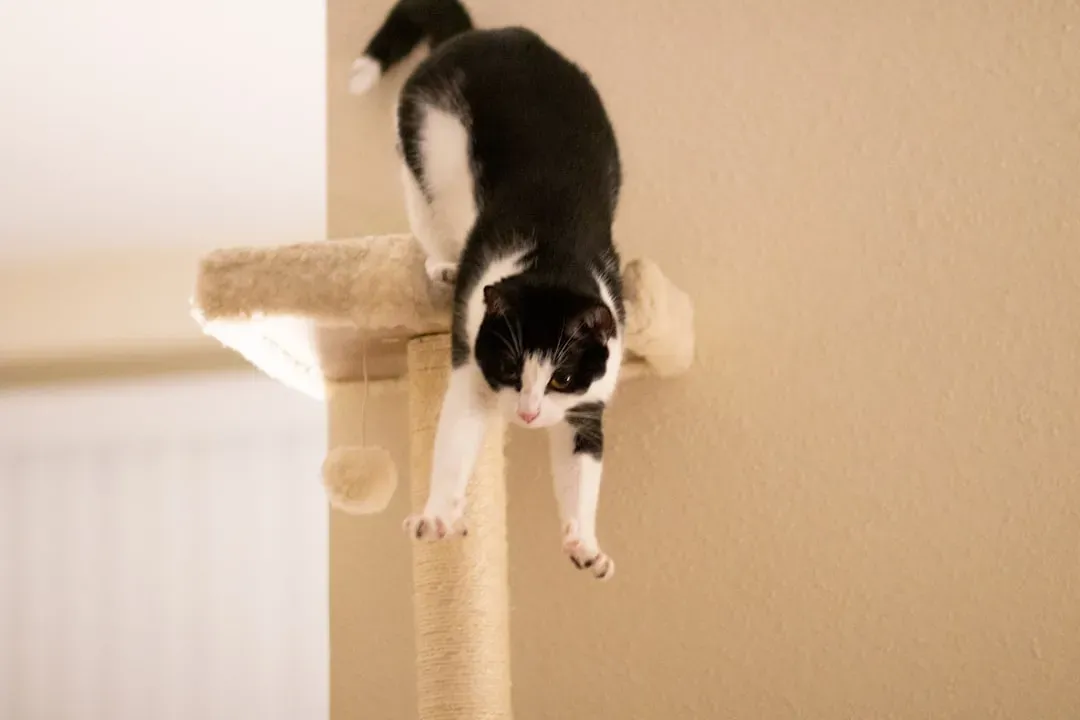
Your cat possesses an innate ability called the righting reflex that allows them to orient themselves as they fall in order to land on their feet. Think of it as having a built-in autopilot system that kicks in the moment they lose their balance. This isn’t something cats need to learn or practice – it’s hardwired into their neurology from an incredibly early age.
The righting reflex begins to appear at approximately three to four weeks of age in kittens, and becomes perfected by the time they’re six to nine weeks old. What makes this even more remarkable is that this complex maneuver happens almost instantaneously, often in less than a second. Your cat doesn’t consciously think about rotating mid-air; their body just does it automatically, like breathing.
The Inner Ear: Your Cat’s Personal Balance Computer
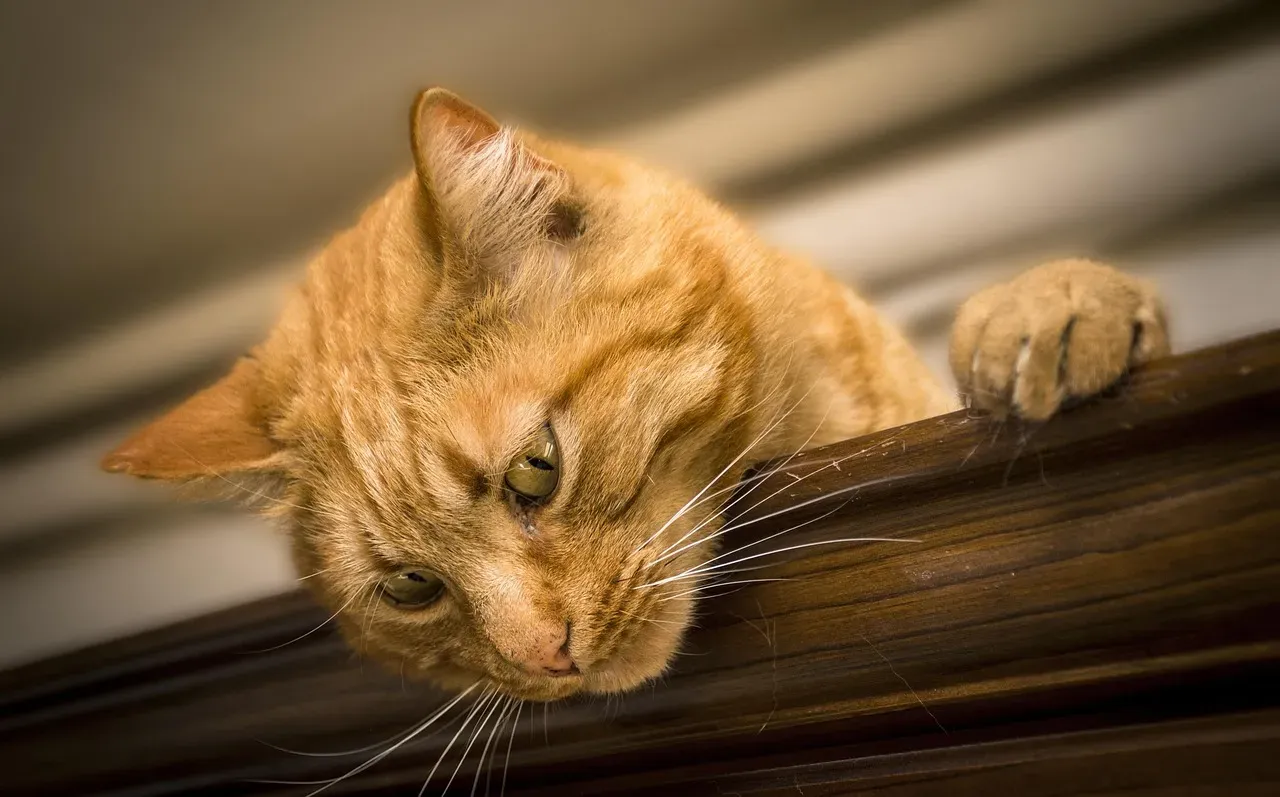
The righting response relies on the vestibular system in your cat’s inner ear, where specialized structures called otoliths detect changes in acceleration and position relative to the ground. Imagine having tiny sensors floating in fluid inside your ears that immediately tell your brain which way is up and which way is down. That’s essentially what your cat has.
These fluid-filled chambers shift as your cat’s head changes position, and corresponding signals are instantaneously sent to the brain, registering the position of the head relative to gravity. This system is so sensitive and so fast that it can trigger the entire righting sequence before you’d even have time to gasp. It’s hard to say for sure, but this vestibular apparatus might be one of the most impressive pieces of natural engineering in the animal kingdom.
The Flexible Spine: A Secret Weapon
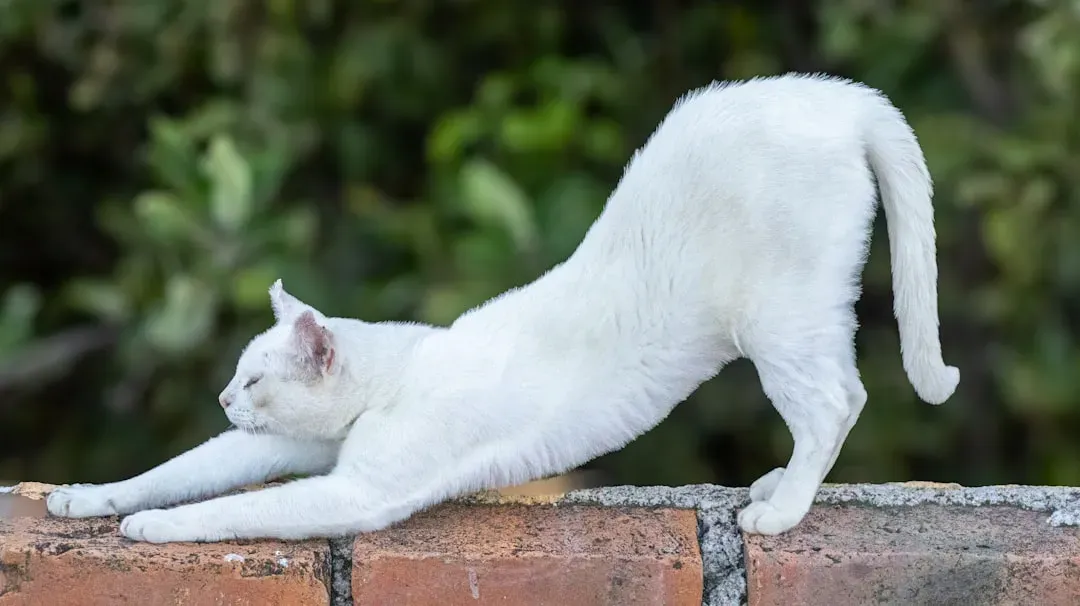
Your cat has approximately thirty exceptionally flexible vertebrae in their spine that enable them to stretch out, compress, arch their back, and rotate different parts of their body independently. Compare that to a human’s much more rigid spine, and you start to understand why we can’t pull off the same tricks. It’s like comparing a stiff board to a spring.
Cats can twist their torsos nearly one hundred eighty degrees, while a human’s range of motion is only as much as ninety degrees. Think about that for a moment – your cat can literally turn their upper body to face one direction while their hips and back legs point the opposite way. This extraordinary flexibility isn’t just for show; it’s the mechanical foundation that makes the entire righting reflex possible.
The Missing Collarbone: Nature’s Brilliant Design Flaw
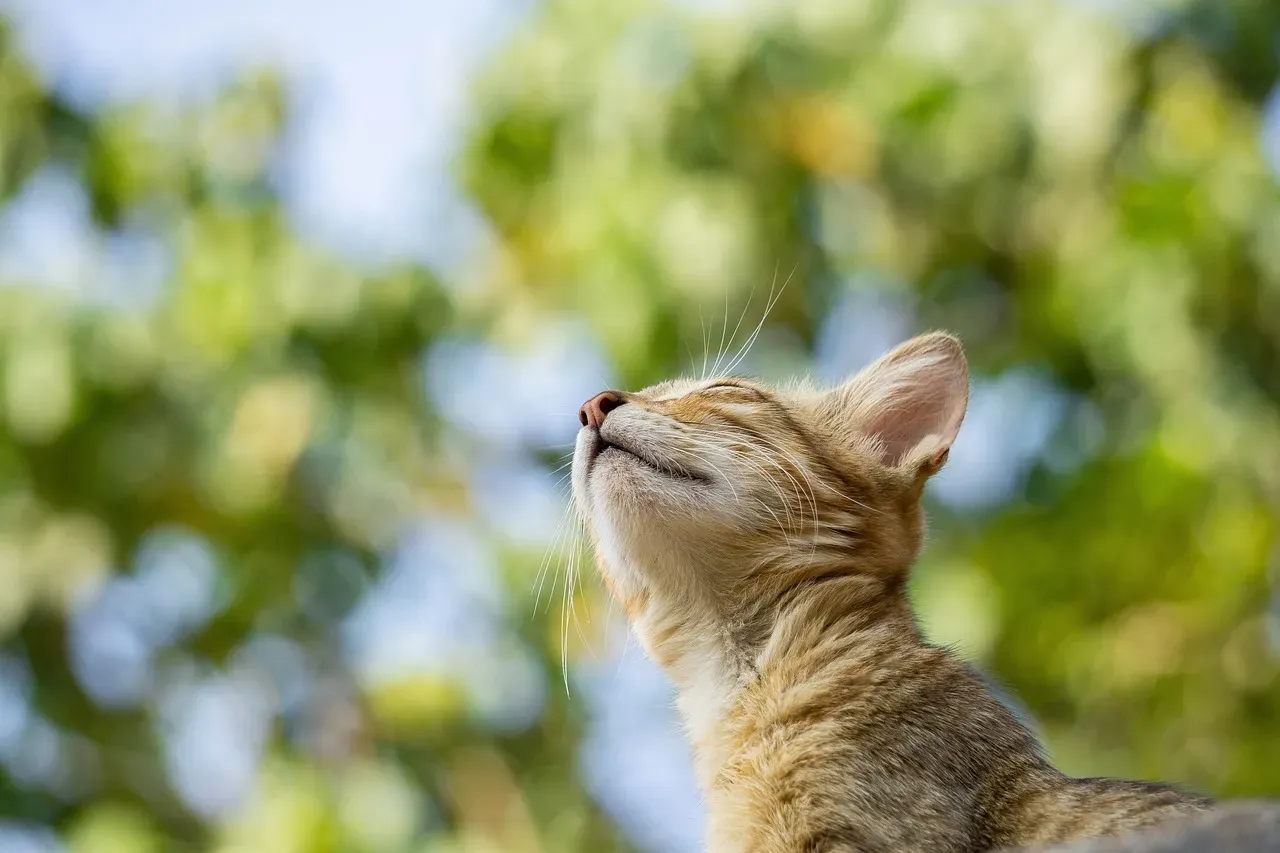
Here’s where things get really interesting. Cats have no functional collarbone, which is one of the key anatomical features that allows them to twist and rotate so dramatically. Unlike humans and dogs whose shoulder structures are anchored rigidly by bone, your cat’s shoulders are attached primarily by muscle. This might sound like a weakness, but it’s actually a superpower in disguise.
Because feline clavicles don’t attach to other bones, cats can twist in virtually any direction and can pretty much fit through an opening that can accommodate their head. Once the head squeezes through, the rest of the body can follow. This same flexibility allows your cat to manipulate their front and back halves independently during a fall, creating the twist needed to right themselves.
The Physics Problem That Stumped Scientists
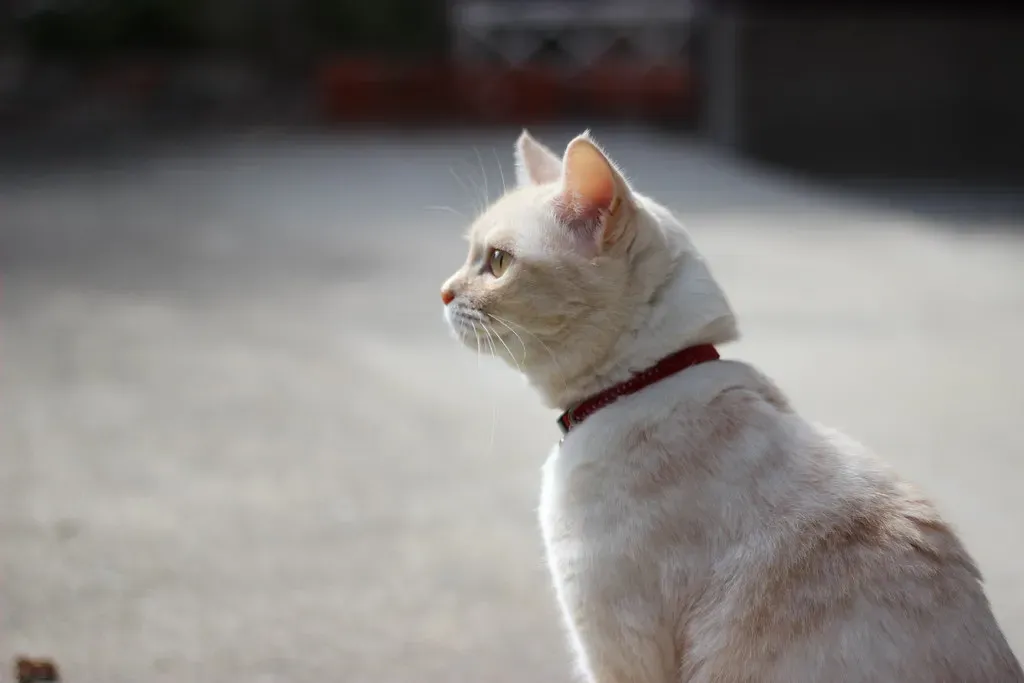
You might think explaining how cats land on their feet would be straightforward, but it actually puzzled physicists for centuries. Research into the physics of the cat-righting reflex is almost as old as physics itself, with the first research paper tackling the subject published in the year seventeen hundred by a French scientist named Antoine Parent. Isaac Newton was still alive at the time, which tells you just how long this mystery has captivated scientific minds.
One of the reasons physicists were surprised that cats could rotate to always land on their feet is the conservation of angular momentum. Essentially, if something twists clockwise, something else has to twist counterclockwise to balance it out. Yet your cat starts from a stationary position and somehow spins without pushing off anything. It seems impossible, yet they do it every time.
The Bend-and-Twist Technique Explained

Scientists eventually imagined the cat as fundamentally consisting of two cylinders representing the front and rear halves, and discovered that if the cat bends at the waist, it can then twist the two halves of its body in opposite directions. This causes their opposing angular momenta to largely cancel each other out, solving the physics puzzle. Your cat essentially becomes two separate spinning objects that work together.
There are other techniques cats use as well, including the tuck and turn method where they extend their front legs while tucking in their back legs, giving the backside a lower moment of inertia, then doing the opposite. It works similarly to how a figure skater spins faster when they pull their arms close to their body. Nature doesn’t care about finding the simplest solution – only the most effective one.
Terminal Velocity and the High-Rise Paradox

Here’s something that sounds absolutely wild but is actually documented science. In a study of cats that fell from buildings, injuries per cat increased positively with altitude until a height of seven stories, at which point injuries decreased. You’d expect falls from greater heights to cause more damage, not less. What’s going on here?
It has been proposed that cats reach terminal velocity after righting themselves at about five stories, and after this point they are no longer accelerating, which causes them to relax. Terminal velocity for a cat is about sixty miles per hour, and once the cat feels it is no longer speeding up, it becomes more relaxed and will spread out its paws horizontally, basically turning itself into a parachute. This relaxation and increased drag can actually lead to fewer severe injuries than falls from moderate heights where they’re still accelerating and land more rigidly.
The Reality Check: Cats Are Not Invincible
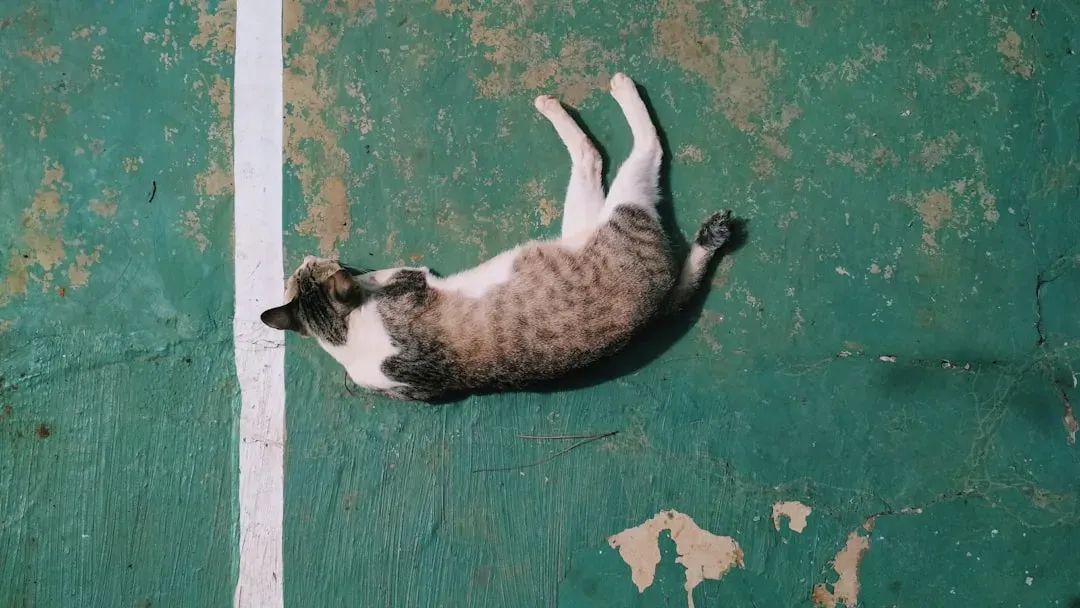
Let’s be real here – just because your cat can land on their feet doesn’t mean falls are safe. Cats can still break bones or die from extreme falls. Cats who fall from seven stories or higher more often land on their feet but experience serious injuries including chest trauma, broken bones, and facial and dental injuries. The phrase “cats always land on their feet” is more myth than safety guarantee.
Many of the cats killed in falls from higher buildings are not reported in studies because cats who die are less likely to be brought to a veterinarian than injured cats. This survivorship bias means the statistics you hear about cats surviving extreme falls only account for those who made it to the vet in the first place. The righting reflex is remarkable, truly astonishing even, but it’s not a force field that prevents all harm.
Your cat’s ability to land on their feet is one of nature’s most elegant solutions to a complex problem. It combines specialized anatomy, lightning-fast neurology, and physics that baffled brilliant minds for centuries. Next time you see your cat perform this incredible feat, you’ll know there’s genuine science behind what looks like pure magic. Still, it’s worth remembering that understanding how it works doesn’t make falls safe – so keep those windows secured and balconies protected. What do you think is more impressive – the physics or the biology behind it all?
Kristina is a young writer from India. An arts graduate and an avid content creator, Kristina is passionate about animals and wildlife. She enjoys exploring topics related to pet care, animal behavior, conservation, and nature, combining thorough research with engaging storytelling.