Why Do Cats Have Such a Mysterious Fascination With Small Spaces?
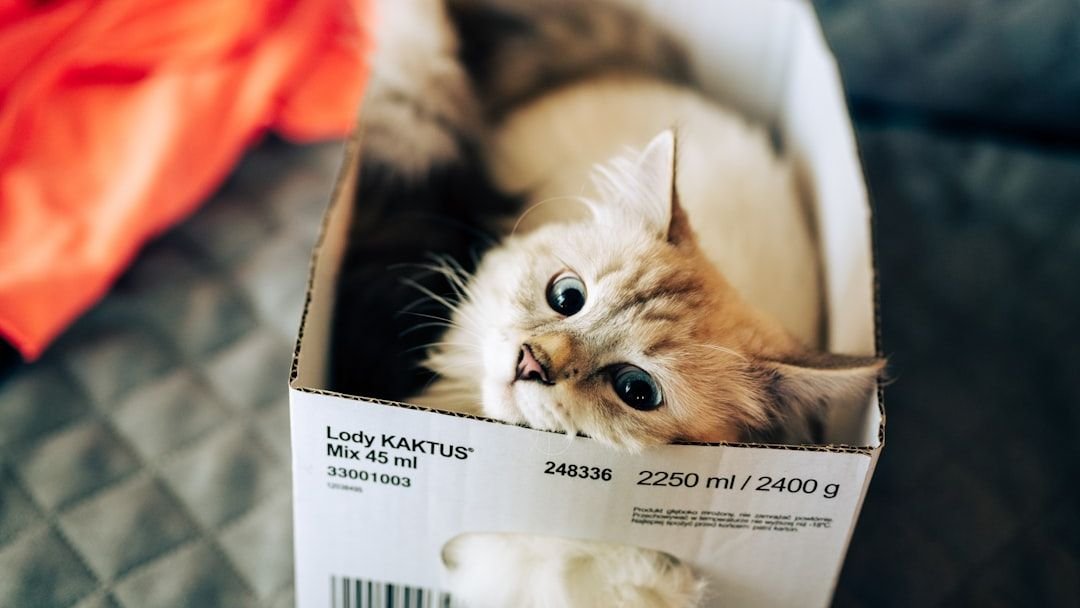
You've probably found your cat wedged inside a shoebox, curled up in a bathroom sink, or disappearing into the back of your closet more times than you can count. Let's be real, it can be confusing when you spend good money on a plush cat bed only to discover your furry friend has chosen a cardboard box instead. This peculiar obsession with cramming themselves into impossibly tiny places isn't just random feline weirdness. There's actually fascinating science and ancient instinct driving this behavior.
Your cat's love affair with confined spaces goes deeper than you might think. From survival tactics passed down through generations to psychological comfort and even temperature regulation, small spaces serve multiple purposes for your feline companion. So let's dive into the mystery behind why your cat would rather squeeze into a tissue box than lounge on that expensive furniture you bought.
The Predator and Prey Duality
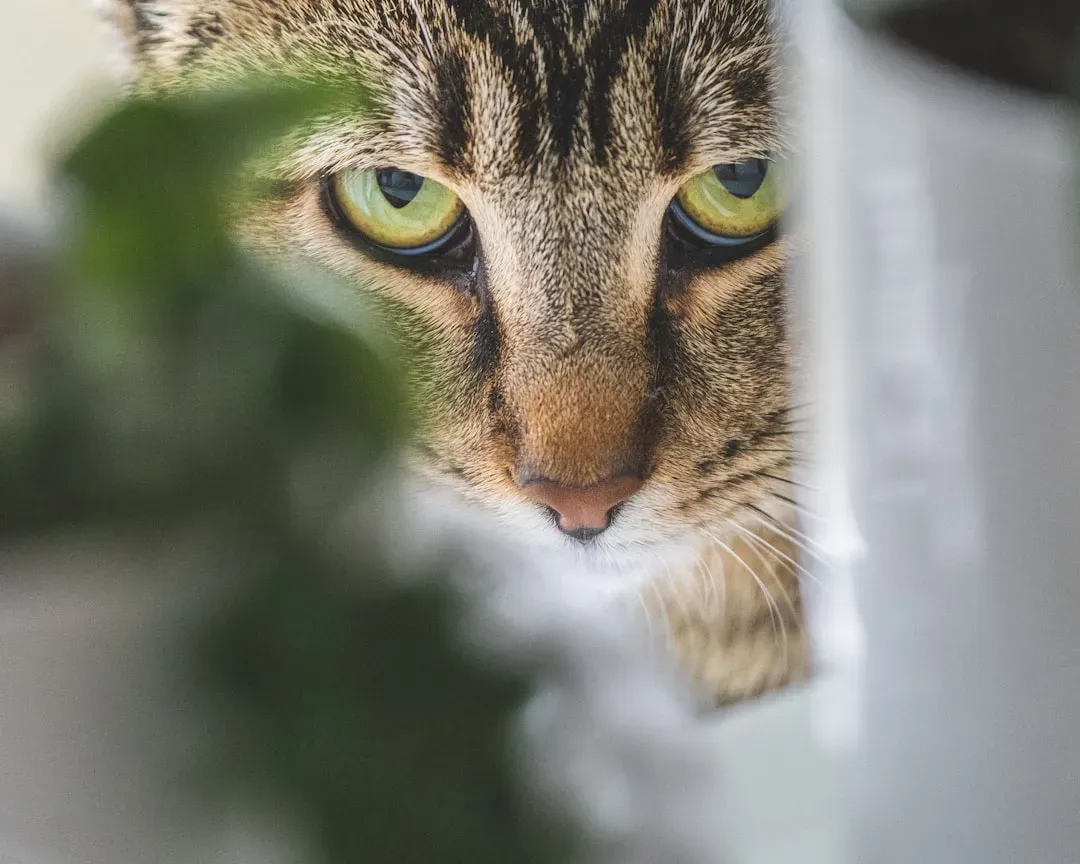
Cats exist in a unique position where they are natural predators but also prey animals themselves. This dual role has shaped their behavior in profound ways. In the wild, being visible meant being vulnerable, and that ancient fear still lives in your house cat today.
Small, enclosed areas provide a crucial advantage by allowing cats to observe their surroundings without being seen, protecting them from potential threats. Think about it from their perspective: when all sides are covered except one opening, nothing can sneak up from behind. Hiding in a small, enclosed space makes a cat feel shielded from potential dangers, reducing stress and anxiety.
Your cat might live in perfect safety, but evolution doesn't care about your cozy apartment. Those survival instincts are hardwired into their brain, compelling them to seek out spots where they can watch the world while staying hidden. Even the most pampered indoor cat carries these primal urges.
Ancient Hunting Instincts at Play
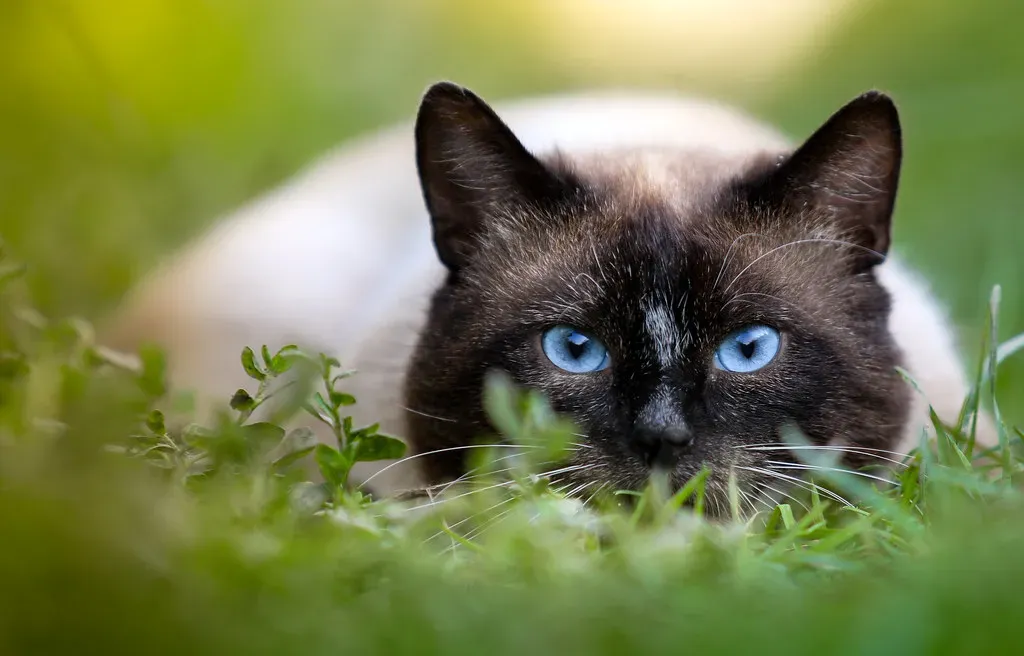
Domestic cats' ancestors were predators who would find a place to lie in wait and watch for prey to saunter past. This stalking behavior is deeply embedded in feline DNA. Your cat isn't necessarily hunting mice anymore, but that doesn't stop the impulse.
Indoor kitties might not see many rodents wandering past their hiding spots, but they still enjoy watching their humans and housemates from a small, cozy spot where they feel invisible. When something interesting passes by, they'll often leap out and pounce. This is part of a cat's predator instinct where felines love to use the element of surprise to increase their hunting success, even if they're only hunting their humans' feet.
The box in your living room becomes a hunting blind. That gap under your bed transforms into an ambush point. These aren't just resting spots, they're strategic positions from which your cat can practice millennia-old hunting techniques.
The Stress Relief Sanctuary
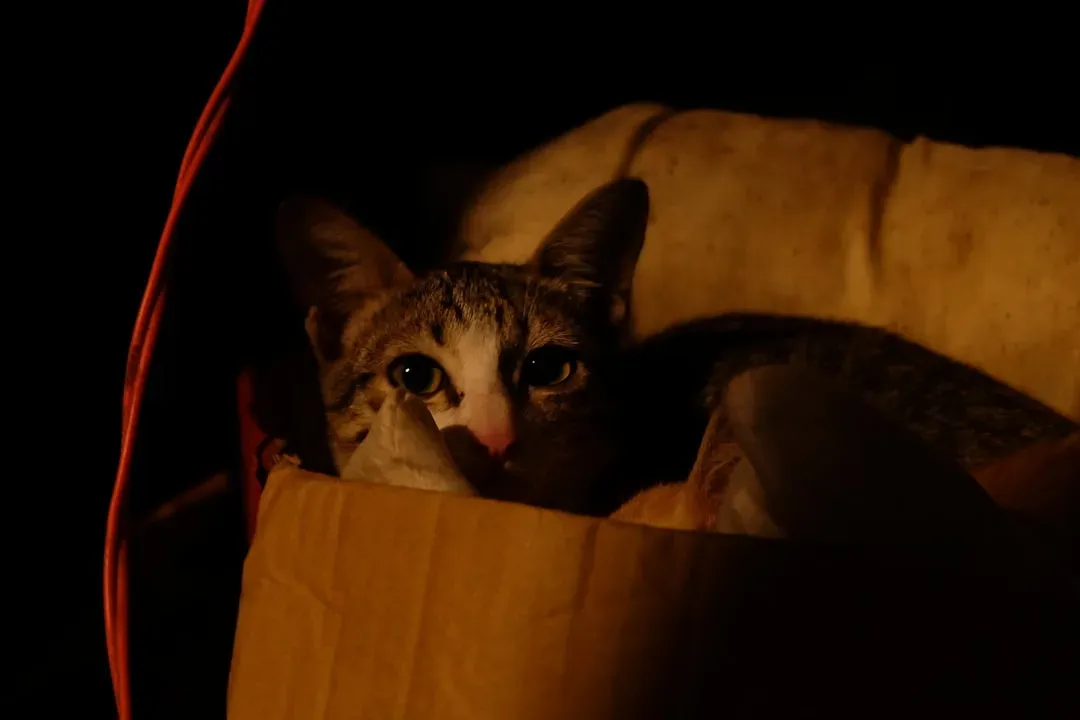
Life can be overwhelming for cats. Loud noises, unfamiliar visitors, changes in routine, or even just a stressful day can send them scrambling for cover. A study from the University of Utrecht found that shelter cats provided with hiding boxes adjusted more quickly to their new environment compared to those without hiding spaces.
Research has shown that confined spaces such as boxes can have a calming effect on cats, helping to reduce their stress levels and provide a sense of security, which is particularly evident in shelter environments. This isn't just about feeling cozy. It's about genuine psychological relief.
During thunderstorms, fireworks, or visits from unfamiliar guests, your cat may vanish into a closet or under a couch as a direct response to their instinct to stay safe when they feel threatened. The walls of that small space create a buffer against the chaos of the outside world. Honestly, can you blame them? Sometimes we all need a hideaway.
Temperature Regulation Through Confinement
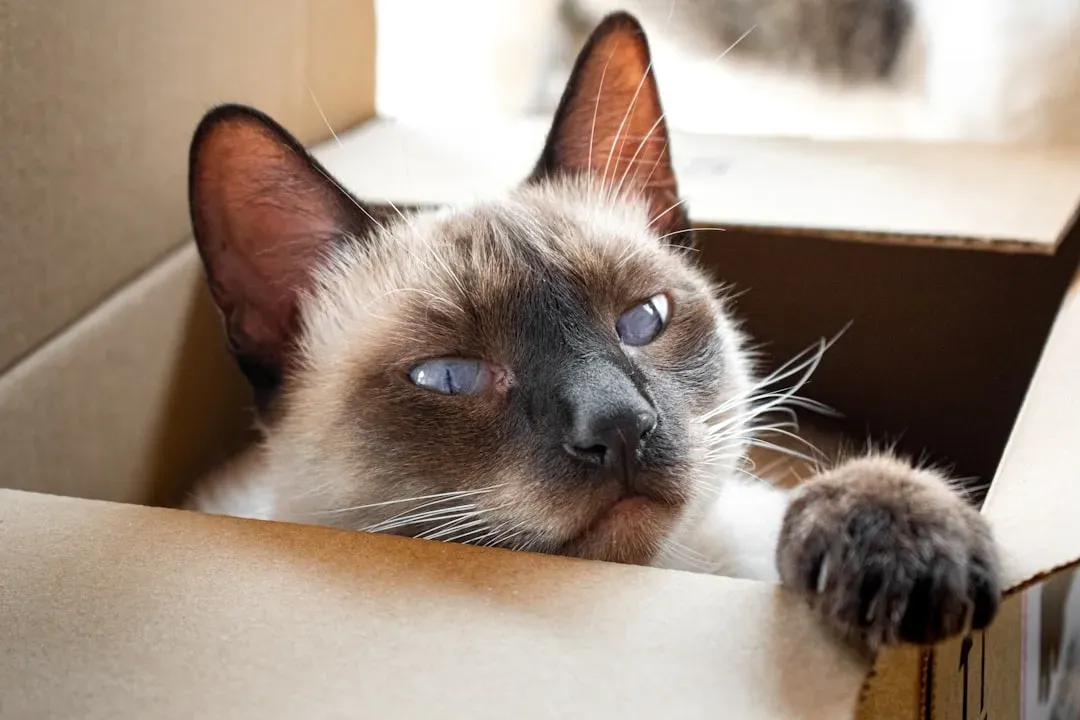
Here's something that might surprise you: cats are most comfortable in temperatures around 86 to 100 degrees Fahrenheit or 30 to 38 degrees Celsius. That's significantly warmer than what most humans prefer. Your thermostat might be set to a comfortable 72 degrees, but your cat is probably wishing for something much toastier.
The closed space of a box, especially one made from a good insulator such as cardboard, creates a warm, cozy environment that helps to retain body heat. The closeness of the walls helps to contain the cat's own body heat, which keeps them warm and relaxed. It's like wearing a snug sweater without actually having to wear anything.
Curling up in small spaces like boxes, under beds or even in sinks helps keep their body temperature steady while the external temperature fluctuates. So when you find your cat squeezed into that shoebox, they're not just being quirky. They're creating their own personal heating system.
The Kittenhood Connection
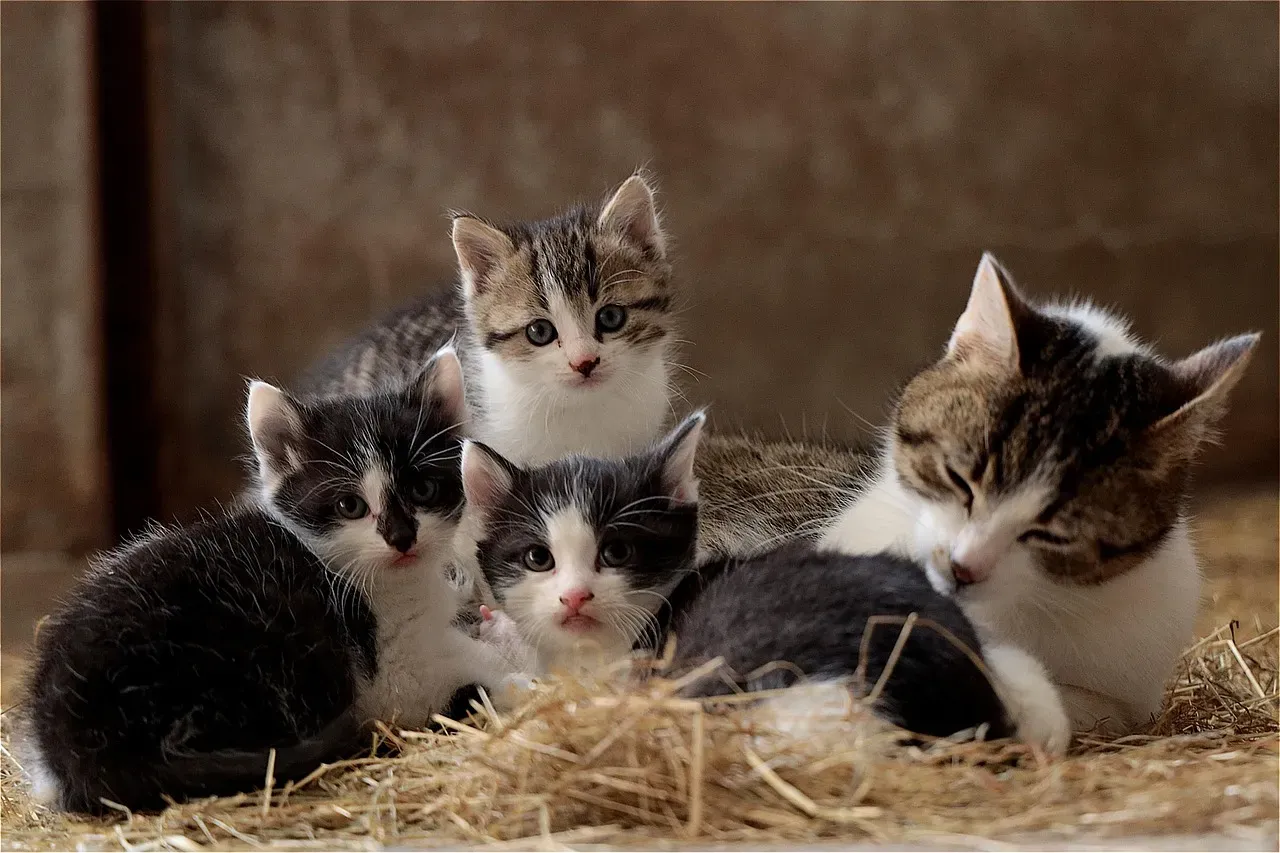
When young, cats used to snuggle with their mom and litter mates, feeling the warmth and soothing contact, and the close contact with a box's interior is believed to release endorphins, nature's own morphine-like substances, causing pleasure and reducing stress. This connection to early life experiences runs deep.
From the cat's earliest moments, a mother cat will seek out a quiet area to birth her kittens, so their first experience will be a safe, enclosed space. That initial memory of security and comfort becomes a template for what feels safe throughout their entire life.
The pressure of walls against their body mimics the feeling of being surrounded by siblings and their mother's warmth. It's comforting on a level that goes beyond logic, tapping into those earliest feelings of safety and belonging. Your adult cat is, in a way, trying to recreate that first perfect sense of protection.
Territorial Marking and Ownership
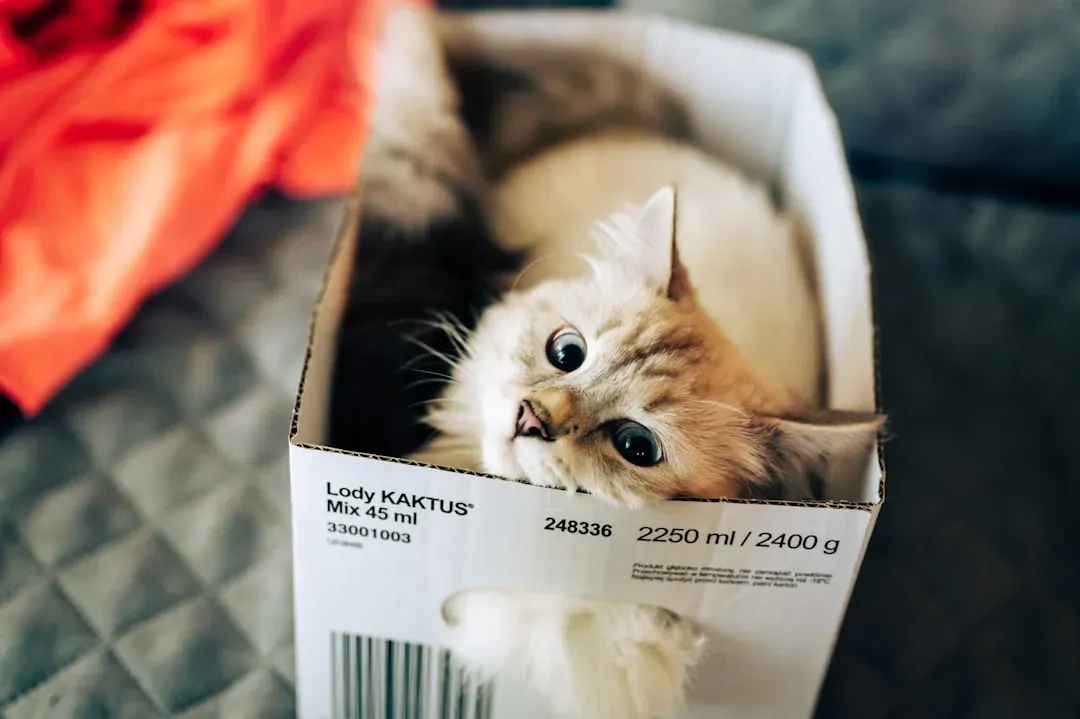
Cats are territorial animals who use scent marking to establish and maintain their territory, and when a cat enters a box, it leaves its scent behind, effectively claiming the box as its own territory. This isn't just about finding a nice spot. It's about ownership.
Cats love to be in control of their surroundings, and when they find a small space to hide in, they create a personal territory where they can relax without interference. That cardboard box or sink becomes their kingdom, a space they've marked and claimed as exclusively theirs.
Think of it as your cat's version of putting up a "Do Not Disturb" sign. They enjoy feeling secure and knowing that nothing can sneak up on them from behind. This sense of control over at least one small area of their environment gives them confidence and peace of mind.
Sensory Regulation and Overstimulation
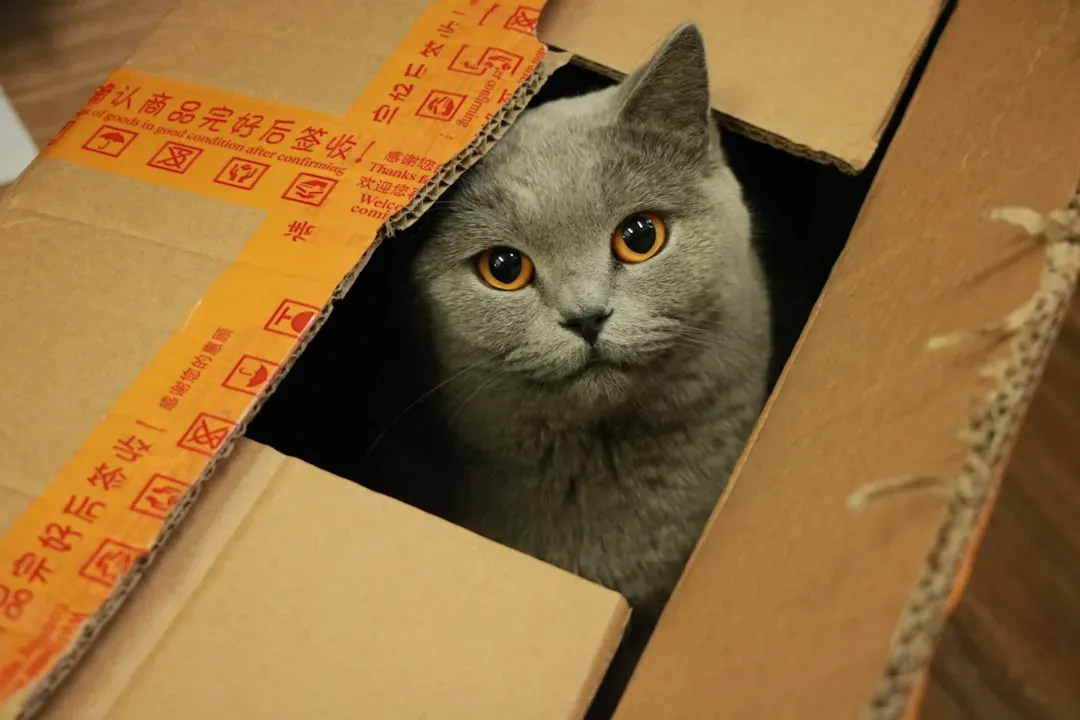
Cats are incredibly sensitive to sensory input with their acute hearing, sharp vision, and sensitive whiskers, meaning they're constantly processing a flood of information, and in a home filled with sudden noises, fast movements, or unfamiliar smells, sensory overload is a real possibility. It's exhausting being that aware of everything all the time.
A box acts as a buffer, a sensory control zone where the walls dampen auditory stimuli and limit peripheral vision, allowing the cat to focus on what's directly in front. This focused awareness is far less overwhelming than having stimuli coming from all directions at once.
Your cat's whiskers, ears, and eyes are picking up things you can't even perceive. The refrigerator hum, the neighbor's footsteps, the shifting shadows from passing cars, all of it registers on their highly tuned senses. A small enclosed space gives them a break from this constant bombardment.
The Science Behind Box Attraction
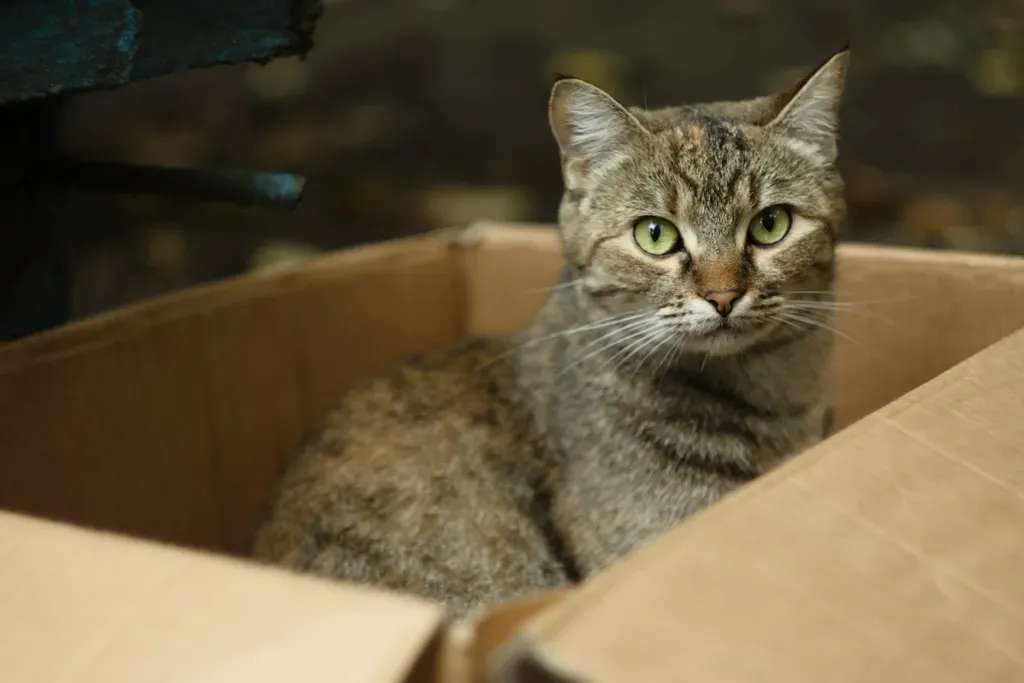
Studies found that cats chose to sit in squares made of tape on the floor or in Kanizsa squares more often than control areas. This reveals something fascinating about feline perception. Researchers confirmed that cats have illusory contour susceptibility, meaning they perceive contours that do not exist in reality, and in experiments, cats sat on a square-shaped illusion just as often as a real square.
This suggests that the attraction to enclosed spaces operates on such a fundamental level that even the suggestion of boundaries triggers the response. It's not just about physical walls. The concept of a defined space itself holds power for cats.
Multiple studies have shown that stress hormones like cortisol are reduced in newly rescued cats when they are given access to a box. The scientific evidence is clear: these aren't just preferences, they're biological needs. Researchers have documented measurable physiological changes when cats have access to small enclosed spaces.
The Curiosity and Novelty Factor
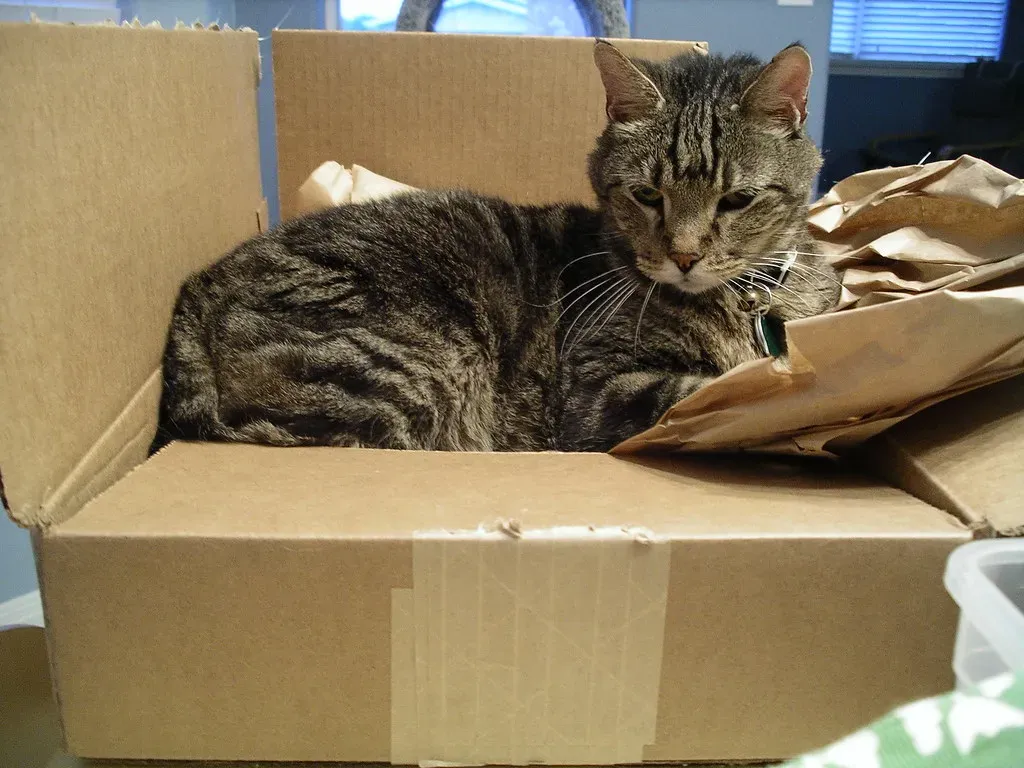
Like children, cats like novelty and exploring new places. That new Amazon box on your floor represents an exciting mystery begging to be investigated. What is this strange object? Where did it come from? Can I fit inside?
Boxes appeal to a cat's natural curiosity and playfulness, as cats are inquisitive creatures, and a box presents an opportunity for exploration and play where they can jump in and out, hide inside, and even ambush toys or other pets from within. The same space that offers security also provides entertainment.
Your cat's powerful sense of smell, which is 14 times stronger than yours, means every box tells a story. They're reading information you can't detect, investigating every scent clue about the box's origin and contents. This investigative process is mentally stimulating and deeply satisfying for their curious nature.
Understanding Your Cat's Personal Retreat
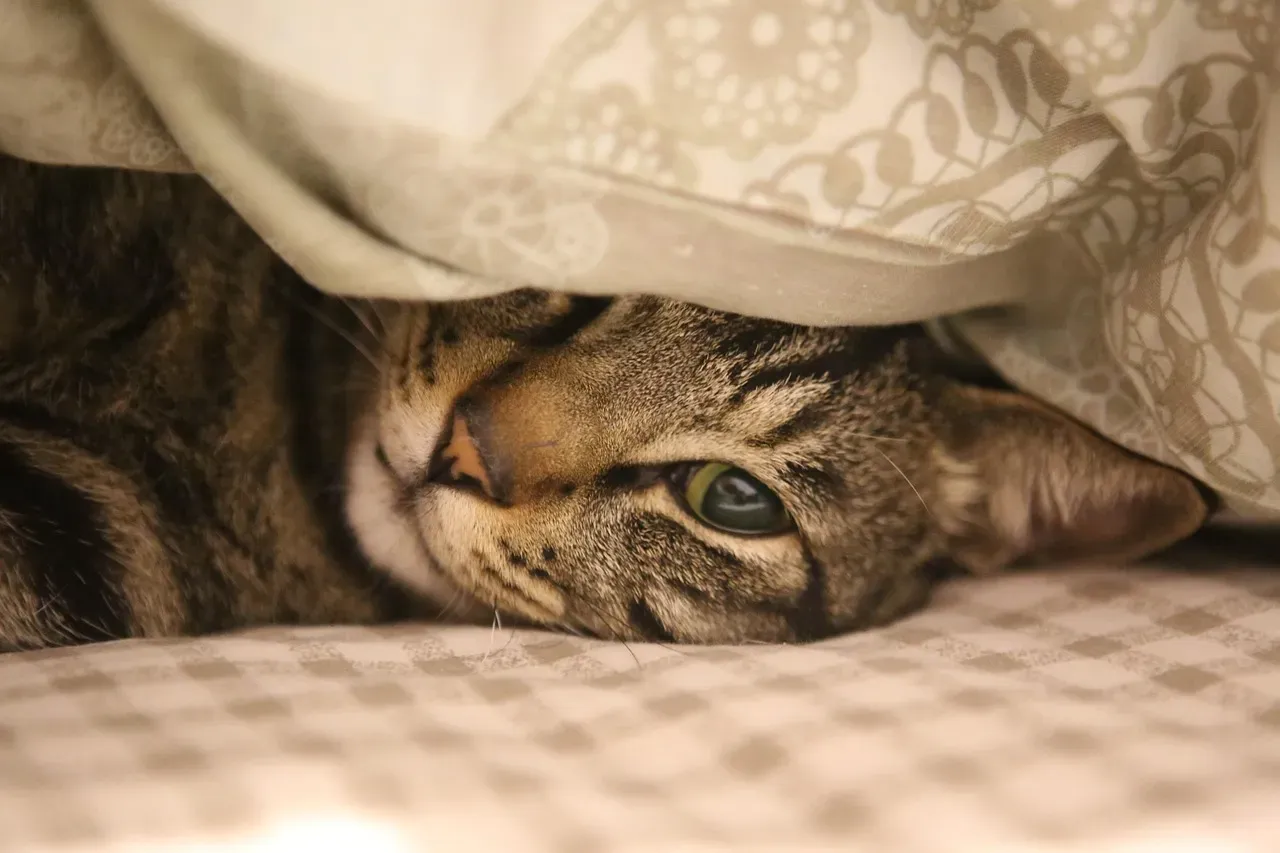
A safe space is a quiet, cozy, and low-traffic area where your cat can retreat, decompress, and feel in control of their surroundings, like a personal sanctuary free from stressors, full of comfort, and full of opportunities for cats to meet their own needs. Providing these spaces isn't just nice, it's essential for their mental health.
If you have a cat who spends a lot of time hiding in the closet or under the bed, that's not necessarily a desirable situation for the cat, but it's an indicator that they don't feel safe, and that's a situation where adding safe areas that are a little more social is recommended. The key is balance. Your cat should have access to hideaways without needing to disappear completely.
Whether spending lots of time in a box reveals anything deeper about how your cat is feeling depends on the context, as a cat cowering at the back of a box with wide eyes is likely using the box very differently from one who is snoozing inside or repeatedly pouncing in and out of it. Pay attention to the details. The behavior tells you whether it's healthy retreat or stress response.
Your cat's obsession with cramming into impossibly small spaces isn't a quirk or a phase. It's a complex behavior rooted in evolution, psychology, and biology. Those cardboard boxes, sinks, and closet corners serve as temperature regulators, stress relievers, hunting blinds, and safe havens all at once. Next time you're about to toss that Amazon box, maybe leave it out for a while. Your cat might just claim it as their new favorite sanctuary, and honestly, who are we to argue with millions of years of evolution? Did you expect the answer to be this fascinating? What do you think about your cat's choices now?