Ever wonder if your feline friend really trusts you? Cats are famously enigmatic creatures. They don’t throw themselves at you with tail wags like dogs do. Instead, their trust unfolds slowly, subtly, through whispers and gestures we often overlook.
Here’s the thing: building that sacred bond isn’t about grand displays. It’s the small, seemingly unremarkable things you do every single day that matter most. Maybe you’ve been overthinking this whole cat thing. You might think trust requires expensive gadgets or hours of dedication, but honestly, it’s simpler than you imagine.
Let’s be real, your cat is watching you right now, evaluating your every move. So let’s dive into what really resonates with them. The gestures that quietly whisper “I’m safe with you.”
Let Them Come to You First
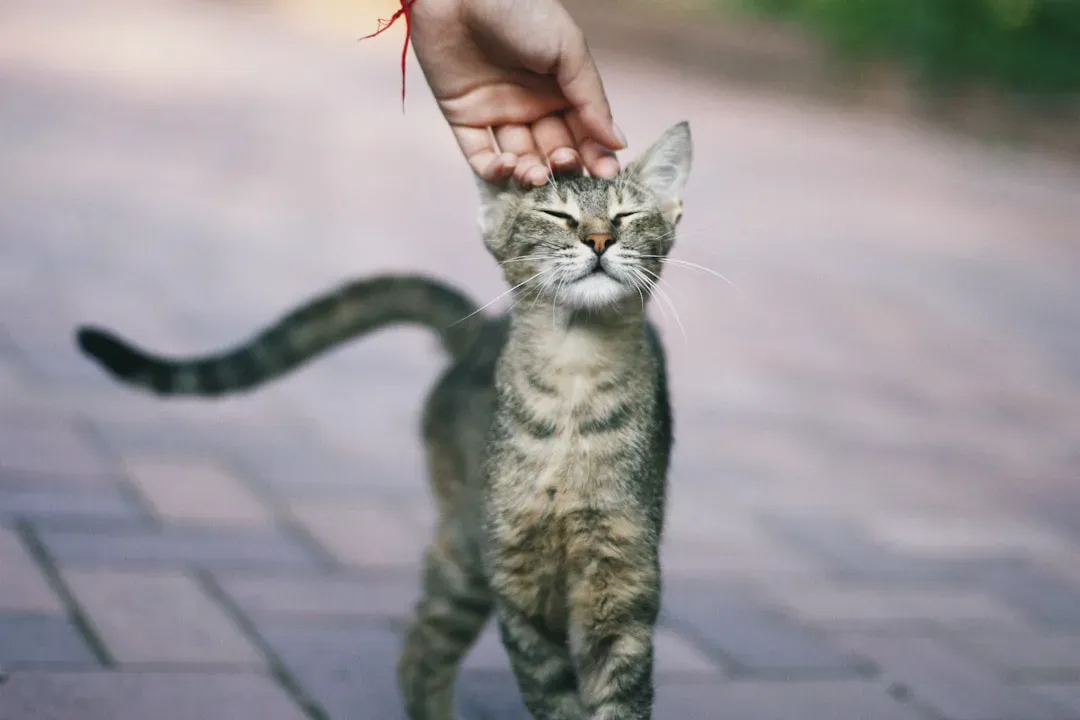
Being a space invader is a common way to lose out on a cat’s good feelings toward you. Allow your cat to come to you rather than charging toward your cat or picking them up. Go at your cat’s pace when it comes to physical contact. Think about it from their perspective: imagine someone twice your size rushing toward you without warning. Terrifying, right?
The first contact with a cat should always be initiated by the cat. This one rule changes everything. When you resist the urge to scoop up your kitty and instead wait patiently, you’re communicating respect. Cats notice that. They remember it. Letting your cat take the lead on the affectionate moments will help you ensure that all the interactions are positive, and you will see that they will start to gain your trust.
Master the Art of the Slow Blink
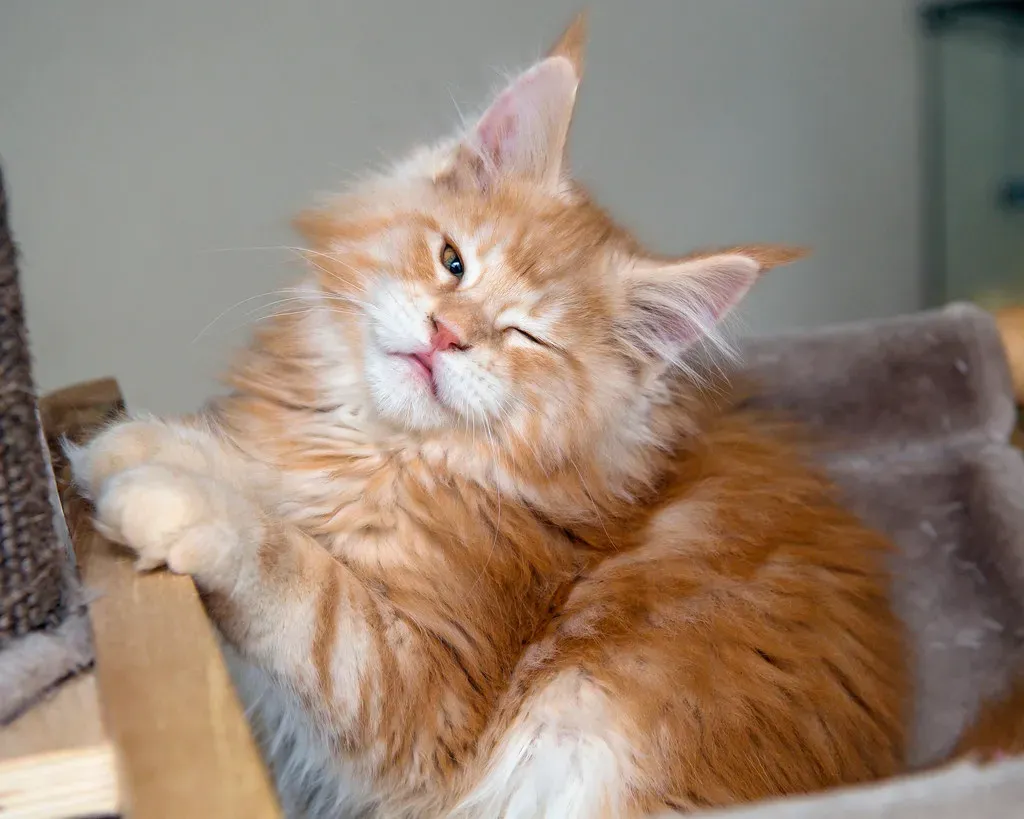
When a cat looks at you and slowly closes and opens its eyes, it’s not just feeling sleepy – it’s saying, “I trust you.” This gentle blink is often called the “cat kiss” and is a powerful gesture in feline communication. I know it sounds almost too easy, but this simple gesture holds incredible power in the feline world.
Cats blink slowly to show affection and relaxation. If a cat blinks slowly at you, they are not threatened by you – in fact, they trust you. To bond with a cat that blinks slowly at you, you can return their gesture by blinking slowly back at them. Try it next time you catch your cat gazing at you. Close your eyes gently, hold for a second, then open them again. If you return the gesture, don’t be surprised if your cat seems even more relaxed, maybe even settling down for a nap nearby. It’s like speaking their secret language.
Hand Feed Meals Instead of Free Feeding
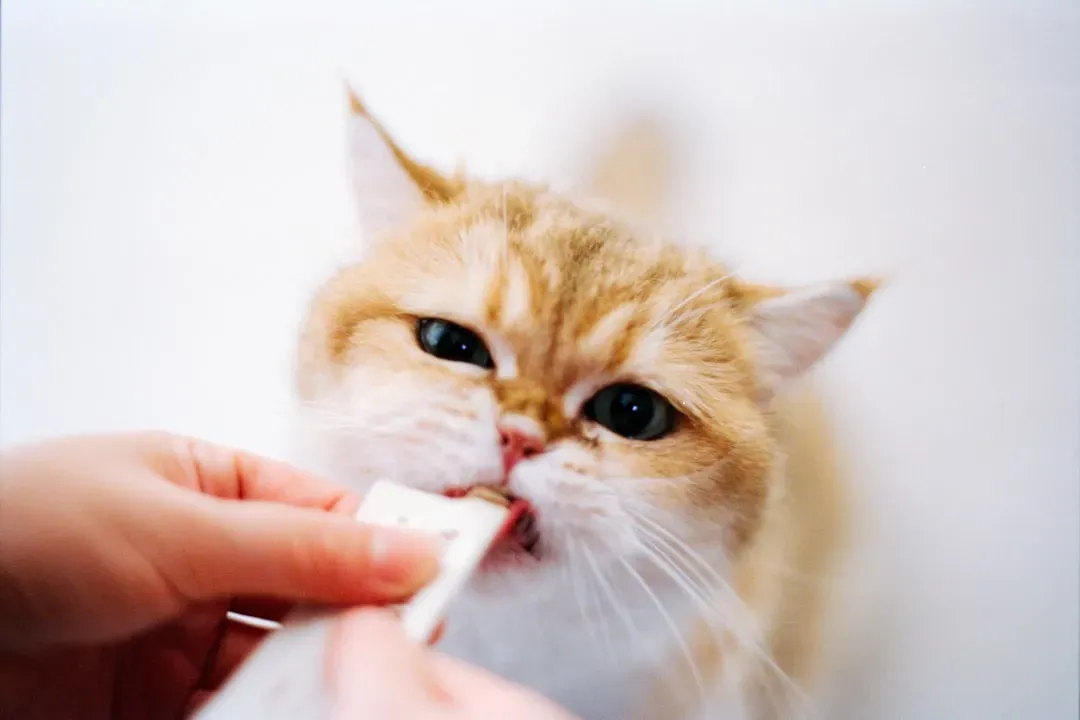
This might sound unconventional, but trust me on this one. Stop free feeding your cat. To a cat, if there’s always food available for them, they just “found it”. If you feed your cats meals instead of leaving a bowl of food always available for them or using an automatic feeder, they will learn to come to you for their food. Feeding your cats every time will make your cats associate you with their meals, someone good, worthy of trust and affection.
With every meal, you can get closer to them or even pet them. Getting your cat to be comfortable enough to eat with you nearby can go a long way toward getting your cat to trust you. You don’t have to hand feed every single kibble. Simply being present during mealtime, speaking softly, creating a ritual around feeding transforms you from a random roommate into their trusted provider. It’s hard to overstate how much this matters.
Never Use Punishment or Negative Reinforcement
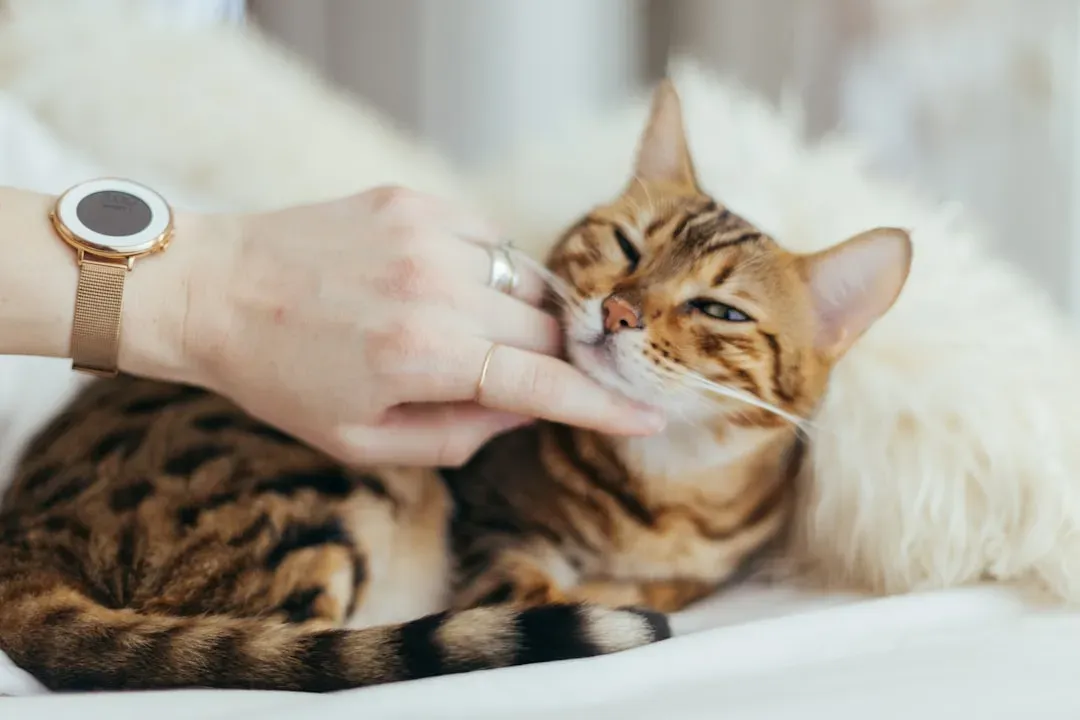
Never use punishment, as it damages trust and often worsens behavioral issues. Yelling, spray bottles, or physical corrections damage trust and often worsen behaviors by increasing anxiety. Seriously, forget everything you’ve heard about spray bottles or stern discipline. Cats don’t respond to punishment the way we might expect.
To allow your cat to associate you with positive things, you have to avoid punishing them when they engage in unwanted behaviors. Punishment will create a negative association with you but affect their anxiety levels, impacting their general well-being as well. Instead, focus exclusively on rewarding behaviors you like. When your cat uses the scratching post, offer a treat. When they come when called, give gentle praise. Avoid negative responses or punishment, as these can damage trust. The goal is simple: you want to be their safe harbor, not a source of unpredictability or fear.
Engage in Daily Interactive Play Sessions
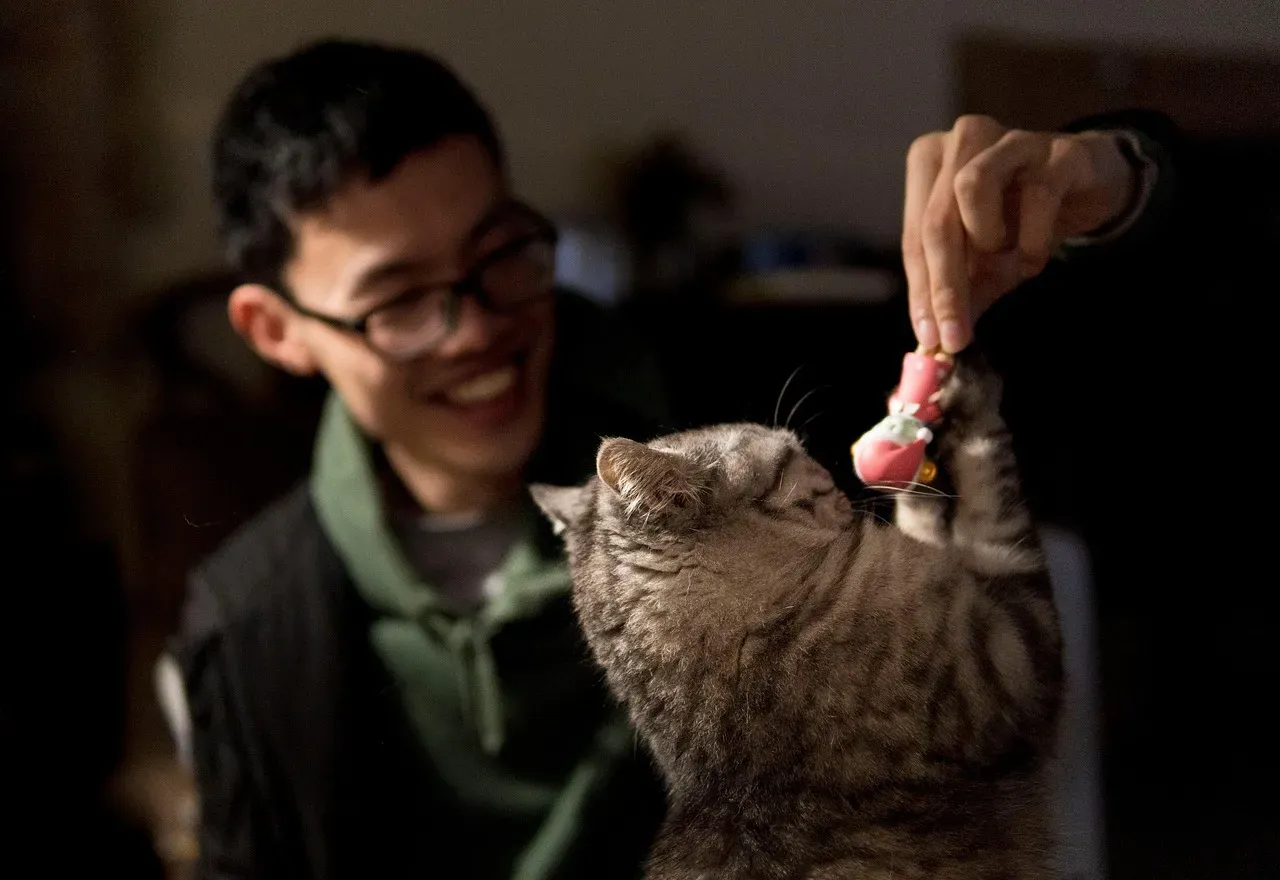
Interactive play is a key method for strengthening the bond between a cat and its owner. Engaging in playful activities not only provides mental stimulation but also reinforces trust and companionship. Playing isn’t just entertainment. It taps into their deepest instincts as hunters and predators.
The simple act of play serves as one of the most powerful cat bonding routines available to pet parents. Unlike solitary play, interactive sessions build trust through shared experiences. Use wand toys or laser pointers to mimic prey movement, allowing your cat to express their natural hunting instincts while associating you with enjoyable activities. The magic happens when you let them “catch” the toy frequently. Remember to end play sessions with a physical toy they can “catch,” providing satisfaction and completion to the hunting sequence. Those few minutes of chasing feather wands or batting at toy mice create positive associations that stack up day after day.
Respect Their Body Language Signals

If your cat is giving you signals that they want you to back off (like tail thrashing, biting, or leaning away), don’t force the interaction. Respecting their space will strengthen their trust in you and protect your bond. Cats communicate constantly through their bodies. The problem is we’re often not listening.
Learn to understand when your cat needs space. When your cat starts wagging its tail, for instance, your cat is getting anxious. If you learn to release your cat when they need to, and they feel they can come and go, they will be more likely to come back to you. A flicking tail, flattened ears, or sudden stillness aren’t just random movements. They’re your cat saying “I need a break.” Understanding your cat’s signals will help you respond appropriately and build trust. Honestly, paying attention to these cues might be the most important gesture on this entire list.
Create Predictable Daily Routines
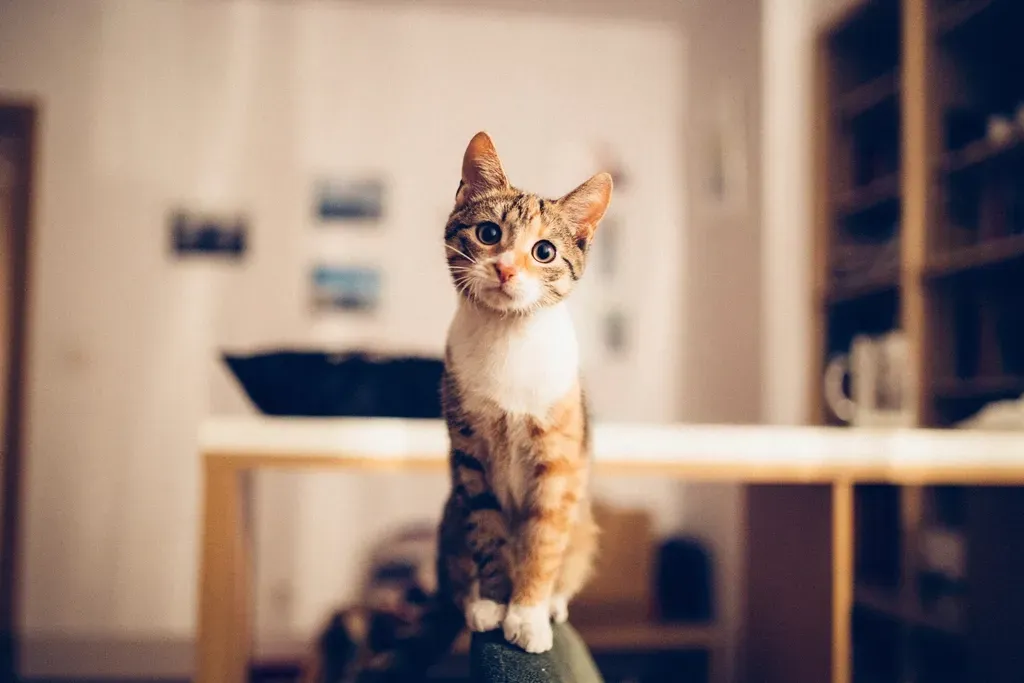
Cats thrive on routines. Feeding, playtime, and cuddle sessions around the same hours each day give them confidence. When you respect their wake-up naps or play bursts, you show them you know them. Cats are creatures of habit. Unpredictability stresses them out in ways we don’t always recognize.
Create a routine wherever possible for your cat’s daily schedule, whether with feed time, playtime, or time outside. The more they know when to expect what, the more confident and relaxed they’ll feel at home – which provides more incentive for them to seek closeness with their human family members. When breakfast happens at roughly the same time every morning, when playtime follows a familiar pattern, your cat starts to feel the world is safe and manageable. To build trust, create a daily care plan, and then stick to the routine as much as possible. “Being able to predict what comes next will help your cat gain in confidence.”
Spend Quiet Time in Their Space

Trust develops when cats feel secure in their environment. Spending quiet time in your cat’s favorite spots becomes an important part of cat bonding routines. Whether sitting near their window perch or relaxing beside their favorite bed, your calm presence in their chosen spaces demonstrates respect for their preferences while building comfortable familiarity.
Sometimes the best thing you can do is simply exist near them without demands. Spending time in the room talking, singing or reading aloud can get them used to you being in their space. Take your laptop in the room and surf the internet for a while, this alone can help the cat to understand that you’re safe. Not all cat bonding routines need to be active. Sharing quiet time – reading a book while your cat naps nearby or working while they observe from their perch – builds comfort through peaceful coexistence. These moments of calm togetherness often lead to spontaneous displays of trust and affection. It might seem like you’re doing nothing, but to your cat, you’re proving you’re a peaceful presence worth having around.
Conclusion
Building trust with your cat isn’t rocket science. It’s about showing up consistently with patience, respect, and genuine affection. These eight gestures might seem small in isolation, but together they create a language your cat understands instinctively. You’re not trying to dominate or control. You’re simply being the safe, reliable presence they’ve been waiting for.
The beauty of these gestures is their simplicity. You don’t need expensive equipment or special training. Just awareness, consistency, and a willingness to meet your cat on their terms. Over time, you’ll notice the shifts. The slow blinks will come more frequently. Your cat will seek you out instead of hiding. They’ll expose their belly, follow you from room to room, and curl up beside you with complete contentment. What gestures have worked best for building trust with your feline friend?
Kristina is a young writer from India. An arts graduate and an avid content creator, Kristina is passionate about animals and wildlife. She enjoys exploring topics related to pet care, animal behavior, conservation, and nature, combining thorough research with engaging storytelling.