You’ve probably heard it a thousand times. Cats are cold. They’re distant. They only care about food and their next nap. Maybe you’ve even caught yourself defending your feline friend at a dinner party when someone casually drops that tired old line about cats being emotionally unavailable. Here’s the thing, though. That stereotype? It’s completely wrong.
Recent research is turning everything we thought we knew about cat behavior on its head. Science is finally catching up to what devoted cat owners have quietly known all along. Your cat isn’t ignoring you because they don’t care. They’re communicating in a language most people simply haven’t learned to read yet. Once you understand the signals, you’ll realize your cat has been telling you they love you all along.
The Science Behind Feline Attachment Is Surprisingly Human
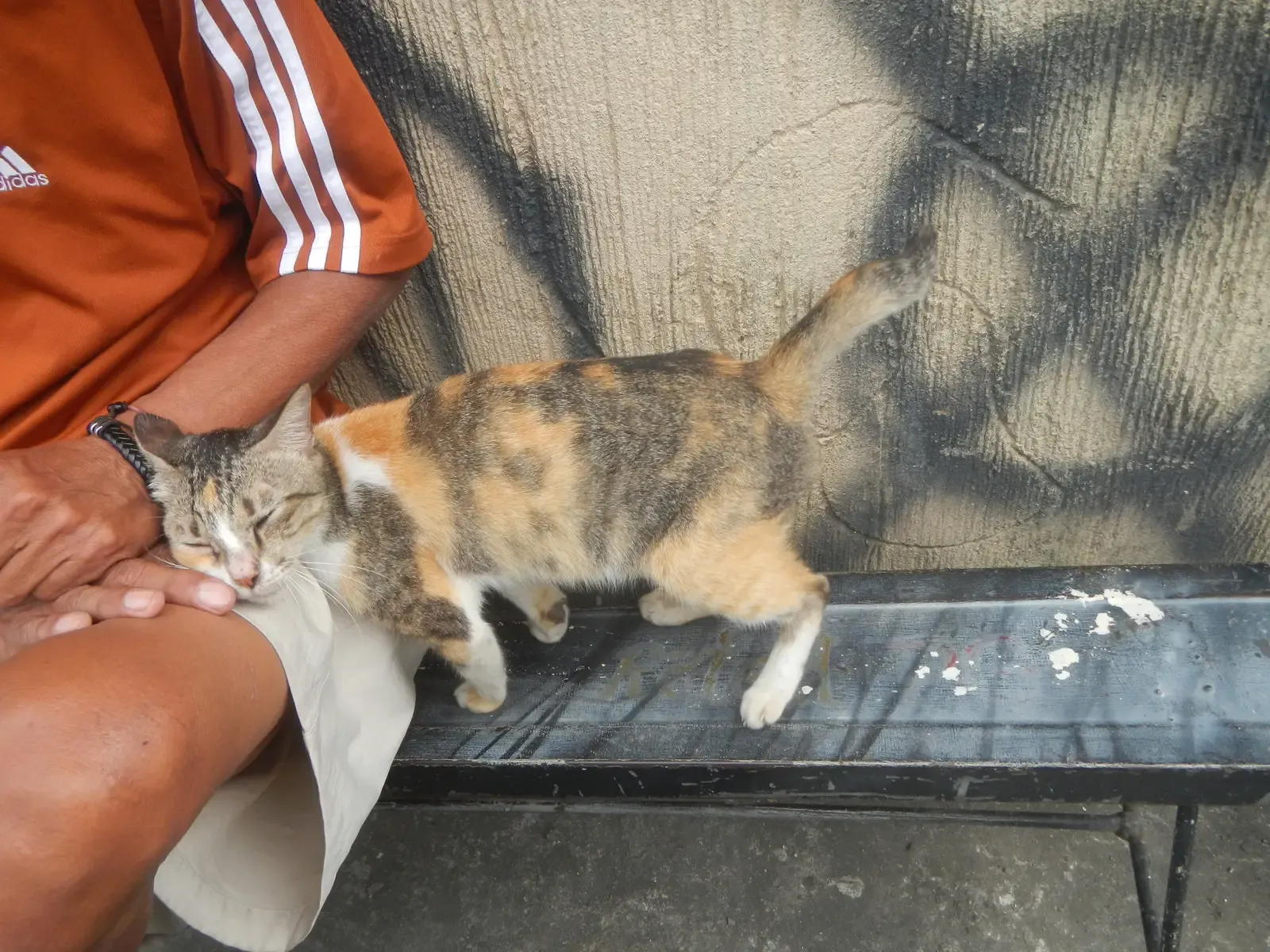
Research shows that cats display a similar capacity for forming secure and insecure attachments toward human caregivers as previously demonstrated in children and dogs, with roughly two thirds securely attached to their caregiver. That’s not a minor finding. Scientists used the Secure Base Test, an abbreviated strange situation test used to evaluate attachment security in primates and dogs, classifying cats into attachment styles using the same criteria from human infant and dog literature.
Think about what that actually means for a moment. Your cat experiences emotional bonds similar to what a child feels for their parent. Cats can form secure attachments to their owners like infants with caregivers, and they recognize human emotions, read tone and gesture, and exhibit behaviors linked to empathy and social awareness. When your cat follows you from room to room or curls up beside you after a long day, it’s not random behavior. It’s genuine attachment expressing itself.
The Slow Blink Isn’t Meaningless; It’s a Cat Kiss
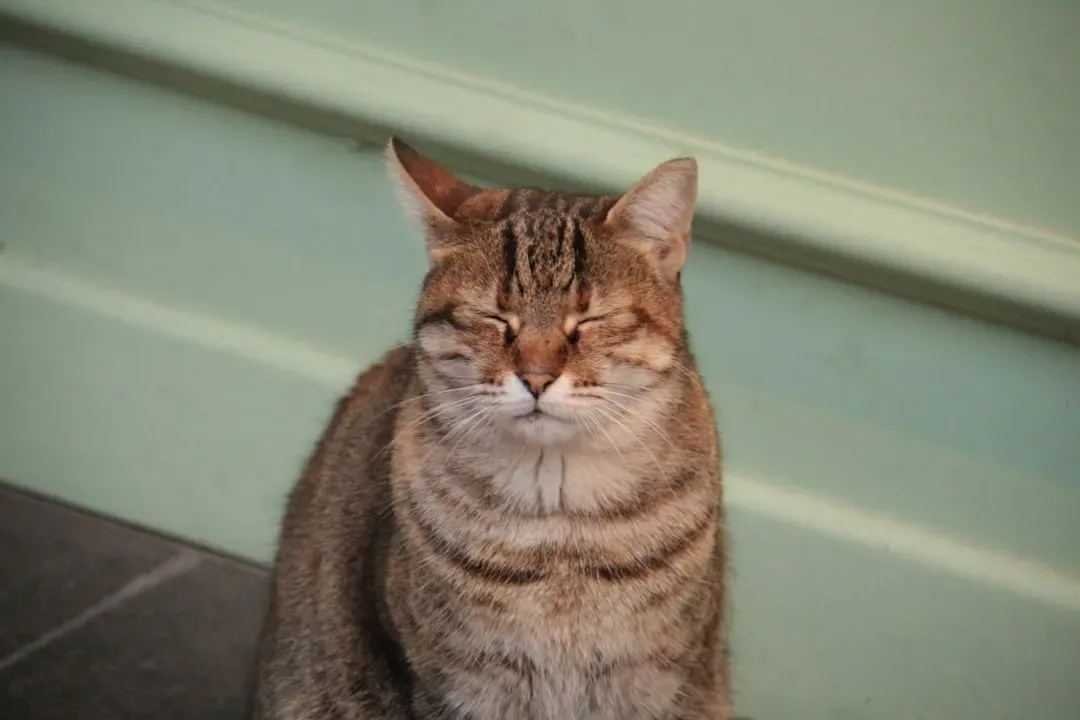
Let’s talk about one of the most powerful signals your cat can give you. When your feline locks eyes with you and slowly closes their eyes, then opens them again, you’re witnessing something profound. When a cat closes their eyes slowly while looking at you, it is essentially a cat kiss, signaling complete trust. In the wild, closing your eyes around another creature is dangerous. It leaves you vulnerable.
This action shows the cat feels safe and relaxed enough to close its eyes slowly around you, and in the wild, closing one’s eyes can make an animal vulnerable to predators, so a slow blink signals that your cat feels secure and at ease in your presence. The next time your cat gives you that languid look, try returning it. Slowly close your eyes, count to two, and open them gently. You’ve just spoken fluent cat.
Headbutts and Cheek Rubs Are Territorial Markers of Love
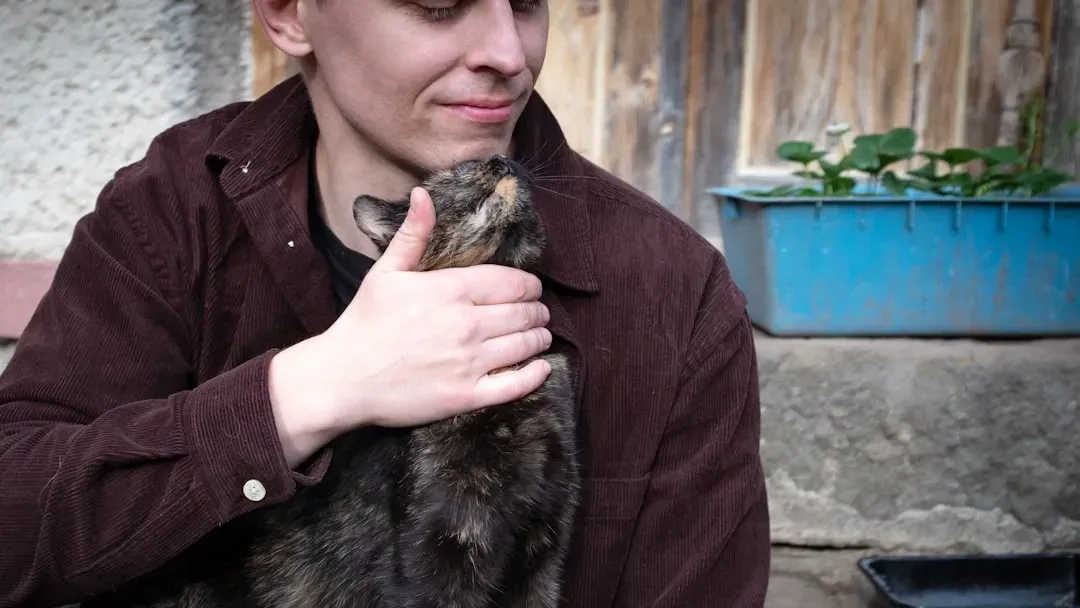
When a cat rubs their head or cheek on you, they’re actually transferring some of their own scent, making you smell like them and marking you as someone who is familiar and can be trusted. You’re not just receiving affection. You’re being claimed as part of their family. Those scent glands on their face are depositing pheromones that basically say, “This human is mine.”
Head butts and chin rubbing are clear signs that your cat loves you because cats have scent glands in their faces that allow them to claim friends and objects as their own. Honestly, you might be competing for their affection with the coffee table or the corner of the couch. Cats mark everything they consider safe and familiar. If your cat is headbutting you regularly, congratulations. You’ve been officially adopted into their inner circle.
That Tail Position Speaks Volumes About Their Emotions
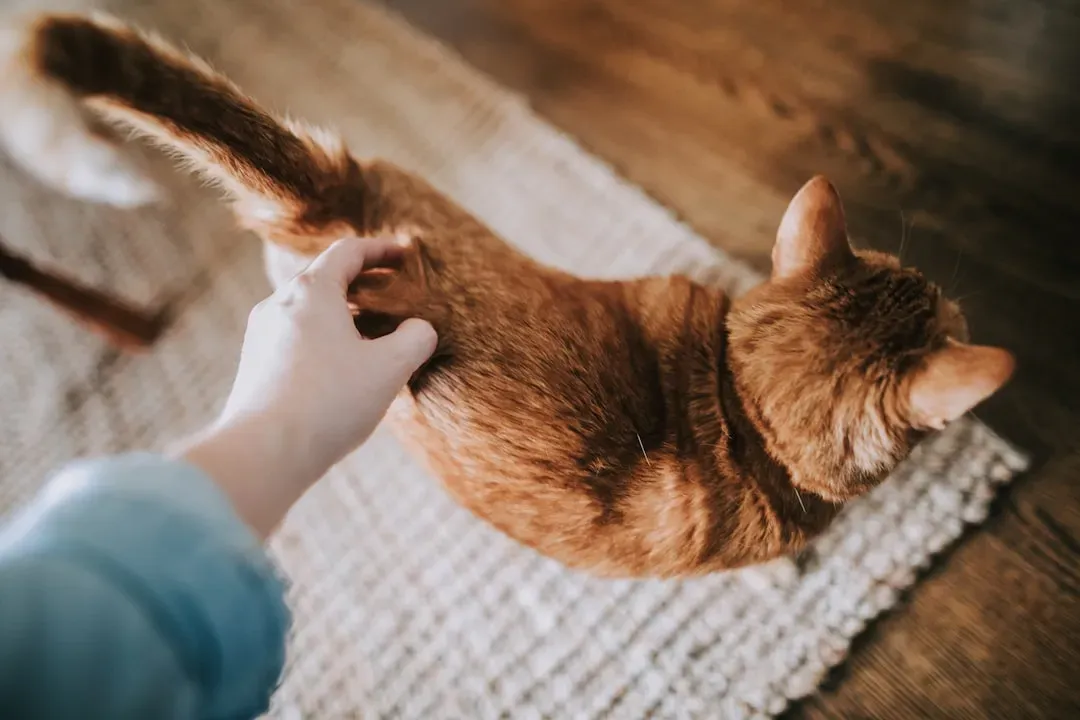
Your cat’s tail is like an emotional antenna broadcasting their feelings to anyone who knows how to read it. A tail held straight up with a slight curl or hook at the tip is a sign of friendliness, confidence, and love, and is one of the most common behavior signs your cat loves you. When your cat approaches you with that question mark tail, they’re essentially announcing their happiness at seeing you.
Cats may behave like dogs and come greet you at the door when you return home, and you may notice their tail is straight up in the air with a slightly curved tip when they do, and that expressive question-mark-shaped tail, which your cat may wrap around your legs, is sure to be a happy one. Low tails, puffed tails, or rapidly swishing tails tell completely different stories. Learning to read this silent language transforms your entire understanding of what your cat is really saying.
Kneading Behavior Is a Relic of Kittenhood Contentment
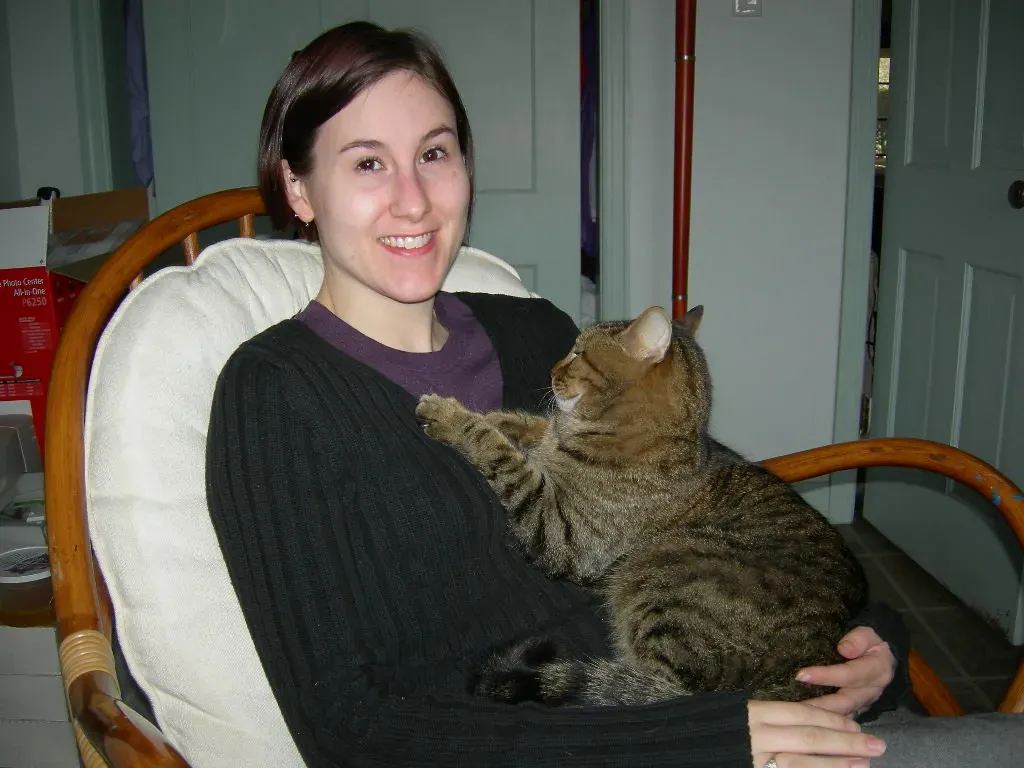
Cats can show affection by kneading their people with their front paws, and this is a behavior kittens do with their mothers to stimulate the flow of milk, strongly associated with happy times. When your adult cat pushes those paws rhythmically into your lap, your arm, or even a soft blanket, they’re reverting to the most comforting experience they knew as babies. It’s pure contentment expressed through instinct.
This self-soothing behavior, colloquially known as making biscuits, is a relic of your cat’s kittenhood when they would massage at their mother’s teat to help expel more milk, and while your cat may never expect your elbow to spontaneously lactate, this behavior is a telltale sign that your cat sees you as their parent. The fact that they feel safe enough to engage in such vulnerable behavior around you reveals just how much they trust you. Some cats even drool a little while kneading. That’s peak happiness right there.
Purring Creates Chemical Bonds Between You and Your Cat
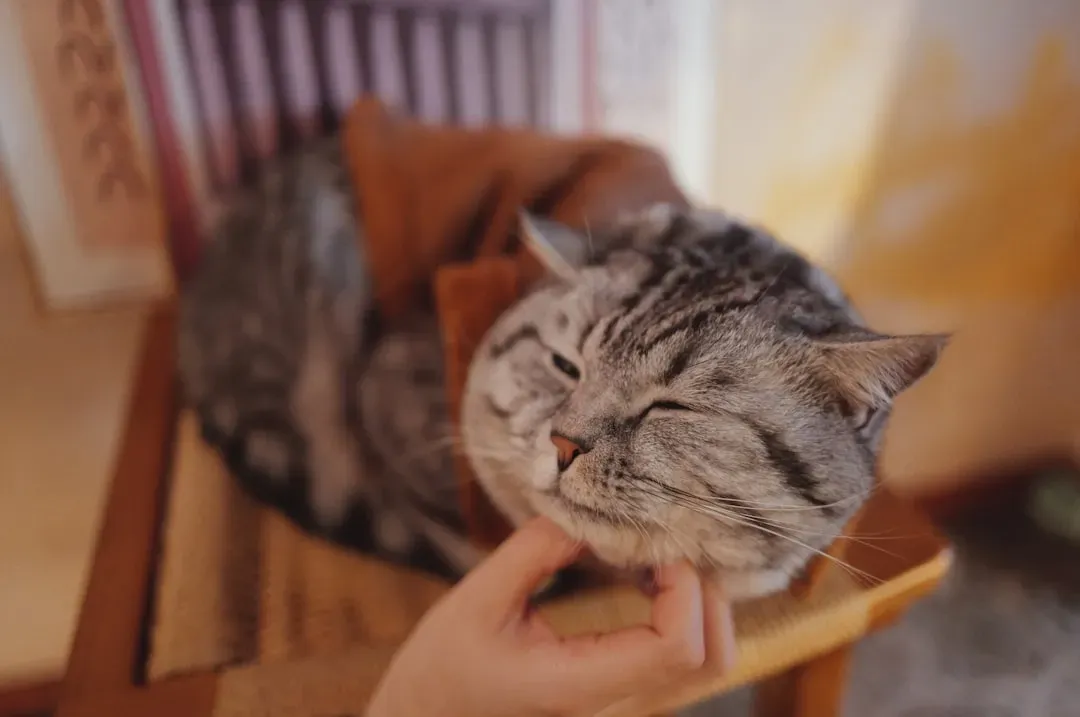
A February 2025 study found that when owners engaged in relaxed petting, cuddling or cradling of their cats, the owners’ oxytocin tended to rise, and so did the cats’ if the interaction was not forced on the animal. Oxytocin is that feel-good hormone responsible for bonding between parents and babies. The same neurochemical flooding your brain when you cuddle your cat is flooding theirs too.
Securely attached cats who initiated contact such as lap-sitting or nudging showed an oxytocin surge, and the more time they spent close to their humans, the greater the boost. This creates a positive feedback loop. Your cat purrs, you both feel good, and the bond strengthens. It’s chemistry working in tandem with behavior to create something genuinely meaningful between two completely different species.
Following You Around Means They Choose Your Company
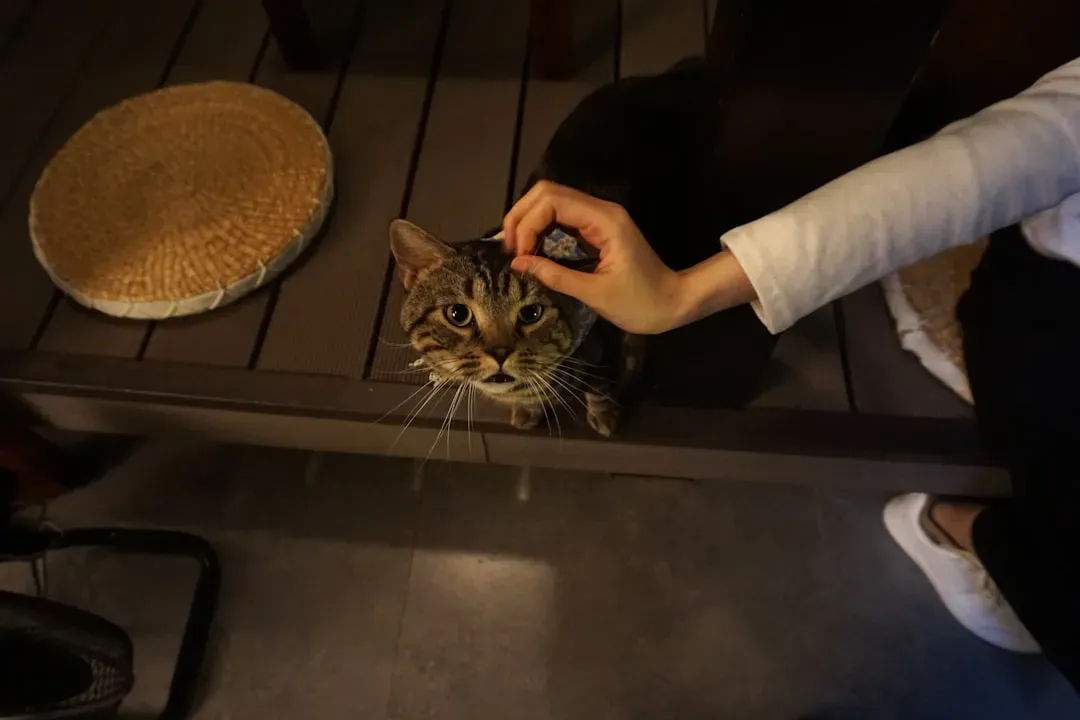
Does your cat shadow you from room to room? Maybe they don’t sit directly on your lap, but they’re always in the same space you occupy. If your cat consistently joins you for morning coffee or nighttime TV, that shared routine reflects a bond, and these predictable moments help cats feel secure, with participating in them being a form of affection. They’re not following you because they’re bored or have nothing better to do.
A cat that rushes to the door to greet you when you return home or consistently follows you from room to room is telling you that they enjoy your company. Some cats are less obvious about it. They might maintain a little distance, settling a few feet away rather than on top of you. That’s still proximity-seeking behavior. They want to be near you without necessarily being on you. It’s cat affection on their terms, which is exactly how it should be.
Vocal Communication Is Reserved for Their Favorite Humans
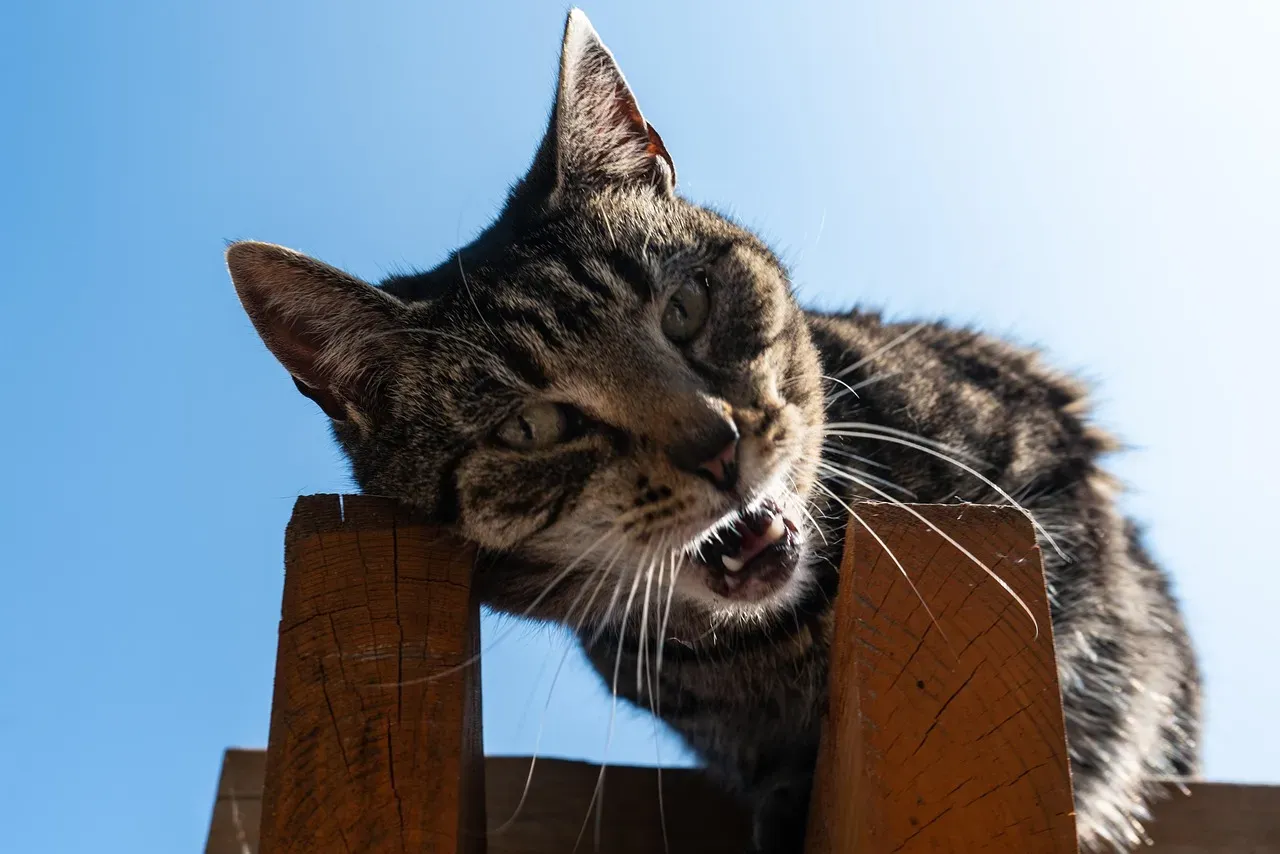
Here’s something fascinating. Since adult cats rarely meow at each other, the fact that your cat primarily uses meowing to communicate with you is a special behavior, meaning they have developed a unique, intimate communication system just for their human. Your cat has literally invented a language specifically to talk to you. They don’t meow at other cats because other cats don’t respond to it. But you do.
Not all cats are chatty, but many reserve certain sounds just for their favorite humans, and soft trills, chirps, or conversational meows can be signs of affection, while purring, though not always exclusive to happiness, commonly goes hand in hand with calm, positive moments. Pay attention to the variety of sounds your cat makes around you. Each one carries meaning, from the chirpy greeting when you walk in the door to the demanding yowl before dinner.
Bringing You “Gifts” Is an Act of Family Loyalty
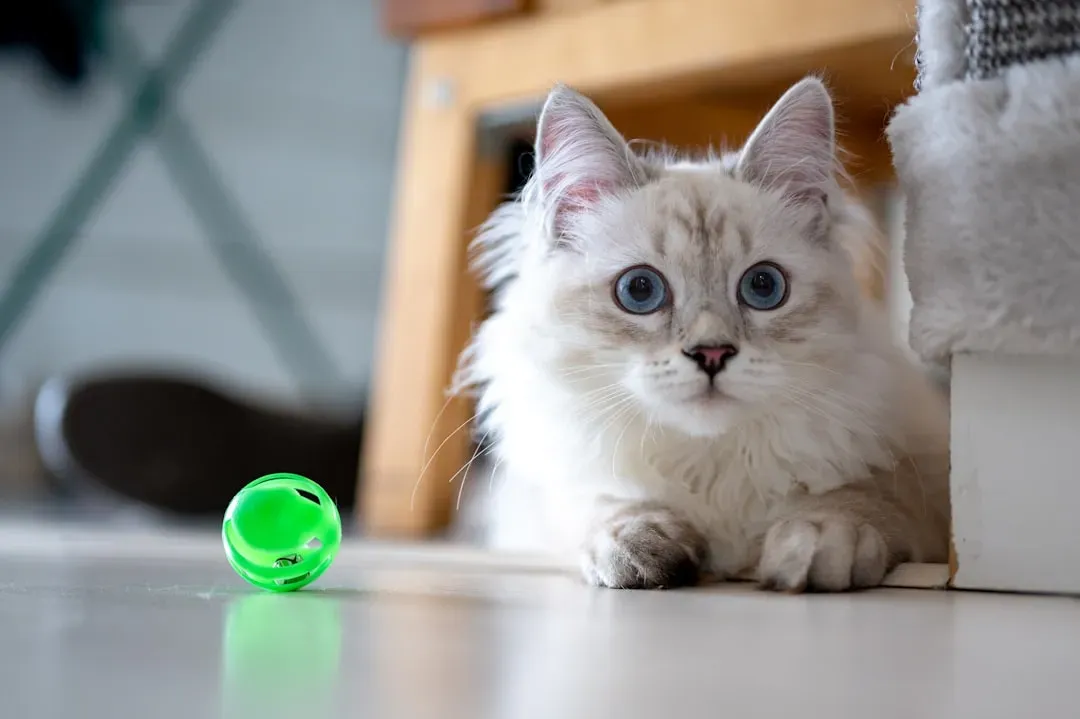
If your cat presents you with prey, be it a dead bug, a toy, or a mouse, they are expressing both love and loyalty, seeing you as a member of their family that needs to be fed or protected, and this is a proud moment for them that you should always accept with positive, non-judgmental acknowledgment. Yes, even when that gift is a half-dead cricket at three in the morning. Your cat is sharing resources with you.
From their perspective, you’re a rather incompetent hunter who might starve without assistance. They’re taking care of you the same way they’d care for their kittens or a member of their colony. Play is a social behavior for cats, especially when it’s initiated by them, and bringing you toys or occasionally less welcome gifts they’ve hunted can reflect bonding, as from your cat’s perspective, sharing resources or playing together is a form of connection. Try to appreciate the sentiment, even if the execution leaves something to be desired.
The Emotional Complexity of Cats Rivals That of Dogs
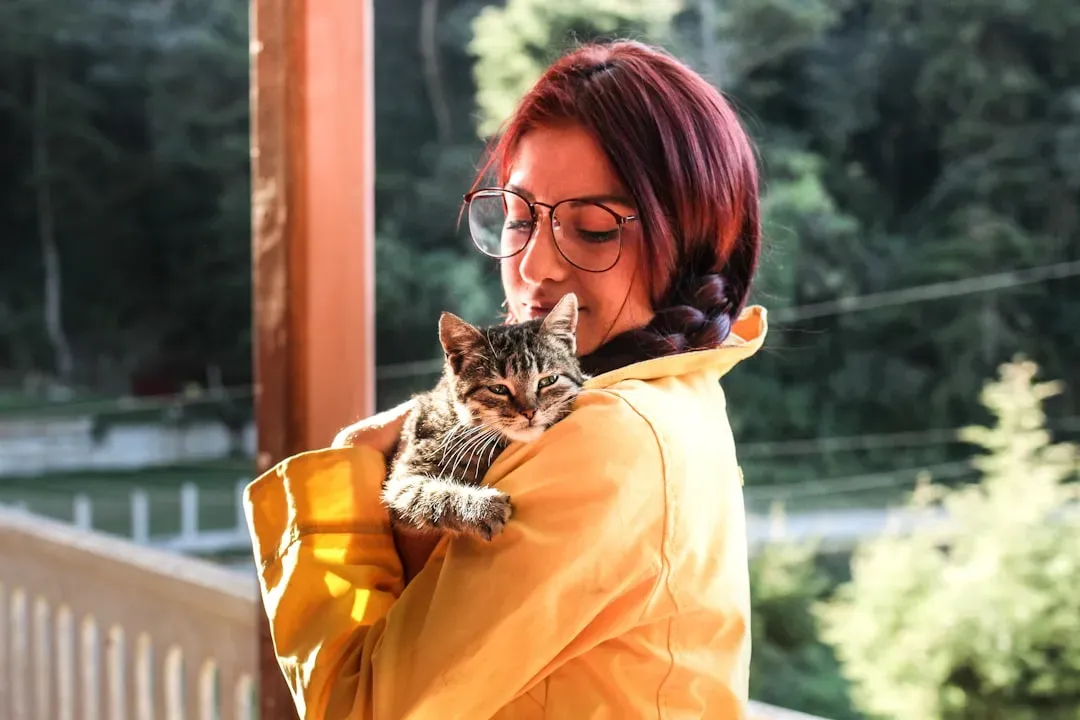
The science is clear: cats are emotionally complex, cognitively advanced, and socially nuanced. For too long, we’ve underestimated what’s happening behind those inscrutable eyes. The findings indicate that cats have a greater flexibility and depth of social relationships than previously thought, suggesting that some cats are bonding with us as caretakers. They’re not the cold, calculating creatures pop culture has made them out to be.
Not only the mere presence of a cat in the household but also interactions with the cat reduce measurable negative moods in the person, and cats alleviate negative moods in an effect comparable to that of a human partner. Your cat is actively contributing to your emotional wellbeing. They sense when you’re down and often adjust their behavior accordingly. The cat changes its behavior in response to depressiveness of the human when close to the person, vocalizing more frequently with the person and head and flank rubbing more often on that person. That’s empathy in action.
Understanding Your Cat’s Love Language Changes Everything
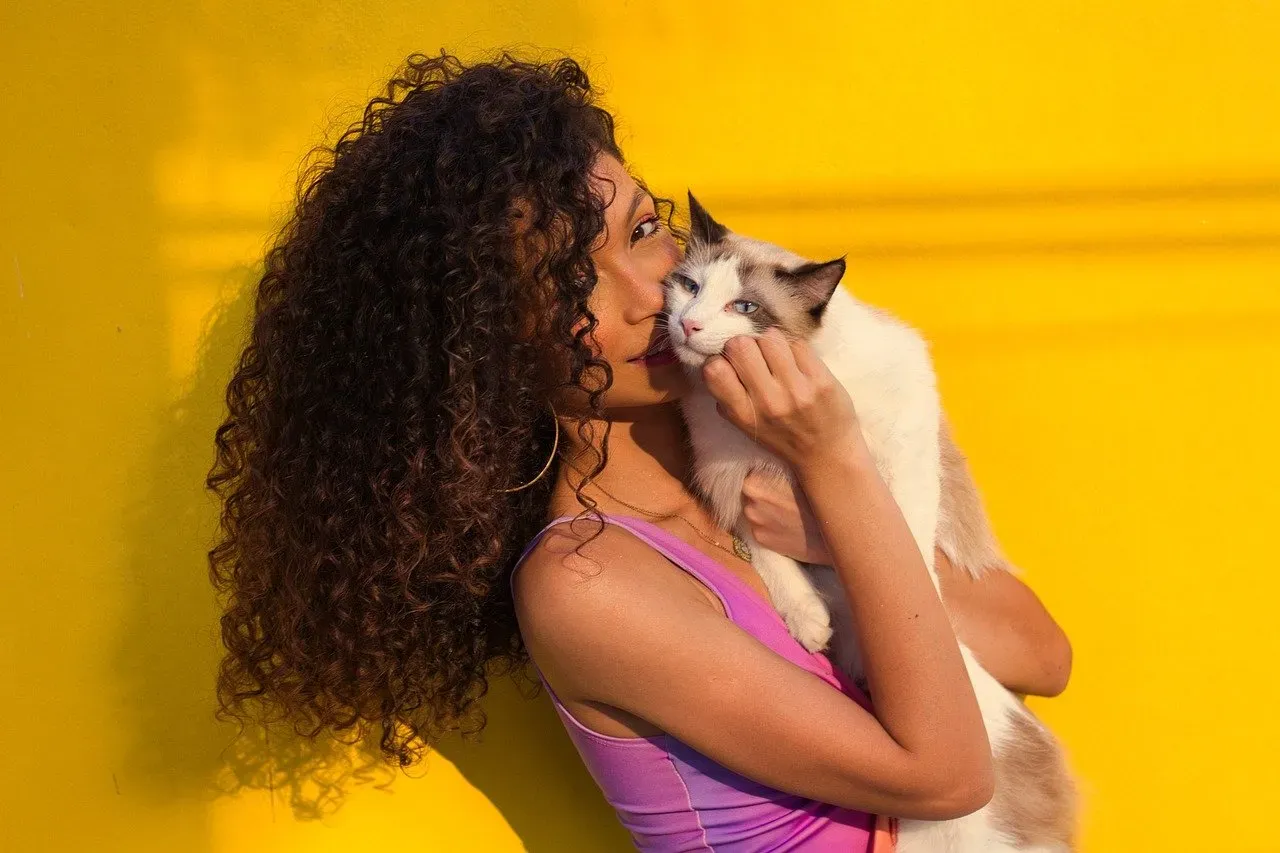
The shared bond between cats and humans is no less than with dogs, though cats are much more subtle in showing their love. Once you learn to recognize the signs, you’ll see them everywhere. The belly exposure, even if it’s not an invitation for petting, is trust. When cats roll onto their back and expose their belly, because the abdomen houses a cat’s most vital organs, this is an act of extreme vulnerability, meaning they feel secure enough around you to let their guard down.
Feline affection is built around trust, safety, and selective social connection, and cats tend to show love through behaviors that signal comfort and familiarity rather than attention-seeking. They’re not aloof. They’re discerning. They’re not cold. They’re cautious. When a cat decides you’re worthy of their affection, it’s because you’ve earned it through patience, respect, and understanding. That’s not aloofness. That’s depth.
Your cat has been loving you all along. You just needed to learn their language. Now that you know what to look for, every slow blink, every headbutt, every midnight gift becomes a declaration of affection. What do you think? Does your cat show love in these ways, or have you discovered other secret signals? The bond you share with your cat is as real and meaningful as any relationship in your life. Treat it that way, and watch how much deeper it grows.
Kristina is a young writer from India. An arts graduate and an avid content creator, Kristina is passionate about animals and wildlife. She enjoys exploring topics related to pet care, animal behavior, conservation, and nature, combining thorough research with engaging storytelling.