You’ve felt it before. That penetrating gaze from across the room, unblinking and relentless, as if your feline companion has decided to conduct a thorough audit of your innermost thoughts. It’s easy to laugh it off, chalking it up to typical cat weirdness. Yet there’s something unnerving about the way your cat looks at you, like they’re reading chapters of your life you’ve never shared with anyone.
Here’s the thing. Your cat isn’t just idly staring. Research and behavioral science suggest that when your cat fixes you with those intense eyes, something far more complex is happening beneath that furry exterior. They’re not judging you in the way humans do, though it might feel that way at three in the morning. What they’re actually doing is communicating, observing, and yes, possibly understanding you better than you understand yourself. Let’s dive in.
The Science Behind That Hypnotic Gaze
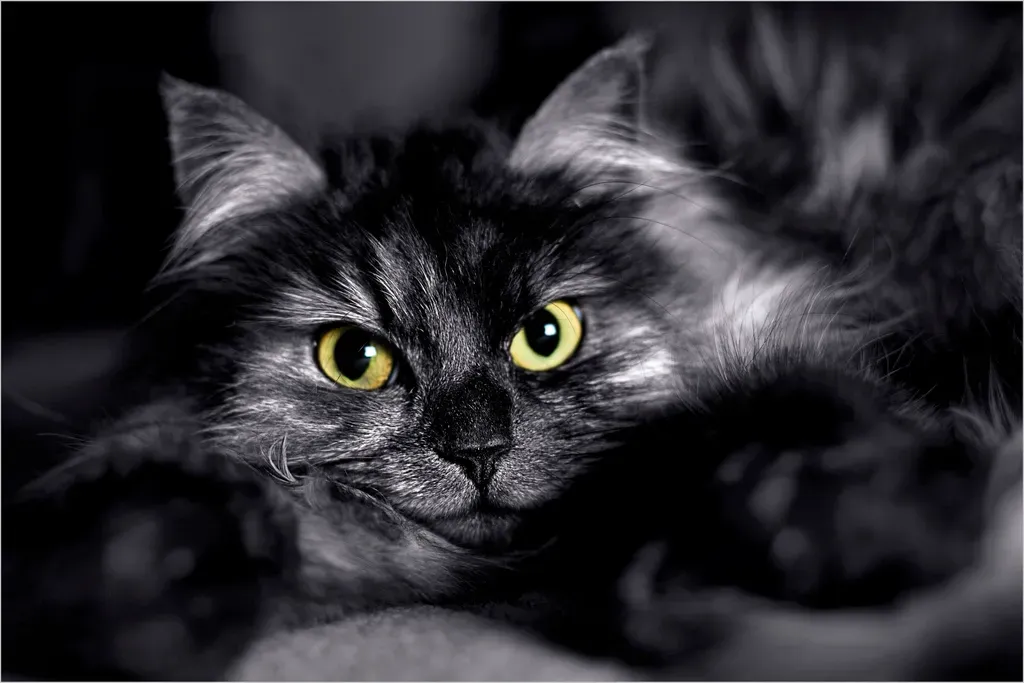
Studies have shown that cats can manipulate humans using visual cues, and honestly, that should surprise nobody who’s ever been owned by a cat. Cats are intelligent and observant animals, and over time they learn what actions lead to results. Your cat has essentially been conducting behavioral experiments on you since day one. They’ve figured out that staring gets results, whether that’s food, attention, or you finally moving from their favorite sunny spot on the couch.
Cats communicate by staring, using subtle shifts in their posture, ears, eyes, and tail to signal their mood. Think of it like Morse code, except instead of dots and dashes, it’s whisker twitches and tail flicks. The stare itself is the headline, but the real story is written across their entire body. Cats use their gaze as a primary mode of communication, and they’re not just staring into your soul, they’re actually trying to tell you something.
Your Cat Is Reading You Like an Open Book
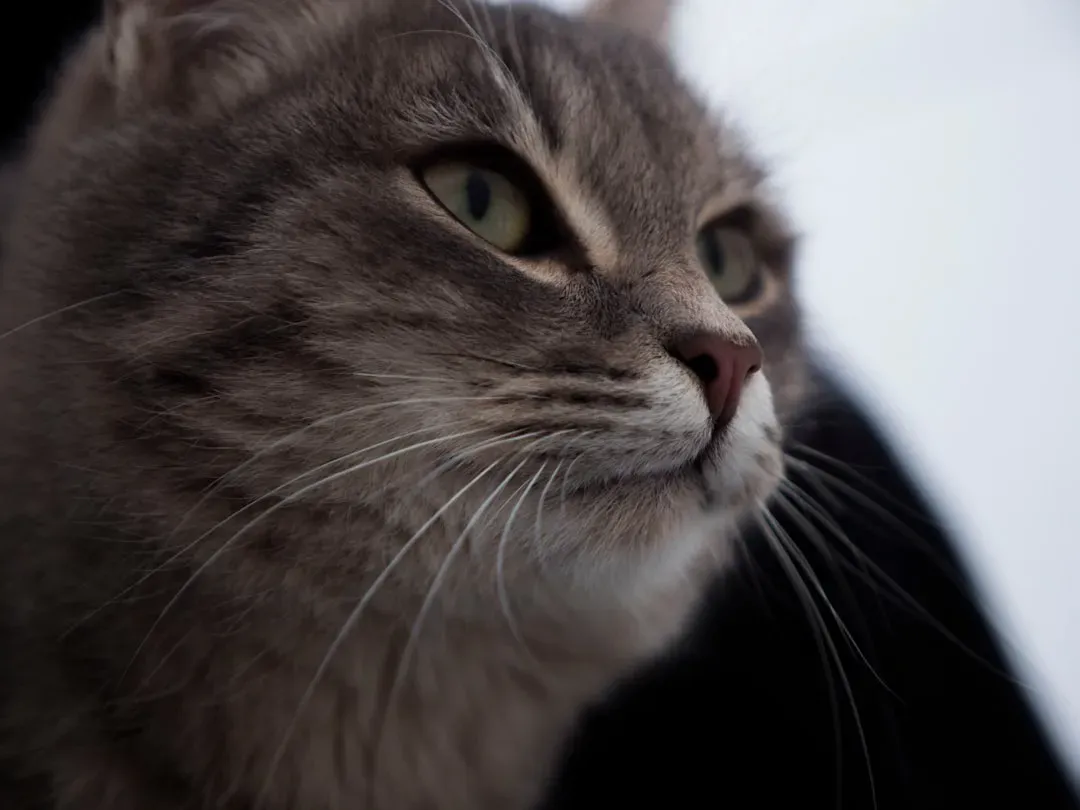
Let’s be real. While you’re wondering what your cat is thinking, they’re probably three steps ahead, analyzing your every move. Cats are surprisingly sensitive to body language and tone, and when you are calm, stressed, or distracted, your cat often notices. That’s right, your emotional state isn’t as private as you think.
Cats are naturally observant animals who may stare simply because they’re taking in what you’re doing, and they may even be trying to anticipate if what you’re doing will impact them. Are you walking toward the treat drawer? Getting ready to leave? They’re constantly calculating, predicting your next move with the precision of a chess grandmaster. This isn’t casual observation. It’s strategic intelligence gathering wrapped in a fur coat.
The Slow Blink: Your Cat’s Version of “I Love You”
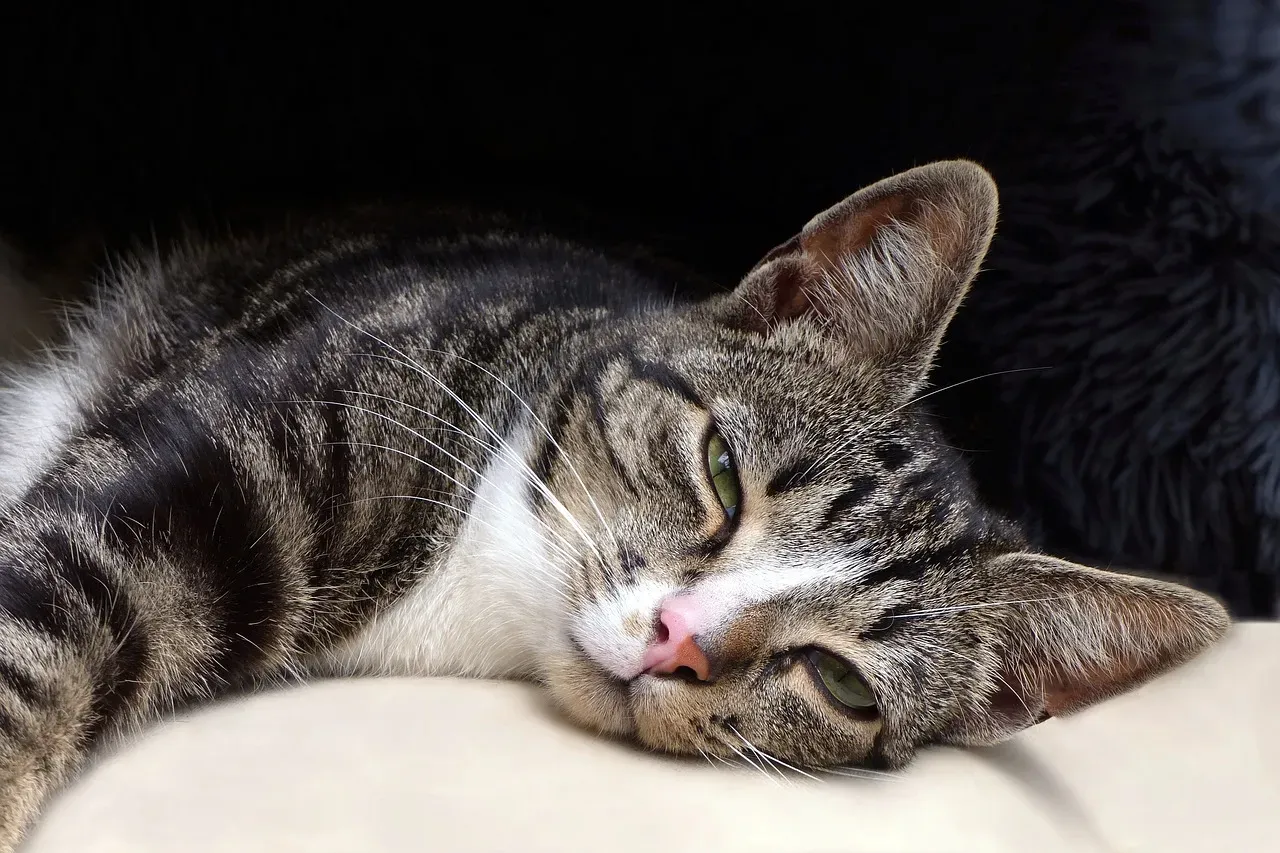
If your cat stares at you and then slowly closes and opens their eyes, congratulations. You’ve just received a feline declaration of affection. A steady gaze, especially if paired with a slow blink, is often a cat’s way of showing trust and comfort. It’s the equivalent of a warm hug, except your cat is doing it from across the room because, well, they’re a cat.
According to a study published in Scientific Reports, slow blinking observed in cats and humans can be a sign of trust, and when they receive slow blinks from their humans, they often return the gesture. Try it yourself next time your cat stares at you. Slowly blink back. You might just start a conversation that deepens your bond in ways words never could. It’s hard to say for sure, but this kind of silent exchange can feel surprisingly intimate and meaningful.
When the Stare Means “Feed Me, Human”
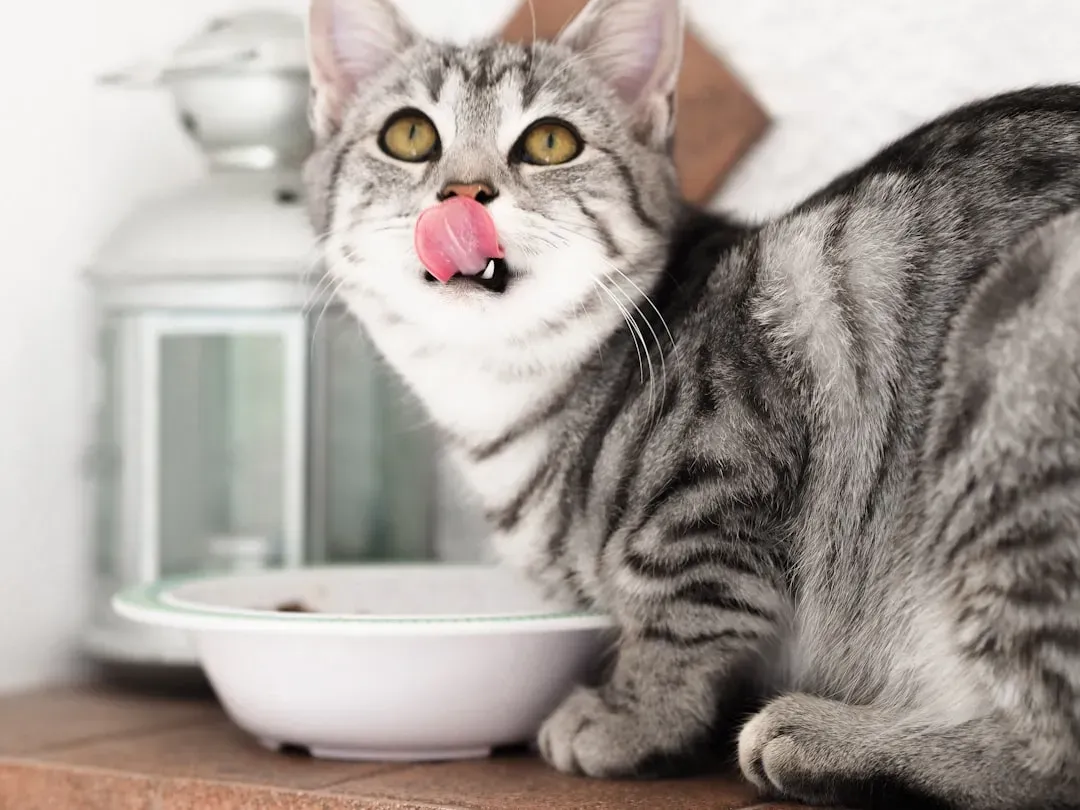
Sometimes the mystery isn’t all that mysterious. Some cats have been known to stare at their pet parents when it’s feeding time, and once you make eye contact, the cat may vocalize and rub on you. They’ve learned that direct eye contact combined with strategic positioning near the food bowl equals a high probability of getting what they want.
This behavior isn’t just cute or annoying, it’s calculated, as cats learn what actions lead to results and staring has proven remarkably effective. Your cat has essentially trained you to respond to their gaze. You might think you’re the one in charge, but let’s face it: you’re the well-trained assistant in this relationship. That intense stare paired with an insistent meow near the kitchen isn’t random. It’s strategy.
The Predator Within: Hunting Instincts Never Sleep
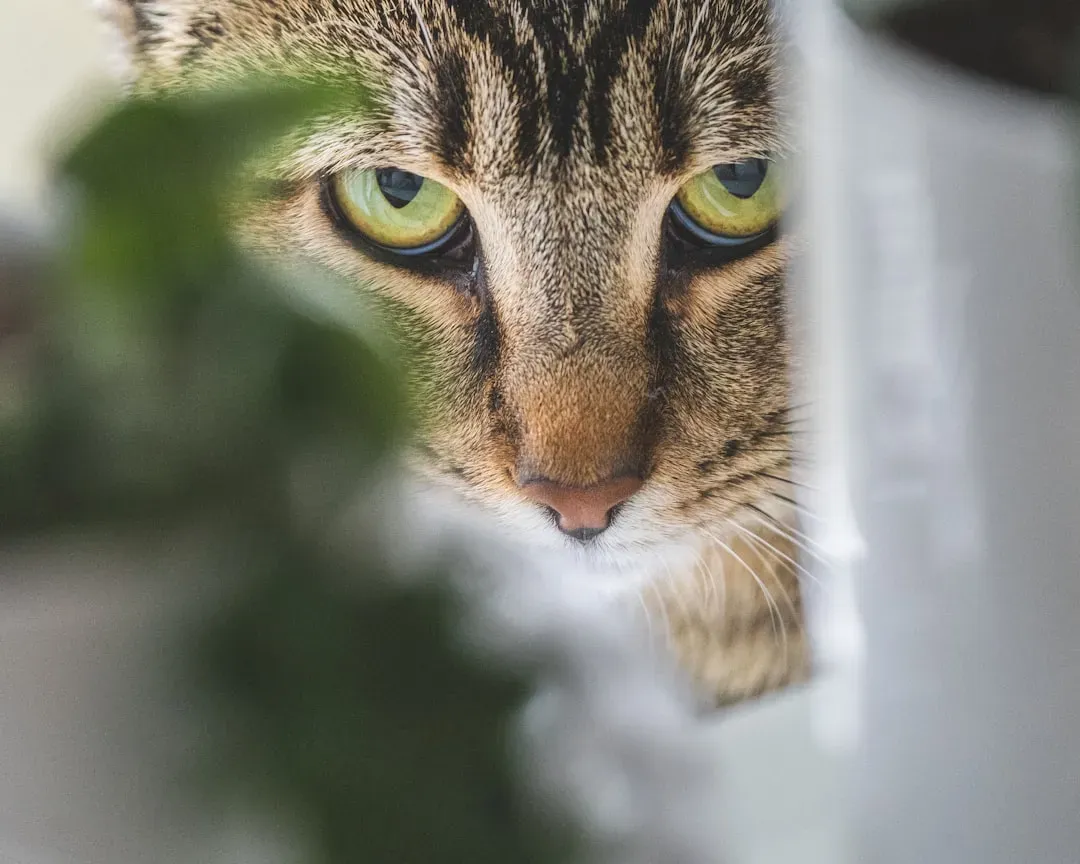
Your cat might be domesticated, but deep down, they’re still a tiny apex predator. Staring is part of your cat’s natural hunting behavior, as they may fixate on a bug, toy, or even something invisible to you, tracking even the tiniest movement. When your cat stares at seemingly nothing, they’re not seeing ghosts. They’re detecting stimuli you can’t even perceive.
Cats have exceptional sensory abilities that allow them to pick up on sights, sounds, and scents far beyond human perception, and what seems like nothing to us often makes perfect sense to them. Maybe it’s a dust mote floating in a sunbeam. Maybe it’s the nearly imperceptible vibration of pipes in the wall. Your cat’s stare is often a window into a sensory world you’ll never fully experience.
Curiosity and Social Bonding Through Eye Contact
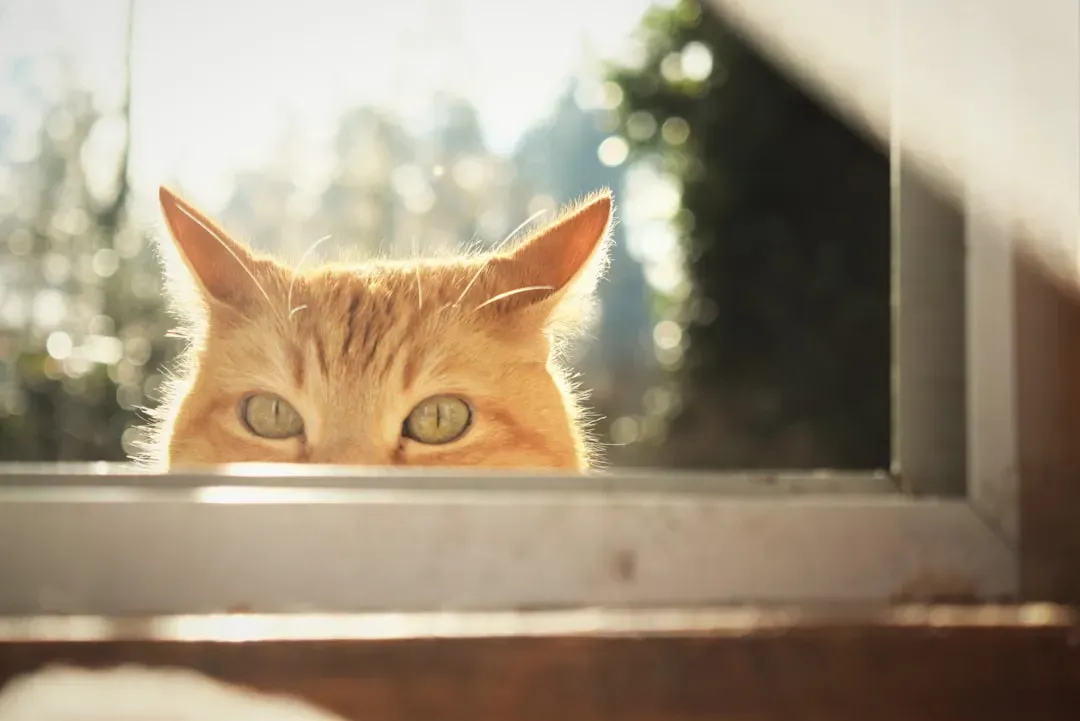
Cats will often stare at people and things when they are curious about them, wondering what you are doing or being confused about a drastic change in appearance or behavior. Did you just get a haircut? Change your perfume? Your cat noticed. They’re basically conducting a continuous investigation into the strange, fascinating creature they’ve chosen to live with.
Staring is also a method of communication and a sign of a close bond between you and your cat, as they are unlikely to hold eye contact with someone they don’t like or trust. Think about that for a moment. Your cat’s willingness to hold your gaze is actually a compliment. It means you’ve passed some invisible test, earned a place in their tightly controlled social circle of exactly one human and possibly a few other cats.
The Dark Side: When Staring Signals Fear or Aggression
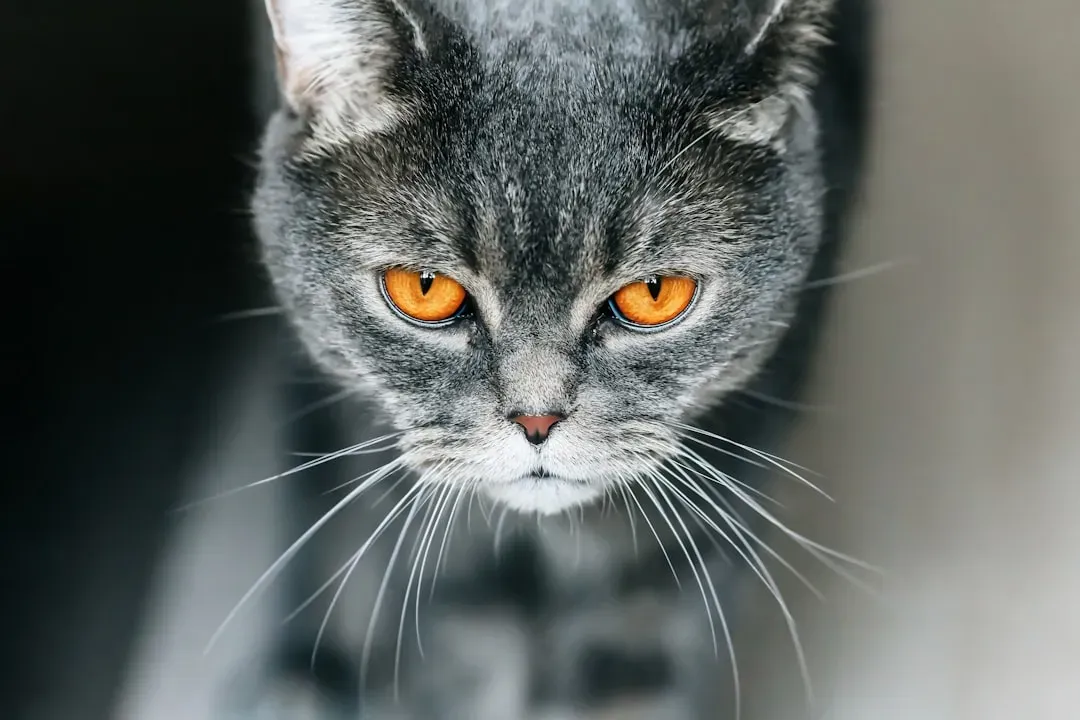
Not every stare is friendly, and this is where reading the full picture becomes critical. When a cat gives a hard, unblinking stare paired with stiff body language and piloerection along the back and tail, it’s a threat to the other person or animal. This is your cat’s way of saying “back off or else,” and you’d be wise to listen.
If your cat’s eyes are wide, pupils dilated, and body tense, they may be hyper-alert, potentially afraid or preparing to defend themselves. Sometimes a cat stares at a person, another animal, or an object out of fear, keeping their eyes on the stimulus they’re worried about. In these moments, the best thing you can do is give them space. Don’t push for interaction. Let them come to you when they feel safe again.
Midnight Stares and the Crepuscular Clock
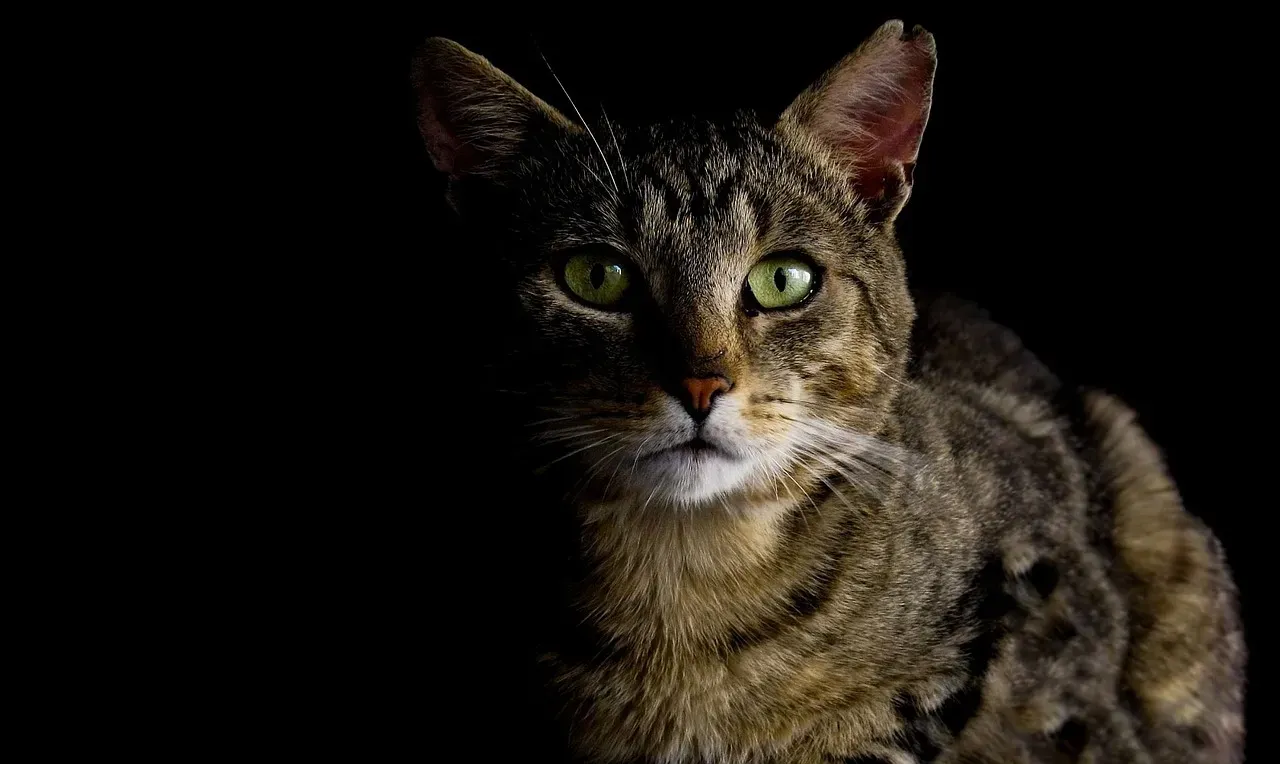
If you’ve ever woken up to find your cat’s face inches from yours at an ungodly hour, you’re not alone. Roughly three-quarters of cat owners have experienced this unsettling moment. Your cat is not a nocturnal animal but a crepuscular animal, meaning its natural peak activity occurs at dawn and dusk. At three in the morning, your cat is biologically programmed to be in their mental hunting phase.
When cats stare at you while you’re asleep, it’s usually tied to curiosity or routine, as they’re waiting for you to wake up, anticipating breakfast, or simply keeping watch. It might seem creepy, but from your cat’s perspective, you’re the most interesting thing in their environment. They’re not plotting your demise. They’re just bored and hoping you’ll do something entertaining. Or feed them. Probably feed them.
Building a Deeper Connection Through Understanding
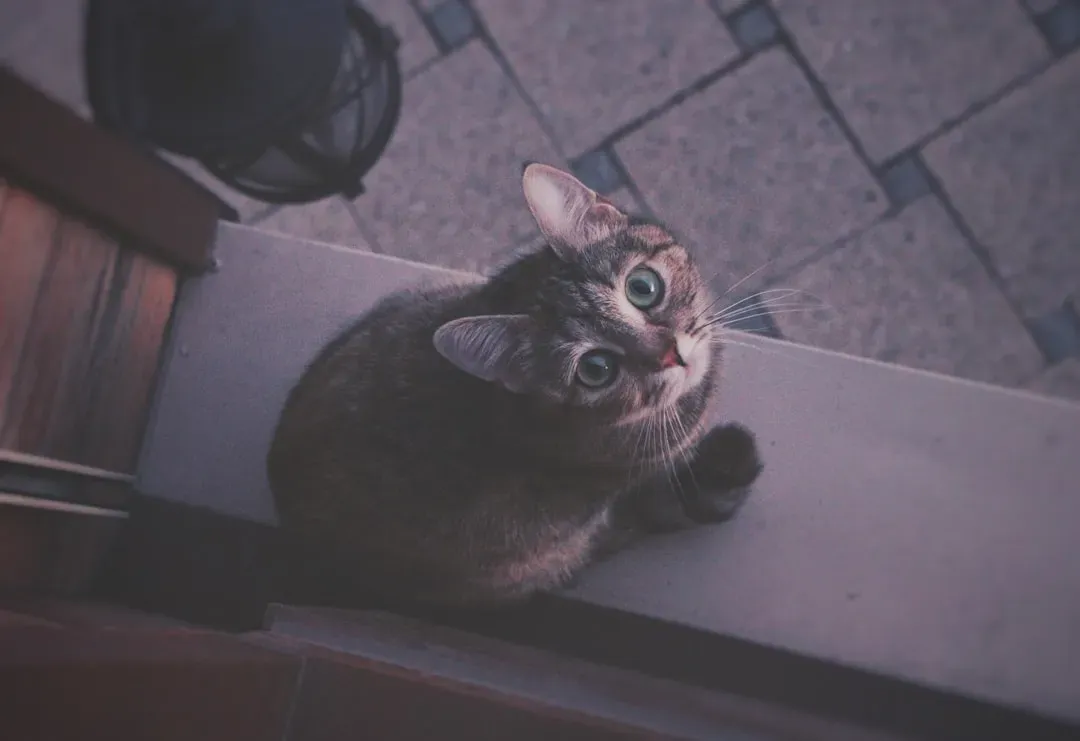
The more you learn to read your cat’s stares, the more you realize they’re not mysterious at all. They’re incredibly expressive, just in a language most humans never bother to learn. Cats communicate with gaze, responding to humans gazing at them and returning the gaze, giving us another way to communicate with our cats. This silent exchange can become one of the most meaningful aspects of your relationship.
Most of the time, a cat’s gaze is a sign of curiosity, affection, or attention-seeking behavior, and by paying attention to the context and their accompanying body language, you can respond in ways that meet their needs and deepen your bond. Try returning a slow blink next time. Acknowledge their gaze with a gentle word. You’ll be surprised how much this simple act strengthens your connection. It’s like learning to speak a new dialect of love.
Conclusion: The Stare That Speaks Volumes
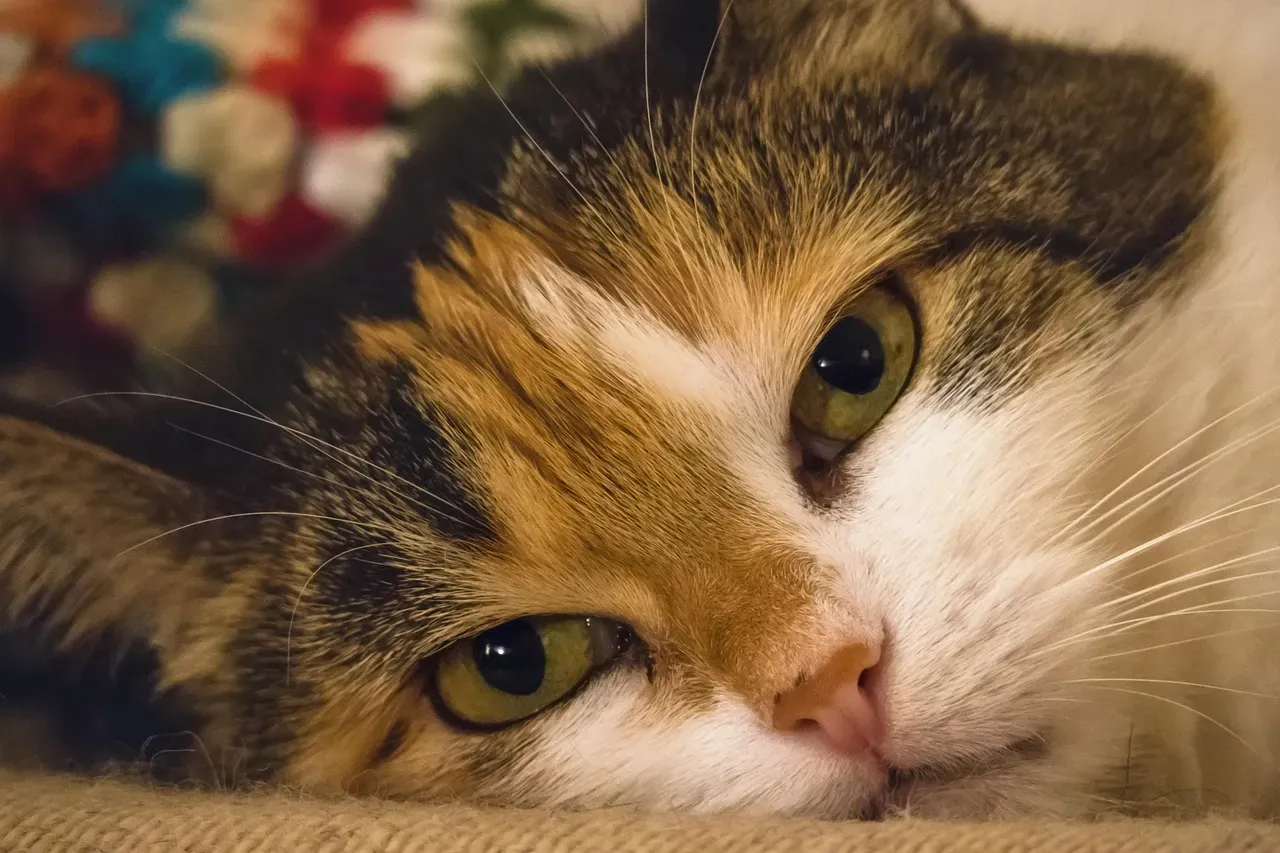
Your cat’s stare isn’t empty. It’s loaded with intention, emotion, and surprisingly sophisticated communication. Whether they’re expressing love through slow blinks, demanding dinner, or simply studying you with scientific curiosity, that gaze is your cat’s way of bridging the gap between two very different species. The next time those eyes lock onto yours, take a moment to really look back. Consider what they might be telling you. Are they relaxed or tense? Blinking softly or staring hard?
Understanding your cat’s stare transforms your entire relationship. You move from guessing to knowing, from reacting to responding appropriately. That penetrating gaze becomes less unsettling and more like a conversation you’re finally fluent in. What do you think about your cat’s stare now? Does it feel different knowing what’s really happening behind those mesmerizing eyes?
Kristina is a young writer from India. An arts graduate and an avid content creator, Kristina is passionate about animals and wildlife. She enjoys exploring topics related to pet care, animal behavior, conservation, and nature, combining thorough research with engaging storytelling.