You talk to your cat like a small, judgmental roommate. You stick to the same daily routine with clockwork consistency. You stare at them, follow them around, and insist on petting them even when they look mildly offended. If you’ve ever worried that your cat secretly despises these habits, here’s a twist you probably didn’t see coming.
Cats are far more complex than their aloof reputation suggests. Beneath that carefully curated air of indifference lies a creature that is intensely tuned into your every move, your voice, your schedule, and even your emotional state. What you assume is annoying your cat might actually be the very thing making them feel safe, loved, and secure. Prepare to be surprised by what science and animal behavior research have to say about this. Let’s dive in.
Talking to Your Cat Like a Baby

Honestly, most of us do it. You walk through the door, spot your cat on the sofa, and suddenly your voice jumps an octave. “Hey little guy, who’s the fluffiest boy?” You feel slightly ridiculous. Your cat, however, is secretly appreciating every single syllable. Research confirms that adult humans change their tone of voice when addressing pet cats, much like they do when speaking to dogs and children, and cats can actually discriminate between speech addressed to them in this tone versus speech addressed to adult humans, but only from their owner.
There’s something profound in that “only from their owner” detail. Your cat isn’t just reacting to any high-pitched voice. They are reacting specifically to yours. A soothing, higher-pitched voice is often perceived as friendly and non-threatening, and when you speak gently, your cat associates the sound with positive experiences like cuddles, treats, or playtime, which builds trust and deepens the human-feline bond. So next time you slip into that silly sing-song voice, know that you’re not embarrassing yourself. You’re doing something your cat genuinely responds to.
Keeping a Rigid Daily Routine
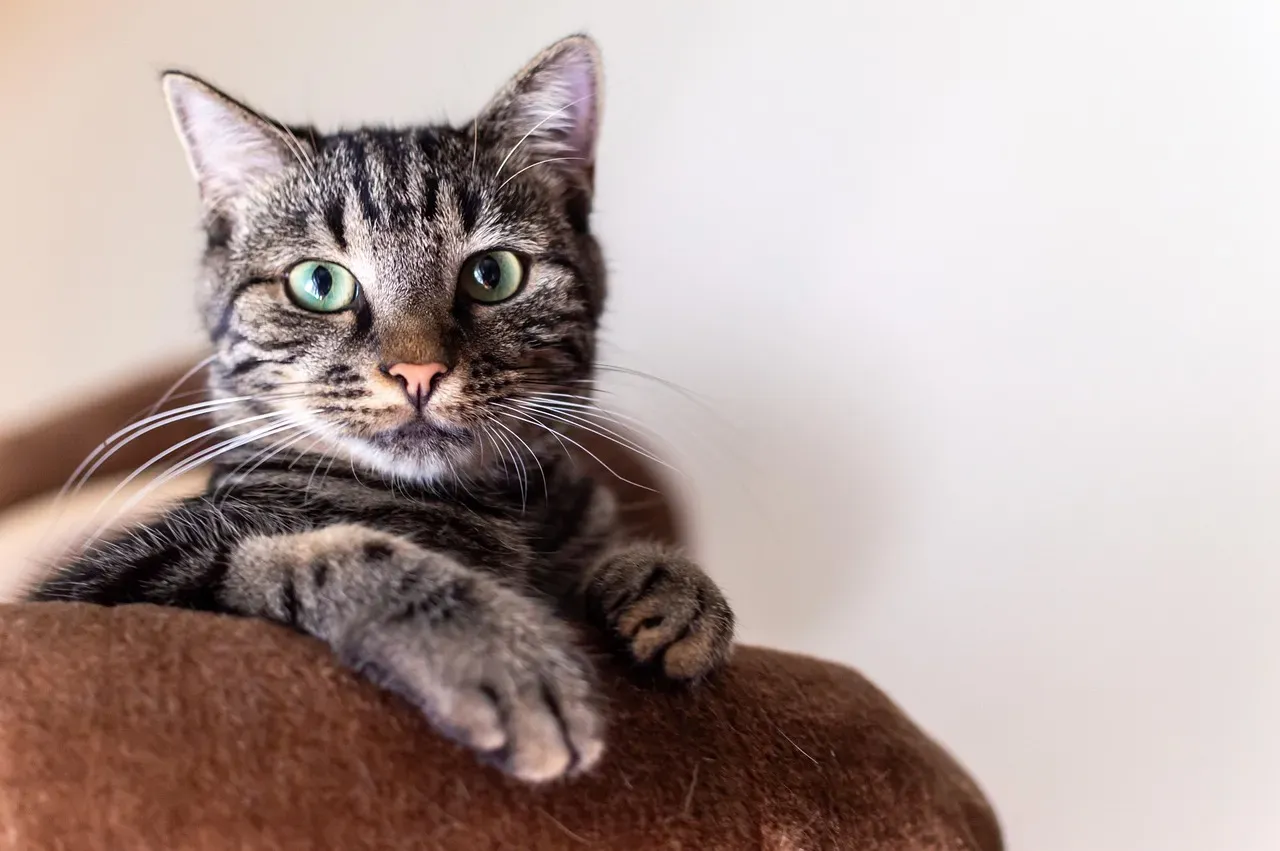
You wake up at the same time every morning, feed your cat at exactly 7 a.m., and follow the same evening wind-down pattern like a human metronome. To outsiders, it might look a little obsessive. To your cat, it is essentially paradise. What seems like a boring existence to us is a routine that means safety and security for a cat, and by setting up regular, unchanging timetables for daily events, you provide an environment that is dependable, predictable, and organized.
The science behind this is fascinating. Wild cats, the ancestors of our domestic companions, survived through strictly regulated daily patterns of hunting, eating, and resting, and this biological programming remains deeply ingrained in modern house cats, manifesting as a strong preference for predictable daily schedules. In other words, your cat’s love of routine isn’t just quirky behavior. It’s evolutionary hardwiring. Routine reduces stress by making the environment predictable and controllable, and when your cat knows what to expect, they feel safer and more confident, leading to decreased anxiety levels and fewer stress-related behaviors.
Following Your Cat From Room to Room
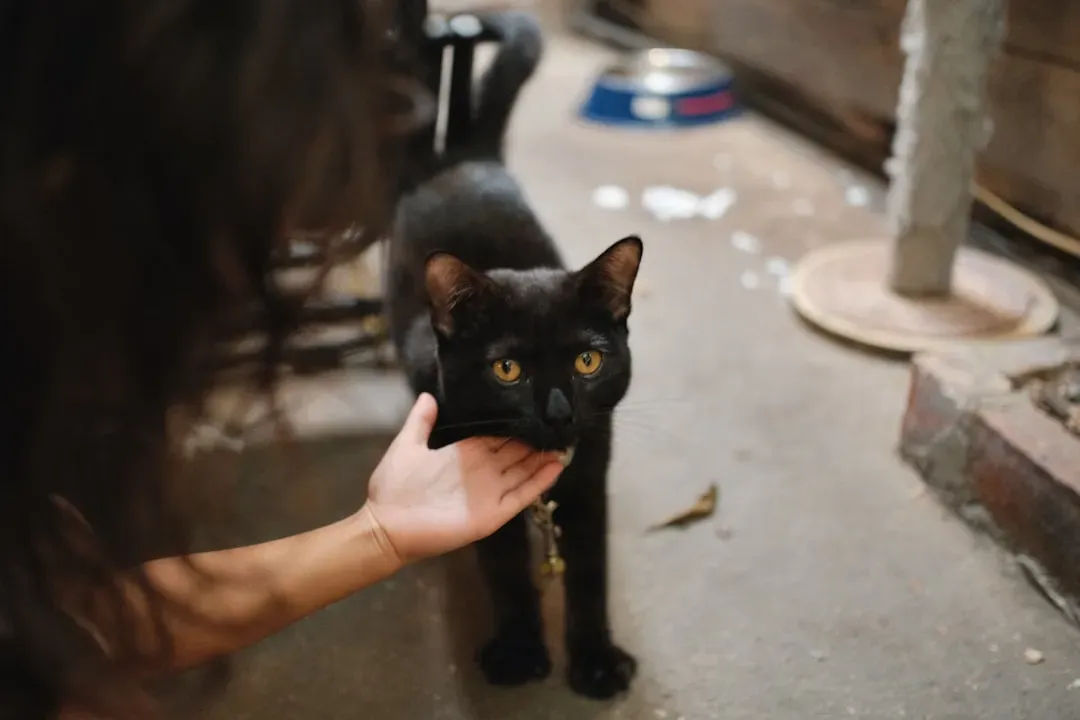
Let’s be real. Most cat owners do this. You shuffle into the kitchen and your cat follows. You head to the bathroom and they’re right behind you, sitting at your feet while you brush your teeth like a tiny, furry security guard. The thing is, you probably mirror this behavior right back without realizing it. Cats are naturally curious creatures, and when they choose to follow you from room to room, it is a sign of affection and trust, showing that your cat enjoys your company and feels secure in your presence, and it isn’t just about wanting food or attention, it is about companionship, because your cat sees you as part of their social group.
When you do the same back to your cat, seeking them out and being present in the same space, it mirrors that exact feline social language. If your cat chooses to spend the majority of their time in the same room as you, that is a good indicator that they feel safe, and given the option, a cat who feels safe with you will usually choose to at least be in the same room as you rather than off on their own. You following them and being near them reinforces that the space is shared, safe, and familiar. Think of it less like hovering and more like sending a very quiet signal that says “I’m here, all is well.”
Staring at Your Cat (And Slow Blinking)
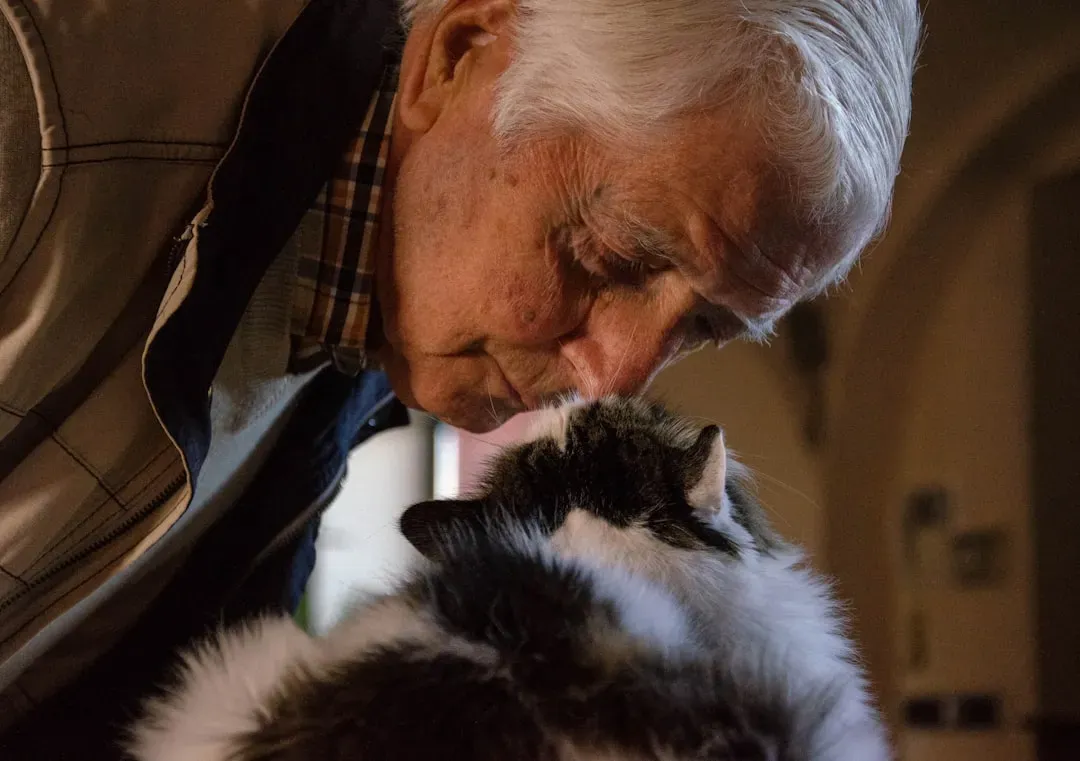
You catch yourself gazing at your cat for what feels like way too long. They stare back. It’s a little awkward, honestly. You might even wonder if you’re being rude by feline standards. Here’s the thing though: the slow blink you instinctively do when holding that gaze is one of the most powerful things you can communicate to a cat. The slow blink is like a cat’s smile, a subtle yet profound gesture of trust, and when a cat looks at you and slowly closes its eyes, it is showing that it feels safe and vulnerable around you, similar to a human giving a reassuring nod, and if you mirror the slow blink back, you are communicating in your cat’s language and strengthening the bond.
When cats greet another cat in their vicinity, they can do a slow, languid, long blink to communicate affection if they trust the person or animal they are in contact with, and one way to communicate love and trust to a cat is to say its name, get its attention, look it in the eyes, and then slowly blink at it to emulate trust and love, and they may return the gesture. So that long, dreamy gaze you give your cat isn’t weird at all. You’re basically speaking fluent cat without even knowing it. I find this one of the most surprisingly beautiful aspects of the human-cat relationship.
Sitting Quietly in the Same Room Without Engaging

You’re working from home, scrolling your phone, or reading a book. Your cat wanders in, settles nearby, and you don’t make a big fuss. No cooing, no reaching out, no trying to drag them onto your lap. Many owners feel guilty about this, assuming their cat wants more active attention. In reality, your calm presence alone is profoundly comforting. While each cat’s reaction may vary based on their individual temperament and the bond they share with their owner, it is evident that cats have an innate ability to recognize and respond to their owner’s emotions, and their calming presence demonstrated through sitting nearby or lying down can help provide solace.
This goes both ways. One key guideline for bonding with your cat is to give them the autonomy to decide when they want attention or cuddling, and by letting your cat come to you on their own terms, you reinforce their sense of security and control. Your cat is not reading your quiet presence as neglect. They are reading it as total safety. A predator doesn’t relax in the open unless it knows the coast is clear, and your calm, unhurried energy signals exactly that. It’s a bit like being someone’s favorite reading companion. No pressure, just presence.
Touching and Petting Them in Certain Spots
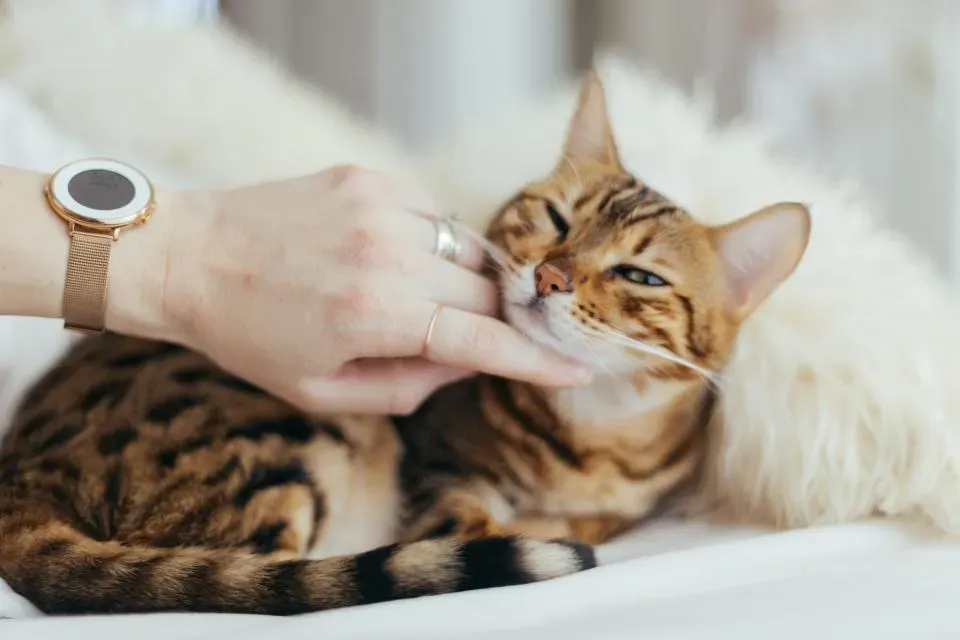
You reach out and rub the top of your cat’s head, scratch behind their ears, or gently stroke along their back. Sometimes they seem annoyed. Sometimes they close their eyes and lean in like you’ve just discovered the world’s greatest secret. The truth is that the spots you choose and the way your cat marks you in return are part of an elaborate scent-exchange ritual that your cat finds deeply grounding. When a cat rubs their face against you, it is more than just a sweet gesture, it is a natural behavior where they mark you as part of their territory using scent glands located on their cheeks, and this is a strong sign that your cat feels safe, trusts you, and considers you a loved member of their social group.
When you pet your cat around the face, head, and cheeks, you are essentially participating in that same scent exchange, and your cat genuinely appreciates it. Unlike humans, cats use their sense of smell to evaluate their surroundings, and cats mark their scent by rubbing their face and body, which leaves natural pheromones to establish boundaries within which they feel safe and secure. Your hands carry your scent, and your cat blending their scent with yours is their way of saying “you are mine, and I am safe.” It’s hard to describe how touching that actually is once you understand it.
Sticking to the Same Sleeping Spot or Side of the Bed
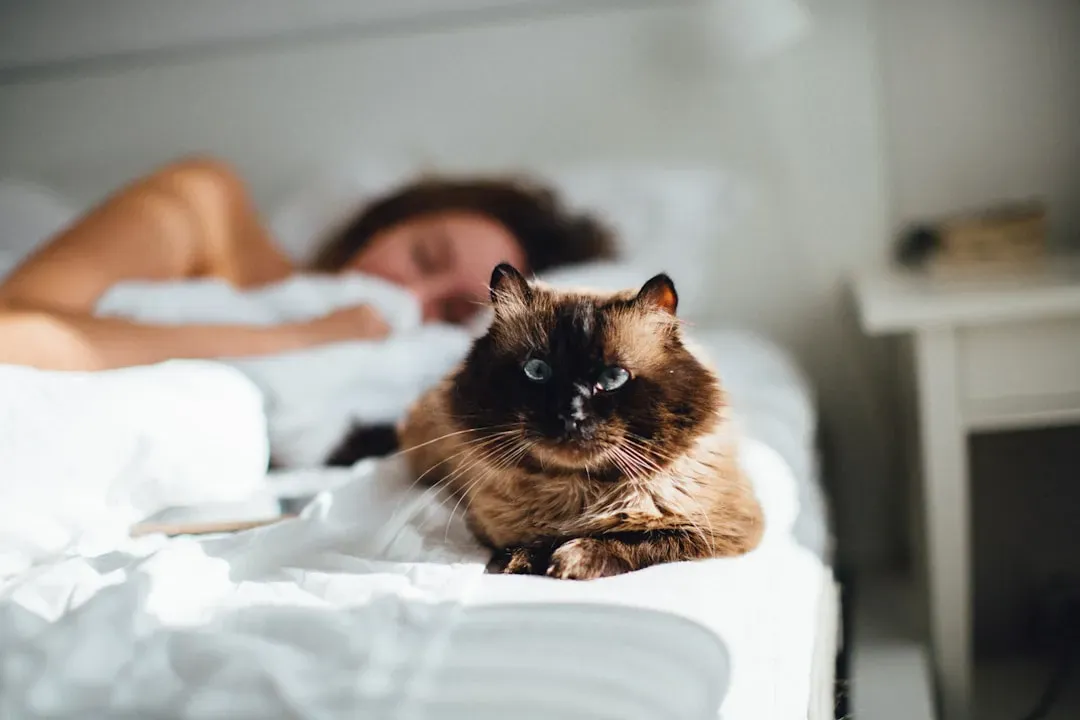
You probably haven’t given much thought to the fact that you always sleep on the same side of the bed, curl up on the same sofa cushion, or settle into the same chair each evening. It’s just habit. To your cat, however, your predictable sleeping and resting patterns are one of the most reassuring things in their world. Some cats choose to rest and sleep near their owners, especially when their owners are feeling down or unwell, and this companionship can not only make the cat feel safe and comfortable but also provide psychological comfort.
It is a big sign of trust if your cat wants to sleep with you because this is a time when cats are very vulnerable. When your cat chooses to curl up beside you in your usual spot, they are not just seeking warmth. They are choosing to be vulnerable in the place they associate with your calm, familiar presence. Cats thrive on routine, and feeding times, play rituals, and quiet evenings create a predictable rhythm that can be incredibly grounding. Your consistent resting patterns become part of that rhythm, a heartbeat of the household your cat can actually count on.
The Takeaway: Your Habits Are More Powerful Than You Think

There’s something genuinely humbling about realizing that the small, seemingly mundane things you do every day, talking in a silly voice, keeping to a routine, sitting quietly, following your cat into the next room, are the exact things building deep security and trust in your cat’s mind. You don’t need elaborate enrichment setups or expensive gadgets. The findings reinforce recent studies regarding the ability of cats to form strong bonds with their humans, and cats, often stereotyped as aloof and independent, are in fact very capable of creating attachment bonds with humans, and our behavior towards them can foster these bonds.
The habits you worried were bothering your cat are, in many cases, the foundation of the entire relationship. By maintaining a routine and respecting your cat’s personal boundaries, you encourage trust and emotional stability, and consistency in feeding times, play schedules, and quiet time helps reduce anxiety. So stop second-guessing the baby talk, stop feeling guilty for being a creature of habit, and next time your cat settles beside you without being asked, know that you’ve earned it. Every single day, in ways you probably didn’t even notice.
What’s the one habit on this list you’re most surprised your cat secretly loves? Drop it in the comments and let us know.
Kristina is a young writer from India. An arts graduate and an avid content creator, Kristina is passionate about animals and wildlife. She enjoys exploring topics related to pet care, animal behavior, conservation, and nature, combining thorough research with engaging storytelling.