There’s a moment every cat owner has experienced. You’re reaching out to pet your cat, feeling perfectly relaxed, and then – out of nowhere – you get a swat to the hand. Your cat wasn’t being random. Your cat was warning you. You just didn’t notice. That’s the thing about cats. They are communicating every single second of the day, but their language is so quiet, so layered, so brilliantly understated that most of us miss the vast majority of it.
Cats may not speak with words, but they communicate every day through posture, movement, and expression. If you’ve ever wondered what a flicking tail or a slow blink means, you’re not alone – cat body language is a fascinating and complex system that reveals how your feline friend feels in any given moment. Once you start learning it, you’ll realize they were never mysterious at all. They were just speaking a language you hadn’t studied yet. Let’s dive in.
The Tail Is Your First Dictionary
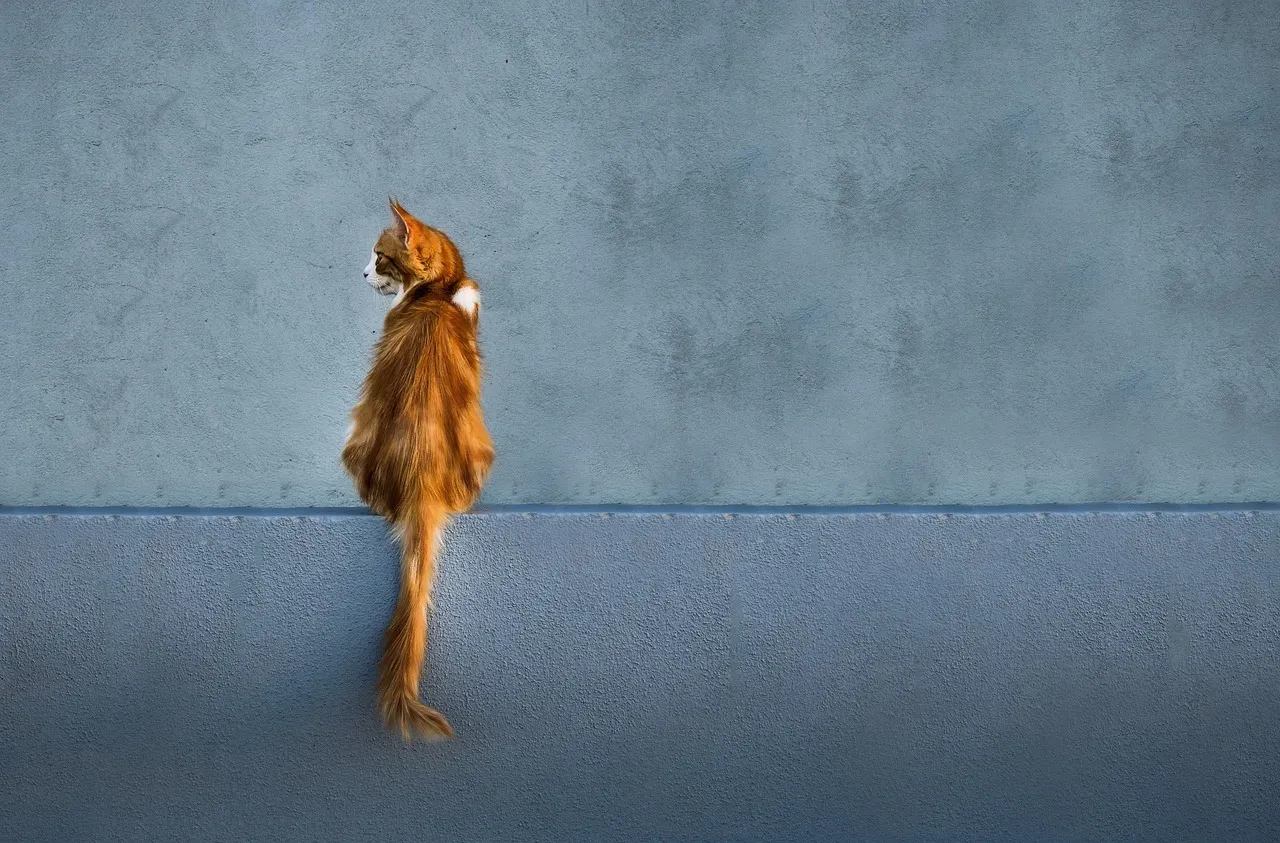
Your cat’s tail is a powerful communication tool. From its position to its movements, it can reveal a lot about how your cat is feeling. Think of it like a mood thermometer. The higher the tail, the better the mood – generally speaking.
One of the most reliable signs of a confident cat is a tail that’s lifted vertically, high in the air. Most of the time, this position indicates that your cat feels comfortable and open to interaction. However, in certain contexts – like warding off a strange cat in their territory – a high tail can also indicate a willingness to attack. The high tail can represent a confident cat or a potentially aggressive one depending on the scenario. Context is everything with cats, and the tail is no different.
If you see your cat with their tail held down low, it means they’re feeling uncomfortable. The more worried and afraid your cat feels, the closer they will pull their tail toward their body. A cat with a tail tucked completely underneath? That’s an extremely terrified feline. Honestly, once you start watching for tail height as a quick emotional barometer, you’ll wonder how you ever missed it before.
Ear Positions That Speak Volumes
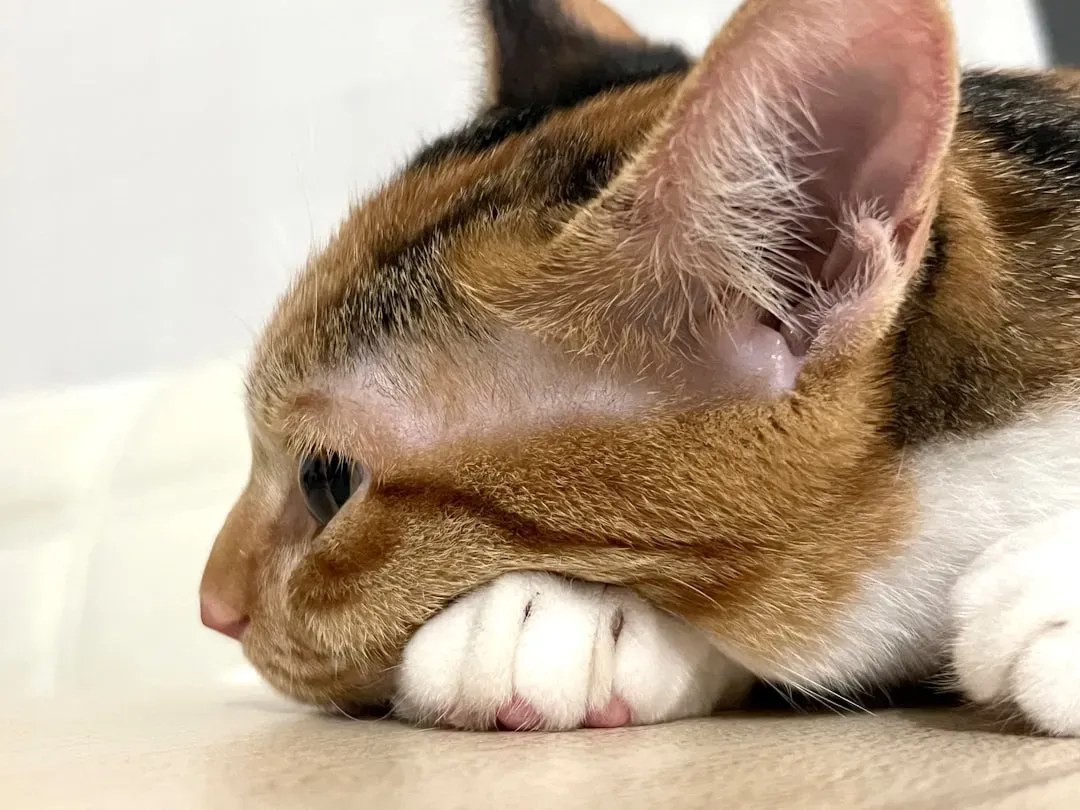
Your cat’s ears are like radar, constantly scanning their surroundings and reflecting their emotional state. They swivel, flatten, perk up, and rotate with incredible speed – and each tiny shift is a sentence in itself. Learning those sentences is, I think, one of the fastest ways to decode your cat.
A feline with their ears forward is typically a relaxed cat who’s feeling comfortable. If you want to know how relaxed your cat is, observe the rest of their posture and body language. When a cat flattens their ears until they push out to the sides and look like airplane wings, the cat is feeling uncomfortable. In general, the more the cat’s ears flare out to the side, the more threatened they feel – so give a wide berth to a cat with their ears pulled all the way back.
Research actually shows that the position of a cat’s ears is more important than tail position for predicting the outcome of cat interactions. It’s worth noting that only one tail-up position exists among the 16 configurations studied for cat-to-cat interactions, while the position of the ears is an important visual signal and is part of the facial configuration in cats. Ears are practically your cat’s headline news. Pay attention.
What Your Cat’s Eyes Are Really Saying
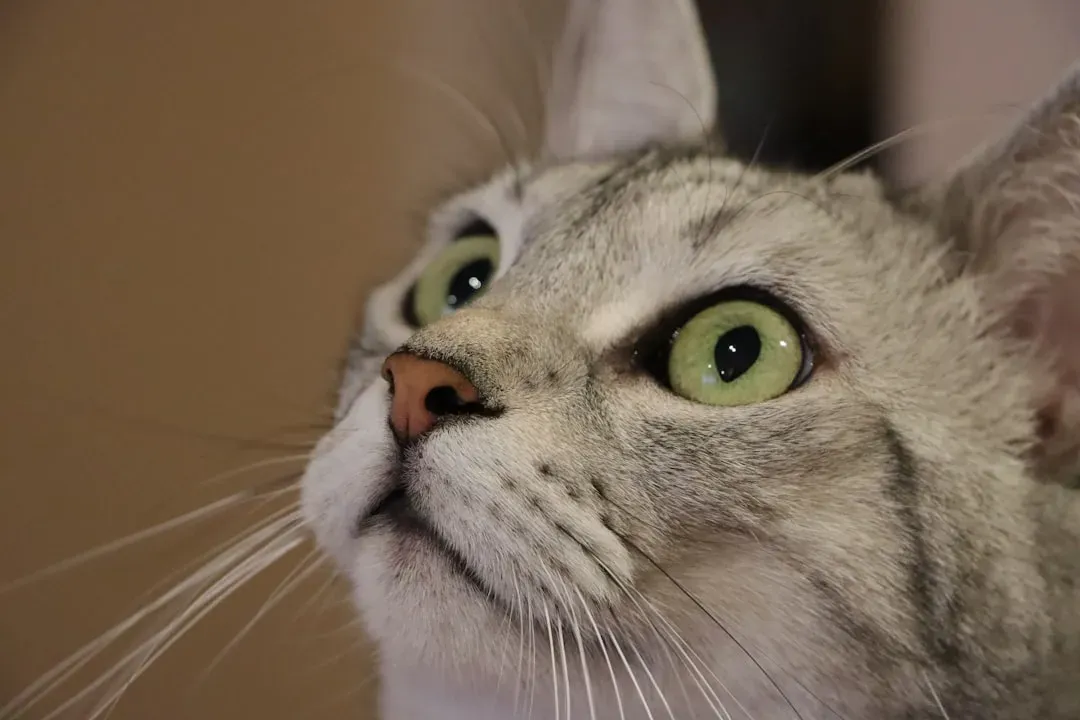
Your cat’s eyes are highly expressive and can reveal a wide range of emotions. Understanding their eye cues can significantly improve your interactions. Wide-open eyes may indicate fear, interest, excitement, or aggression, while half-closed or drooping eyes convey relaxation and friendliness.
When your cat’s pupils are large and dilated, that means they’re stimulated. Stimulation is not necessarily good or bad – a cat that’s feeling playful will often have dilated pupils. However, dilated pupils can also indicate fear, excitement, or anger. Consider the context to decide. It’s hard to say for sure just from pupils alone, which is why you always need to read the whole picture.
Perhaps one of the most wonderful of feline body signals, but one that is most often missed by even the most observant of cat owners, is the slow eye blink. Cats blink slowly to show affection and relaxation. If a cat blinks slowly at you, they are not threatened by you – in fact, they trust you. To bond with a cat that blinks slowly at you, you can return the gesture by blinking slowly back at them. It’s genuinely one of the sweetest things you can do with your cat.
The Subtle Language of Posture and Body Shape
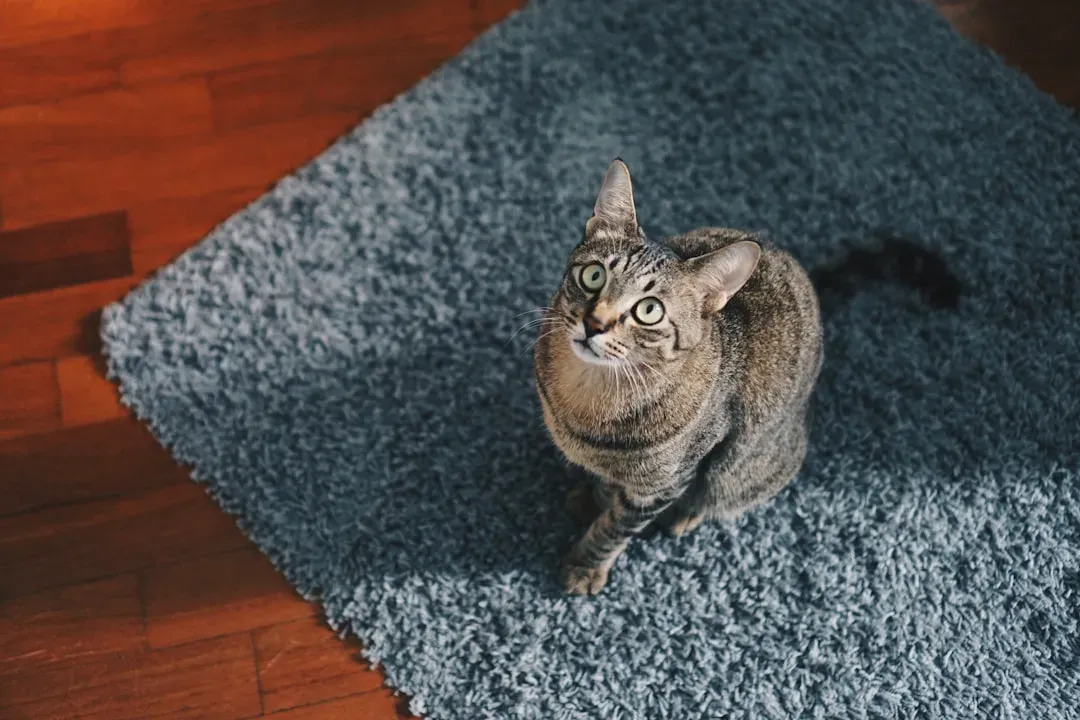
Your cat’s overall posture tells you a lot about their state of mind. Whether they’re in a playful mood or feeling threatened, their body language provides valuable clues. Let’s be real – posture is the stuff that gets overlooked most because we’re often too focused on faces. Don’t make that mistake.
A cat stretched out on their side with paws loose and body extended feels comfortable and secure. Another common relaxed pose is lying belly-up, which reflects total trust. However, belly exposure doesn’t always mean an invitation for petting – many cats simply find it a comfortable way to rest. This is probably the most common misread signal among cat owners. The exposed belly is not an open invitation. Treat it like you would a “look but don’t touch” museum exhibit.
When a cat arches their back, they are typically feeling aggressive, and the posture is often accompanied by fluffing fur along the back and tail. This is your cat’s attempt to appear larger and more threatening. You’ve seen the classic Halloween cat silhouette. Now you know exactly what emotional state inspired it.
Whiskers: The Underrated Signal
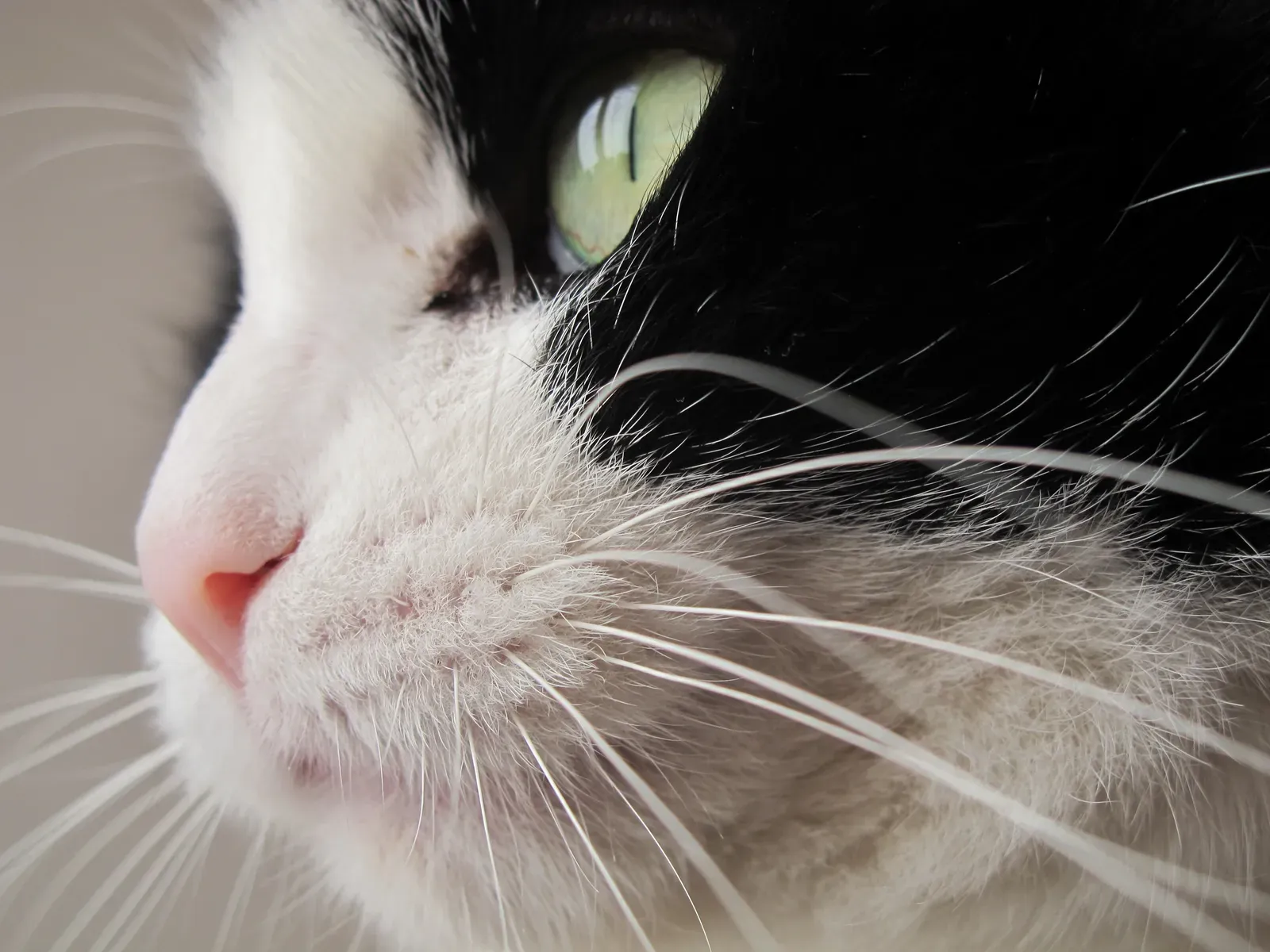
Most people barely think about whiskers when reading cat body language. That’s a shame, honestly, because whiskers are constantly broadcasting useful information. They’re not just for navigating tight spaces – they’re emotional antennas.
Look for other cues of happiness, such as semi-closed eyes and relaxed whiskers. When your cat is comfortable and content, their whiskers will sit in a naturally neutral position, fanned slightly outward but not pressed flat. If you’ve taken in all the other signs and still want more information, check out your cat’s whiskers. Compared to posture, tail, ears, and eyes, the whiskers aren’t going to tell you as much, but they may provide a helpful hint.
When whiskers are pulled tight against the face and flattened back, that’s a stressed or frightened cat. Think of it the same way a person pulls their shoulders inward when they feel threatened – it’s a shrinking, self-protecting signal. Low or outward-pointing whiskers can also accompany other signs of illness or discomfort. So if your cat’s whiskers look off, take a moment to check all their other cues too.
How Cats Talk With Their Paws
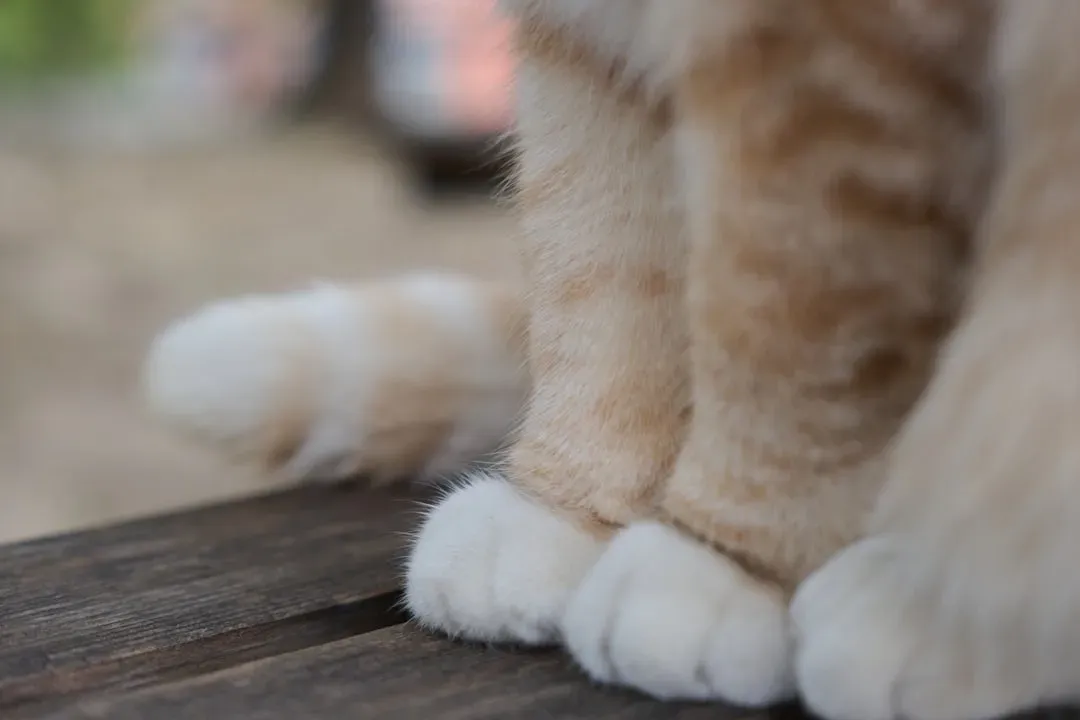
Here’s something that surprises a lot of people: your cat’s paws are part of their communication system too. It’s not just claws and kneading. There’s real emotional vocabulary happening down there.
Kneading – often called “making biscuits” – signals comfort and contentment. Clawing or scratching is a natural behavior used to mark territory and stretch muscles. Gentle paw taps are a way of getting your attention without meowing. Swatting is usually a warning to back off or stop unwanted interaction. Each of those paw actions tells you something entirely different, which is why paying attention to the context matters so much.
When your cat is spending some time cuddling on your lap, you might notice them kneading – another sign of enjoyment – because it mimics feeding behavior in nursing kittens. So when your cat is rhythmically pushing their paws against you like they’re making bread dough, you’re actually witnessing a behavior rooted in their earliest, safest memories. That’s pretty moving, when you think about it.
Vocalizations: More Than Just Meowing
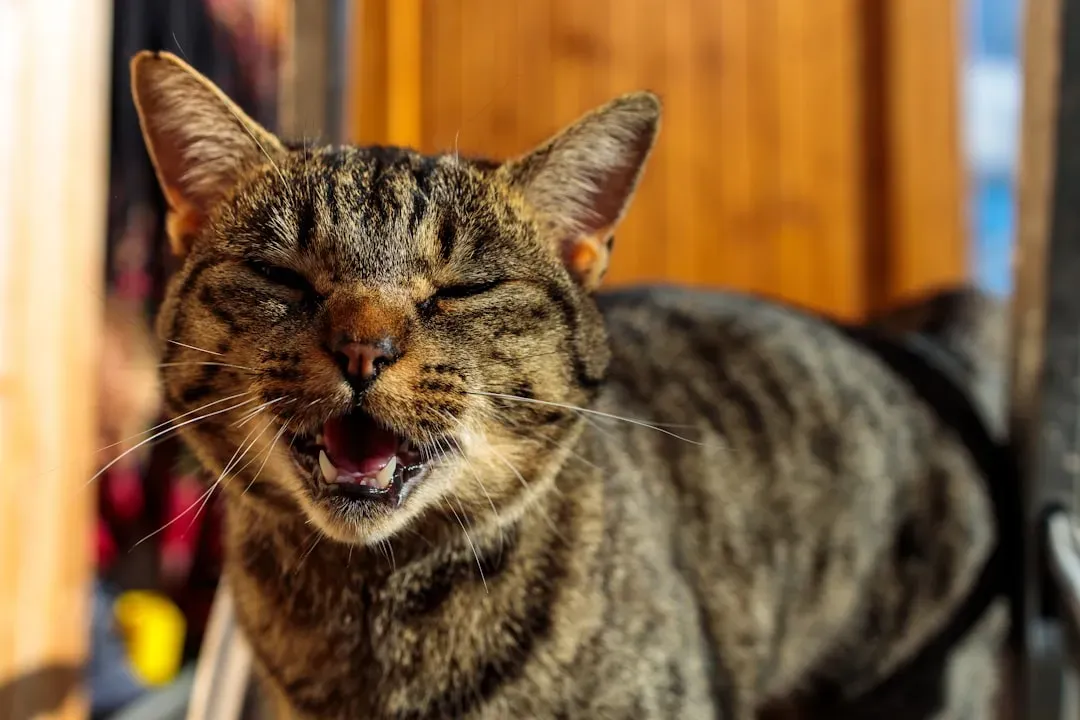
Ask any young child what a cat says and they’ll tell you confidently, “Meow!” But is meowing all that cats say? Vocalizations are just a small part of cat communication. All felines use body language to share their emotions with us and other animals. Still, sound does add essential color to the conversation.
A cat may purr to express contentment and pleasure, meow when greeting someone or asking for something like food or attention, or trill – which is like a high-pitched purr – to show they are friendly. Each sound carries its own emotional weight. A low, rumbling growl means something completely different from a chirpy trill directed at a bird outside the window.
Cats also purr when they are frightened, such as during a vet visit or when exposed to an unfamiliar environment. This is a form of self-soothing. So don’t assume a purring cat is always a happy cat. A cat purring while tucked tightly in a corner is sending a very different message than one purring lazily in a sunny spot. Always look at the whole picture.
Reading the Full Body: Context Is Everything
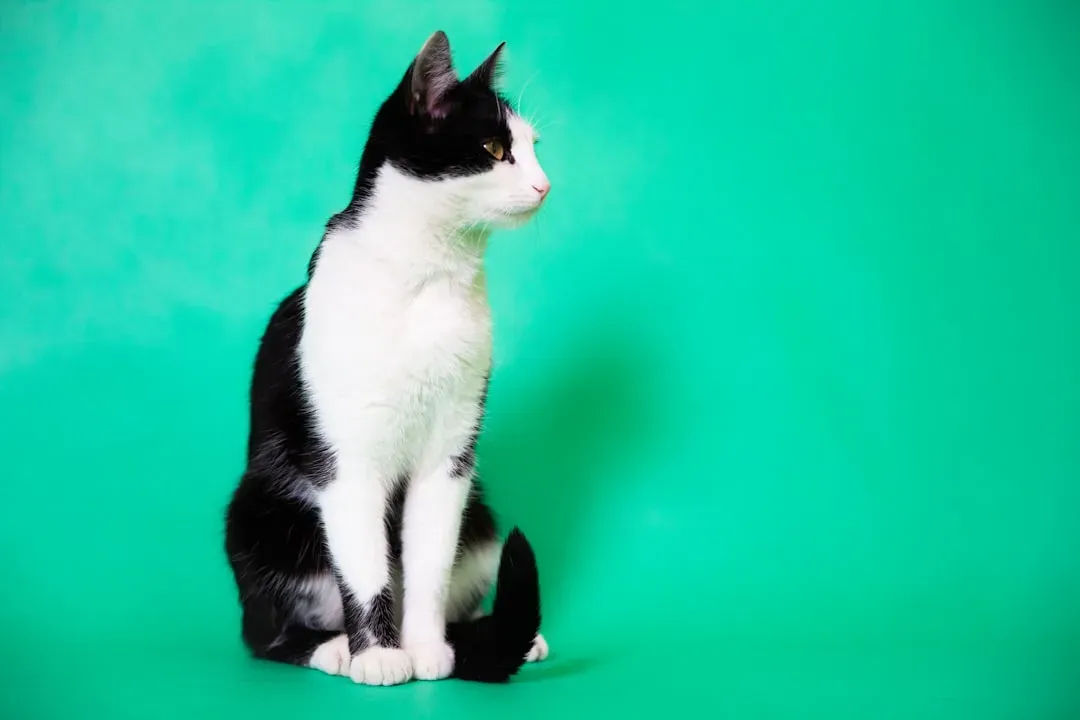
Cats rarely communicate with just one signal. Instead, they combine ears, eyes, tails, and posture into a full message. For example, forward ears plus an upright tail plus a slow blink equals a relaxed, friendly cat. Reading one signal in isolation is like trying to understand a sentence by only reading one word.
One crucial thing to remember is that context matters immensely when interpreting cat body language. A single gesture can mean different things depending on the situation. For instance, a cat showing its belly might be displaying trust in a relaxed setting, but the same behavior could be a defensive posture in a tense situation.
Use the combination of tail, ears, eyes, and posture to get a full picture of what your feline companion is feeling. Over time, you’ll learn your cat’s specific cues. What looks like fear in one cat might just be curiosity in another. Every cat has their own dialect, so to speak, within the broader feline language. The more time you spend observing your specific cat, the more fluent you become.
What to Do When You Spot the Signals
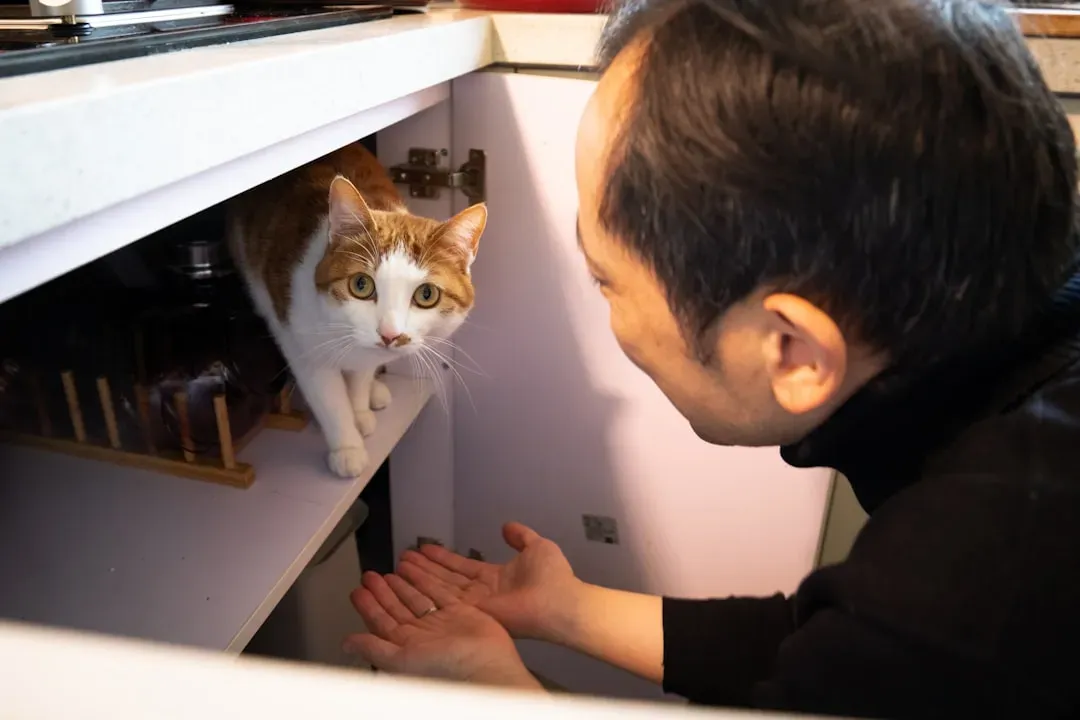
Recognizing the signals is only half the work. Responding correctly to them is where the real magic of your relationship with your cat gets built. Recognizing signals is only half the challenge – knowing how to respond matters too. Tips include: respecting warning signs such as flattened ears or whipping tails, rewarding calm behavior with gentle praise or treats, engaging in play if your cat shows hunting readiness with a focused posture, and providing space when signs of stress or irritation are present.
Research shows cats adjust their body language and vocalizations when interacting with humans, using more eye contact and meows than they do with other cats. That’s remarkable if you sit with it for a moment. Your cat has actually developed a special communication style just for you. They’ve adapted to speak your language a little. The least you can do is learn a little of theirs.
Respecting your cat’s body language is essential in establishing a trusting relationship. By observing and interpreting their ear and whisker positions, eye cues, tail movements, and behaviors, you can lay the foundation for a deep, long-term connection. Remember to observe, proceed with caution, and always respect your cat’s boundaries. That’s not just good advice for cats. Honestly, it’s pretty solid life advice in general.
Conclusion
Cats have never been the cold, indifferent creatures they’re sometimes made out to be. They’re communicating constantly – with their tails, their ears, their eyes, their posture, their paws, and their voices. The truth is, they’ve been talking to you this whole time. You just needed the right vocabulary to hear them.
Once you start reading your cat’s hidden cues, something shifts in your relationship. You stop guessing. You stop accidentally overstepping. You start responding to what’s actually being said rather than what you assumed was meant. The more you understand your feline friend’s signals, the deeper your bond will grow.
Your cat is not mysterious. Your cat is brilliantly expressive. So the next time your cat flicks their tail, narrows their eyes, or turns their ears slightly sideways – pause. Listen with your eyes. What do you think they’ve been trying to tell you all along?
Kristina is a young writer from India. An arts graduate and an avid content creator, Kristina is passionate about animals and wildlife. She enjoys exploring topics related to pet care, animal behavior, conservation, and nature, combining thorough research with engaging storytelling.