Most people assume cats simply tolerate their owners. Like furry, whiskered roommates who expect free meals and ask nothing in return. But what if everything you thought you knew about your cat’s “indifference” was completely wrong? The science behind feline attachment is far more fascinating, and honestly a little surprising, than most people realize.
You see your cat doing weird, quirky, sometimes borderline rude things every single day. Staring at you. Sitting on your laptop. Dropping a suspicious object at your feet. Here’s the thing: many of those strange habits aren’t random at all. They are deliberate, emotionally loaded signals that your cat is completely bonded to you. Let’s dive in.
1. The Slow Blink That Means Everything
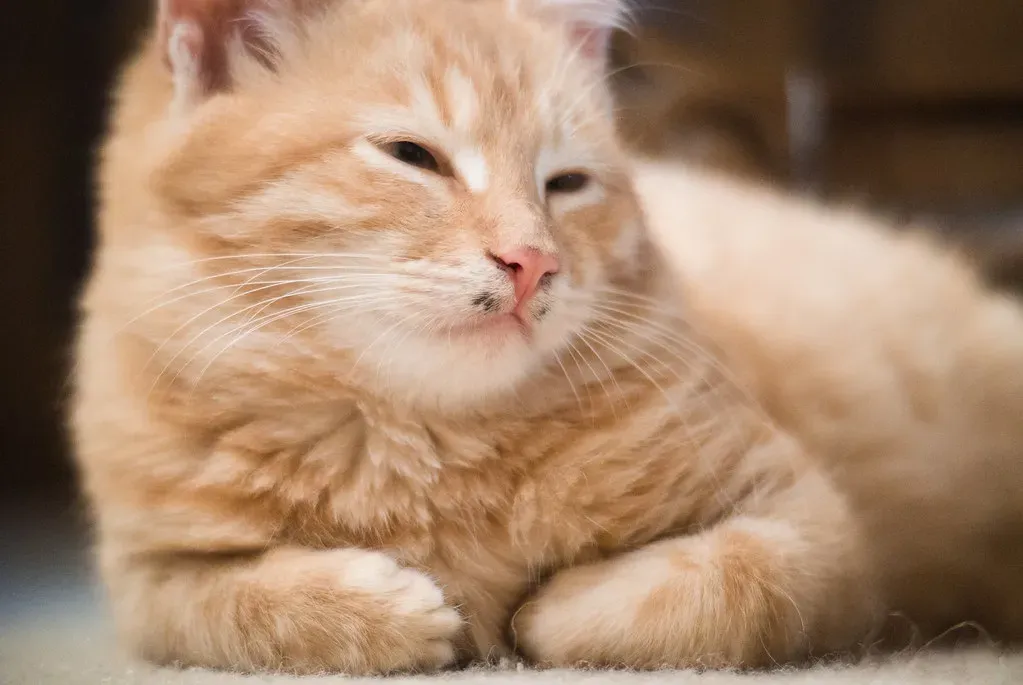
You’ve probably caught your cat staring at you from across the room, eyes half-closed, blinking slowly like they’re about to fall asleep. It feels random. It’s anything but. Research suggests that slow blinks are associated with a positive emotional state and can be a sign of trust, contentment, and affection, similar to a human smile.
When cats greet another cat in their vicinity, they use this slow, languid blink to communicate affection if they trust the person or animal they’re with. One way to return the love is to say your cat’s name, get its attention, look it in the eyes, and then slowly blink to emulate trust. They may actually blink right back. Think of it as the feline version of a heartfelt “I love you” – just far more dignified and without any of the drama.
2. Head-Butting You Like You’re Their Property
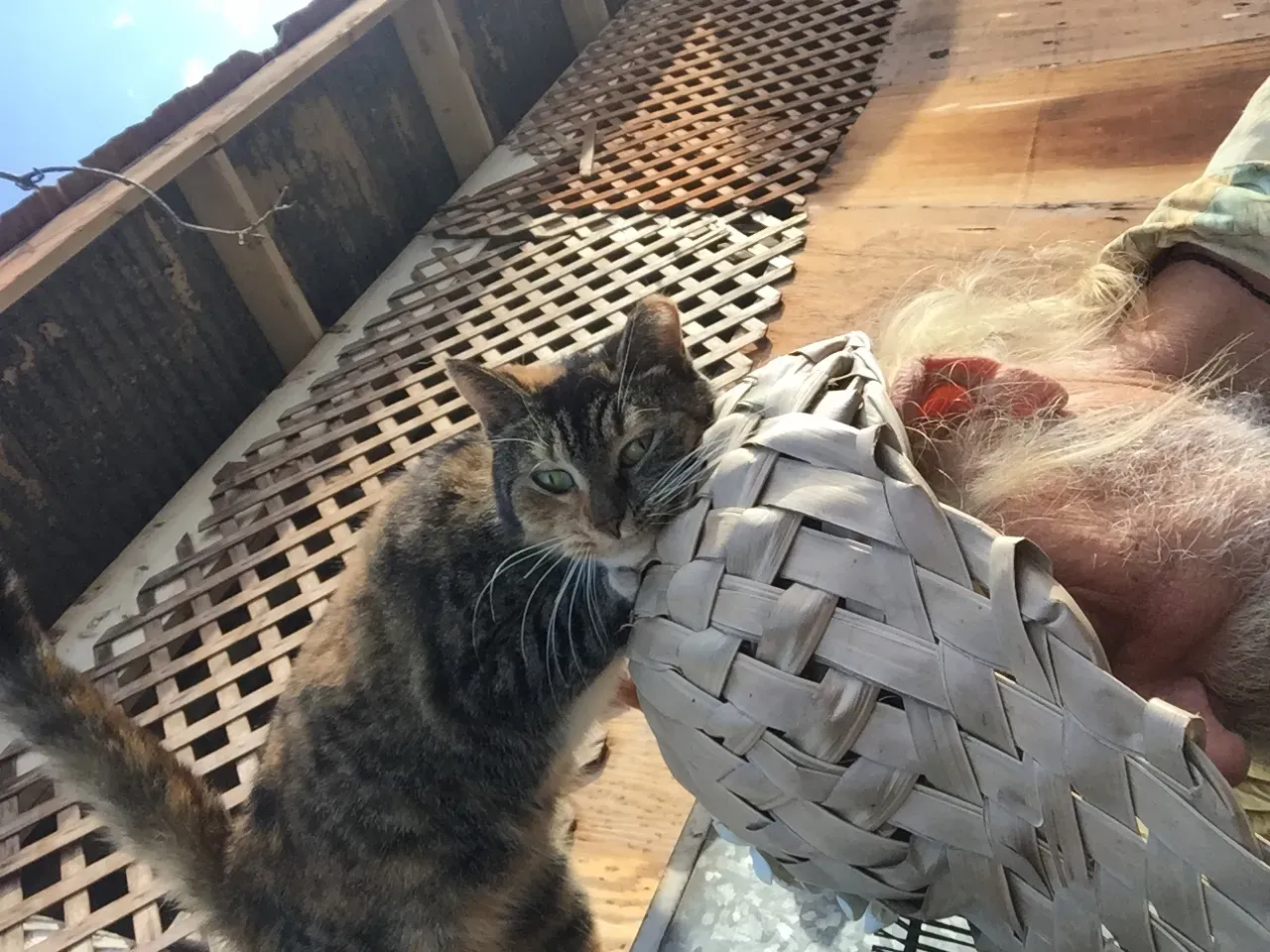
If your cat walks over and rams their forehead into your face, your chin, or the side of your knee, congratulations. You’ve just been officially claimed. When your cat rubs their head on you, they’re doing more than showing affection and saying hello. They are actually doing something that behaviorists call “bunting,” where pheromones are released from the cat’s head as their way of showing ownership over you.
That familiar feeling when your cat hits the back of your knee can also be a sign that they feel an extremely close bond to you. The feline version of a high-five, the head bump is usually saved for a cat’s closest feline friends and most trusted humans. So the next time your cat headbutts you at six in the morning, don’t be annoyed. Be flattered. You’ve been chosen.
3. Following You From Room to Room (Without Being Obvious)
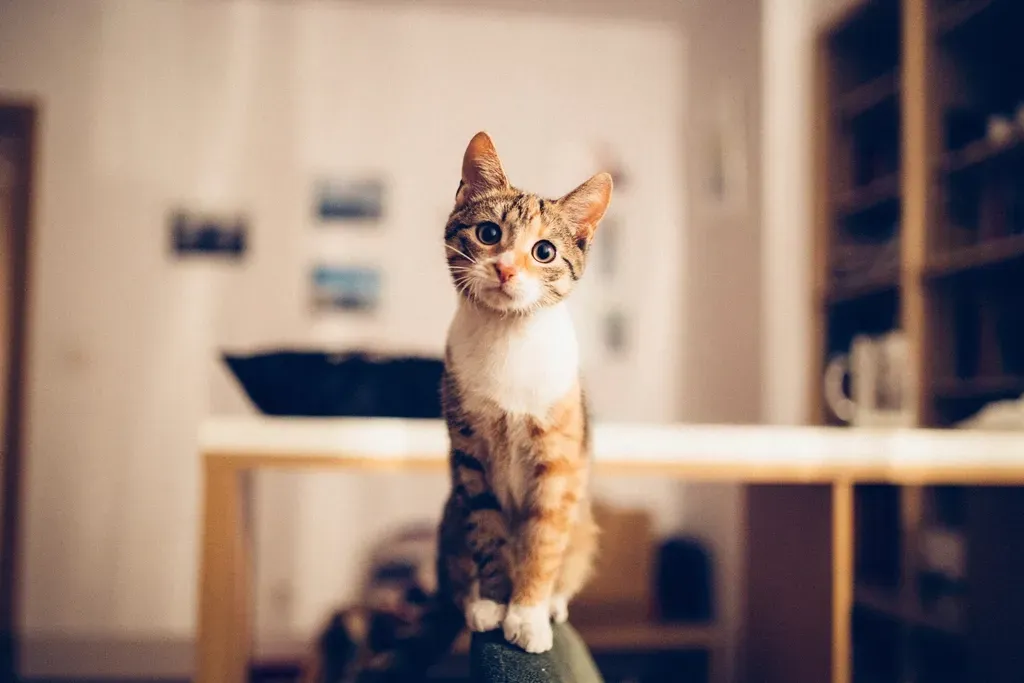
Your cat doesn’t always follow you like a dog would, trotting right at your heels. It’s subtler. You get up to make coffee, and mysteriously, your cat appears in the kitchen. You head to the bathroom, and there they are, sitting outside the door like a tiny, judgmental security guard. If your cat follows you around the house, it’s a sign they want to be near you and feel safe around you.
Cats who are attached to their humans will solicit attention from them by approaching them, often with a tail held straight up, meowing or pawing at them. They also tend to follow their owners from room to room, albeit sometimes at a distance. It’s a beautiful mix of devotion and pride. They love you deeply, but they’ll never make it look desperate. That’s just cat etiquette.
4. Kneading You Like You’re Bread Dough
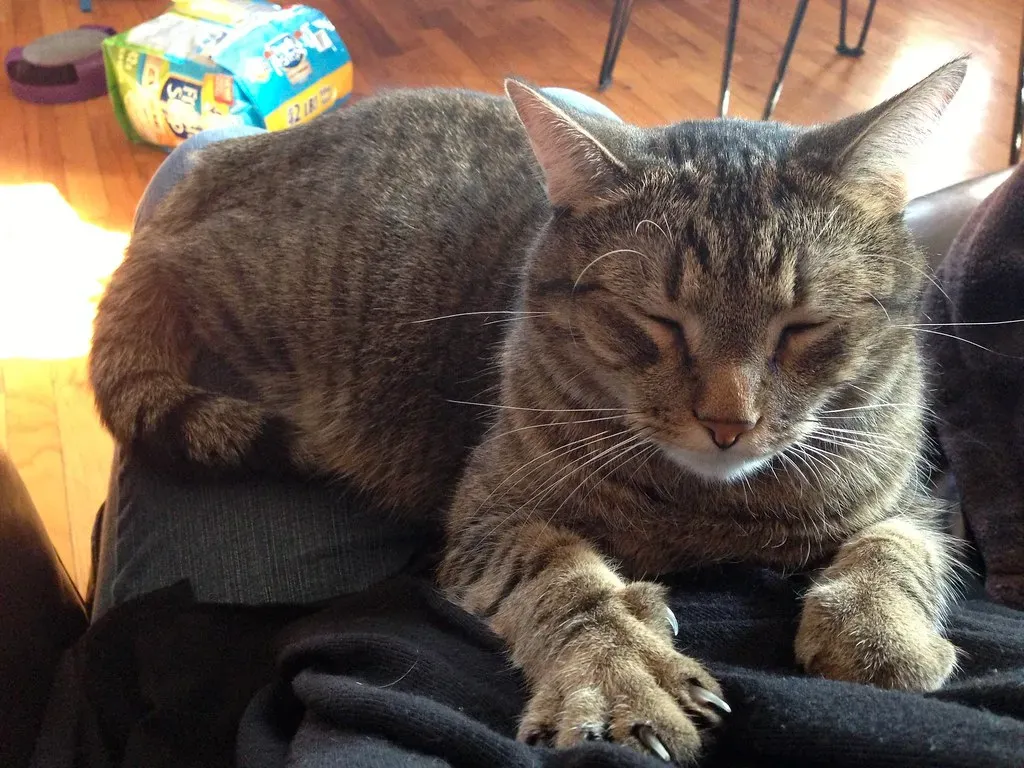
Few things feel simultaneously bizarre and wonderful as your cat rhythmically pressing their paws into your stomach, your thigh, or your shoulder. You might wonder what on earth they’re doing. The answer goes all the way back to kittenhood. Have you ever felt your cat push their paws into you, almost like they’re kneading dough? This behavior comes from kittenhood when they kneaded their mother’s belly for milk. When adult cats do it on you, it’s pure affection, because they see you as a source of comfort, warmth, and love.
When your cat presses their paws into you and massages back and forth, your cat’s instinct to do this traces back to their earliest days of nursing. By pressing their paws on their mother’s mammary glands, it encouraged better milk production. When your cat does this as an adult, they are either content and showing they’re happy, or trying to alleviate stress and calm themselves down. Either way, you are their ultimate comfort zone. That’s a big deal.
5. Bringing You “Gifts” That Are Actually Horrifying
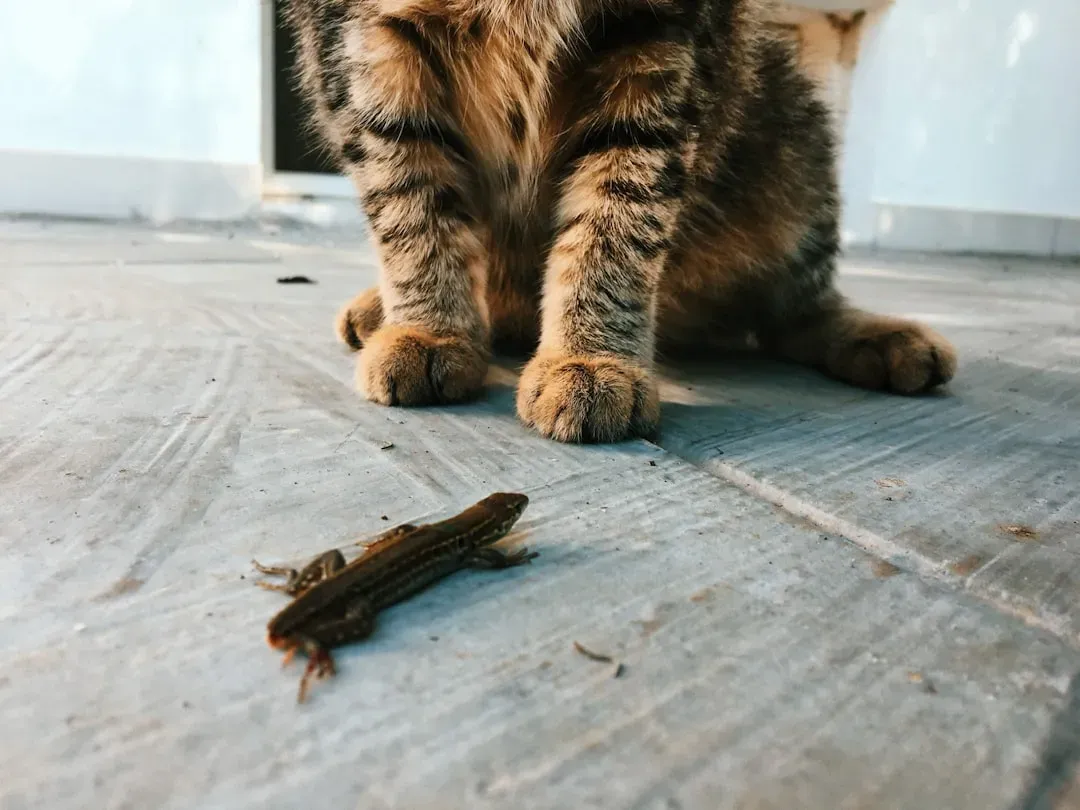
A dead mouse. A half-eaten lizard. A moth that didn’t make it. If you’ve ever woken up to find one of these thoughtful offerings at your bedroom door, your first reaction was probably not gratitude. Your second reaction probably should have been. While it may not always be pleasant, the act of bringing you “presents” such as dead mice or birds, or favorite toys for indoor-only cats, is your cat’s way of showing affection. Cats are instinctive hunters and highly social, and in the wild, they would share their bounty with their family members. Even if their gifts may be startling, it means they view you as part of their family.
Behaviorists have a few theories on why your cat is persistent in their pursuit of leaving you their kills. Even though this habit may be perceived as a gross one, your cat is acknowledging you as a member of their group and is sharing their hunting success with you. It’s less “creepy” and more “I provide for my people.” The intention is genuinely sweet, even when the delivery is not.
6. Grooming You With That Sandpaper Tongue
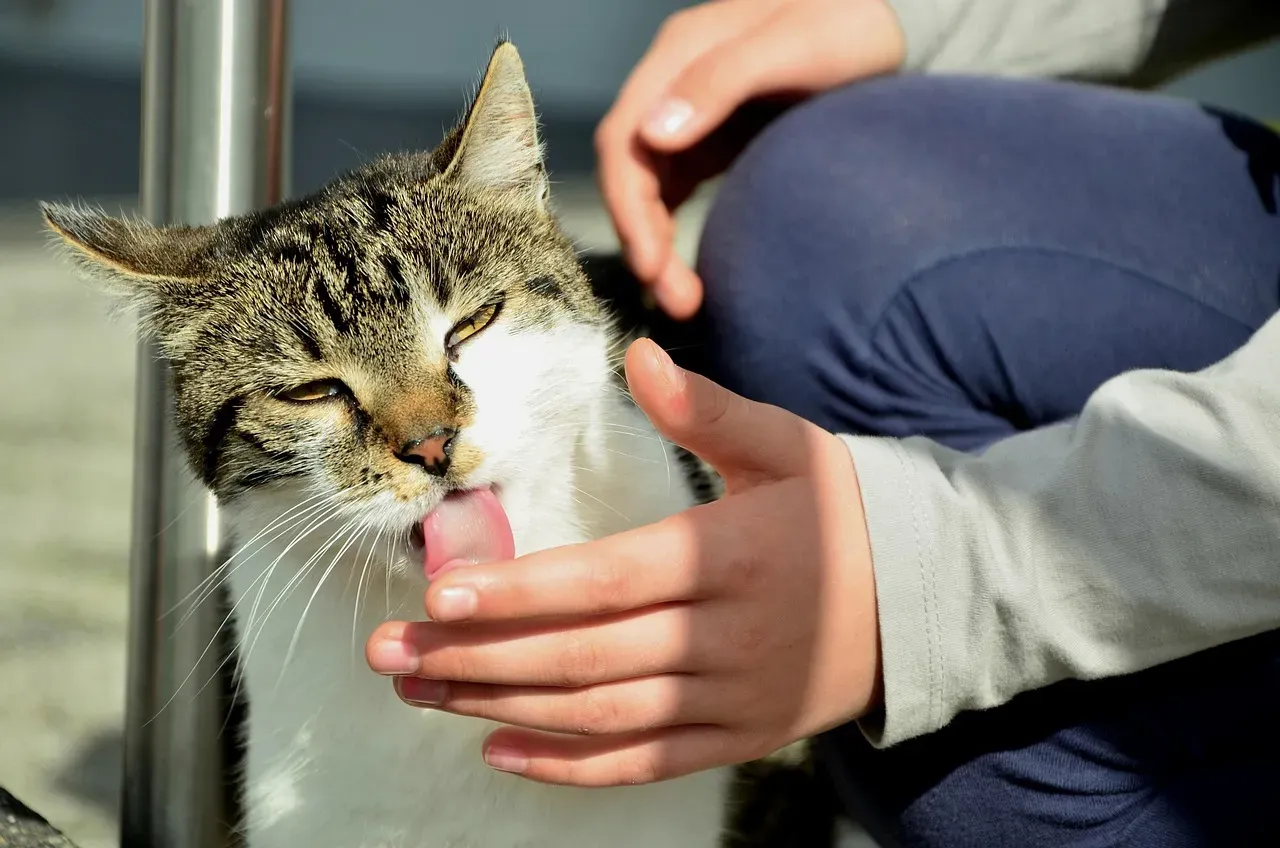
Getting licked by your cat is not always comfortable. That tiny tongue feels like warm sandpaper dragging across your hand or forehead. Still, try to appreciate it for what it is. Grooming only happens between cats with a warm relationship, so licking your hand or face can be a show of endearment, even though those barbed tongues may not feel all that gentle.
When cats groom each other, it’s a social bonding activity. If your cat licks you, they’re extending that same camaraderie to you. In the same vein, if your cat gives you a gentle nibble, it is typically them giving a “love bite” and showing you a playful sign of their love. So the next time your cat gives you an unsolicited tongue bath, just go with it. You’ve been accepted into the inner circle of the colony, and that colony is your living room.
7. Sitting Near You Without Actually Touching You
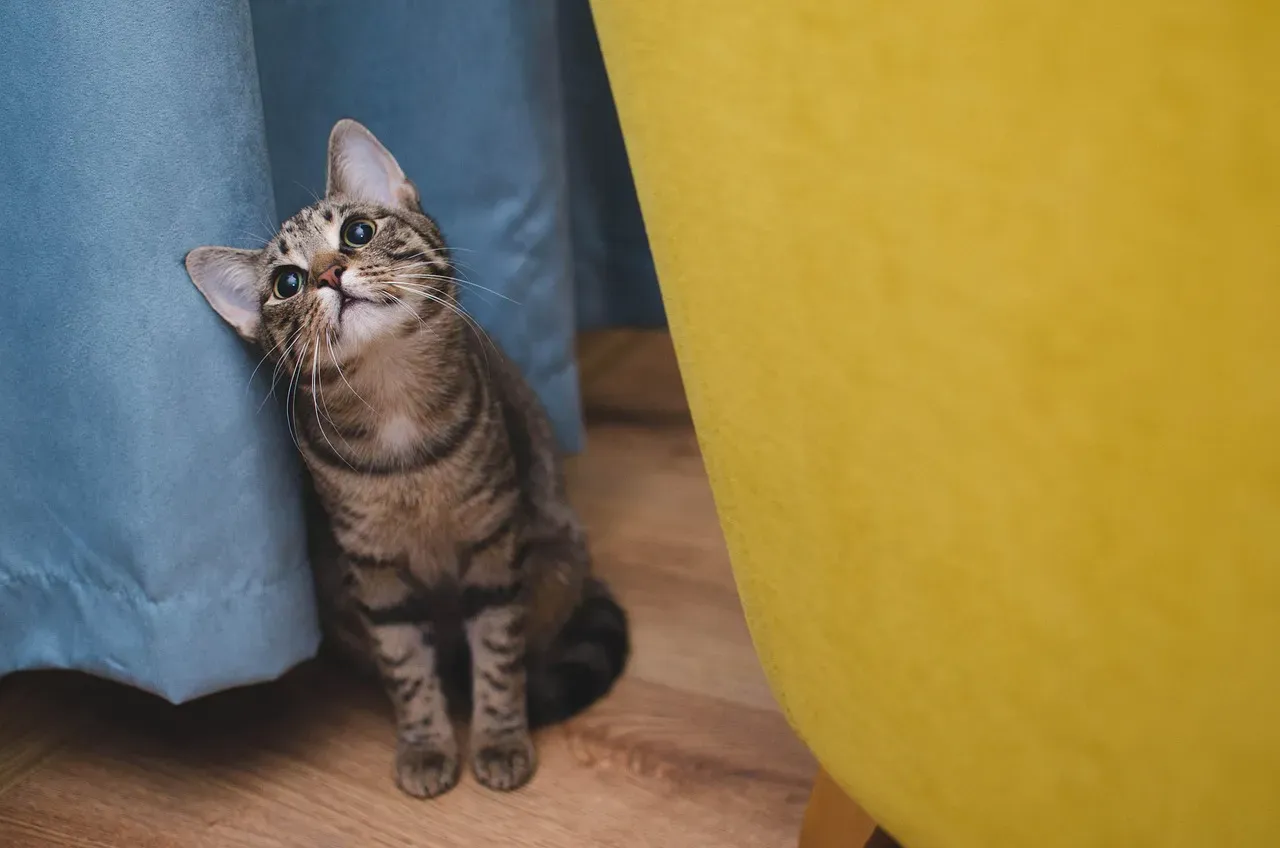
Here’s one that confuses a lot of cat owners. Your cat isn’t on your lap. They’re not curled up against you. They’re just… nearby. On the floor next to the couch. On the windowsill behind you. Always within a few feet. It might not look like much, but in cat language, it speaks volumes. In the wild, adult cats will lay nearby one another but rarely cuddle like kittens. If your cat likes to be on the rug while you’re on the couch, or in their tree while you’re at your desk, they’re showing you they want to be around you in their own way.
Cats are very protective of their personal space and don’t like unwelcome guests to invade it. If a cat allows you to get close to them, that suggests a close bond, particularly where the contact is frequent or long lasting. Curling up on your lap for a nap is a sign of deep trust. Proximity is the love language here, even without the cuddle. Don’t overlook it.
8. Responding to Your Voice Like You’re Speaking Their Language
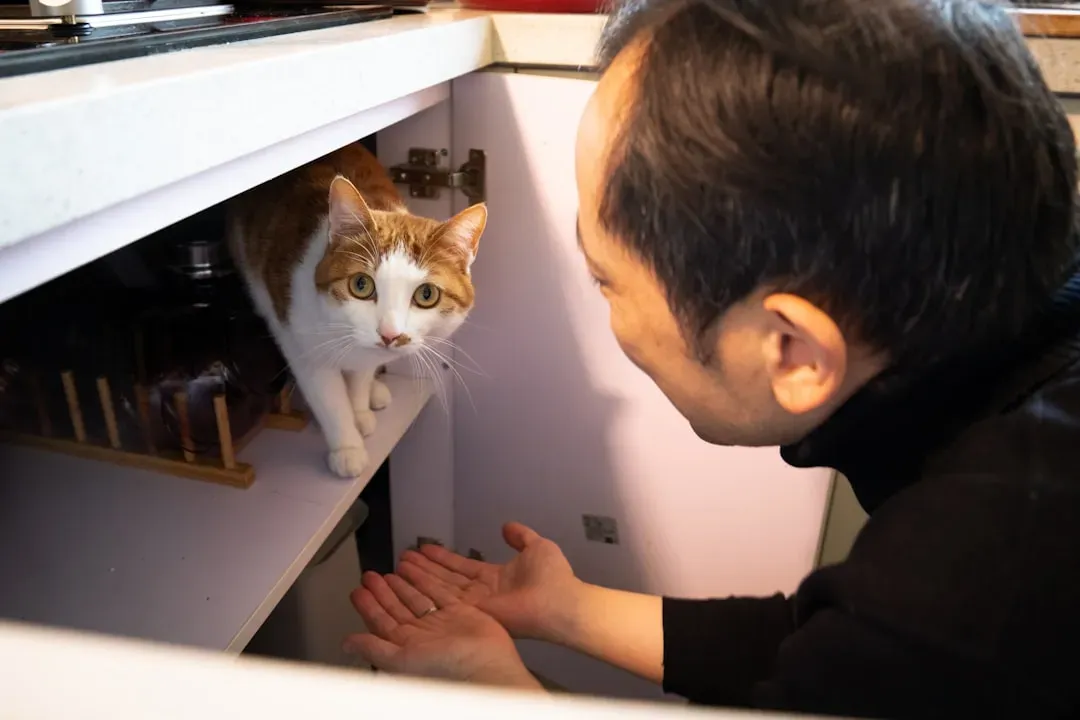
You talk to your cat constantly, probably more than you’d admit to other people. What’s remarkable is that your cat actually listens, and not just to the word “treat.” Contrary to popular belief, cats do recognize their owners’ voices and, over time, more common words like “dinner” or “play.” Pay attention to how your cat reacts when you speak to them, or if they are attuned to your moods.
Cats may seem like they ignore you at times, but studies show they recognize their owner’s voice. If your cat responds when you call their name, meows back, or comes running, that’s love. Honestly, there’s something deeply moving about that. Your voice, out of all the sounds in the world, is the one they’ve memorized. They know it’s you, and they respond to it. That’s not indifference. That’s devotion.
9. Purring When You’re Nearby (Even When Nothing Else Is Happening)
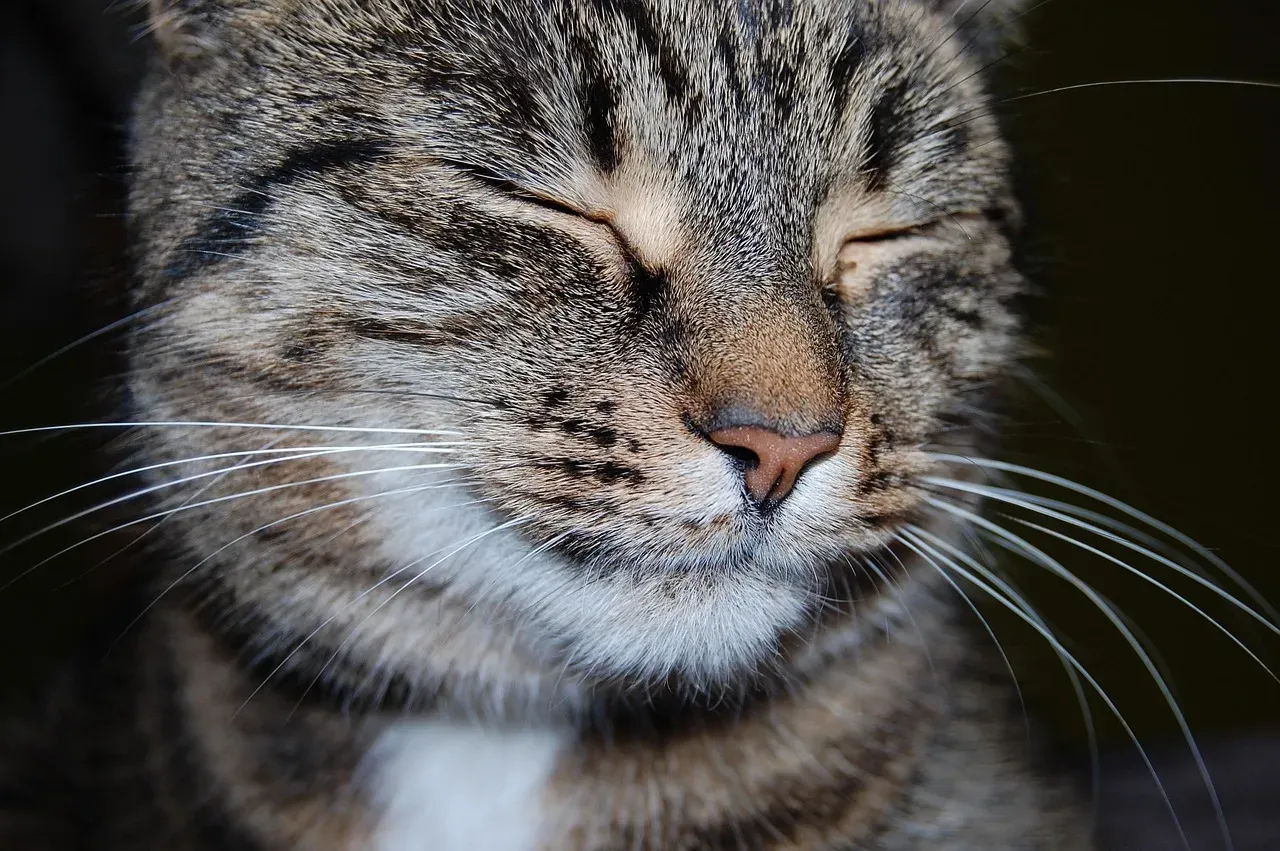
Purring is one of the most iconic cat sounds in existence. Most people assume cats purr simply when they’re content. The reality is richer than that, and more personal. Purring is primarily a kitten behavior used to communicate with the mother cat. While adult cats purr in various contexts, purring when you’re near signals contentment and attachment.
Purring and head rubbing or bunting are signs that your kitty genuinely enjoys your presence. Think about what that means for a moment. Your cat is running an internal motor, a literal vibration in their chest, specifically because you’re in the room. You don’t have to be feeding them, playing with them, or even touching them. Sometimes just existing near your cat is enough to make them purr. If that doesn’t feel like pure, unconditional love, I honestly don’t know what does.
10. Showing You Their Belly (Without Letting You Touch It)
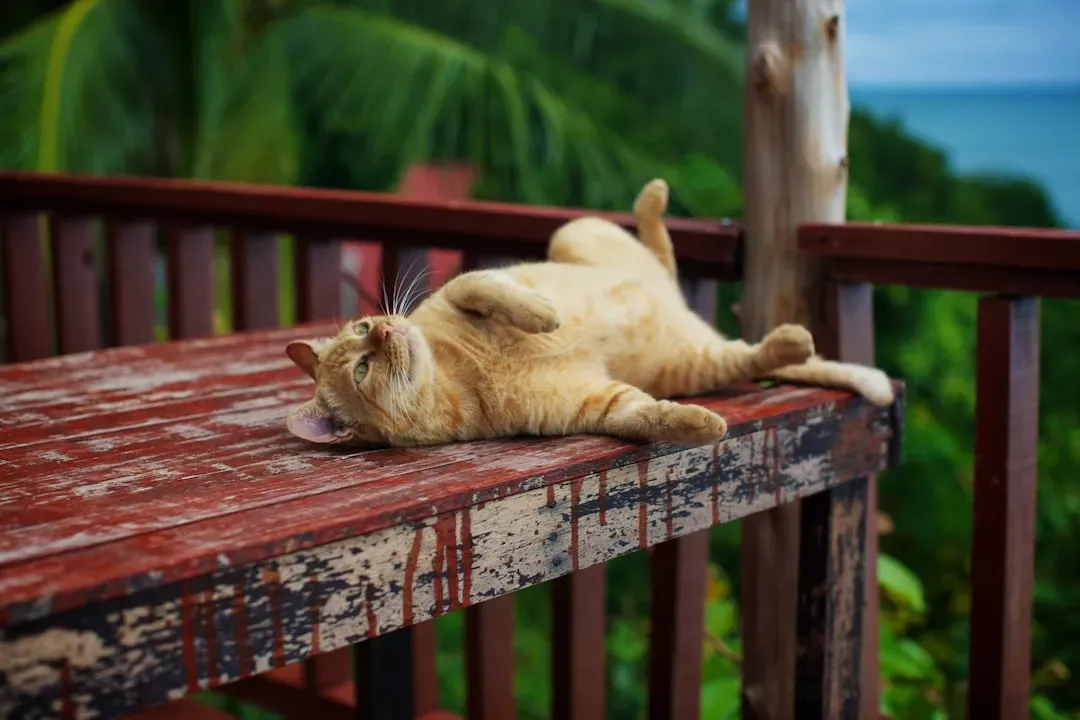
A cat rolling over and exposing their belly to you is one of the most misunderstood gestures in the entire feline playbook. So many cat owners reach for that fluffy stomach, only to be met with a swift swat. But here’s what you need to understand: the display itself is the gift. Another tell-tale example of loving body language is when your cat shows off their soft, fluffy belly.
The belly is the most vulnerable part of any animal’s body. Showing it to you means your cat trusts you completely, in a very primal, instinctive way. Cats are very protective of their personal space and don’t like unwelcome guests to invade it. So when your cat flops over and exposes that soft underside to you, they’re not asking for a belly rub, necessarily. They’re saying you are safe. You are trusted. You are theirs. Touching it is optional. Appreciating it is not.
11. Greeting You at the Door With a Raised Tail
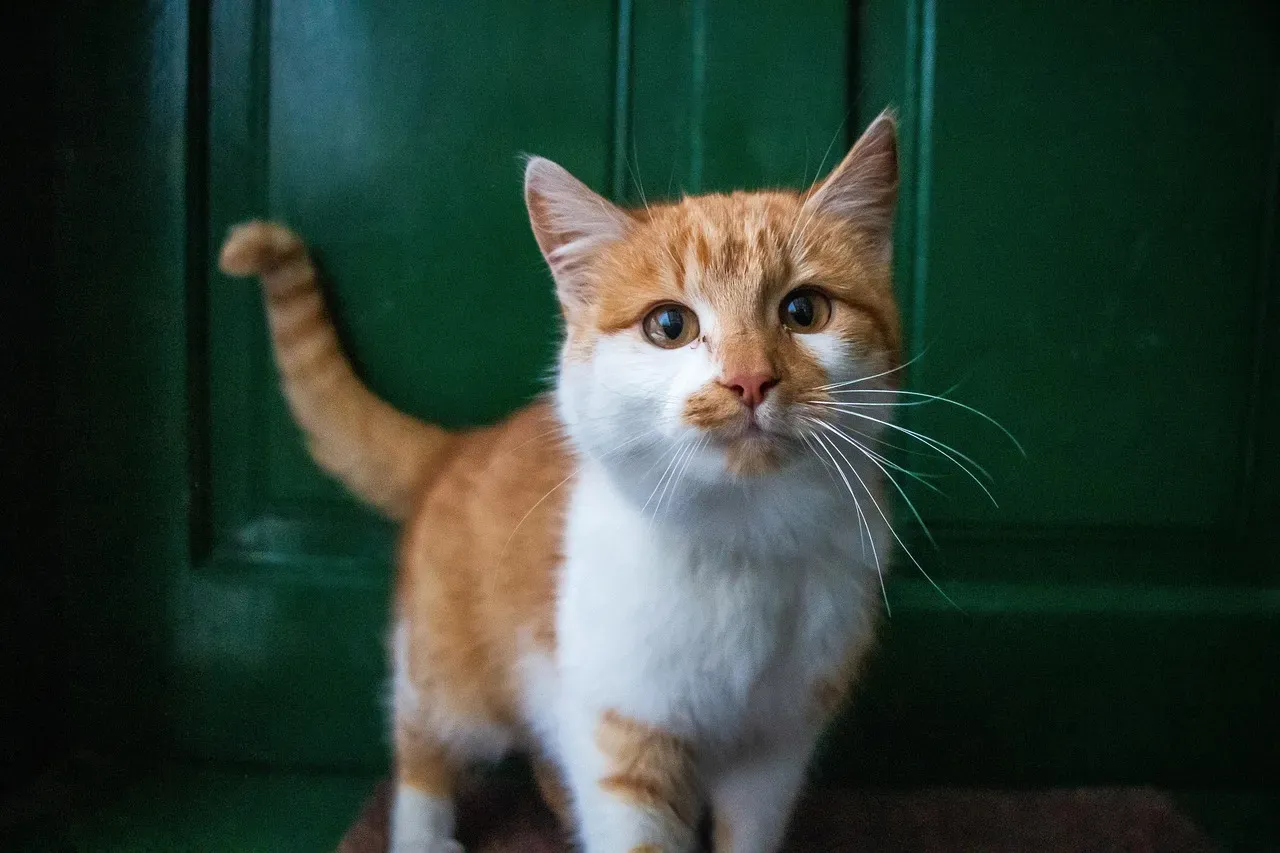
You walk through your front door after a long day, and before you’ve even put your keys down, your cat appears. Tail straight up in the air, maybe with a little curl at the tip, sometimes letting out a small chirp or trill. It’s one of the most endearing things cats do, and it’s far more meaningful than it looks. When cats approach a familiar cat and greet their keepers after a short absence, they raise their tails upright, presumably as a sign of friendly intentions. Only domesticated cats use this signal.
An easy way to gain insight into a cat’s mood is to watch their tail. A tail held high and straight, with no twitching or shaking, is the cat version of an exclamation point. They’re happy to see you. When you think about it, that upright tail is your cat’s version of a hug, or at least the closest they can get to one while still maintaining their dignity. It’s a greeting reserved for the people they genuinely love.
12. Using You as Their Safe Base When the World Feels Scary

When something startles your cat, whether it’s a thunderstorm, a vacuum cleaner, or a surprise visitor, where do they go? If you’re in the picture, there’s a good chance they come to you. Not the closet, not the bed, not under the sofa. You. That’s not a coincidence. A lot of people have these stereotypes about cats, that they’re aloof or solitary. But cats also use their owners as a source of security when they’re stressed out.
Securely attached cats display a reduced stress response and curiously explore the room while checking in periodically with their owners for attention. You are, in your cat’s mind, the safest place in the world. Confronted with something strange and upsetting, cats turn to their person for reassurance. That’s the deepest form of attachment there is, the kind that says, no matter how scary things get, you make it feel okay. You can’t put a price on that kind of trust.
Final Thought: Your Cat Chose You, and That Means Something
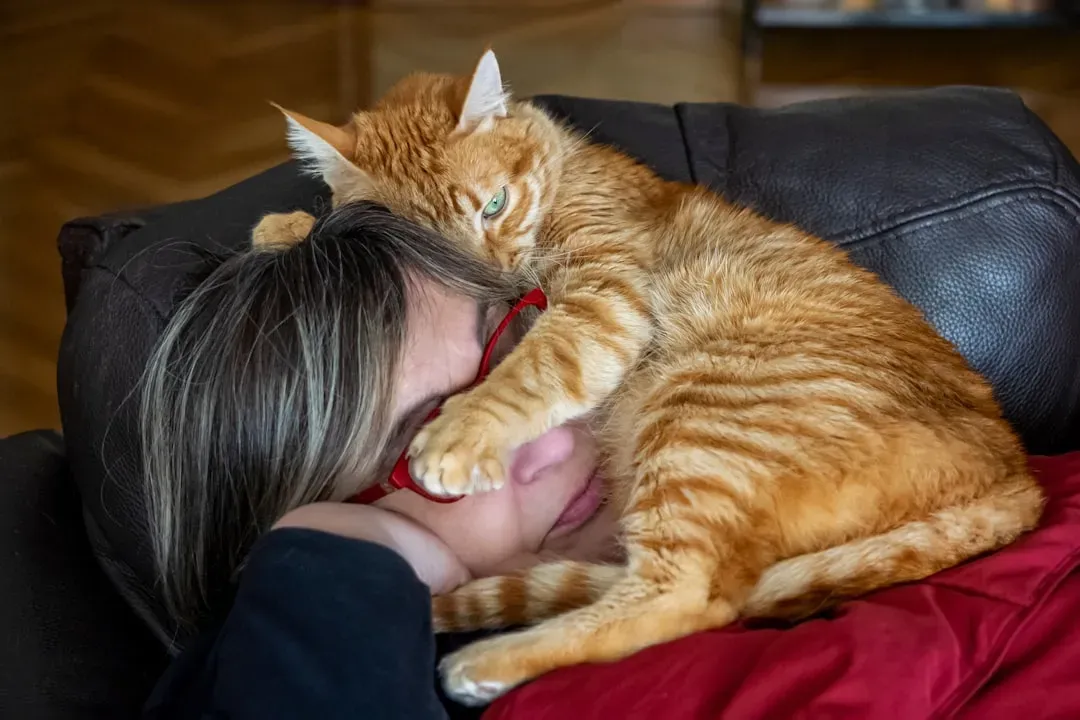
Research shows that cats experience complex emotional bonds with us the same way we do with them. They really are like children to us, and they see us as their moms and dads. Let that sink in. Your cat, who you may have assumed was simply tolerating your presence, is actually attached to you in a way that mirrors one of the most fundamental bonds in nature.
Attachment is a natural and positive aspect of the human-cat bond and should not be underestimated. The tricky part is learning to speak their language. Once you do, every slow blink, every head bump, every unsolicited “gift” left on your doorstep starts to look a whole lot less strange, and a whole lot more like love.
So the next time your cat does something weird, pause before you scroll past it. They might be trying to tell you something important. Did you recognize any of these signs in your own cat? Tell us in the comments which one surprised you the most.
Kristina is a young writer from India. An arts graduate and an avid content creator, Kristina is passionate about animals and wildlife. She enjoys exploring topics related to pet care, animal behavior, conservation, and nature, combining thorough research with engaging storytelling.