You’ve probably spent good money on a fancy feathered toy, a catnip mouse, maybe even one of those robotic gadgets that spins around on its own. Your cat walked past all of it, sat down in the cardboard box everything arrived in, and stared at you like you owed them an apology. Sound familiar? You’re not alone – and honestly, you shouldn’t be embarrassed. Every cat owner on the planet has been there.
The truth is, your cat’s seemingly bizarre obsessions with random household objects aren’t random at all. There’s a deep, fascinating science behind every stare, every swat, and every frantic midnight chase down the hallway. Once you understand what’s going on inside that furry little head, the world your cat lives in becomes endlessly more interesting. Let’s dive in.
1. Cardboard Boxes: The Ultimate Feline Fortress
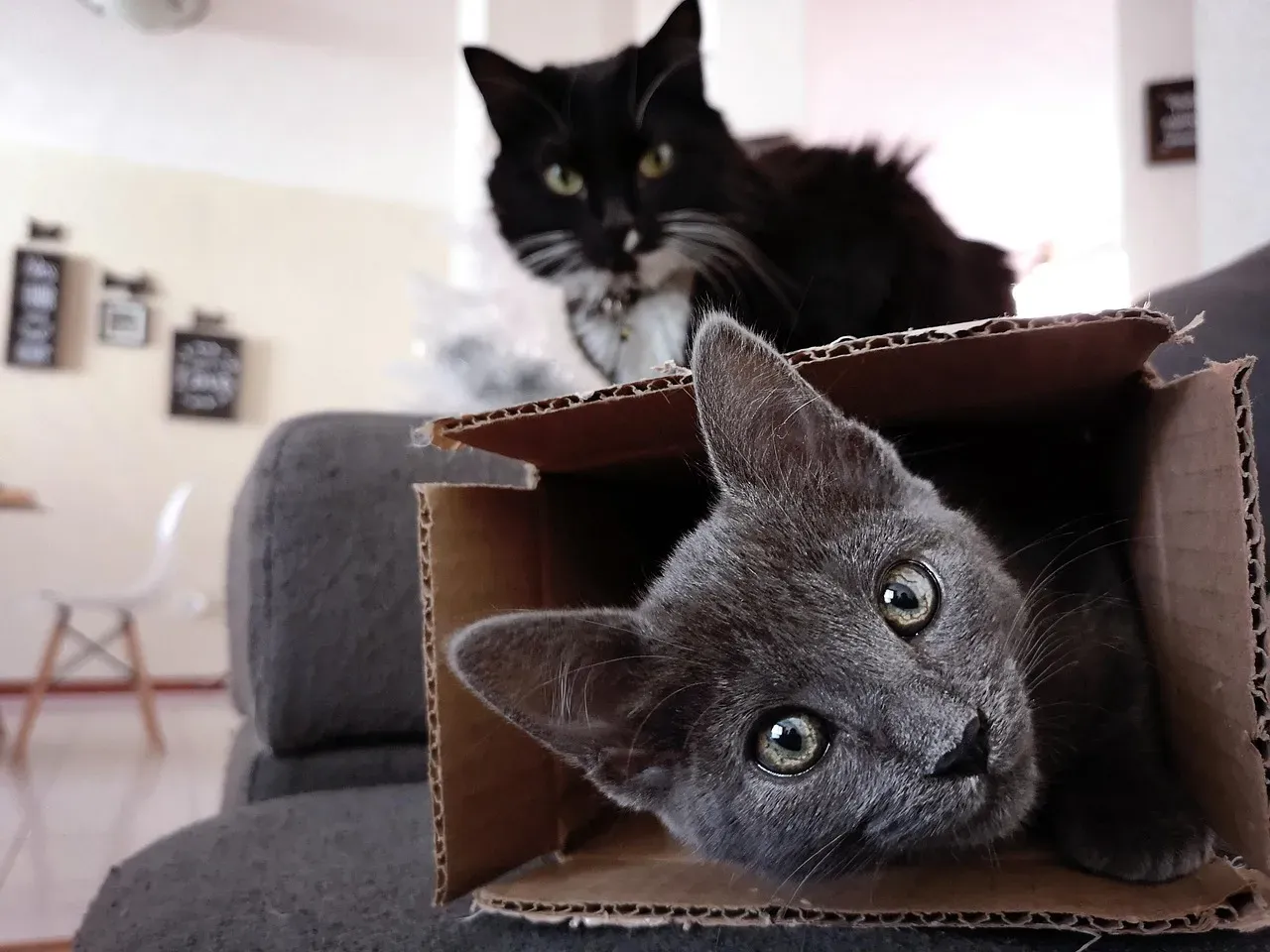
Here’s the thing – to you, it’s packaging. To your cat, it’s a fortress, a hunting blind, and a five-star hotel all rolled into one. In the wild, small hidden spaces protect cats from predators. A box is a secure, enclosed environment that triggers your cat’s natural instinct to find a safe den, and curling up in one lets them keep watch while feeling completely hidden and safe. It’s the feline equivalent of pulling the blinds and locking the door.
A study conducted and published in PLOS ONE showed that cats who came into a Dutch animal shelter for the first time utilized cardboard boxes for comfort and to adapt to a new, scary situation – and the study revealed that the cats suffered from chronic stress beforehand, with the boxes genuinely helping them cope. So when your cat dives headfirst into the Amazon delivery box you just set down, they’re not being silly. They’re self-soothing, hunting, and homesteading all at once.
2. Running Water From the Faucet: The Flowing Mystery
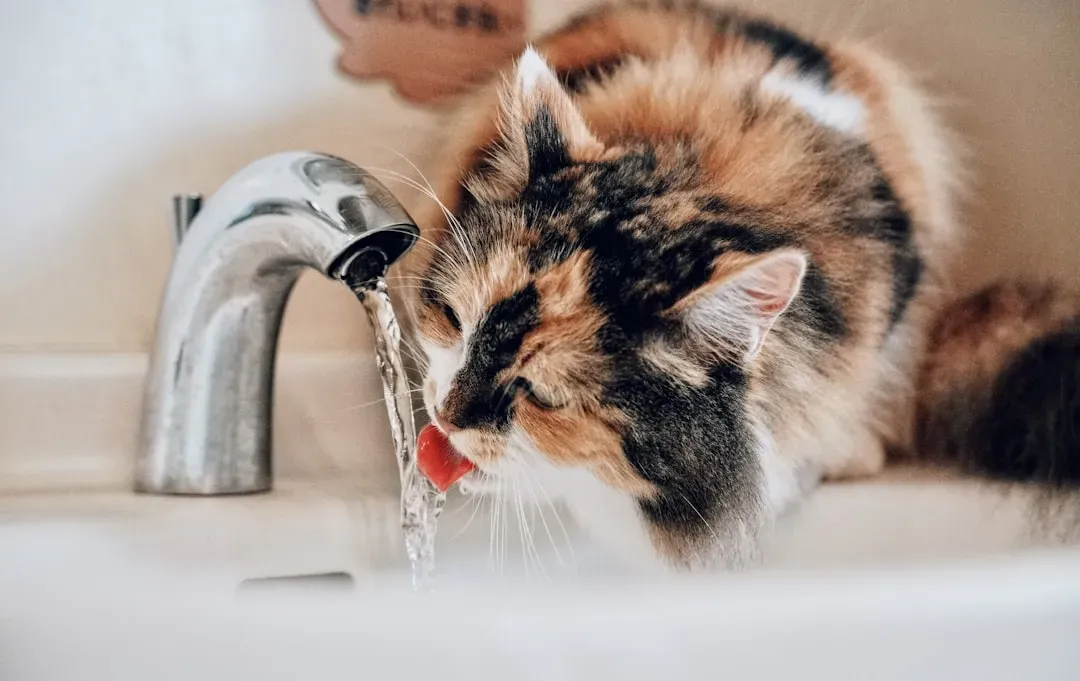
You’ve probably caught your cat pawing at the sink faucet, staring at the stream as if it personally offended them. Though domestic cats are no longer wild animals, they might find running water appealing because evolution has taught them that it is considered safer and cleaner than still water. Lots of cats seem to prefer the actual taste of running water. Think about it from their perspective – in the wild, still water can mean danger.
Cats love anything that moves, and water is very good at moving. Your cat might enjoy batting at running water from the faucet because it’s shiny and reflective and moves quickly, much like their favorite toys do. Though they probably don’t enjoy being submerged in water, the feeling of running water against their paw might be surprising and interesting, prompting them to do it again and again. It’s basically an interactive toy that comes free with your plumbing.
3. Paper Bags: A Rustle in the Jungle
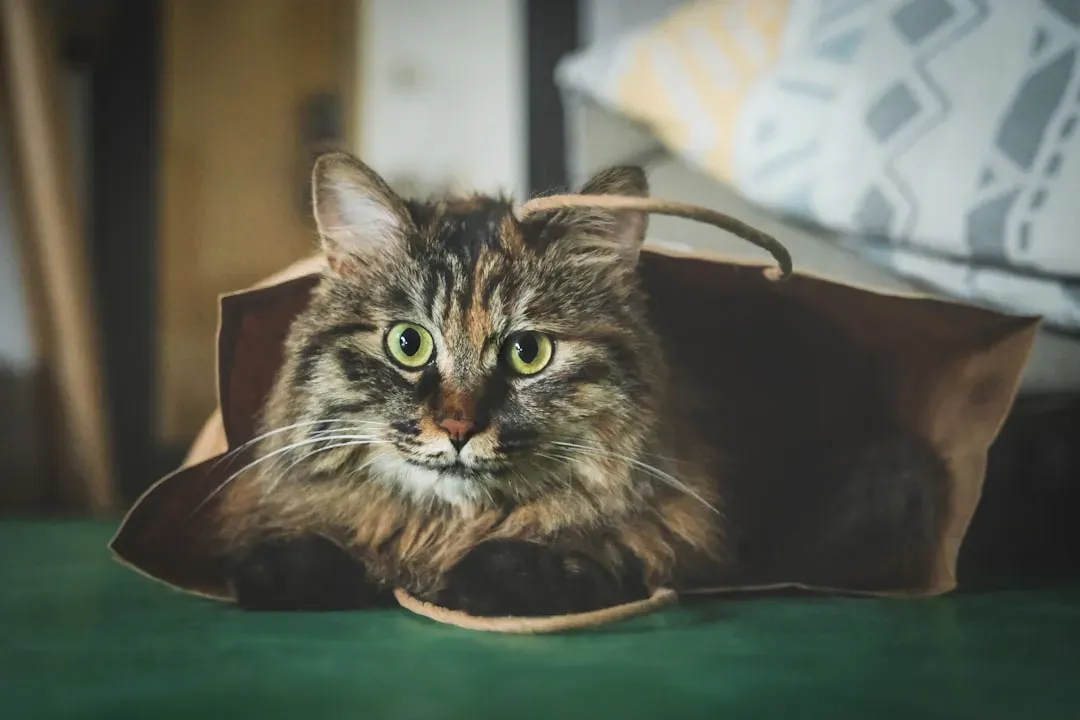
Play is a hugely important part of a cat’s life, as they use it not only to relieve boredom but also to practice their hunting instincts. Paper might not look much like a cat’s usual prey of birds or small mammals, but its crinkle and crunch can sound a bit like rodents hiding in leaves, and the way it seems to move by itself as it unfolds after scrunching can be very stimulating for cats. A simple paper grocery bag, in other words, is basically a jungle gym wrapped in sensory gold.
Beyond the sound, there’s the warmth factor too. Cats love to be warm and are biologically programmed to need more warmth than us. Domestic cats are descended from wild cats living on the African savannahs and Middle Eastern deserts, and a cat’s natural body temperature is higher than a human’s. Paper is a great insulator, and if you live somewhere with hardwood or tile floors, cats may be drawn to even a single piece of paper as a way to conserve body heat as they rest.
4. Hair Ties and Rubber Bands: Tiny Prey in Disguise
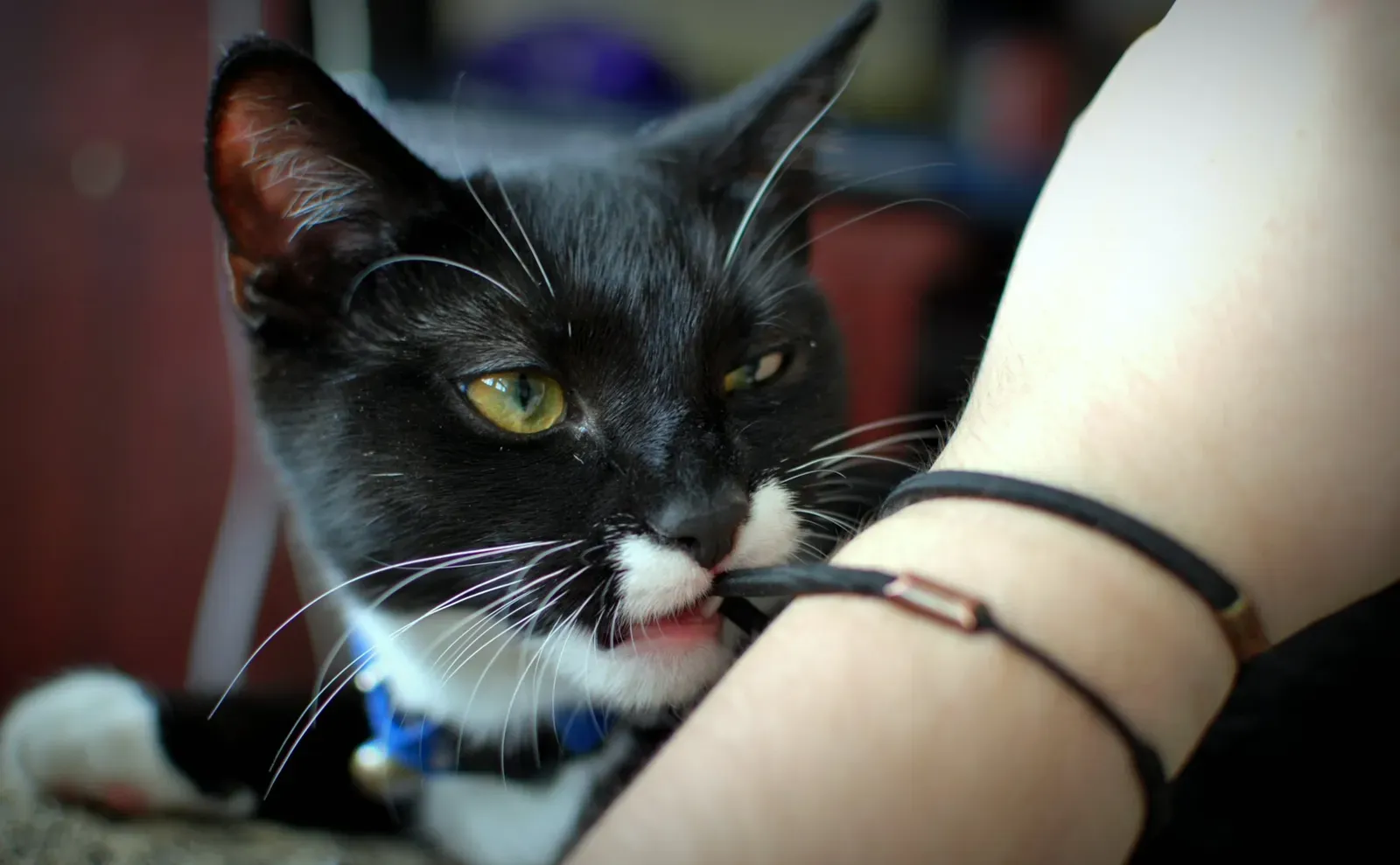
Many cats love to play with hair ties because they make ideal “prey,” stimulating their natural hunting instincts. Think about it from a cat’s perspective – a small, rubbery, bouncy loop that skitters across the floor at the slightest touch? That’s basically a miniature lizard. Generally, cats like playing with tactile toys and they may view rubber bands as prey because of their springy, chewy, tendon-like texture and small size.
There’s a smell element to this one too, which is where it gets genuinely surprising. Cats may like the comforting scent of their owner on the hair ties. Cats have an extremely well-developed sense of smell with far more olfactory receptors than humans have. In fact, a cat’s nose is almost 40 times more sensitive than ours, so even brand-new hair ties offer intriguing smells. That said, keep these items stored safely – ingesting rubber or elastic is no laughing matter for your cat’s digestive system.
5. Keyboards and Laptops: The Warm Throne of Attention
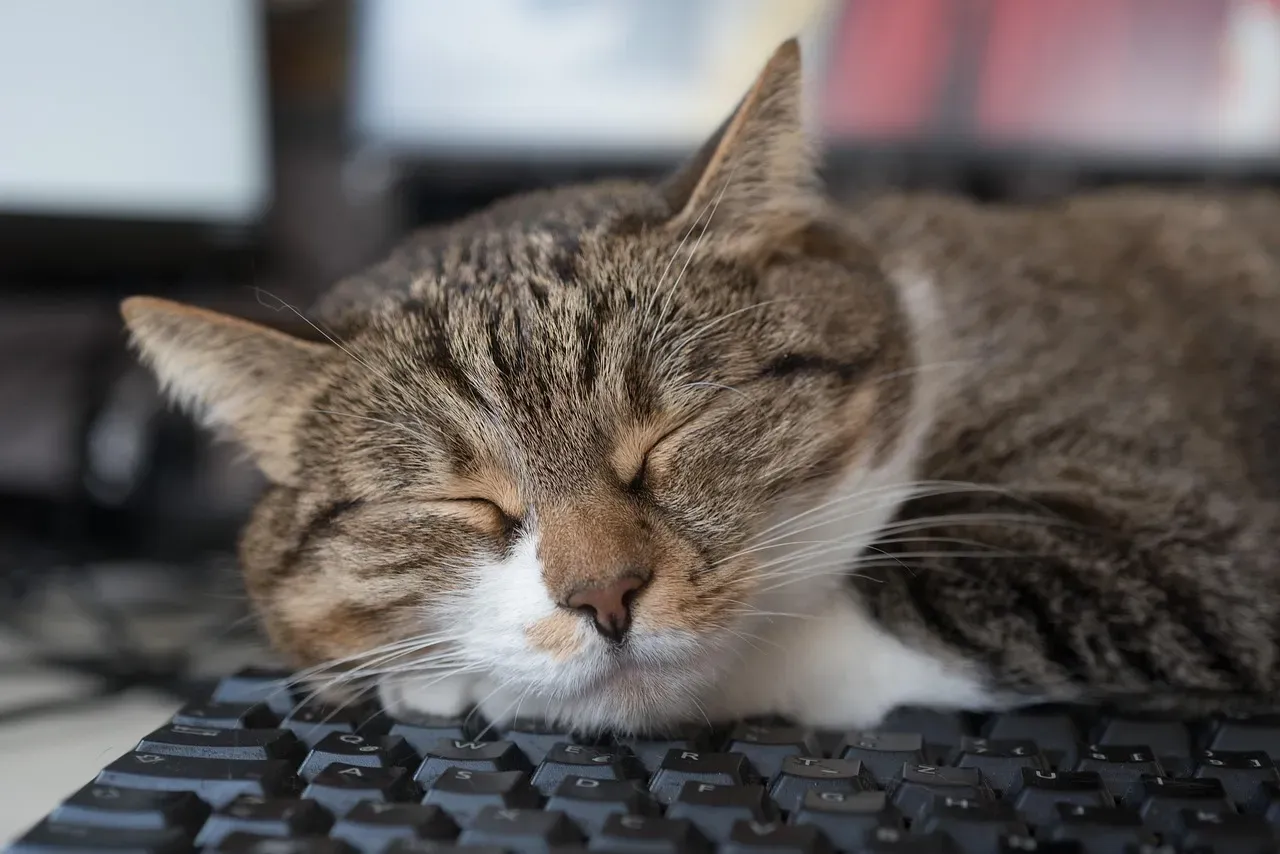
If you work from home, you already know this scene: you sit down to type something important, and within sixty seconds your cat is draped across your keyboard like a furry paperweight with opinions. Cats are very attracted to keyboard sounds. Cats will walk on keyboards sometimes just to hear the noises the keys make. Those little clicks activate the same curiosity response as rustling leaves or skittering bugs.
Cats love to be in warm spots. It’s one of the reasons they love to lounge in the sun whenever possible. Laptop keyboards especially tend to get very warm, so it makes sense that they would find keyboards to be a cozy place to rest. When your cat climbs onto your keyboard or interrupts your work, it’s often seeking attention rather than misbehaving. Cats are social in their own way, and curiosity can be their method of initiating interaction. Essentially, your laptop is warm, noisy, and has your undivided attention on it – everything your cat wants for themselves.
6. String and Ribbon: The Slithering Predator’s Dream
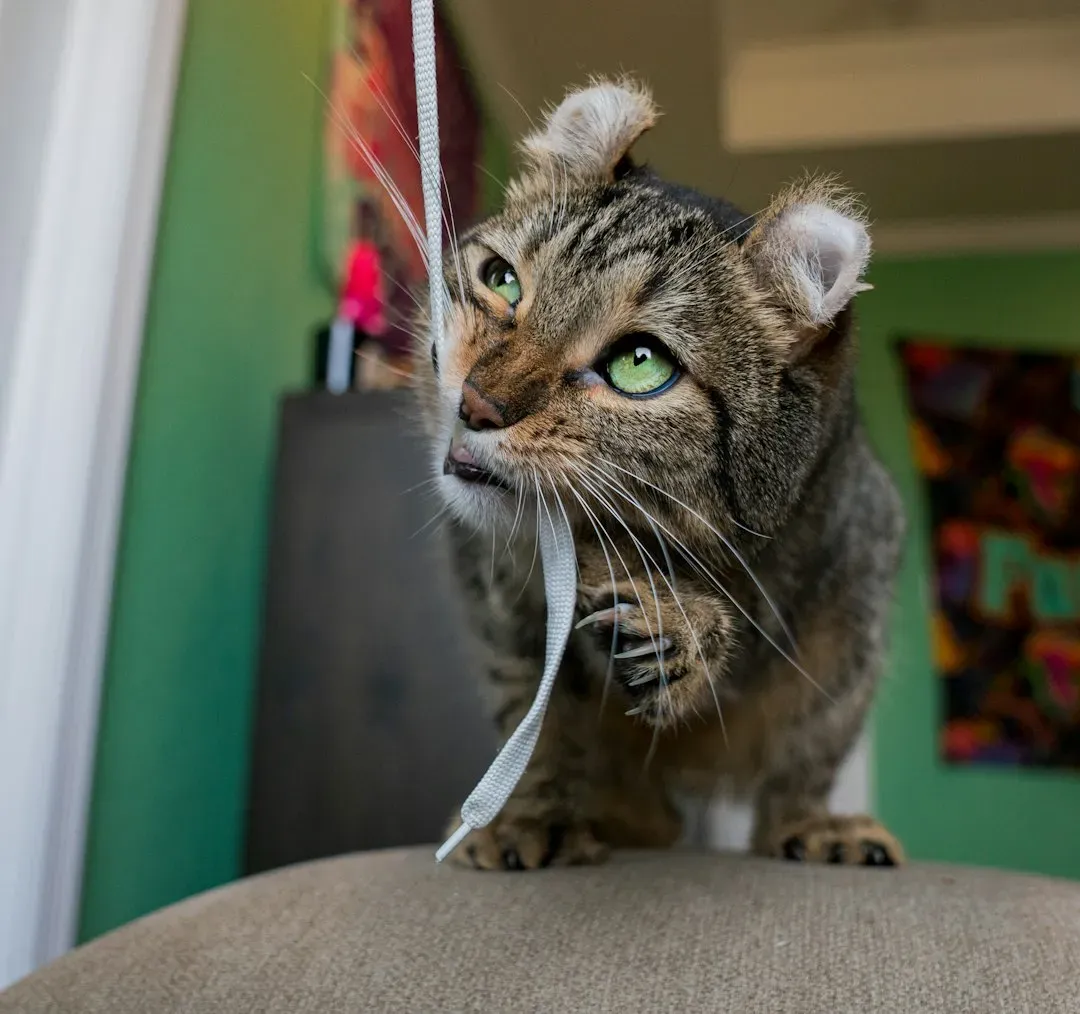
When your cat sees a piece of string dangling or draped across the floor, every hunting instinct in their body activates. The way string moves mimics snakes, lizards, or other small creatures that would trigger your cat’s predatory response. It’s one of those instincts so deeply wired into their brain that even the most pampered indoor cat can’t resist it. You could dangle a piece of twine over a tiger and probably get the same result, honestly.
Play serves as a form of physical exercise and mental stimulation for cats. String and ribbon tick both boxes perfectly, which is why cats seem almost hypnotized by it. Interacting with small moving objects allows cats to exercise control over their environment. In the wild, controlling their territory is crucial for survival, and hunting is part of this territorial behavior. Cats express this natural territorial instinct by capturing and “controlling” these objects within their domestic environment. So when your cat finally “kills” that piece of ribbon, they’re genuinely celebrating a victory.
7. Crinkly Things and Plastic Bags: A Symphony for Super Ears
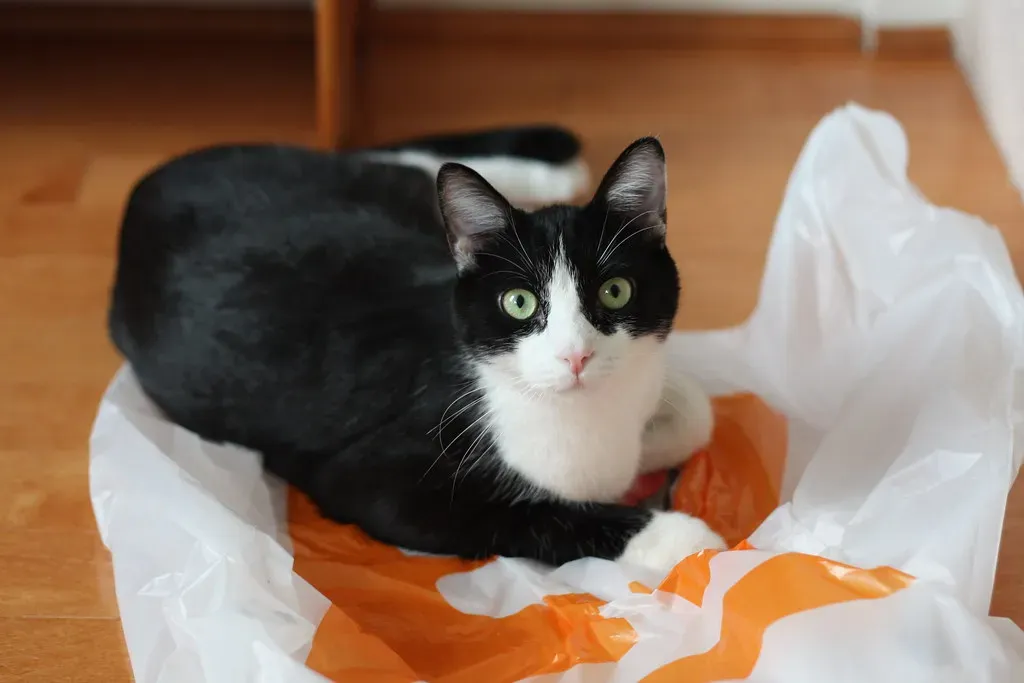
Honestly, if you want to understand why your cat goes completely unhinged over a crinkled receipt, you need to appreciate just how extraordinary their hearing is. Cats possess extraordinarily sensitive hearing capabilities, detecting frequencies up to 85,000 Hz – far beyond human hearing range. This remarkable auditory sensitivity makes crinkly sounds particularly engaging for them. To you, a plastic bag makes a vague rustling noise. To your cat, it’s a full surround-sound experience.
Cats might be attracted to crinkly noises because they resemble the sounds made by small prey animals rustling in leaves or grass, tapping into their hunting instincts. On top of that, many cats have learned to associate crinkly sounds with positive experiences, particularly food and treats. The distinctive sound of a treat bag or food wrapper creates a powerful conditioned response, and this learned behavior can extend to other crinkly items, making them inherently interesting to investigate. A word of caution though – plastic bags carry real suffocation and ingestion risks, so always supervise your cat around them.
8. Grocery Bags and New Smells: The Investigation Bureau Opens for Business
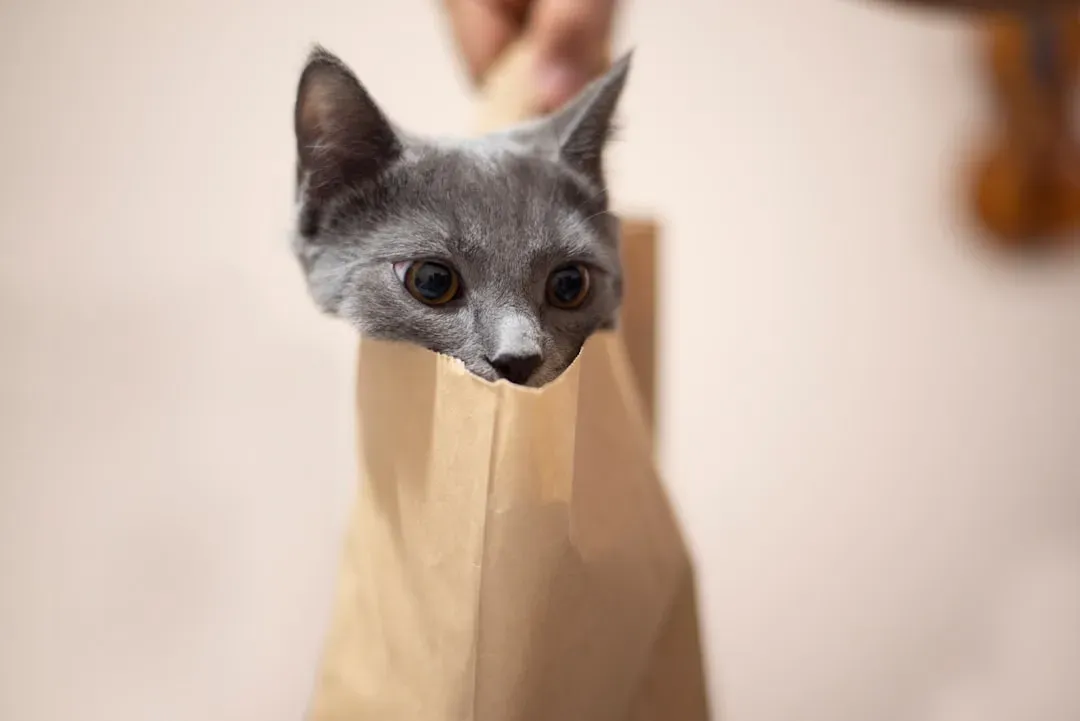
Changes in your home – like when you come home with bags of groceries – prompt your cat to immediately investigate these objects to make sure they aren’t a danger. It might look like nosiness, but it’s actually a finely tuned security system doing its job. Your cat is essentially a one-animal customs office, checking every new arrival for threats and opportunities alike.
Cats are notoriously curious creatures, so it should come as no surprise that whenever you buy something new, they make a beeline for it to investigate. Not only does the new item smell different, but your cat is also curious to see what the purpose of the new item is in their home. Every grocery bag is essentially a scent-filled news bulletin from the outside world, packed with information about other animals, environments, and foods your cat has never encountered. They’re reading the headlines one sniff at a time.
9. Sunbeams and Warm Spots: The Solar-Powered Cat
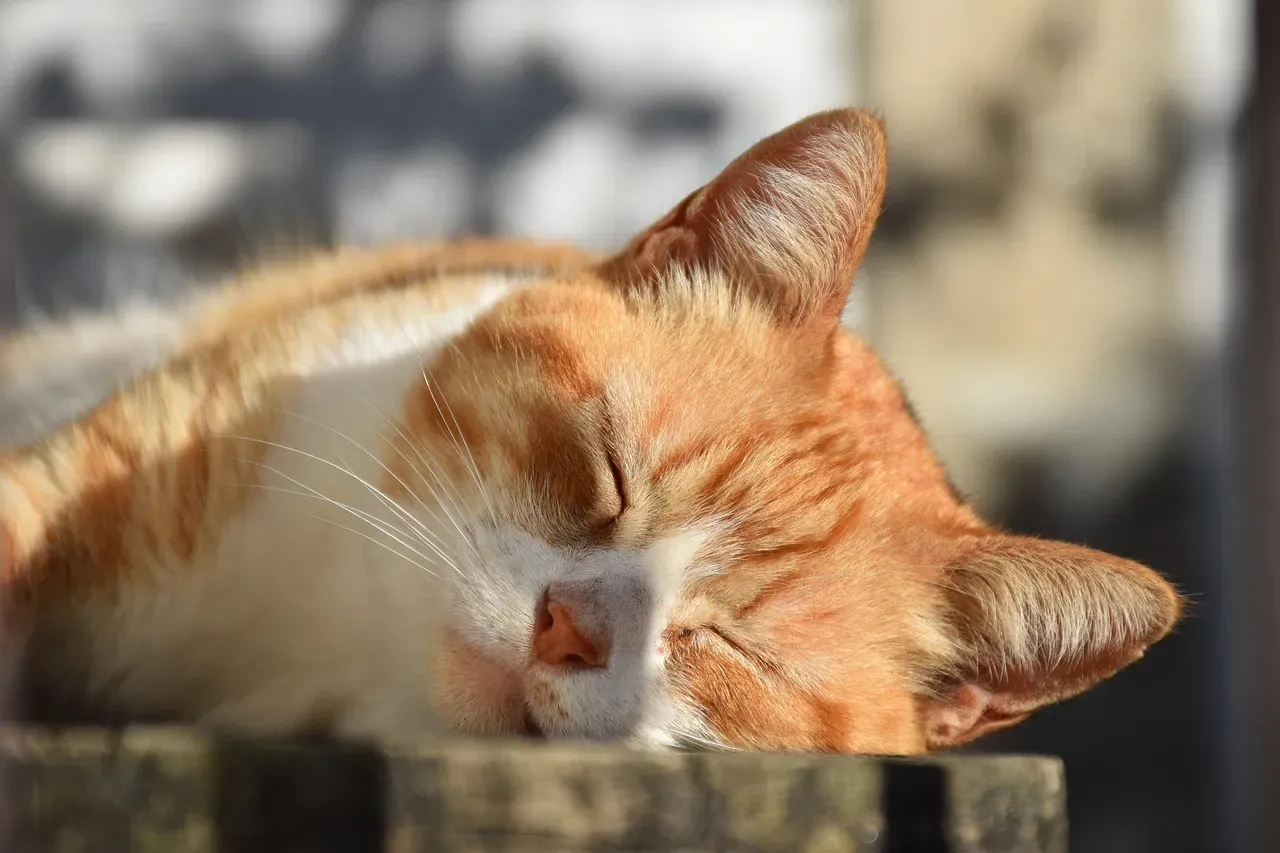
If you’ve ever watched your cat migrate slowly across the floor, following a patch of sunlight like a tiny golden shadow, you’ve witnessed one of the most instinctual behaviors in all of cat-dom. Cats love warmth. According to a 2006 study by the National Research Council, cats are most comfortable in temperatures between 86 and 97 degrees Fahrenheit – significantly warmer than the typical home environment. A sunbeam, then, is essentially a free portable heater.
It’s more than just comfort though. Cardboard is a good insulator, which means enclosed spaces heat quickly, giving cats their little pocket of warmth. This is the same reason cats love to sleep on laptops, radiators, and other heat-emitting parts of the house, including your lap. Warm spots are prioritized deeply in the feline brain – it’s survival logic from thousands of years of evolution, playing out on your living room floor every single afternoon.
10. Toilet Paper Rolls: Texture, Sound, and Pure Chaos

Let’s be real – if you have a cat and a full roll of toilet paper anywhere within reach, you’ve accepted a certain level of risk. The combination of textures, the spin, the satisfying unspooling cascade – it’s almost tailor-made to activate every cat instinct at once. Cats’ fascination with objects is a multifaceted behavior encompassing their predatory instincts, sensory stimulation, need for play and learning, territorial behaviors, and desire for stress relief and entertainment. Toilet paper rolls hit nearly every one of those buttons simultaneously.
Cats are highly intelligent creatures with complex cognitive abilities. One fascinating example of this is their understanding of object permanence – the awareness that objects continue to exist even when they’re out of sight. So once your cat has figured out that spinning the roll sends it tumbling endlessly, they’ve essentially discovered a machine that produces infinite entertainment. They’re not being destructive. They’re being engineers. Infuriating, fur-shedding engineers.
11. Bugs and Insects Near Windows: The Live Action Channel
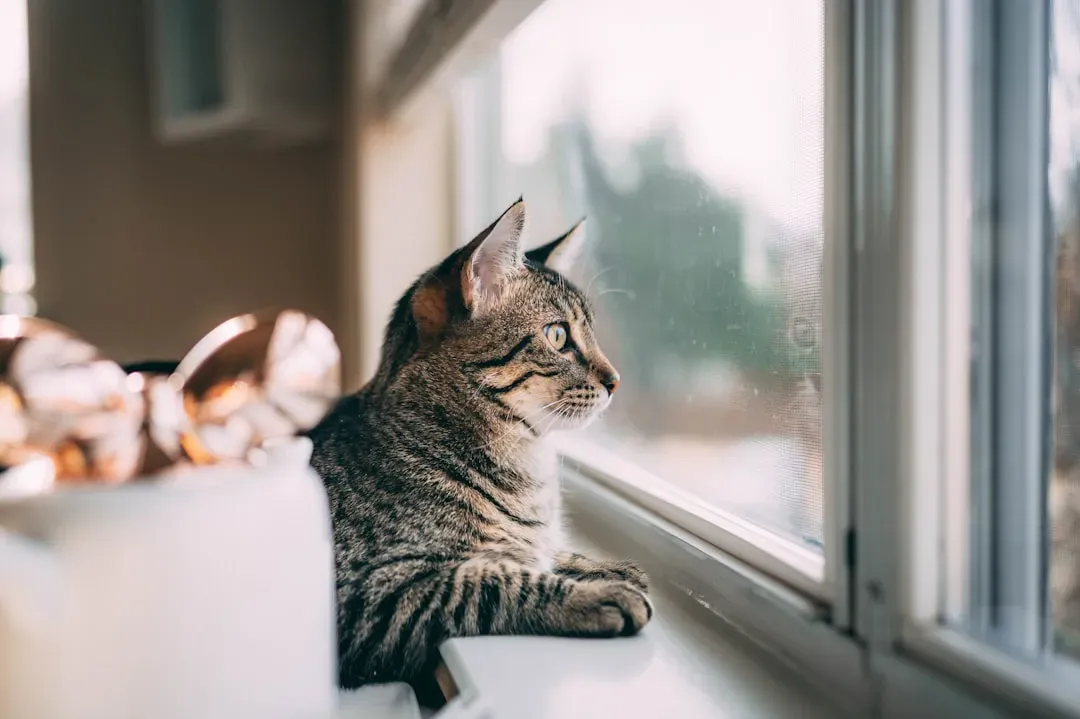
There’s a reason your cat will sit absolutely motionless at a window for twenty minutes, pupils dilated, jaw chattering, completely transfixed by a moth on the other side of the glass. You may have noticed your cat making a strange chattering or chittering sound while watching birds or insects outside. This behavior, often accompanied by a quivering jaw, is fascinating to scientists. Some think it’s a sign of frustration at not being able to catch the prey, while others believe it might be an instinctive “killing bite” motion. Either way, it’s a clear sign that your cat’s predatory instincts are in full swing.
Your cat might also climb up onto higher surfaces in your home, which gives them a better vantage point from which to observe their surroundings. Windows serve as the ultimate television screen for cats – live, unpredictable, fully three-dimensional, and always broadcasting something new. The fascination with moving objects provides a safe outlet for natural behaviors, ensuring cats remain physically fit and mentally sharp. I think it’s genuinely one of the most enriching things you can offer an indoor cat: a window with a view.
12. Your Feet Under the Blanket: The Moving Monster
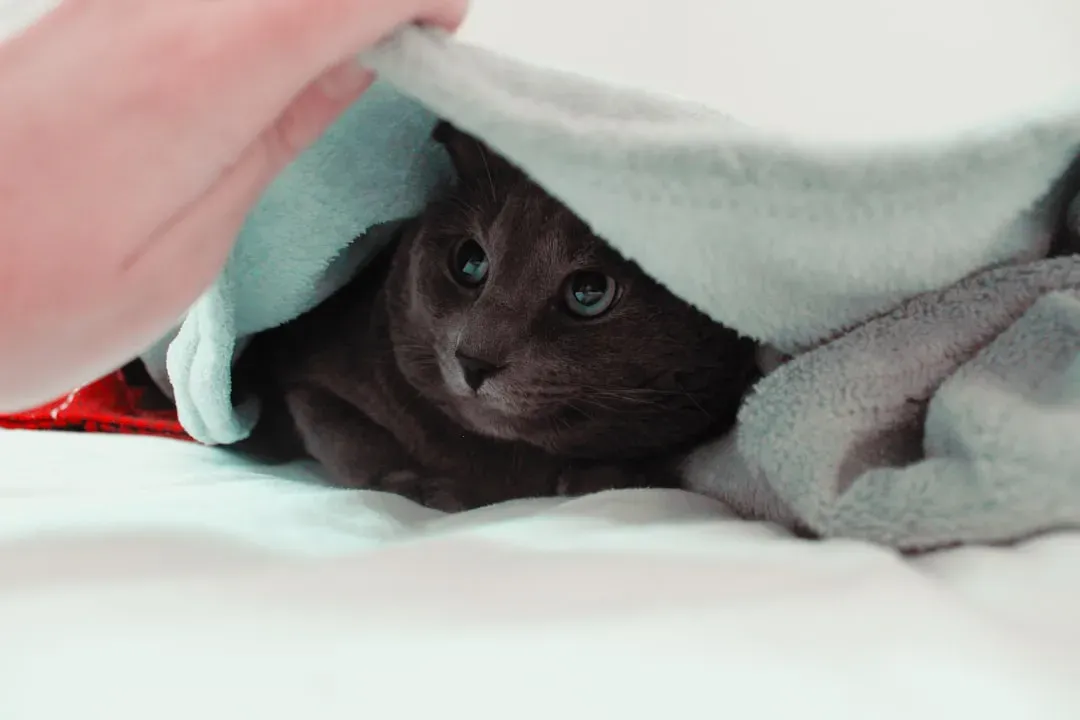
Few things seem to delight a cat more than the sight of toes wriggling under a duvet. The moment your foot shifts under the covers, something ancient and unstoppable awakens in your cat. Your cat isn’t being difficult – they’re following instincts that have been hardwired into them for thousands of years. The objects they love often trigger something primal, whether it’s their hunting drive, their need for security, or just pure curiosity. To your cat, a moving lump under a blanket looks identical in logic to a small burrowing animal trying to escape.
One fascinating example of cat cognition is their understanding of object permanence – the awareness that objects continue to exist even when they’re out of sight. This concept develops similarly to how it does in human infants. Because of this ability, cats remember that a toy rolled under the couch is still there, which explains why they paw at spaces where they’ve seen something disappear. Your foot is still under there. They know it. They’re not letting it get away this time.
Conclusion: Your Home Is Your Cat’s Entire Universe
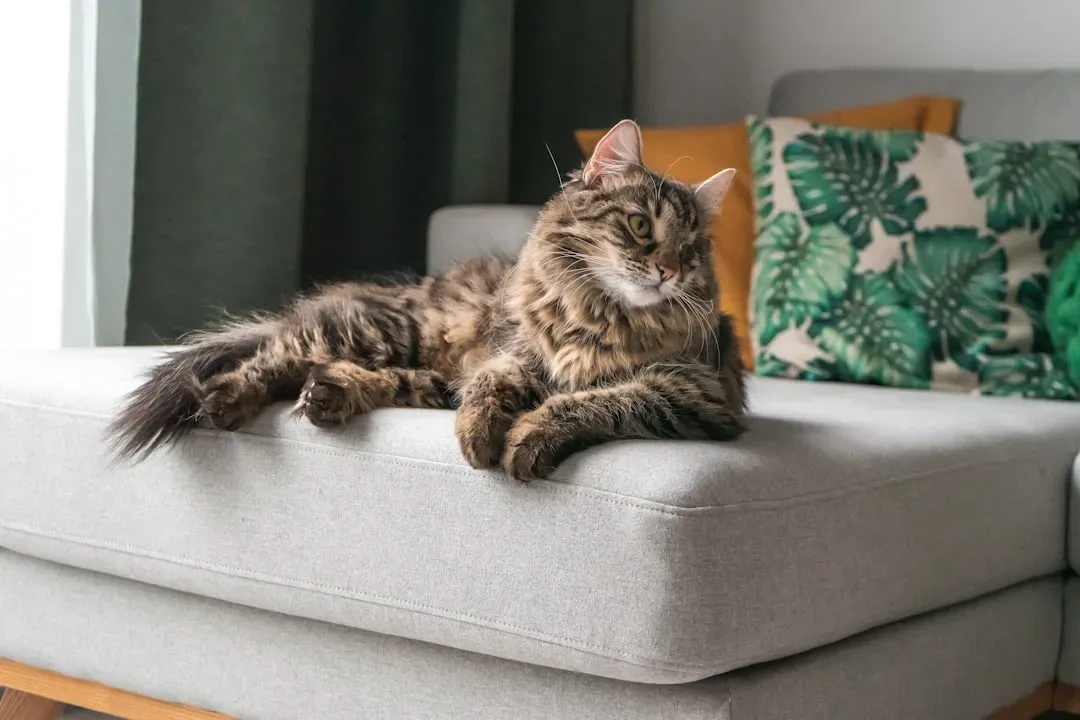
When you step back and see it all together, something genuinely lovely emerges. Your cat isn’t random, bizarre, or destructive for the sake of it. Cats don’t act randomly. Every tail flick, stare, or silent retreat is loaded with context. They’re constantly assessing their environment – measuring threats, predicting outcomes, and calculating effort versus reward. This mental filtering system is why they ignore a flashy toy but obsess over a crinkly receipt on the floor.
Their curiosity is rooted in evolution, serving as a tool for learning, survival, and social connection. By understanding the science behind feline curiosity, you can create an enriched environment that keeps your cat mentally stimulated, physically active, and emotionally content. You don’t need to spend a fortune on gadgets and gizmos. A box, a paper bag, a sunlit windowsill – sometimes the best gift you can give your cat costs absolutely nothing.
The next time your cat abandons the expensive toy and goes wild over a twist-tie from the bread bag, don’t be frustrated. Be curious. They’re showing you exactly who they are. What everyday object does your cat obsess over the most? Drop it in the comments – we’d love to hear!
Kristina is a young writer from India. An arts graduate and an avid content creator, Kristina is passionate about animals and wildlife. She enjoys exploring topics related to pet care, animal behavior, conservation, and nature, combining thorough research with engaging storytelling.