Cats have been living alongside humans for thousands of years, yet so many pet owners still feel like their feline is an unsolvable mystery. They sit, they stare, they knock things off the counter for no apparent reason. But here’s the thing – your cat is actually communicating with you constantly. You just haven’t learned the language yet.
The secret is closer than you think. It’s literally right there behind them, swishing and curling and fluffing up with every passing emotion. Their tail is one of the most expressive biological tools in the animal kingdom, and once you start reading it properly, it completely changes how you understand your cat. Let’s dive in.
The Tail Held High: Your Cat Is in a Good Mood and Ready to Connect
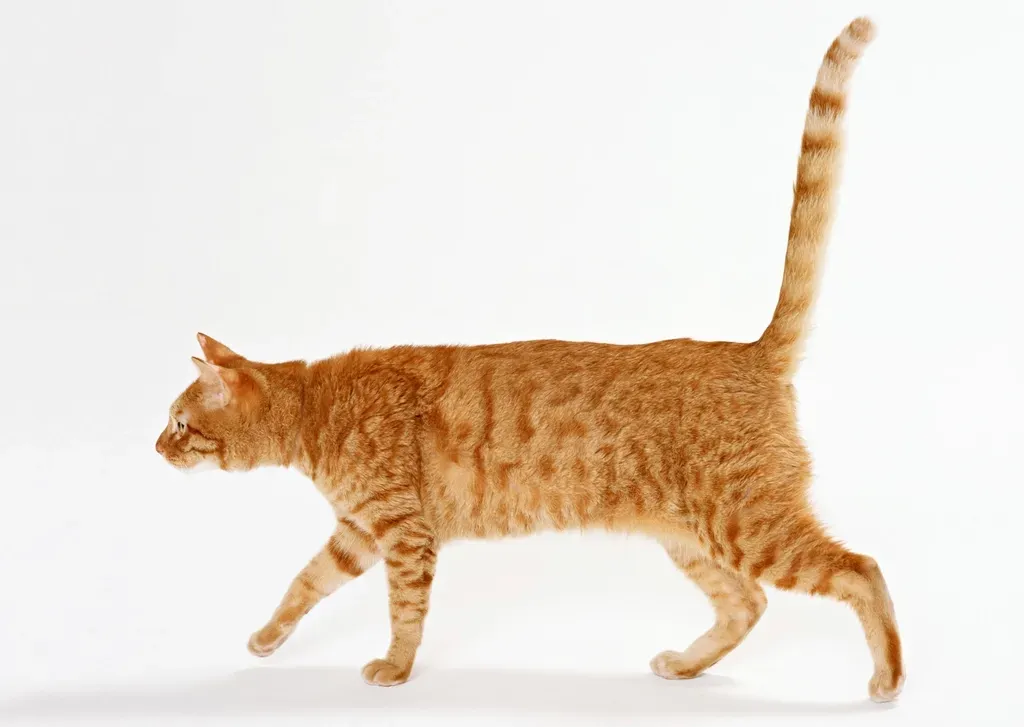
You walk into a room and your cat strides toward you with their tail pointing straight up to the ceiling, proud as a flagpole. That’s a great sign. When your cat holds their tail high in the air as they move about their territory, they’re expressing confidence and contentment, and a tail that sticks straight up signals happiness and a willingness to be friendly.
When a cat’s tail is upright, they are feeling social and confident, and are approaching in a friendly manner. Think of it like someone walking toward you with a big smile and open arms. That upright tail is your cat’s version of “Hey, I’m really glad you’re here.” This cat tail language indicates a friendly greeting, and it’s how kittens greet their mothers. If your cat approaches you with their tail up, this is a good time to pet them or play with them.
The Question Mark Tail: An Open Invitation You Should Never Ignore
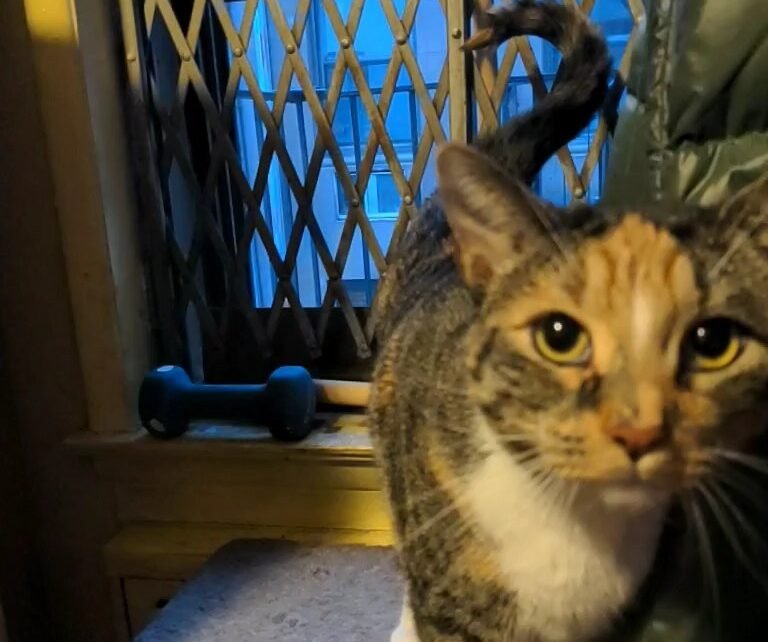
You may notice that sometimes your cat’s tail looks like a question mark – it stands upright but curls at the end. This cat tail language indicates that your cat is happy and approaching amicably, and when your cat’s tail is in this position, it means it’s an invitation to interact. Honestly, this is one of the sweetest signals your cat can give you.
If your cat bends their tail into the shape of a hook or question mark, this is a very positive sign, and the “question mark tail” is a pro-social behavior. It’s your cat essentially asking, “Do you want to hang out?” The question mark-shaped tail position is a cat’s way of asking you: would you like to play? The next time you see that little curl at the tip, drop what you’re doing and give them some attention. They genuinely want it.
The Puffed-Up Tail: Pure Fear on Display
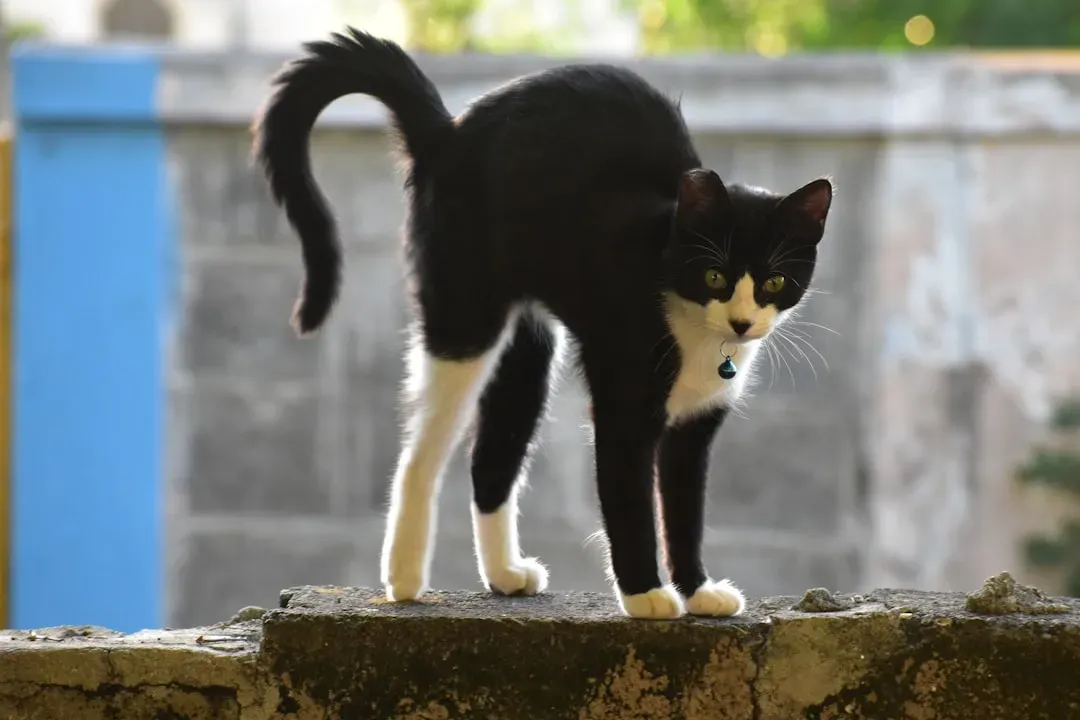
Ever seen your cat transform from a sleek little animal into something that looks like a bottle brush? That dramatic puffing is not an accident. When your cat puffs up their tail, it’s a sign of fear, and part of the purpose of puffing up the tail is to make them look bigger to other creatures around them – it’s a defense mechanism designed to communicate that they’re actually very large and scary and not worth fighting.
If your cat assumes the quintessential Halloween-cat posture with a puffed tail and arched back, then they are startled or frightened by a sudden, severe threat, and your cat’s hair stands on end so they can appear to be larger. This is called piloerection, and it’s entirely involuntary. Your cat isn’t performing. They are genuinely terrified. A puffed-up tail typically signals feelings of fear or aggression, and your cat may feel threatened or startled and is attempting to appear larger to ward off perceived danger. The kindest thing you can do in this moment is simply give them space.
The Tail Tucked Between the Legs: Something Is Very Wrong
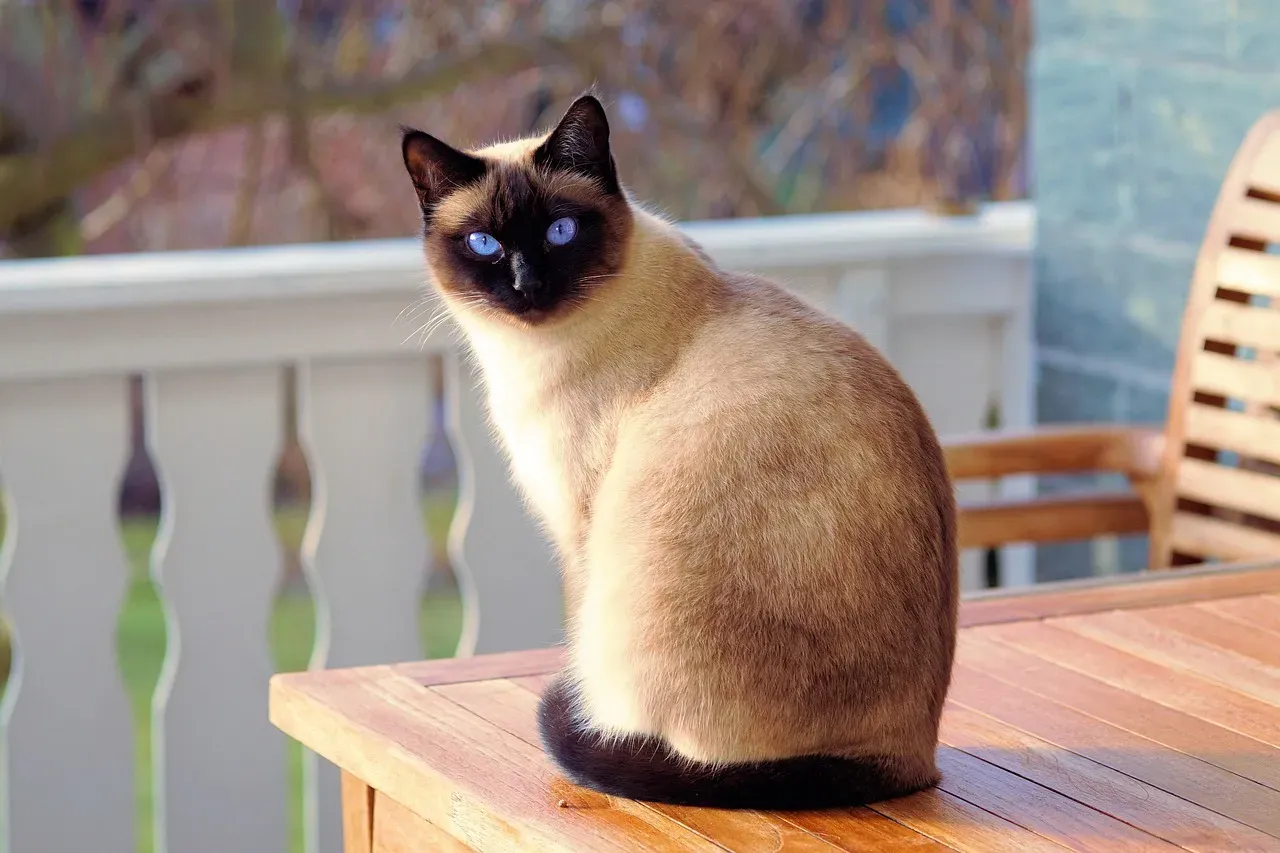
If the puffed tail says “I’m scared but trying to look tough,” then the tucked tail says something quieter and far more vulnerable. A cat who has tucked the tail between the hindlegs is very frightened – this is a submissive posture where the cat is trying to appear small and non-threatening. It’s the cat equivalent of a person curling into themselves during a panic attack.
If your cat’s tail is tucked between their legs, then they are really scared or may be experiencing pain. That last part is important. Pain and fear look remarkably similar in cats. When a cat tucks their tail under their body or wraps it around themselves, this can be a sign of uncertainty that may indicate feelings of fear and submission, and this is especially true when this tail position is accompanied with wide eyes, dilated pupils, and flattened ears. If you see all of those signs together, something is genuinely distressing your cat and it’s worth investigating.
The Tail Wrapped Around You: You’ve Been Officially Claimed
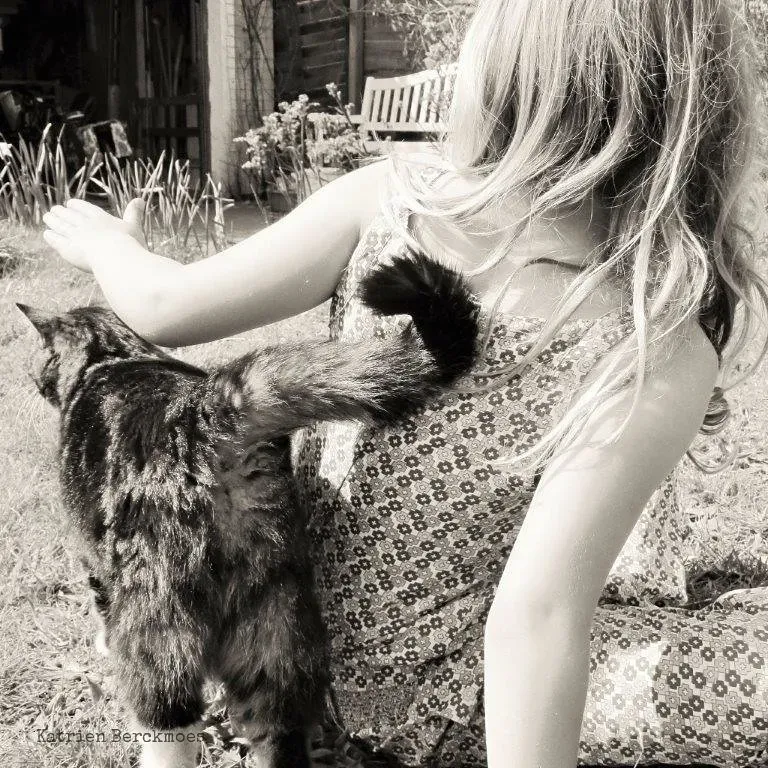
Let’s be real – there is no better feeling than a cat wrapping their tail around your ankle. It feels warm and completely deliberate, and that’s exactly because it is. When a cat wraps their tail around a person or animal, it is usually a sign of affection, and if a cat uses their tail to wrap around your leg, or perhaps another cat’s tail, this is a sign of close affection. At a biological level, a cat’s tail includes scent glands, so the tail is being used to swap scents with the other creature.
In other words, your cat is literally marking you as theirs. Not in a possessive way – in a loving, “you belong to my world” way. A tail wrapped around another cat is like you putting your arm around another person – it conveys friendship. If your cat snuggles up next to you with their tail curled around you, it means you’re part of their in-crowd and they like you a lot. That curled tail is the highest compliment your cat can pay.
The Lashing Tail: Back Away Slowly and Give Space
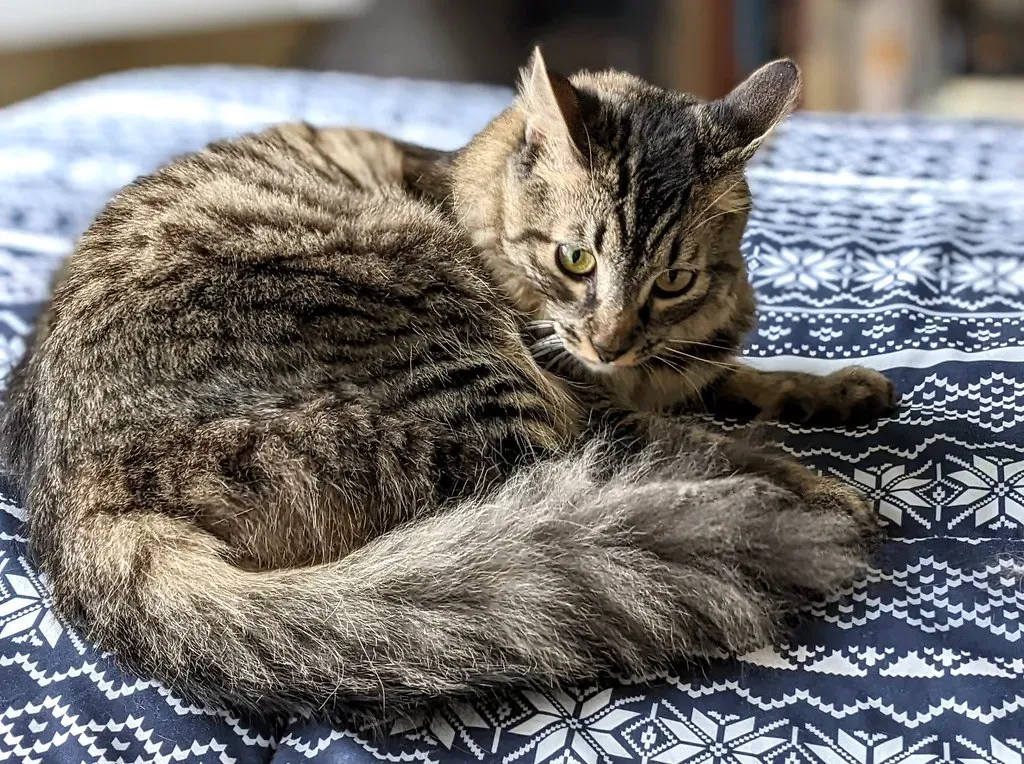
You’ve probably seen it. You’re petting your cat, everything seems fine, and then suddenly the tail starts thrashing side to side like it has its own agenda. That’s your cat’s warning system firing up. Whipping or lashing of the tail is a sign that a cat is angry, and that they may take a sudden, strong action in the near future.
A tail whipping back and forth indicates agitation, and if that warning is ignored, aggression will likely follow – this is a clear message to give your cat some space. Think of it like a traffic light going from yellow to red. If you or a visitor is petting your furry friend and tail thrashing starts, your cat might be shouting, “Stop!” and it is wise to do so unless you want to witness an entirely different kind of communication, such as hissing or swatting. Your cat isn’t being mean. They’re just being very, very clear.
The Slow, Gentle Swish: Calm, Curious, and Completely at Ease
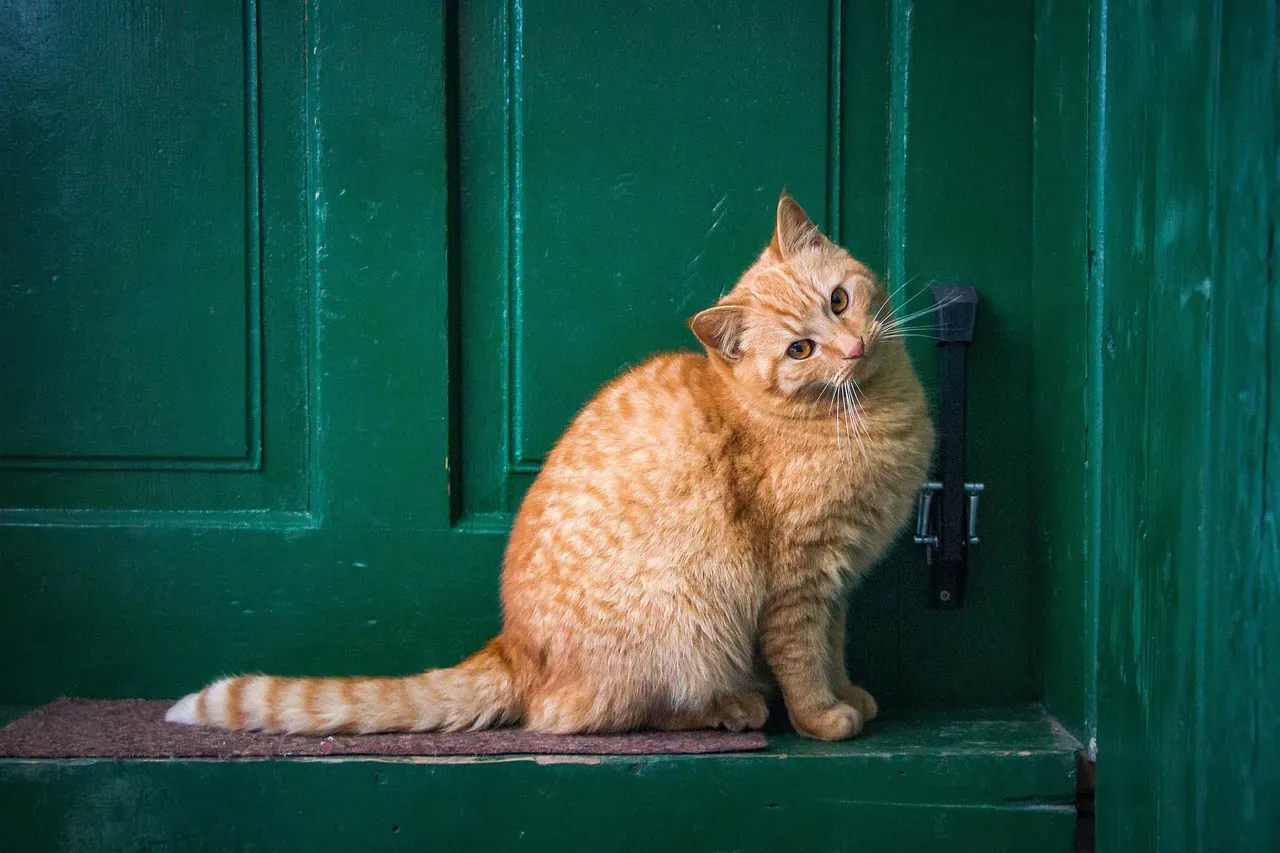
Not every tail movement is a red alert. Sometimes it’s just the feline version of a contented sigh. Swishing tails slowly from side-to-side in a soft, fluid manner indicate cats who are relaxed, calm, and perhaps mildly interested in something – just let these purring machines hang out and enjoy life. It’s one of the more underrated tail signals, honestly.
When a cat’s tail is in motion and looks fluid and soft, it’s “swishing” and generally indicates a cat who’s relaxed or calmly interested in what’s happening. Imagine someone sitting on a porch on a warm evening, just gently tapping their foot to music. That’s the energy here. If your cat’s tail slowly swishes when sleeping, they’re likely only partially asleep – as both predators and prey, cats remain in tune with their surroundings even while resting. So even in their most peaceful moments, they’re still quietly tuned in to the world around them.
The Quivering Tail: Pure Excitement, Pure Joy
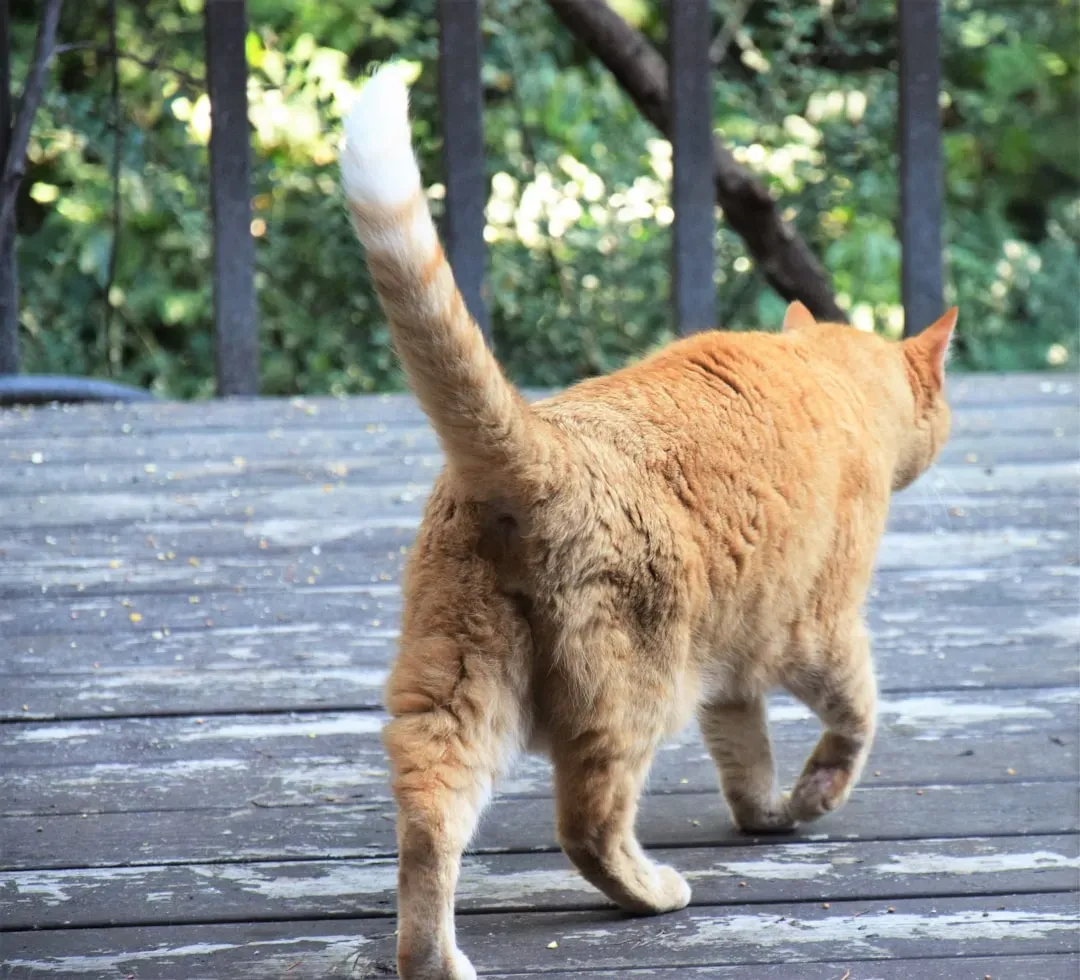
This one is genuinely delightful once you know what it means. You walk through the front door after a long day, and your cat rushes over with their tail held up and vibrating like a tiny motor. I think this might be one of the most underappreciated expressions of feline happiness out there. Your cat may quiver their tail when they are especially excited to see you or another cat.
The cat is excited or anticipating something – you may notice your cat’s tail quivering while waiting for you to prepare a meal. It’s that barely-contained anticipation, like a kid the morning of their birthday. This might indicate excitement, happiness, and anticipation, and your cat may want to cuddle, play, or better yet – a treat. Worth noting though: sometimes, when a cat quivers their tail while holding it straight up and backing up against a vertical surface, they may be urine marking. Context, as always, is everything.
The Twitching Tip: Hunting Mode Activated
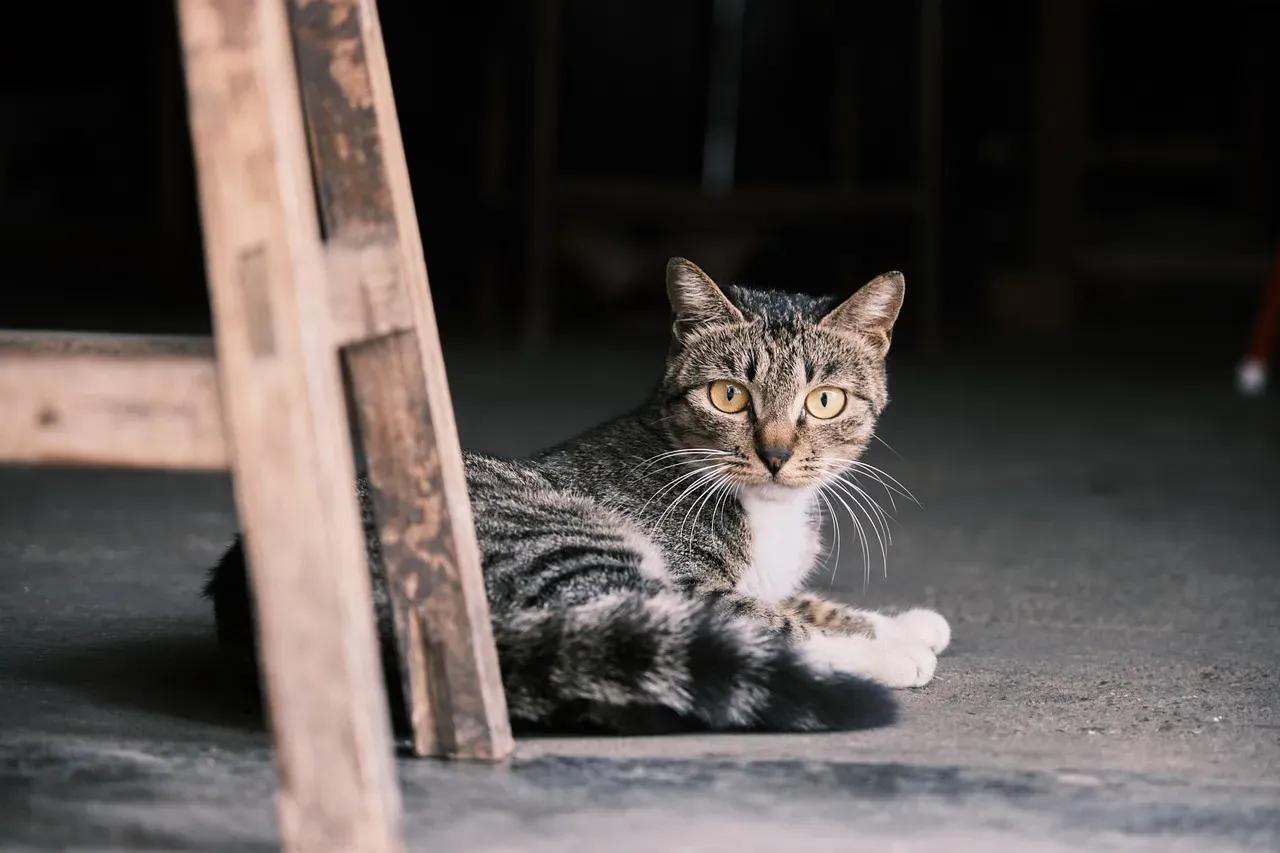
This is the subtle one. Your cat is sitting perfectly still, looking out the window at a bird, and only the very tip of their tail is moving – just barely, back and forth. It’s almost hypnotic to watch. With flicking, just the tip of the tail is moving and may flip back and forth in a rapid motion – this motion can be part of predatory behavior or predatory play, meaning that your cat might see something they want to pounce on, whether for playtime or to attack.
Cats may also twitch the tip of their tail if they are focusing on prey or preparing to pounce on a toy, so make sure you interpret their tail position in accordance with the situation and other body language cues. It’s all about the stillness surrounding that tiny movement. Tail twitching is one of those cat tail signals that can have a variety of meanings depending on the context – when a cat is focused on something, such as a toy or prey, they may exhibit quick, subtle twitching reflecting heightened attention, but if the tail begins to thrash or twitch more rapidly, it can also signal mild irritation or annoyance. The twitch is the starting gun. The pounce is close behind.
The Tail Curved Low or Tucked Down: Anxiety and Defensiveness
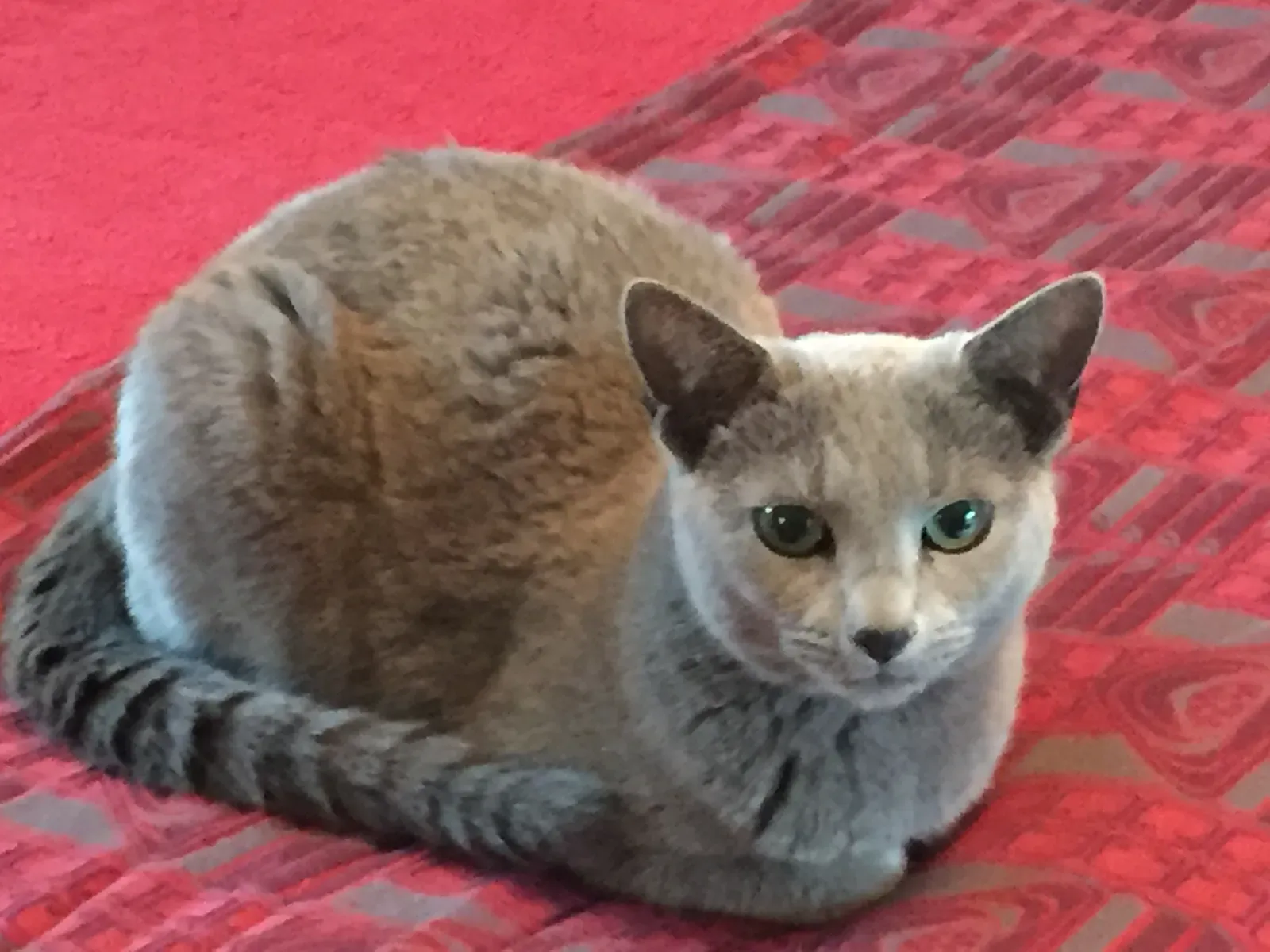
A lowered tail doesn’t always mean your cat is in full panic mode, but it’s definitely a signal worth paying attention to. A cat may lower their tail below the level of their back if they are frightened or anxious, and if your cat’s tail is tucked between their legs, then they are really scared or may be experiencing pain. The lower the tail drops, the deeper the discomfort tends to go.
A downward curve can mean defensiveness, while a relaxed cat will carry their tail in a neutral or low position. So there’s a nuance here – a softly resting low tail on a relaxed cat is fine, but a sharply curved or tucked-under tail on a tense cat is a different story entirely. One important reason to pay attention to your cat’s body language is to catch any signs of illness, pain, or distress early on, as cats are masters at hiding pain or illness – by understanding your cat’s normal body language and behavior, you’ll be better equipped to notice subtle changes that could indicate a health issue. If the tail stays persistently low for days, a vet visit is genuinely worth it.
Conclusion: Your Cat Has Been Talking All Along
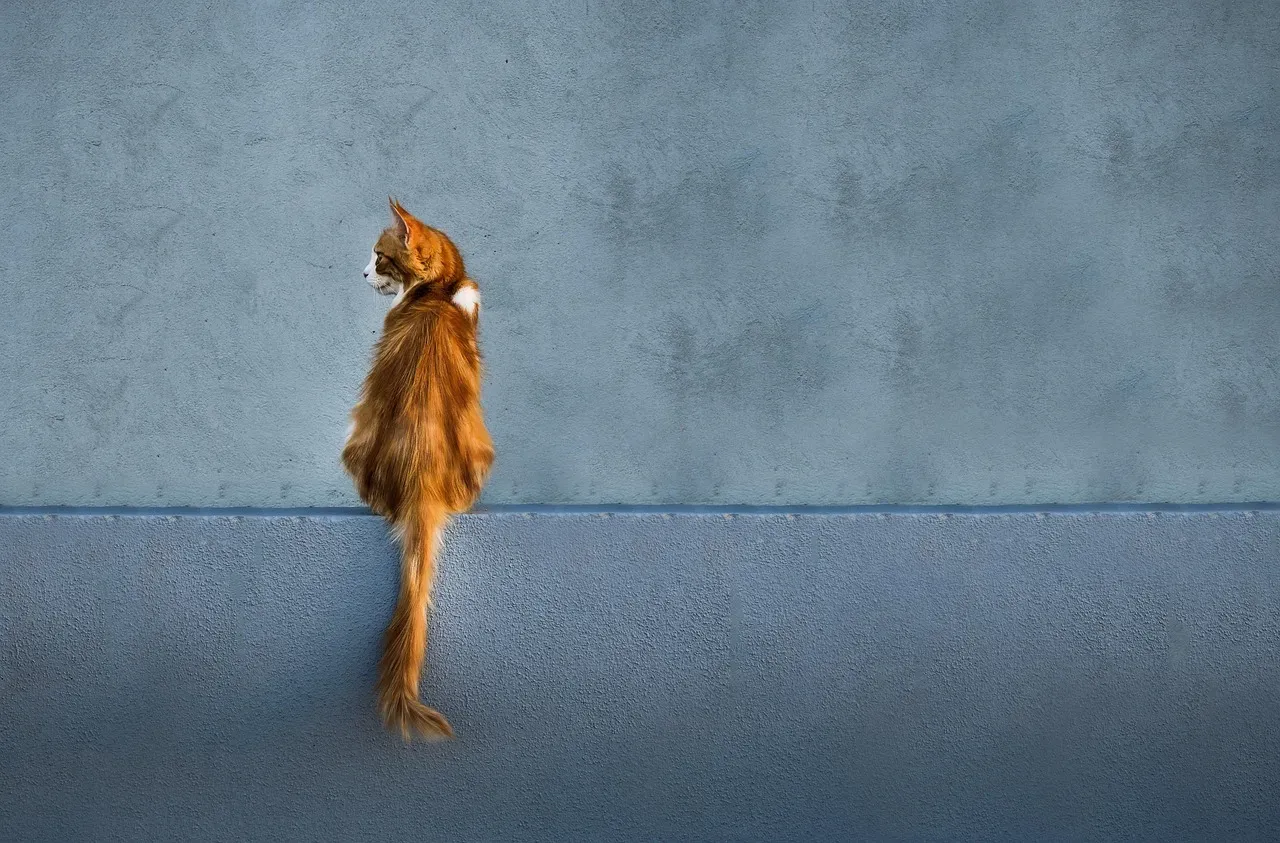
Here’s the beautiful truth – your cat has never been silent. Every tail position, every flick, every dramatic puff is a sentence in a language that most humans have simply never been taught to read. Although you should look at more than just their tail movements to fully understand your cat’s emotional state, the tail may be the most expressive part of a cat’s body language.
Once you start paying attention, it’s hard to unsee. That raised tail walking toward you? Affection. The twitching tip at the window? Pure predator focus. The slow, fluid swish on the couch? Total contentment. Cats are masters of communication and your job is to pay attention – if you learn to accurately read body language signals and respect what your cat is telling you, it will create trust and strengthen the bond you share.
The relationship between a cat and their human deepens enormously when communication flows both ways. Your cat has always been trying. A cat’s tail is one of their most expressive features, and they use it to let us in on a world of feelings and emotions – once you better understand feline body language and know what your cat is trying to convey, you can respond to them when they’re feeling happy or assist them when they’re stressed, and all this knowledge can help you form a deeper bond with your furry friend. So the next time your cat walks into the room, look at their tail first. What do you think they’re telling you right now?
Kristina is a young writer from India. An arts graduate and an avid content creator, Kristina is passionate about animals and wildlife. She enjoys exploring topics related to pet care, animal behavior, conservation, and nature, combining thorough research with engaging storytelling.