You’ve probably watched it happen more times than you can count. Your cat walks casually past a perfectly decent, brand-new cat toy, ignores it completely, then goes absolutely feral over a dust bunny rolling across the kitchen floor or a forgotten hair tie sitting on the bathroom counter. It’s funny, sure. Maybe a little baffling. Honestly, I think it’s one of the most misunderstood things about life with a cat.
There’s a surprising amount of real science behind this seemingly ridiculous behavior. Your cat isn’t broken, weird, or just messing with you. There’s something ancient, hardwired, and deeply fascinating going on inside that little furry head. Stick around, because what you’re about to discover might completely change how you see your cat’s daily drama.
Your Cat Is Still, Essentially, a Wild Hunter Trapped in Your Living Room
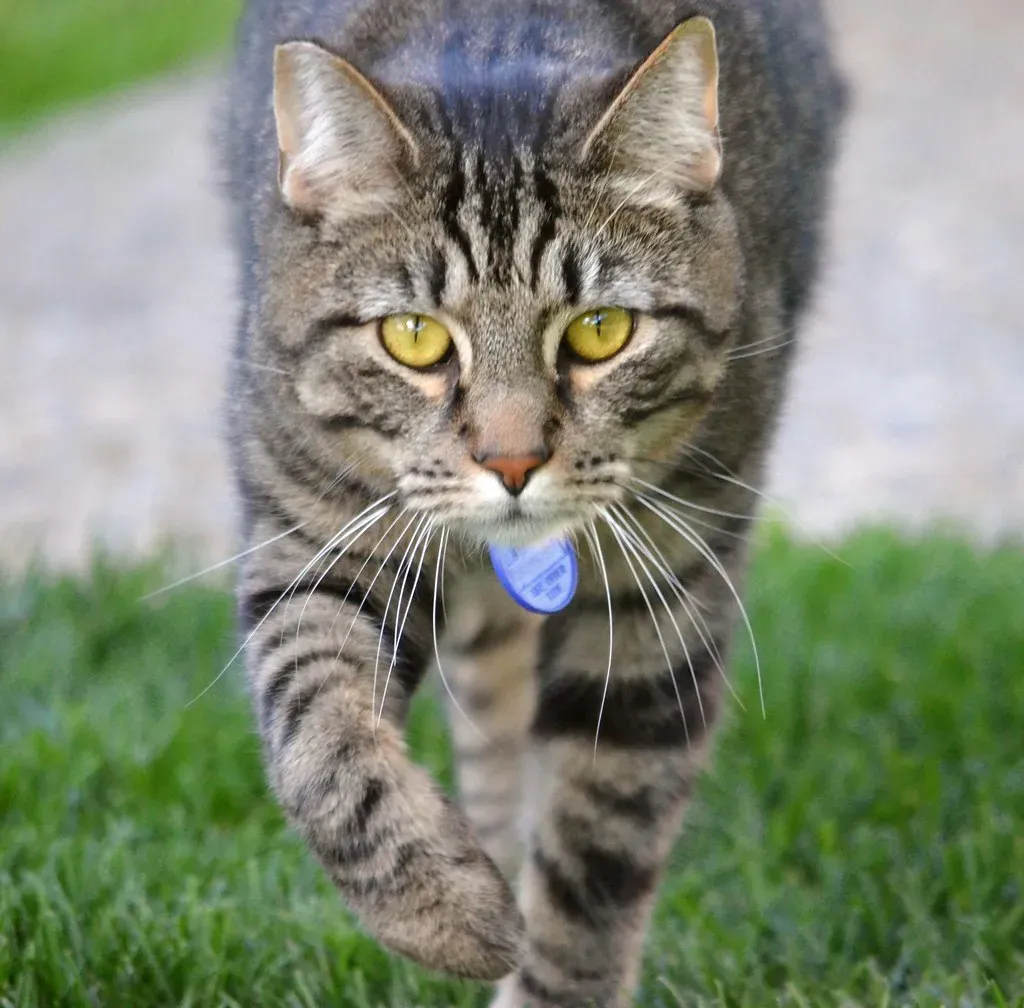
Let’s start with the most important thing to understand: your well-fed, couch-napping feline companion is not as domesticated as they might look. The domestic cat is a predatory species, and much like their wild ancestors, domestic cats are solitary hunters. Until quite recently, cats were mainly kept to control rodent populations rather than as pets, and during that time, only the best hunters survived and reproduced. Think about that for a moment. Your cat descends from centuries of elite, cold-blooded hunters.
There’s been very little selective breeding of cats, so their instinctive need to hunt remains deeply strong. This is wildly different from dogs, who have been selectively shaped for companionship over thousands of years. Your cat? Basically still operating on ancient firmware. The living room is the savanna now, and the dust bunny is the mouse.
The Movement Trigger: Why Something Tiny and Skittery Is Irresistible
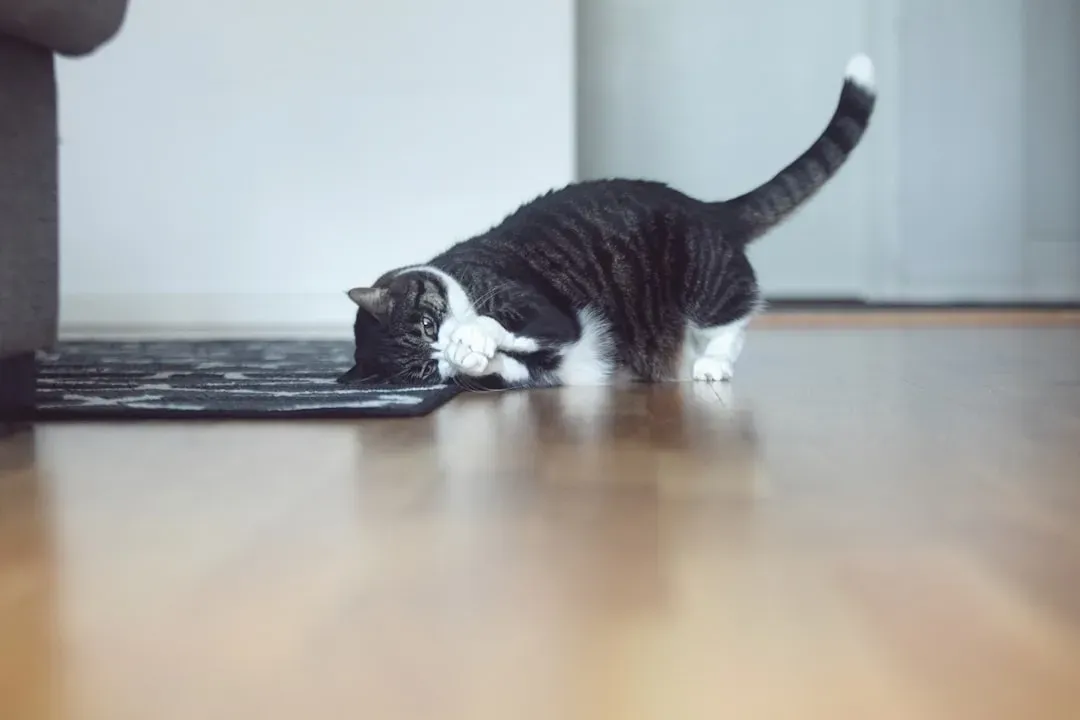
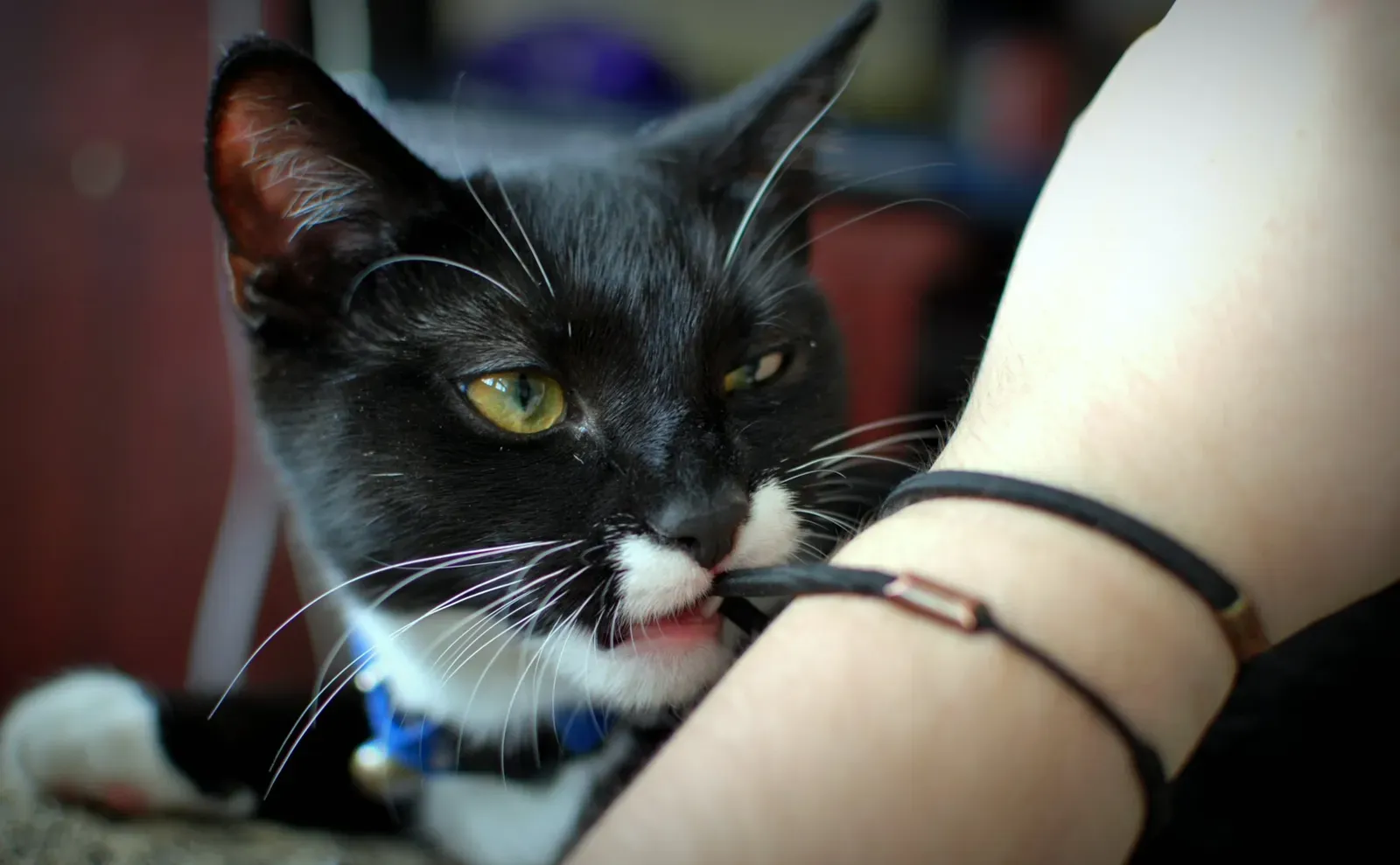
What attracts a cat to its prey is sudden, quick movements. It stands to reason, because of the way hair ties flit and fly around when being played with, that a cat would tap into its inherent hunting instinct. This is exactly why a hair tie bouncing off a tile floor is basically crack cocaine for your cat. It doesn’t matter what the object is. It matters how it moves.
Cats are natural-born hunters, and hair ties trigger their predatory instincts in several ways. The springy, unpredictable movement of these elastic bands mimics the erratic motion of small prey like mice or insects. A dust bunny tumbling in a breeze? Same principle. It moves like something alive and small, and your cat’s brain lights up like a pinball machine. You can spend a fortune on elaborate cat toys, but a rogue puff of fluff will always win.
Size and Shape Matter More Than You Think
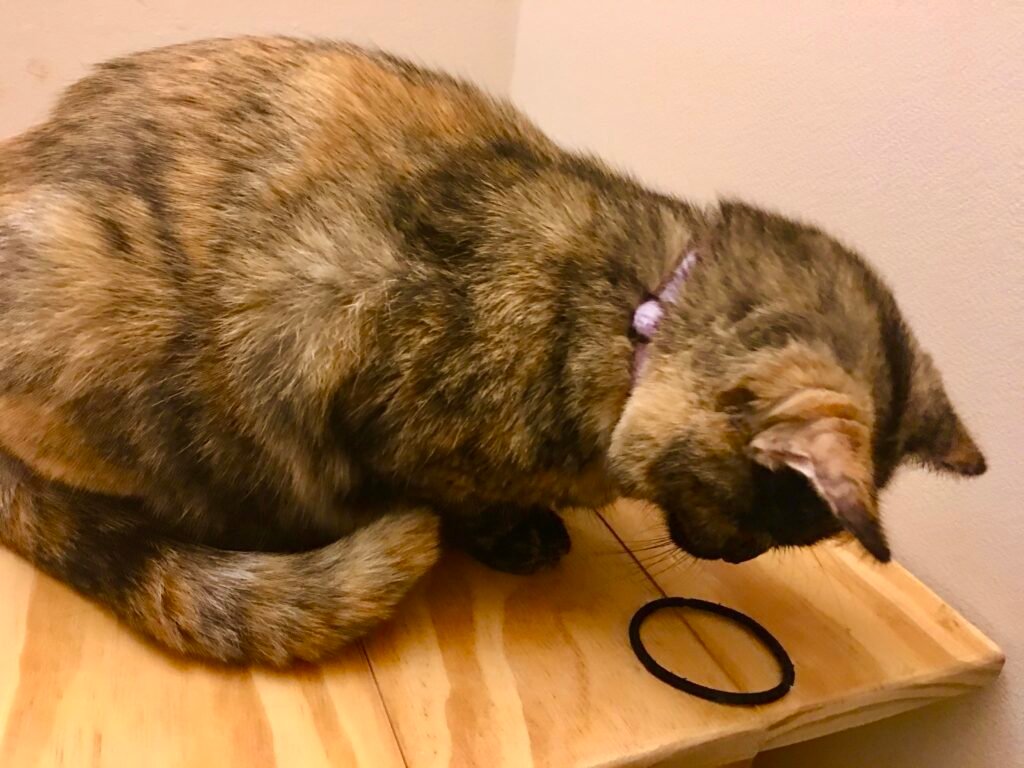
The texture and shape of a hair tie are similar to that of a small animal or bird, which triggers a cat’s instinctive urge to investigate. Additionally, the movement of the hair tie when it is played with encourages them to continue their pursuit. It’s not random at all. Your cat is essentially performing a subconscious size-check, and small, compact objects pass the test every time.
As cats hunt alone, their prey is small in size, and most commonly small mammals and birds. This means your cat’s predatory template is specifically calibrated for small, quick, lightly weighted things. A dust bunny is almost the perfect size and weight of a mouse. A hair tie, when it goes flying, feels like a fleeing insect. The fit is uncomfortably perfect, honestly.
Your Cat’s Supercharged Senses Are Reading Things You Can’t Even Detect
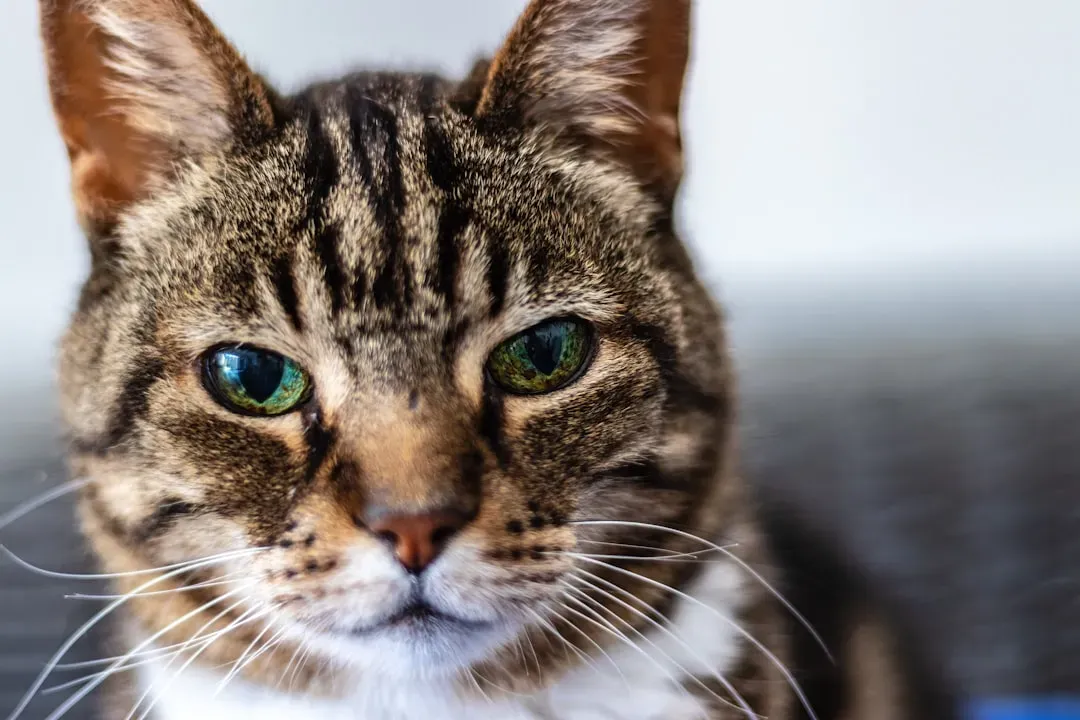
Your cat experiences touch through a complex network of highly specialized sensory organs spread throughout their body. While they possess nerve endings across their entire form, their whiskers and paw pads stand out as extraordinarily sensitive instruments. These sophisticated touch receptors transform your cat’s body into a living radar system, constantly gathering information about their environment. When your cat bats a hair tie, they’re not just playing. They’re reading it like a book.
Cats have more than 200 million odor sensors in their noses. Their sense of smell is 14 times better than that of humans. Your hair tie carries your scent, the scent of your hair products, and possibly faint traces of skin cells. To your cat, that’s a rich chemical story. Hair ties have a scent that cats find appealing, thanks to their high number of scent receptors. This scent adds to the overall allure of hair ties for cats. They’re not just chasing an object. They’re investigating an entire world of information you can’t even perceive.
Playing Is Not Playing – It’s Practicing to Kill
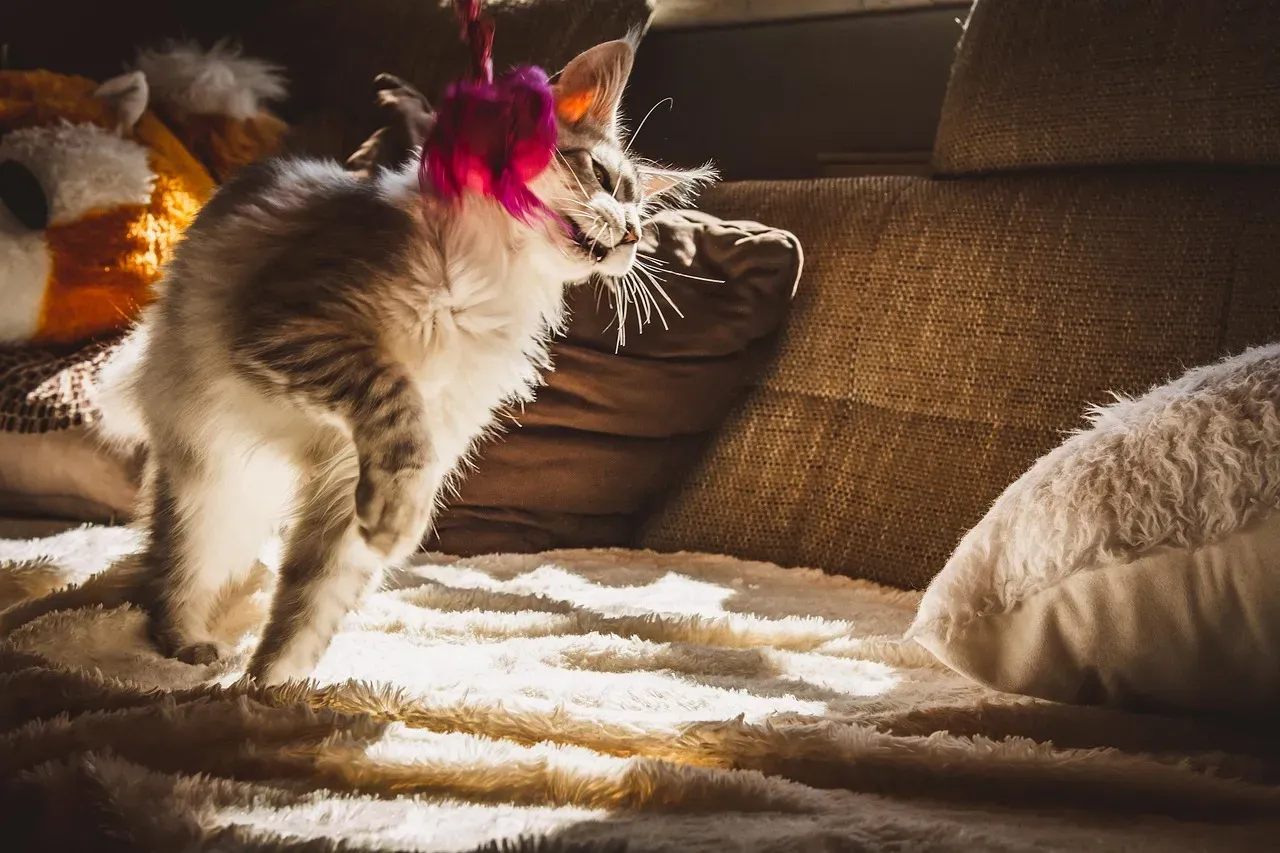
Here’s the thing most cat owners get completely wrong. When your cat “plays,” they’re not goofing around in the human sense. Predatory play in cats comprises two characteristic subtypes: prey-play, when instead of or before killing captured prey the cat performs non-lethal elements of hunting behaviour on it; and object play, when the cat performs the behavioural repertoire of hunting and killing on inanimate objects. So that dramatic pouncing attack on your hair tie? A full rehearsal of a kill sequence.
Kittens are programmed from birth to chase. Through play, they develop the coordination and timing needed to successfully capture their target. They learn to adjust their speed to the speed of moving objects. They learn to gauge distance by pouncing. Play gives the kitten a chance to learn to make judgments by experience. Your adult cat never fully stops this process. Every dust bunny chase is a training session. Every hair tie pounce is a skills review.
The Secret Stash: Why Your Cat Keeps ‘Collecting’ Your Hair Ties
If you’ve ever found a small pile of missing hair ties under the couch or behind the dresser, congratulations. You live with a hunter who caches their kills. Cats are opportunistic hunters, which means they will hunt when the chance arises, even if they’re not hungry at that moment. They will then store and save their catch for later. If your cat is treating hair ties as prey, then they might be hoarding them for later.
One unusual mode of gathering behavior involves the collecting and hoarding of objects. The items are not just retrieved; they are stashed and hoarded, even though the collector cat seems to have no further use for them. It’s part pride, part instinct, and part deeply adorable obsession. Some cats naturally collect toys and other objects, mimicking hunting and caching prey. This behavior can be especially common in indoor cats looking for activities to engage them. In other words, your cat isn’t stealing your hair ties. They’re just claiming their trophies.
What Happens When Your Cat Doesn’t Get to Hunt (Even Pretend Hunting)
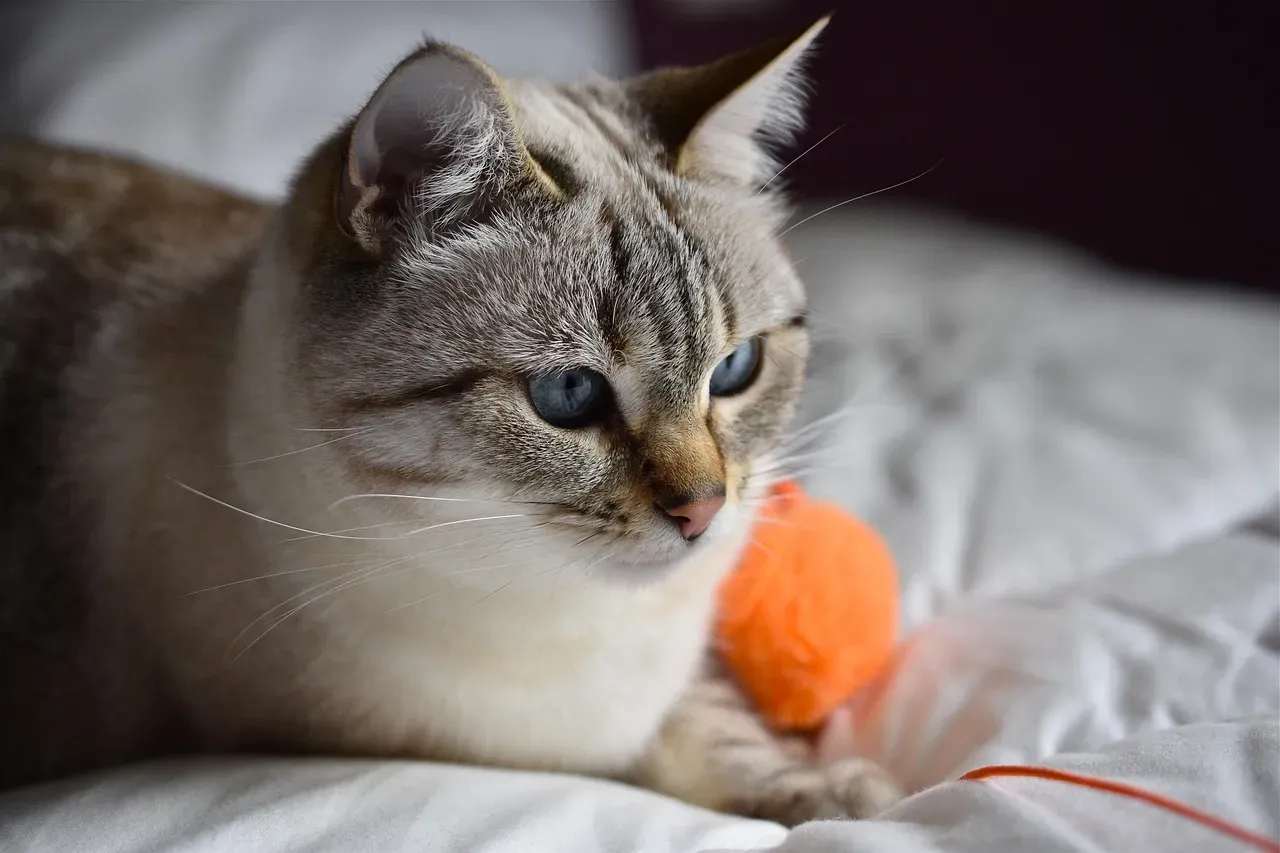
Cats have a strong natural instinct to hunt and engage in predatory behaviors for both mental stimulation and physical activity. These behaviors take up a majority of their daily routines and consist of predatory sequences such as locating, capturing through stalking and chasing and pouncing, killing, preparing, and eating their prey. Cats that are indoor and well fed still need to engage in these natural behaviors. This is not optional for them. It’s a core need, like eating or sleeping.
Without this natural stimulation in their daily life, cats may become obese and frustrated. This pent-up energy can result in destructive behaviors or stress expressions such as overgrooming, anxiety, inflammatory diseases, and misdirected aggression. Think of it this way: imagine being an Olympic sprinter forced to sit on a couch every single day. That’s essentially what indoor life feels like for a cat without proper outlets. The dust bunny chasing isn’t silly. It’s survival of the mind.
The Real Safety Warning: When ‘Harmless’ Prey Becomes a Hidden Danger
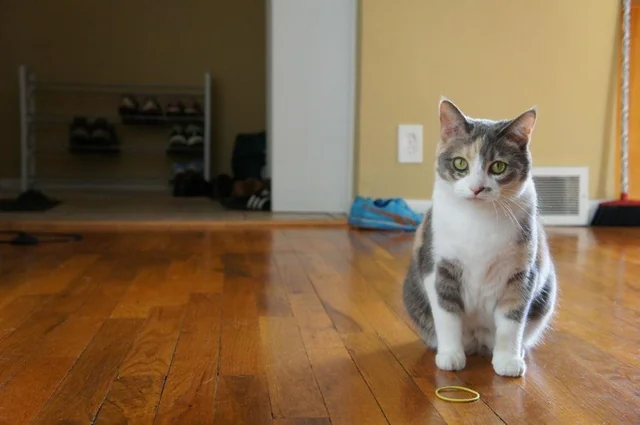
So the hunting instinct is natural, understandable, and even important for your cat’s wellbeing. Here’s where it gets serious though. If your cat swallows one or more hair ties, it could cause an obstruction in your cat’s gastrointestinal tract, including the esophagus, stomach, or intestines. This can be life-threatening and your cat will need surgery to remove the obstruction. That adorable game of fetch-with-hair-ties has a very real dark side.
Cats have barbs on their tongues that face backward. Even if they don’t intend to eat the hair tie, it can get caught up on those barbs and pushed toward the throat. This means your cat doesn’t even need to be trying to swallow one for it to become a problem. The safest approach is to prevent access to hair ties entirely and provide appropriate toy alternatives. If you must let your cat play with hair ties, supervise them closely and remove the hair ties immediately after play sessions. The good news? One of the five pillars of a healthy feline environment is the opportunity for predatory play. Experts recommend five to ten minutes of such play daily. You can absolutely satisfy your cat’s inner hunter safely, with the right toys and a bit of daily effort.
Conclusion
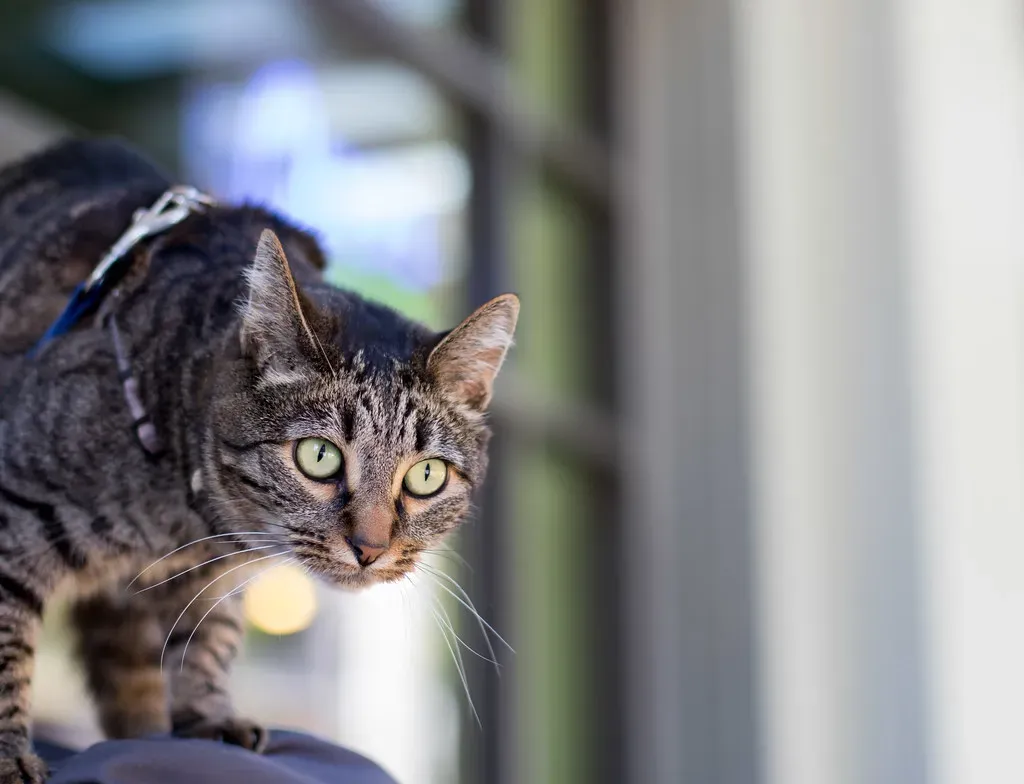
So the next time your cat ignores the expensive feather toy you bought specifically for them, then goes completely berserk over a clump of dust rolling past the refrigerator, try not to feel offended. What you’re watching is thousands of years of evolution playing out in real time on your kitchen floor. Your cat is not being difficult. They’re being exactly what nature made them to be: a small, elegant, remarkably determined predator who just happens to live rent-free in your home.
The dust bunny is a mouse. The hair tie is a fleeing insect. And your cat? They’re just doing their job, one pounce at a time. Understanding this doesn’t just make their behavior less baffling. It also gives you a powerful tool for keeping them happy, healthy, and mentally fulfilled. Give them safe outlets for that ancient drive, and you’ll have a calmer, more balanced companion in return.
Now that you know the strange and surprisingly deep truth behind your cat’s obsession with dust bunnies and hair ties, does your cat’s behavior suddenly make a whole lot more sense? What does your cat “hunt” at home? Drop it in the comments, because honestly, the answer is probably hilarious.
Kristina is a young writer from India. An arts graduate and an avid content creator, Kristina is passionate about animals and wildlife. She enjoys exploring topics related to pet care, animal behavior, conservation, and nature, combining thorough research with engaging storytelling.