You’ve probably watched your cat press their face against the corner of your couch, walk across your keyboard and then sniff every inch of it, or bump their forehead into your chin without any apparent reason. It looks cute. Maybe a little quirky. Honestly, you might have assumed it was just your cat being weird. The truth, though, is far more fascinating.
Your cat is speaking. They’re drawing maps. They’re leaving messages, reading others, and processing an invisible chemical universe that exists just below your ability to detect it. Every rub, scratch, and sniff is part of a sophisticated communication system that has been refined over thousands of years of evolution.
So if you’ve ever wanted to actually understand what your cat is doing and why, buckle up. Let’s dive in.
A Nose That Puts Yours to Absolute Shame
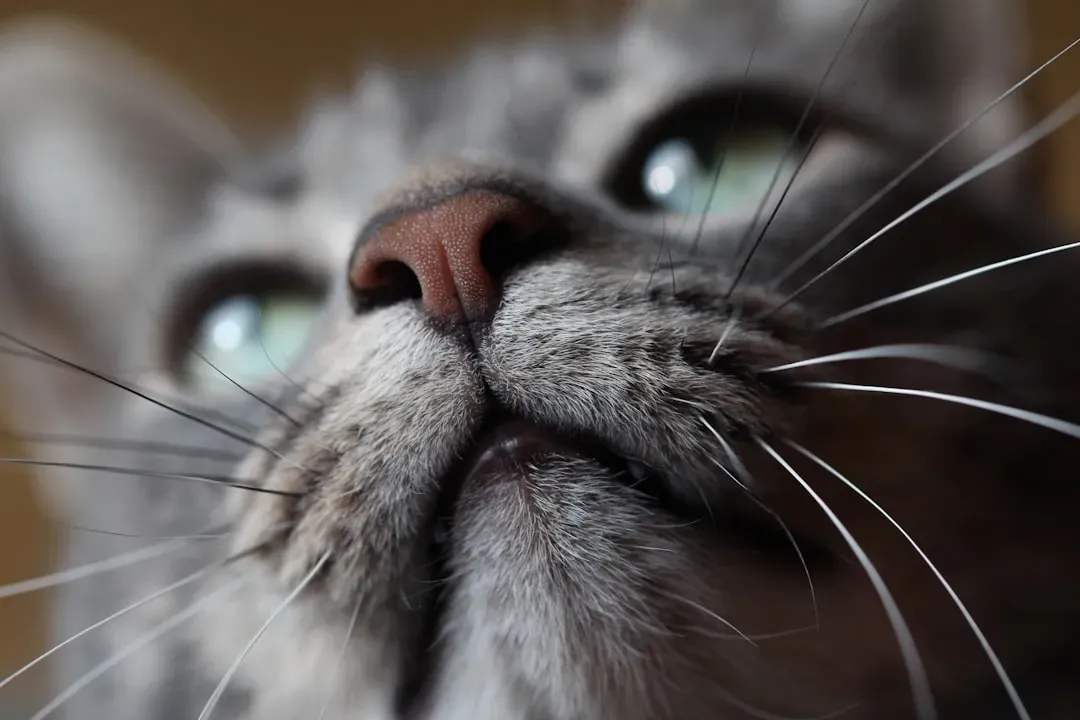
Let’s be real, your sense of smell is pretty basic by comparison. A cat’s sense of smell is far more powerful, with about 200 million scent receptors in its nose compared to a human’s mere 5 million. To put that in perspective, imagine trying to read a novel with only one letter visible at a time, while your cat reads the whole page in one glance. That’s roughly the gap between your olfactory world and theirs.
Wild and domestic cats have a superpower in their dual olfactory systems. The olfactory membrane space in cats is 4:1 compared to humans, where information from the smell receptors is transmitted to and processed by the olfactory lobe in the forebrain. So when your cat walks into a room and freezes for a second, nose twitching, they’re not confused. They’re reading an entire bulletin board of scent information you can’t even begin to access.
The Secret Second Nose: The Jacobson’s Organ
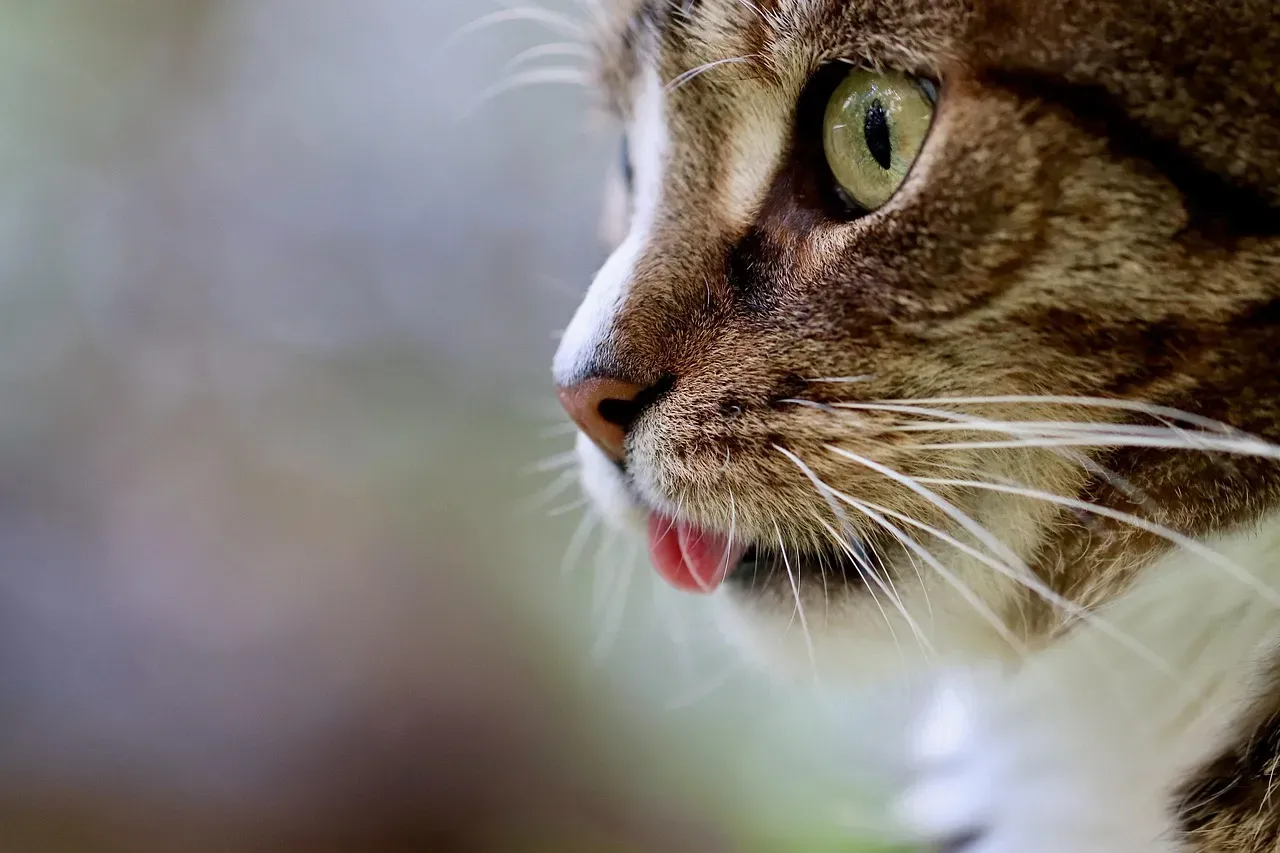
Here’s something that might genuinely blow your mind. Your cat doesn’t just smell through their nose. In addition to their noses, cats have a secondary scent organ called the vomeronasal organ (VNO), or Jacobson’s organ, located in the roof of their mouth. This organ allows them to detect pheromones, chemicals secreted in different areas of the body by all cats for communication between the species.
You’ve almost certainly seen your cat use this organ without knowing it. When you see a cat make that funny open-mouthed face where they look a little disgusted, which is called the flehmen response, they’re actually drawing scent into the Jacobson’s organ and analyzing it. It’s not a grimace of disgust, it’s actually a deep, focused chemical analysis. Think of it like your cat switching from standard definition to ultra-high-definition scent processing. Pretty extraordinary, honestly.
Scent Glands Are Literally All Over Their Body
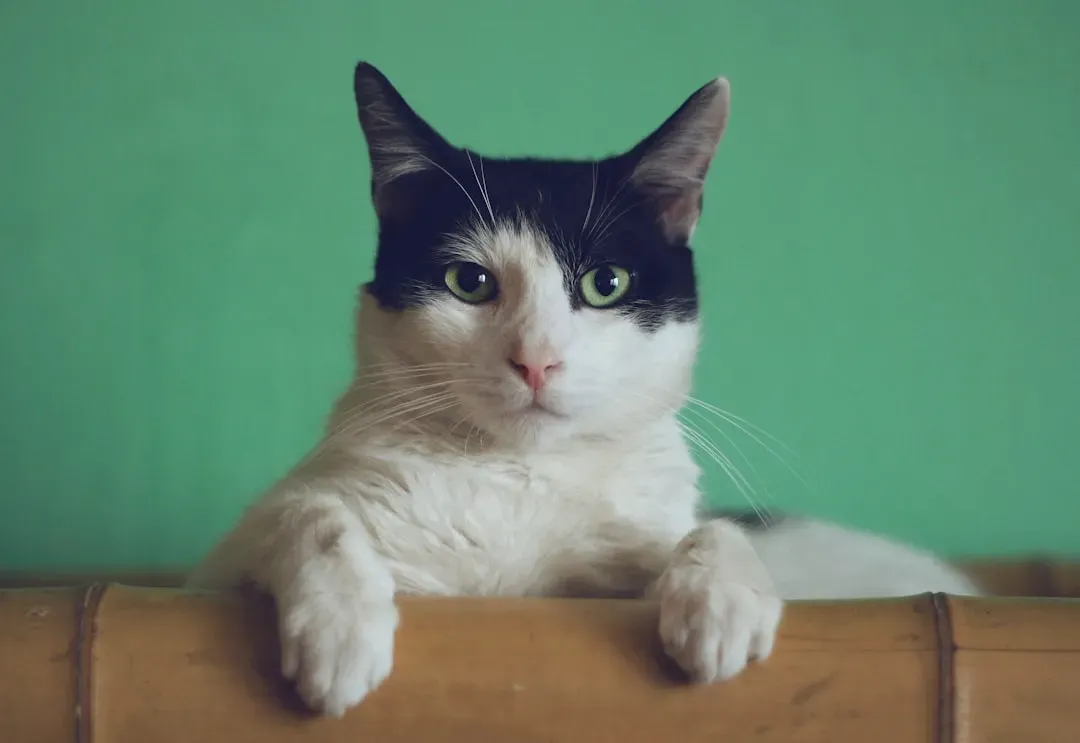
Cats have scent glands on their paw pads, their cheeks, lips, forehead, flanks, tail, and there are also two little glands on each side of the rectum that release a very strong-smelling liquid to mark the cat’s stool as it passes through. Every time your cat moves through your home, they are essentially painting the space with invisible chemical signatures. Your furniture, your doorways, your legs, your pillow. All tagged.
Pheromones have no odor and cannot be detected by humans or dogs. They are only perceived by other cats. So while you sit completely unaware on your scent-covered sofa, your cat knows exactly who has been there, how recently, and how they were feeling. It’s a layer of the world that exists entirely beyond your perception, and your cat navigates it with absolute fluency.
How Your Cat Builds a Scent Map of Their World
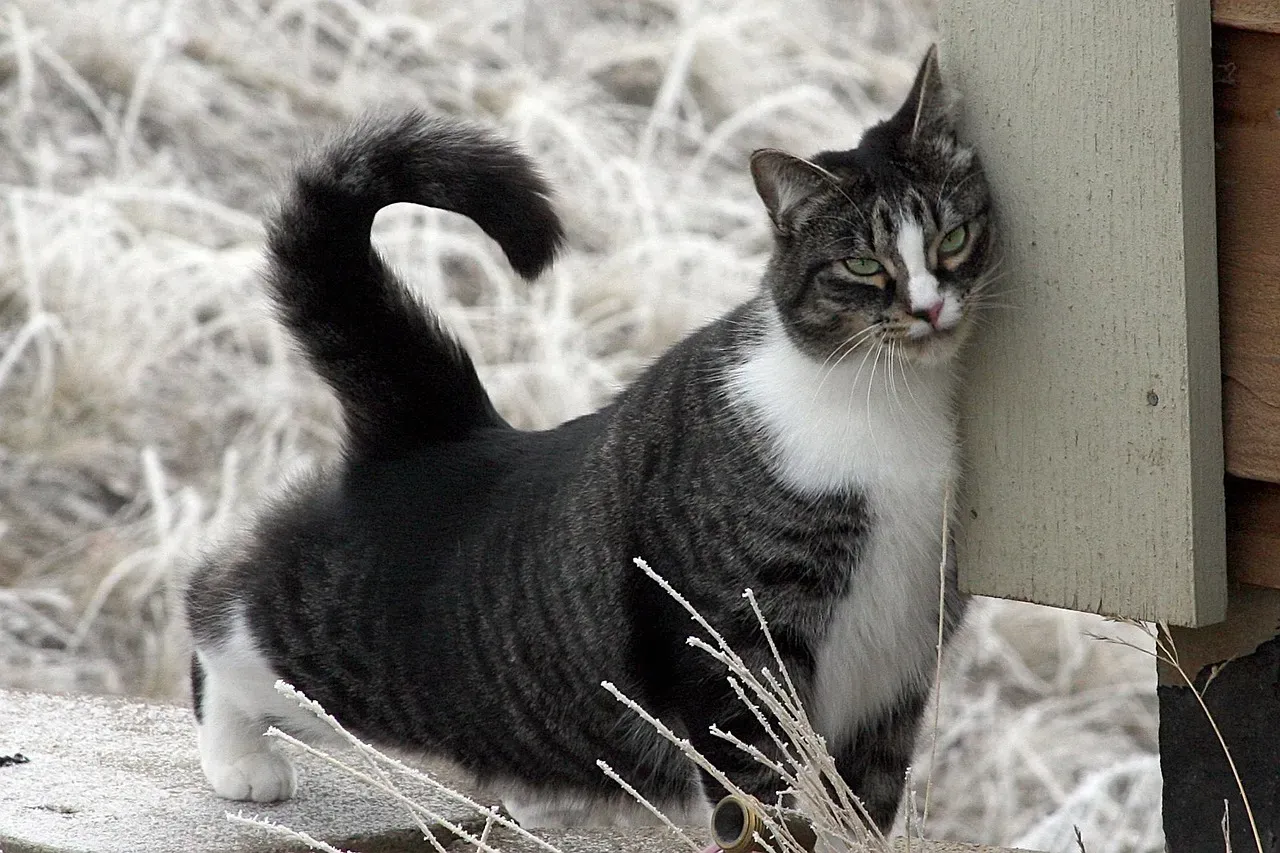
Cats use scent markers to create a mental map of their environment. They may rub their faces against objects to leave pheromones, which helps them recognize familiar areas. They also sniff frequently to gather information about their surroundings and to navigate spaces, especially in low visibility conditions. This is genuinely remarkable behavior. Your cat isn’t just wandering around, they’re constantly updating an internal GPS built entirely out of smell.
Cats use scent to map their territory, recognizing familiar areas and detecting intruders or changes such as new furniture or people. Outdoor cats rely on smell to navigate large areas, returning to familiar scent-marked locations. Think about that the next time you rearrange your living room furniture and your cat spends twenty minutes sniffing every single piece. They’re not being dramatic. Their entire scent map just got scrambled, and they’re working hard to update it.
What Your Cat’s Headbutt Is Actually Saying to You
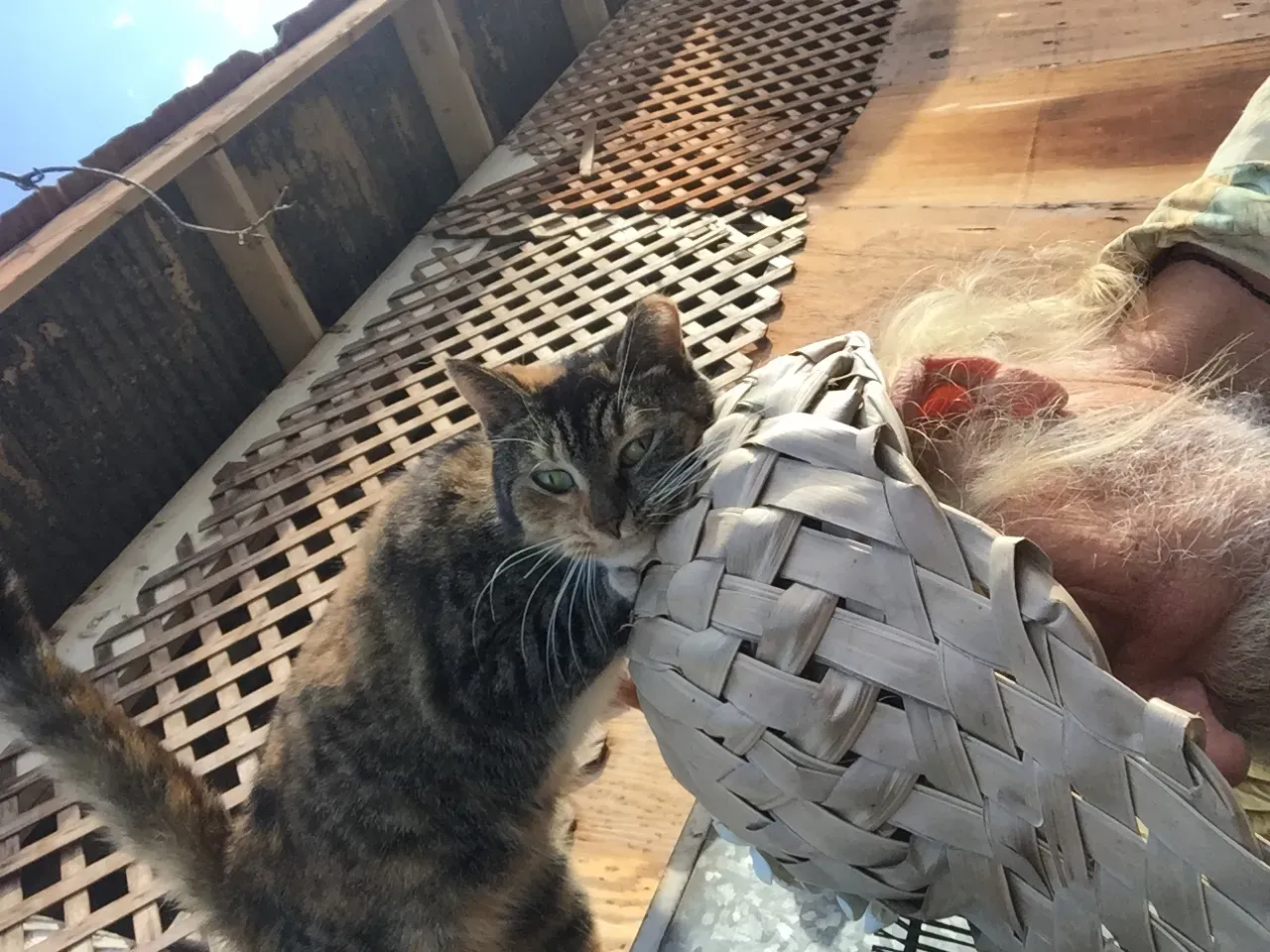
When your cat presses their forehead or cheek into your face, many people assume it’s just affection. It is affection, but it’s also much more loaded than that. Head bunting is a behavior cats engage in toward another cat, dog, or human with whom they have a friendly relationship. Head bunting is not displayed toward inanimate objects; it’s a behavior reserved as a bonding gesture. So if your cat does this to you, consider yourself genuinely honored.
As well as their cheeks, cats have many scent glands on their forehead. Their affectionate headbutting, known as bunting, helps them spread their scent during bonding moments, especially with humans. When your cat bunts you, they are essentially merging their scent identity with yours. They are saying you belong to their world. You’re part of the group. It’s hard to think of a more intimate gesture coming from an animal that evolved as a solitary species.
Scratching Is Not Destruction, It’s a Signature
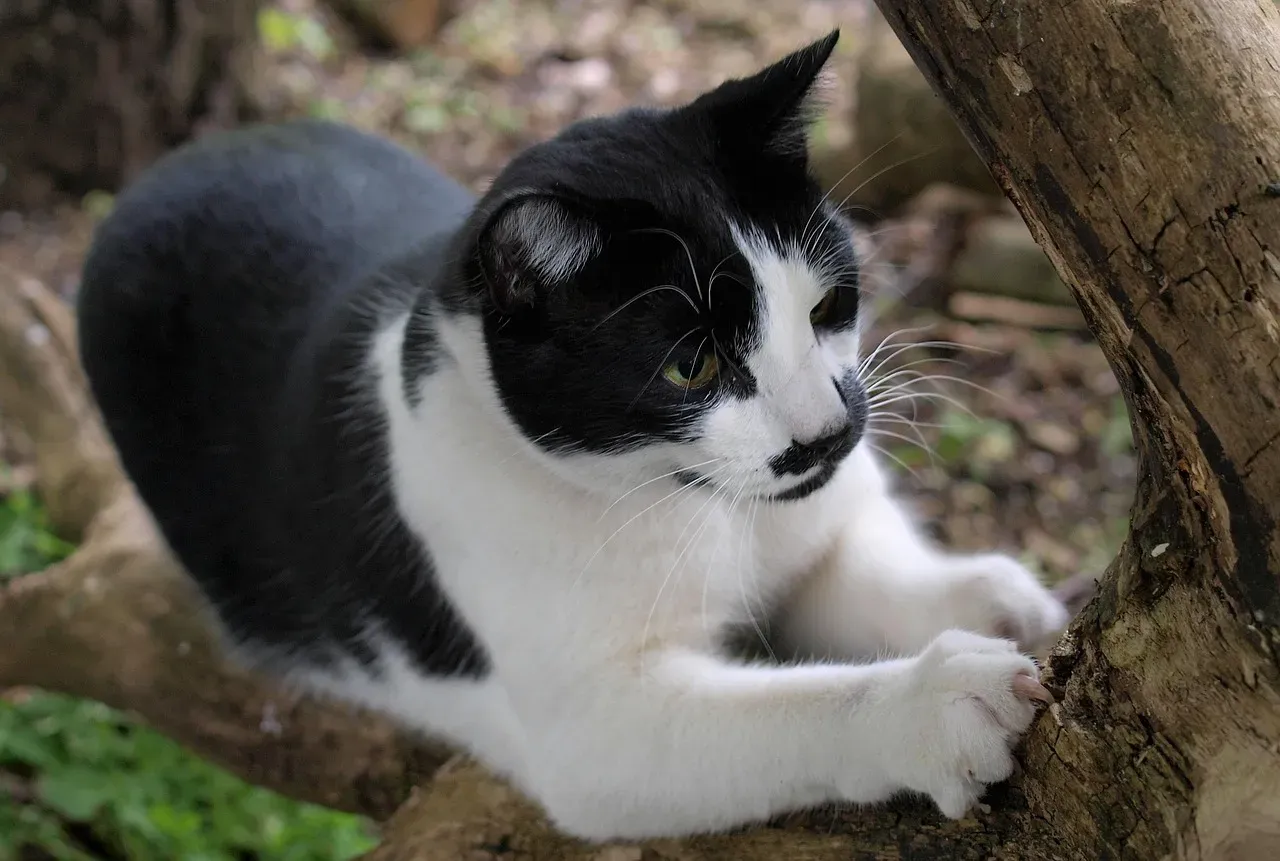
Every cat owner has had a moment of frustration with scratching behavior. Shredded couches, clawed doorframes, ruined curtains. It feels purely destructive. It isn’t. The scent glands in the cat’s paw pads get used when scratching on objects for marking. In addition to leaving a visual mark from the claws, a cat leaves an olfactory mark through the scent glands. Your cat is essentially signing their name every single time they scratch something.
Having both a visual and olfactory mark is important for safety. The visual mark allows other cats to see the scratch marks from a distance so they will know they’re entering another cat’s area. If they choose to come closer, they will then be able to identify the olfactory marks. Scratching is a dual-channel broadcast, part visual billboard and part invisible chemical message. Understanding this might not make you love the shredded couch, but it does make your cat’s behavior a whole lot more logical.
Urine Marking, Spraying, and What Stress Really Smells Like
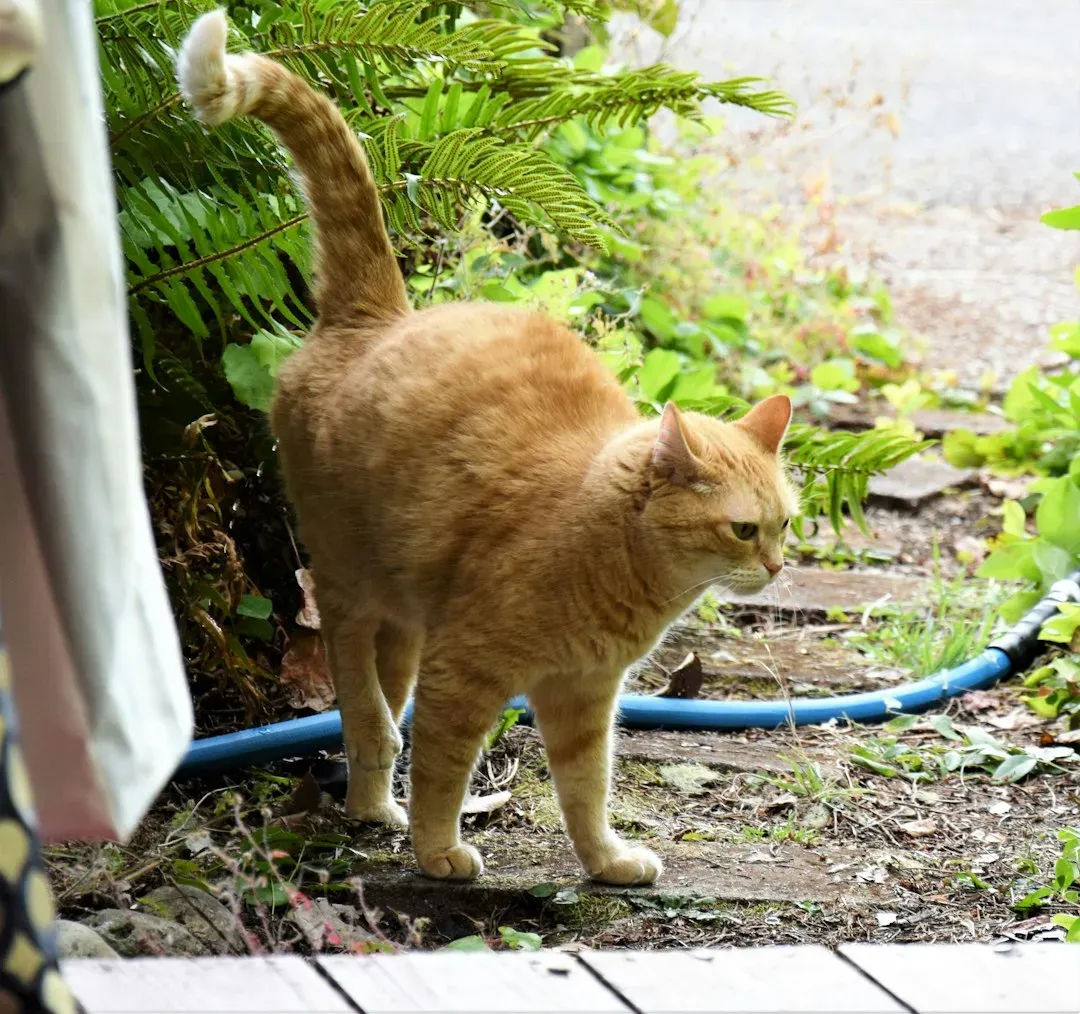
Spraying is one of the more alarming scent behaviors cats engage in, especially indoors. Unlike typical urination, which is done in a squatting position, spraying is performed while the cat stands upright, often with a quivering tail. The scent left behind provides critical information about the cat’s identity, status, and reproductive availability. It’s an intense and highly targeted chemical announcement, and it’s often misunderstood as simple misbehavior.
One important clue can be found in the pattern of their urination. If you’re finding urine around doors, windows, and prominent locations around the house, it’s most likely urine marking. If you’re finding a consistent pattern to the type of surface peed on, then it’s likely a toileting issue. Knowing the difference matters enormously for how you respond. Spraying is a communication problem, not a hygiene one, and addressing the underlying anxiety or territorial stress is the actual solution.
How Scent Builds Bonds, Both With Other Cats and With You
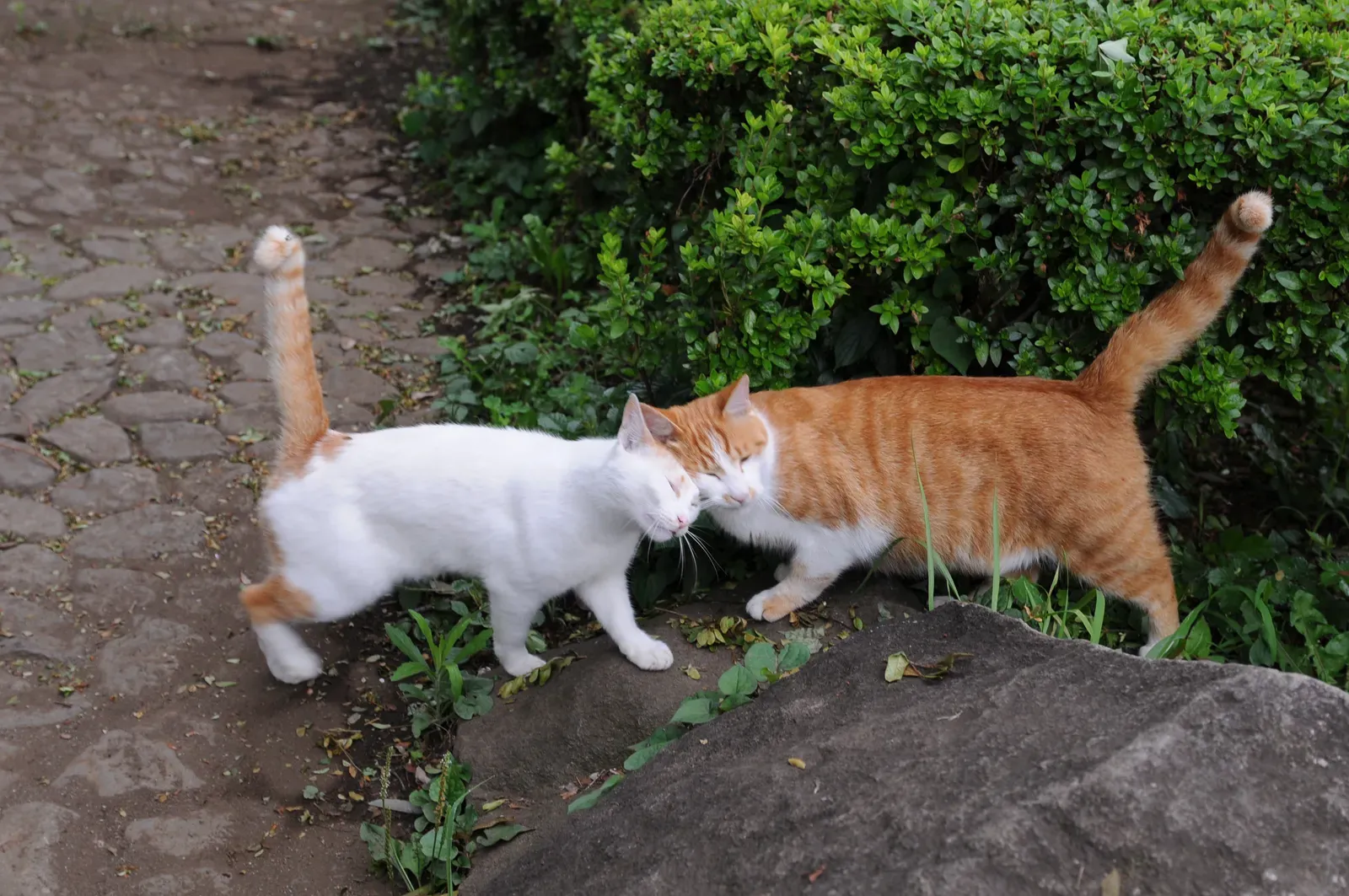
Cats that live together often develop a communal scent, which helps them recognize and bond with each other. This is why cats that are close companions will frequently rub against one another or engage in mutual grooming. Think of it like a shared family perfume. When all members of the group smell the same, it signals familiarity, trust, and safety. Disrupting that shared scent, such as when one cat returns from the vet smelling of antiseptic, can temporarily break that bond.
Cats find their own scent reassuring, so they will use it to make an environment feel more familiar. When a cat rubs against you, the corner of your furniture, or against new things you bring home, they are depositing their scent and making that thing, or you, smell more familiar to them. This is a way for your cat to reassure themselves and feel more comfortable about their environment. Honestly, when your cat rubs against your legs the moment you walk through the door, they’re not just greeting you. They’re pulling you back into their scent world after a day of you smelling like everywhere else.
What Your Cat’s Nose Tells Them About You Specifically
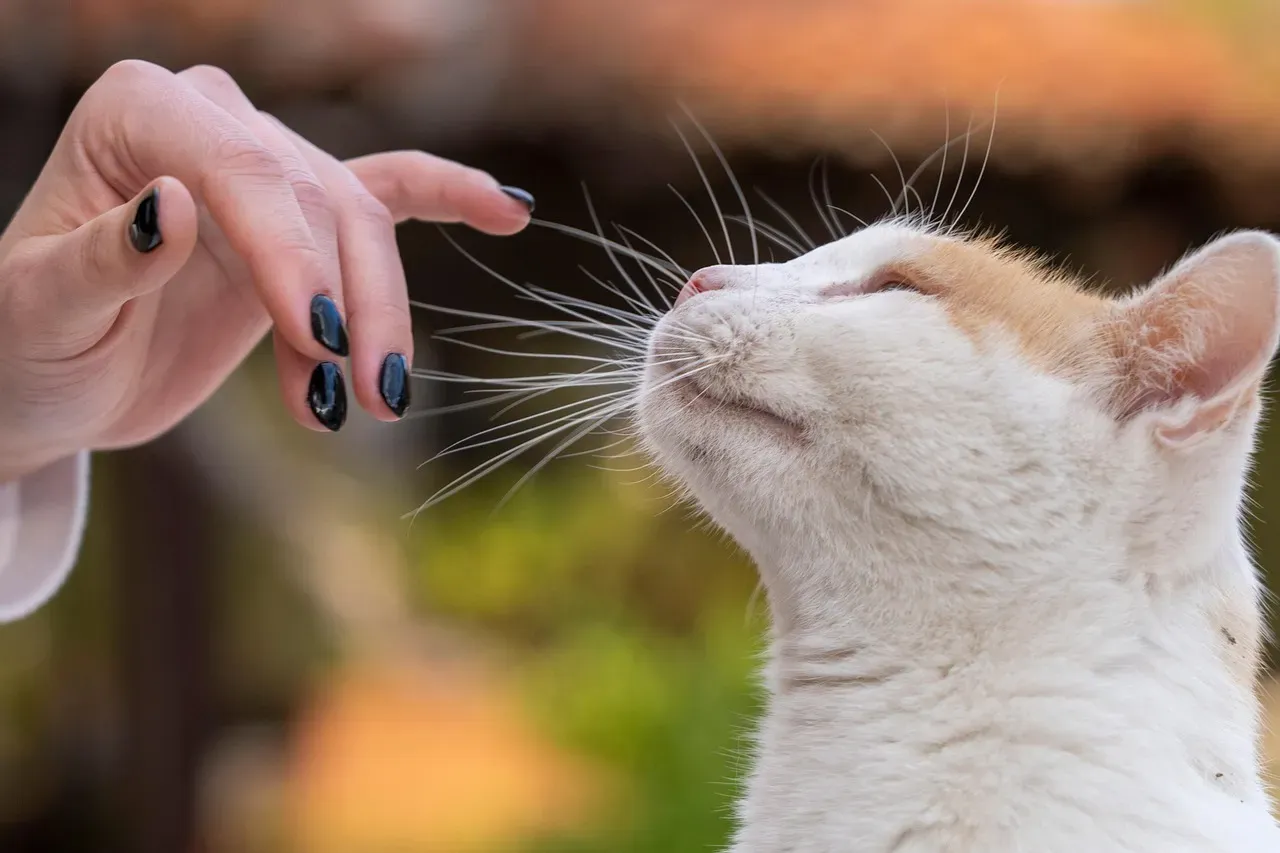
Cats may use scent to gauge a person’s emotional state, as human odours can vary with stress, fear, or illness. This aligns with prior studies showing cats adjust behavior based on human emotional cues. This is one of those facts that feels almost unsettlingly intimate. Your cat may not know the exact reason you had a rough day, but they can smell that something shifted. That explains why some cats become unusually clingy when their owners are sick or emotionally distressed.
Changes in a cat’s environment can trigger significant behavioral responses due to their acute sense of smell. New furniture, different cleaning products, or unfamiliar guests can create a shift in the olfactory landscape. Cats may react by hiding, exploring cautiously, or in some cases, marking territory to reassert their presence. So if your cat suddenly starts acting strange after you switched cleaning products or had a new visitor over, their nose is the reason. Their entire sense of “home” is scent-based, and you just rewrote part of the story they rely on every day.
Conclusion
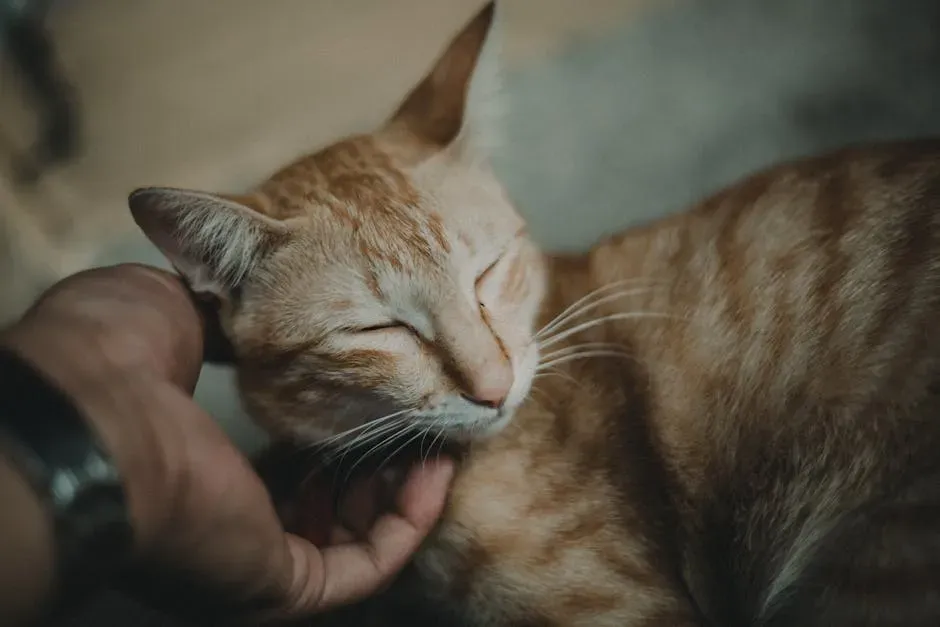
Your cat is not living in the same world you live in. They inhabit an invisible, richly detailed universe built entirely out of scent, one you can barely detect and almost certainly underestimate. Every headbutt, every scratch on the doorframe, every curious sniff of your shoes after you come home is a sentence in a language they speak fluently and you’re only just starting to learn.
The good news is that understanding this changes everything. Scent is one of the most important aspects of your cat’s world. It shapes their territory, their relationships, their moods, and their sense of belonging. When you stop seeing these behaviors as random or inconvenient and start reading them as communication, your relationship with your cat deepens in a way that feels genuinely rewarding.
Next time your cat presses their forehead against yours, take a moment. They’re not just being affectionate. They’re including you in their world, permanently and deliberately. What other creature in your life does something quite that intentional? Have a think about that one.
Kristina is a young writer from India. An arts graduate and an avid content creator, Kristina is passionate about animals and wildlife. She enjoys exploring topics related to pet care, animal behavior, conservation, and nature, combining thorough research with engaging storytelling.