A cat owner was left puzzled after noticing something unusual about her pet’s teeth—they seemed to be getting longer. Concerned by the strange change, she turned to Reddit for advice, sharing photos of her cat’s increasingly prominent fangs. What started as a curious post quickly turned into a viral discussion, but the explanation from a veterinarian revealed the situation might signal an underlying dental problem rather than a quirky feline feature.
The post, shared by Reddit user u/Careless-Elephant-98, showed a five-year-old black cat whose upper canine teeth appeared to protrude further from the mouth over time. The owner explained she had gradually noticed the change and wondered whether the teeth were somehow growing longer. The unusual images quickly sparked debate among fellow cat owners and veterinary professionals online.
A Viral Reddit Post Raises Concern
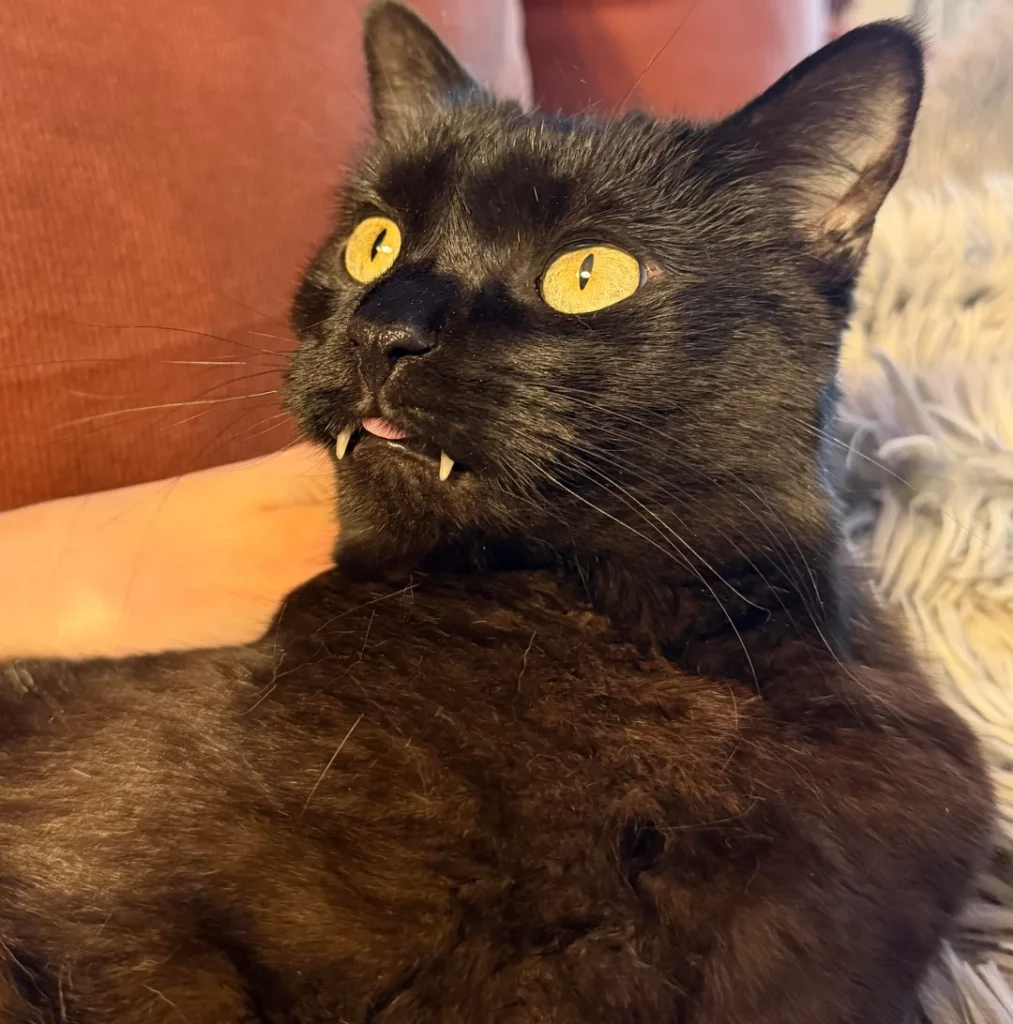
The discussion began when the owner uploaded photos of the cat’s noticeably elongated canine teeth and asked other users if they had ever seen anything similar. She clarified that the cat was already fully grown, so the change could not be explained by normal kitten teething.
The post quickly gained attention on Reddit, drawing thousands of views and comments. Some users joked that the cat looked like a tiny vampire, while others expressed concern and encouraged the owner to consult a veterinarian to rule out potential dental issues.
What the Veterinarian Suggested
After speaking with a veterinarian, the owner learned that the unusual appearance might be linked to feline alveolar osteitis, a condition associated with inflammation and disease in the bone surrounding the tooth socket.
Rather than the tooth itself growing, changes in the surrounding bone can push the tooth outward. This makes the visible portion of the tooth appear longer, even though the actual structure of the tooth has not increased in size.
Why the Issue Can Be Painful for Cats
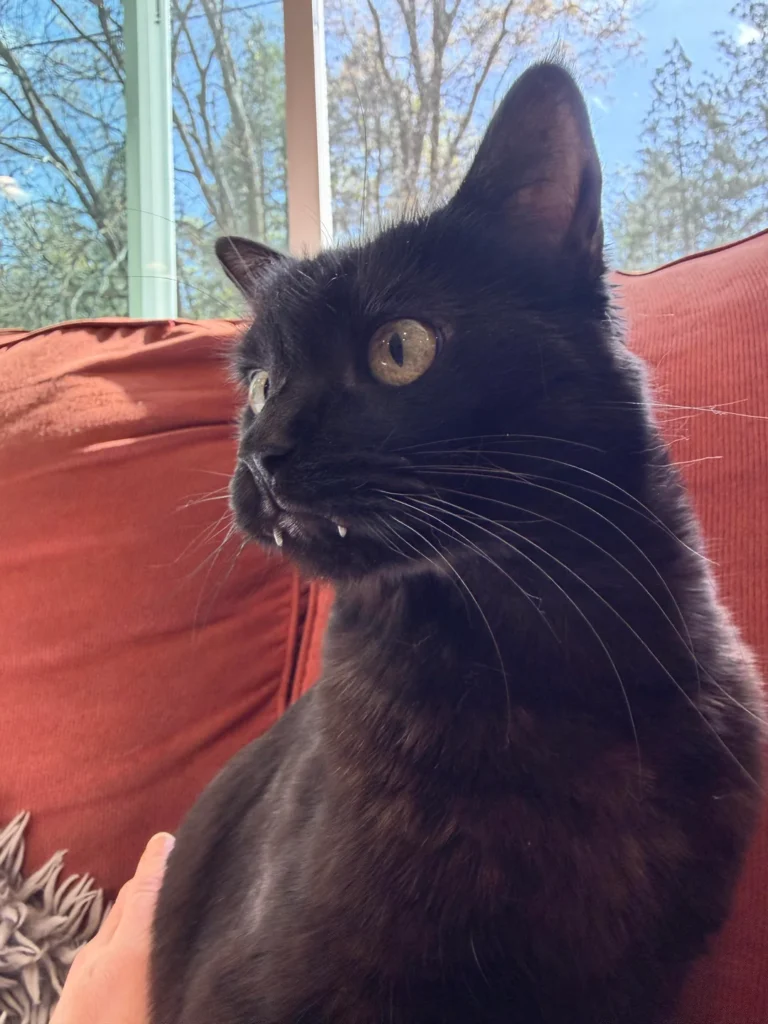
Veterinary professionals in the Reddit discussion warned that the condition can be painful if left untreated. One commenter explained that if the problem is related to osteitis or tooth resorption, it can cause significant discomfort beneath the gum line.
Cats, however, are known for hiding pain remarkably well. Even when suffering from dental disease, they may continue eating, playing and behaving normally, making problems difficult for owners to detect until the condition becomes advanced.
Possible Treatment Options
The treatment approach depends on the severity of the dental issue. In some cases, veterinarians may recommend dental X-rays to determine whether the tooth is affected by resorption or infection.
If the condition has progressed, the most common solution is extraction of the affected tooth. While the idea can sound alarming to pet owners, veterinarians note that cats generally recover quickly and adapt well after dental procedures.
Why Regular Dental Checks Matter
Feline dental disease is more common than many owners realize. Conditions affecting the gums, roots and surrounding bone often develop slowly and can remain hidden for months or even years.
Routine veterinary checkups and dental exams can help detect early warning signs before they become severe. Experts say paying attention to subtle changes—such as unusual tooth length, bad breath or difficulty chewing—can make a significant difference in a cat’s long-term health.
The viral Reddit post shared by u/Careless-Elephant-98 may have started as a curious question about a cat’s “growing” teeth, but it ultimately highlighted an important lesson about feline health. What appears to be a harmless cosmetic change can sometimes signal an underlying medical issue.
Veterinarians emphasize that any unusual changes in a cat’s mouth should be evaluated promptly. As this story shows, a small observation by a concerned owner can lead to the discovery of a potentially serious condition—and help ensure a pet receives the care it needs.
Kristina is a young writer from India. An arts graduate and an avid content creator, Kristina is passionate about animals and wildlife. She enjoys exploring topics related to pet care, animal behavior, conservation, and nature, combining thorough research with engaging storytelling.