You’ve seen it a hundred times. Your cat sits perfectly still, eyes locked onto a blank wall, a dark corner, or seemingly nothing at all, and you wonder: what on earth are they looking at? It feels mysterious, maybe even a little unsettling. Here’s the thing – that gaze is anything but empty.
Science has spent decades pulling back the curtain on feline vision, and what researchers have found is genuinely mind-bending. Your cat doesn’t just see a slightly blurrier version of your world. They see a fundamentally different one, shaped by millions of years of evolution as one of nature’s most refined predators. Let’s dive in.
The Eyes of a Born Hunter: How Feline Vision Evolved
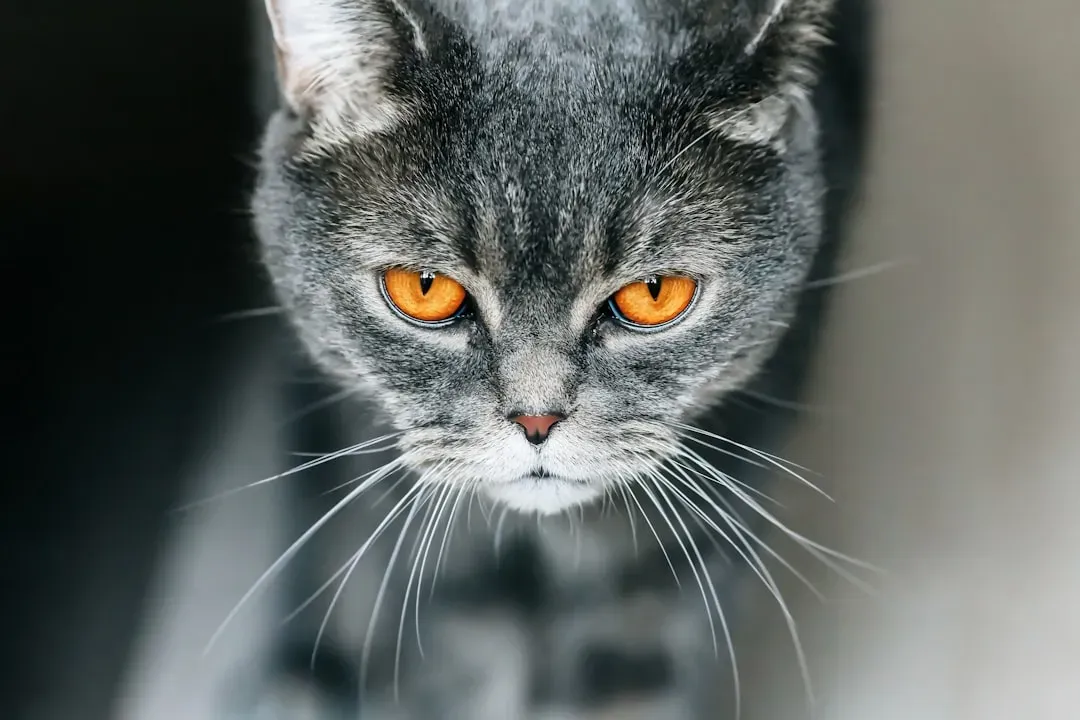
Cats didn’t develop their extraordinary eyes by accident. The cat’s visual system was shaped entirely by their hunting lifestyle, so much so that cats are built around hunting at nearly every level of their biology. Think of their eyes as precision instruments, carved by evolution across countless generations, tuned not for reading or art appreciation, but for one singular purpose: catching prey.
Humans and cats share a last common ancestor that lived over 90 million years ago, and that ancestor probably had a simpler, less powerful visual system than either species has today. Over time, both lineages became adapted to particular ways of life that required sharper vision. The result is two very different eyes built for two very different worlds. Honestly, it’s remarkable that two animals living in the same house can experience that home so differently.
Rods, Cones, and Why Your Cat Owns the Dark
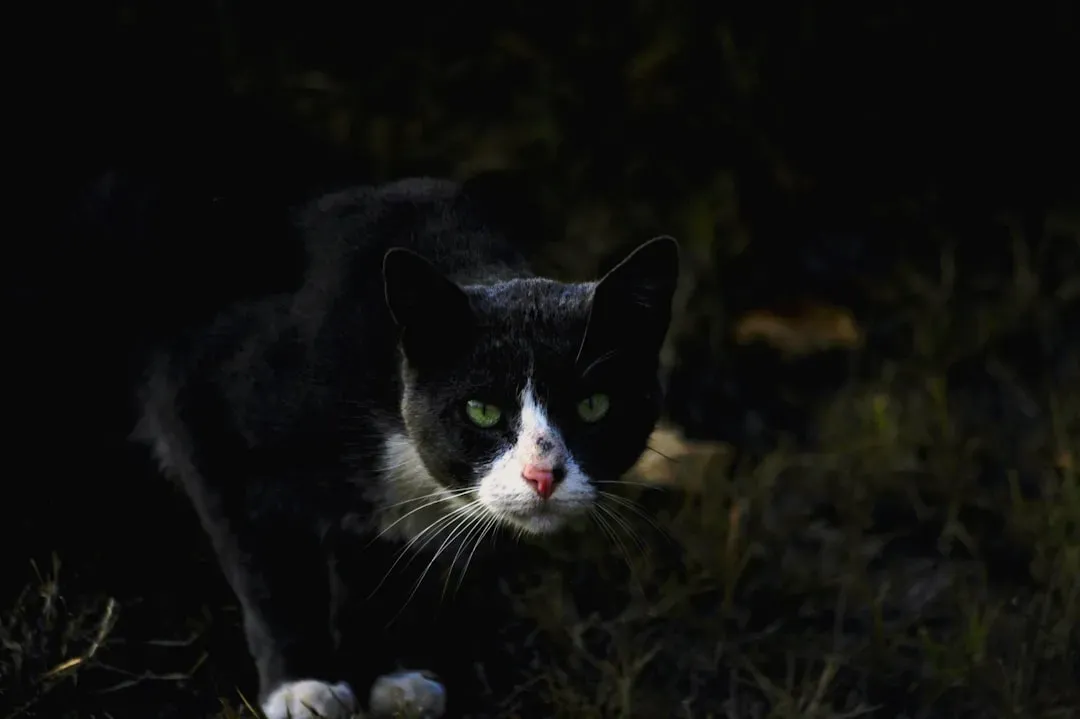
Where cat vision really shines is at night. Cats have six to eight times more rod cells than humans do, and those rod cells can detect light at incredibly low levels. Their fondness for pouncing on feet and feathery toys is deeply rooted in this unique visual ability. It’s the difference between walking into a dim room and seeing nothing versus seeing everything. Your cat is firmly in the latter camp.
Cats have a higher concentration of rods than cones in the retina. Rods are responsible for vision in low-light conditions, while cones handle color perception and fine detail. This proportion means cats have excellent twilight and night vision, but less vivid color perception than humans. It’s a trade-off, but one that makes total sense for an animal that hunts most actively at dawn and dusk.
The Glowing Mirror Inside Their Eyes: The Tapetum Lucidum
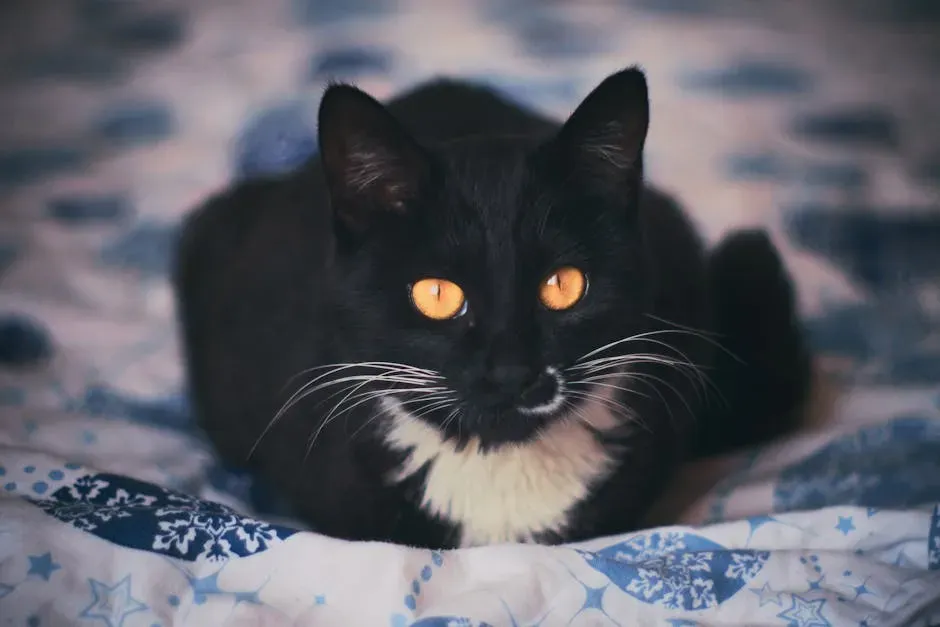
All eyes reflect light, but some eyes have a special reflective structure called a tapetum lucidum that creates the appearance of glowing at night. The tapetum lucidum, which translates loosely to “shining layer,” is essentially a tiny mirror in the back of many nocturnal animals’ eyeballs, and it helps these animals see remarkably well after dark. That eerie glow you see in your cat’s eyes when light catches them? That’s this biological mirror at work.
In cats, the tapetum lucidum lowers the minimum threshold of vision by six times, which is a staggering advantage. The tapetum lucidum reflects with constructive interference, increasing the quantity of light passing through the retina. In the cat specifically, it decreases the absolute threshold for vision without materially changing spectral sensitivity. To put it simply, imagine if someone doubled the brightness of every lamp in a dark room – that’s roughly what a cat’s tapetum does with whatever faint light is available.
The Slit Pupil: A Masterpiece of Precision Engineering
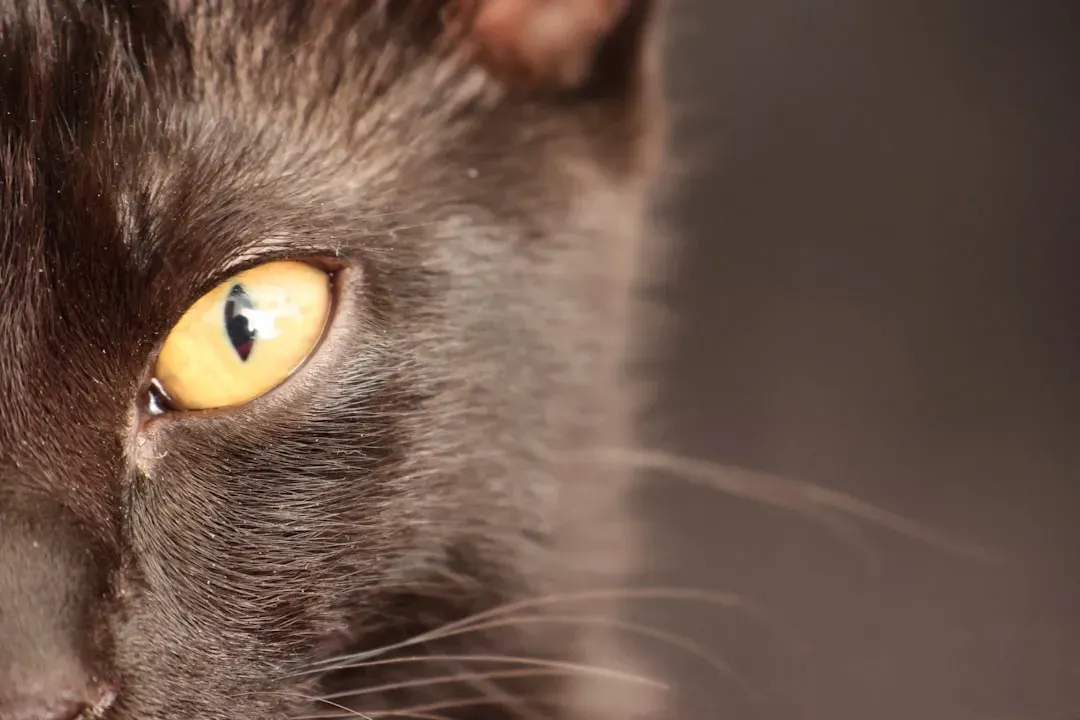
The vertical slits in a cat’s eyes undergo a 135-fold change in area between constricted and dilated states, while humans have only about a 15-fold change. This ability gives cats the dynamic range to help them see in dim light without being blinded by bright sunlight. Compare that to your own eyes and it’s a bit humbling. We get dazzled walking out of a movie theater. Cats barely flinch.
Another major advantage of slit pupils is their role in enhancing depth perception. The vertical orientation of the slit helps in creating sharp, vertical outlines of objects and in judging distances accurately – critical skills that are particularly useful when stalking and ambushing prey. Research suggests that vertical pupils provide ambush predators like cats with better depth perception cues, essentially giving them a built-in rangefinder that calculates the exact distance to a leaping target.
A World Painted in Blues and Grays: How Cats Experience Color
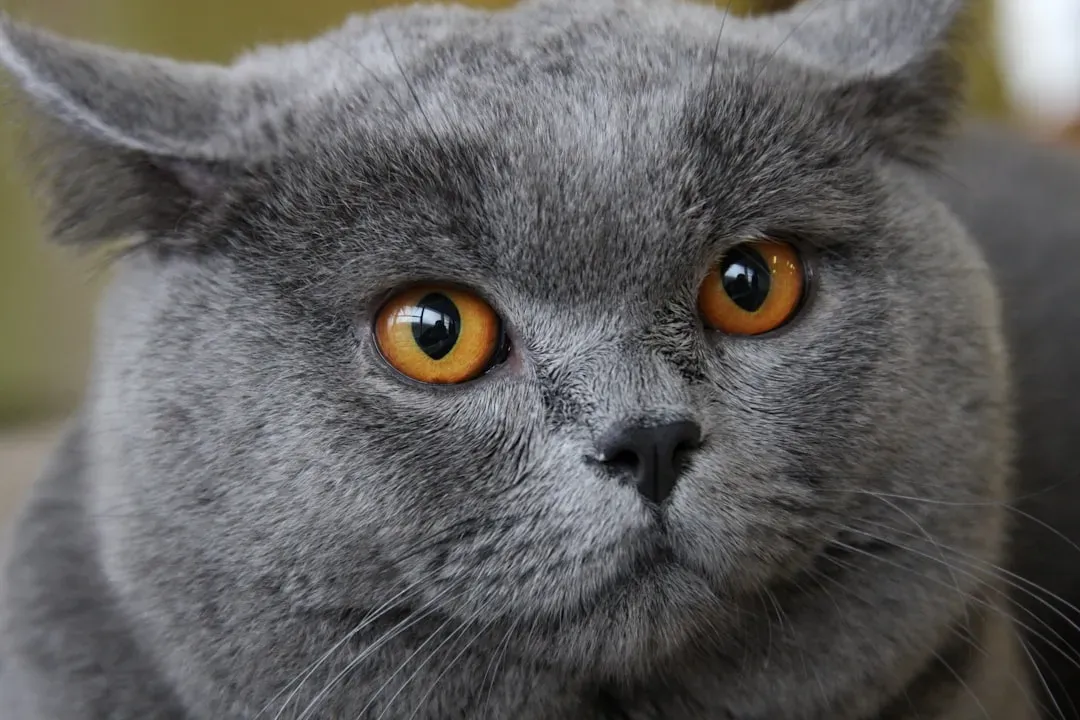
Let’s be real, your cat is not out there admiring a vivid red sunset. Cats don’t see the full spectrum of colors that humans do and have fewer color receptors in their eyes. They primarily see blues and greens, while reds and oranges appear more muted or grayish. Despite limited color vision, they rely heavily on motion, contrast, and brightness to interpret their surroundings. So while your cat may not notice the difference between a red and orange toy, they’ll detect its movement instantly.
Cats can see some colors and can tell the difference between red, blue and yellow lights, as well as between red and green lights. They are able to distinguish blues and violets better than colors near the red end of the spectrum, but they cannot see the same richness of hues and saturation of colors that humans can. It’s a bit like watching an old color film from the 1950s – the world is technically in color, just not the rich, saturated version we experience.
Seeing the Invisible: Cats and Ultraviolet Light
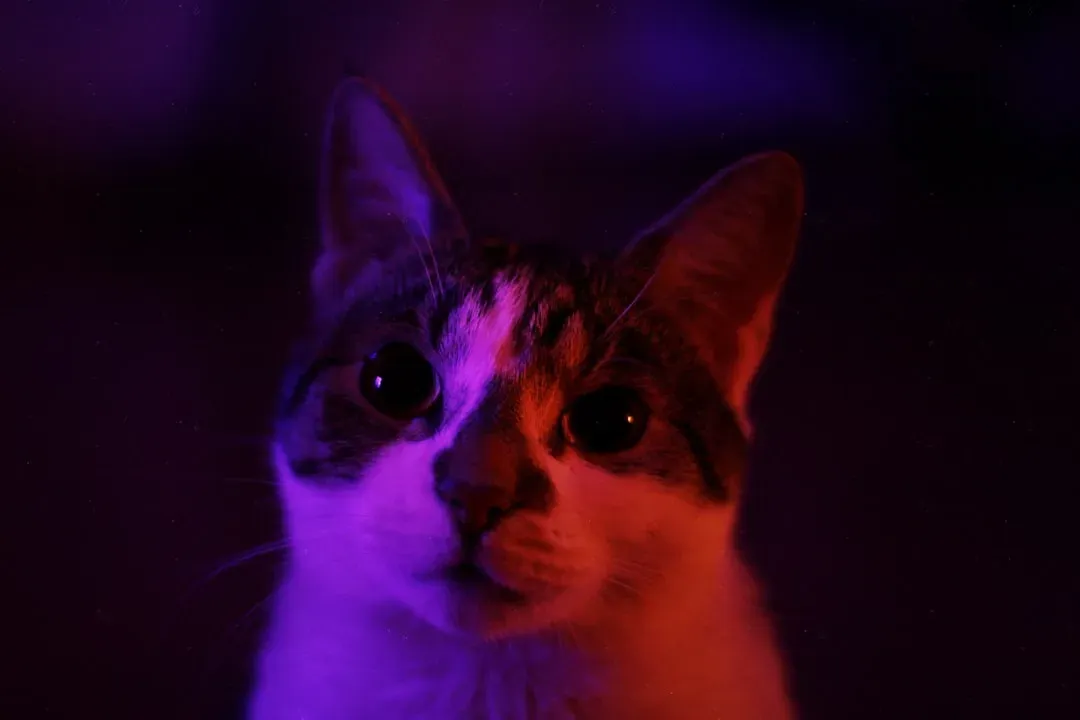
A 2014 study found that, along with several other mammals, cats’ lenses transmit significant amounts of ultraviolet light, which suggests that they possess sensitivity to this part of the spectrum. This is genuinely wild to think about. There’s a whole layer of visual information in your home that you simply cannot see, and your cat might be perceiving at least some of it. I know it sounds crazy, but your cat’s world may literally glow in ways yours doesn’t.
Although cats’ ability to see ultraviolet light is not nearly as intense as that of birds and bees, it can help them to distinguish prey that is invisible to us. A white rabbit in the snow might escape your notice, but because rabbit fur and snow reflect ultraviolet light in different ways, the rabbit would probably be quite obvious to your cat. Man-made optical brighteners are sometimes added to paper, fabrics, laundry detergents, cosmetics and shampoos to make them appear brighter. Since optical brighteners absorb light in the UV spectrum, they might appear different, or stand out more, to UV-sensitive animals.
Masters of Motion: Why Nothing Escapes a Cat’s Gaze
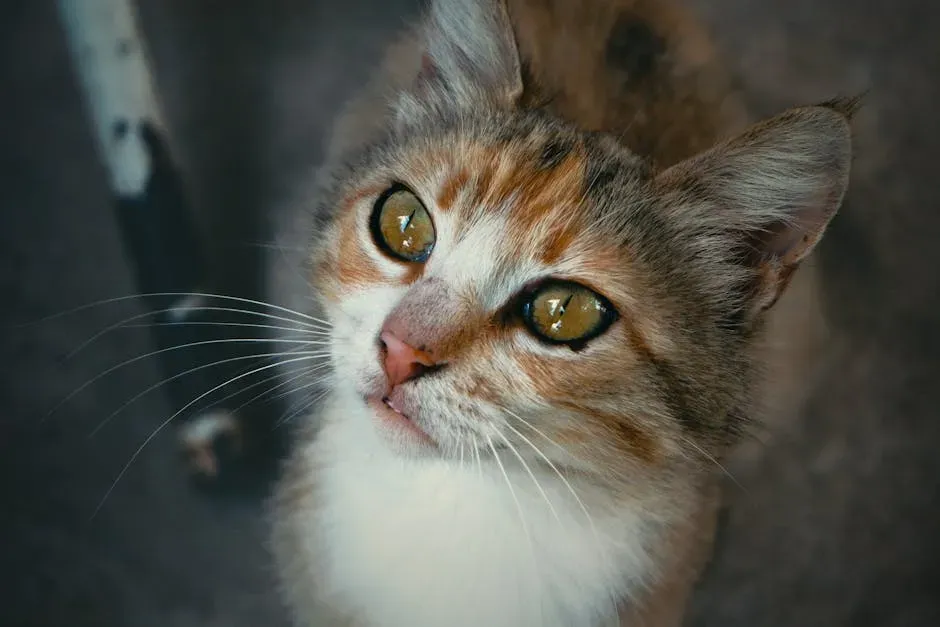
Cats are masters of motion perception, a skill that has developed over millennia to support hunting. Their eyesight is particularly sensitive to rapid movements, enabling them to spot prey with great efficiency. Their eyes are extremely sensitive to movements, especially those occurring in low light. Even the slightest movement can attract the full attention of a cat. This ability is essential for a predator who must detect moving prey even in the most difficult conditions.
In contrast, cats are actually less skilled at perceiving static objects. If something is not moving, a cat may not notice it at all, which explains why they often only respond to moving toys or prey. This is why a stuffed mouse sitting motionless on the floor holds zero interest, but the moment you drag it across the carpet, your cat transforms into a focused, calculating predator. Motion is everything to them.
Not Perfect: The Surprising Visual Limitations of Cats
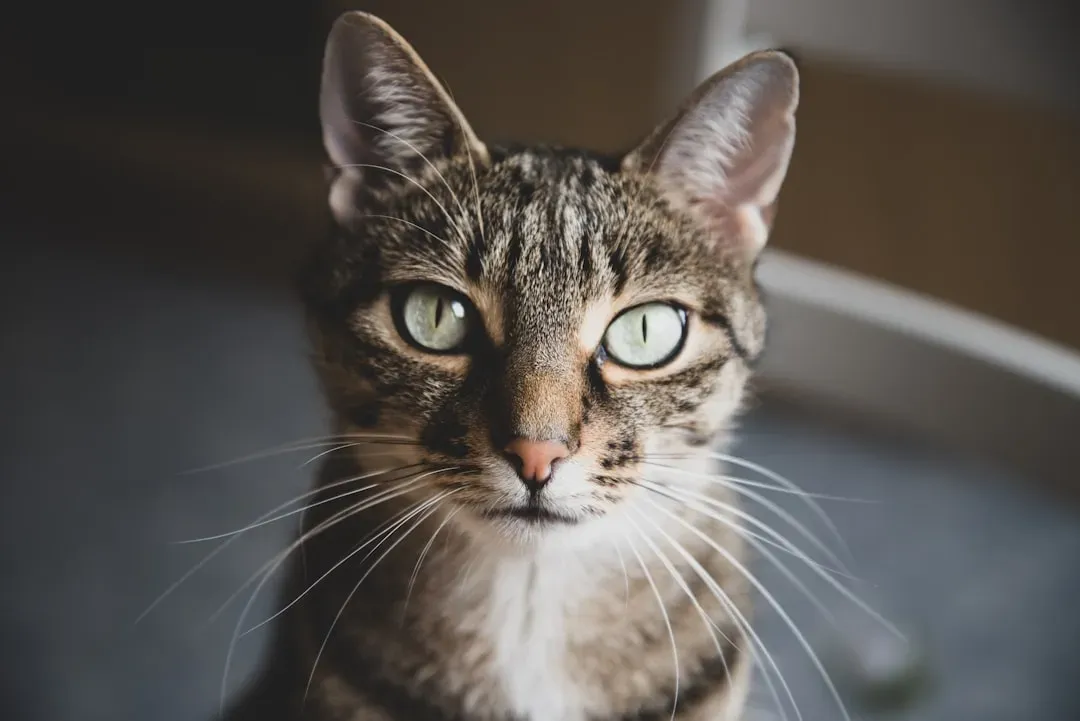
It might seem like cats have all the advantages when it comes to vision, but here’s where it gets more nuanced. A cat’s visual acuity is anywhere from 20/100 to 20/200, meaning a cat has to be at 6 metres to see what an average human can see at 20 or 30 metres. That’s a significant gap in sharpness. Your cat essentially lives in a slightly soft-focus version of reality, like a photo shot with the wrong lens setting.
Felines also have slightly less ability to focus up close, seeing things at 10 inches away that humans can see clearly at about 5.5 inches. Cats are also more near-sighted than humans, meaning an object that you may see clearly at 100 feet would need to be 20 feet away for a cat to see it sharply. It’s a fascinating trade-off. You gave up the night. Your cat gave up the detail. Both adaptations make perfect sense for the life each species was built to live.
A Wider Window: Peripheral Vision and Field of View

Whereas humans are able to see more vibrant colors during the day, their feline companions have the edge when it comes to peripheral vision and night vision. Cats have a wider field of view at about 200 degrees, compared with humans’ 180-degree view, and also have a greater range of peripheral vision, all the better to spot that mouse wriggling in the corner. That extra 20 degrees might not sound like much, but it means your cat can see things at the edges of their vision that you would completely miss.
Cats have a field of view of about 200 degrees, compared to a human’s 180 degrees. It’s one reason why cats are such skilled hunters and why they can be startled by sudden movements. Think of it like having a slightly wider camera lens on the world at all times. Nothing sneaks up on a cat from the side without at least a chance of being detected. That’s not paranoia, that’s millions of years of survival instinct baked right into the anatomy.
Whiskers as Vision: The Sixth Sense That Extends Their World
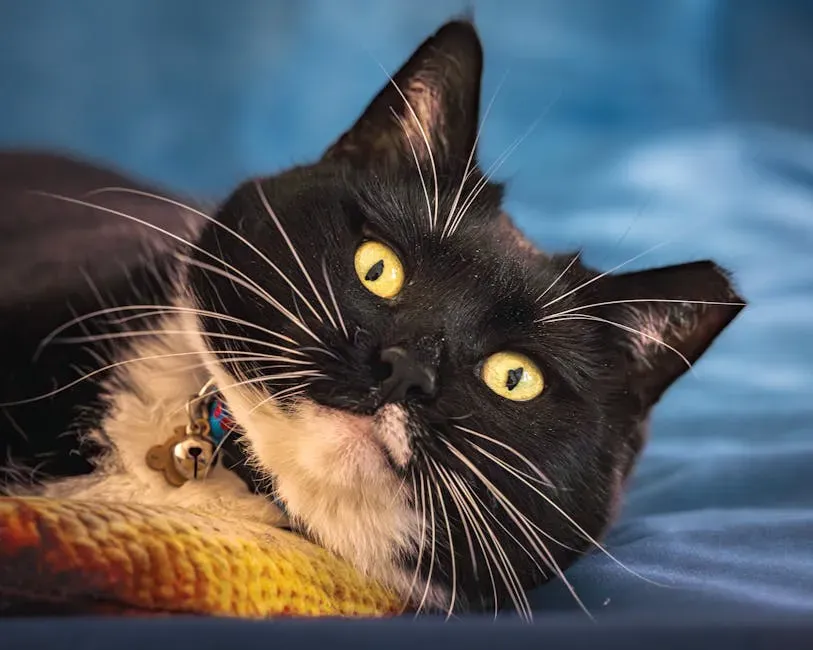
Here’s something that often surprises people: a cat’s visual experience doesn’t end with their eyes. The structure of the brain region that receives information from the vibrissae (whiskers) is similar to that found in the visual cortex, which permits the cat to create a three-dimensional map of its surroundings. This does not mean that sensing with vibrissae is a type of vision – it is still a touch sensation – but environmental information is built up incrementally in small steps, and vibrissae aid both sensation and navigation.
The upper two rows of whiskers can be moved independently from the lower two rows for greater precision during measurement. A cat’s whiskers are more than twice as thick as ordinary cat hairs, and their roots are three times deeper in a cat’s tissue than other hairs. They have numerous nerve endings at their base, which give cats extraordinarily detailed information about nearby air movements and objects with which they make physical contact. In other words, your cat builds a rich, detailed map of reality using multiple senses simultaneously, with vision being just one layer of that experience.
Conclusion: A World Beyond Your Imagination Lives Behind Those Eyes
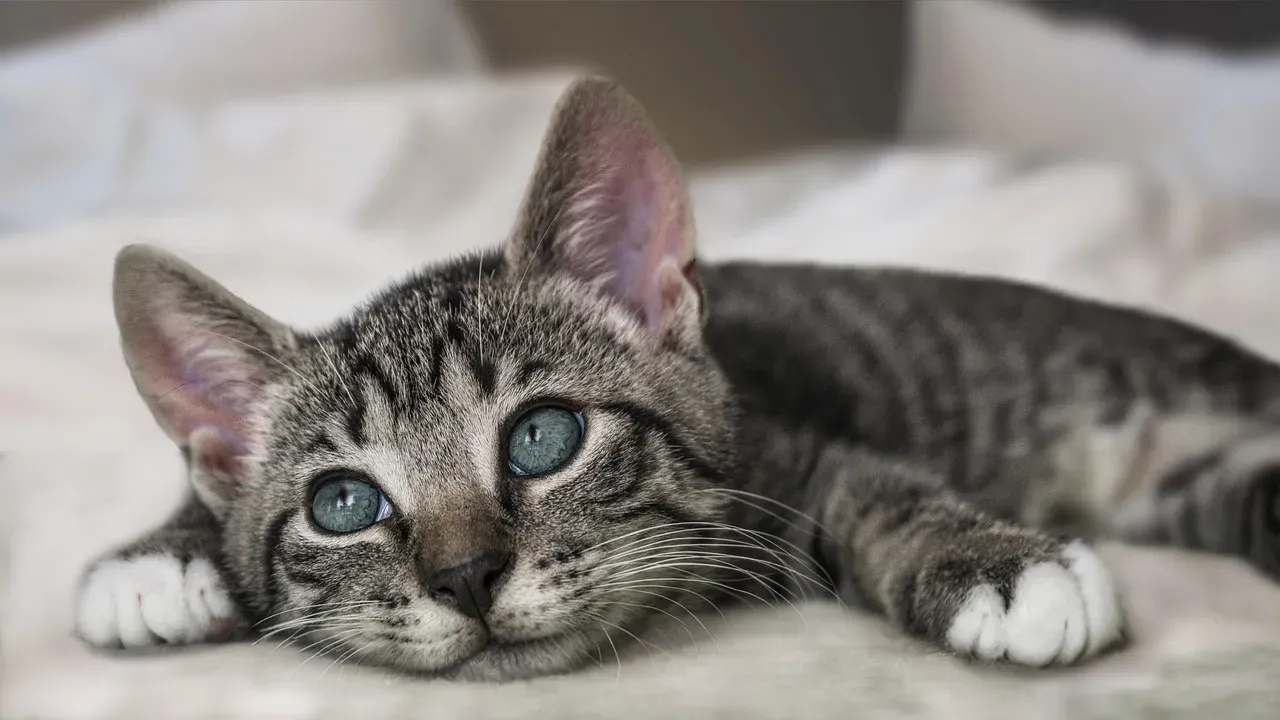
The next time your cat locks eyes with you – or stares intently at what appears to be a blank wall – try to hold on to this thought: they are not zoning out. They are perceiving a world woven from ultraviolet light, ghostly motion trails, wide peripheral panoramas, and information gathered from whiskers reading the air like a book. Their reality is genuinely, profoundly different from yours.
Science has given us the tools to understand the outline of what a cat sees, but there is still so much we can only guess at. The richness of feline perception likely exceeds anything a simple filter or simulation can capture. What we do know is humbling enough: your cat’s stare is not empty. It is full of a world you will never fully see.
Doesn’t that make you look at your cat just a little differently? Drop your thoughts in the comments – we’d love to know what you think is going on behind those extraordinary eyes.
Kristina is a young writer from India. An arts graduate and an avid content creator, Kristina is passionate about animals and wildlife. She enjoys exploring topics related to pet care, animal behavior, conservation, and nature, combining thorough research with engaging storytelling.