You’ve seen it happen a hundred times. A delivery arrives, you pull out whatever was inside, and within sixty seconds your cat is already in the box. Not playing nearby. Not sniffing it politely. Fully inside, tucked away, blinking at you like you’re the weird one for finding this strange.
Here’s the thing: your cat isn’t being quirky. What looks like a random obsession is actually one of the most deeply layered survival behaviors in the animal kingdom. Millions of years of evolution are packed into that cardboard square, and once you understand why, you’ll never look at the Amazon box the same way. Let’s dive in.
The Wild Ancestor Inside Your Living Room
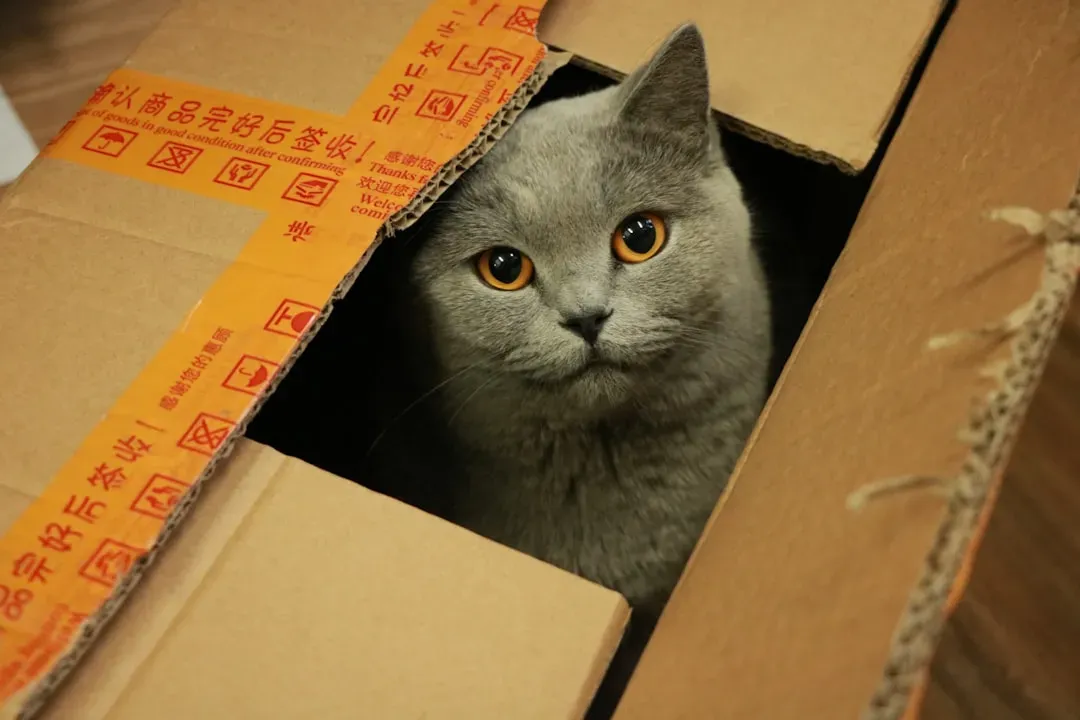
Your cat may spend its days napping on a sofa and demanding treats, but its brain still runs the same ancient software as its wild relatives. To understand modern feline behavior, you need to look back at the ancestors of domestic cats. The wild progenitor of today’s housecat is the African wildcat, which inhabited arid regions where shelter from predators and extreme temperatures was absolutely essential. In such environments, small, enclosed spaces offered both protection from threats and crucial insulation against heat loss.
Natural shelters like rock crevices, hollow logs, and dense thickets provided security and warmth. These spaces minimized exposure while maximizing concealment, a survival advantage that became deeply encoded in feline instincts. Even though domestic cats no longer face those same dangers, their brains still operate under these ancestral imperatives. A cardboard box mimics the dimensions and enclosure of a natural den, triggering an innate sense of safety. Honestly, it’s kind of remarkable when you think about it – all that prehistoric programming quietly firing in your cozy living room.
Predator and Prey: The Double Life of Every Cat
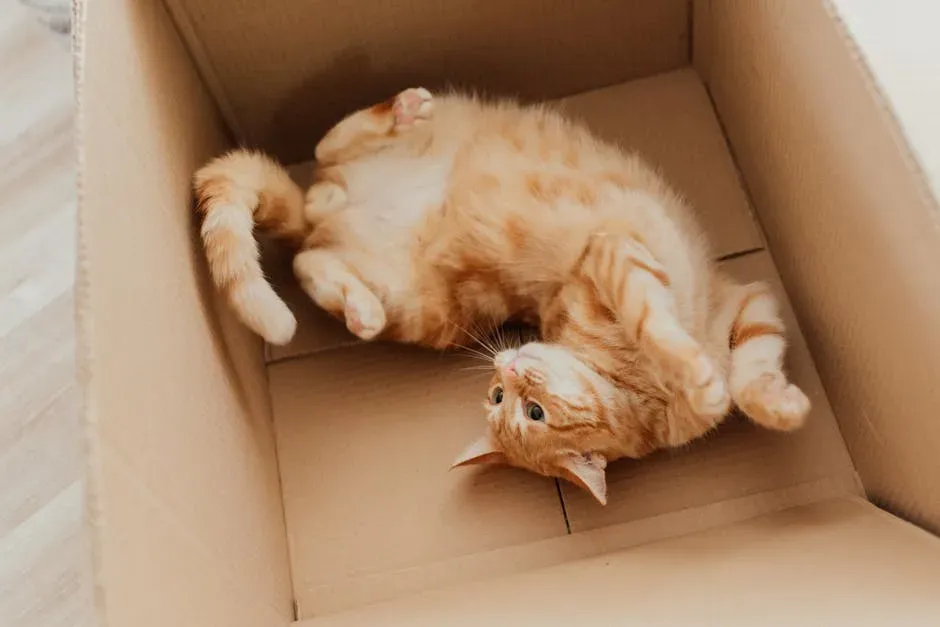
Your cat’s love for boxes stems from its evolutionary history as both predator and prey. In the wild, small, enclosed spaces provided safety from larger predators while offering strategic viewing points for hunting. This is the key tension that defines cat psychology. They aren’t just hunters. They’re also hunted – and that dual identity never fully left them.
Since cats are both predators and prey in the wild, a box gives them a safe spot to hide where they can watch what’s going on around them without being seen, which helps them feel less stressed. Think of it like the corner booth at a restaurant, where you can see every door, nobody approaches from behind, and you feel completely in control. Cats may seek out boxes for exactly that reason: so they can observe their surroundings in peace, knowing nothing will sneak up on them. A cat in a box feels its vulnerable back is protected.
The Science of Security: What Stress Research Reveals
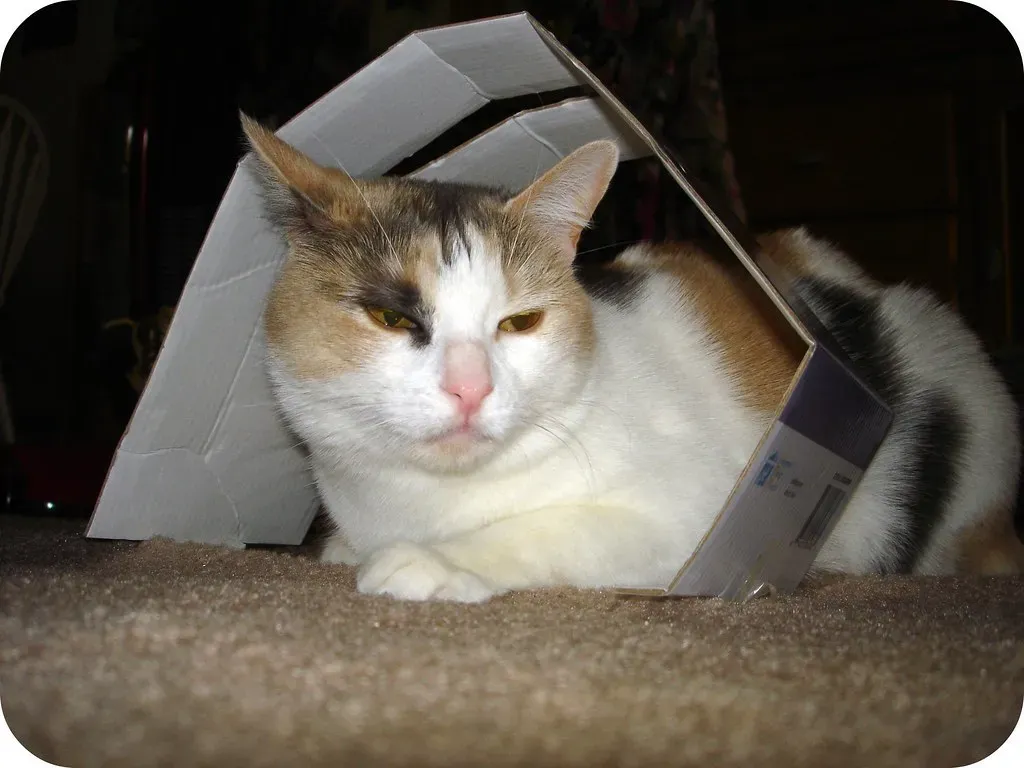
It’s not just a theory. Science has actually gone out of its way to test whether boxes genuinely help cats, and the results are hard to argue with. This sense of comfort is especially crucial in stressful situations. In a 2019 paper published in the journal PLOS One, Dutch scientists noted that the ability to hide was crucial in lowering the stress levels of cats that had just arrived at an animal shelter. The researchers measured those stress levels using the non-invasive Cat-Stress-Score, which assesses stress based on posture, vocal behavior, and activity level.
The major findings were striking: cats with a hiding box showed a significantly faster decrease in their Cat-Stress-Score, reaching a lower steady state seven days earlier than the control group. Seven days earlier. That’s not a minor improvement. The hiding box clearly helps shelter cats adapt more quickly to a stressful new environment, preventing the development of chronic stress. If a simple cardboard box can do that in a shelter, imagine what it does for your cat during a houseful of loud guests.
Born to Hide: How Instinct Starts From Birth
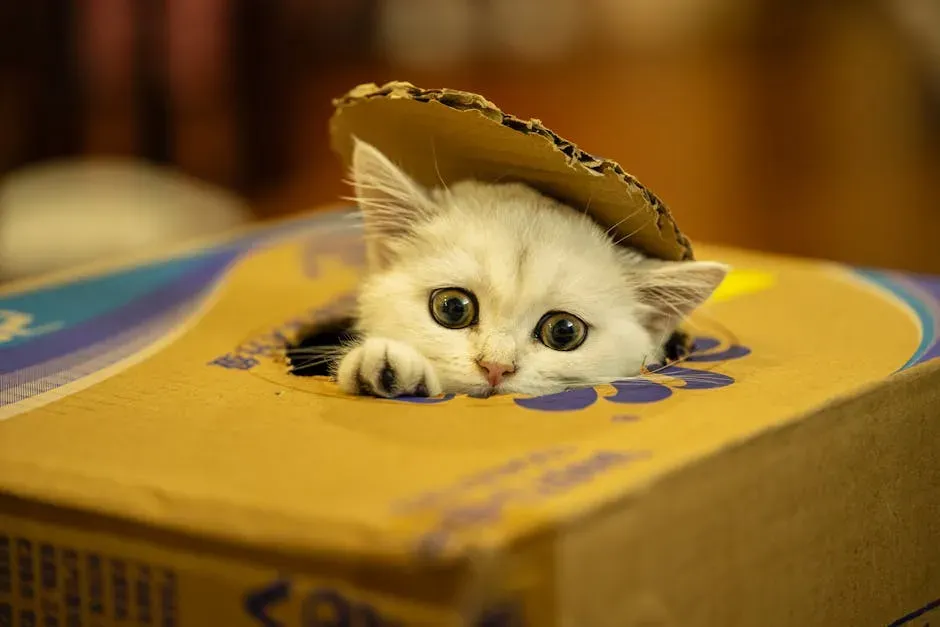
This instinct begins from a cat’s earliest moments. A mother cat will seek out a quiet area to birth her kittens. Their very first experience of the world is a safe, enclosed space. So from the literal first breath, a cat associates confinement with safety. That’s a deeply conditioned emotional response that never really fades.
In a shelter, a box helps mimic the enclosed comfort that kittens experience when cuddling with their mother and littermates. Just as human babies are comforted by swaddling, an enclosed space helps cats become calmer. It’s a beautiful parallel, isn’t it? Whether it’s a newborn human wrapped in a blanket or a cat curled in a shipping box, the need for gentle pressure and containment is universal across mammals. The box is essentially a cardboard mom-hug.
The Ambush Advantage: Hunting From a Box
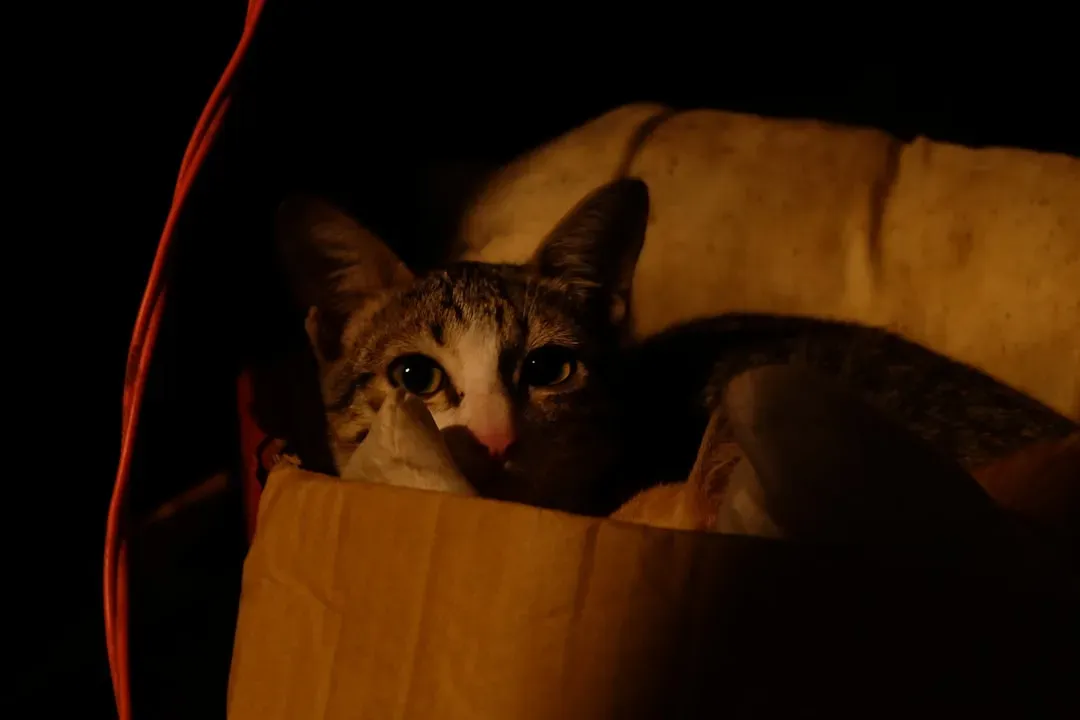
Let’s talk about the predator side of things. Cats are natural hunters, and their instinctual behaviors are deeply rooted in their wild ancestry. In the wild, cats rely on stealth and camouflage to stalk and ambush their prey. A box is not just a hideaway. It is, from a feline perspective, one of the world’s most perfect ambush positions.
Cats are ambush predators by nature. Boxes provide the perfect vantage point for observing prey and launching surprise attacks. This behavior is frequently observed during playtime with toys. Many cats treat boxes as interactive environments, crawling in and out, peeking over edges, or using them as ambush points during toy chases. This engagement stimulates mental activity and satisfies predatory drives. The next time your cat pounces on your ankles from inside a box, know that they’re not being mischievous. They’re being deeply professional.
Temperature and the Cardboard Heat Trap
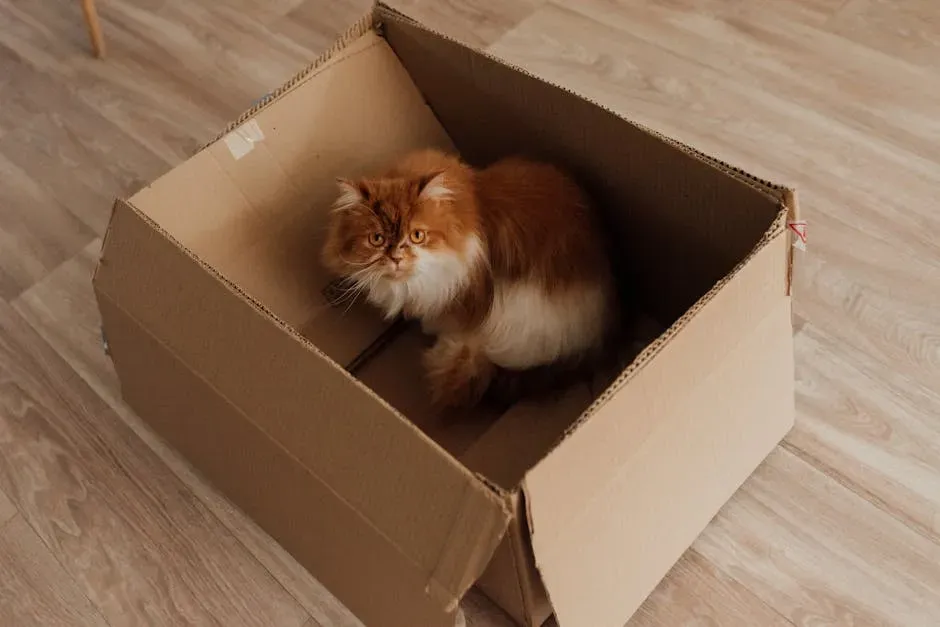
Here’s something that genuinely surprises most people. According to a 2006 study by the National Research Council, a cat’s thermoneutral zone is between 86 and 97 degrees Fahrenheit, which is a good 20 degrees higher than that of its human owner. Most homes are kept at a temperature your cat actually finds slightly chilly. So your cat is perpetually searching for warm pockets of heat throughout the day.
Cardboard, despite its flimsy appearance, is an excellent insulator. Its fibrous structure traps air, creating a microclimate that retains body heat. When a cat curls up inside a box, the walls reflect radiant heat back toward its body, reducing heat loss through convection. This makes even a simple shipping container feel like a heated nest. The reason behind this behavior is that your cat’s wild ancestors originated from desert regions, where high temperatures were a constant part of daily life. Today’s housecats still carry that warm-weather preference in their DNA.
Territory, Scent, and the Art of Claiming a Box
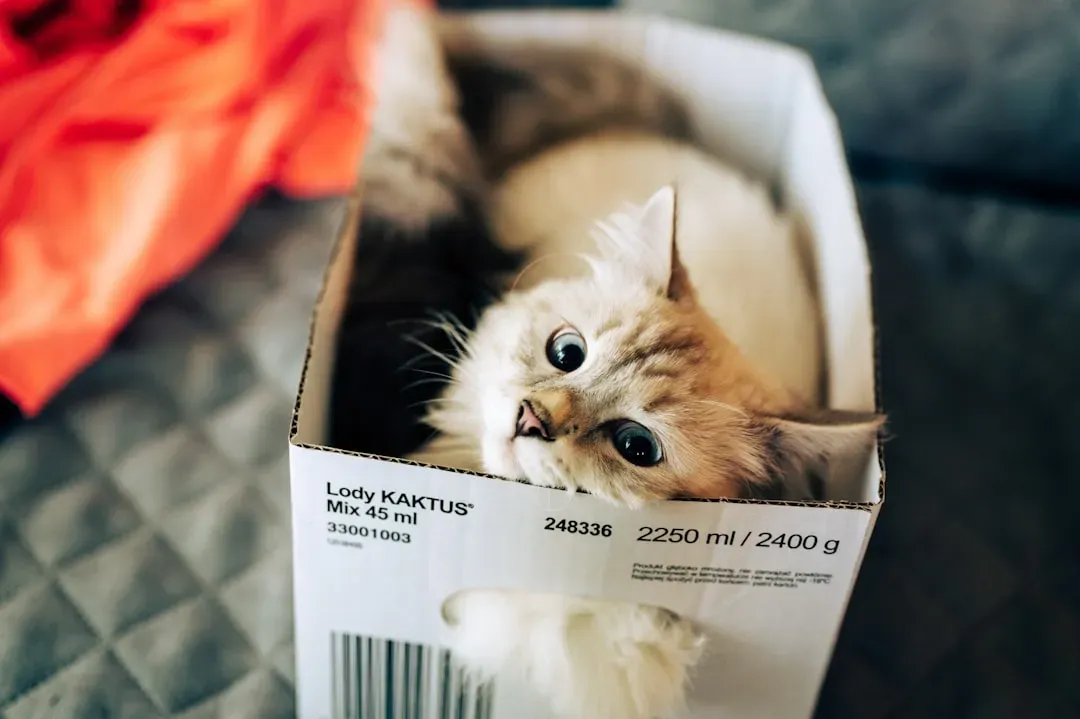
You might have noticed that your cat doesn’t just sit inside a box. It rubs its face all along the edges first. That’s not random. The very first thing most curious cats do when they see a cardboard box is rub up against it. Cats have scent glands on the sides of their face, which is why they love rubbing their cheeks against everything. This action leaves their scent on the object, like a feline “Property of Whiskers” sign. Your cat considers a new cardboard box to be an interesting addition to their domain, and they’ll naturally want to claim ownership of everything within their territory.
When cats rub against the interior of a box or knead the surface, they deposit pheromones that signal familiarity and comfort. Over time, the box becomes imbued with the cat’s olfactory signature, transforming it into a psychologically safe zone. It’s a bit like how you feel more comfortable in a hotel room after you’ve unpacked your things and spread your belongings around. Cats just use chemistry instead of luggage.
The Sensory World Inside a Cardboard Box
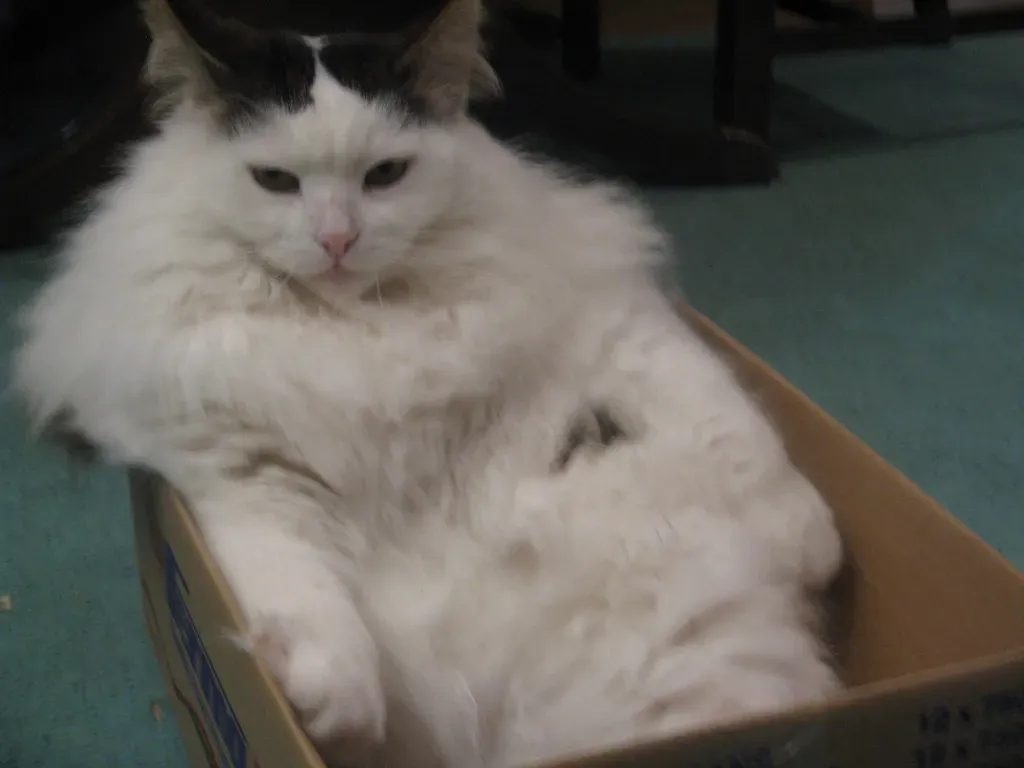
Cats have an acute sense of smell, and cardboard boxes are porous materials that can retain scents. When cats enter a box, they are enveloped by a medley of intriguing smells. This olfactory experience can be comforting and captivating, especially when they are exploring a box brought from the outside world, teeming with unfamiliar scents. Think about it from your cat’s point of view: that new delivery box just traveled through warehouses, trucks, and neighborhoods your cat has never visited. It’s basically a sensory adventure in a square.
The texture of cardboard is also appealing to cats. It provides an interesting tactile experience, which is particularly relevant as cats have sensitive paw pads. Sensory stimulation extends to visual engagement too. Boxes often have openings or flaps, inviting cats to peek in and out. The play of light and shadow inside the box can captivate their attention and trigger their instinctual curiosity. In short, a cardboard box isn’t passive furniture to your cat. It’s a fully immersive sensory installation.
When Box-Hiding Is Actually a Warning Sign
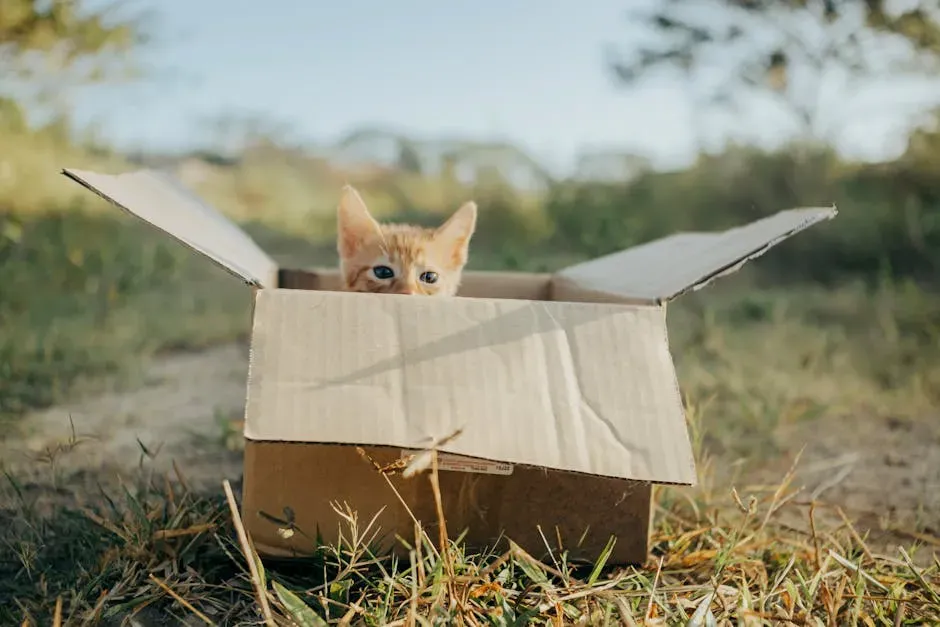
I think this is the part most cat owners overlook, and it’s genuinely important. Boxes are wonderful for cats, but how your cat uses a box tells you a lot. Whether spending lots of time in a box reveals anything deeper about how your cat is feeling depends on the context. A cat cowering at the back of a box with wide eyes is likely using the box in a very different way from one who is snoozing inside or repeatedly pouncing in and out of it.
If a normally social, confident cat suddenly begins hiding in boxes constantly, avoiding interaction, eating less, or acting withdrawn, that can signal stress or illness. Boxes are a normal enrichment tool. Sudden isolation is not. As always with cats, behavior changes tell the real story. If your cat is hiding excessively, that is a good time to talk to your veterinarian and maybe get a referral to a behaviorist who can help your cat cope better. A box is a sanctuary, not a symptom – unless the behavior suddenly and dramatically shifts.
How to Harness the Box for Your Cat’s Wellbeing
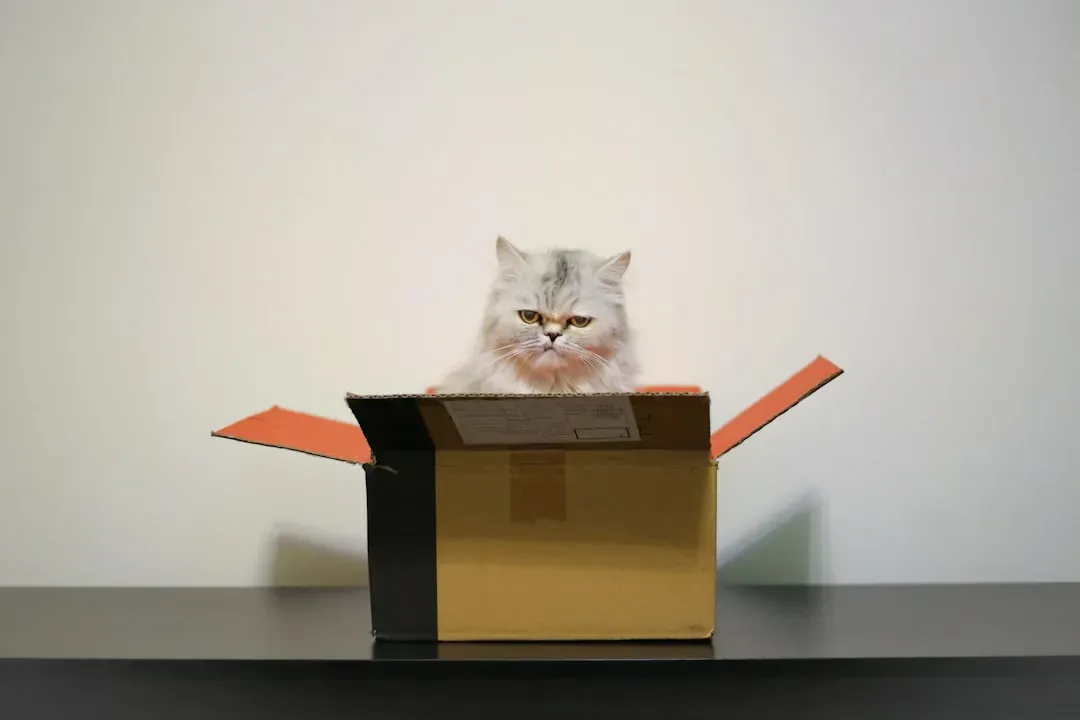
Once you understand why your cat loves boxes so much, you can actually use that knowledge to genuinely improve their daily life. Place boxes in quiet areas of your home, ensure they’re clean and free of hazardous materials, and consider cutting multiple entrances for escape routes. Add soft bedding for extra comfort and rotate boxes regularly to maintain interest. Rotating boxes is a small thing that many owners never think to do, but it keeps the novelty alive, which is part of what makes a box so irresistible in the first place.
Cardboard boxes are one of the simplest, most effective forms of enrichment you can offer. They support natural instincts including hiding, observing, pouncing, and scratching, without requiring expensive gadgets or elaborate setups. In many cases, a plain shipping box does more for your cat’s mental well-being than a flashy piece of pet furniture ever could. The American Association of Feline Practitioners and the International Society of Feline Medicine both include providing a safe private space for cats, such as a cardboard box, as one of the five core environmental needs of domestic cats. So yes, the cardboard box is basically a certified feline wellness tool.
Conclusion: Never Throw Away That Box Too Quickly
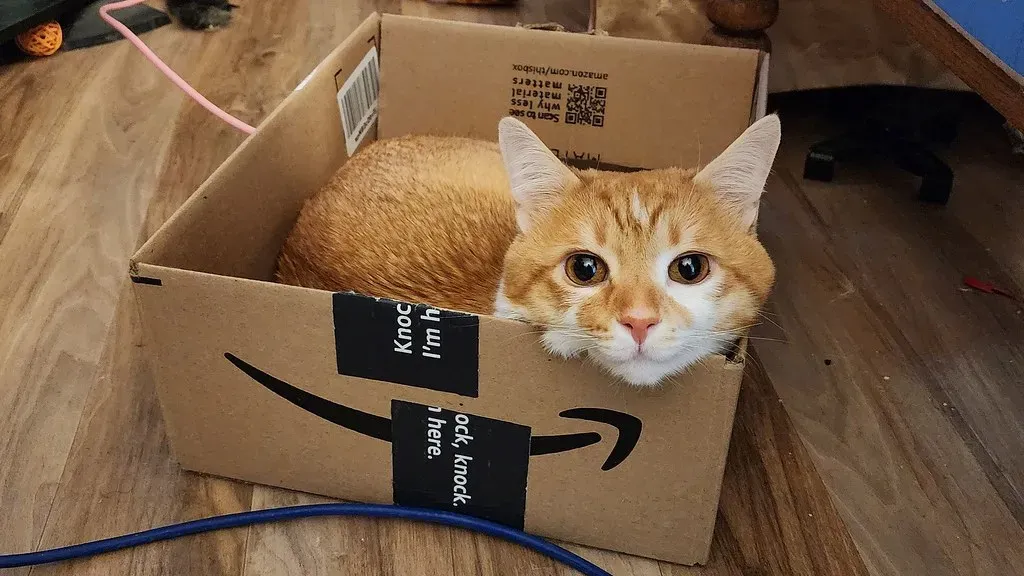
Your cat’s obsession with boxes is one of those rare behaviors where science, instinct, psychology, and emotion all converge in one tidy square of cardboard. It’s ancient survival code wrapped in something you’d normally toss into the recycling. The sight of a cat nestled in a box is more than a cute internet meme – it’s a window into the intricate workings of feline psychology. What appears to be a quirky habit is, in fact, a deeply rooted survival strategy shaped by evolution, refined by instinct, and sustained by emotional necessity.
So the next time you unpack something and reach for that box to break it down, pause for a moment. Your cat is about to experience something genuinely meaningful to them. Let them have it. Leave it on the floor, maybe toss in a soft blanket, and watch them light up. That simple gesture costs nothing and gives your cat exactly what millions of years of evolution designed them to need. A hiding place. A warm shelter. A little kingdom of their own.
What’s the wildest place your cat has ever chosen to hide in instead of their perfectly good cat bed? Something tells me the answers would fill their own box. Share your thoughts in the comments below.
Kristina is a young writer from India. An arts graduate and an avid content creator, Kristina is passionate about animals and wildlife. She enjoys exploring topics related to pet care, animal behavior, conservation, and nature, combining thorough research with engaging storytelling.