You’ve seen it a hundred times. Your cat sits across the room, staring at you with what looks like total disdain, wearing an expression that seems to scream “I’ve made a terrible life choice living here.” It’s easy to laugh it off and assume your cat is just being, well, a cat. Moody. Distant. Unfathomable.
But what if that face isn’t dismissal at all? What if it’s something far more layered, more intelligent, and honestly more fascinating than we’ve ever given cats credit for? Turns out, science has been quietly dismantling the myth of the aloof, emotionless feline. And what researchers have uncovered will genuinely surprise you. Let’s dive in.
Your Cat Has Nearly 300 Facial Expressions – Yes, Really
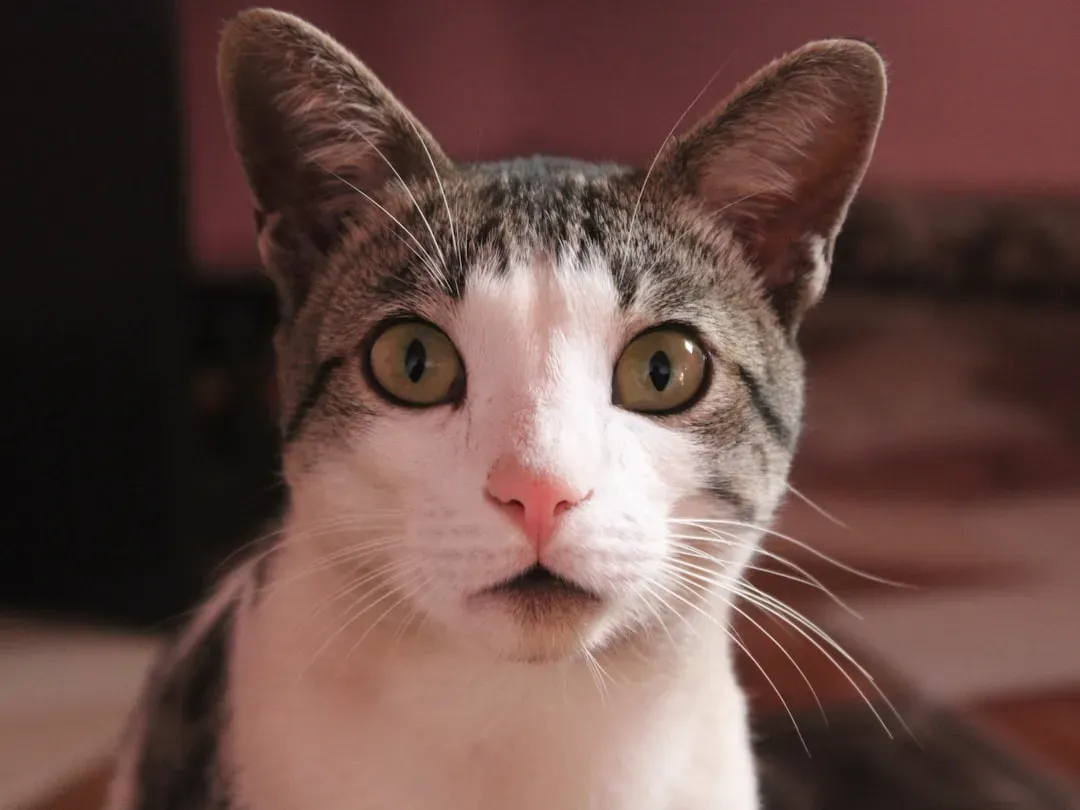
Here’s the thing that stopped researchers in their tracks: cats have 26 different facial movements that combine to make 276 distinct expressions. That number is nothing short of jaw-dropping. Think about it – most of us assumed cats had maybe a handful of recognizable looks. An annoyed face. A sleepy face. Maybe a hungry face when the bowl is empty.
Researchers discovered that cats use nearly 300 distinct facial expressions to communicate with one another, according to a study published in the journal Behavioral Processes. Honestly, that’s almost as expressive as a chimpanzee, which clocks in at roughly 357 expression combinations. Your “grumpy” cat isn’t emotionless. It’s practically Shakespearean.
The Science Behind the Cat Face: How Researchers Cracked the Code
Over 10 months, researchers Lauren Scott and Brittany N. Florkiewicz observed 53 domestic shorthair cats in a Los Angeles cat cafe and recorded 186 separate meetings between the animals. That’s not a casual glance at some funny cat videos – that’s serious, dedicated science. The kind that changes the way you look at your cat forever.
Back at the lab, the team used a coding system for facial expressions called Facial Action Coding System, or CatFACS. Trained users can identify “even the most subtle of muscle movements,” and each of these movements, called an “action unit,” is noted and given a number using a video software, ELAN. Think of it like a decoder ring for cat faces – one that reveals a hidden language you never knew existed.
Most of Those Expressions Are Actually Friendly – Not Grumpy
This is the part that surprises people the most. When you look at your cat’s serious, stone-cold expression and assume it means something negative – you are probably wrong. The majority of the facial expressions – 45 percent – were categorized as friendly, while only 37 percent were aggressive, and 18 percent of the expressions were ambiguous. This debunks some popular beliefs about cat moodiness – it turns out they’re more likely to give a friendly “hello” than turn their noses up, after all.
Let’s be real. Cats have had a PR problem for centuries. We built an entire cultural mythology around their supposed coldness. Intentionally or unintentionally, cats’ expressions can give us the impression that they’re feeling silly, peaceful, happy, playful, shocked, grumpy, or downright appalled. Nevertheless, the expression a cat makes doesn’t always mean what we think it does, as cats emote differently from how humans do. That frown you see? It might just be the cat equivalent of a warm hello.
The Slow Blink: The Deepest Form of Trust You Can Share
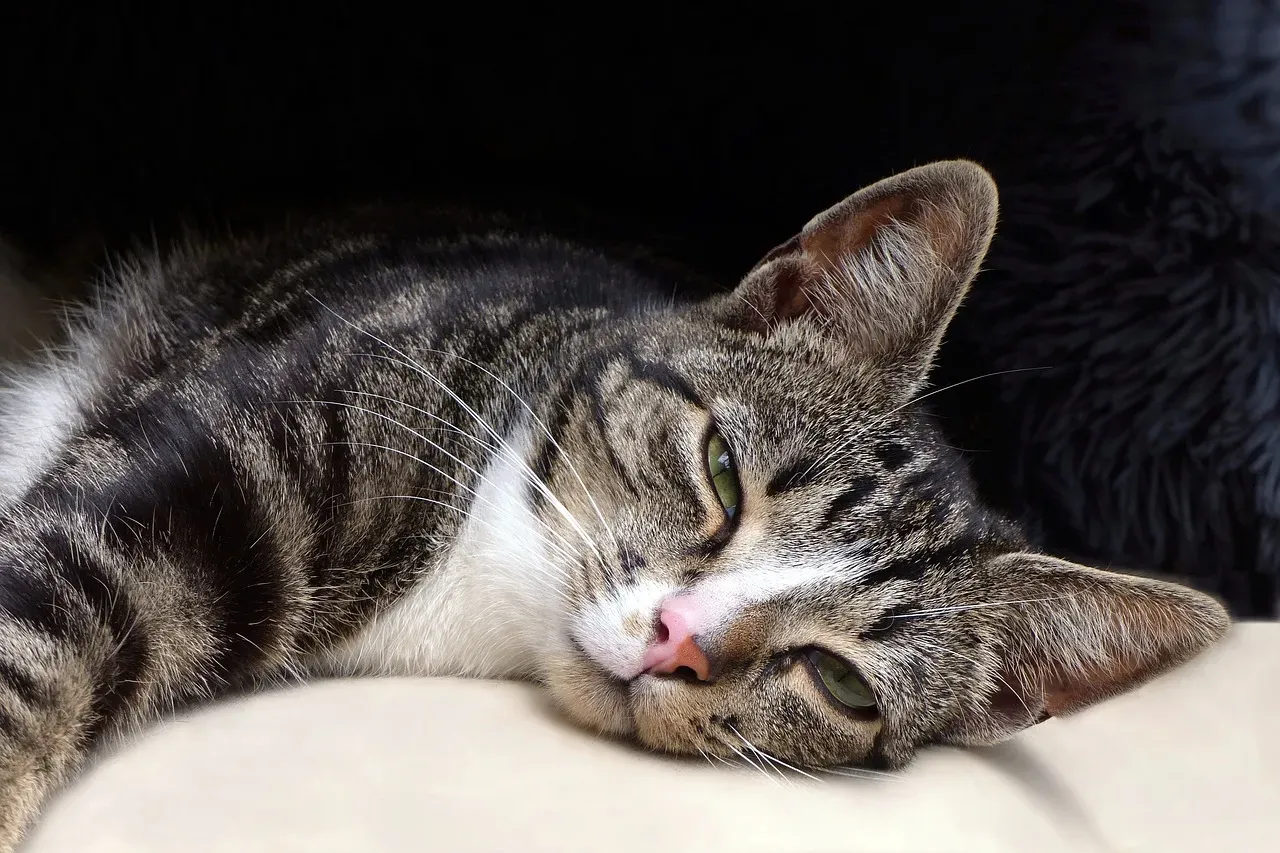
You’ve probably seen your cat narrow its eyes slowly at you from across the sofa and thought nothing of it. But that small, lazy gesture carries enormous emotional weight. When a cat slow blinks at you, they are often expressing a sense of trust, contentment, and affection. In the feline world, closing their eyes in the presence of another creature makes them vulnerable, as they are unable to detect potential threats. In other words, your cat is choosing to go briefly blind – for you. That’s profound.
By observing cat-human interactions, scientists were able to confirm that this expression makes cats – both familiar and strange – approach and be receptive to humans. The best part? You can do it back. When humans initiate the slow blink, you are telling the cat that you trust them, which will allow the cat to form a positive association with you. It’s the quietest, most elegant conversation you’ll ever have.
That Disgusted “Stinky Face” Is Actually Deep Cognitive Processing
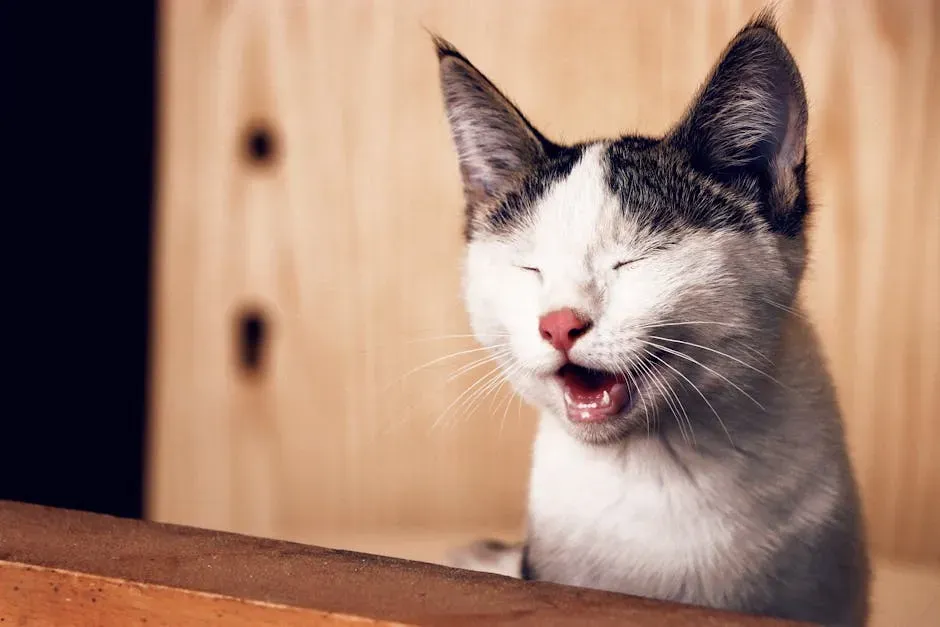
You know the expression. Your cat sniffs something, curls its upper lip, and looks utterly appalled – like you just played them the worst music they’ve ever heard. It’s called the flehmen response, and it looks rude, but it’s anything but. Cats give the “stinky-face” because of the “flehmen response,” which occurs when a cat smells something and the scent particles go to the roof of the mouth, causing the Jacobson’s organ, a sensory receptor, to kick in. In response, the cat opens their mouth and grimaces, which makes it look as though they’re disgusted by whatever they’re smelling. This isn’t the case, though: they’re just processing smells – like pheromones left behind by other cats – to gather information about them.
Think of it as your cat running a scent analysis through a biological supercomputer. The flehmen response may look like the face we make when we smell something bad, but it doesn’t necessarily mean the cat finds the odor offensive. It’s only trying to process the scent more deeply than the nose is capable of, sending signals about it to the brain. So next time your cat makes that face at your freshly washed laundry, know that it’s gathering data. Scientific, nose-based data.
Whisker Positions Tell You Exactly What Your Cat Is Thinking
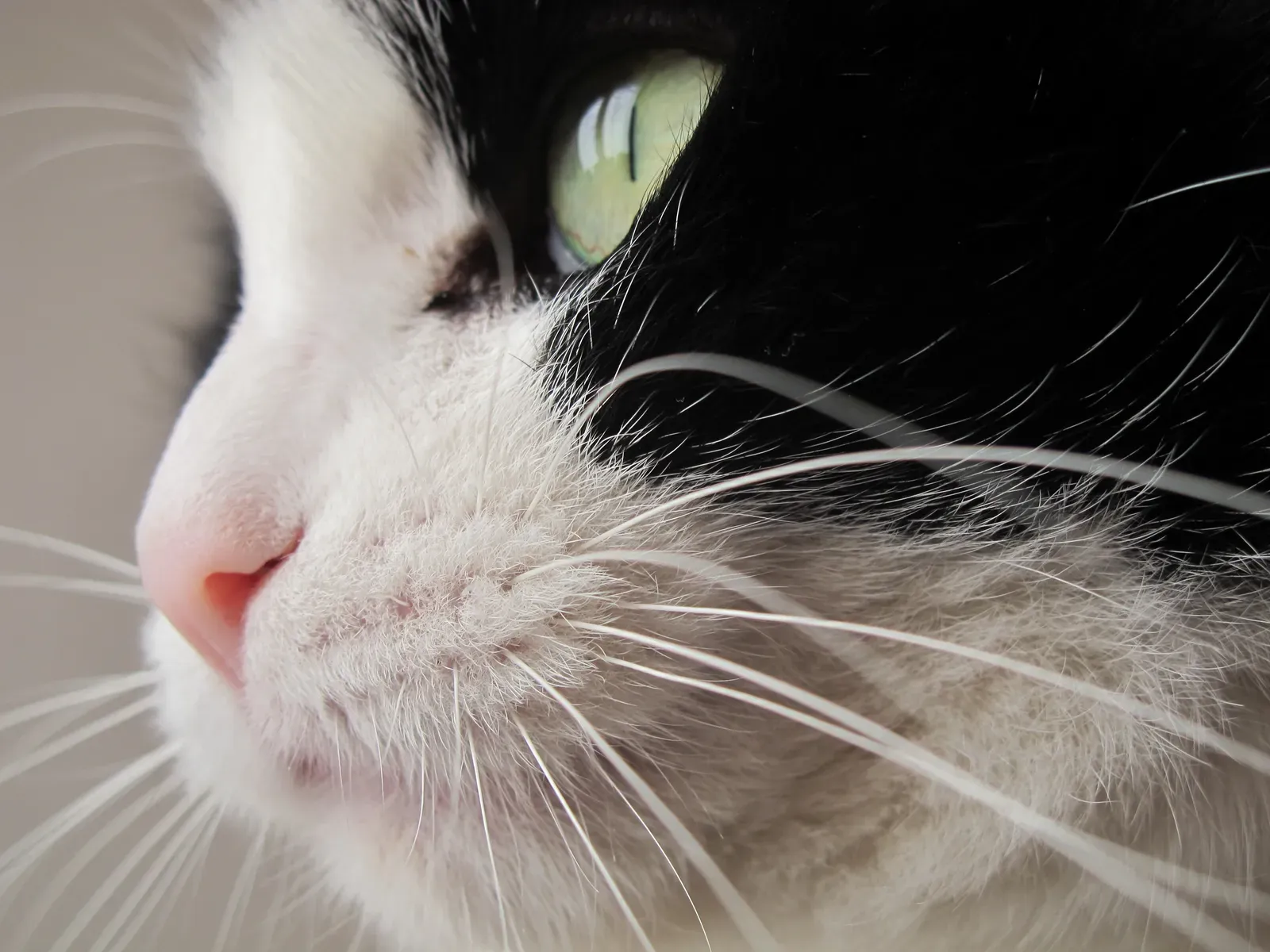
Whiskers are one of the most underrated communication tools in the animal kingdom. They are not just decoration – they’re essentially a live emotional display, broadcasting your cat’s inner world in real time. Whiskers, scientifically known as vibrissae, are not ordinary hairs. They are embedded much deeper into a cat’s skin than regular fur and are packed with nerve endings. These specialized hairs act as highly sensitive tools that help cats detect air currents and movements.
The position of those whiskers changes everything. Whiskers overall are surprisingly telling: content or happy cats almost always point their whiskers forward. Meanwhile, when a cat’s whiskers are backward and tense, it can indicate a state of anxiety, fear, or aggression. Cats often display this whisker position when they are feeling threatened, scared, or defensive. If your cat suddenly pulls its whiskers flat against its cheeks, that’s your cue to back off and give it some space – not interpret it as indifference.
Domestication Made Cats More Expressive – Humans Did This
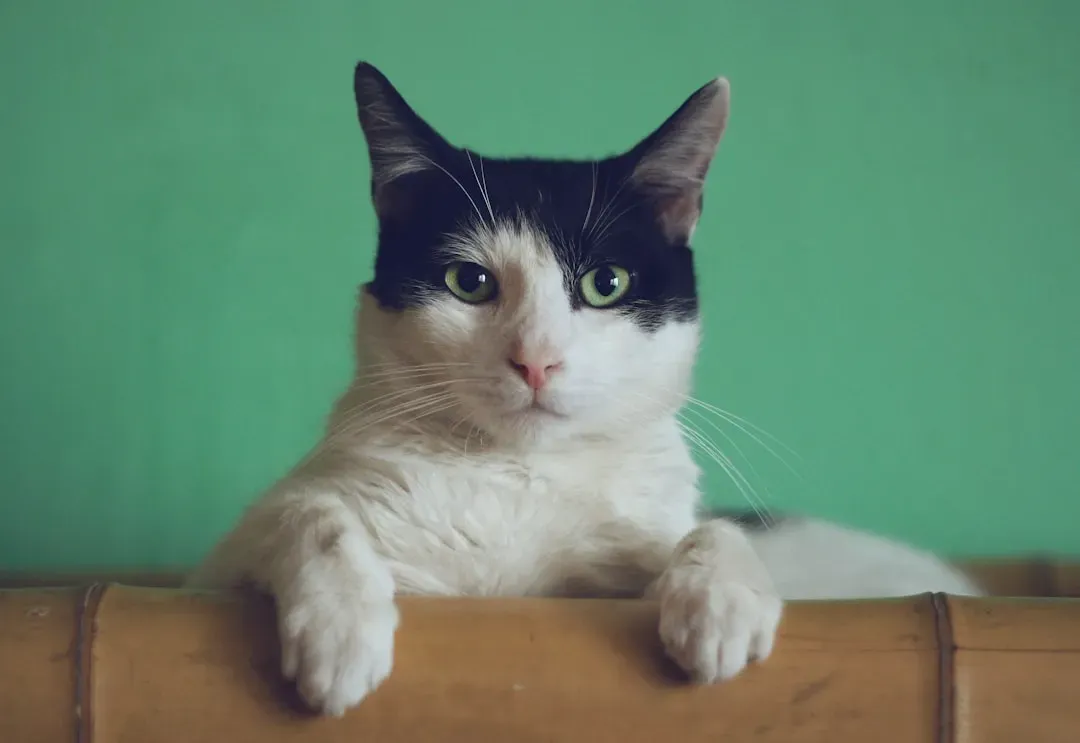
Here’s a fascinating twist in this whole story. Your cat’s remarkably expressive face? You may be partially responsible for it. Cats have 276 distinct facial expressions, a discovery that turns on its head the popular belief that our pet felines are aloof and just not that into us. In fact, cats likely evolved these various expressions because of us – a product of communication between felines and humans over 10,000 years of domestication.
Although researchers haven’t been able to compare their results with those of wild felines, they do know that all close relatives of the domestic cat are ferociously solitary animals. Pet cats might have retained some of that defensive communication, but these domestic descendants probably started to pick up friendly facial expressions as they gathered to await humans’ dinner leftovers. Over thousands of years, a silent negotiation took place – and faces were the currency. It’s hard not to find that beautiful, honestly.
Reading Your Cat’s Face Can Genuinely Improve Its Life
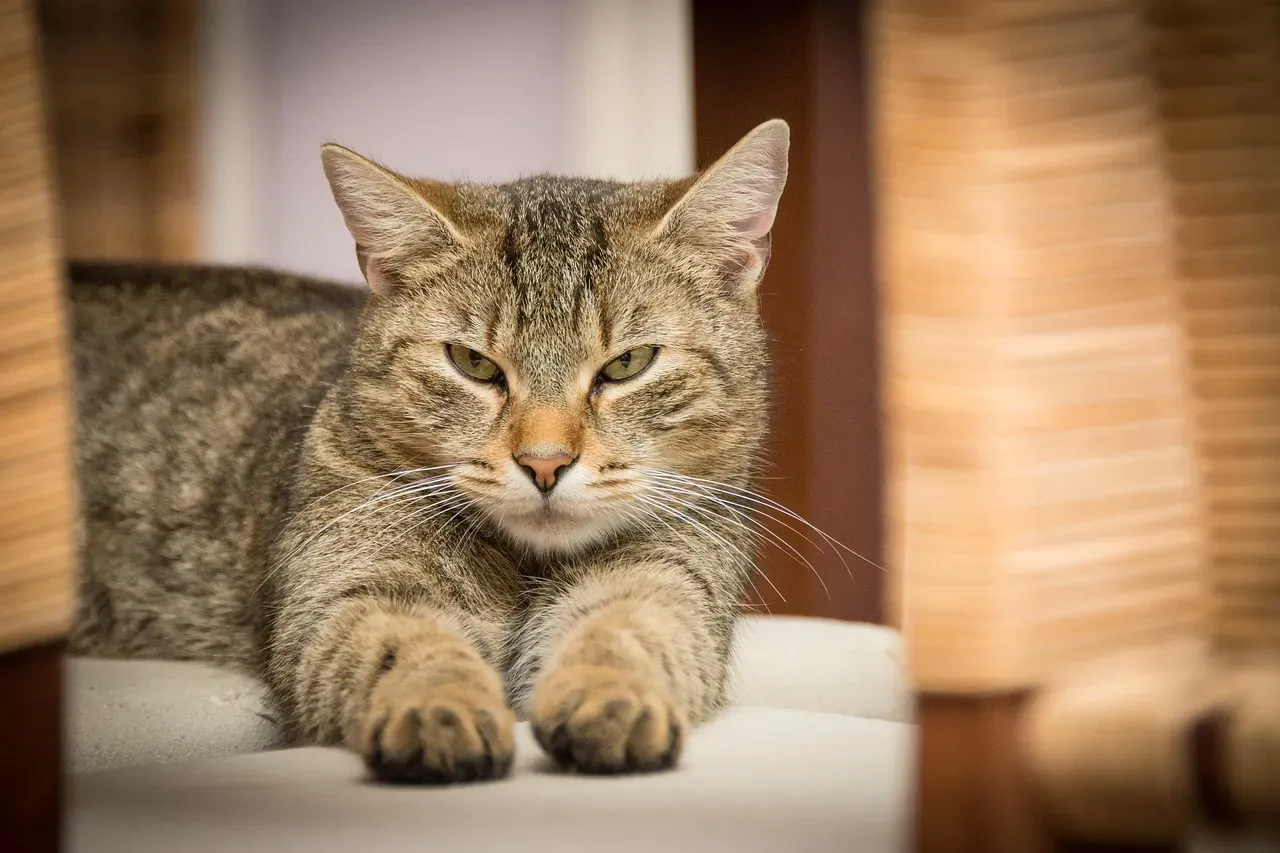
Understanding your cat’s facial expressions isn’t just a fascinating party fact. It has real, tangible benefits for both of you. Being able to read and interpret these different facial expressions can help to ensure that cats receive appropriate care. For example, facial expressions can indicate when a cat may be in pain and require treatment. Being able to read cat faces can also improve the bond between cat owners and their cats, through an improved understanding of how their cats may be feeling.
There’s also a practical angle that vets and shelters are now taking seriously. The results may be useful to shelters, veterinarians, and cat guardians. For example, being able to spot these facial expressions might help a shelter know whether a particular cat should be adopted out on their own or to a home with another cat. Even more exciting, the more time you spend with cats, the better you are at reading them. So every quiet evening spent watching your cat is actually making you more fluent in a language most people don’t even know exists.
Conclusion: That “Grumpy” Face Was Never What You Thought
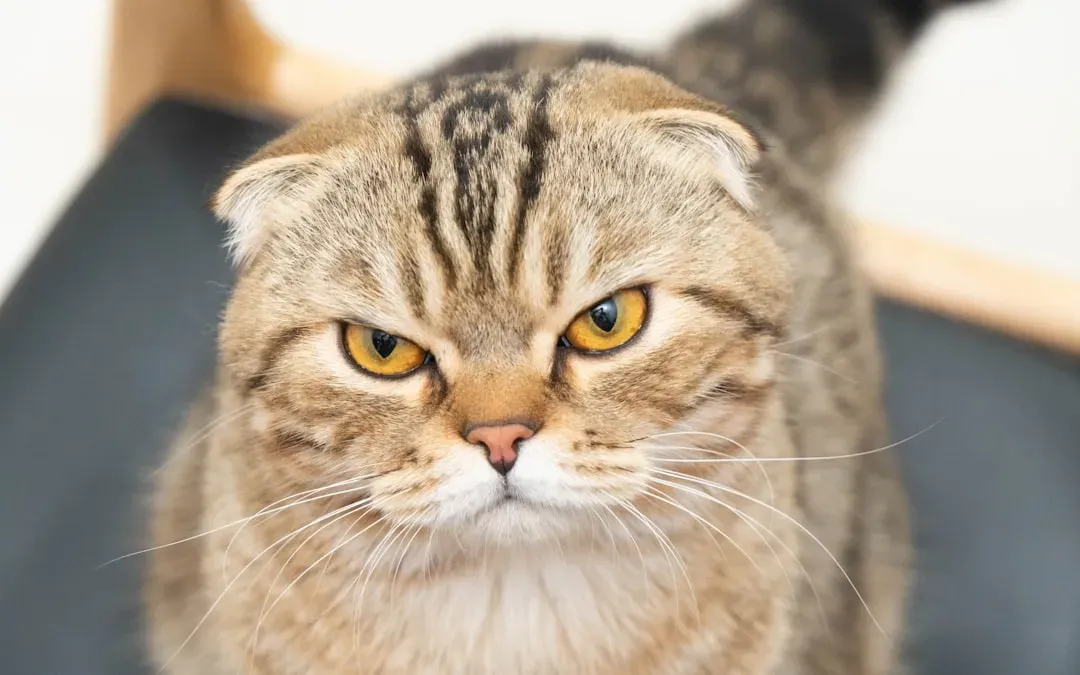
The next time your cat levels you with what looks like a withering, disapproving glare, try to resist the urge to laugh it off. What you’re witnessing is the result of 10,000 years of emotional evolution – a highly expressive, cognitively active creature that is processing its world, communicating its feelings, and yes, possibly even showing you affection in the only way it knows how.
Science has made it crystal clear: your cat is not aloof, not cold, and definitely not empty-headed. Our felines are signaling subtly-thought facial expressions every moment they are with us, and the more we observe, the more we see. The rich emotional lives that cats lead can be shared. The conversation has been going on this whole time. You just needed to learn the language.
So – will you look at your cat’s face a little differently now? Something tells me you absolutely will.
Kristina is a young writer from India. An arts graduate and an avid content creator, Kristina is passionate about animals and wildlife. She enjoys exploring topics related to pet care, animal behavior, conservation, and nature, combining thorough research with engaging storytelling.