You bring a new cat home, full of hope and excitement, imagining afternoon cuddles and purring on the couch. Then they vanish. Under the bed. Behind the dryer. Into thin air, basically. Sound familiar? Shy cats can feel like a mystery wrapped in fur, and honestly, it can be a little heartbreaking when all you want to do is love them.
Here’s the thing though – a shy cat isn’t a broken cat. They’re simply a careful one. Behind all that hiding and side-eyeing lives a creature perfectly capable of becoming your most devoted companion. It just takes the right approach, a lot of patience, and a willingness to play the long game. Be surprised by what a little gentleness can unlock.
1. Create a Safe, Dedicated “Home Base” Room

When you bring a shy or fearful cat into your home, the entire house can feel massively overwhelming to them. Think of it this way – it’s like being dropped blindfolded into a foreign city and told to “just explore.” Not exactly comforting. Bringing your fearful cat home to a secluded room set up specifically for them gives them a quiet place to adjust to new surroundings, complete with a litter box, food dish, water bowl, comfy cat beds, safe hiding spaces, and some toys.
At first, a fearful cat should be confined to a small, quiet room with some hiding spots – safe options include boxes, pet carriers, cat trees, or blankets. Resist the urge to give them free roam of the whole house right away. Sometimes, lots of space can actually encourage fearful cats to keep their distance, and they may feel more insecure in a bigger area than they would in just one room. Small and cozy is the goal here, not grand and open.
2. Let Your Cat Set the Pace – Always

This might be the hardest tip to follow because your instinct is going to scream “just pet them already!” Resist it. Allow your shy cat to approach you. A golden rule of interacting with a timid feline is to never approach them – instead, let your cat decide when they’d like to come to you. It sounds counterintuitive, but it’s genuinely the fastest way to build trust. Chasing a shy cat only teaches them that you are something to be chased from.
Holding your cat against their will or forcing them to play will increase their fear and continue their anxiety around you. Instead, adopt a slow pace with lots of patience, and let your cat determine when they want to hang out or be petted. Think of yourself less like an eager new friend and more like a calm, reliable presence – like a good neighbor who waves hello but never barges through the door uninvited.
3. Use Your Voice and Body Language Strategically
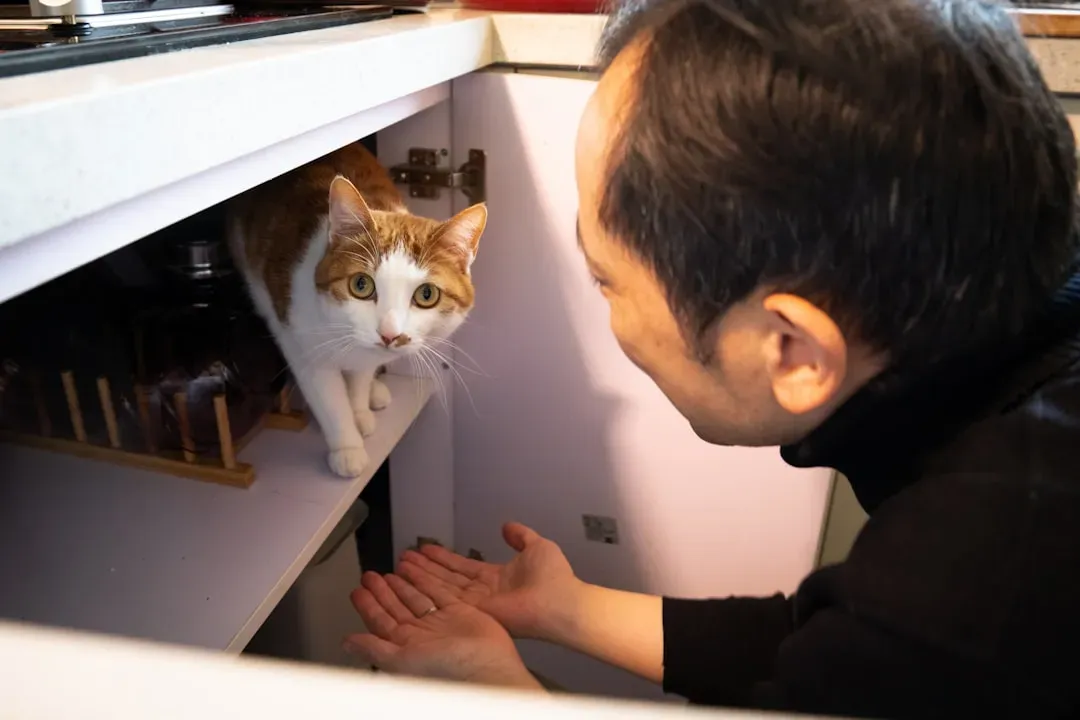
Always talk softly and move slowly around your cat. Avoid staring at them, since this can be perceived as a threat, and it helps to get down to the cat’s level when interacting instead of towering over them. This is huge. From a small cat’s perspective, a tall human walking directly toward them while maintaining eye contact looks a lot like a predator on the hunt. You might not mean it that way, but your cat absolutely reads it that way.
Avoid staring at your cat or approaching them directly, as this can seem threatening. Instead, try getting down to your cat’s level by kneeling or sitting on the floor. Sit sideways. Glance away. Read a book out loud in a calm voice – yes, really. Speaking to them in a calm voice, even reading aloud from a book, helps them become familiar with your scent and your voice. You’re essentially becoming background furniture, and that’s a compliment in cat language.
4. Harness the Power of Food and Treats

Never underestimate what a well-placed treat can accomplish. Explore whether your cat is treat-motivated or play-motivated – most cats, even fearful ones, will display signs they’re interested in one of these. Use treats or playtime to your advantage to engage your cat, because they will start redefining your relationship when positive things like treats and toys are associated with your presence. It’s basically the same logic as bringing donuts to the office on your first day.
Food can be used as a positive bonding tool. Feed your cat at scheduled meal times instead of leaving food out all the time, as this will help them make positive associations with people. Over time, you can also use treat placement strategically. Lickable treats are ideal for enticing your cat – you might need to put the treat on a plate and then back away to give your cat space, gradually reducing the distance between you and the cat over time. Slow and steady wins this particular race.
5. Offer Good Hiding Spots, Not Just Open Space

You might think removing hiding spots will force your shy cat to come out more. That logic backfires spectacularly. Instead, give your cat lots of “good” hiding spots that still allow you to see them and access them in case of emergency. A big, roomy carrier is a favorite hiding spot to offer a fearful cat – cover it with a towel or blanket and it becomes a perfect little cave, and you also encourage them to see a carrier as a safe space.
Cats often feel most comfortable on high perches because they can safely observe their surroundings. That’s why a cat tree near a window is practically gold. Make sure you have plenty of safe cat-friendly spots your cat can retreat to, such as high perches and quiet hiding spots, especially if there are other overly playful pets in the house who are prone to invading your kitty’s personal space. Giving your cat control over where they feel safe is one of the kindest things you can do.
6. Build a Consistent Daily Routine

Shy cats are not fans of surprises. At all. Cats crave predictability, and you can help a new or shy cat settle into their home and trust you by creating a reliable routine. Predictability works like a security blanket for them. When they know feeding time is at 7am, that you’ll sit quietly in the room at 6pm, and that the house will be calm by 9pm, their nervous system gradually relaxes. It’s remarkably similar to how humans feel calmer when their workday has a clear structure.
Making a cat’s day as consistent as possible helps them know what is coming next, which can increase confidence in more fearful cats. This means establishing routines around playtime, feeding, and even bedtime. Daily routines, such as when you feed your kitty, are important to them feeling secure and comfortable – routine is a way to relax your cat as they come to know what to expect, including when you are away and when they will have your undivided attention for play and grooming. Predictability, honestly, is love in cat terms.
7. Introduce Gentle Play to Build Confidence

Play is not just fun – it’s deeply therapeutic for a shy cat. Some cats are very play-motivated, and regular play sessions can help bring them out of their shell and out of hiding. The key is choosing the right kind of play. You want to start at a comfortable distance so your cat can engage without feeling pressured to come too close. Think of it as a low-stakes audition for friendship.
Shy cats may prefer toys focused on a distant object, such as a feather wand or laser pointer. Others may respond well to catnip-filled mice or other catnip toys. Once you find the ones they like, find a few moments each day for activities and play. I think this is also important to remember: if your cat is tracking the toy with their eyes, that’s a start. They don’t have to play and pounce at first – if they’re watching it, they’re enjoying themselves. Even quiet engagement is progress worth celebrating.
8. Learn to Read Feline Body Language

Here’s the honest truth – you can do everything else on this list perfectly and still push your cat backwards if you’re misreading their signals. Cats communicate in different ways, and you can usually identify a scared or shy cat by their body language. Physical signs of fear can include dilated pupils, ears flattened against the skull, and recoiling or cowering from your touch. If you notice these signs, give your cat space and don’t force them to interact if they don’t want to.
Observe your cat’s body language carefully, as they communicate first and foremost through it. Is your cat crouched away from you, or is their body oriented toward you and more welcoming? Is their tail flicking in annoyance, or is it relaxed? Pay attention to ear positions, how wide their eyes are, and their overall body position. If a cat is rubbing against you with their head, mouth, or tail, they are marking you as safe – this is the ultimate sign of trust. Learning this language changes everything about how you interact with your cat.
A Final Thought Worth Keeping

Gaining the love of a shy cat is one of the most quietly rewarding things a person can experience. It doesn’t happen in a weekend. Sometimes it takes weeks. The amount of time it takes a cat to settle into a new home varies from case to case – some cats may take a week, while others may take months, depending on their individual personalities. The timeline doesn’t matter nearly as much as the consistency of your effort.
Fearful cats can integrate into a home and become fulfilling companions. Being a fearful cat does not mean they are incapable of giving or receiving love. What you’re building isn’t just tolerance, it’s genuine, earned trust. Helping shy cats feel less stressed and anxious comes down to patience and listening to them when they communicate their needs – cats love predictability, and by keeping interactions positive, your shy cat will slowly learn to trust you. The day your once-terrified cat curls up next to you on the couch, voluntarily and on their own terms, will feel like an absolute gift.
So tell us – have you ever gained the trust of a shy or fearful cat? What worked for you? Drop your experience in the comments. You might just help someone else’s hidden kitty find their courage.
Kristina is a young writer from India. An arts graduate and an avid content creator, Kristina is passionate about animals and wildlife. She enjoys exploring topics related to pet care, animal behavior, conservation, and nature, combining thorough research with engaging storytelling.