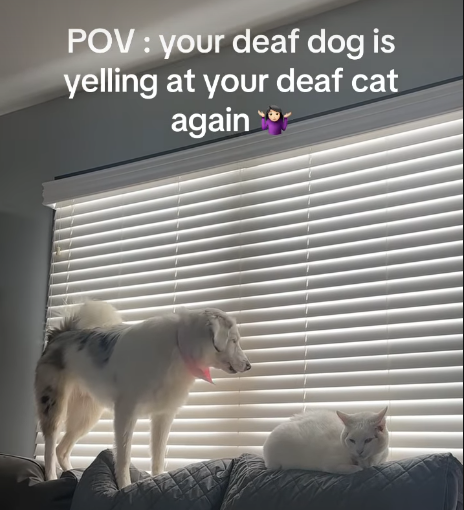
A brief Instagram Reel has captured the internet’s attention with a deceptively simple pet interaction that reveals deeper layers of companionship. In the clip, a dog unleashes a series of enthusiastic barks toward a relaxed cat perched nearby on a couch, yet the feline shows zero reaction. The twist that both animals share the same hearing impairment turns what could be a chaotic clash into a profoundly tender, soundless moment of sibling dynamics.
The Scene That Stopped Scrollers
The video, shared by the account @toomanypaws.co, unfolds in mere seconds but packs an emotional punch. The dog positions itself atop the couch, body tense and mouth open in full bark mode, directing its energy straight at the cat. That cat, curled into a loaf shape, continues its nap without so much as a twitch of the ear or tail.
Owners of the account captioned the post with a playful query: “POV: Your deaf dog is yelling at your deaf cat again. I wonder what she is mad about.” Hashtags like #deafdog and #deafcat underscore the key element that elevates the footage beyond typical pet antics. Viewers quickly amassed over 97,000 views and more than 28,000 likes, proving the clip’s widespread appeal.
Spotting Deafness in Household Pets
Deafness affects dogs and cats in distinct ways, often going unnoticed until specific tests reveal it. Pet owners benefit from recognizing early signs to adapt care effectively. Both congenital factors and acquired conditions contribute to hearing loss in these animals.
The following table outlines common indicators for each species:
| Pet Type | Key Signs of Deafness |
|---|---|
| Dog | Fails to respond to name, verbal commands, or sounds like jingling keys when out of sight; sleeps through noises; puppies learn commands slowly. |
| Cat | Sleeps deeply without stirring to sounds; reacts only visually to other pets; startles easily upon visual cues; ignores clapping or rattling from behind. |
Simple at-home tests, such as clapping behind the pet or using a squeaky toy unseen, confirm suspicions. These observations align with the video’s portrayal, where the cat’s composure stems directly from its inability to hear the dog’s vocalizations.
Online Reactions Highlight Universal Charm
Audience responses flooded the comments section, blending humor with heartfelt admiration. One viewer imagined the cat sensing vibrations from the barks but opting to ignore them entirely. Another likened the scenario to “trying to eat soup with a fork,” capturing the futility in a lighthearted way.
Additional feedback praised the pets’ calm demeanor: “Glad they didn’t overreact.” These reactions underscore a broader appreciation for animals navigating life with disabilities. The video’s rapid spread reflects how such stories foster empathy and joy among pet enthusiasts worldwide.
- The dog’s persistent energy contrasts sharply with the cat’s serene indifference, creating comedic timing.
- Shared deafness eliminates auditory escalation, preventing potential conflicts.
- Social media engagement soared, with likes and views climbing steadily post-upload.
- Viewers connected through personal anecdotes of their own special-needs pets.
- The clip serves as an unintended awareness tool for pet deafness.
Thriving with Special-Needs Companions
Many deaf pets lead full, happy lives once owners adjust communication methods. Hand signals replace verbal commands for dogs, while visual cues suffice for cats. Conditions like ear infections, trauma, or aging prompt gradual hearing decline, but early intervention ensures smooth adaptation.
In this household, the dog and cat demonstrate seamless coexistence despite their impairment. Their interaction suggests strong bonds formed through non-verbal means – body language, touch, and routine. Stories like this encourage adoptions of deaf animals, showing challenges pale against the rewards of their loyalty and affection.
Experts note that deaf dogs may bark more due to unawareness of their volume, mirroring the video’s energetic display. Cats, meanwhile, rely heavily on sight, explaining the loafing posture’s persistence amid the unseen “noise.”
Key Takeaways
- Both pets’ deafness creates a uniquely peaceful “argument,” highlighting adaptive pet behaviors.
- Recognition of hearing loss through simple tests empowers better care.
- Viral moments like this promote understanding and adoption of disabled animals.
This silent standoff reminds viewers that true connection transcends sound, relying instead on presence and patience. Pet owners worldwide find inspiration in such displays of resilience and playfulness. What do you think of this duo’s dynamic? Share your thoughts and pet stories in the comments.
Kristina is a young writer from India. An arts graduate and an avid content creator, Kristina is passionate about animals and wildlife. She enjoys exploring topics related to pet care, animal behavior, conservation, and nature, combining thorough research with engaging storytelling.