Have you ever paused to wonder why your cat always gravitates to the same corner of the couch, the very top shelf of the bookcase, or the exact center of your pillow? It doesn’t feel random, and honestly, it isn’t. Your cat’s choice of resting spot is practically a window into their inner world, a quiet language spoken through location rather than sound.
Cats can’t tell you when they’re anxious, too cold, or craving your presence. Instead, they show you by choosing certain spots over and over again, each one whispering something specific about what they need. So whether your cat is a windowsill philosopher or a hide-under-the-bed introvert, their favorite spot is saying something worth listening to. Let’s dive in.
The Language of Location: Why Spot Choice Is Never Random
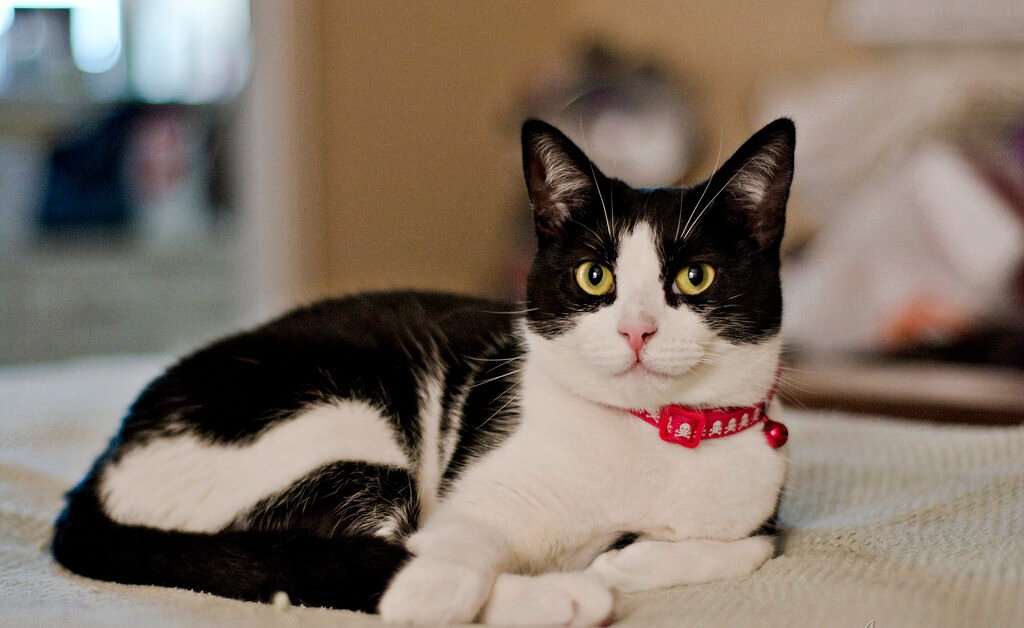
Cats are incredibly intuitive animals, and their choice of a favorite spot is often a combination of instinct, comfort, and security. Think of it less like random lounging and more like a carefully executed architectural decision. Your cat is essentially designing their own safe world one perch at a time.
Sometimes, the temperature, texture, or even the scent of a spot plays a role in their preference. It’s a bit like how you might always choose the same seat at a café. You feel settled there. You know the lighting, the draft situation, the people-watching angle. Your cat does the exact same calculation, every single time. Understanding these reasons can help you decode your cat’s unique behavior and strengthen your bond.
High Perches and What Your Cat Is Really Saying From Up There
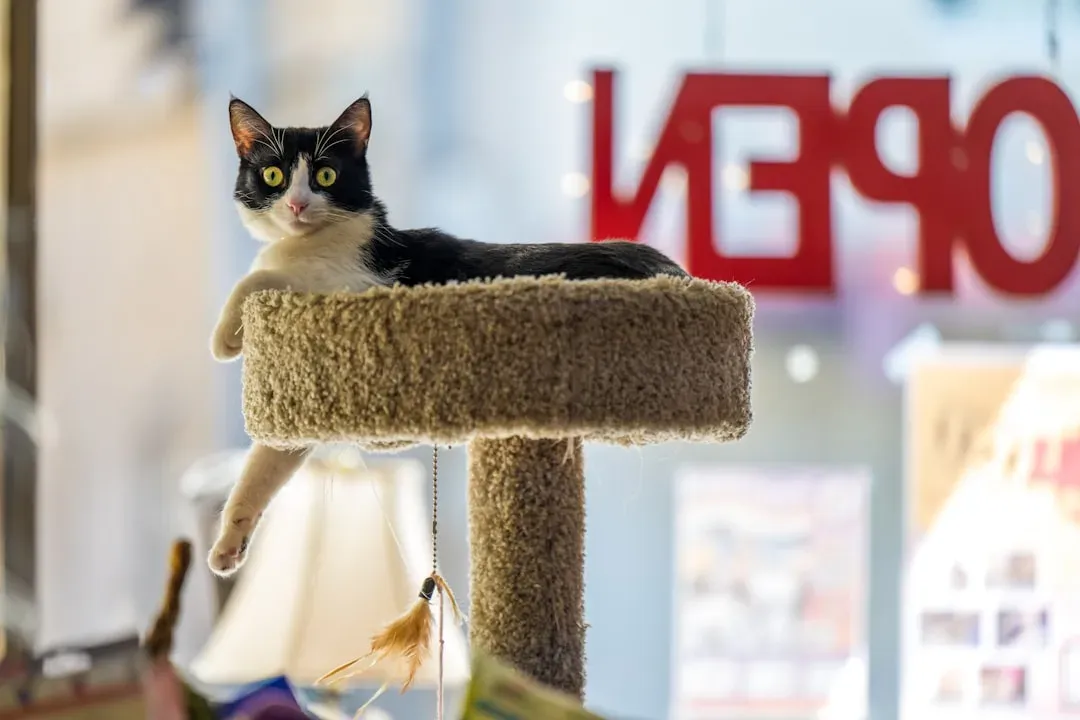
If your cat treats the top of the refrigerator like a throne, there’s a very good reason for it. High vantage points are particularly appealing to cats because they allow them to survey their surroundings. From a tall bookshelf or a cat tree, they can observe everything happening in the home, satisfying their natural predatory instincts while also giving them a sense of control over their environment.
Cats are territorial by nature, and high places play a critical role in how they monitor and manage their environment. In the feline world, whoever occupies the highest vantage point often holds the social advantage. That’s why in multi-cat households, you’ll frequently find the dominant cat lounging on the tallest perch while others settle for lower ground. So if you’ve noticed one of your cats constantly claiming the highest spot in the room, they may simply be asserting that they are, in fact, the boss of the household. Which, let’s be honest, they probably are.
The Sunny Windowsill: A Need for Warmth and Mental Stimulation
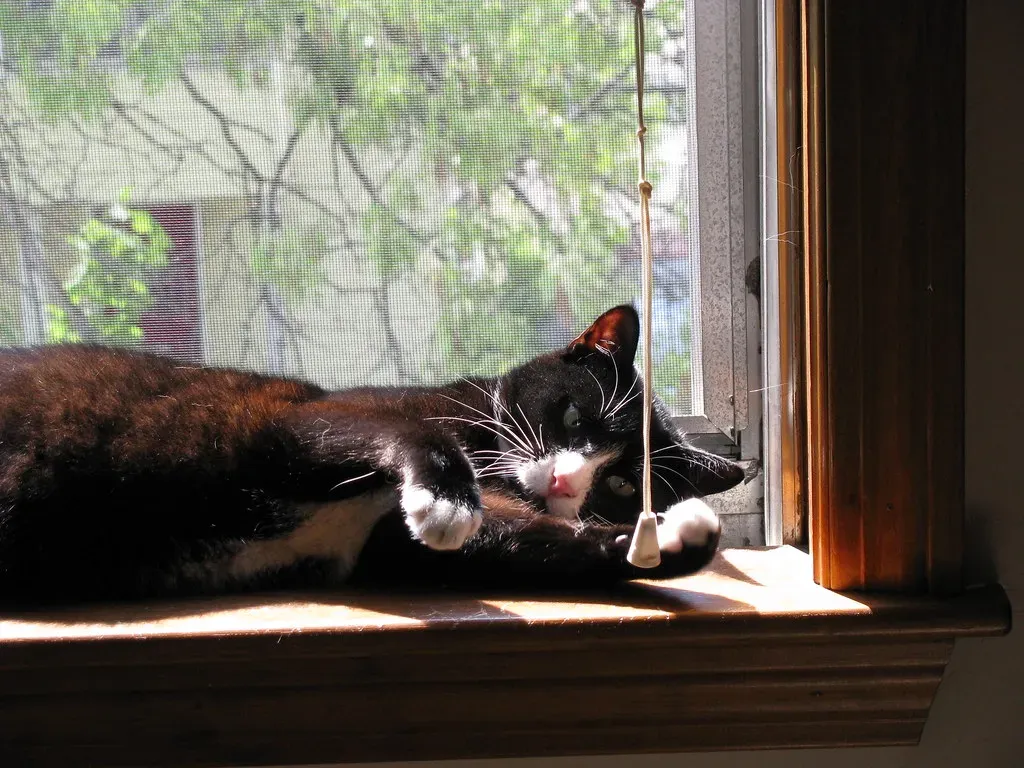
There’s something almost meditative about watching a cat bask in a patch of afternoon sunlight, completely still, eyes half-closed, utterly content. Our furry friends love sunshine so much that it can seem like all cats want is to follow the beam of sunlight as it moves across the floor. As veterinarian Sara Ochoa, DVM notes, “Cats love nothing more than a warm, comfy place to sleep.”
Cats are notorious for their love of warmth, often choosing spots that provide a cozy escape from the cold. A sunny windowsill, a patch near a heater, or even your laptop keyboard can become their go-to place. Warmth not only makes them feel comfortable but also helps conserve their energy, which is why they’re drawn to these heat-filled spots. On top of that, a window perch gives your cat a full live broadcast of birds, squirrels, and neighborhood drama, which is basically the feline equivalent of streaming television. The appeal of window perches goes beyond height alone. For curious cats, a dedicated perch transforms even a small apartment into a dynamic world of movement and sound.
Sleeping on You: When Your Cat Chooses You as Their Favorite Spot
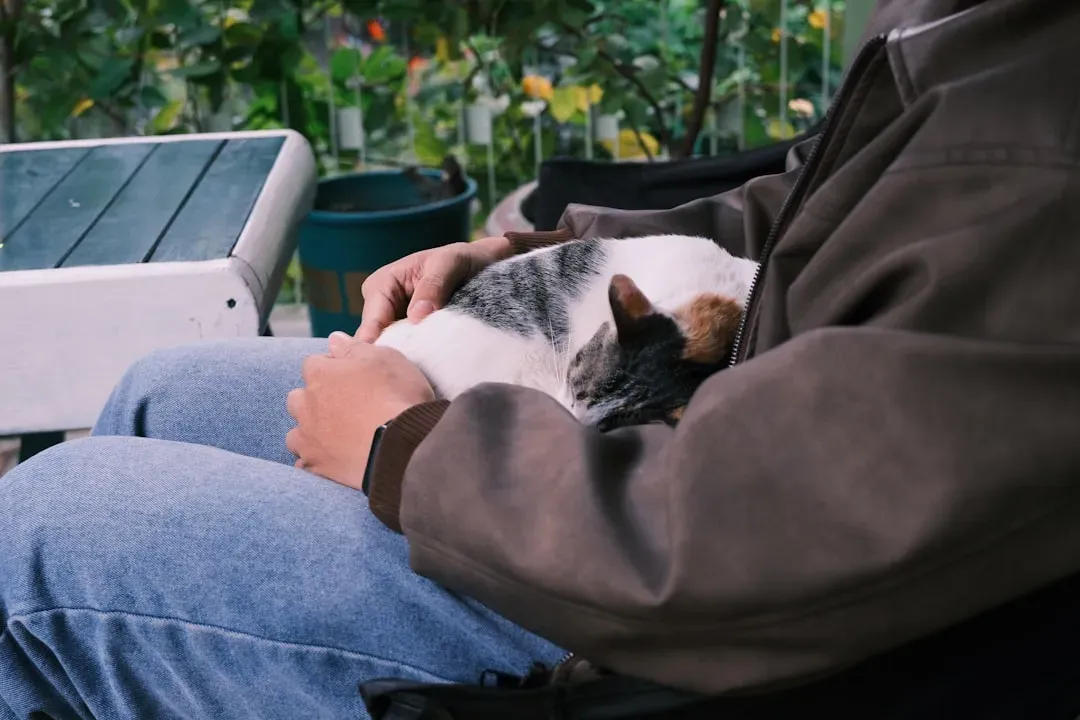
There’s no higher feline compliment than having your cat choose you as their preferred resting place. Sleep can be a vulnerable time, and cats instinctively gravitate toward places where they feel safe. By choosing to sleep near a familiar human, cats not only find warmth and comfort; they also benefit from a sense of security that reinforces their bond. So essentially, you are a heated, heartbeat-equipped security blanket.
Cats who sleep on your chest are drawn to your warmth, heartbeat, and the rhythmic rise and fall of your breathing. Kittens associate these sensations with nursing, so adult cats who chest-sleep often express deep comfort and attachment. Sleeping near your head sends a slightly different message. A cat that sleeps by your head is seeking closeness to your scent at its strongest. Your face and scalp release familiar oils that your cat associates with safety and comfort. Honestly, I find this equal parts touching and slightly weird, but mostly touching.
Hiding Spots: The Spot That Signals Something Deeper
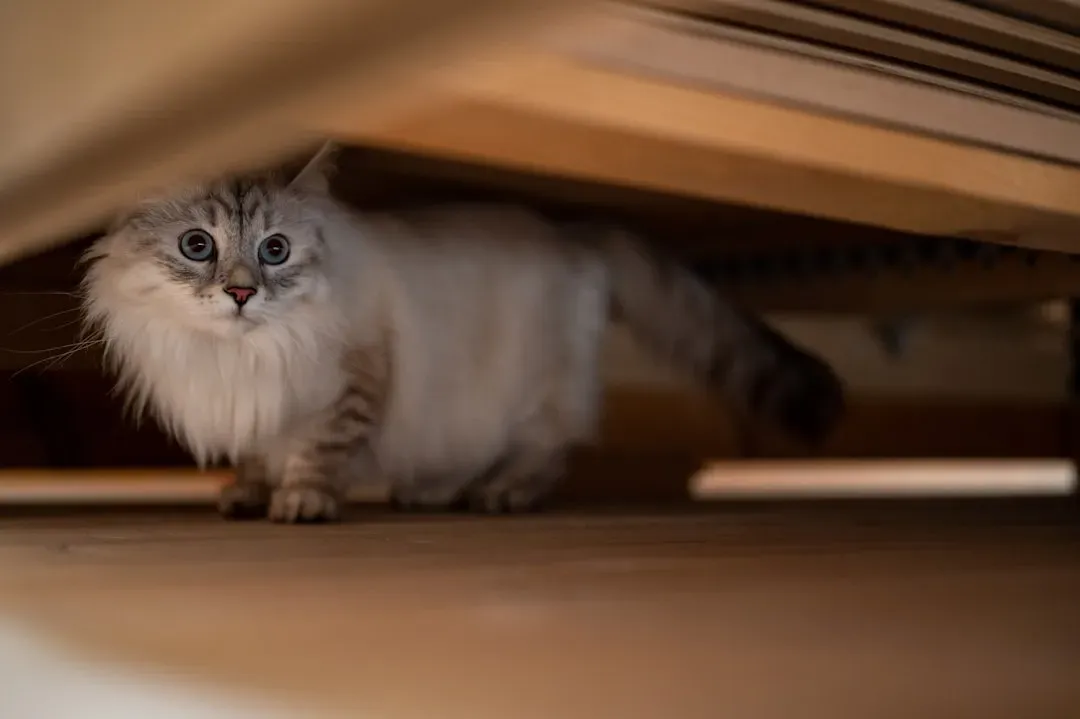
When your cat disappears under the bed or tucks themselves into the back of a closet for hours, it’s tempting to take it personally. Don’t. Cat hiding behavior is deeply rooted in feline instincts. Kitties are both predators and prey, which means they are naturally wired to seek safe, enclosed spaces, especially when they feel threatened or overwhelmed.
Here’s the thing though: a sudden increase in hiding can be a red flag worth taking seriously. Everything from urinary tract infections to upper respiratory infections can lead to an increase in cat hiding. Cats are good at hiding when they’re sick or in pain, but a sudden tendency to hide can be a clue that they aren’t feeling well. Any changes in your cat’s hiding behavior should be addressed with your veterinarian. While occasional hiding can be normal, frequent or prolonged hiding often signals a deeper issue and can be an important clue that your kitty may need extra support or medical attention.
Cardboard Boxes and Enclosed Spaces: The Cozy Container Theory
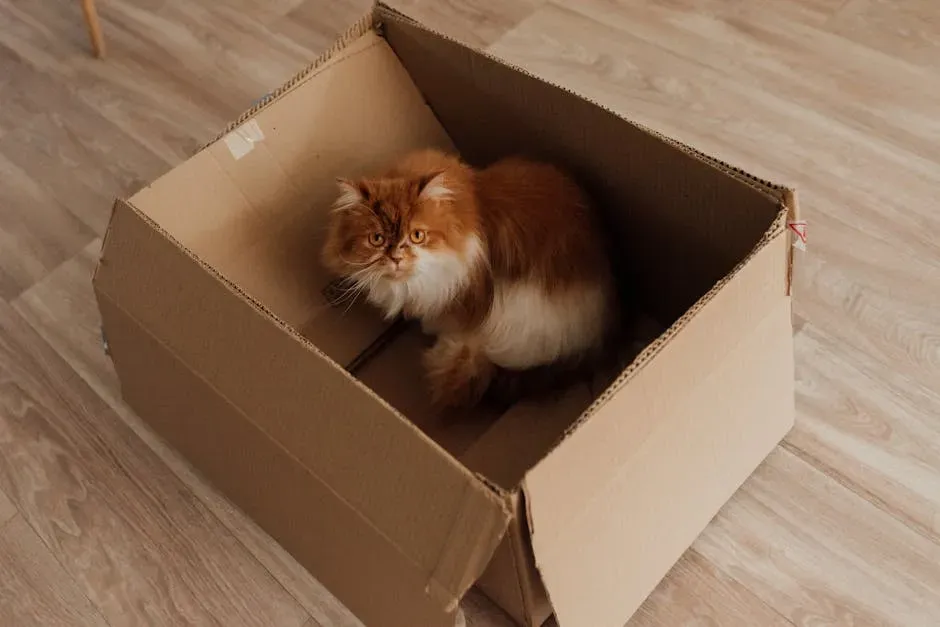
You spend a fortune on a plush cat bed, only to find your cat sleeping in the Amazon box it arrived in. Classic. Despite differing personalities and energy levels, all cats can get something out of a well-placed box. One crucial benefit relates to their hunting instincts. It’s not ingratitude, it’s pure biology.
Just because a cat is indoors doesn’t mean that they lose their instincts, and boxes offer a perfect hunting spot, with walls that shield them from view and an open top that they can use to pounce onto potential prey, or a plush toy. Boxes are one-stop shops for all of your cat’s hiding, hunting, and exploring needs. Providing boxes and other quiet hiding spots can be crucial to giving them a safe space when their threat alarms go off, and this means that hiding behavior in a box or enclosed space might just be what a cat needs to feel safe. A cardboard box is, in its own humble way, a masterpiece of feline furniture.
The Foot of Your Bed: Independence With a Side of Affection
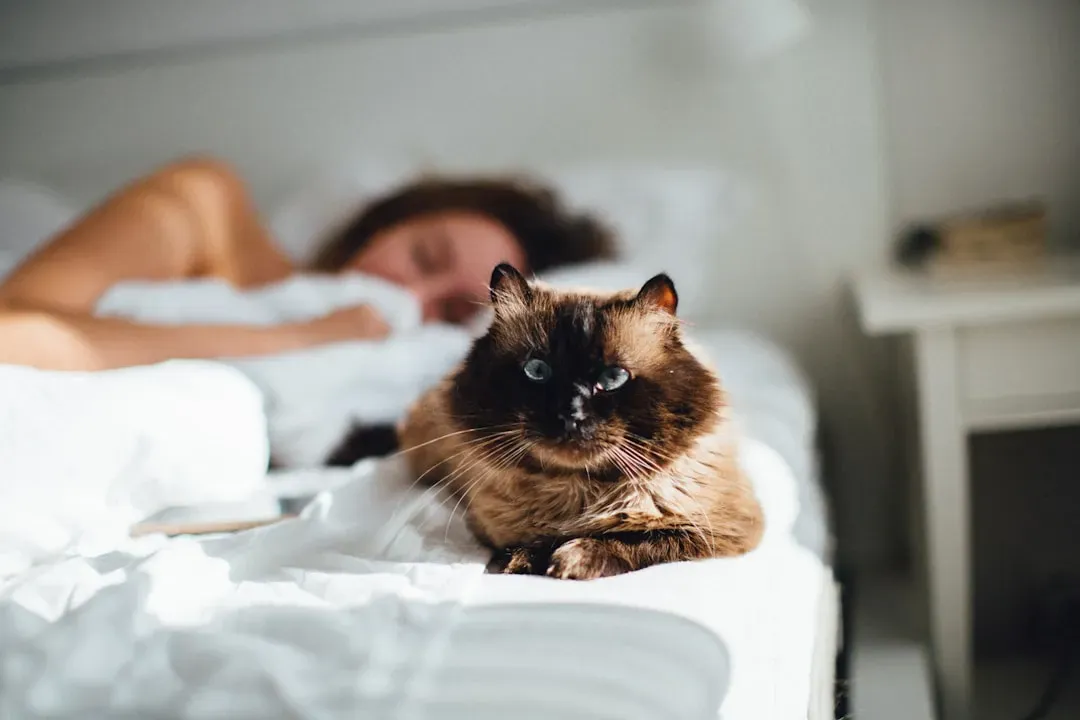
If your cat parks themselves at the foot of the bed every night without fail, they’re striking a very specific balance. A cat that sleeps at your feet might be doing so to keep both of you warm. This position allows closeness yet provides your cat with quick access to an escape route, often making them feel more secure when they’re at the end of the bed, couch, or chair.
Although cats are often labeled as solitary hunters, they exhibit surprisingly social behaviors when it comes to rest. Felines may prefer some independence during the day, yet they often seek out trusted companions at night. This “social sleeping” tendency reveals a more communal side of feline behavior than many realize. Think of the foot-of-the-bed cat as someone who loves their roommate but still values their personal space fiercely. It’s not cold, it’s healthy boundaries.
Quiet, Tucked-Away Corners: The Need for Solitude and Decompression
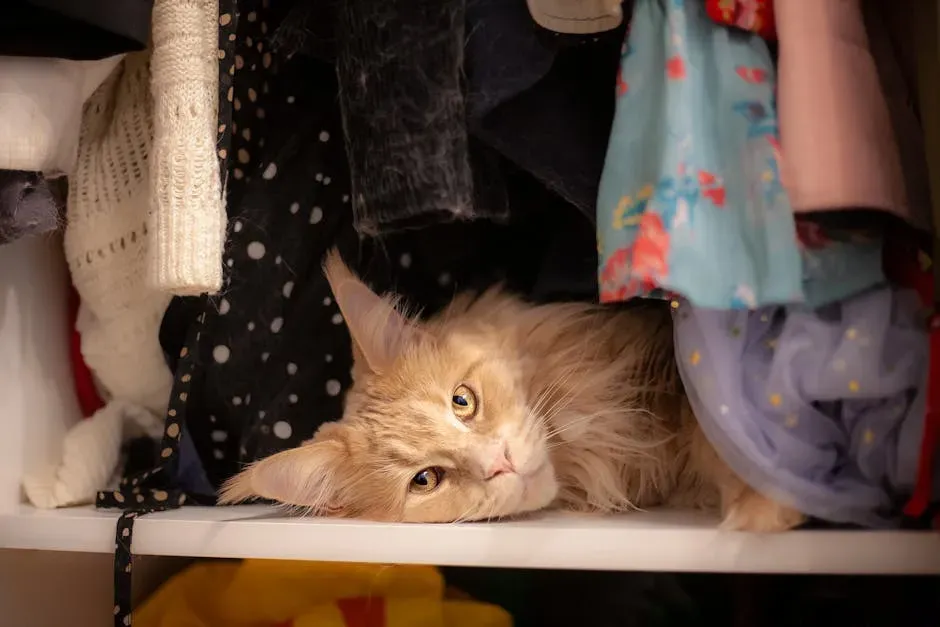
Every cat, no matter how social, needs a place to decompress. Cats value their alone time, and their favorite spot often provides an escape from noise and distractions. A tucked-away corner, a closet, or even the top of the fridge gives them the solitude they crave. This quiet retreat is essential for reducing stress and helping them feel calm.
Home environment plays a significant role in anxious cat behavior. Cats thrive on predictability, and even small disruptions can feel big to them. Hosting guests, bringing home a new baby, or adding another pet can all increase stress levels for your kitty. If your cat retreats to a corner more than usual during periods of change in your home, they’re not being antisocial. They’re self-regulating. It’s actually rather impressive, and the rest of us could honestly take a lesson from it.
Scent Marking and Familiar Spots: Why Your Cat Keeps Returning to the Same Place
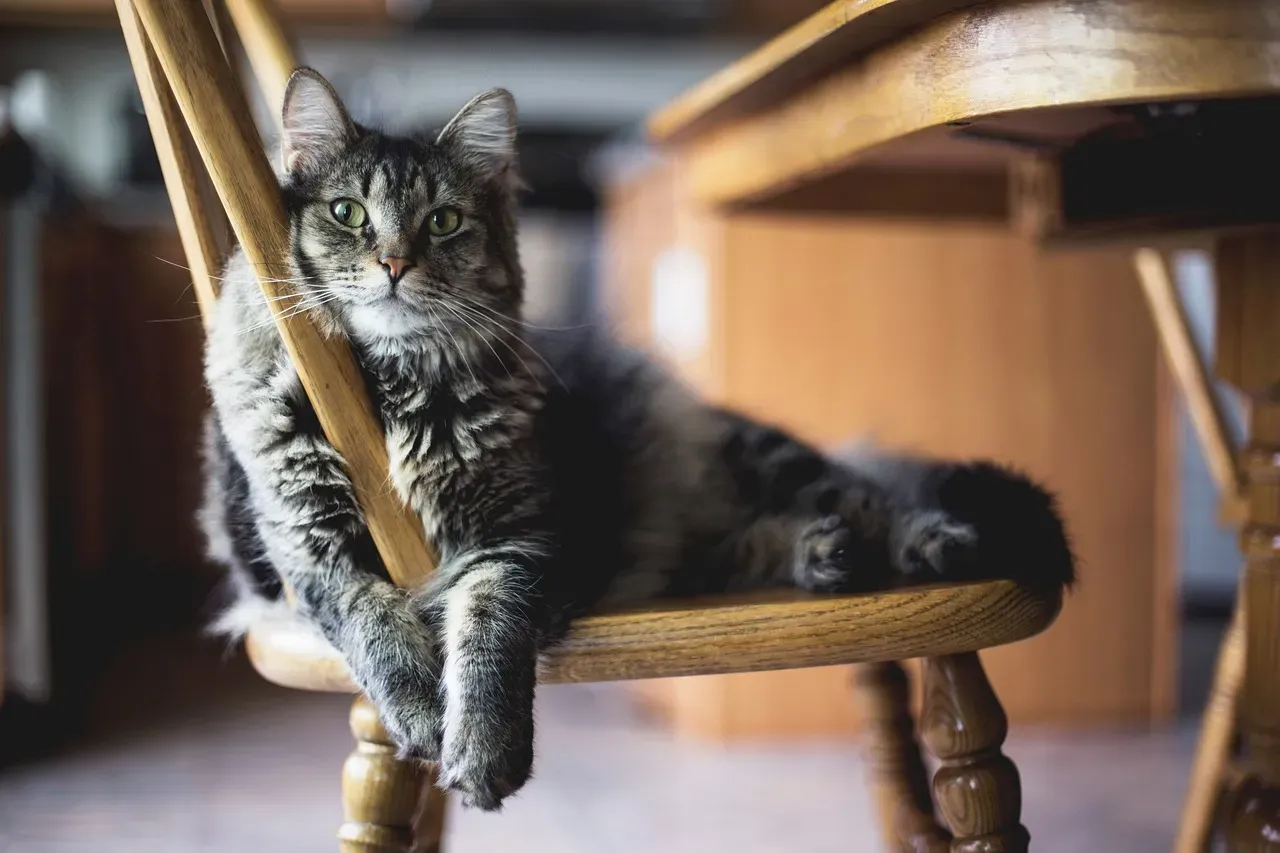
Have you ever noticed your cat rubbing their face along the edge of their favorite chair before settling in? That’s not just a stretch routine. Scent plays a major role in your cat’s world, as they rely on it for comfort and familiarity. A favorite spot might smell like you, their favorite blanket, or even themselves, thanks to scent-marking. These familiar scents help create a sense of belonging and make the spot feel uniquely theirs.
Cats are territorial by nature and enjoy claiming certain areas as their own. When they choose a spot, they’re not just lounging, they’re asserting ownership. This is why they often rub their face or body on their favorite areas, leaving subtle scent markers to establish dominance. When a cat knows exactly where and how it will settle in to sleep, the consistent pattern helps it feel calmer and more secure. Their scent, combined with your scent markers, reinforces the notion that this spot is a personal sanctuary. It’s territorial behavior, yes. It’s also, in the most endearing way, your cat saying “this is home.”
When a Spot Change Becomes a Warning Sign
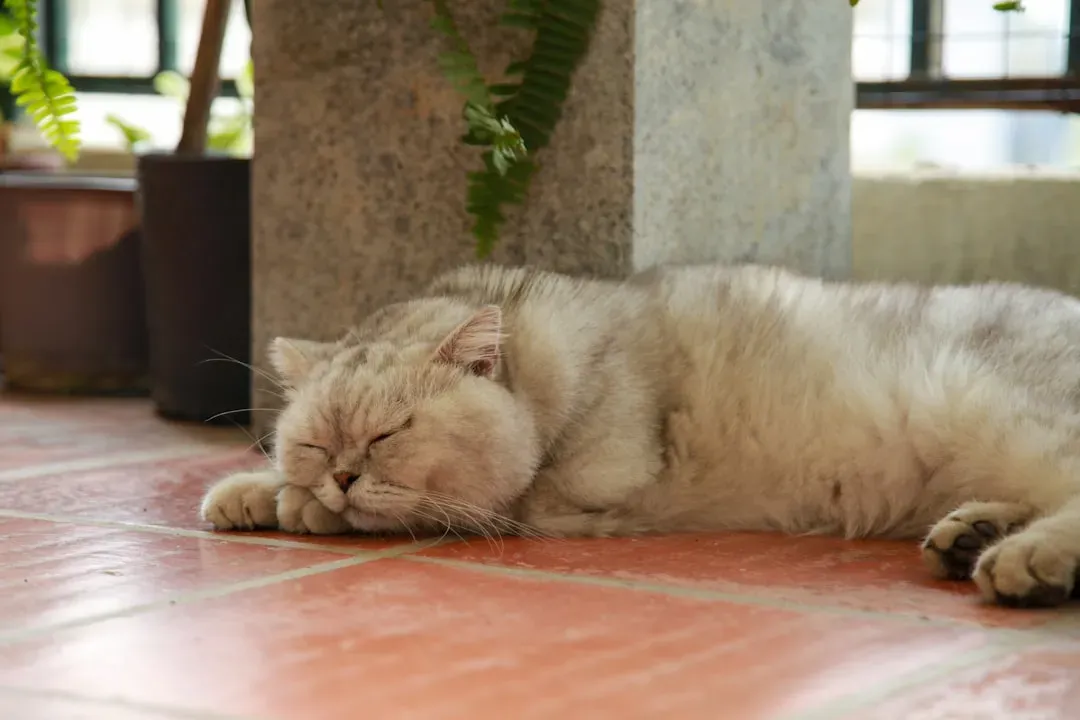
Pay close attention if your cat suddenly abandons their favorite spot or starts choosing somewhere completely unusual. Certain sleep patterns can indicate health issues. A cat that suddenly starts sleeping in a hunched, tense position, hides in dark or enclosed spaces more than usual, or stops stretching out entirely may be in pain.
A sudden change in sleep patterns can be a health indicator. A change in a cat’s usual sleeping habits may signal an underlying health issue, injury, or cognitive dysfunction, especially in older cats. Healthy cats typically sleep openly, rotate between various positions, and exhibit frequent stretching. In contrast, those experiencing stress or illness may limit movement, sleep in secluded areas, or maintain stiff postures. You know your cat better than anyone. If something feels off, trust that instinct, and let a veterinarian help you confirm it.
Conclusion
Your cat’s favorite spot is more than a quirk or a preference for a certain cushion. It’s a map to their emotional state, their instincts, their trust in you, and sometimes, their health. The sunny window says they need warmth and stimulation. The foot of your bed says they love you, but on their own terms. The hidden corner says they’re overwhelmed. The top shelf says they feel powerful. Each location tells you something real.
The more you pay attention, the more fluent you’ll become in this quiet, location-based language your cat speaks every single day. Once you start reading the story behind the spot, you’ll never look at your cat’s resting place the same way again. So, which spot does your cat always return to, and what do you think it’s been telling you all along?
Kristina is a young writer from India. An arts graduate and an avid content creator, Kristina is passionate about animals and wildlife. She enjoys exploring topics related to pet care, animal behavior, conservation, and nature, combining thorough research with engaging storytelling.