12 Amazing Feats of Agility Your Cat Performs Daily
You've seen it a hundred times. Your cat launches off the couch, twists mid-air like something out of a Marvel film, lands silently on the kitchen counter, and stares at you as if gravity is just someone else's problem. It's effortless for them. Completely baffling for us.
Here's the thing though: what looks like casual feline arrogance is actually the result of millions of years of extraordinary biological engineering. Every leap, every squeeze, every silent stalk through the hallway at 2 a.m. is a masterclass in physics, anatomy, and neural precision. Your cat isn't just lounging around all day. They're walking proof of one of nature's most brilliant designs.
So buckle up, because what you're about to discover about your seemingly lazy house cat might genuinely leave you speechless. Let's dive in.
1. Launching Skyward: The Astonishing Standing Jump
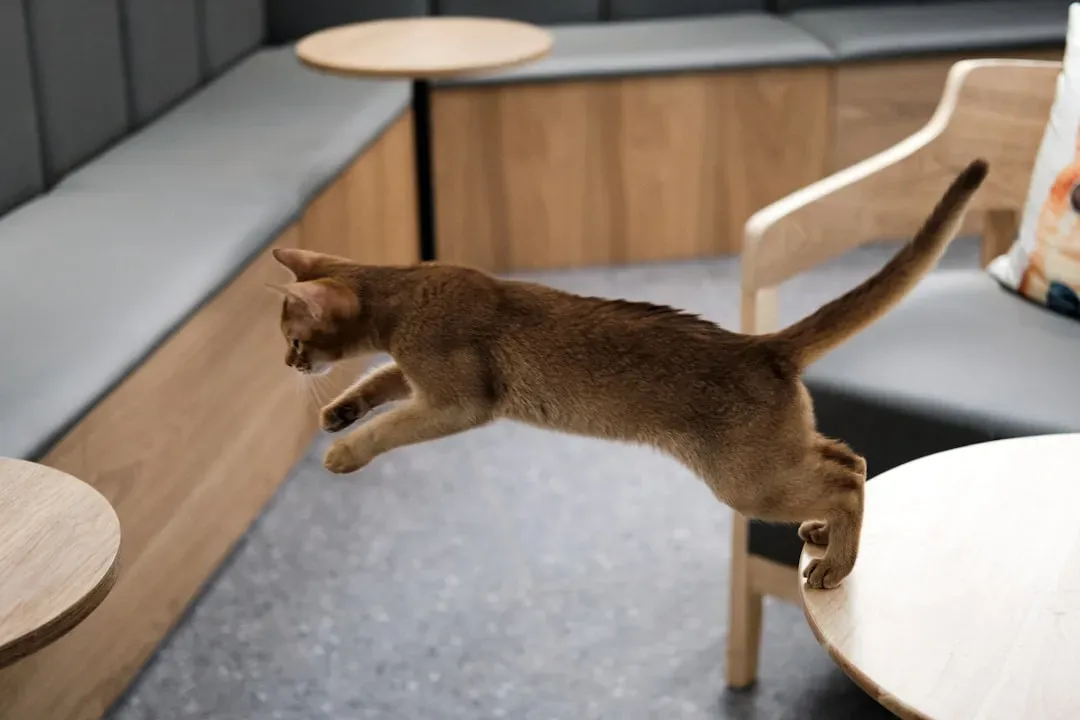
Think about the last time your cat leaped from a standstill straight onto a tall refrigerator. It probably looked simple, almost bored. On average, a healthy adult cat can jump five to six times its own body height from a complete standstill, which for an average cat equals a leap of five feet or more straight into the air. To put that into a human context that's a little jaw-dropping, that would be the equivalent of you jumping clean onto the roof of a one-story house without even bending your knees for a run-up.
The average housecat can jump six times its own height. Dogs manage only about one times their height. Humans? A mere quarter of theirs. So the next time your cat soars onto the highest bookshelf without a second thought, know that you're watching an athlete performing at a level no human could ever replicate. Honestly, it's kind of humbling.
2. The Righting Reflex: Defying Physics Mid-Fall
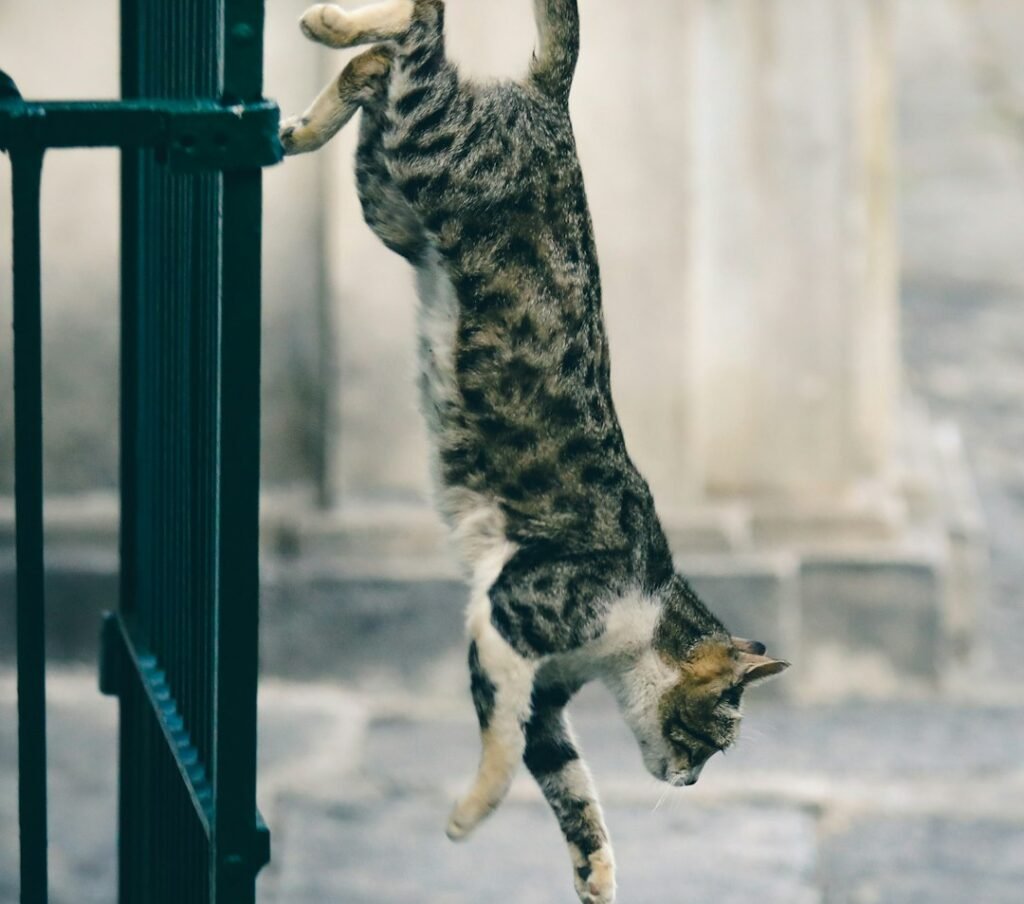
The cat righting reflex is a cat's innate ability to orient itself as it falls in order to land on its feet. This righting reflex begins to appear at just three to four weeks of age and is perfected by six to nine weeks. Scientists historically found this ability so puzzling that it was once believed to violate the very laws of physics. When cats fall, they always seem to land on their feet, a phenomenon scientists and cat owners alike have marveled at, known as "cat-turning" or the "cat-righting reflex."
After determining which way is down visually or with their vestibular apparatus in the inner ear, cats twist themselves to face downward, bending in the middle so that the front half of their body rotates about a different axis from the rear half. Cats are able to do this because they have an unusually flexible backbone and no functional clavicle. It's not magic. It's just biology doing something magic-adjacent.
3. Speed That Rivals a Wild Animal
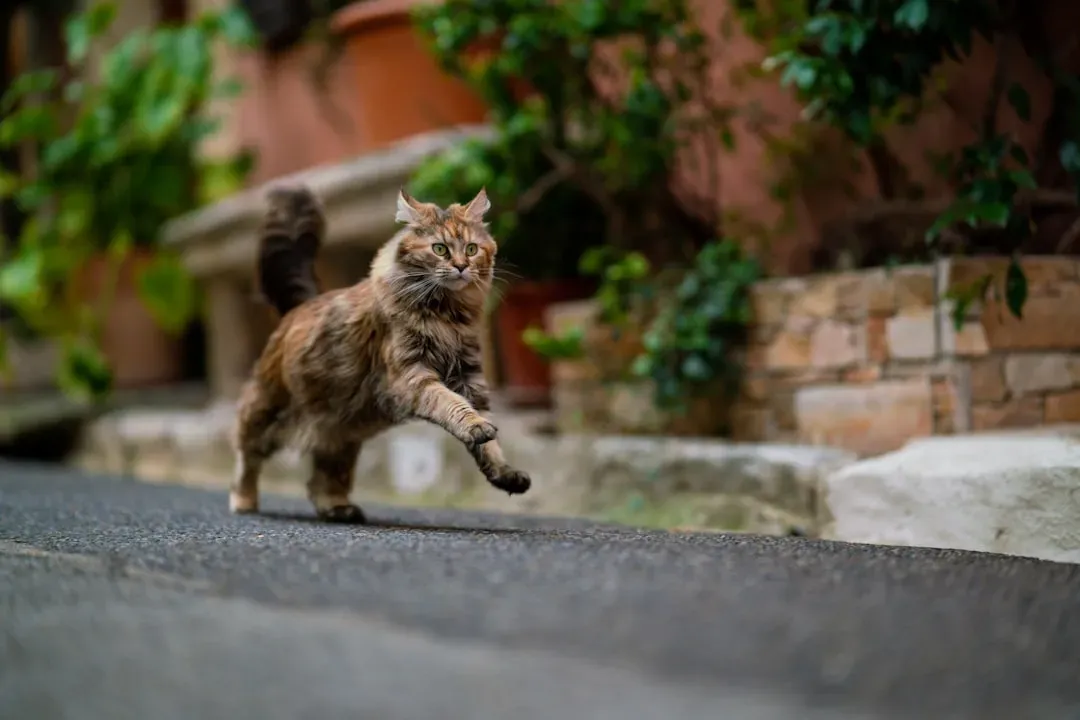
Your cat dozing on the sofa looks like the last creature on earth capable of speed. Let's be real, they barely seem to move fast enough to bother chasing a fly. House cats can reach top speeds of around 30 miles per hour, a speed comparable to white-tailed deer, warthogs, and grizzly bears. That's not a gentle trot to the food bowl. That's a genuine sprint that leaves most other animals in the dust.
Cats are fast. They are natural sprinters, so it is exciting to watch cats do agility. Think of it this way: if your cat were placed on a running track and motivated sufficiently (a particularly exciting toy, perhaps), they could keep pace with an Olympic sprinter. Their explosive power comes from those powerful hindquarters and a spine that compresses and launches like a coiled spring with every stride. Remarkable.
4. The Flexible Spine: Nature's Greatest Engineering Achievement
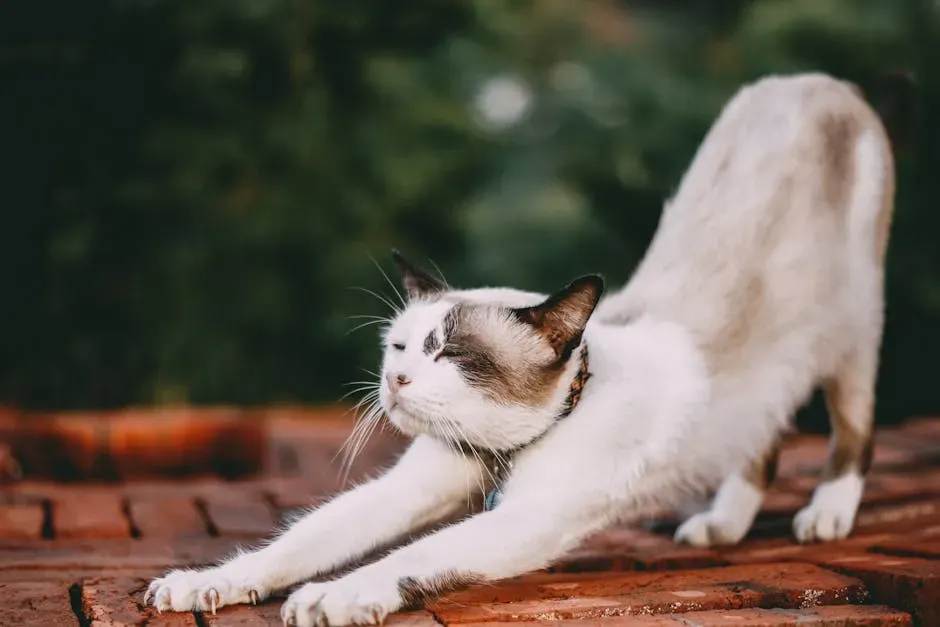
Cats have long spines with extra cushioning between the vertebrae to allow rotation and flexibility. They also have shoulder blades only attached by muscle rather than bone, allowing long strides. Their small clavicles allow them to squeeze into tight spaces. It's a design so efficient that bioengineers have studied it to inspire robot construction. During intense activities like jumping and sprinting, felids adjust their posture by twisting and stretching their body to disperse limb impact and minimize injury, a self-stabilization mechanism that has attracted significant attention for inspiring biometric robot design.
Cats have over twenty more vertebrae than humans, who have only thirty-three. This increased number helps a cat's spine rotate its torso a complete one hundred and eighty degrees, while humans can only rotate around ninety degrees. Imagine turning your body completely around while keeping your feet planted. You can't. Your cat does a version of that without breaking a sweat, or even waking up fully sometimes.
5. Silent Movement: The Art of the Soundless Stalk
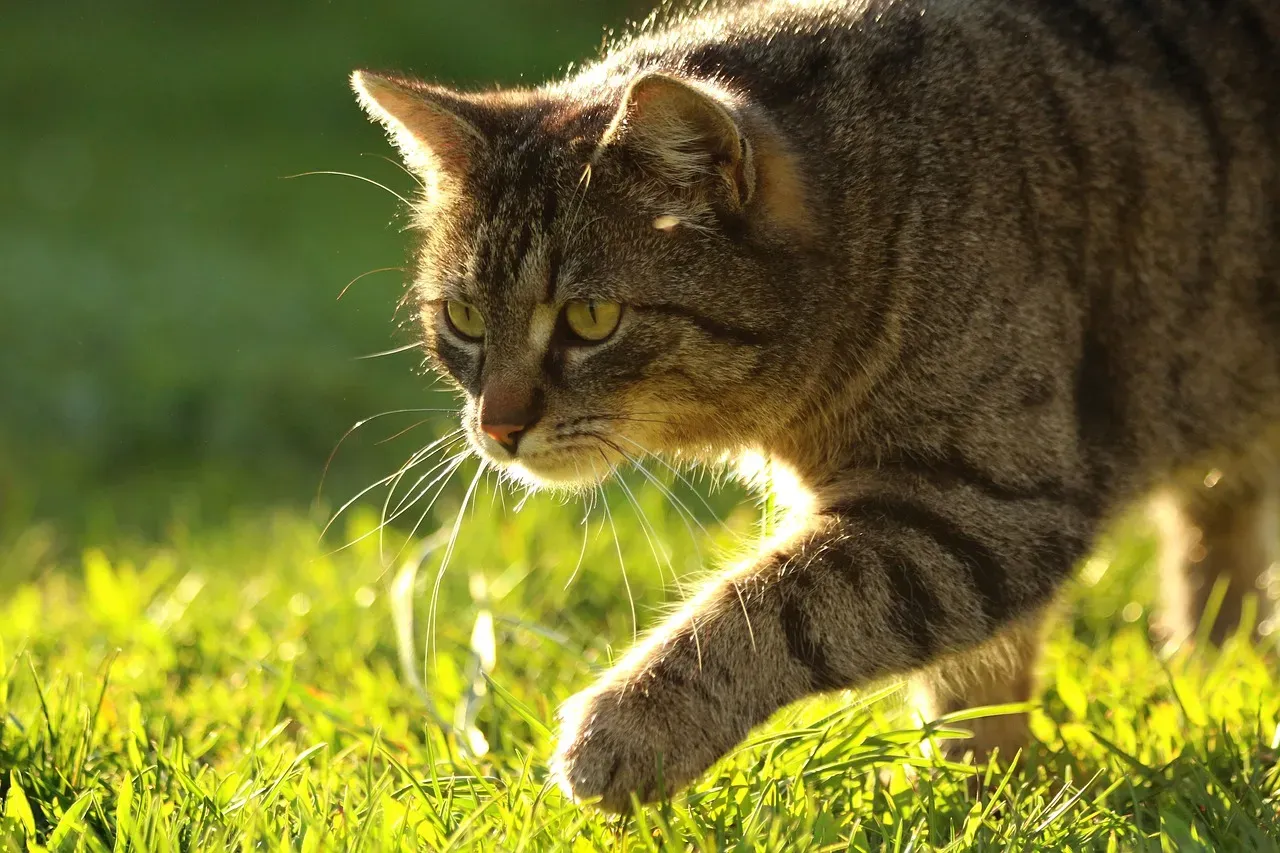
You've experienced it yourself. One minute the room is empty, and then suddenly your cat materializes behind you without a single sound of warning. This isn't coincidence. Retractable claws are useful in sneaking and pouncing during hunting; when their claws retract, the cat can sneak silently on its soft, muffled paw pads. There's no scraping or clicking of claws on the ground, reducing the chance of alerting their prey. Your cat moves like a whisper made physical.
The most fascinating aspect of cat claws is their ability to retract. When relaxed, special elastic ligaments pull the distal phalanx upward, automatically retracting the claw into a protective sheath. This keeps the claws sharp and prevents them from wearing down during regular walking. When a cat needs to use its claws, strong flexor tendons contract, rotating the distal phalanx downward and extending the claw in a smooth, switchblade-like motion. It's a mechanism so elegant that no human engineer has managed to fully replicate it.
6. Whisker Navigation: Built-In Radar That Never Needs Charging
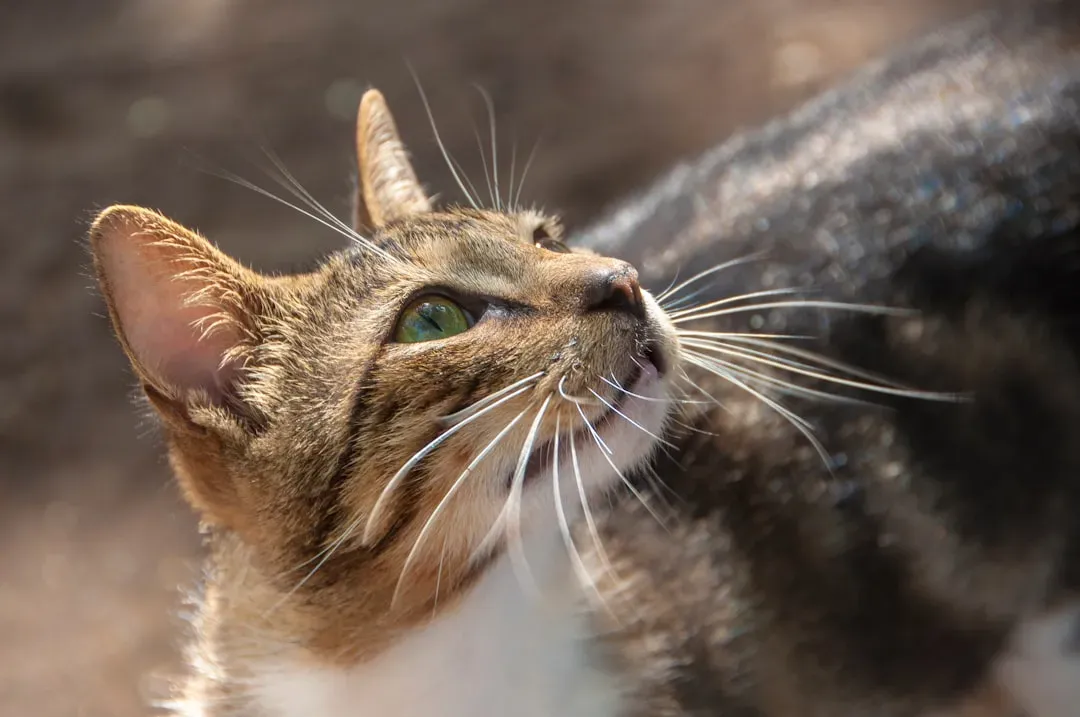
Your cat's whiskers are far more sophisticated than they look. They are finely tuned sensory equipment that guide a cat through daily activities, aiding vision and helping a cat navigate the environment by providing additional sensory input, much like antennae on insects. Cat whiskers detect subtle changes in air currents and transmit information about the size, shape, and speed of nearby objects, helping them navigate the world. Your cat doesn't just see its environment. It reads it continuously, like a living sonar system.
A good portion of a cat's brain is devoted to processing data from touch sensors, and whiskers are reliable touch sensors, with almost forty percent of the brain's sensory area aligning with body parts that have whiskers. Whiskers roughly correspond to the width of a cat's body, so as she approaches a narrow opening, they help her figure out if she'll fit through. It's a natural measuring tape, permanently attached and always accurate. That's genuinely clever.
7. Squeezing Through the Impossible: Feline Body Compression
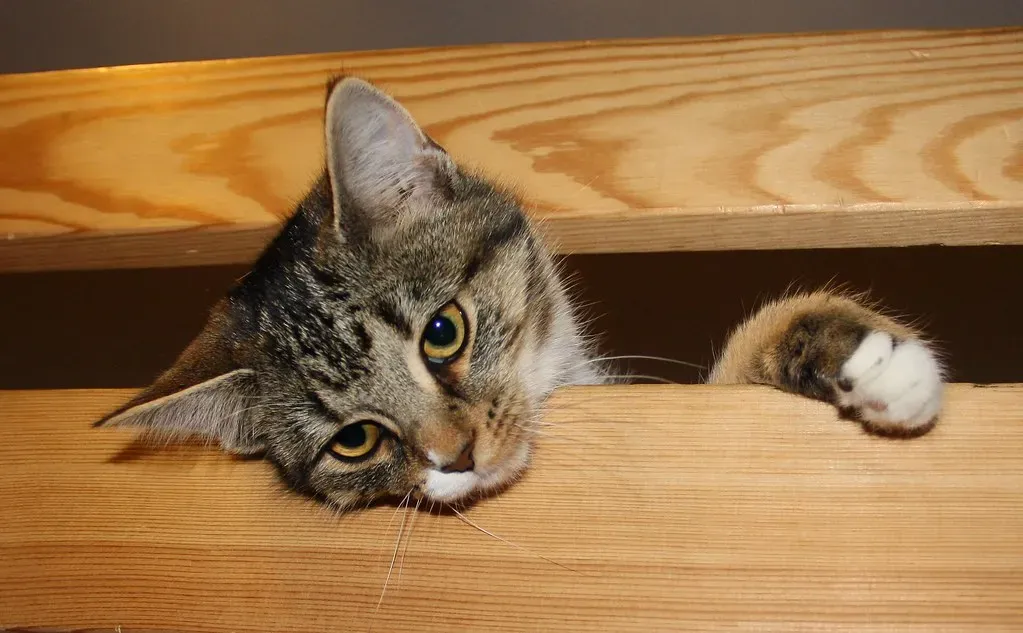
It looks like a magic trick. Your cat eyeballs a gap that seems barely the size of its head, and then glides through effortlessly. Human collarbones anchor to our arms, but feline clavicles don't attach to other bones, which lets cats twist in any direction. Because of that, they can pretty much fit through an opening that can fit their head, and once the head is through, they can adjust their clavicles as needed. The whole body is engineered to follow wherever the head leads.
Surprisingly, a cat's whiskers also help them in squeezing through tight openings. These hairs are twice as thick as the cat's guard hair and located three times as deep within the skin. The base of each whisker is packed with nerve endings, providing cats with a highly sensitive navigational system that delivers information about their environment, including judgment about the size of small spaces before they attempt to squeeze through. Your cat quite literally measures the gap before deciding to go for it. There's nothing impulsive about it at all.
8. Retractable Claws: The Original Switchblade
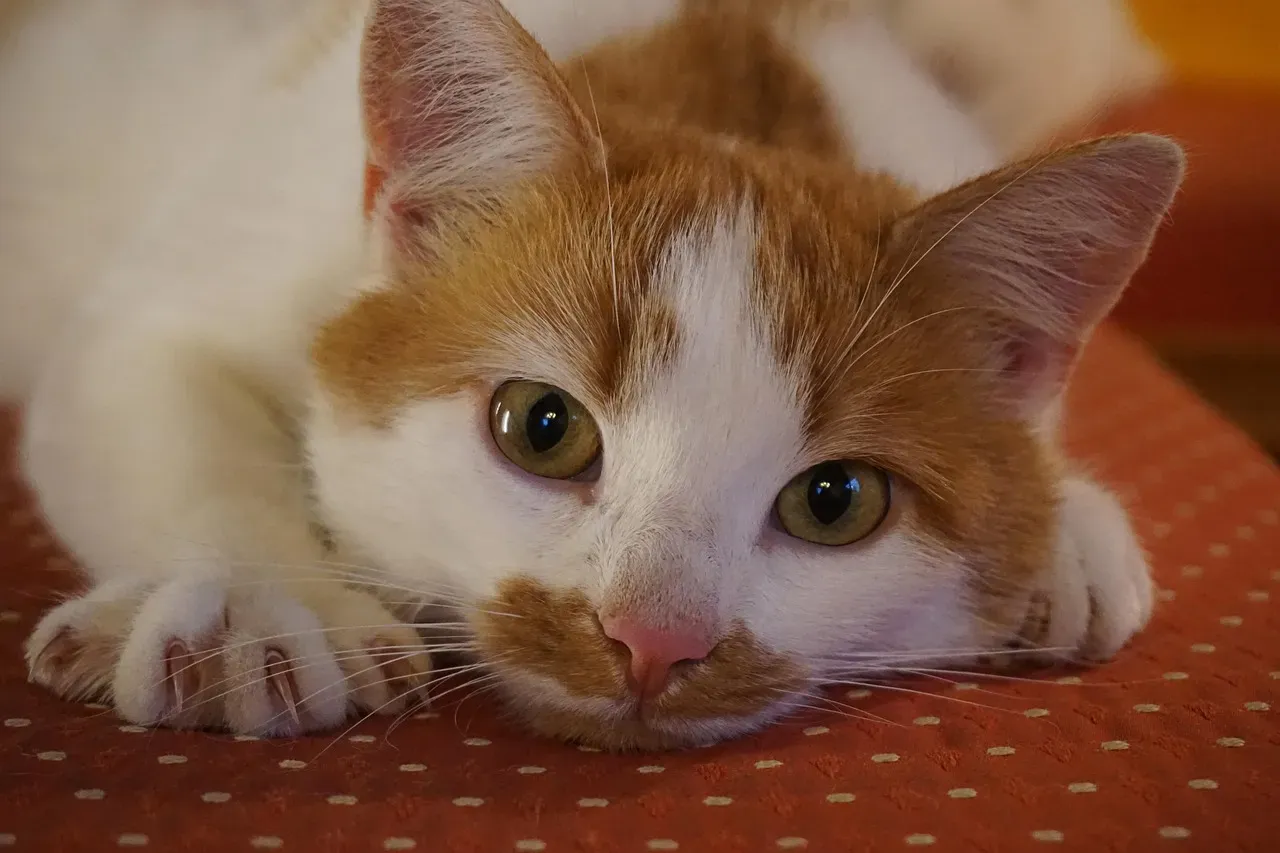
A cat's claw isn't just a sharp nail. It's a retractable, responsive, self-renewing structure made for survival and grace. This biomechanical system enables cats to display their claws only when needed, such as for climbing, marking territory, or catching prey, while keeping them retracted to prevent injury and allow for stealthy movement. The engineering principle behind it is something humans have spent considerable effort trying to mimic in mechanical grippers and robotic tools. So far, none have matched the original.
Retractable claws provide several benefits that are crucial for a cat's survival. By sheathing their claws, cats can move silently, which aids in stalking prey. Extended claws allow for better grip when climbing trees or catching prey, giving the cat an excellent means of both chasing down food and evading predators. Your cat keeps its most powerful tools hidden until the precise moment they're needed. That's not just agility. That's strategy.
9. Superior Balance: Walking the Narrowest of Lines
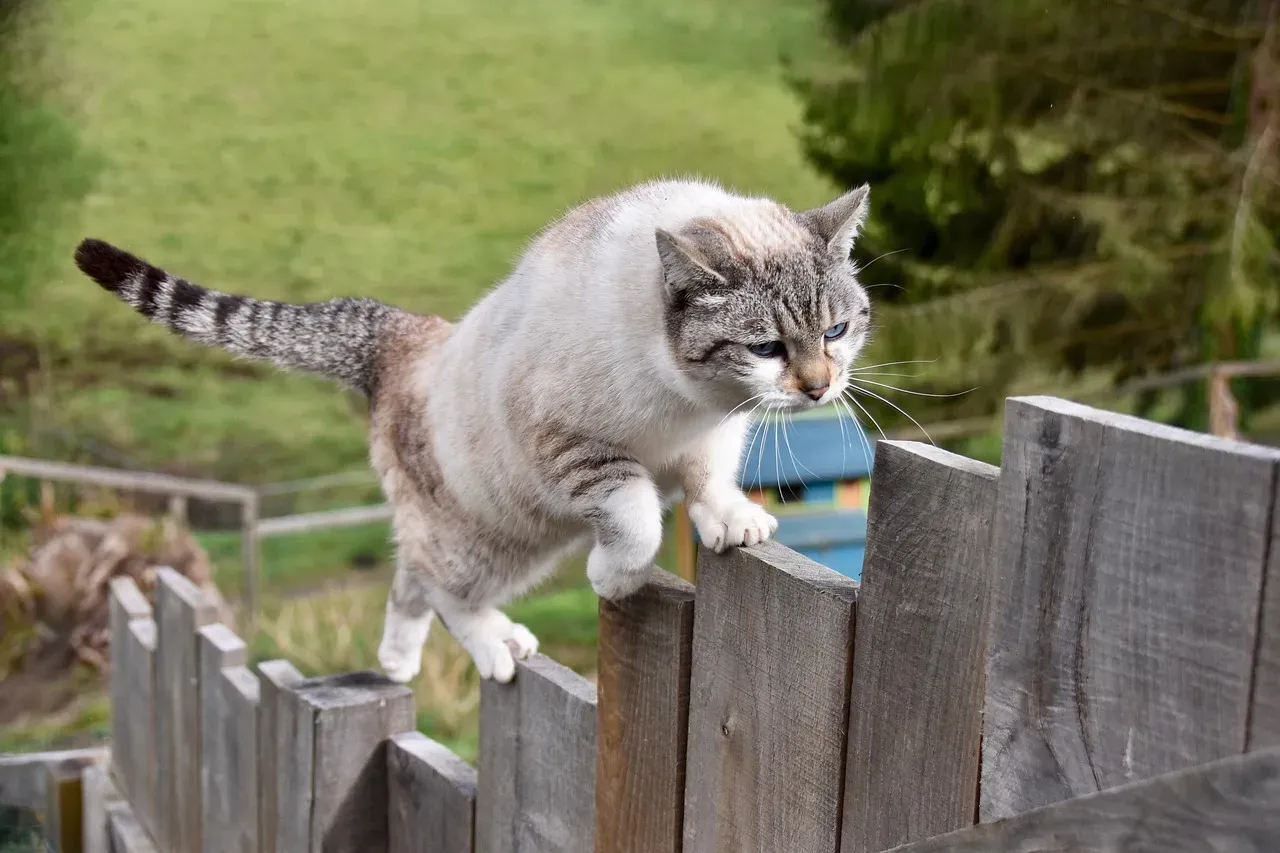
Watching your cat parade along a fence rail barely wider than a ruler, with all the confidence of someone strolling a wide boulevard, is something that never gets old. A cat's tail is much more than a mood indicator; it's a high-precision balancing tool. When a cat walks along a narrow ledge, its tail is constantly moving, acting like a rudder, making tiny adjustments to its center of gravity to keep it stable. Think of it as the counterbalance on a tightrope walker's pole, except it's permanently attached and always instinctive.
The vestibular system has components in the brain and the inner ear. The inner ear houses the vestibular apparatus, which has several fluid-filled canals. When your cat moves their head, the fluid in the canals shifts and a signal is sent to their brain that registers where their head is. The vestibular apparatus can tell if your cat is moving or standing still, if only their head is moving, and even if they are upside down. It's a masterpiece of biological engineering, tucked inside a furry creature that seems completely indifferent to it.
10. Lightning Reflexes: Faster Than Your Eyes Can Follow

If a cat's body is the hardware, then its nervous system is the lightning-fast software that runs the show. A cat's brain can process what it sees and feels, and then trigger a physical response in the blink of an eye. This is why a cat appears to teleport when you try to catch one that doesn't want to be caught. There is no delay between sensing and acting. It's all instant and seamless, like a reflex loop with no lag time whatsoever.
A cat's facial whiskers send signals directly to specialized regions of the brain, specifically the somatosensory cortex, which processes tactile input with remarkable speed and precision. This neural pathway is unusually direct, allowing sensory information to influence movement almost immediately. Neuroscientists have mapped how each whisker connects to hundreds of neurons, feeding into barrel-shaped clusters in the cortex that process direction, speed, and pressure with remarkable efficiency. Your cat isn't just reacting. It's computing, instantly.
11. Seeing in the Dark: Night Vision That Puts Yours to Shame
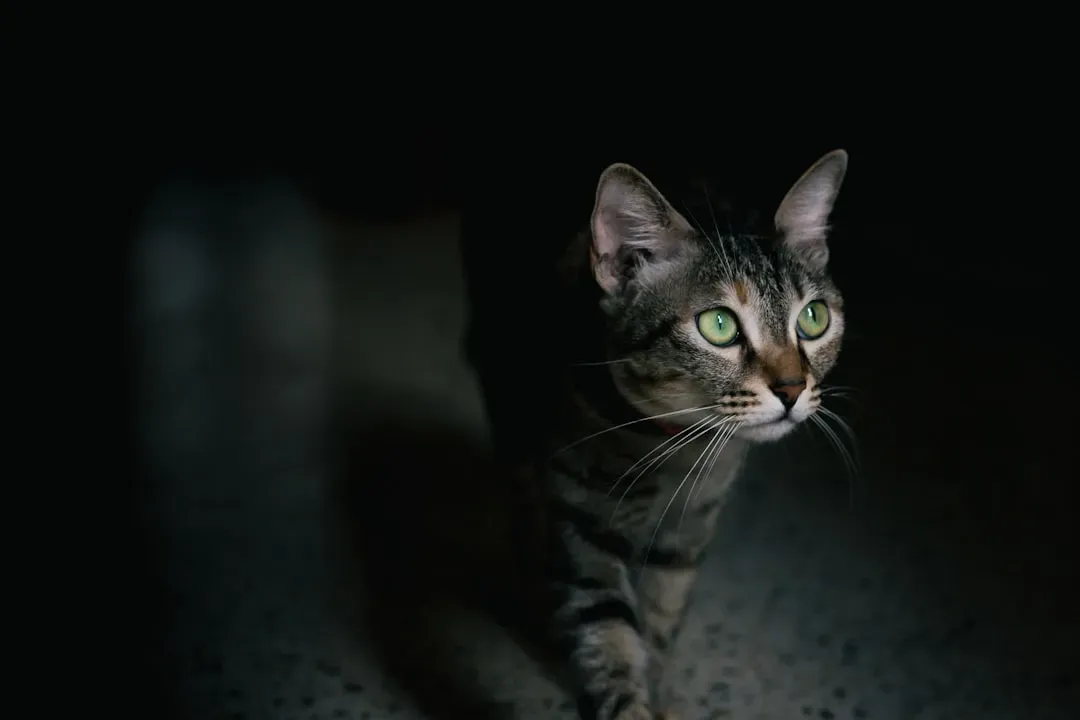
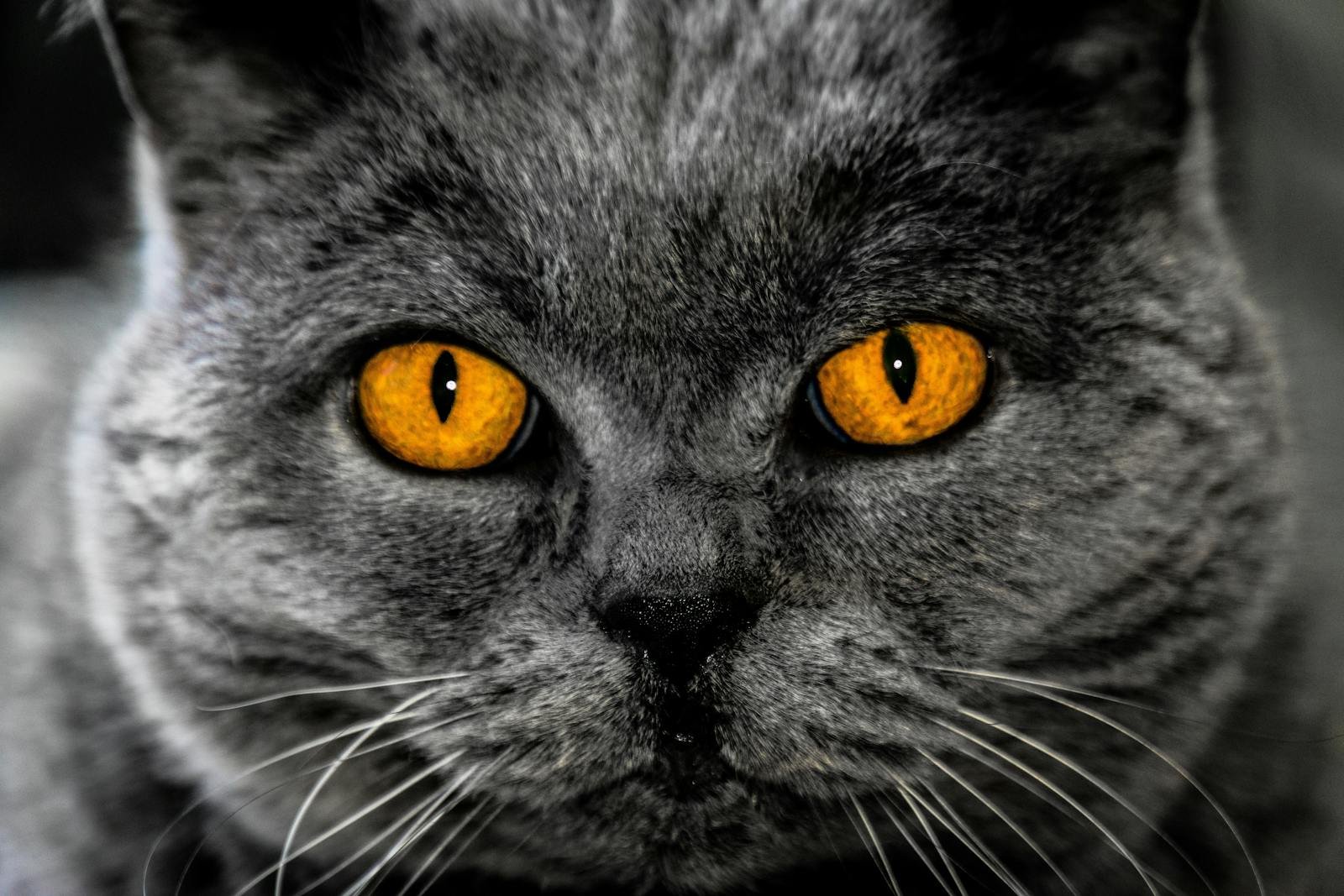
Your cat is crashing around the house at midnight while you're stumbling into furniture with the lights on trying to find your glass of water. There's a reason your cat seems totally unbothered by the dark. Cats' night vision is enhanced by a unique structure in their eyes called the tapetum lucidum, which reflects light and increases visibility in low-light conditions. The large number of rod cells in cats' retinas allows them to detect very faint light, making them excellent nocturnal hunters. Cats' pupils can expand to extraordinary sizes, maximizing the amount of light entering their eyes during nighttime.
While they can't see in total darkness, their eyes are built to see in low-light conditions, perfect for hunting at dawn or dusk. Cats have more rod cells in their retinas than humans, which are sensitive to dim light. Whiskers also play a crucial role in navigation in the dark, helping cats detect and maneuver around obstacles even without visual cues. So when your cat seems to be navigating a pitch-black room with ease, it's not clairvoyance. It's just superior engineering.
12. Problem-Solving on the Fly: The Agile Cat Mind
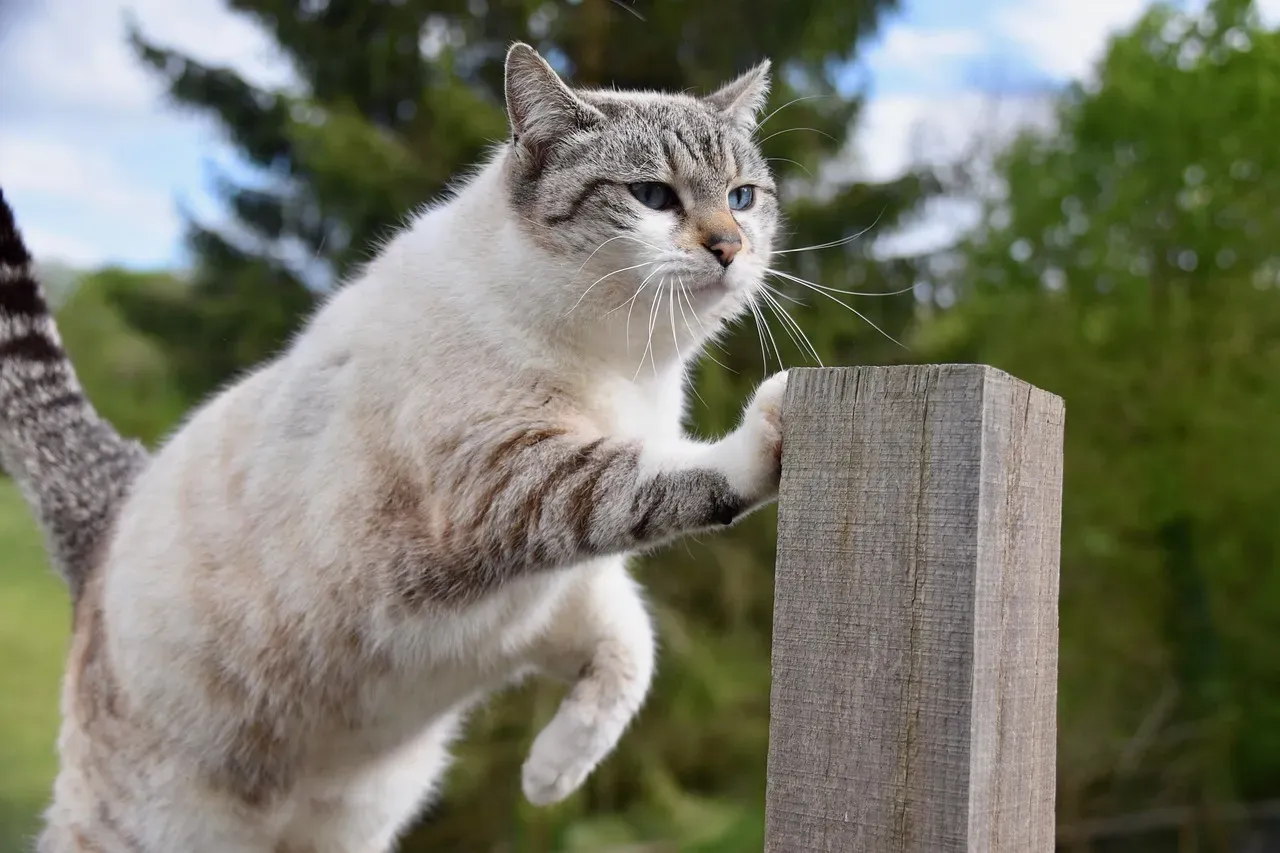
Physical agility without mental agility is half an equation. Your cat's body moves brilliantly partly because its brain works brilliantly. Cats are naturally agile, with excellent lateral body movement and jumping ability. They are intelligent and think for themselves. They are excellent problem-solvers because of their insight learning method. That means they don't just repeat behaviors robotically. They adapt, improve, and innovate based on what they've observed and experienced.
Cats have a very long short-term memory of up to sixteen hours and can retain positive memories for up to ten years. Usually once a cat has gone through a course, they remember it. Agile cats do best in stimulating environments where they can enjoy playing, learn trick routines, and interact with others. Their boundless energy often leads to athletic feats and strong bonds, proving that agility isn't just physical, it's a joyful expression of engagement and connection. That nightly zoomie session isn't random chaos. It's your cat exercising its entire being, body and mind in perfect, exuberant sync.
Conclusion: Your Cat Is a Daily Miracle
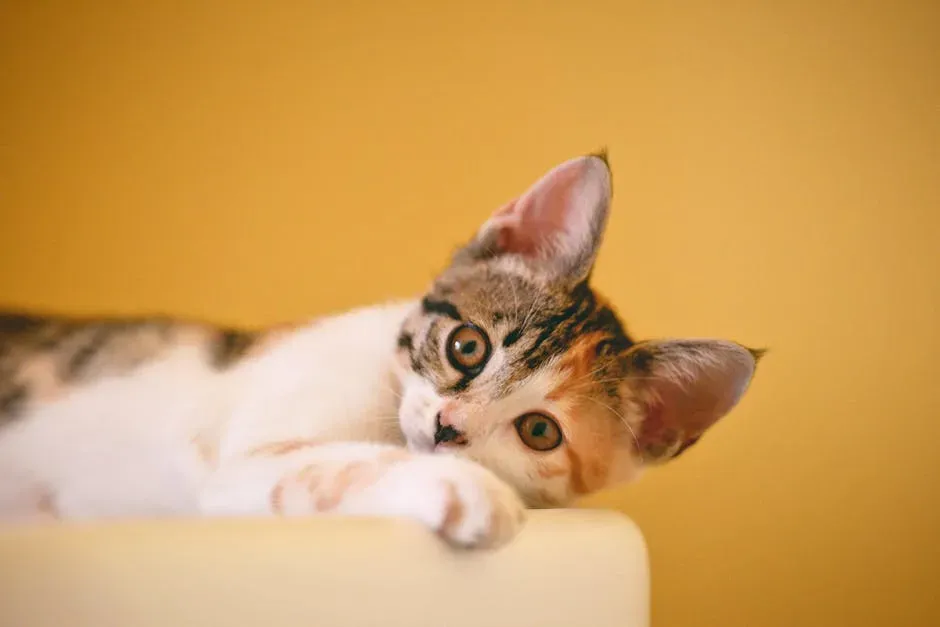
Every single day, without ceremony or applause, your cat performs feats that would stump human engineers, baffle physicists, and leave elite athletes genuinely humbled. From a spine that rotates nearly twice as far as yours, to claws that deploy like precision instruments, to whiskers that map the world in invisible detail, your cat is nothing short of a walking biological masterpiece.
The next time your cat leaps silently from the sofa to the top of the wardrobe and stares down at you with pure indifference, don't be offended. Be amazed. You're sharing your home with one of nature's most refined and extraordinary athletes. They just happen to also enjoy napping on your freshly laundered clothes.
What's the most jaw-dropping thing your cat has ever done? Tell us in the comments below.