Cats Don't Just Hear; They Interpret Your Every Whispered Word
You talk to your cat. Maybe more than you'd like to admit. You whisper good morning to them. You narrate your day. You apologize when you accidentally step near their tail. And then you wonder - is any of this landing? Are they even listening? The answer, it turns out, is a whole lot more complicated and fascinating than most people expect.
Science has spent years quietly unraveling the mystery of what actually happens inside a cat's mind when your voice fills the room. The results are equal parts surprising and strangely touching. So settle in, because what you're about to read might change the way you talk to your cat forever. Let's dive in.
Your Cat's Ears Are Basically Biological Supercomputers
Before you can appreciate what your cat does with your words, you need to understand what they're working with. While humans are limited to hearing sounds ranging from roughly 20 Hz to 20,000 Hz, cats can perceive sounds all the way from 48 Hz up to 85,000 Hz. That's an extraordinary range. Think of it like comparing a tiny transistor radio to a state-of-the-art concert hall sound system.
Cats are highly skilled at determining the direction of sounds, thanks to their ability to move their ears independently - something humans can also do, but not with the same precision and speed. High-pitched tones - like childlike voices or pitches raised when calling a cat - fall into ranges that grab a cat's attention more readily than low, monotone voices. So yes, that silly high-pitched voice you use? It's working exactly as intended.
They Know the Sound of Your Voice Like No One Else's
Here's a fact that should honestly melt your heart a little. Research has filled a long-standing gap in feline science: cats can distinguish their owners' voices from those of strangers. When they heard a familiar voice, the felines responded in subtle but distinct ways, such as swishing their tails, pivoting their ears, and freezing while grooming. They showed no such response when owners were speaking to other people, or to strangers' voices.
The cats responded to human voices not by communicative behavior like vocalization and tail movement, but by orienting behavior such as ear movement and head movement - and this tendency did not change even when they were called by their owners. Don't let that fool you, though. It was demonstrated that cats could distinguish their owner's voice from strangers' voices - a finding that scientifically confirms a socio-cognitive ability lying behind the classic image of the so-called "aloof cat."
Your Cat Knows When You're Talking to Them - Not Just at Them
Let's be real. There's a difference between talking in the general direction of your cat and actually addressing them. Turns out, your cat can feel that difference too. Research observed that cats can distinguish when their owner is talking in a cat-directed tone compared to an adult-directed tone, but did not react any differently when a stranger changes tone. That's remarkable specificity.
In a study, cats decreased their behavior when hearing audio from their owner in an adult-directed tone but significantly increased their behavior when hearing the cat-directed tone from their owner. The change in behavior intensity was not found when a stranger was speaking in either an adult-directed or cat-directed tone. In other words, your cat is not just hearing a voice. They are reading context, reading intent, and reading you.
The "Baby Talk" You Use Has Real Scientific Power
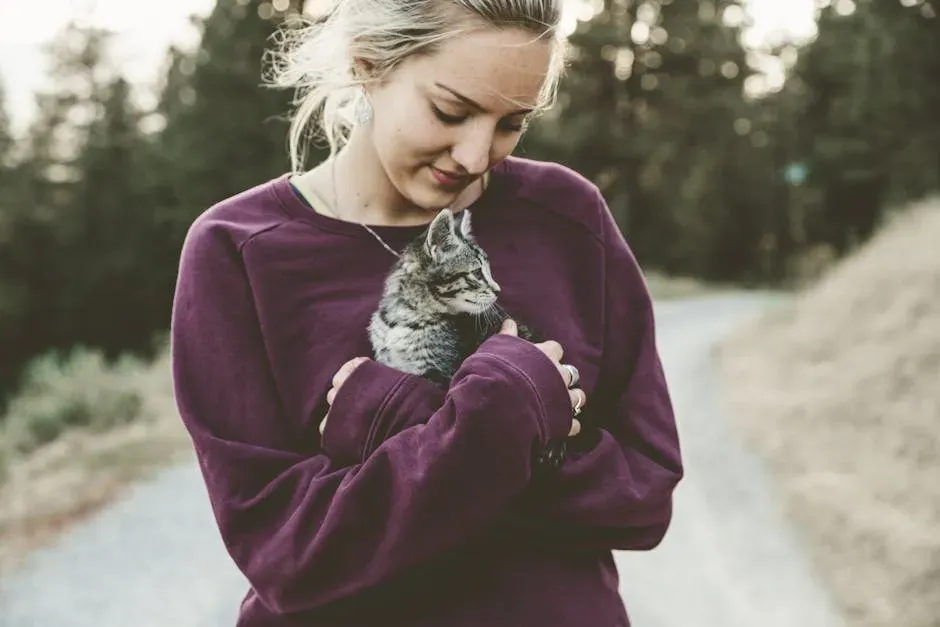
You might feel a little embarrassed using that squeaky, sing-song voice with your cat when guests are over. Don't be. Humans often use "cat-directed speech" - characterized by higher pitch and exaggerated intonation - unconsciously, and this mirrors what is used with infants and increases responsiveness in cats. Your instincts are actually scientifically sound.
Research shows cats tend to respond best to a higher-pitched, friendly tone similar to baby talk, and soft, calm voices can help cats feel safe and relaxed, strengthening the bond between cats and their person. Even better, oxytocin - often referred to as the "love hormone" - is released from both you and your cat during these interactions, creating a sense of trust and safety. Combine a soft tone with petting or a slow blink and it creates an even greater oxytocin boost. That little act of cooing is basically chemistry.
Cats Can Actually Associate Words With Meaning - Faster Than Babies
I know it sounds crazy, but your cat might be linking your words to real-world meaning faster than a human toddler can. Without any particular training, cats appear to pick up basic human language skills just by listening to their people talk. In fact, cats learn to associate images with words even faster than babies do, according to a study published in Scientific Reports.
The cats spent an average of roughly one third more time looking at a screen when they heard "wrong" words spoken - a sign they had learned to associate the original words with images. Surprisingly, the vast majority of cats had learned each word-image association after only two 9-second lessons. By contrast, most 14-month-old human babies need four 15-second lessons, including hearing each word seven times per lesson, as opposed to four. Your cat, it seems, is paying very close attention to what you say every single day.
They Learn Your Key Words Through Association, Not Grammar
Cats rely on sound-to-action links - like "dinner" making food appear or hearing their name meaning attention or play. Vets and animal behaviourists agree that cats learn words by associating a sound with an experience rather than by definition. Think of it less like language and more like a very detailed personal dictionary your cat builds about you over time.
While they can't grasp full sentences, studies show cats may recognize roughly 20 to 40 human words - and some experts say even more in rare cases. Cats are highly intelligent creatures, and while they lack the cognitive ability to understand words and language, they are able to develop responses to certain words through association with certain actions. Honestly, it's less about linguistics and more about trust built over thousands of shared moments.
Your Emotional State Comes Through Loud and Clear
Here's the thing about cats - they aren't just listening to your words. They are listening to what's underneath your words. It's not just the pitch or volume of your voice that cats respond to - they are also surprisingly good at detecting emotions. Cats are observant and can pick up on subtle changes in your tone, body language, and facial expressions. For example, if you're feeling stressed or upset and your voice reflects that, your cat might become more attentive or display comforting behaviors like sitting near you or purring.
Research results showed that cats are able to cross-modally match pictures of emotional faces with their related vocalizations, particularly for emotions of high intensity. Overall, these findings demonstrate that cats have a general mental representation of the emotions of their social partners, both other cats and humans. Neuroscience further indicates that cats process emotional stimuli in brain regions similar to those in human emotional centers. So when you're having a rough day and your cat plants themselves on your lap uninvited, that is not a coincidence.
Your Voice Actually Shapes Your Cat's Sense of Safety
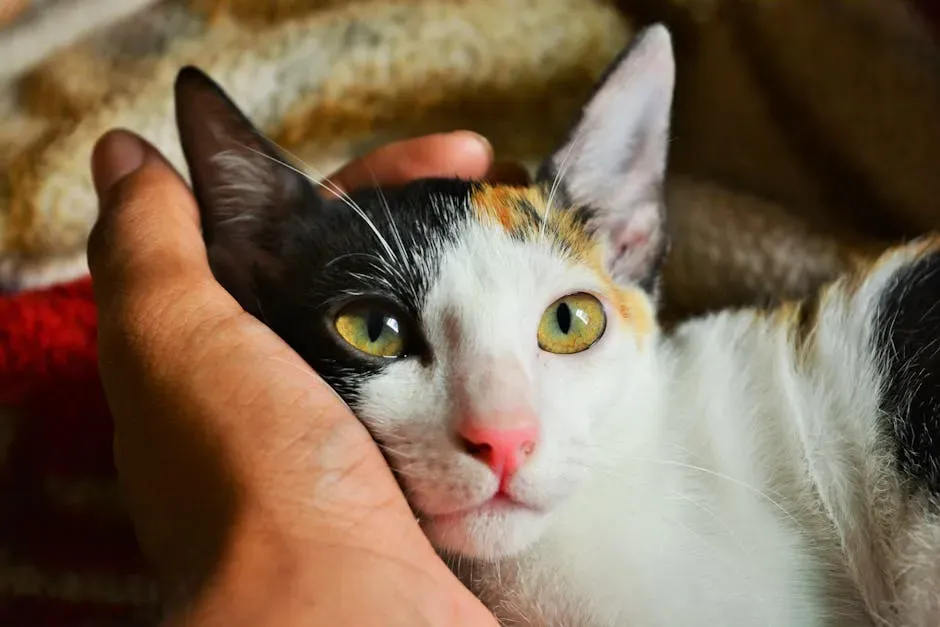
While cats may respond to certain tones, familiarity is often the most powerful factor. Your cat learns your voice over time and associates it with daily routines like meals, playtime, and comfort - which is why many cats will perk up when their favorite human speaks, even from another room. Your voice has become a landmark in your cat's emotional world.
This recognition builds trust. A familiar voice signals safety, predictability, and care - all things cats value deeply. Over time, your voice becomes part of your cat's emotional landscape. Researchers suggest that cat communication potentially relies on experience of the speaker's voice, and they conclude that one-to-one relationships are important for cats and humans to form strong bonds. You are not just their person. You are a whole sensory environment they have learned to navigate by sound.
Talking to Your Cat Genuinely Strengthens Your Bond
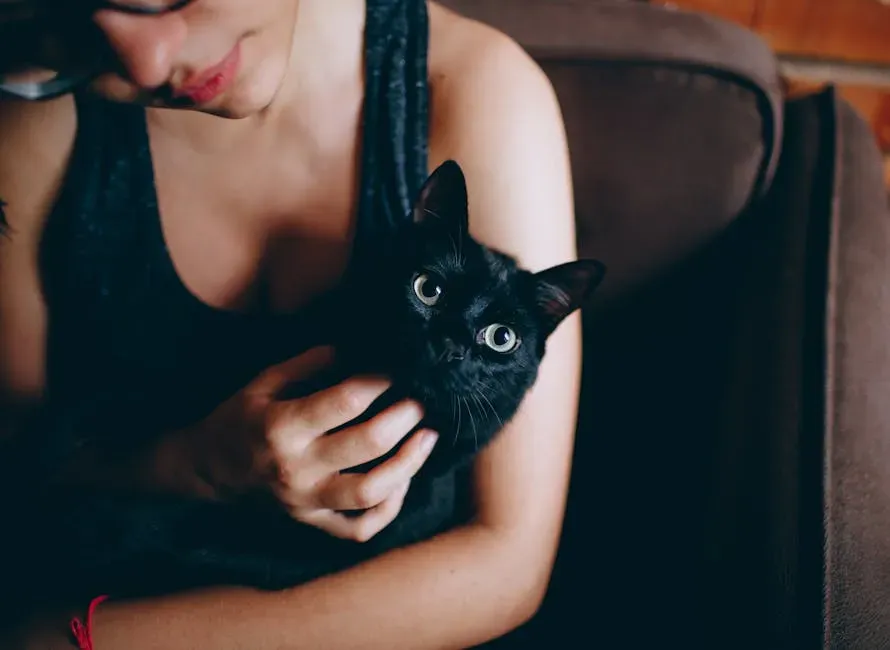
Cats enjoy hearing the sound of their owners' voices because they know it comes from the person who feeds and cares for them. Our feline companions absolutely do enjoy being talked to. You might notice your cat responds positively to your voice by pricking up their ears, lifting their head, meowing, purring, rubbing around you, or head-butting. These are not random behaviors. They are responses to you.
Cats are much more bonded and in touch with their humans than we typically give them credit for, and they actively seek their people's voices and crave that connection. According to a study in Scientific Reports, cats can form bonds with their owners that resemble the attachments formed by dogs and even human infants - suggesting they are not only capable of interpreting your voice but also using it to gauge your emotional state. That quiet, reserved animal curled up across the room is building a relationship with you every single time you speak.
Conclusion: Never Underestimate the Cat Listening From the Corner
Every whisper, every sigh, every enthusiastic "treat time!" you've ever uttered has been received, filed, and interpreted by a creature far more tuned in than their reputation suggests. The research is clear: your cat is not simply tolerating your voice. They are decoding it, connecting it to memory, emotion, and meaning, and using it to understand the world you both share.
The next time your cat gives you that slow, steady gaze from across the room while you're mid-conversation on the phone, consider the possibility that they've already decided whether or not that call concerns them. You've been communicating all along. You just didn't realize how deeply they were listening.
So the question worth sitting with is this: now that you know your cat is truly interpreting what you say, will you think twice before you speak? Tell us what you think in the comments - have you ever noticed your cat responding to a specific word or tone of yours?