You spend good money on plush cat beds, elaborate cat trees, and toys that squeak, rattle, and flash. Then a delivery arrives at your door. You set the box down for one second, and your cat is already inside it, looking smug. Sound familiar? Honestly, if you’ve lived with a cat for more than a week, you know this scene like the back of your hand.
The box obsession in cats is one of the most entertaining and genuinely puzzling behaviors in the animal world. It crosses breeds, ages, and personalities. The timid cat does it. The bold, rambunctious one does it too. So what is really going on inside that cardboard kingdom your cat has claimed as their throne? The answers are more fascinating than you might expect. Let’s dive in.
It All Starts with Survival Instincts Deep in Their DNA
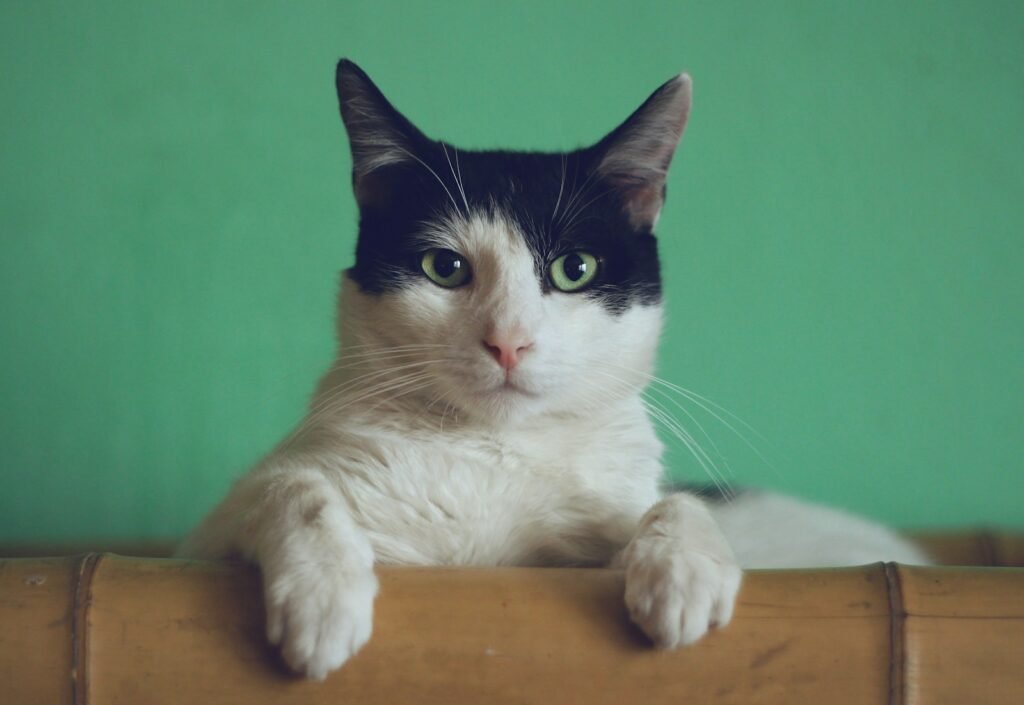
Here’s the thing about domestic cats that most people forget: your cozy indoor kitty is, at heart, a wild animal wearing a very convincing house-pet disguise. Cats that roam free occupy a delicate midpoint in the neighborhood food chain, where they are both predator and prey. As they hunt for birds or insects, outdoor cats look for hiding spots like bushes or nooks that can conceal them from prey or any potential predators such as hawks or foxes.
This survival logic is baked so deeply into feline biology that even centuries of domestication haven’t erased it. Just because a cat is indoors doesn’t mean that they lose their instincts, and boxes offer a perfect hunting spot, with walls that shield them from view and an open top that they can use to pounce onto potential prey. That innocent cardboard box on your living room floor? To your cat, it might as well be a jungle thicket.
The Security Factor: Why Enclosed Spaces Feel Like Home
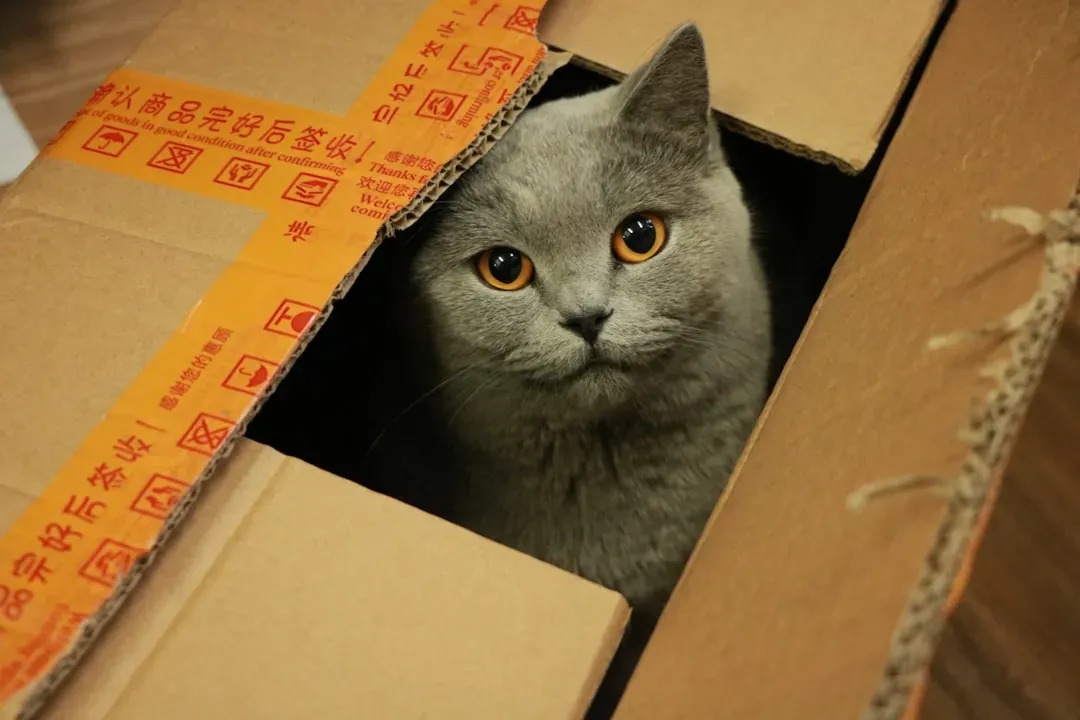
Cats like boxes because these enclosed spaces give them a sense of security and comfort. Additionally, boxes can serve as stress relievers. When faced with unfamiliar or stressful situations, a cat may retreat into a box to regain a sense of control and to feel at ease. Think about it like choosing the corner booth at a restaurant so nothing can sneak up behind you.
Cats may seek out boxes for the same reason many people are drawn to the corner booth at a restaurant: so they can observe their surroundings in peace, knowing nothing will sneak up on them. A cat in a box feels their vulnerable back is protected. They can periscope their little face around the edge to see everything happening or retreat into a corner of the box as needed. It’s a very clever setup, when you think about it from the cat’s perspective.
The Science Proves It: Boxes Actually Reduce Stress in Cats
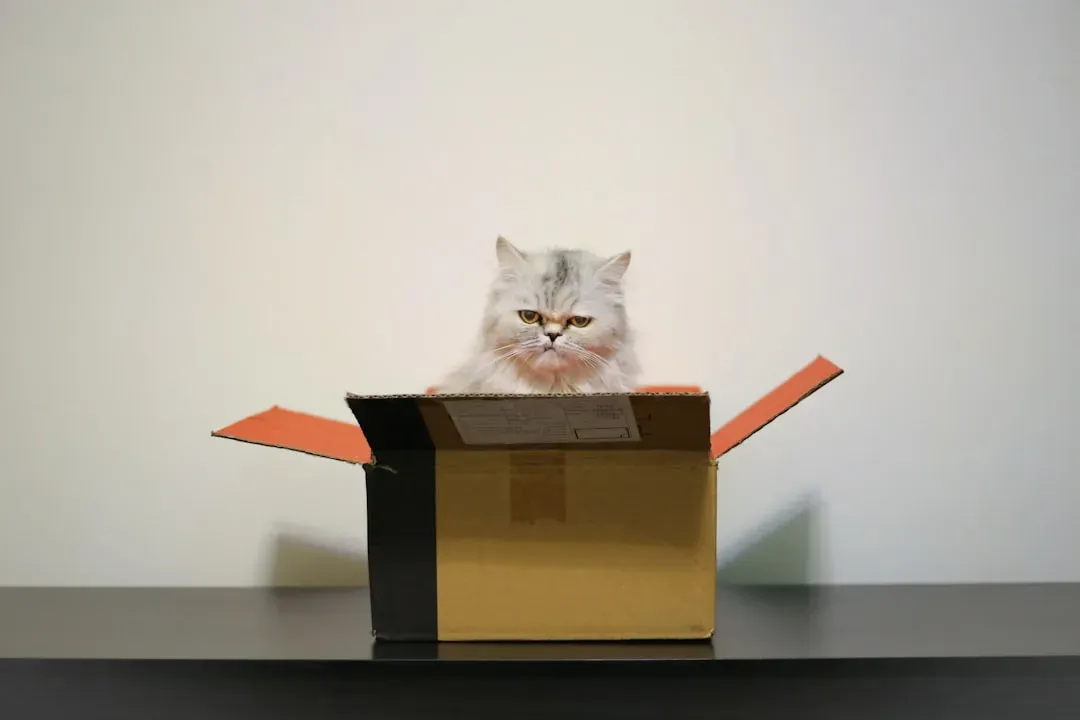
This isn’t just theory or cute speculation. Real research backs it up. A study on Dutch shelter cats found that when cats are given boxes, their stress levels decrease significantly faster than cats not given boxes. The results were striking enough that veterinarians and shelters began taking the “simple cardboard box” far more seriously as a tool for feline wellbeing.
In this study, cats with a hiding box showed a significantly faster decrease of behavioural stress compared to the control group, which was most prominent during the first observation days. To put that into perspective, that’s a plain cardboard box outperforming stress management techniques that are far more complicated and costly. Hiding enrichment reduces behavioural stress in shelter cats during quarantine situations and can therefore be a relatively simple aid to shelter adaptation.
Warmth Is a Bigger Deal Than You Think
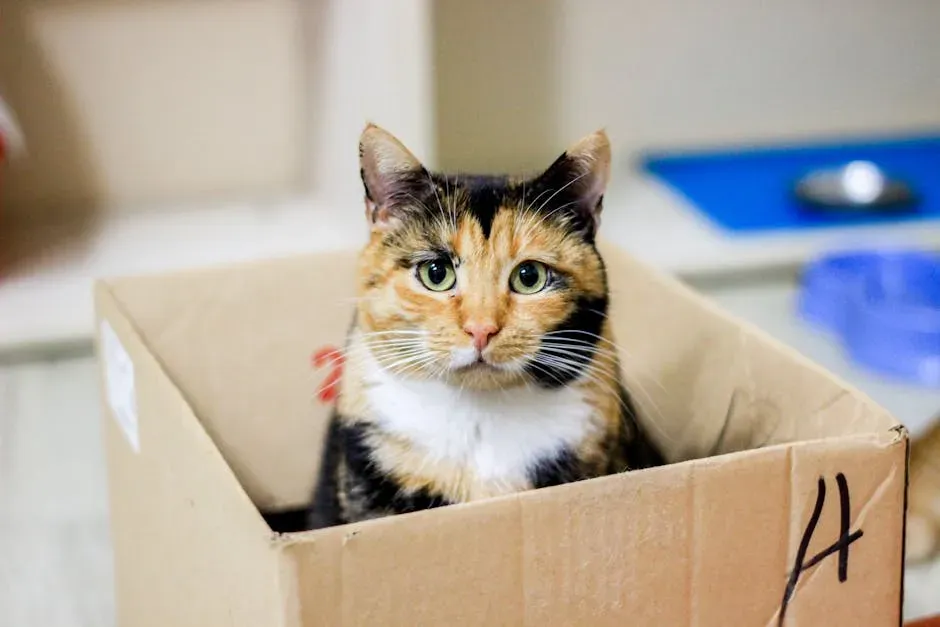
Your cat isn’t just hiding. Sometimes they’re simply trying to stay warm. A 2006 study showed that temperatures between 86 and 97 degrees Fahrenheit are best suited for most cats. The closed space of a box, especially one made from a good insulator such as cardboard, creates a warm, cozy environment that helps to retain body heat. Most homes sit well below that temperature range.
A cardboard box provides insulation for a chilly kitty, and the small space helps retain body heat. This is the same reason cats love to sleep on laptops, radiators, and other heat-emitting parts of the house, including your lap. So the next time you walk past your cat curled tightly into a box, just know they’ve engineered their own personal sauna. I think that’s honestly impressive for a creature that refuses to follow any rules but their own.
The Ambush Predator Advantage: A Box Is the Perfect Launchpad
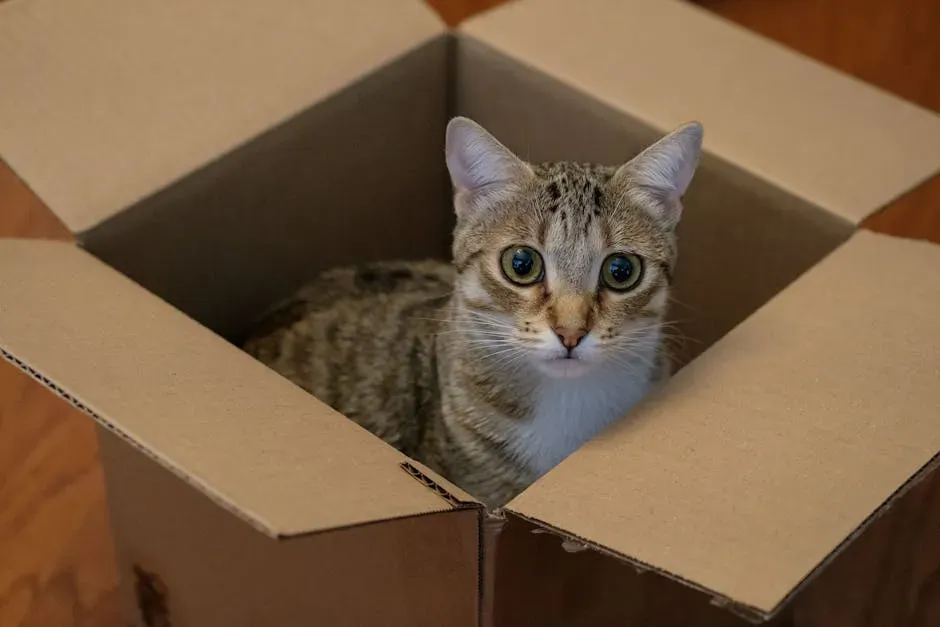
Let’s be real, cats are, at their core, ambush predators. A cat’s primary method of hunting is to hide and wait to be able to jump out and capture their victim. Whether the target is an unsuspecting mouse, a toy, or your unsuspecting ankle, the strategy is identical. The box is simply the tool of the trade.
These instincts are still present in domestic cats. Whether they’re stalking a mouse or preparing a sneak attack on your legs as you walk by, cats need tight, hidden spaces to observe and not be seen until the timing is right. It’s actually a little terrifying how perfectly a delivery box serves this purpose. You’ve essentially been gifting your cat a custom hunting blind every time an online order arrives.
Conflict Avoidance: The Box as a Personal Time-Out Zone
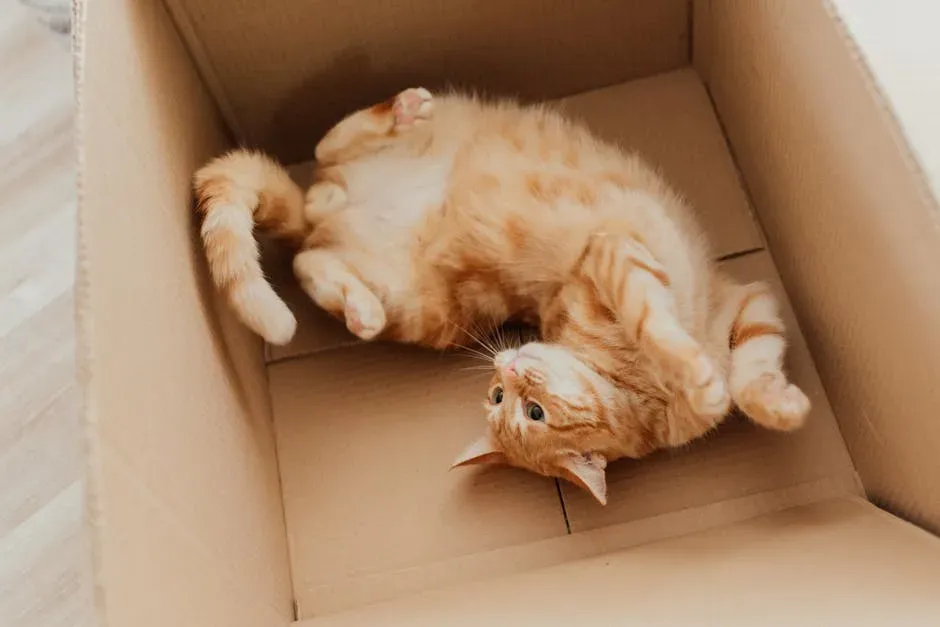
Boxes are also helpful during conflicts. Cats are not adept at resolving disputes and would rather take refuge in the safe space of a box. This behavior can help reduce anxiety and promote well-being. Unlike dogs, who tend to confront tension head-on, cats are masters of the strategic retreat.
Instead of talking through the conflict, cats are more apt to run off and hide, preferably in a box or similar container. Boxes are a “safe zone” that allow them to sleep, stew and eventually forget. So when you spot your cat dramatically disappearing into a box after you’ve dared to rearrange the furniture or bring home a new pet, understand that they’re not being dramatic. They’re emotionally processing. In their own way.
Territorial Scent Marking: Your Cat Is Literally Claiming the Box
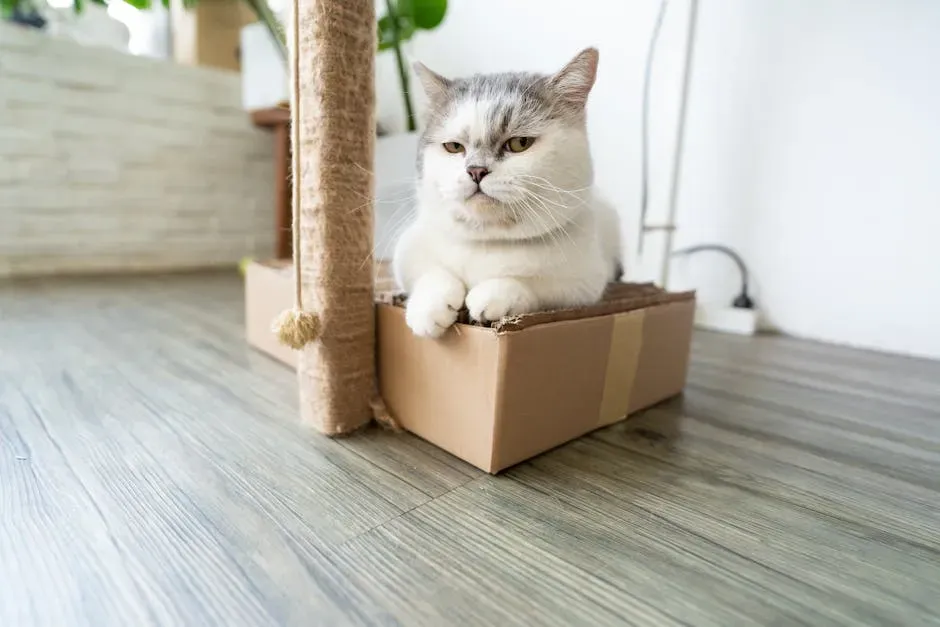
The moment your cat dives into a new box, something very deliberate starts happening. The very first thing most curious cats do when they see a cardboard box is rub up against it. Kitties have scent glands on the sides of their face, which is why they love rubbing their cheeks against everything. This action leaves its scent on the object, like a feline “Property of Whiskers” sign.
By scratching, rubbing, and chewing on cardboard, cats deposit their unique pheromones, effectively claiming the space as their own. This behavior is not destructive but a fundamental aspect of feline communication. When a cat scratches a surface, the glands in their feet release pheromones and, in addition, the claw marks serve as long-lasting visual communication. In multi-cat households, this territorial claiming can become especially passionate.
Cats Will Even Sit in a Fake Box. No, Really.
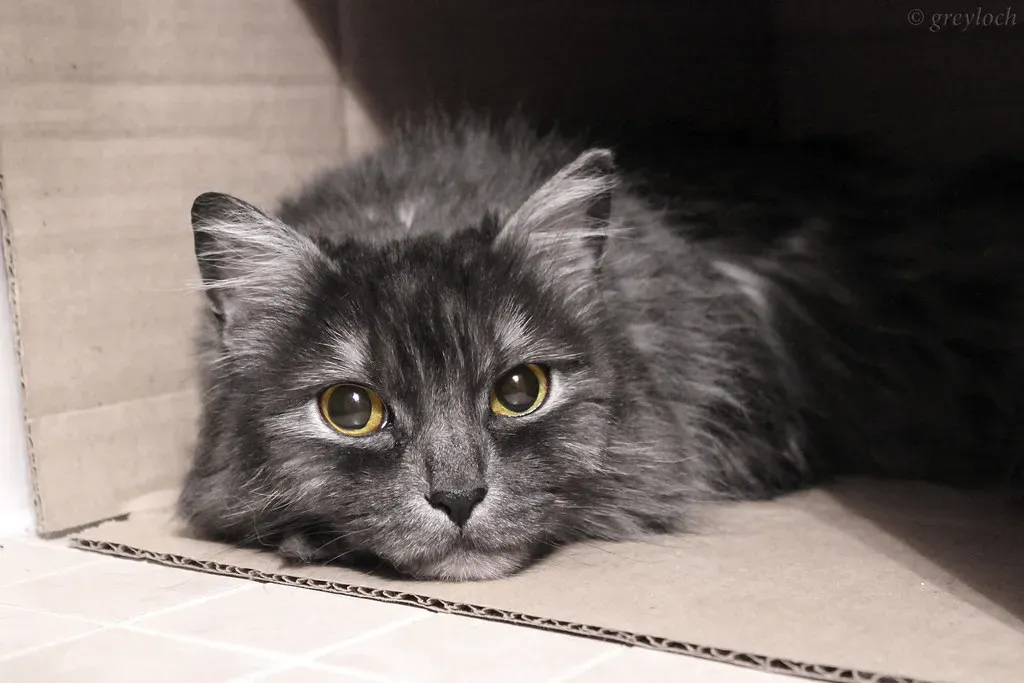
Here’s where things get genuinely wild. Scientists suspected the box obsession ran deep, but just how deep surprised even the researchers. In 2017, the social media tag #CatSquare showed multiple felines plopping themselves in square outlines on the floor made with masking tape. A new study published in Applied Animal Behavior Science found cats were more likely to sit inside 2-D shapes that imitate an illusion of a square.
In April 2021, research entitled “If I Fits, I Sits: A Citizen Science Investigation Into Illusory Contour Susceptibility in Domestic Cats,” was published in Applied Animal Behaviour Science. The researchers found the felines chose the illusory square seven times, nearly as much as the eight times the cats chose the real squares, indicating that they were susceptible to the illusion. Your cat isn’t just looking for a box. They’re responding to the perception of boundaries. It’s remarkable stuff.
Curiosity and Play: Cardboard Is Genuinely Fun for Cats
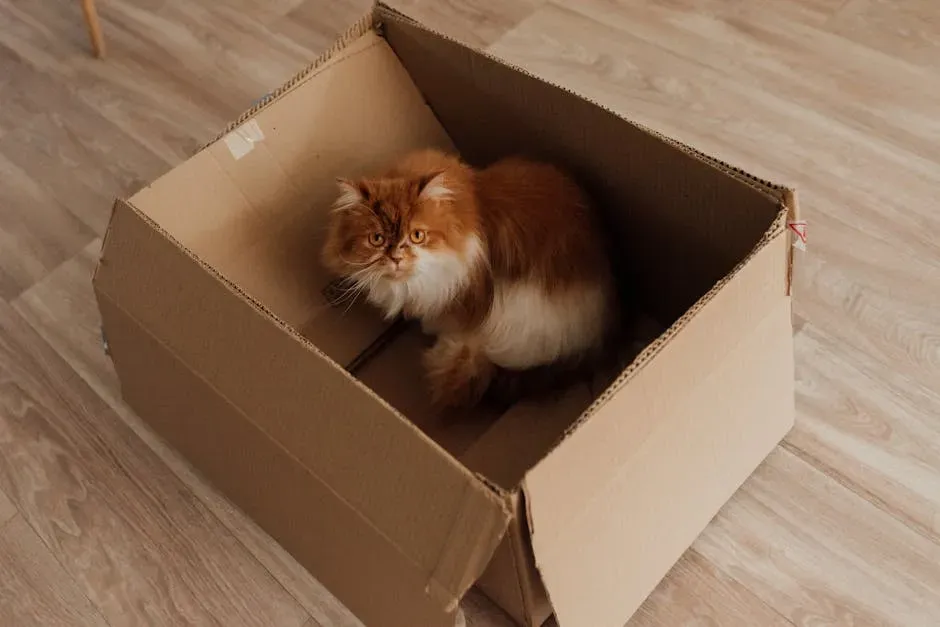
Boxes appeal to a cat’s natural curiosity and playfulness. Cats are inquisitive creatures, and a box presents an opportunity for exploration and play. Cats are curious creatures, and boxes present an exciting world of exploration. Cats love investigating new things, and a new box, with its smells and textures, represents a new puzzle that must be unraveled.
Beyond exploration, cardboard itself offers some genuinely satisfying entertainment. There’s a reason why most scratching posts are made out of cardboard. Cats love the feel of boxes, making them the perfect place for a cat to claw and scratch their nails. It’s part toy, part scratcher, part fortress. Honestly, from a cost-to-enjoyment ratio, a cardboard box might be the most efficient cat entertainment product ever made, and it costs nothing.
Why Your Cat Prefers the Box Over the Fancy Bed You Bought
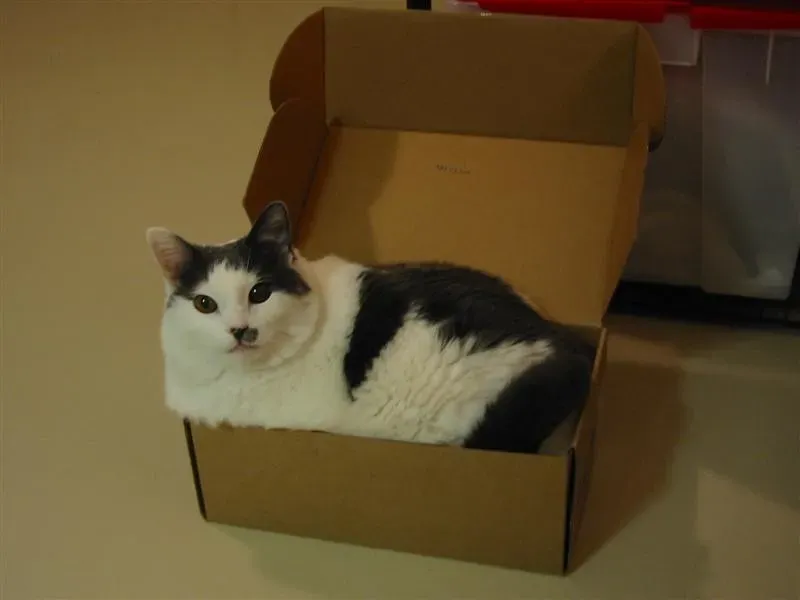
This one might sting a little if you’ve recently splurged on a luxury cat bed. Maybe the most obvious reason why cats love boxes is because they provide a comfort level that most cat beds and toys can’t match. Think of humans and our ever-present desire for comfort. Most of us love weighted blankets, warm clothing, cuddling, and anything else that envelops us in coziness. Cats are the same, they just seek out different ways to invite comforting pressure onto their bodies.
The box physically wraps around them in a way that an open bed simply cannot replicate. A box is a secure, enclosed environment that triggers a cat’s natural instinct to find a safe den. Curling up in a box lets a cat keep watch while feeling hidden and safe. It’s hard to say for sure whether cats actively “prefer” boxes over beds in every situation, but the behavioral evidence is pretty hard to argue with. The box checks far more of their primal boxes, so to speak, than even the most cushioned cat bed on the market.
Conclusion: The Box Is So Much More Than Cardboard
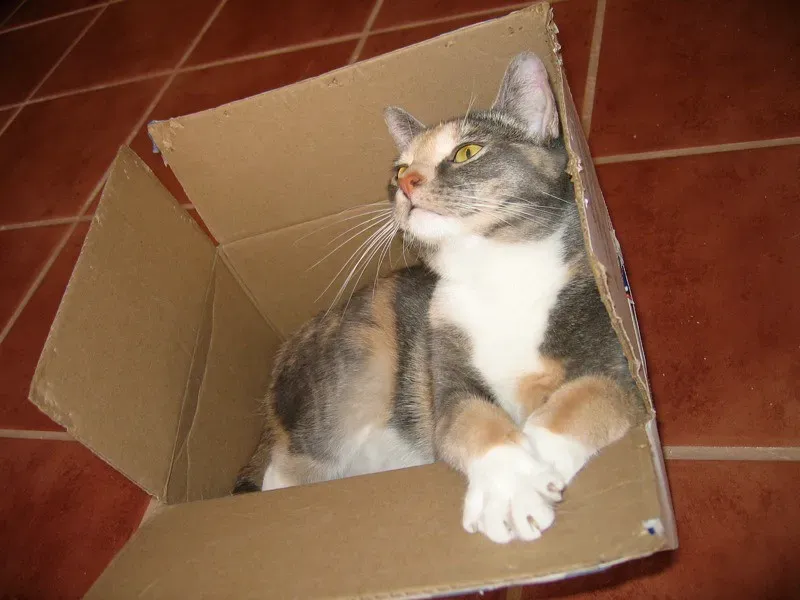
Your cat’s obsession with boxes is not a quirk or a random habit. It’s a layered, deeply rooted behavior that touches on survival instinct, emotional regulation, physical comfort, territorial identity, and even visual cognition. Every single time your cat squeezes into that delivery box, they’re drawing on millions of years of evolutionary programming, all wrapped up in a humble piece of folded cardboard.
The practical takeaway here is worth noting. Providing boxes for your cat, especially during stressful periods like moving house, introducing a new pet, or even after guests leave, is genuinely good for their mental wellbeing. It’s one of the simplest, cheapest, and most scientifically supported enrichments you can offer. You don’t need to spend a fortune. Just save the next box that arrives at your door.
So the next time you order something online and your cat immediately commandeers the packaging, maybe let them have it for a while. They’ve earned it. After all, who do you think is really in charge of the house? What do you think your cat is really plotting in there? Share your thoughts in the comments.