You call your cat’s name. Nothing happens. You call again. Still nothing. Your cat sits there, grooming a paw with the energy of someone who has never heard the word “listen” in their life. Sound familiar? Most cat owners have been there, and most of us have quietly wondered whether our furry companions even register our voices at all.
Here’s the thing, though. Science keeps revealing something quietly astonishing: your cat is paying far more attention than you think. The whole “aloof and indifferent” reputation? It might be the most spectacular misreading of an animal in human history. Let’s dive in.
Your Cat Knows Your Voice and Can Tell It Apart From a Stranger’s
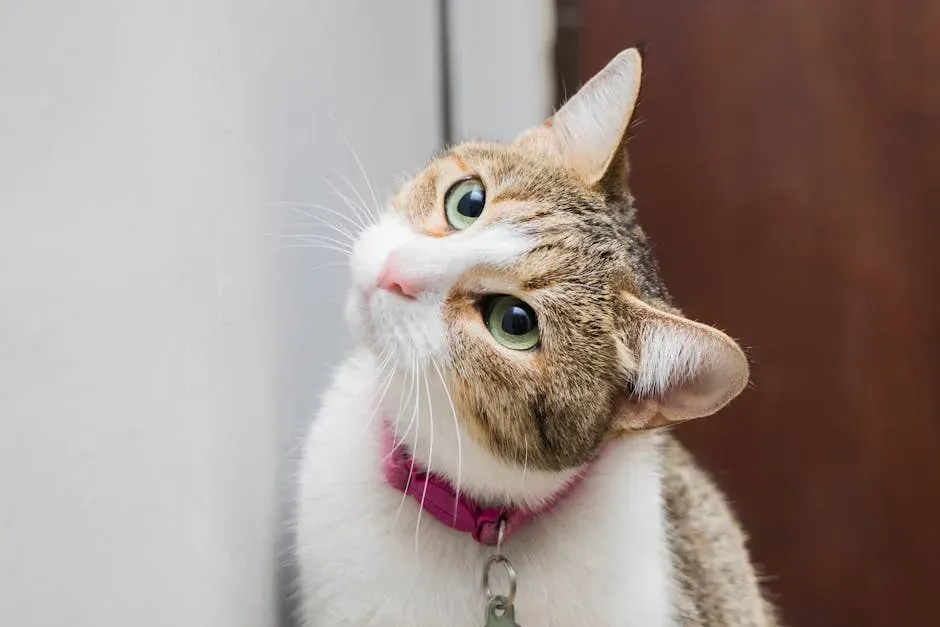
This one might actually surprise you. Research indicates that cats are able to use vocal cues alone to distinguish between humans. Not just in a vague, general way either. Think of it like a radio that’s precisely tuned to one specific frequency. Your voice is that frequency.
In a series of experiments on 16 house cats, researchers showed that feline pets know their owner’s voice, and they also behave differently when their owners are talking to them as opposed to another person. When a stranger spoke, even in the exact same way, the cats simply carried on with their day. Your cat is absolutely listening. It just has very selective priorities.
Your Cat Responds to the Specific Way You Talk to Them
You know that voice you use? The slightly higher-pitched, softer, baby-talk version of yourself that only comes out around your cat? It turns out your cat responds to that and only to that. Researchers used what is called cat-directed speech, which is when you talk to your cat using short, repetitive phrases in a higher-pitched voice. They also had owners talk to the cats using human-directed speech. The results showed that the cats did not react to human-directed speech, but they definitely reacted to cat-directed speech, though only from their owners.
Honestly, I find this oddly touching. Your cat has learned the sound of intimacy in your voice. The findings suggest adult house cats have only learned to decipher the nuances of their owner’s speech. The closeness of the cat-human relationship, in other words, might be based on experience rather than an innate preference for friendly qualities in a human voice. The more time you spend together, the more finely tuned your communication becomes. It’s basically a private language you’ve built together without realizing it.
Your Cat Actually Knows Its Own Name
Call your cat’s name and watch it twitch an ear, glance at you briefly, then look away. Maddening, right? That one tiny ear movement is actually proof of something remarkable. Research indicates domestic cats do recognize their own names, even if they walk away when they hear them. The ignoring part is a lifestyle choice, not a comprehension failure.
The cats had more pronounced responses to their own names, such as meowing or moving their ears, heads, or tails, when compared to similar words or other cats’ names. It’s hard to say for sure exactly what level of self-awareness this represents, but what is clear is that the cat’s name is a “salient stimulus” and may be associated with rewards like food, petting, and play. Whether or not your cat identifies herself by name, she knows that the word carries a special meaning. That’s not nothing. That’s actually quite a lot.
Your Cat Can Match Words With Objects and Images
This one pushes into territory that genuinely blew researchers away. When cat owners spoke a nonsense word alongside a drawing of a blue unicorn after repeated pairings with a sun image, cats stared at the screen for longer than usual, as if surprised by the mismatch. Researchers believe they had learned to associate the word with the original image. Think about what that actually means. Your cat hears a word, stores it, maps it to a visual concept, and then notices when that relationship is violated.
These findings build on previous research suggesting cats are adept at deciphering human communication. Studies have shown that cats can differentiate between their own name and similar-sounding nouns, follow human pointing, look for emotional cues from their familiar humans when confronted with novelty, and can tell when their owner is angry or happy. So next time you say “treat” and your cat comes running, understand it isn’t just conditioning. There’s a genuine word-to-concept link happening in that furry little head.
Your Cat Reads Your Emotional State Through Your Face and Tone
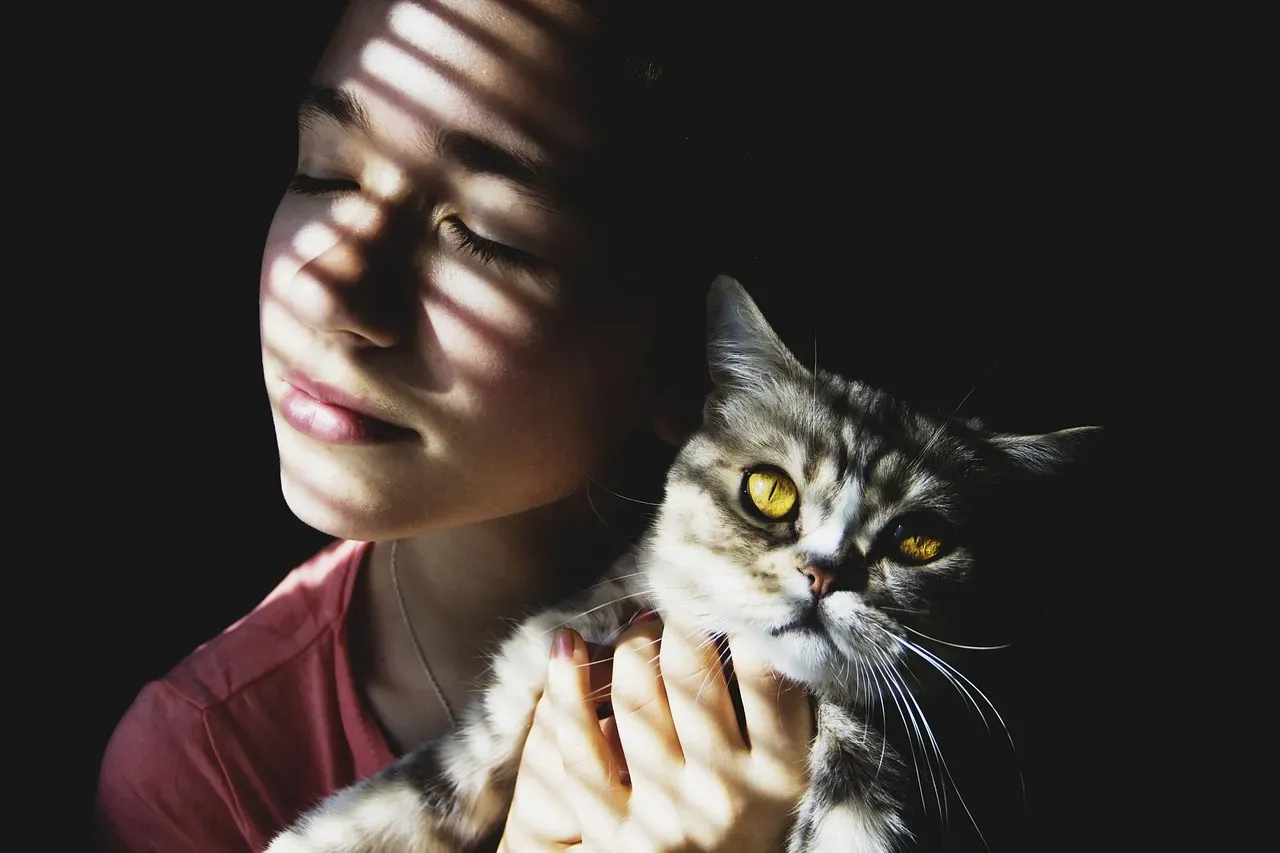
Your cat is watching you more carefully than most people in your life. Research demonstrates that cats integrate visual and auditory signals to recognize human and conspecific emotions, and they appear to modulate their behavior according to the valence of the emotion perceived. In plain terms: your cat listens to your voice and watches your face simultaneously, then adjusts its behavior based on what it perceives.
Researchers observed that cats exhibited more frequent positive behaviors, including purring, rubbing, or sitting on their owner’s lap and spending more time with them, when their owner was smiling. Frowns seemed to produce the opposite effect in the cats. So when you’re having a rough day and your cat sits a little closer than usual, that isn’t coincidence. The closer your bond is with your cat, the more likely they are to be in sync with you and understand your different moods.
Your Cat Can Literally Smell Your Emotions
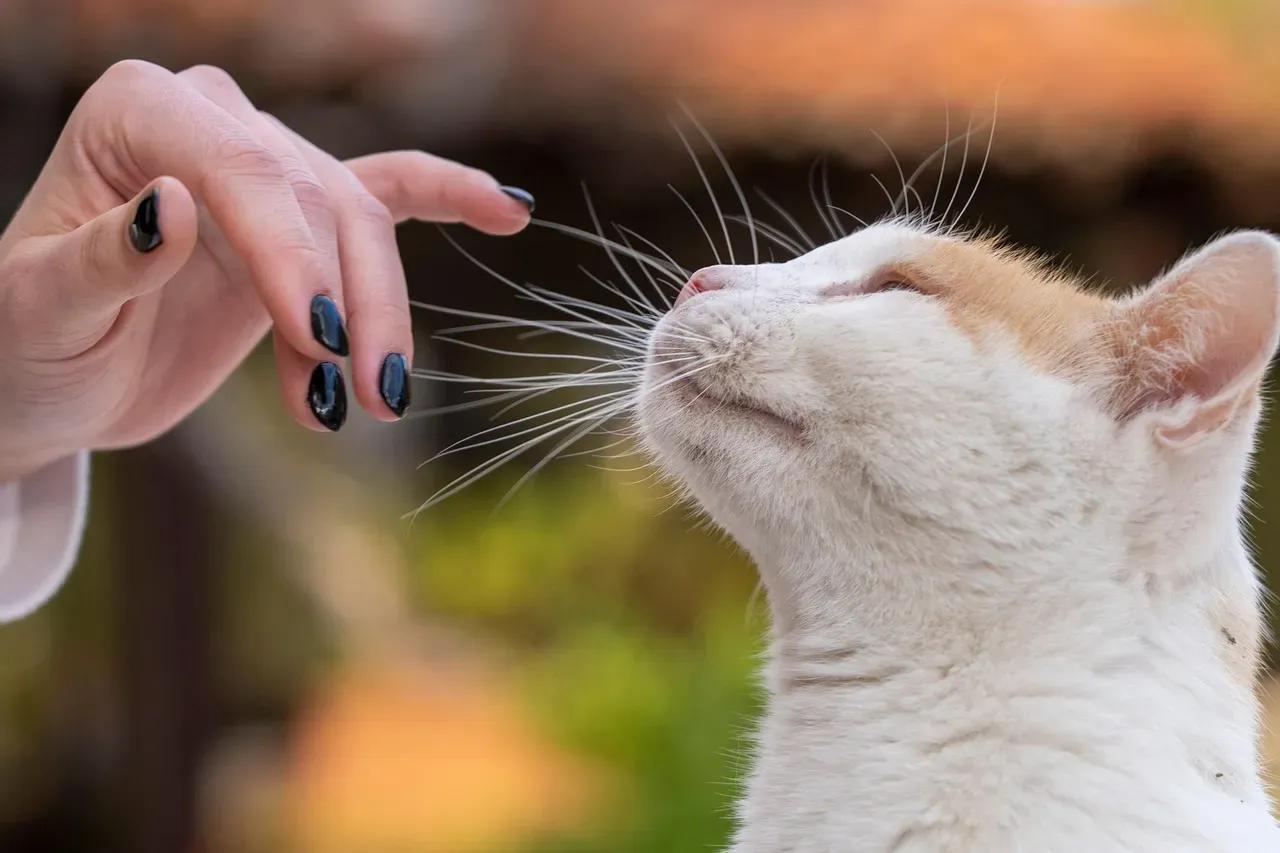
Let’s be real, this one sounds like science fiction. Your cat picking up on your fear or happiness through smell? Yet research is pointing squarely in that direction. A recent study shows cats can detect human emotions through scent, especially fear, suggesting our cat friends might understand us more than we realize. Your emotional state essentially broadcasts itself chemically, and your cat’s nose is finely calibrated enough to receive that signal.
These findings challenge the stereotype of cats as indifferent to human emotions. While they may not express their attachment in the same overt ways as dogs, cats are clearly tuned into the emotional states of their humans. They not only recognize human emotions but may also respond to them in ways that reflect their own emotional states. The next time you feel stressed and your cat suddenly materializes next to you, consider the possibility that it picked up on something you didn’t even consciously broadcast.
Your Cat Listens to Your Tone, Then Adjusts Its Own Communication
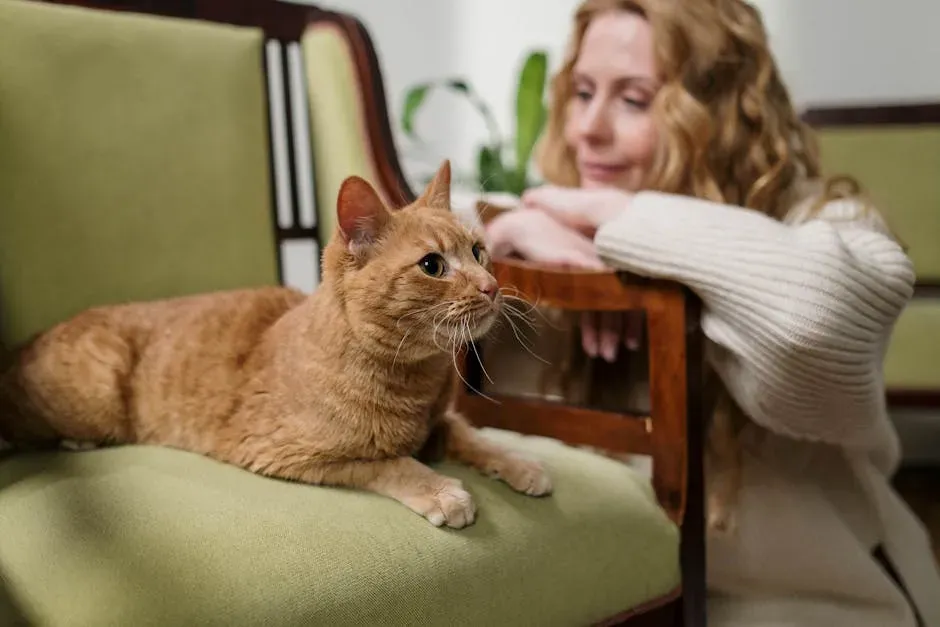
Your cat doesn’t just passively absorb your voice. It actively calibrates its own communication in response to it. Research has revealed a fascinating dynamic around this. A study published in the journal Ethology revealed that domestic cats meow more frequently when male caregivers walk through the front door. The reason behind this is genuinely clever. Researchers suggest that because male caregivers tend to talk less to their cats and are generally less attentive, the cats adjust their communication to get their attention.
Think about this for a second. Your cat is monitoring how responsive you are to its signals, then recalibrating its strategy accordingly. It is therefore possible that male caregivers require more explicit vocalizations to notice and respond to the needs of their cats, which in turn reinforces cats’ tendency to use more directed and frequent vocal behavior to attract their attention. Your cat isn’t just listening to you. It’s analyzing your listening habits and adapting. That’s not a passive animal. That’s a surprisingly savvy one.
Your Cat Speaks Back Through Body Language You Might Be Missing
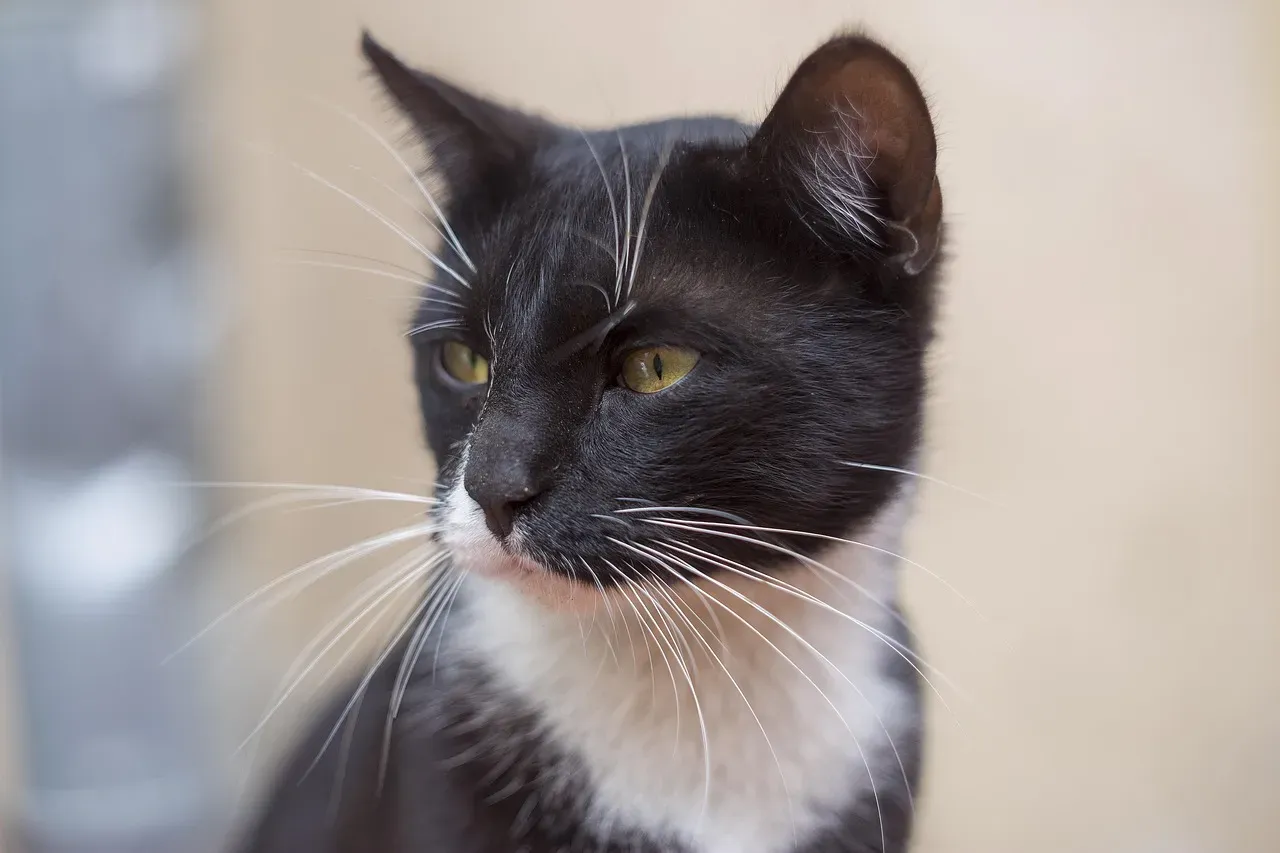
Listening isn’t always about words. A lot of it is about response, and your cat is responding to you constantly through signals that most owners walk right past. Cats use more than 20 different ear muscles to fine-tune ear movement. Those tiny ear rotations you see when you speak? Those are deliberate responses. When a cat’s ears are facing forward and close together, that means the cat is interested in something. When your voice is that something, you’re receiving real-time feedback about how closely your cat is tuned in.
Then there’s the slow blink. The slow blink has been proven in studies to strengthen human-cat bonds. Lots of cats do something called a “slow blink,” where they hold your gaze and then shut their eyes and open them again slowly. This is thought to be the cat equivalent of a smile or a kiss, and means your cat loves and trusts you. Try giving one back the next time your cat does it. You might just start a conversation you didn’t know was possible.
Conclusion
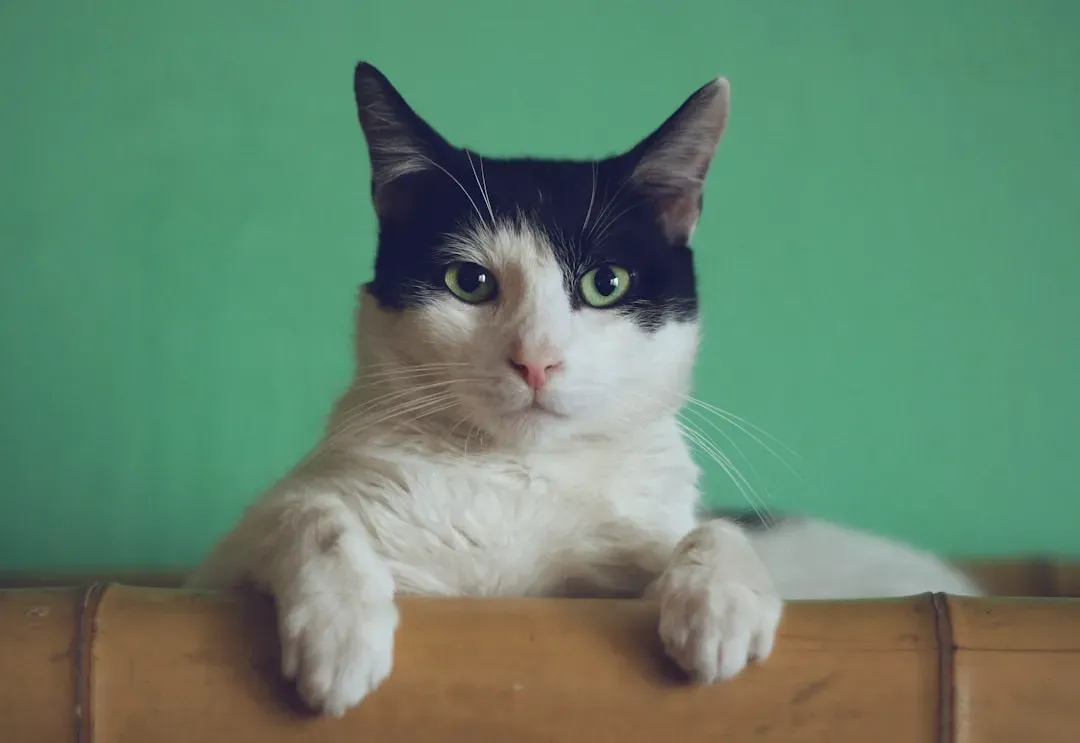
Cats have spent roughly ten thousand years living alongside humans, and in that time, they’ve developed an astonishingly rich capacity for tuning in to us. They track our voices, decode our emotional states through sight, sound, and even scent, recognize their names, and adapt their own behavior based on how we communicate. The silence you interpret as indifference is often just a different kind of listening.
The real irony is that we spend so much time wondering whether our cats hear us that we forget to ask whether we’re truly hearing them back. Cats have earned a reputation for being hard to read, but it’s not their fault. They just communicate differently than humans. With their posture, tails, ears, eyes, whiskers, and vocalizations, they’ll tell you whether they’re comfortable or not.
So the next time your cat does that slow, majestic blink from across the room, understand that you just received a message. A quiet, unhurried, deeply feline message. The question is: are you listening? What do you think, has your cat surprised you with just how tuned-in they really are? Tell us in the comments!