You live with a tiny, fur-covered judge. Every day, without you even knowing it, your cat is watching you stumble through your morning routine, talk to your phone, and argue with the TV. They are witnesses to the full, unfiltered comedy of human life, and honestly? They seem pretty entertained by it.
While cats may not understand humor the way we do, they are incredibly attuned to human emotions and reactions. That means every awkward, loud, or baffling thing you do is being processed by a creature with sharp senses, sharp instincts, and what I can only describe as a very judgmental resting face. The question is: what exactly are they silently laughing at? Let’s dive in.
Talking to Them Like They Understand Every Word
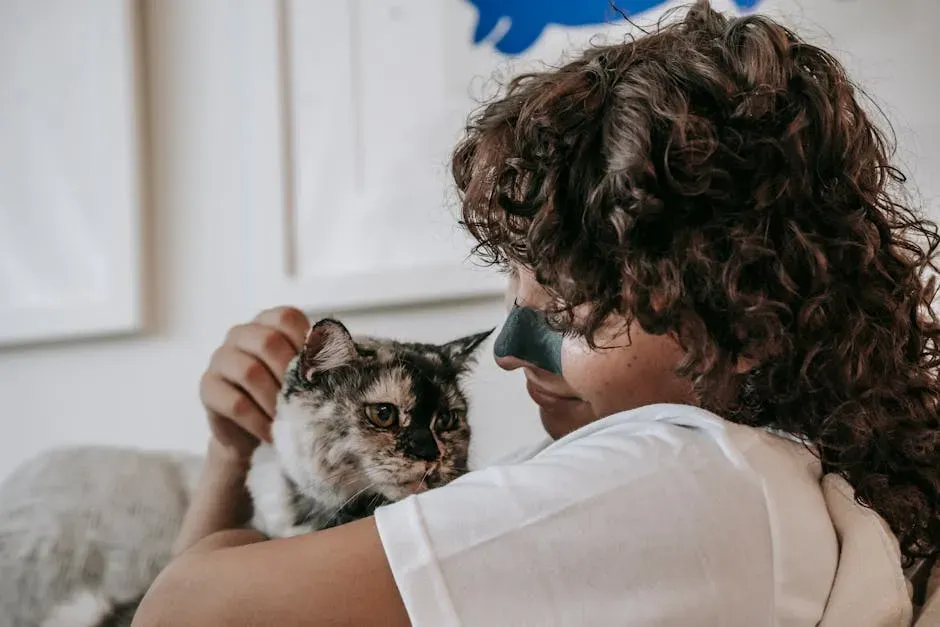
You do it. Everyone does it. You walk into the kitchen and start narrating your entire morning in a high-pitched voice, fully explaining to your cat why you’re late with their breakfast. It feels completely normal in the moment, until you catch them staring at you with that slow, half-lidded blink that screams “you absolute clown.”
Adult cats almost never meow to any creatures besides humans, and their purrs appear to have evolved a high-frequency component that evokes human baby cries, all the better to get our attention. So in a way, your cat helped create this whole talking-back-and-forth dynamic. Research has confirmed what most cat owners already know: we tend to dip into “baby talk” when addressing our feline friends, a habit many researchers are guilty of themselves. Your cat probably finds the whole thing wildly theatrical, and yet, from a behavioral science standpoint, they actually do pick up on when you’re speaking directly to them versus speaking to another person.
Screaming at the TV or Video Games
There you are, sitting completely still on the couch, and then suddenly you erupt into a full-volume monologue directed at a fictional character or an online opponent. Your cat, who had been peacefully napping in the corner, now stares at you with wide eyes and flattened ears, processing the chaos.
Cats often have exaggerated reactions to everyday occurrences, which adds a comedic twist to mundane situations. Whether leaping into the air at a sound on the television or responding dramatically to unfamiliar objects, their unexpected reactions never fail to cause laughter. Here’s the thing though: your cat isn’t just startled. According to Cats Protection, cats hear things in the ultrasonic range that humans cannot, and they have an eight-octave hearing range, hearing higher and lower than many other mammals. So when you yell at the screen, your cat is essentially hearing you in surround sound and probably wondering why their giant human companion keeps losing arguments with a glowing rectangle.
Tripping Over Nothing in the Middle of the Night
You get up at 2 AM for a glass of water, shuffle into the hallway, and promptly walk directly into the wall. Your cat, who has been casually sitting in the dark watching you with perfect night vision, has ringside seats to the entire performance. They were probably already awake anyway.
Since cats are crepuscular, it’s natural that they are more active at twilight, around dawn or dusk. Since we’re often not home during the day, they spend a lot of that time sleeping. This means by the time you’re stumbling around at night, your cat is essentially at peak alert mode. Think of it like a professional athlete watching someone try to run in flip-flops. Your cat also sees things differently than you. Humans see light in a spectrum from red to violet, but cats can see in the ultraviolet spectrum that is invisible to us. You’re basically fumbling through a room your cat can read like an open book.
Dedicating an Entire Bed to Them and Sleeping on the Edge
You spent real money on a plush cat bed. It’s beautiful, cozy, perfectly sized. Your cat has slept in it exactly zero times. Meanwhile, you are curled into a croissant shape on twelve inches of mattress because somehow, this eleven-pound creature has claimed the entire bed.
Cats love to sleep on whatever object has captured their human’s attention. No matter how stiff, hard, or generally unwelcoming the surface, your cat is right there. It’s not really about comfort. It’s about ownership and proximity to you. There are a few reasons why cats like to snooze near their owner’s head. For one thing, your head is warm, it probably smells familiar, and for those who are restless sleepers, the head is actually the most stationary part of the body at night. So you have essentially become a very large, self-warming cat mattress, and your cat is absolutely thriving in this arrangement.
Using a Baby Voice Then Immediately Switching to a Normal Voice
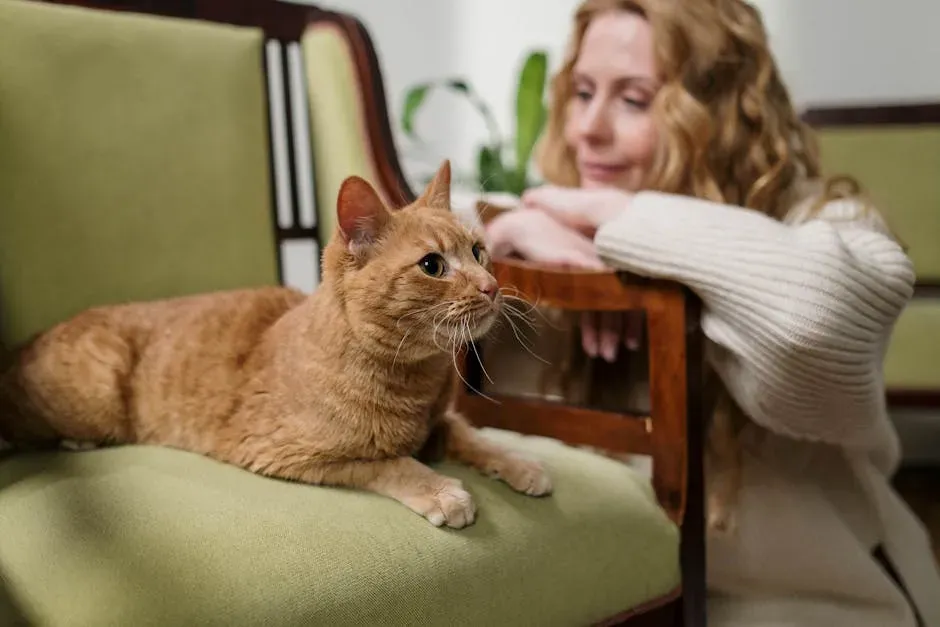
One moment you’re cooing “Who’s the prettiest little baby in the whole wide world?” and the next you’re answering your phone with a perfectly professional “Hello, this is Sarah speaking.” Your cat just watched you code-switch from infant mode to adult mode in under three seconds, and honestly, the whiplash alone must be impressive.
Recent research suggests that cats may be more attuned to human emotions than previously thought. Studies show that cats react to their owners’ visual and vocal signals and adjust their behavior based on human emotions. That means your cat genuinely notices the contrast. While cats may not understand humor as we do, many cats learn that certain behaviors get positive responses from their owners, leading them to repeat actions for attention or rewards. So your cat has quietly figured out that the baby voice usually precedes treats or petting, and they’ve simply filed away the rest of your vocal range as deeply, wonderfully bizarre.
Panicking When You Can’t Find Something They Knocked Over
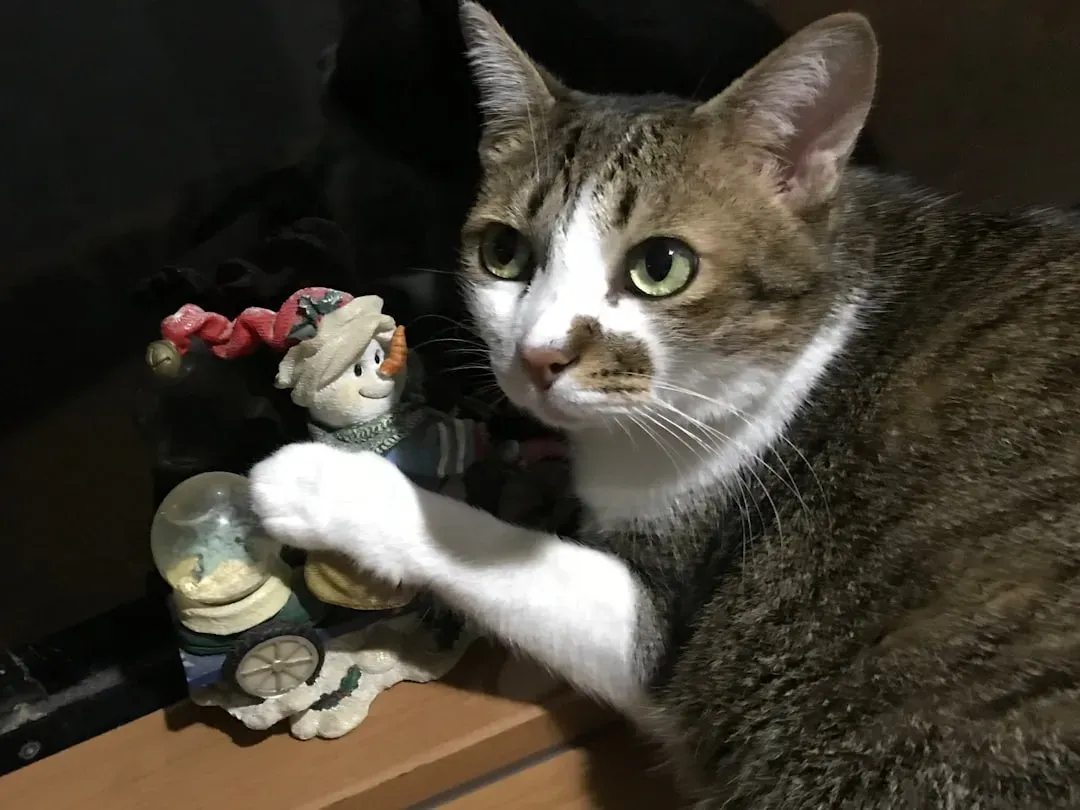
Your keys were on the counter. You are certain of this. You are also now fifteen minutes late and spiraling. Meanwhile, somewhere behind the couch, your keys are exactly where your cat deliberately batted them while maintaining direct eye contact with you this morning.
Maybe your cat likes to push your keys behind an end table to spice things up. Maybe they delicately tip flower vases off the kitchen table just to see what happens. This is not accidental chaos. Cats quickly learn that this behavior gets a reaction, making it an effective way to engage with their humans. So every frantic search you conduct is, from your cat’s perspective, a successful interaction they engineered from the start. You are not a victim of circumstance. You are the entertainment.
Loudly Sneezing or Hiccuping Multiple Times in a Row

A human sneezing is genuinely one of the strangest things a cat ever has to witness. You contort your entire face, produce a sudden explosive sound at maximum volume, and then sometimes do it again five more times without warning. There’s no equivalent in the animal kingdom, and your cat’s slow pivot to stare at you from across the room says it all.
Cats have sensitive hearing and are much smaller than humans, which means they can become startled around people who are too loud or make sudden noises. A sneeze hits all of those triggers at once: sudden, loud, and completely unpredictable. Cats have extremely unpredictable behavior that keeps owners entertained, from sudden bursts of energy to surprise acrobatics, and there is never a dull moment. The irony is that the creature famous for its own unpredictable behavior is watching you, the supposedly calm and rational human, randomly explode from the face. You’ve officially become their version of the zoomies.
Buying Expensive Gifts They Immediately Ignore
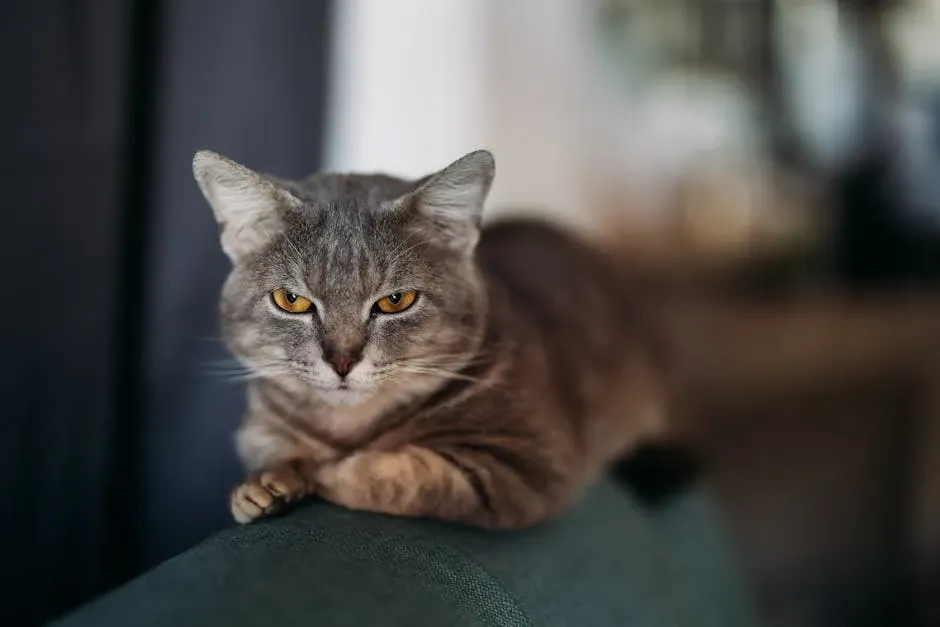
You researched it online. You read the reviews. You paid far too much for a motorized feather wand with three speed settings and a built-in timer. Your cat sniffed it once and walked away. They then spent forty-five minutes playing with the cardboard box it came in.
Cats are drawn to small spaces because they provide security and warmth. In the wild, enclosed spaces offer protection from predators. The amusing part comes from their “if I fits, I sits” mentality, where they attempt to squeeze into increasingly improbable spaces, seemingly defying the laws of physics. So you didn’t buy the wrong toy. You just accidentally bought the wrong part. Present your cat with a fluffy king-size mattress or an expensive luxury cat bed, and they may still opt to chill in a cardboard box destined for the recycling bin. Your cat chooses the smaller and less comfortable space because enclosed areas make them feel secure from all angles. Your wallet weeps. Your cat naps inside a shipping box. The universe is perfectly in order.
Having a Full Emotional Breakdown and Then Immediately Making a Snack

You’ve had a terrible day. You sat on the couch, had a solid five-minute cry, stared at the ceiling with profound existential heaviness, and then stood up and made yourself a bowl of cereal while humming an unrelated song. Your cat watched this entire arc without moving a single muscle.
Research suggests that cats can form strong emotional bonds with their owners and may even mirror their moods, contributing to more playful and entertaining interactions when their humans are in good spirits. Your cat is genuinely reading the room, every single time. Research shows that the depressive owner initiates fewer interactions with the cat, but when the cat approaches, the human accepts. The cat also changes its behavior in response to the human’s emotional state when in close proximity, vocalizing more frequently and rubbing more often on that person. So your cat wasn’t just watching you have a breakdown. They were actively adjusting their behavior to respond to you. Then you got up and made cereal, your emotional weather changed in an instant, and your cat was left having to recalibrate the entire situation. Honestly, from their perspective, humans must seem absolutely riveting.
Conclusion: The Joke’s on All of Us
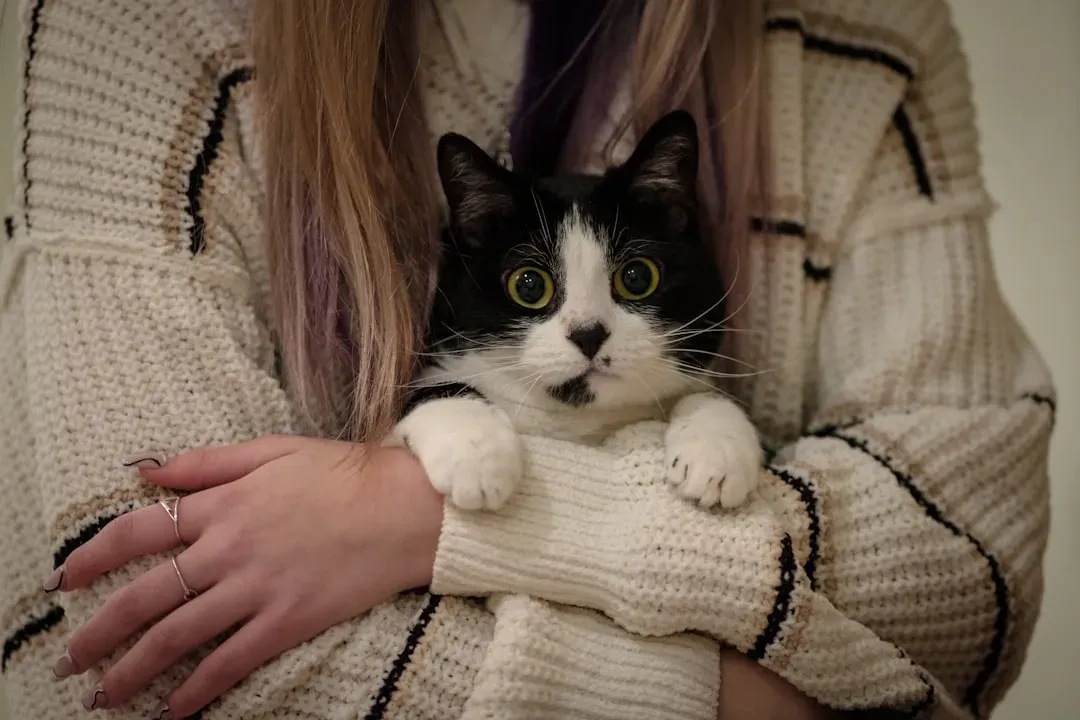
Here’s the beautiful truth at the heart of all of this. Your cat is not just tolerating your weirdness. They are observing it, cataloging it, and in their own quiet, inscrutable way, they’re entirely fascinated by it. Cats are endlessly entertaining with their quirky antics and mysterious ways. While some of their behaviors seem random, they usually have a logical reason behind them, driven by instinct and natural habits. Once you understand what’s really going on, their funny actions make a lot more sense.
While cats may not intentionally try to be comedians, their natural instincts, predatory behaviors, and unique way of interacting with their environment create moments of pure hilarity. Many of cats’ most amusing behaviors actually stem from their wild ancestry, as their predatory instincts, refined over millions of years, manifest in ways that appear comical in our modern homes. The same could honestly be said about us from their vantage point. We are large, loud, emotionally complicated creatures who buy expensive beds only to sleep in a corner of them, and your cat has a front-row seat to the whole show.
So the next time you catch your cat staring at you with that deeply unreadable expression, maybe just accept that you’re probably funnier than you think. What’s the most ridiculous thing your cat has ever caught you doing? Drop it in the comments.