You’re just walking to the kitchen, minding your business, maybe thinking about coffee, when suddenly a furry blur launches from behind the sofa and latches onto your ankle. Sound familiar? If you’ve ever shared your home with a cat, you almost certainly know this feeling. One second you’re living your calm, ordinary life, and the next, you’re a piece of prey.
Here’s the thing though: that little ninja ambush isn’t as random or mysterious as it feels. There are actual reasons behind it, rooted deep in biology, behavior, and sometimes even your cat’s feelings about you. If you’ve been puzzled, frustrated, or secretly amused by those surprise ankle attacks, you’re about to find out everything. Let’s dive in.
Your Ankles Look Exactly Like Prey to Your Cat

Cats are natural predators, and their instincts to hunt and capture prey are deeply ingrained in their behavior. Even the most pampered, well-fed domesticated cats still carry those instincts. Think of it this way: thousands of years of evolution don’t just disappear because you’ve been filling a food bowl twice a day.
Your moving ankles can trigger those hunting instincts without warning. When you walk by, your feet mimic the movements of small prey animals like mice or birds, making your ankles a tempting target for a quick pounce or bite. Honestly, from your cat’s perspective, you’re basically doing a perfect little mouse impression every time you shuffle across the floor.
The Prey Drive: Why Movement Is Irresistible
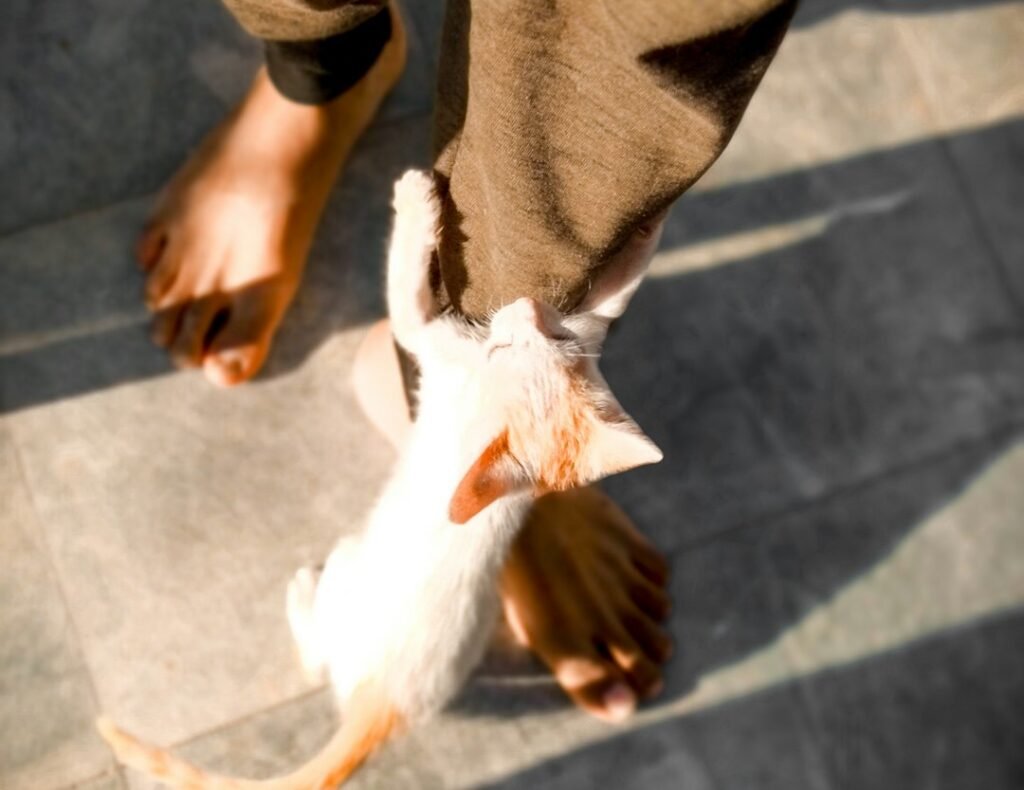
Your cat targets your ankles because they’re a moving target, and the prey drive is triggered by objects moving across or away from the cat’s visual field. It’s a deeply automatic response, almost like a switch flipping on the moment something darts past them.
When you walk past, your moving ankles mimic the scurrying motion of a rodent, triggering a dormant hunting instinct that overrides their domestic training. It’s not personal at all, though I know it feels personal when there are teeth in your leg. Your cat isn’t planning revenge. They’re just being, well, a cat.
Boredom: The Silent Culprit Behind Most Ankle Attacks
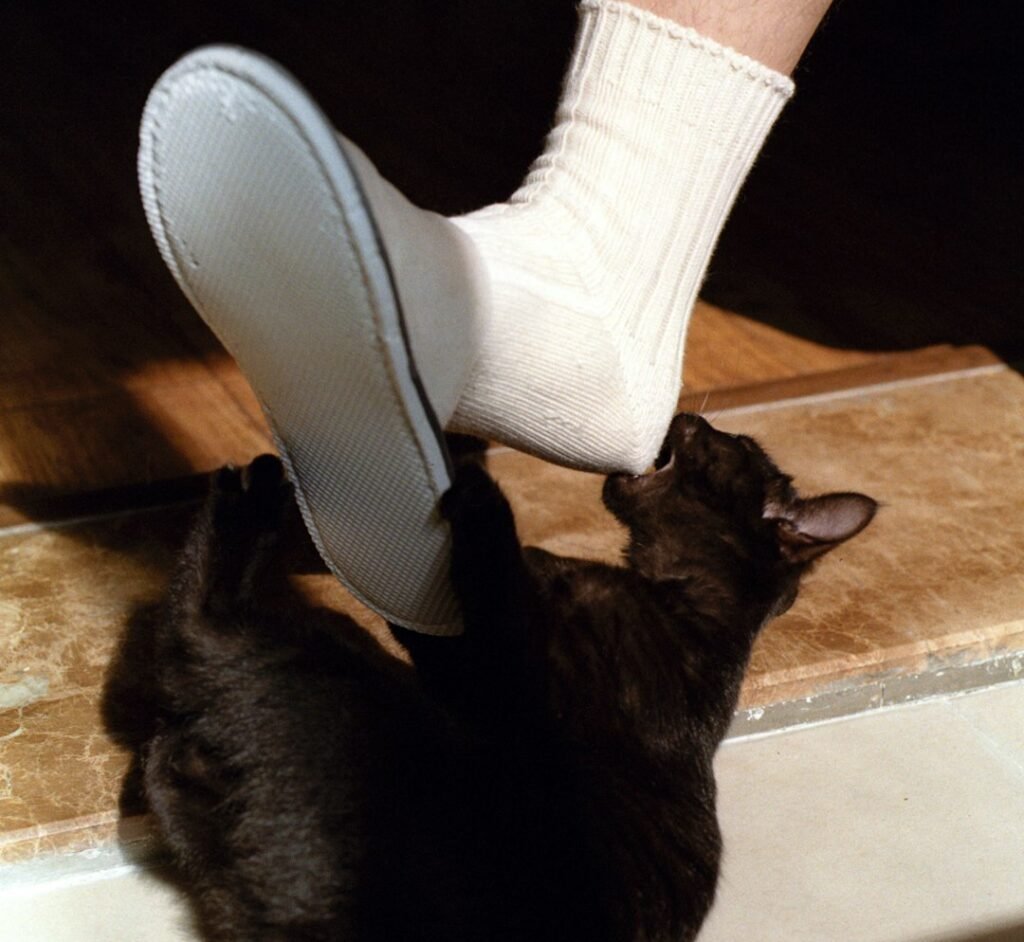
A bored cat is an inventive cat, and sometimes that invention involves targeting your ankles. If your cat isn’t getting enough mental and physical stimulation through play, exploration, or interaction, they’ll find their own ways to entertain themselves. Your ankles, moving predictably as you go about your day, become a convenient and engaging target.
If your cat isn’t getting adequate stimulation and playtime opportunities through interactive play therapy or adequate environmental enrichment, she’s going to take it upon herself to find a substitute. Unfortunately, that substitute is a painful one to the human family member. Think of your ankle as the victim of a scheduling failure. More playtime, fewer bite marks.
Play Aggression: When Fun Gets a Little Too Fierce
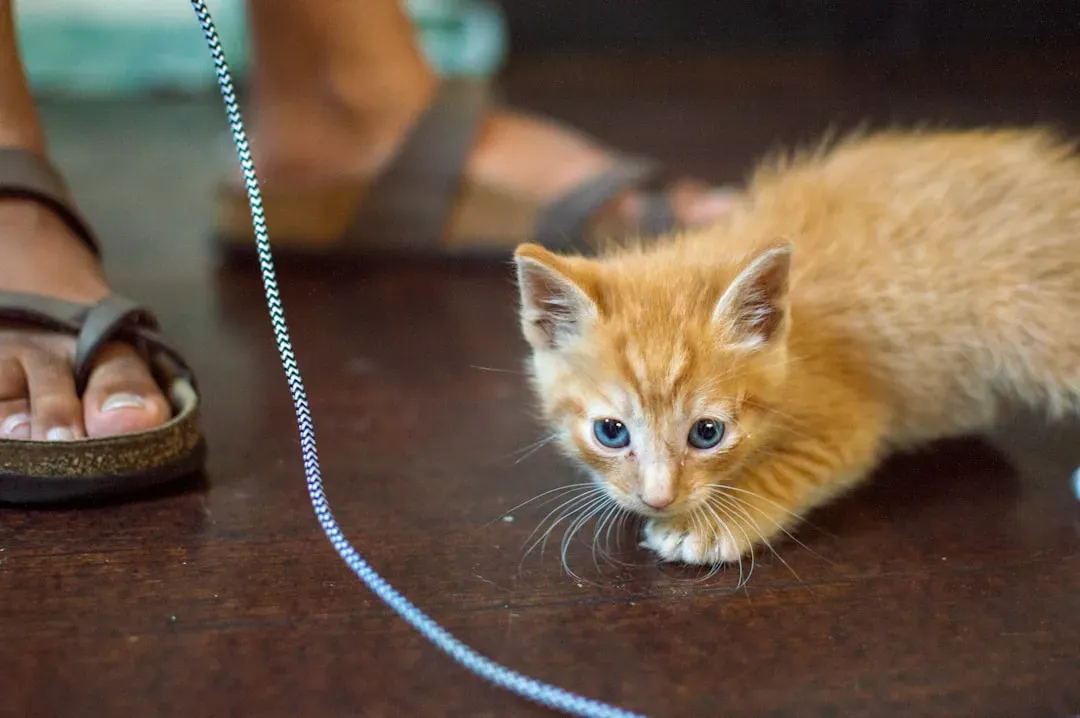
Cats who pounce and bite at ankles are usually just trying to play, albeit in an inappropriate way. Felines have a strong hunting instinct, and much of their play behavior is based on practicing their skills: chasing, pouncing, and biting. It’s essentially your cat running their daily training simulation, and your leg just volunteered as equipment.
Cats can go from chill to chaotic in just a few seconds. A simple walk across the room might spark excitement, leading to a surprise ankle attack. This happens when your cat gets overstimulated, especially during or after play. If you’ve ever noticed your cat with wide pupils and a twitchy tail just before pouncing, that’s your warning sign. They’re not being mean. They’re just fully switched on.
Attention Seeking: Yes, Your Cat Is Literally Demanding You Notice Them

Sometimes your cat’s ankle biting is a clear signal: “Pay attention to me!” You might be engrossed in a book, working on your laptop, or simply not engaging with them. Your cat, feeling ignored, might resort to biting your ankles to get you to acknowledge their presence. It’s a fairly effective, albeit annoying, method.
Cats quickly learn what gets a response from their favorite humans. If biting your ankle makes you stop, talk, move, or react, your cat may repeat the behavior because it works. Even negative reactions like yelping or scolding can reinforce the habit if your cat craves interaction. You might think your startled yelp is teaching them a lesson. You’d be wrong. You just rewarded them.
Kittens and Early Learning: When Bad Habits Are Born

Many adult cats that bite ankles learned the behavior when they were kittens. When kittens play with human hands and feet, they practice hunting behaviors without realizing those targets shouldn’t be attacked later in life. If those early habits weren’t redirected, the behavior can continue into adulthood.
Kittens raised alone often miss out on learning “bite inhibition.” Without a sibling to yelp when they bite too hard, they never learn that skin is fragile. It tends to happen more in single cat households or with kittens that weren’t habituated enough with their mother cats, so the mums never taught them boundaries. The earlier you redirect this behavior, the easier it becomes to correct it.
Separation Anxiety and Emotional Need

Some cats struggle with the fear of being alone. When you walk away, they might panic and bite your ankles as a way to keep you nearby. This behavior is more common in cats that follow their person from room to room. If your cat trails you like a tiny shadow all day, those ankle bites might be less about hunting and more about an emotional plea not to leave.
Walking away from your cat may seem harmless, but to them, it can feel like a game or even a goodbye they did not approve of. That quick movement can set off all kinds of reactions, from playful pounces to upset behavior. It’s actually a little heartbreaking when you think about it. Still, that doesn’t make the teeth in your Achilles tendon feel any better.
Stress and Environmental Disruption

Stress affects cats more than many people realize. Changes in routine, new pets, visitors, or environmental disruptions can increase anxiety, which may surface as ankle biting. Cats sometimes use biting as a way to release stress or regain a sense of control. If ankle biting appears suddenly or increases during times of change, stress could be a contributing factor.
If your cat exhibits other signs of stress such as litter box avoidance, excessive vocalization, and hiding, ankle biting may be one more way their anxiety is showing itself. If you’re hosting a party, or your house is full of people and your attention is diverted at a time when they normally expect attention, your cat will feel confused and anxious. It’s hard to say for sure exactly how much stress plays a role in every individual cat, but the connection is real and documented.
How to Actually Stop the Ankle Biting

In order to stop the ankle attacks, you need to provide your cat with a better option, and that comes in the form of playtime opportunities with appropriate toys. Setting up a schedule of interactive play therapy on a daily basis is the first step. Use a fishing pole-type toy so you can mimic the movements of prey. Give them a real hunting experience, and they’ll be far less interested in your legs.
One thing you shouldn’t do is run or pull away, because that will often only result in the cat biting down harder. Prey moves away, so don’t act like prey when you’re bitten. Instead, confuse your cat by gently pushing toward her. This will often cause her to release her grasp because no self-respecting prey willingly heads toward the predator. It sounds ridiculous, I know, but it genuinely works. A little bravery goes a long way.
Conclusion: Your Cat Is Not Your Enemy

Let’s be real: that furry ankle-biter of yours is not acting out of spite or some elaborate vendetta. Whether it’s the morning munchies, a midnight hunt under the blankets, or an ankle ambush, the root cause is usually a mix of hunting instinct and a desire for interaction. Your cat isn’t trying to hurt you; they are just trying to be a cat in a house where the only “prey” available is your big toe.
Understanding the real reason behind the behavior is the first and most important step. Redirecting your cat’s hunting instincts through frequent play is one of the most effective methods in helping to reduce or eliminate hunting behaviors, and play provides mental stimulation while helping to satisfy your cat’s hunting desires. A stimulated, engaged cat is a cat that leaves your ankles alone.
Your cat is communicating with you the only way they know how. Once you start listening, everything changes. So the next time those tiny teeth find your ankle, don’t shout and don’t sprint away. Grab a wand toy instead, and remember: you’re not being attacked. You’re just living with a tiny, drama-loving predator who thinks the world of you. What do you think about that? Drop your thoughts or your own ankle-biting story in the comments.