Jasmine faced a common dilemma when she brought home a tiny 10-week-old kitten named Teddy. Experts advised her to keep the newcomer separated from her 10-year-old resident cat, Joey, for at least two weeks to allow gradual introductions. Yet Joey, still mourning the loss of his brother Garfield from 2019, showed immediate interest and warmth toward the little one. Their quick connection highlighted how individual personalities can sometimes override standard protocols.
Joey’s Longing for Company
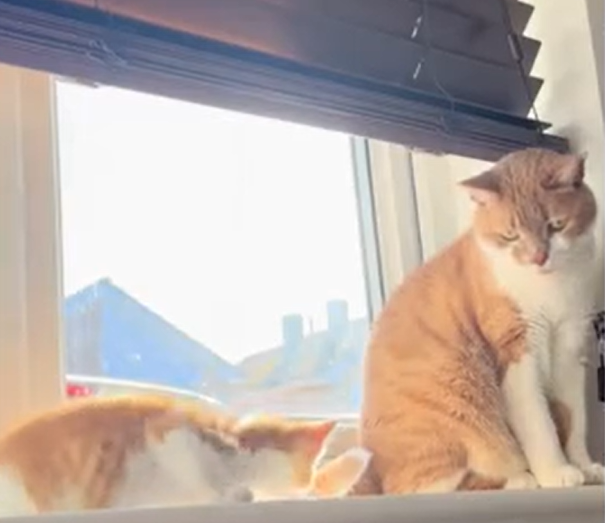
Joey had lived alone since Garfield’s passing five years earlier. That solitude weighed heavily on the senior cat, who often sought affection from Jasmine. When she decided to adopt Teddy, she prepared for a cautious approach based on veterinary recommendations. Those guidelines aim to prevent stress, aggression, or territorial disputes between cats.
Instead of hissing or swatting, Joey approached Teddy with curiosity. He sniffed the kitten gently and soon began grooming him. Jasmine watched in surprise as the older cat positioned himself protectively near the newcomer. This rapid acceptance suggested Joey craved the companionship he had lost.
Defying the Two-Week Separation Rule
Standard advice from animal welfare organizations emphasizes slow integration. Owners typically confine the new cat to one room, exchanging scents via blankets before supervised meetings. This process builds familiarity without overwhelming either animal. Rushing it risks fights or lasting fear.
Joey skipped those steps entirely. Within moments of their first encounter, he lay down beside Teddy, inviting play. The kitten responded with playful pounces, and Joey tolerated them patiently. Jasmine noted no signs of tension, allowing the pair unrestricted access to the home from day one.
Signs of a Successful Bond
The duo displayed classic indicators of feline friendship right away. Joey shared his food bowl and sleeping spots without hesitation. Teddy followed the elder cat everywhere, mimicking his movements. Such behaviors signal trust and mutual comfort in multi-cat households.
Veterinarians explain that while guidelines protect most cats, exceptions occur with sociable personalities. Joey’s history of living with a sibling likely prepared him for quick adaptation. Their interactions grew more synchronized over days, with mutual grooming and synchronized napping.
- Gentle sniffing and rubbing as initial greetings.
- Shared resting areas without pushing away.
- Playful chasing that ends in calm cuddles.
- Mutual grooming sessions.
- Relaxed body language, like exposed bellies.
Lessons for Cat Owners
Not every introduction unfolds so smoothly. Many households experience setbacks, requiring patience and sometimes professional intervention. Jasmine’s experience serves as a reminder to monitor body language closely. Positive cues like purring and slow blinks encourage progression, while stiff tails or flattened ears demand separation.
Experts stress preparation regardless of outcomes. Providing multiple resources – litter boxes, scratching posts, and beds – reduces competition. Pheromone diffusers can ease anxiety in trickier cases. Joey and Teddy’s story underscores the rewards of successful pairings.
Key Takeaways
- Monitor for stress signals during introductions.
- Respect individual cat temperaments over rigid timelines.
- Grieving pets may seek bonds faster than expected.
This heartwarming tale of Joey and Teddy illustrates the unpredictable joy of pet adoptions. While rules offer safety nets, love often finds its own path. What experiences have you had with multi-cat homes? Share in the comments below.
Kristina is a young writer from India. An arts graduate and an avid content creator, Kristina is passionate about animals and wildlife. She enjoys exploring topics related to pet care, animal behavior, conservation, and nature, combining thorough research with engaging storytelling.