You’ve probably watched two cats meet and thought, “What on earth is happening right now?” One stares. The other freezes. A tail goes up. There’s a slow, deliberate blink. Then maybe a nose touch, followed by what appears to be a very intense sniffing session that would make even the most curious human blush. It looks chaotic, but here’s the thing – every single move is intentional, packed with meaning, and governed by an entire set of unspoken social rules.
Cats are far more socially sophisticated than the “lone, indifferent predator” stereotype gives them credit for. Their greeting rituals are a rich, layered form of communication built on scent, posture, eye contact, and timing. If you share your home with more than one cat, or you’ve ever introduced two cats and watched things either flourish or combust, you know just how real these rules are. So let’s dive into the fascinating world of feline hello’s – and find out what’s really going on.
The Tail-Up Signal: The First Hello You Should Notice
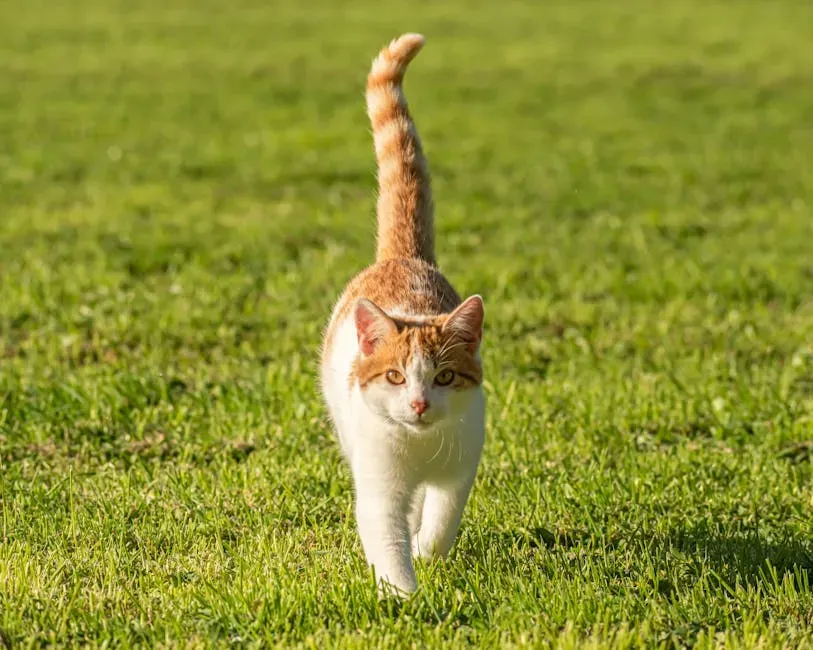
Before a single nose is touched or a paw is extended, the tail already says everything. A tail-up greeting is a behavior where a cat approaches another cat with their tail held high – a sign of confidence and friendship, showing that the cat is not afraid and is ready to interact. Think of it like a human walking into a room with their chin up and a relaxed smile. It immediately signals, “I come in peace.”
A sign that your cat is feeling friendly toward another includes holding the tail high in the air with a tall, confident posture, and the tip of the tail may even crook forward as the cat approaches another cat it likes. That tiny curl at the very tip? That’s practically the feline equivalent of a warm wave. Pay close attention to it the next time your cats meet in the hallway.
The Nose-to-Nose Touch: Feline Equivalent of a Handshake
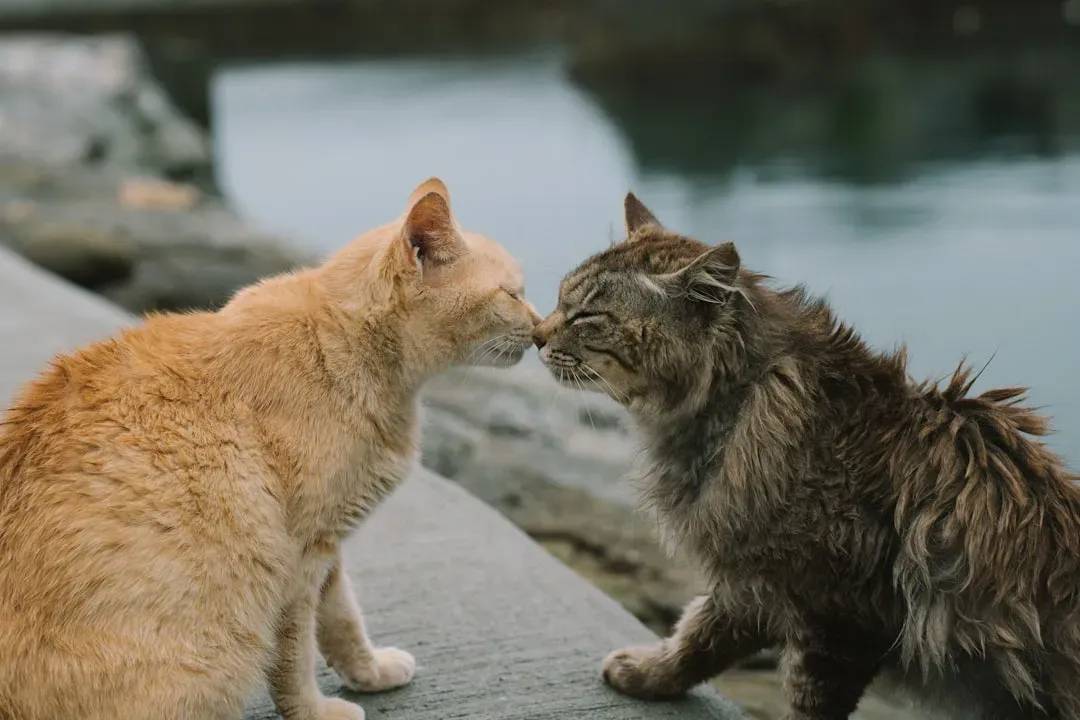
Nose touching is a friendly greeting that allows scent exchange between two cats so that they can recognize one another, and in multi-cat households, nose touching can reinforce social bonds. Honestly, it’s more information-dense than any human handshake could ever be. In just a second, a cat knows where the other has been, what they ate, and even something about their current emotional state.
The vomeronasal organ, also known as Jacobson’s organ, located in the roof of the cat’s mouth, plays a key role in this scent analysis, and by touching noses, cats can transfer scent molecules to this organ, allowing them to gain a more detailed understanding of the information contained within the scent. It’s basically a biological data transfer. Two cats can do in two seconds what a human would need a full conversation to accomplish. Remarkable, right?
The Slow Blink: Trust Delivered in Silence
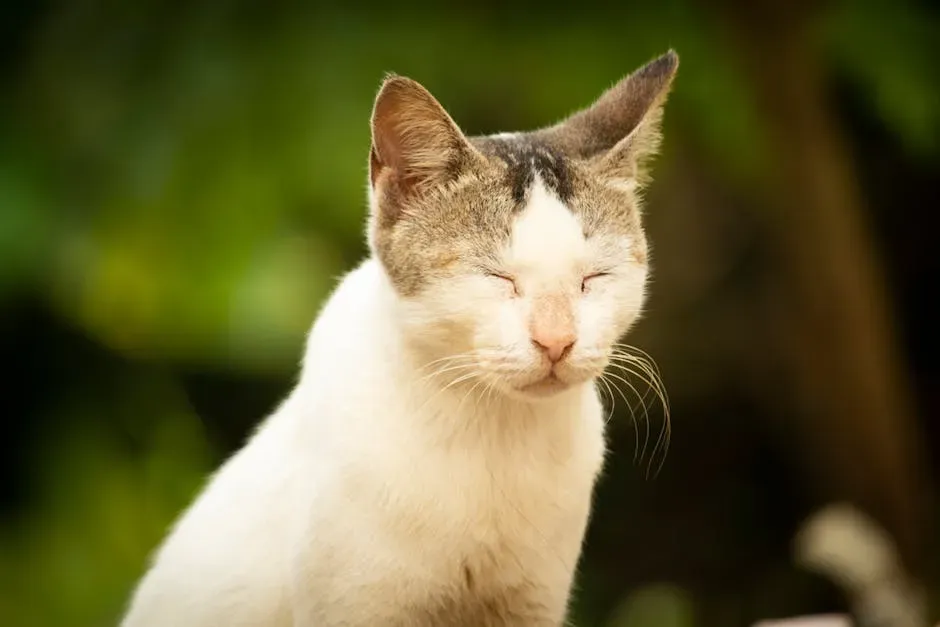
You might have read about the slow blink before. Maybe you’ve even tried it with your own cat. But between cats themselves, this gesture carries enormous weight. Direct eye contact can be seen as a challenge or a threat, so cats often engage in what’s known as a “slow blink” – a slow, deliberate closing and opening of the eyes that is a friendly gesture signaling trust. It’s like saying, “I’m so relaxed around you, I’m willing to lower my guard completely.”
Direct eye contact can sometimes signal a territorial challenge in cats, but a cat who slowly blinks or lowers their eyelids is showing trust and affection, often referred to as a “cat kiss” – a way for cats to communicate safety and comfort with one another. If you ever catch two of your cats slow-blinking at each other from across the room, congratulations. You’ve got a genuine friendship on your hands.
Head Bunting and Cheek Rubbing: Marking You as Family
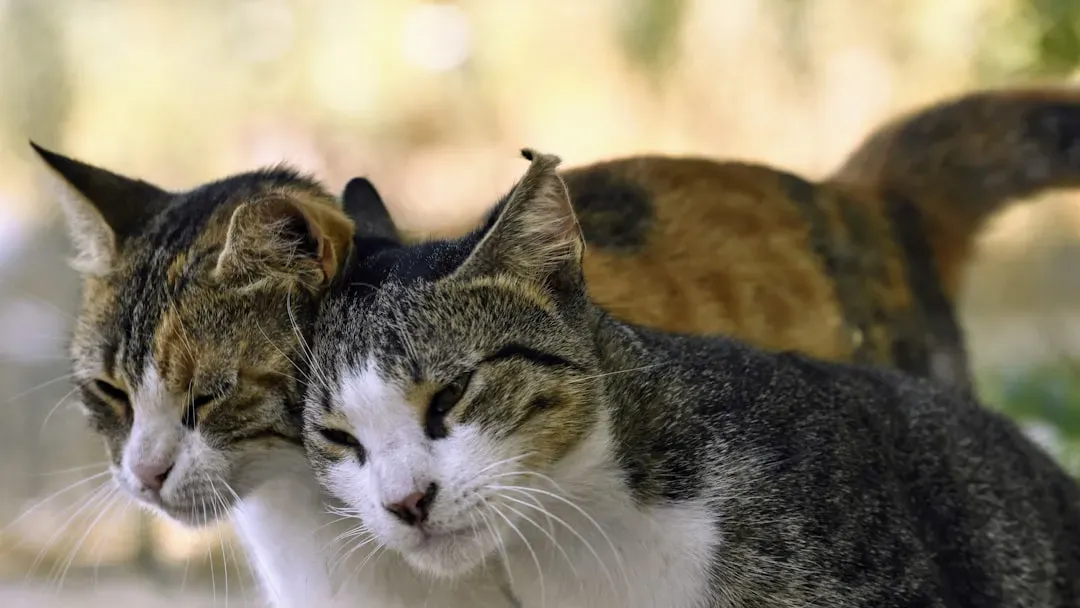
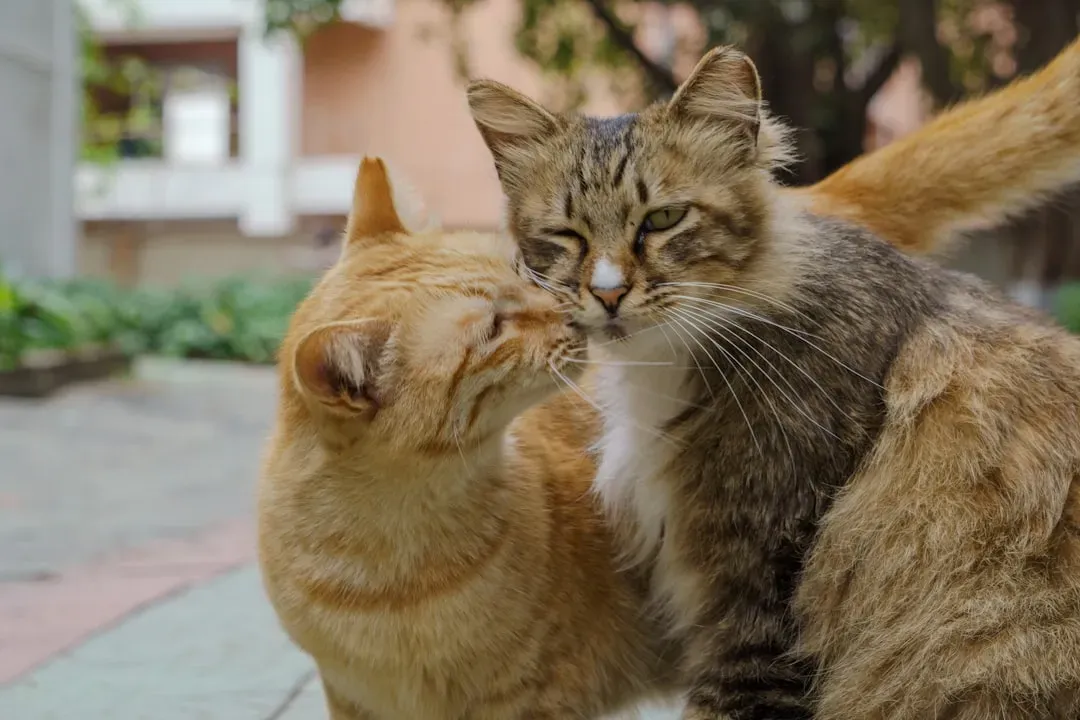
Cats sometimes “head-bump” humans or other cats with the front part of the head – an action referred to as “bunting” – and this communication might have an olfactory component as there are scent glands in this area of the body. When one cat buntings another, it’s not just affection. It’s a chemical declaration: “You belong to my world.”
For cats with a closer bond, they may continue the greeting by rubbing heads, foreheads, cheeks, and chins, as a cat’s cheeks and chin have tiny scent glands containing pheromones they use to mark territory, and when cats rub their faces on objects, humans, or other cats, it’s a sign of acceptance. Think of it as adding someone to your contact list – only the list is written entirely in scent and can’t be deleted without a very awkward re-introduction.
The Butt Sniff: Not Rude, Just Science
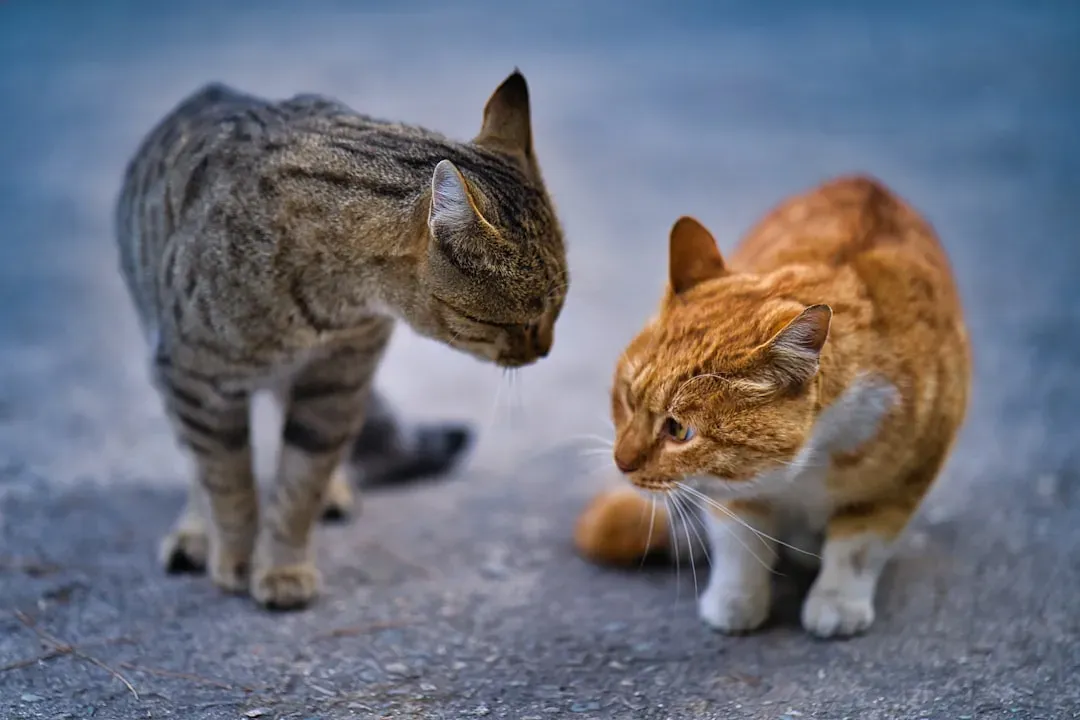
Let’s be real – this one always catches people off guard. Two cats meet, do the nose touch, and then one of them pivots and presents their backside. The other leans in for a sniff. It looks bizarre. But from a feline perspective, it’s perfectly logical. Cats greet each other by touching their noses and rubbing against each other, exchanging scents to learn more about each other and often ending with sniffing under each other’s tails.
Pheromones provide information that other felines can use to learn about cats they encounter, including their gender, health status, and even if they’re in a good mood, and dominant cats tend to make the first move regarding the butt-sniffing part – while more submissive cats have a few handy tricks for fending off over-enthusiastic sniffing, often refusing to participate by taking a seat. I know it sounds crazy, but that little sit-down move is actually a clever piece of social maneuvering. Submissive cats literally choose not to share their full profile. Smart.
Allogrooming: The Ultimate Badge of Friendship
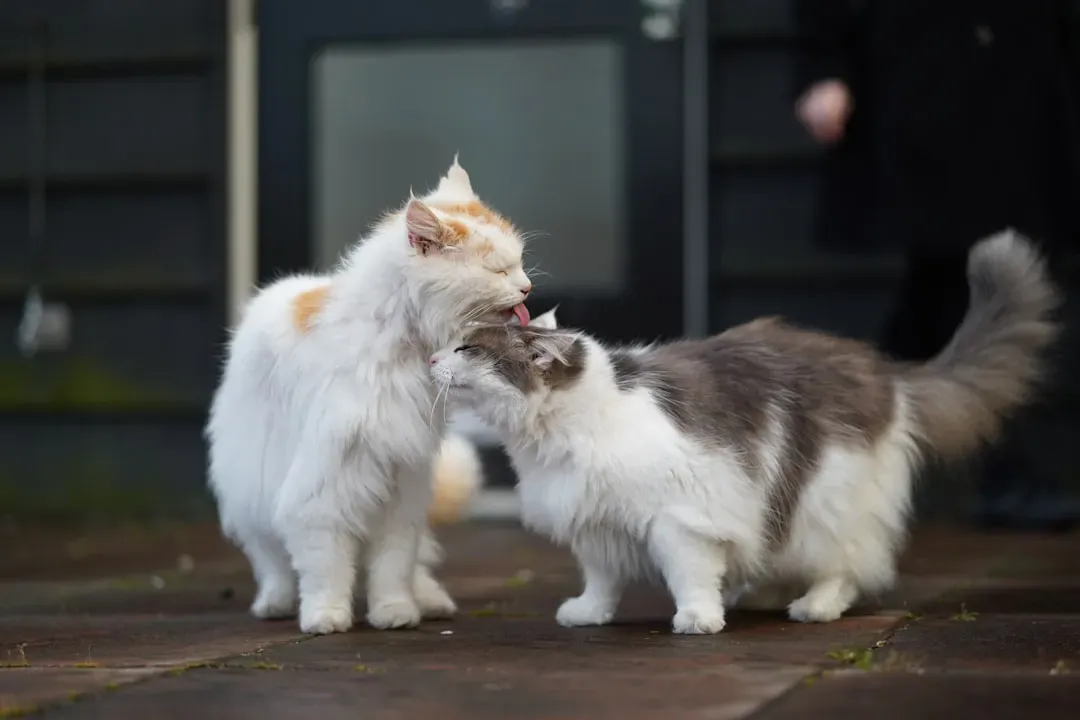
If nose touching is a handshake and head bunting is adding someone to your inner circle, then mutual grooming – called allogrooming – is inviting them to move in. Cats often groom each other as a way to establish and strengthen social bonds, and this behavior, known as allogrooming, is a sign of affection and trust – when cats groom each other, they are not just cleaning but also sharing scents, which helps create a unified group smell that fosters a sense of community and reduces aggression.
Studies in cat behavior show that most often a higher-ranking cat grooms a less dominant cat, commonly around the head, face, and neck – which are vulnerable areas and also targets for aggression during conflict, suggesting that grooming “down” the ranks may be a method to show dominance without causing harm. So that sweet grooming scene between your two cats? It might be a loving bond – or it might be a gentle power move. Possibly both at the same time.
Scent Pheromones: The Invisible Language Running the Show
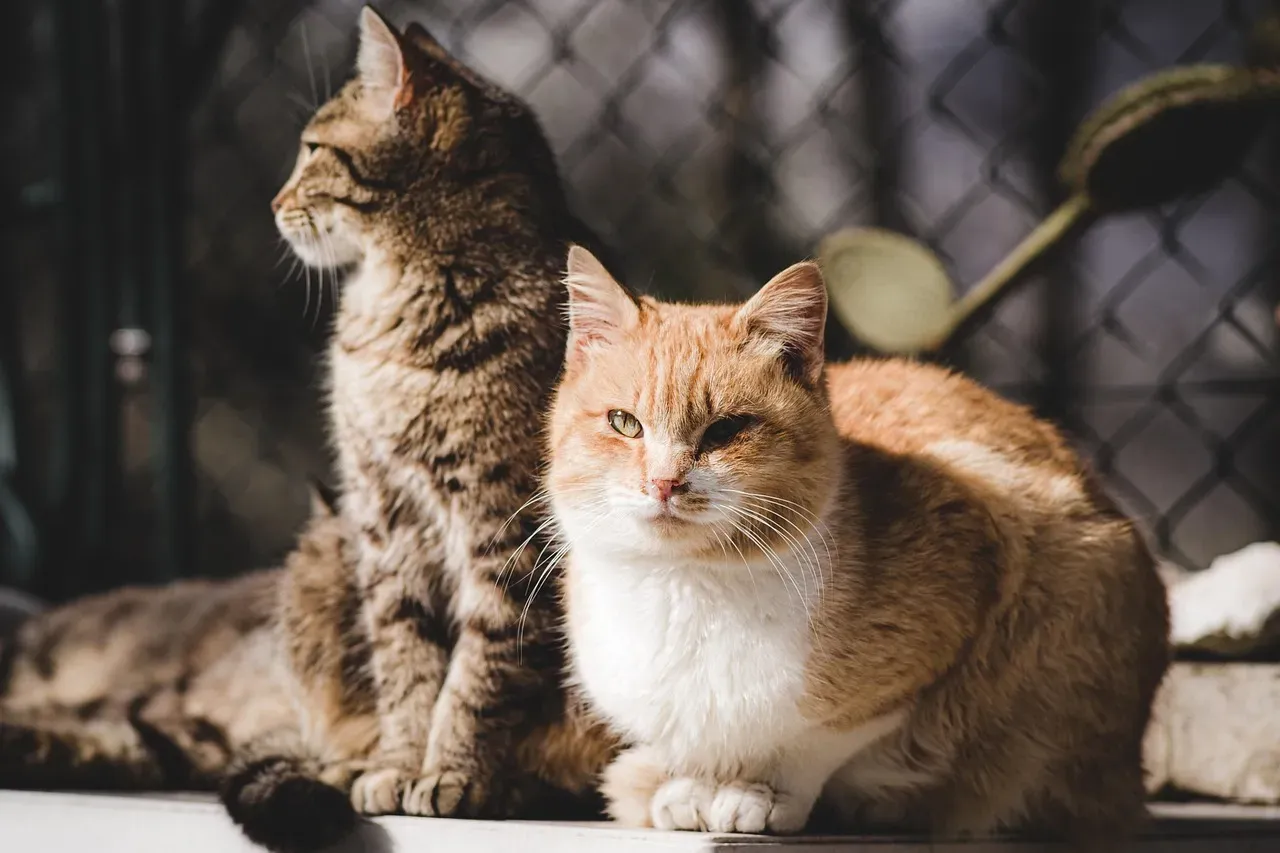
Underneath every visible greeting behavior is an invisible chemical conversation happening in real time. Unlike humans, who rely primarily on verbal and visual cues, cats use scent as a fundamental part of their social interactions, and a cat’s sense of smell is far more powerful, with about 200 million scent receptors in the nose compared to the mere 5 million humans have – a heightened ability that allows cats to detect and interpret an incredible range of odors, making scent one of their primary means of communication.
The pheromone fraction known as F4 is important for social relationships within groups of cats: cats that get on will rub against each other (called allo-rubbing) and also allo-rub the same places, thought to create a “group scent,” while tail-wrapping is also thought to maintain this group scent and hence social cohesion. Essentially, when cats greet each other and exchange scents, they’re literally building a shared identity. You’re part of the group. Your smell proves it.
Body Language and Posture: Reading the Full Picture
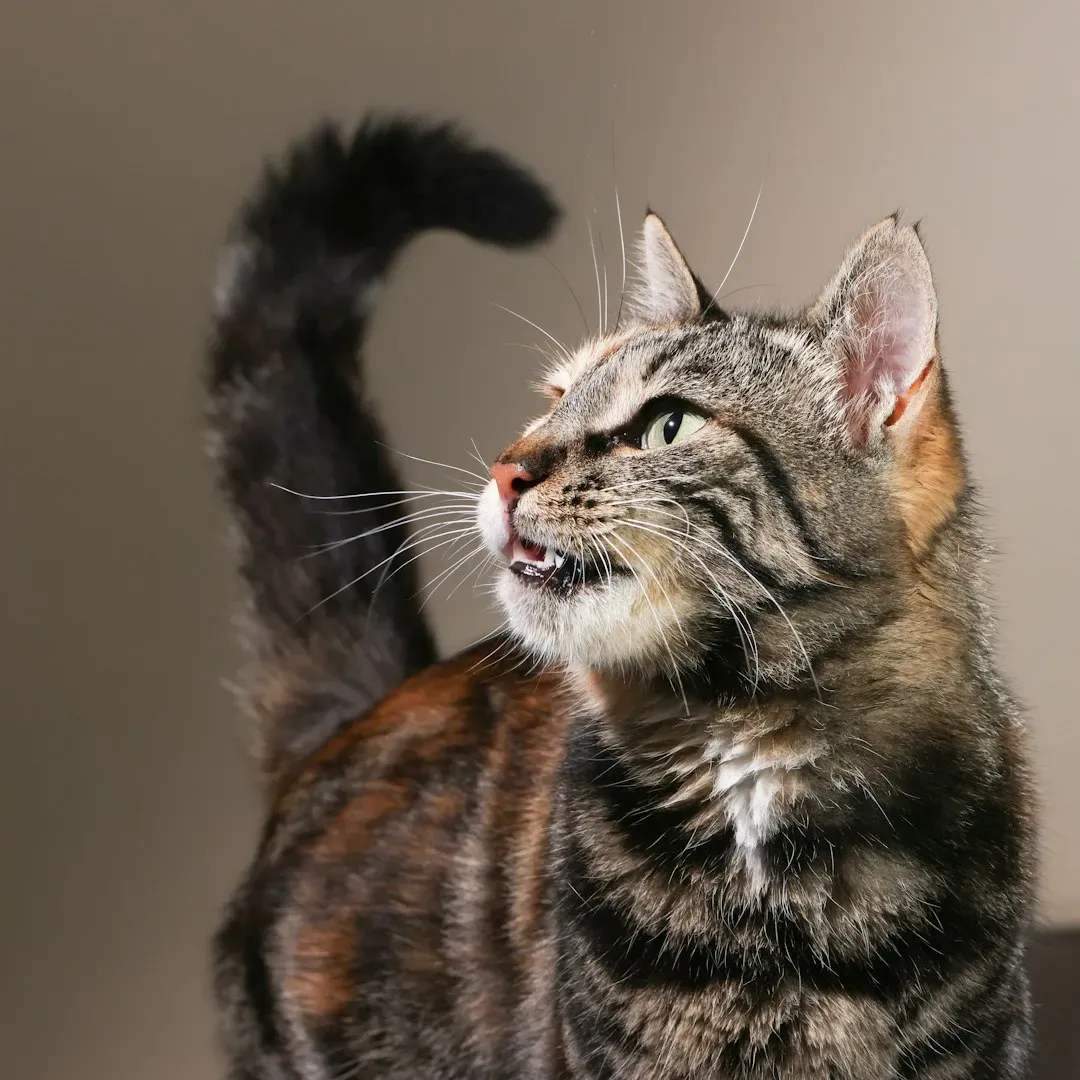
A greeting doesn’t happen in isolation. Cats use subtle body language cues to communicate during greetings and let each other know how they feel, with their ears, tails, eyes, and whiskers being key to the way they communicate – and confident or content cats hold their tails up high and point their ears forward. Miss one of these signals and you might completely misread what’s actually going on between two cats.
Fearful cats may flatten their ears into “airplane ears” and hunch down, tucking their limbs into a loaf position in order to appear smaller and protect their internal organs, and may hiss or growl as well as thwack their tail or fluff up their fur if they are particularly upset. It’s worth paying attention to the whole picture when your cats interact. A wagging tail paired with flat ears tells a very different story than a high tail and forward ears. Context is everything.
When Greetings Go Wrong: Recognizing the Red Flags
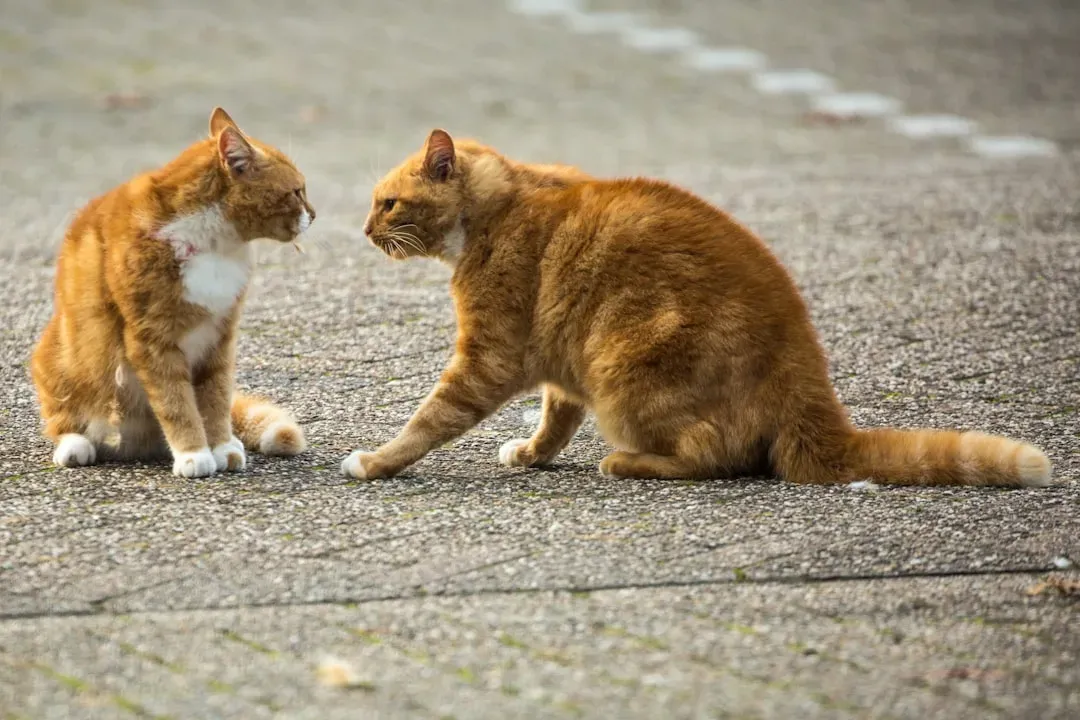
Not every cat-to-cat meeting ends in a lovely nose touch and a grooming session. Sometimes greetings deteriorate fast, and it’s important to recognize the warning signs early. If a cat is feeling uncertain or uncomfortable toward another feline, it may crouch down, tuck its tail along its body, and pause to observe the other cat – and if it feels threatened, its body may show signs of aggression, including lashing its tail from side to side, its back and tail arched with fur standing on end.
Body blocking occurs when cats position themselves to prevent other cats from moving or accessing a resource or space, such as food or a resting spot – this can be very subtle and can even look like the cat is simply resting, but body blocking can be accompanied by a stare-down, which indicates tension and conflict between the cats. If you ever spot one cat casually “sitting” in a doorway while the other cat hovers nearby looking stressed, that’s not coincidental lounging. That’s a power play. A silent, calculated one.
Conclusion: A Secret Language Worth Learning
There is a whole world of communication happening between your cats every single day – most of it invisible to the untrained eye. Once you start noticing the tail position, the slow blink, the careful approach, the nose touch, and the occasional strategic butt-sit, you’ll never look at your cats’ interactions the same way again. It’s honestly one of the most sophisticated social systems in the animal kingdom, packed into creatures that most people still call aloof or antisocial.
The beauty of it all is that you can participate. The main takeaway is that a cat’s body language and behaviors should be looked at as part of one big picture, and by using the context of the entire situation, trying to see things from the cat’s point of view, and looking for subtle cues in body language, you’ll have an excellent chance at understanding your feline friends. So the next time you see two cats doing that silent, slow-motion greeting dance in your living room, take a moment to watch closely. They’re not being weird. They’re having a full conversation. What would you say if you could translate it?