You’ve probably seen it happen at least once. Your cat freezes mid-step, fixes a laser-like stare on a tiny clump of fur and dust rolling across the floor, and launches into a full-blown ambush. It looks almost absurd – a perfectly fed, pampered house cat stalking household debris like a lion on the savanna. Yet something genuinely important is happening in that moment.
This behavior isn’t quirky or random. It’s a window into a biology that hasn’t changed much in thousands of years, regardless of how soft the cat bed or reliable the food bowl has become. What looks like a silly game is actually a sophisticated predatory system firing on all cylinders.
Your Cat Is, at Heart, a Born Predator
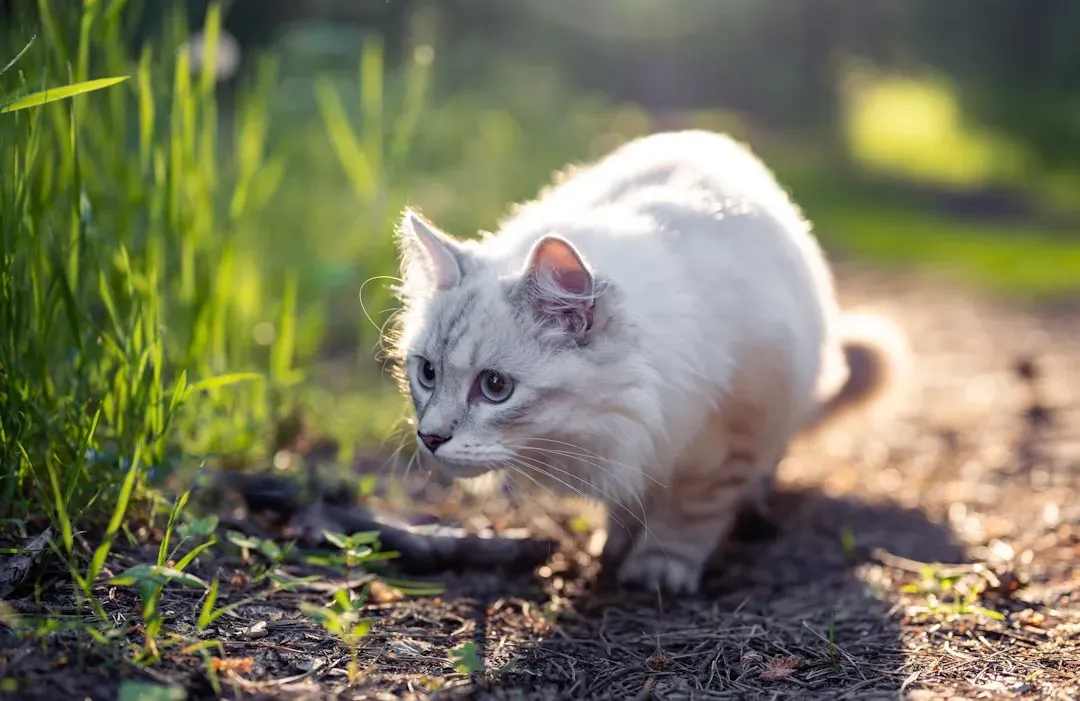
The domestic cat is a predatory species – one that hunts for food, and, much like its wild ancestors, does so as a solitary hunter. That solitary nature is a key distinction. Cats didn’t evolve in packs that could share the labor of a hunt. They evolved to rely entirely on their own speed, stealth, and precision.
Until quite recently, cats were mainly kept to control rodent populations rather than as pets, and during that time only the best hunters survived and reproduced, meaning today’s pet cats descended from the most adept hunters. There has been very little selective breeding of cats since, so their instinctive need to hunt remains strong. When your cat eyes a dust bunny skidding across the kitchen floor, it’s drawing on a lineage of top-tier predators – not just playing around.
The Prey Drive That Never Switches Off
Even if your cat is well-fed, her prey drive isn’t going anywhere – it’s an instinct. She may not be hunting actual prey, but you may still find her catching bugs and dust bunnies around the house, or pouncing on her toy mouse. Hunger has very little to do with it. The drive to hunt exists independently of whether your cat’s bowl is full or empty.
Wild and feral cats don’t wait to hunt until they’re hungry – that approach would risk not having enough energy to catch prey and, ultimately, starving. Instead, they take a more opportunistic approach: if they see prey within reach, they’ll try to catch it regardless of hunger. As a result, your well-fed house cat still has the instinct to hunt. A dust bunny drifting across the floor in a slight draft? That’s close enough to prey movement to pull the trigger.
Why Small Moving Objects Are So Hard to Resist
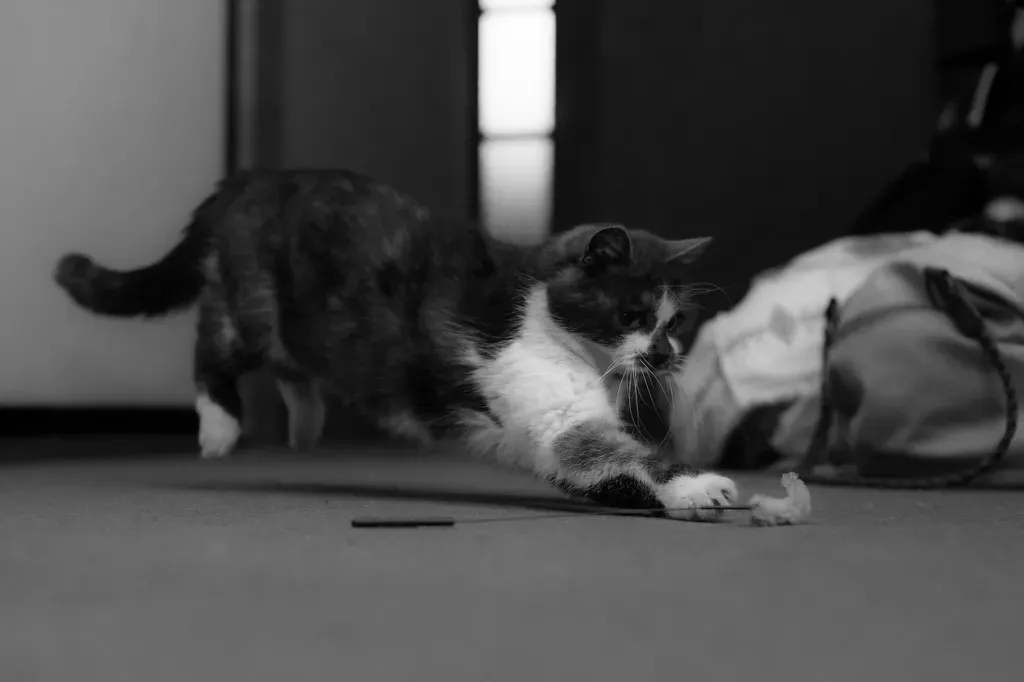
The primary reason cats are drawn to small, moving objects lies in their predatory instincts. Cats are solitary hunters in the wild, relying on keen senses to detect and capture prey. This instinctual behavior is deeply ingrained, and even though domestic cats do not need to hunt for survival, the instinct persists. When a cat sees a small, moving object, it mimics the stimuli of potential prey, triggering their innate urge to stalk, pounce, and capture.
Research has confirmed that toy size, similarity to prey, and novelty are all predictors of a cat’s play response. When cats were presented with toys of different sizes, they tended to prefer smaller toys similar in size to a mouse. A dust bunny – small, light, unpredictably mobile – checks nearly every box that a cat’s brain registers as worth chasing.
The Brain Chemistry Behind Every Pounce
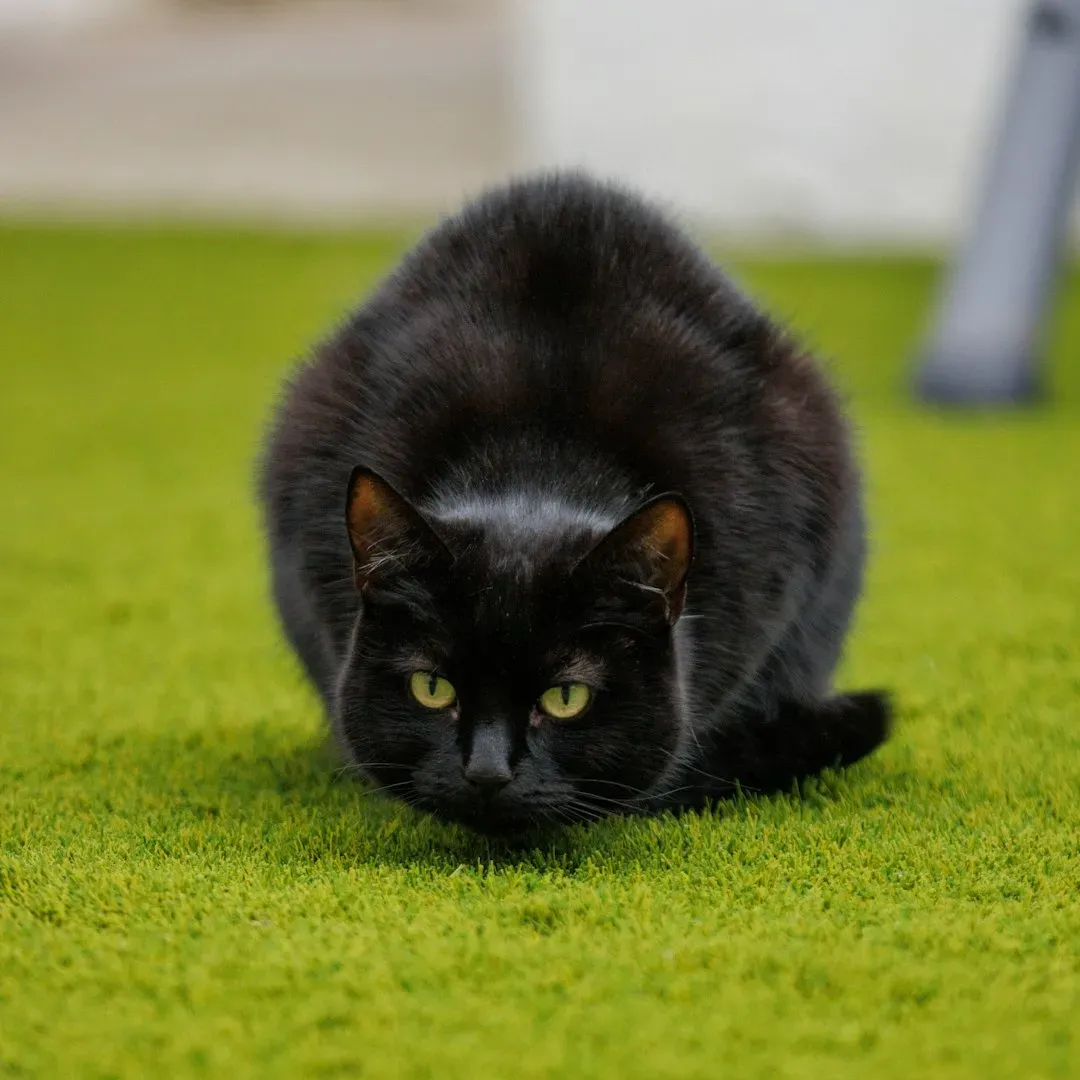
Hunting is hardwired into a cat’s brain. Studies show that the feline brain’s reward system lights up when cats engage in predatory behaviors, releasing dopamine that reinforces the behavior. This instinct persists even in well-fed domestic cats, which is why your cat might pounce on a feather toy despite a full bowl of kibble. Dopamine doesn’t just feel good – it compels repetition.
Cats like being in hunting mode. Dopamine is released in a cat’s brain when she is hunting, creating a feeling of eager anticipation. This feeling of eager anticipation makes it less likely for her to feel bored, anxious, or depressed. So when your cat hunts a dust bunny, she’s not just burning off energy – she’s actively regulating her own emotional state through a biological feedback loop.
The Predatory Sequence: Stalk, Chase, Pounce, Catch
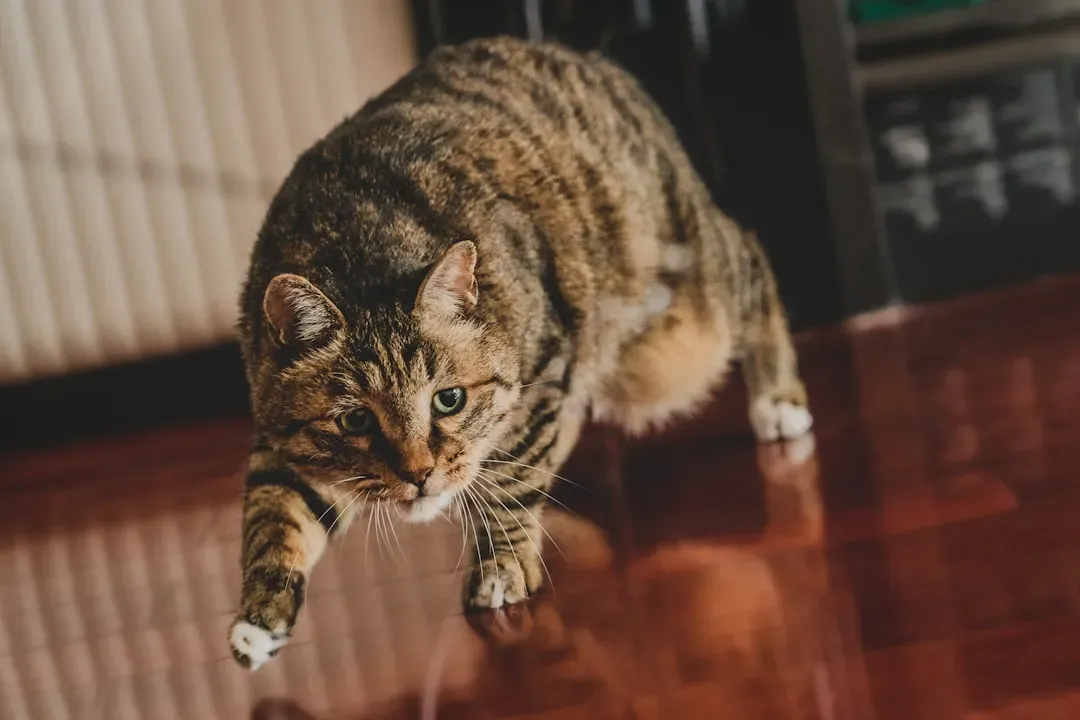
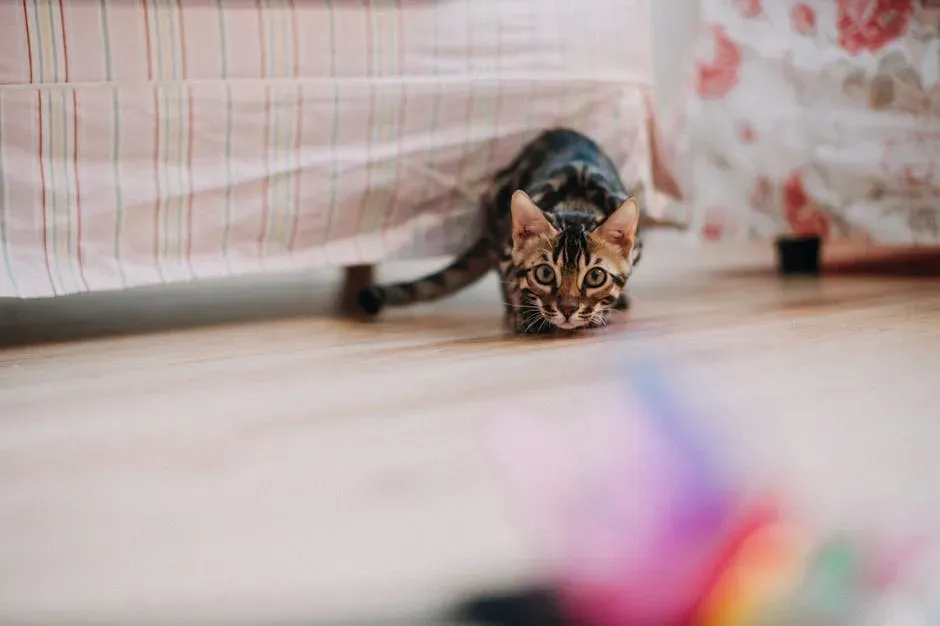
From a neurological perspective, cat play closely follows the predatory sequence hardwired into their brains: stalk, chase, pounce, catch, kill – or, in a domestic setting, bat around a toy. Engaging in this full sequence is not only satisfying for cats; it completes a biological loop. When your cat creeps low across the floor toward a dust bunny, every part of that movement maps directly onto the ancestral hunt.
Interrupting the cycle too soon – for example, stopping play abruptly before a “capture” – can actually leave a cat agitated or overstimulated. This is why you’ll sometimes notice your cat seeming frustrated after a half-hearted chase. The sequence needs to complete itself. A successful “kill,” even if it’s just pinning a wad of lint, provides a genuine sense of resolution.
The Extraordinary Senses That Make It All Possible
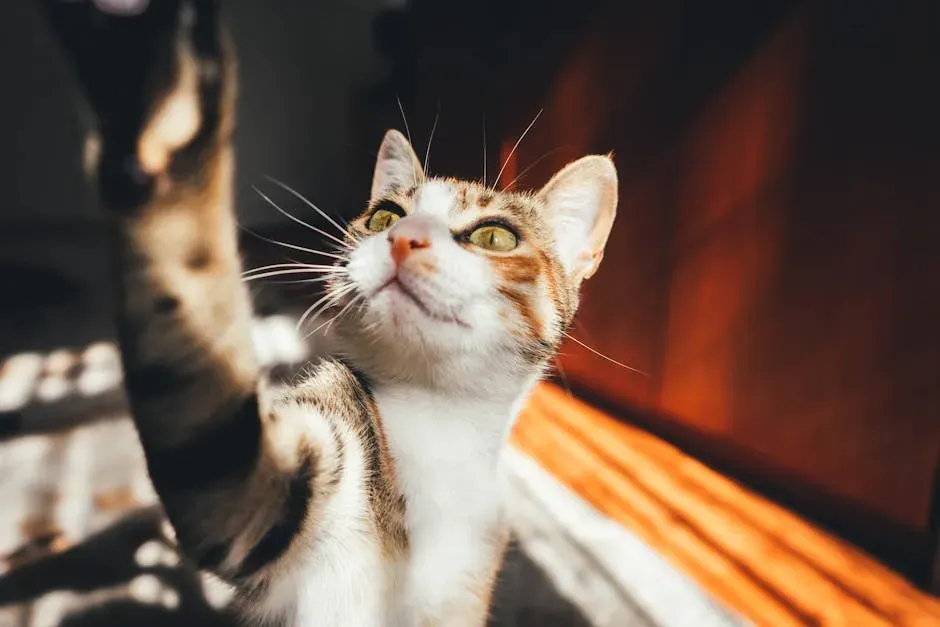
Cats are good at detecting movement in low light, have an acute sense of hearing and smell, and their sense of touch is enhanced by long whiskers that protrude from their heads and bodies. These senses evolved specifically to allow cats to hunt effectively at dawn and dusk. Every one of these adaptations is still fully operational inside your home – aimed squarely at that dust bunny.
Humans and cats share a similar range of hearing on the low end of the scale, but cats can hear much higher-pitched sounds, up to 64 kHz. When listening for something, a cat’s ear flaps can independently point backwards, forwards, and sideways to pinpoint a sound’s source. Cats can judge within about 8 centimeters the location of a sound being made from a meter away. The faint rustle of a dust bunny skimming over hardwood is more than enough to get those ears rotating.
Indoor Life Sharpens, Not Dulls, the Urge to Hunt
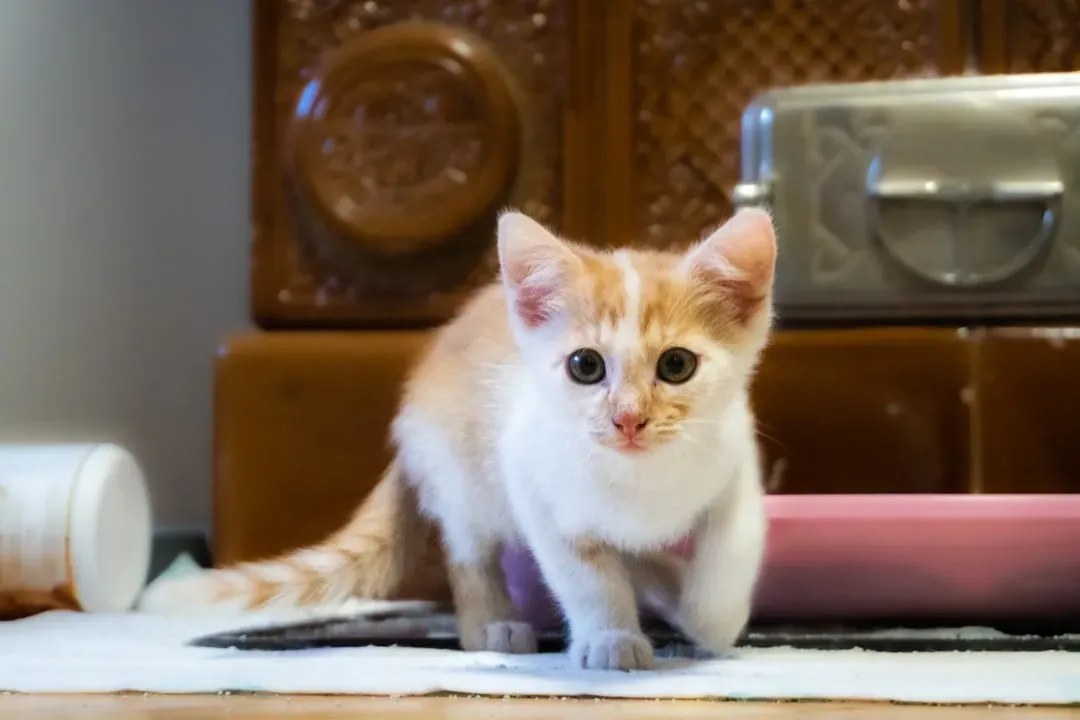
Research has found that indoor-only cats actually approach, touch, or play with objects sooner than indoor-outdoor cats, and also begin searching for sounds more quickly. Counterintuitively, less exposure to real prey seems to make cats more reactive to anything that resembles it – including loose clumps of household dust.
Indoor cats, in particular, may hunt to alleviate boredom. Without the challenges of the wild, a cat’s environment can feel stagnant. Stalking a bug or batting at a curtain provides mental stimulation and a sense of purpose. A dust bunny drifting under the sofa isn’t boring domestic debris to your cat – it’s a pop-up opportunity in an otherwise predictable environment.
What Happens When the Hunt Goes Unsatisfied
When play is absent, cats suffer distress and behavioral problems such as overgrooming, house-soiling, scratching furniture, and aggression. These aren’t random bad behaviors – they’re symptoms of a predatory system with nowhere to go. Without an outlet, that energy and tension build up in ways that are uncomfortable for both the cat and its owner.
Whether there’s prey to hunt or not, your cat still has a prey drive. There’s no use trying to get rid of it, because it’s here to stay. In fact, if you don’t provide appropriate outlets, your cat may decide to turn furniture, decorations, and fingers and toes into her next targets. The dust bunny, in this light, is actually doing useful work – giving your cat something appropriate to fixate on.
How to Redirect and Support Your Cat’s Hunting Instinct
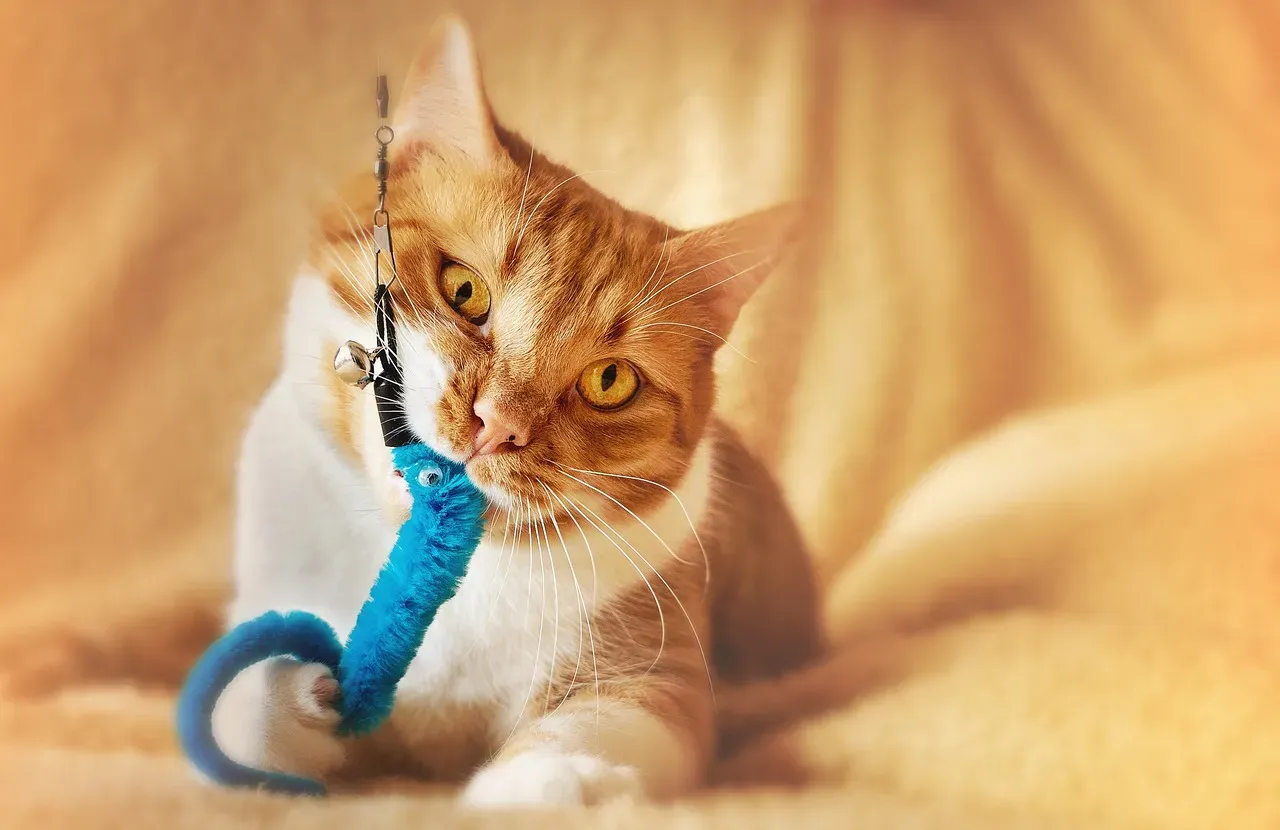
Redirecting your cat’s hunting instincts through frequent play is one of the most effective methods for satisfying her hunting desires. Play provides mental stimulation and helps satisfy those deep drives. Short, interactive sessions with wand toys, feather teasers, or anything that mimics erratic prey movement can genuinely replace what a dust bunny would otherwise trigger.
Short, frequent play sessions most closely resemble a cat’s natural predatory pattern. Choosing toys that look and feel like natural prey increases engagement and provides an alternative outlet for predatory behavior. Variety matters too – to keep your cat’s mind active, vary their toys and environment regularly, since cats get bored easily, especially with the same toy lying around. A cat whose hunting instinct is regularly met through play is a calmer, more content companion overall.
Conclusion
Your cat isn’t being silly when it stalks a dust bunny. It’s expressing something that runs far deeper than play – a predatory identity shaped across millions of years that no amount of domestication has erased. The dust bunny just happens to tick the right boxes: small, light, unpredictable, and moving.
Understanding this doesn’t just explain a funny moment you might have photographed and shared. It changes how you think about what your cat actually needs. Regular, varied, prey-mimicking play isn’t a luxury for a house cat – it’s closer to a necessity. Give your cat something worth hunting every day, and you’re not just entertaining it. You’re honoring what it fundamentally is.