Most cat owners have shared the same experience: you watch your cat stare at a blank wall, knock a perfectly good cup of water off a table, or simply ignore you calling its name from two feet away, and you think, “What exactly is going on in that tiny head?” The answer, it turns out, is quite a lot.
Cats have evolved to demonstrate their intelligence in ways that may not seem immediately apparent to us humans. This makes it genuinely challenging to accurately assess what they’re doing cognitively. The available evidence suggests, however, that cats are much smarter than many people give them credit for. The tricky part is knowing what to look for.
They Solve Problems Quietly and on Their Own Schedule

You’ve probably noticed your cat pacing near a closed cabinet, then nudging it open with one paw as if it had rehearsed the whole thing. That’s not luck. Cats more frequently try to solve problems on their own, which is a sign of intelligence that fits with how the species moves through the world. They don’t wait for help. They work it out.
Early research on cat intelligence can be traced back to psychologists such as Edward Thorndike, who used puzzle boxes to study animal learning. Thorndike’s experiments demonstrated that cats could learn to manipulate levers and latches through trial and error, revealing their capacity for associative learning. Over time, more refined experiments began to examine spatial awareness, memory, and problem-solving strategies. Your cat opening a drawer isn’t random mischief. It’s the product of genuine cognitive work.
Your Cat Knows Its Own Name and Recognizes Yours Too
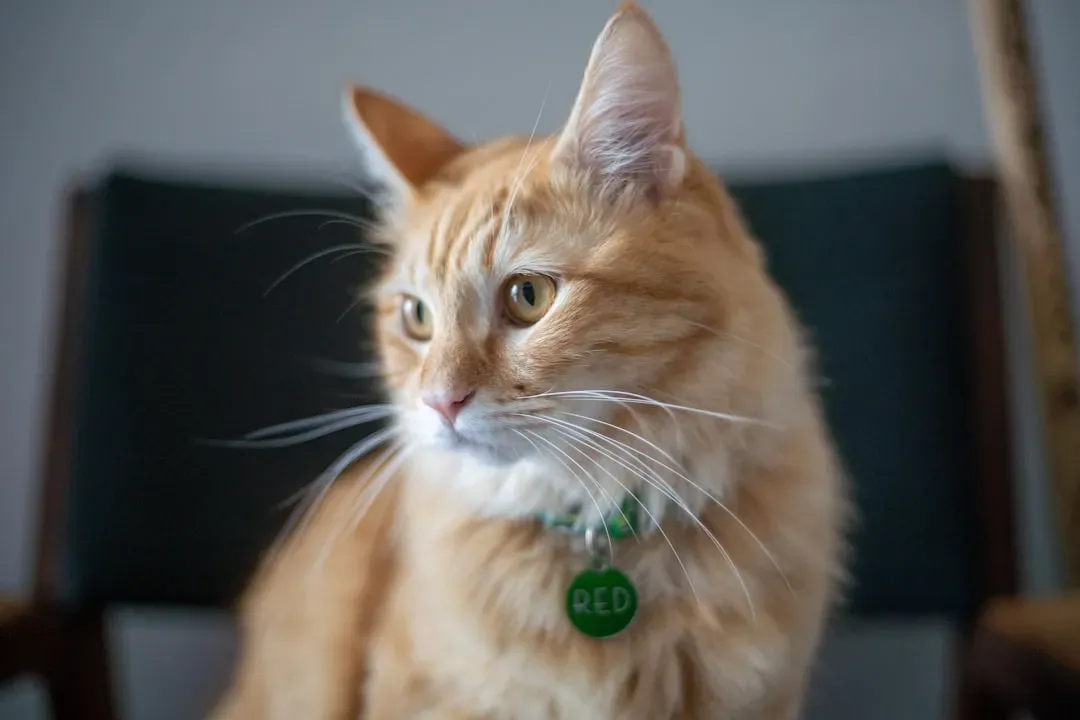
When your cat hears you say its name and casually flicks an ear without moving a muscle, that’s not indifference. It’s recognition. Studies have shown that cats do recognize their names. Not only that, but they know their friends’ names too. So while they might or might not respond, a smart cat knows when you’re talking about them.
Cats have been shown to distinguish their own name from another familiar cat’s name in a habituation and dishabituation procedure, and they also distinguished those names from general nouns. Interestingly, cats living in multi-cat households habituated less to their companion cats’ names than to other nouns. Your cat may very well know the names of every person and pet in your home, even if it pretends otherwise.
They Can Mentally Map Where You Are, Just From Your Voice
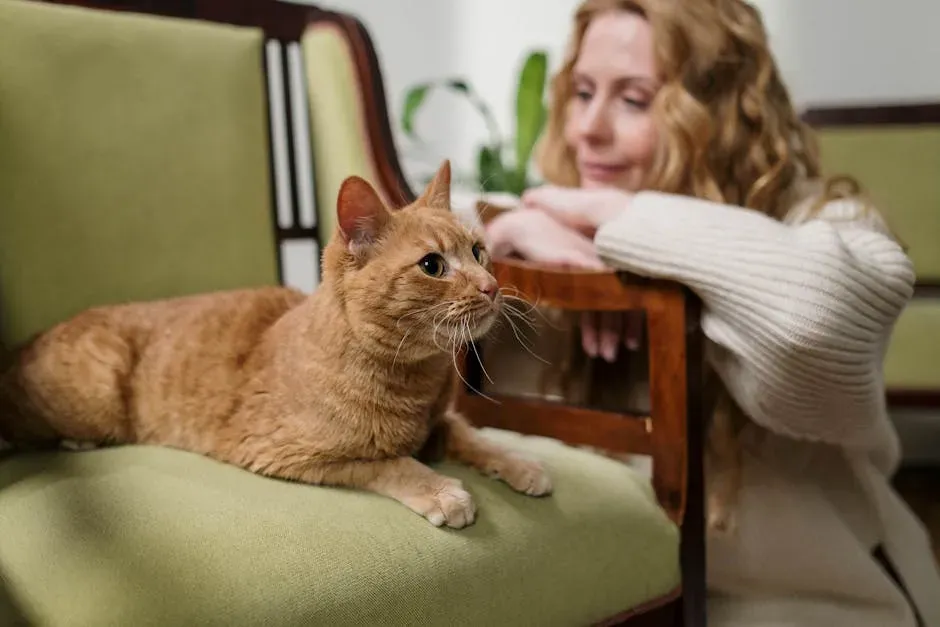
This one tends to surprise people. Your cat isn’t just hearing you when you call from another room. It’s building a mental picture of where you are. Researchers tested whether cats mentally map the spatial position of their owner or a familiar cat based on that individual’s vocalization. They placed one speaker outside a familiar room and another inside the room, as far as possible from the first speaker, then left the subject alone.
The finding that cats mentally map their owner’s location from their voice corresponds at least to visible displacement in object permanence. Mentally representing the outside world and manipulating those representations flexibly is an important feature in complex thinking and a fundamental aspect of cognition. When your cat turns its head toward the hallway before you walk in, it already knew roughly where you were.
They Read Your Emotional State With Precision

You might assume your cat doesn’t notice when you’re having a rough day. Research suggests the opposite. Results are consistent with previous studies demonstrating that cats are sensitive to human communicative cues and to their emotions, particularly if expressed by their owners. Cats discriminate their owner’s emotional reaction toward an unfamiliar object and adjust their behavior accordingly, expressing more positive behaviors when their owner appeared happy and less positive behaviors in response to an angry expression.
Researchers in Italy found that cats could discern between happy and angry expressions in humans and other cats. This ability to understand humans extends to their owners, with a study showing that cats react differently to their owners’ smiles and frowns. That moment your cat jumps into your lap exactly when you’re at your lowest? It may be more calculated than comfortable.
They Recognize Your Voice Over Anyone Else’s

The way your cat responds to you specifically, versus a stranger’s voice, reveals something real about its cognitive abilities. Of the cats studied, the majority demonstrated a lower response magnitude to strangers’ voices. These habituated cats showed a significant rebound in response to the subsequent presentation of their owners’ voices. This result indicates that cats are able to use vocal cues alone to distinguish between humans.
Cats respond differently when their owners use cat-directed speech versus speech used for addressing adult humans. Cats don’t discriminate between the two types of speech when a stranger speaks; they only respond to cat-directed speech when it comes from their owner. This research shows that there is a special bond between cats and their owners, and that people and cats do develop their own form of communication.
They Understand That Hidden Things Still Exist
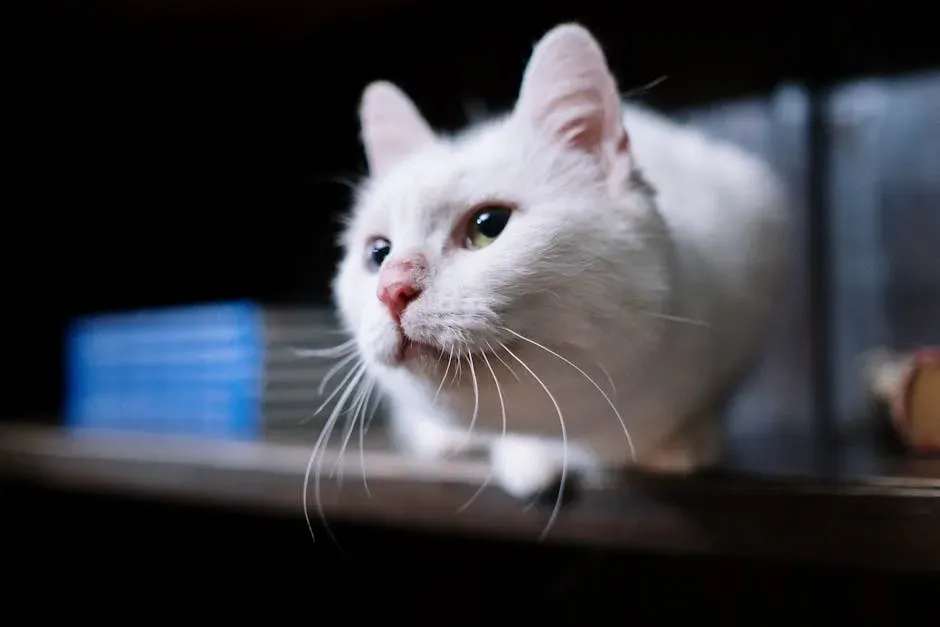
Hide a toy behind a box, and your cat will search for it. This matters more than it seems. Object permanence, the understanding that objects continue to exist while out of sight, is a key part of the sensorimotor stage of cognitive development. Cats have been shown to reach Stage 5 object permanence by passing successive visible displacement tests. This is a cognitive milestone we typically celebrate in human infants around eight to twelve months of age.
In controlled experiments, cats demonstrated fully developed concepts of object permanence, indicating that their sensorimotor intelligence is complete. In contrast, human infants are tested with multiple invisible displacements of an object to assess the emergence of mental representation. The cats’ search behavior in these tasks was consistent with their ability to represent an unsensed object. When your cat watches you stash its treat bag in a new cupboard and finds it the next day, that’s memory and spatial reasoning working together.
They Learn by Watching You

Your cat isn’t just lying there while you go about your day. It’s studying you. Observational learning is a hallmark of higher cognitive ability, and smart cats are good at it. Cats learn quickly that certain actions lead to predictable outcomes, and their behavior is almost always about learning what works. When your cat figures out how to turn on the faucet, it probably figured it out by watching you do it first.
An experiment identified possible observational learning in kittens. Kittens that were able to observe their mothers performing an experimentally organized act were able to perform the same act sooner than kittens who had observed a non-related adult cat, and sooner than those placed in trial and error conditions with no model to observe. This social learning begins early and carries into adulthood in ways you see every day without fully registering them.
Their Long-Term Memory Is Deeper Than You’d Expect
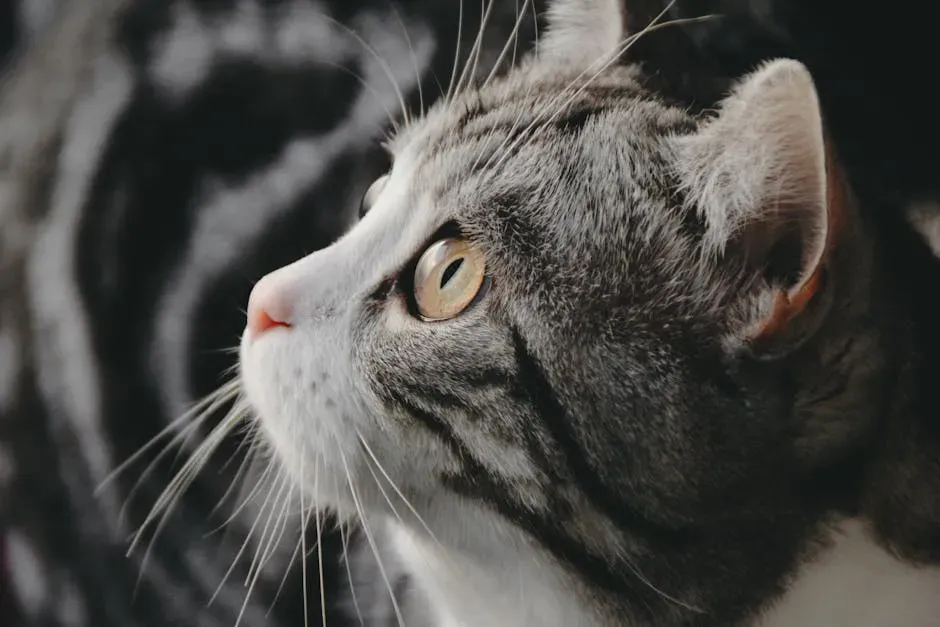
Your cat hasn’t forgotten anything meaningful. That vet visit from three years ago? Still filed away. Cats have well-developed memory, retaining information for a decade or longer. These memories are often intertwined with emotions, allowing cats to recall both positive and negative experiences associated with specific places. This explains why your cat vanishes the moment the carrier comes out, even before you’ve said a word.
If your cat is reluctant to go into their carrier, this suggests that your cat has the long-term memory to recall previous negative experiences associated with the carrier, such as veterinary visits or long car rides. Cats not only excel at learning new information, but they can also mesh that information with things they’ve learned previously, recall it when needed, and apply it to the current situation. That layered recall is a trait we tend to associate with far more complex creatures.
They Track Time and Use It to Manipulate Routine
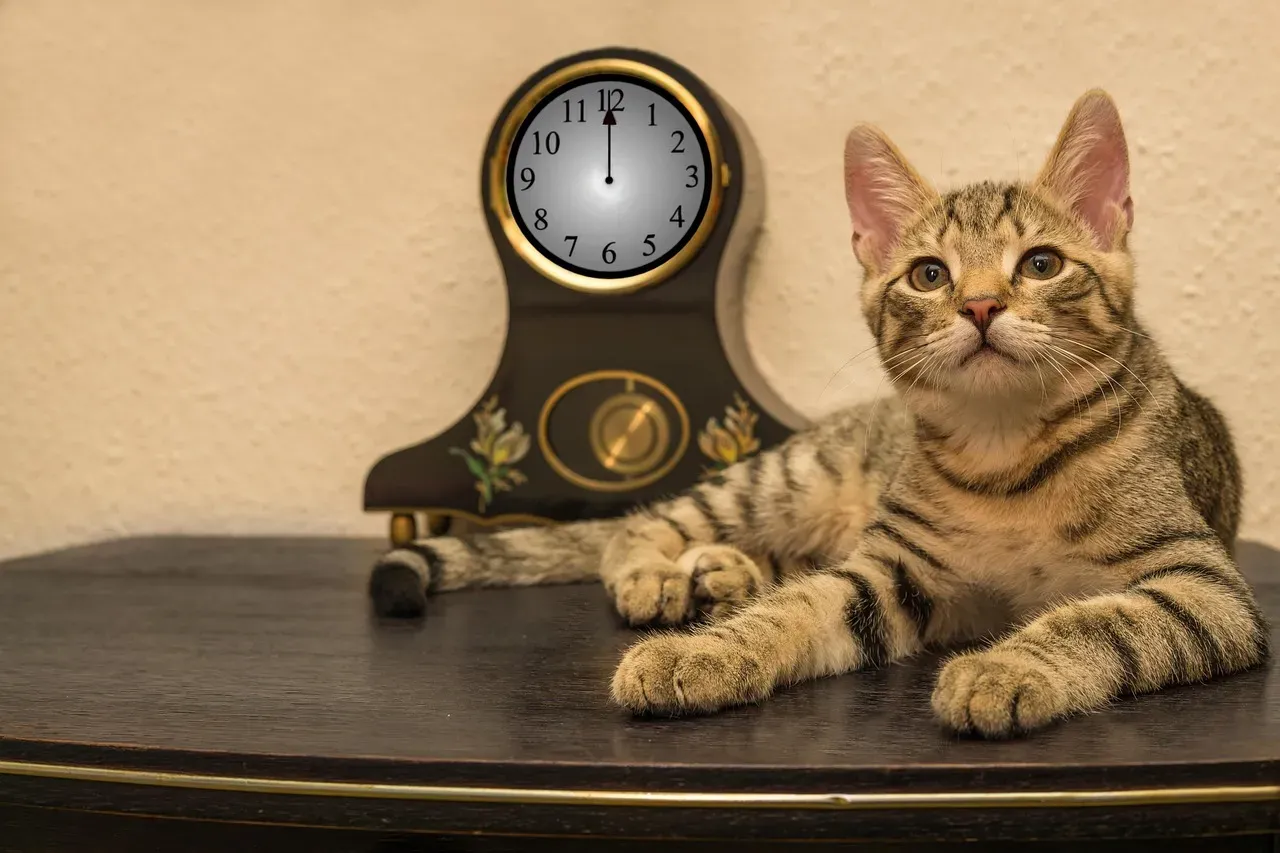
If your cat knows exactly when you close your laptop and starts nudging you toward the kitchen, that’s not coincidence. If your cat waits by the door just before their favorite human comes home or materializes in the kitchen the second the fridge opens, that’s not magic. Studies suggest cats use temporal learning, recognizing patterns in time and associating them with predictable outcomes.
When your cat uses meows and other attention-getting behaviors to get you to feed it at a certain time, this indicates that your kitty understands the concepts of time and cause and effect. When cats live alongside us, they’re smart enough to readjust their natural behaviors. They sync their internal clock to yours, which is both impressive and, honestly, a little unsettling.
They Think Independently and Adapt Their Strategies
Unlike dogs, who often look to you for cues when stuck, your cat tends to think its way through a problem independently. Smart cats have the ability to think for themselves. They make decisions based on their own judgment and experience, and aren’t easily distracted by other things. This independent streak is frequently misread as stubbornness or aloofness, but it’s actually a sign of confident cognition.
While research demonstrates that cats as a species possess real cognitive capacity, individual variation undoubtedly exists. Some cats may excel at cognitive tasks while others struggle, influenced by factors including genetics, early socialization, environmental history, health status, and individual temperament. Environment, early socialization, and mental stimulation can matter as much as genetics. Some of the smartest cats observed have been mixed-breed cats who were simply curious, observant, and confident.
Conclusion
Cats rarely perform for an audience. They don’t sit on command, fetch enthusiastically, or offer obvious proof of their mental lives. The notoriously independent nature of cats can create unique challenges in understanding feline intelligence. While we may never know precisely how smart cats are, it’s clear that they are capable of complex thinking and problem-solving.
Cats that learn routines, manipulate environments, and communicate clearly are using the same mental skills researchers study in labs: memory, problem-solving, and social cognition. The genius isn’t missing. It’s just quiet, deliberate, and completely on their terms.
The next time your cat ignores you with apparent indifference, consider the possibility that it already knows exactly what’s going on, has assessed the situation, decided its interests lie elsewhere, and moved on. That’s not obliviousness. That’s a different kind of smart entirely.
Kristina is a young writer from India. An arts graduate and an avid content creator, Kristina is passionate about animals and wildlife. She enjoys exploring topics related to pet care, animal behavior, conservation, and nature, combining thorough research with engaging storytelling.