#1 They purr at frequencies linked to physical healing
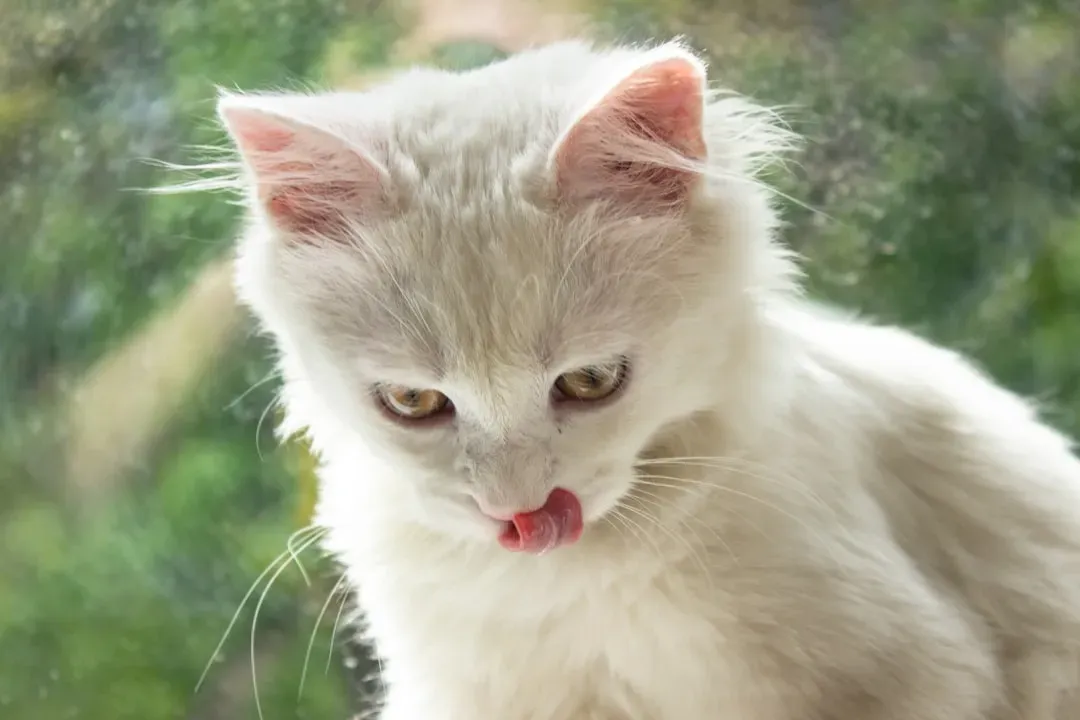
A cat’s purr is not just a sound of contentment. Researchers have found that every felid in a study of forty-four wild and domestic cats generated strong frequencies between 25 and 150 Hz. That range matters because bone responds to vibrations around 25 to 50 Hz while skin and soft tissues respond to frequencies closer to 100 Hz, according to researchers.
What makes this more than a fun coincidence is the pattern of when cats purr. A current hypothesis suggests the purr indicates contentment, however, cats purr when they are severely injured or frightened. Some scientists believe purring may double as a low-grade self-repair mechanism, and if that is true, the humans curled up next to a purring cat could be getting a small dose of the same vibrational benefit, whether or not the cat intends it that way.
#2 They slow blink to signal safety and affection
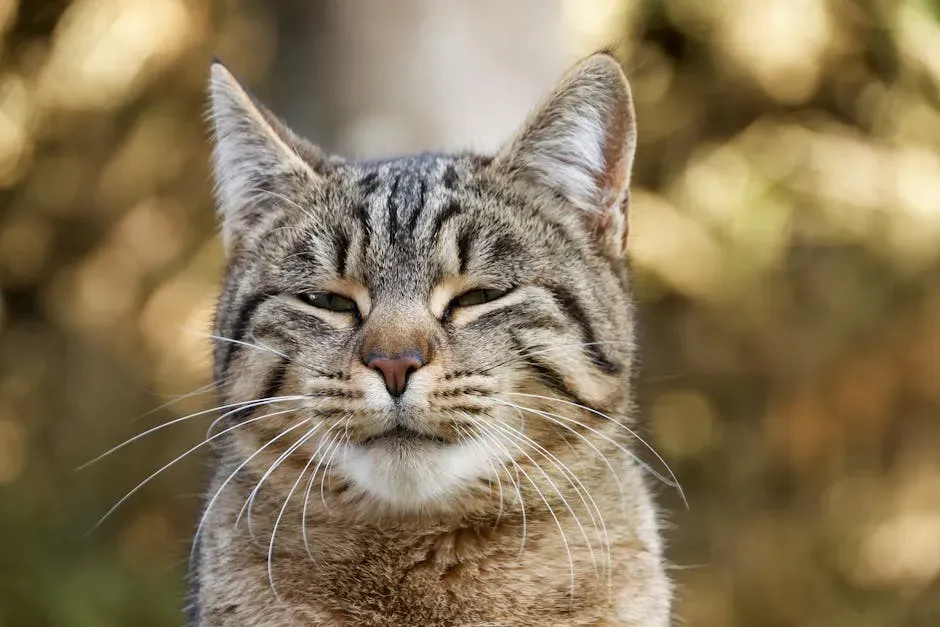
If you have ever had a cat close its eyes slowly while looking at you, that was not sleepiness. A 2020 study published in Scientific Reports found that the slow blink sequence appears to be an indicator of positive emotion in cats. Researchers observed that cats in the study were more willing to approach a person who slow blinked compared to a person who kept a neutral face.
The behavior carries weight because of how vulnerable it makes a cat. As one veterinary source put it, closing their eyes can put them at risk of being attacked by letting their guard down, so cats will only close their eyes and narrow their field of vision around someone they know is safe. When a cat slow blinks at you during a rough day, it is essentially telling you that your presence still feels safe, even if everything else feels off.
#3 They stay close instead of demanding attention
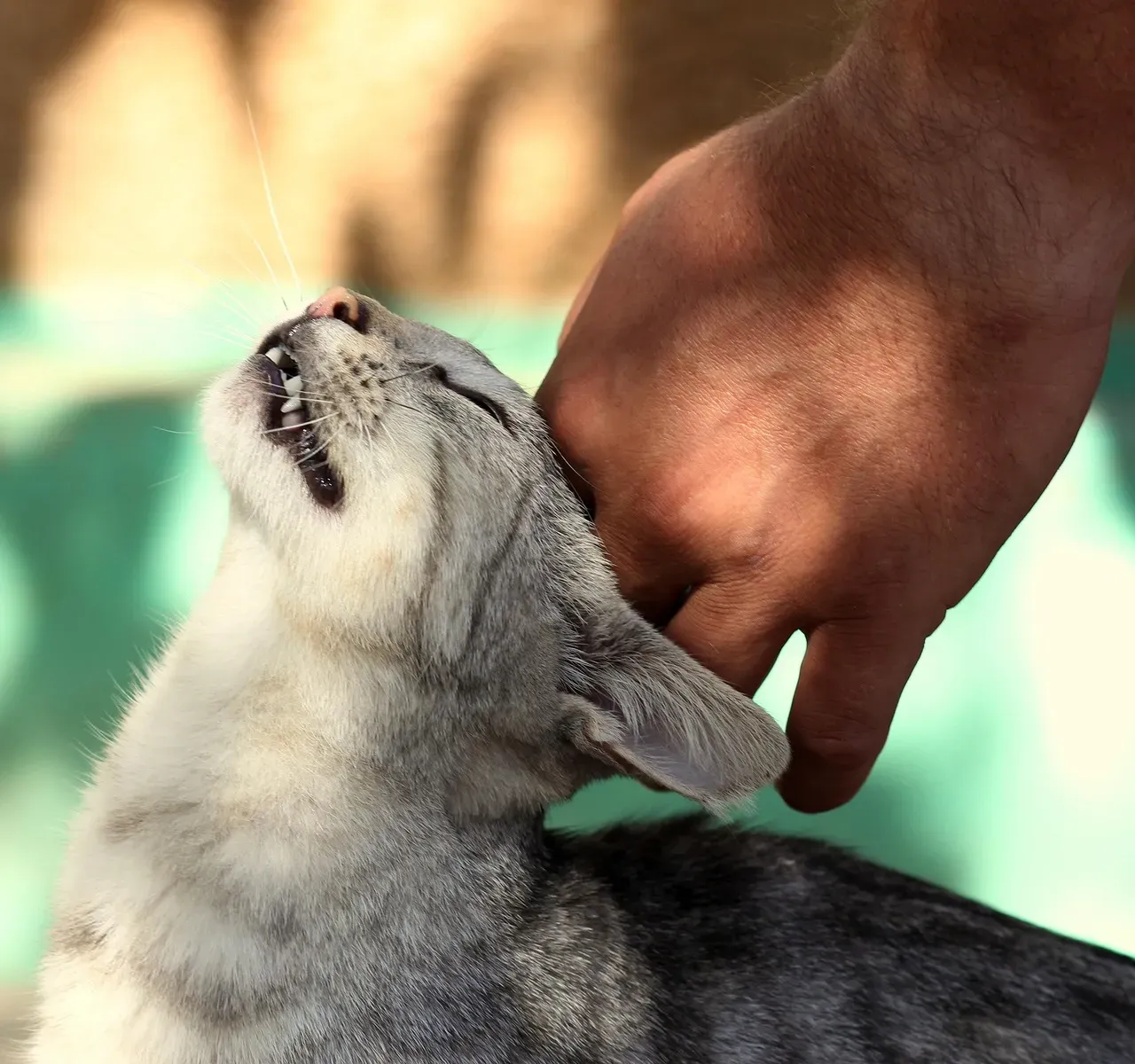
Cats are famously independent, so when one chooses to park itself nearby during a low moment, that choice means something. This is not the same as a cat asking to be fed or wanting to play. It is a quieter kind of company, the sort that does not ask anything of you beyond letting it stay in the room.
Many cat owners notice this pattern most clearly during illness or stress, when a cat that normally naps in another room suddenly parks itself on the bed or couch. There is no formal way to measure this kind of behavioral shift across the general cat population, but it is one of the most commonly reported comfort behaviors among owners describing their pets. The lack of demands is part of the point. A cat that simply stays nearby is offering presence without pressure, which is sometimes exactly what a person needs.
#4 They knead like they did as kittens
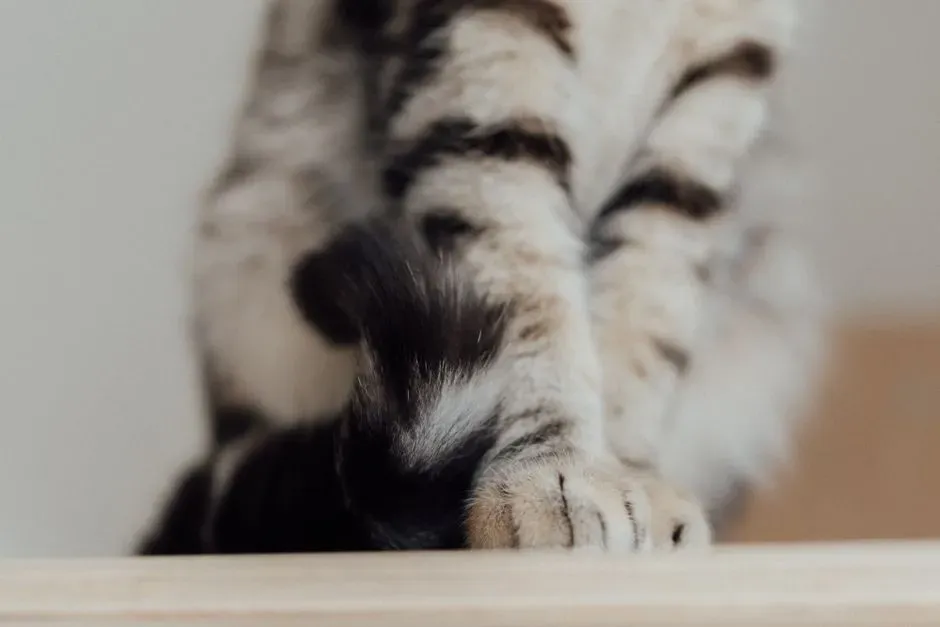
Kneading, that rhythmic pressing of paws against a blanket or a lap, traces back to kittenhood, when kittens knead their mother’s belly to stimulate milk flow. Adult cats keep the behavior long after they need it for survival, and many direct it toward the humans they trust most. It shows up most often during moments of relaxation, which is exactly when a stressed owner might benefit from a bit of unhurried physical contact.
There is something almost meditative about being kneaded by a cat. The motion is slow, repetitive, and entirely on the cat’s own schedule, which forces the person underneath to slow down too. It is not comfort in the sense of active care, more like a cat inviting you into its own state of calm and hoping some of it rubs off.
#5 They head-butt and rub against you
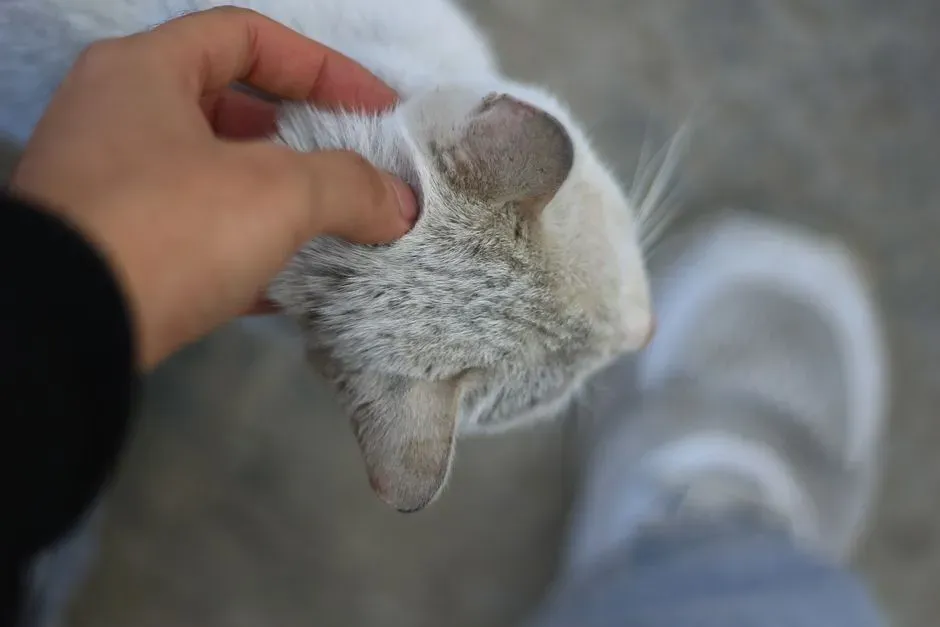
Head-butting, technically called bunting, is a cat’s way of marking you with its scent glands, which are concentrated around the face. Cats do this to trusted humans and to other cats they consider part of their social group. It is a deliberate act of inclusion, not an accident of proximity.
When a cat increases this behavior during a period when its owner seems withdrawn or upset, it often reads as an attempt to reestablish connection. The gesture says, in cat terms, that you still belong to its circle. It is a small physical nudge, literally, toward reengagement, and it tends to show up right when a person might otherwise feel most alone.
#6 They mirror your mood and settle when you settle
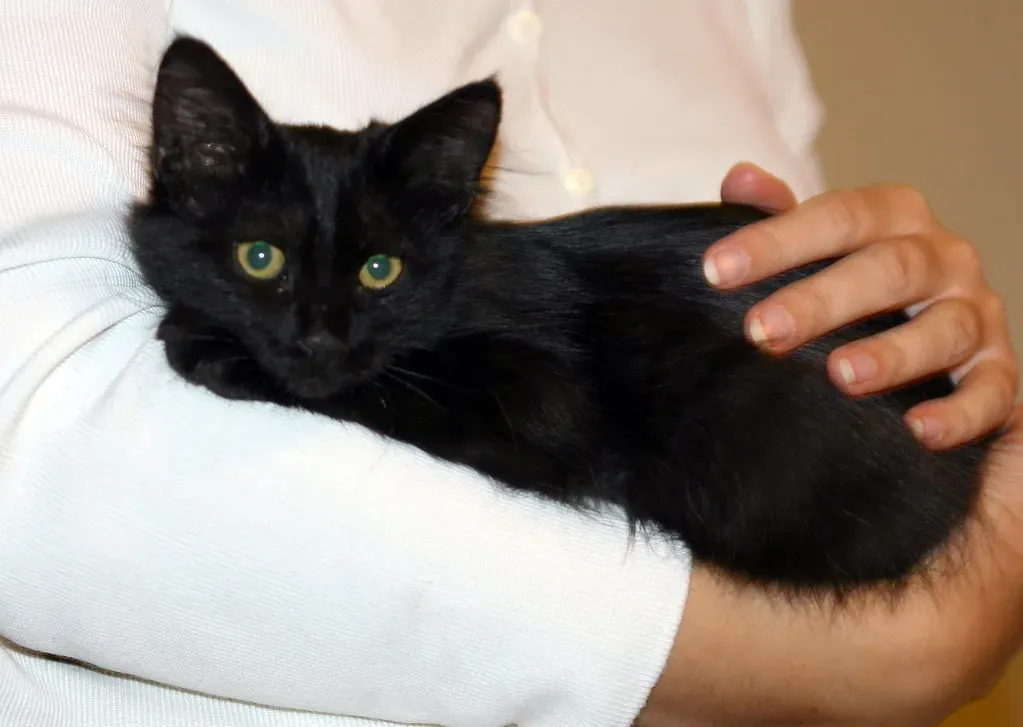
Cats are more attuned to human emotional states than they often get credit for. Owners frequently describe a kind of mirroring, where a tense household produces a tense cat, and a calm one produces a cat that visibly relaxes. This sensitivity likely comes from a cat’s evolved ability to read tone of voice, posture, and movement, all of which shift noticeably when a person is upset.
The comfort in this case comes from the cat’s willingness to match your pace rather than push against it. A cat that curls up quietly next to someone who is having a hard day is not performing sympathy the way a person might. It is simply syncing its own behavior to the environment, and that synchronization can feel remarkably soothing, almost like the room itself has calmed down a notch.
#7 They groom you as an act of bonding
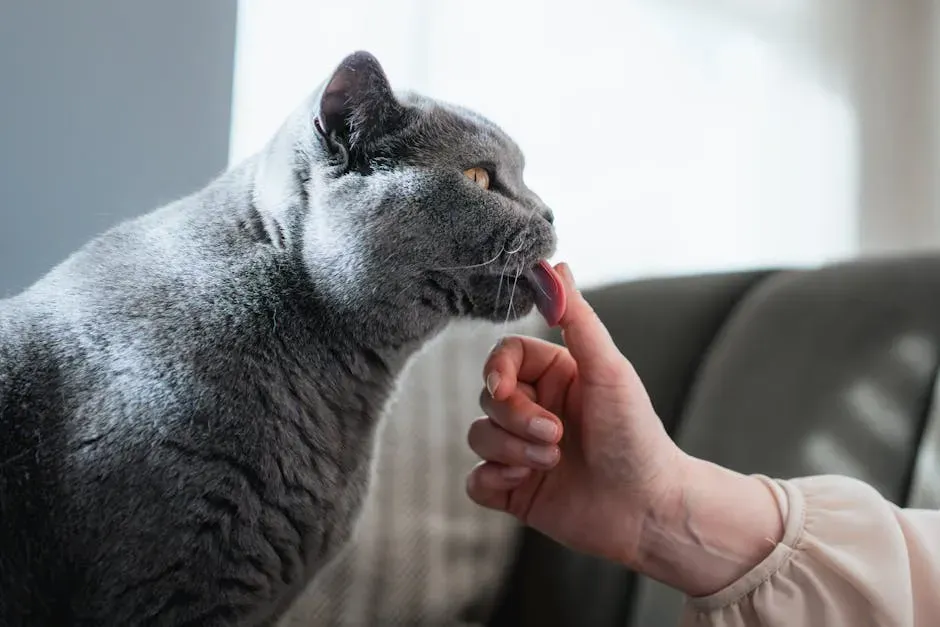
Cats groom each other as part of maintaining social bonds within a group, and when a cat licks a human’s hand or hair, it is extending that same behavior across species lines. It is not hygiene motivated, since human skin and hair do not need feline grooming. It is a social gesture borrowed from cat-to-cat relationships and applied to the humans they consider family.
This kind of grooming often increases when an owner is sick, tired, or emotionally low, based on frequent anecdotal reports from cat owners and behaviorists. Whether the cat is responding to changes in scent, posture, or simply spending more time close to its person, the result is the same small act of physical care, repeated patiently until the moment passes.
The quiet loyalty behind the fur
Kristina is a young writer from India. An arts graduate and an avid content creator, Kristina is passionate about animals and wildlife. She enjoys exploring topics related to pet care, animal behavior, conservation, and nature, combining thorough research with engaging storytelling.