You know that feeling when your cat suddenly locks eyes with you, tail still, whiskers tense, like you’ve just become the evening news? Many people brush that off as random cat weirdness, but there’s growing evidence it is anything but random. When your environment changes, a strange noise echoes, or something unfamiliar appears, your cat may be using your face as a kind of emotional weather report.
I remember the first time I realized this with my own cat: a glass shattered in the kitchen, she froze for half a second, and instead of bolting, she stared straight at my face, scanning me like a living mood detector. The more I paid attention, the more obvious it became that she wasn’t just “staring” – she was checking in. Let’s dig into what science suggests is really going on, and why that intense feline gaze in strange moments might be far smarter and more meaningful than it looks.
#1 Reading Your Face Like a Safety Signal
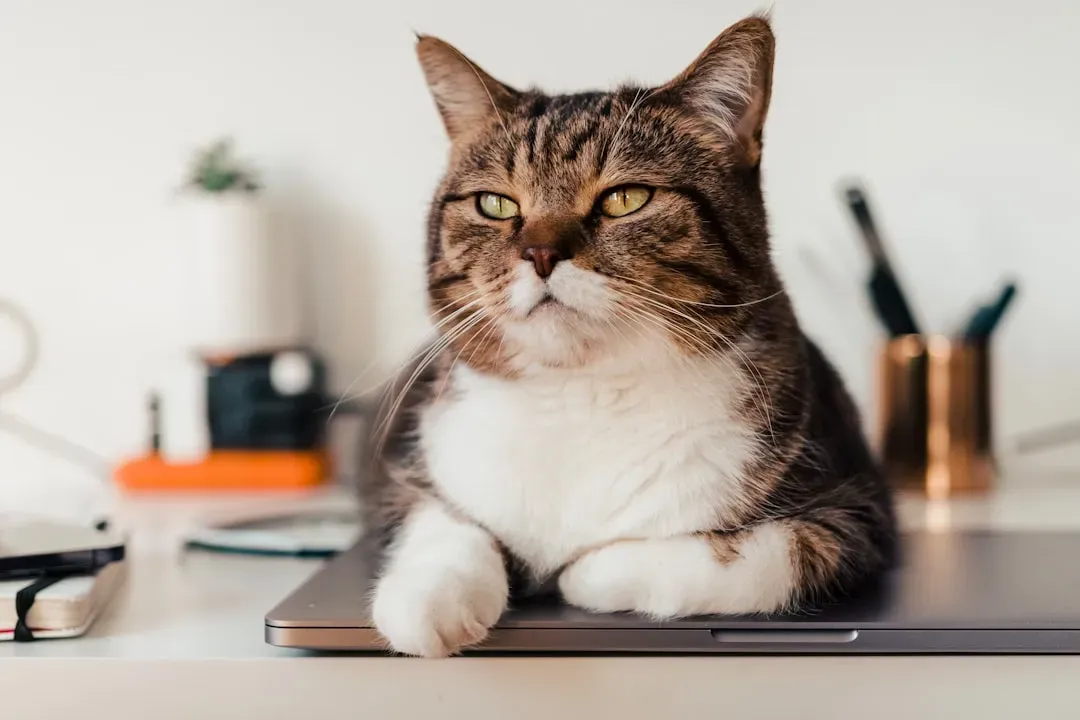
In unfamiliar situations, many cats do something that looks almost human: they look up at their trusted person’s face before they decide what to do next. Rather than interpreting this as simple curiosity, a more accurate way to see it is as a search for emotional information, a bit like a child looking to a parent before stepping onto a wobbly bridge. Your eyes, eyebrows, mouth, and overall expression can all serve as a fast, silent cue that says either “this is fine” or “this is bad, run.”
Researchers studying animal behavior call this kind of thing “social referencing” – using the emotional reactions of others to guide your own behavior. Evidence suggests that at least some cats are capable of this, especially with humans they know well. So when your cat watches your face after a sudden bang or a new object in the room, they may not be asking, “What is that?” so much as, “Do you think this is safe?”
#2 Social Referencing: Not Just a Dog or Baby Thing
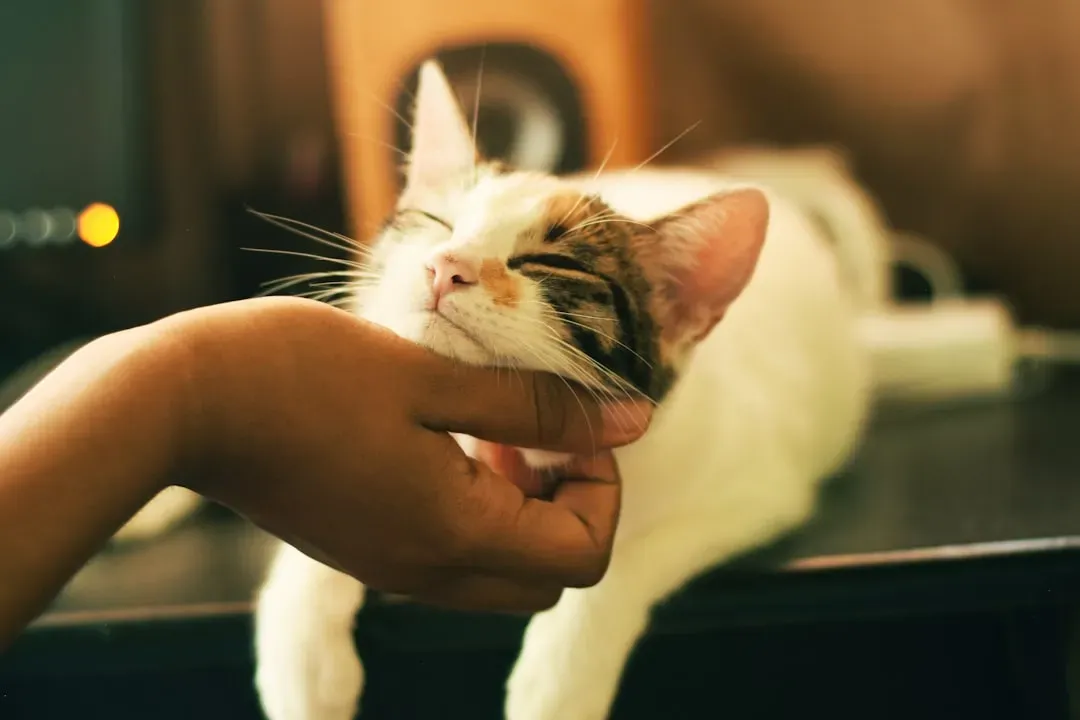
Social referencing was first described in human infants, who look to caregivers’ faces for cues in uncertain situations – for example, when they encounter a new toy or a drop-off in front of them. Over time, similar patterns have been documented in other social animals, especially dogs, who are now well-known for checking human faces to decide whether to approach or avoid something new. For a long time, cats were assumed to be more aloof and less tuned in to human expressions.
More recent observations challenge that old stereotype. Studies and careful at-home watching both suggest that many cats pay attention to human emotional signals, particularly in unfamiliar contexts. They may still be more subtle and slower to react than dogs, but that doesn’t mean they are indifferent. It more likely means that cats process information in a quieter, more cautious way, and face-watching is part of that calm assessment.
#3 How Cats Actually See Your Face and Emotions
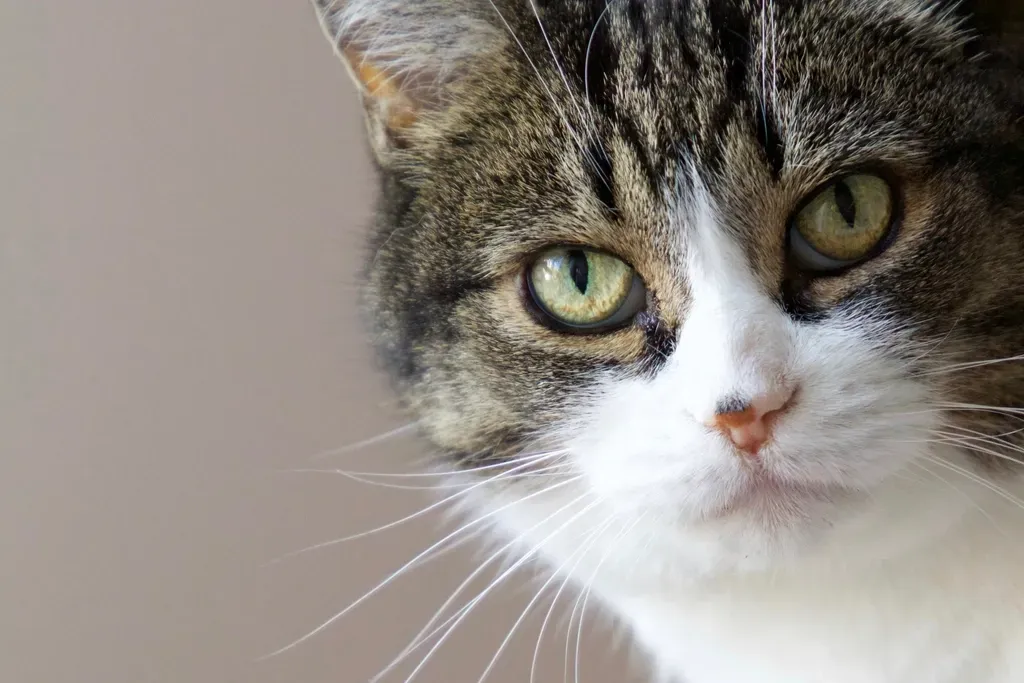
When your cat stares at your face, they are not only seeing your features; they are linking those features to patterns they’ve already learned. They can distinguish at least some differences in expressions, such as a relaxed, smiling face versus a tense, angry one, especially when these expressions are paired with tone of voice and body posture. Over time, they build up a mental catalog of what your “calm,” “angry,” or “worried” face tends to predict for them.
Even if cats do not interpret human expressions in the same rich, layered way humans do, they still use them pragmatically. If every time you look anxious and tense, something loud or unpleasant follows, a cautious cat can learn that your worried face means they should brace themselves or stay away. On the other hand, if you stay loose and calm despite a weird noise or a new guest in the house, a confident cat may feel safe enough to investigate more boldly.
#4 New Noises, Strange Objects, and the “Check-In” Stare
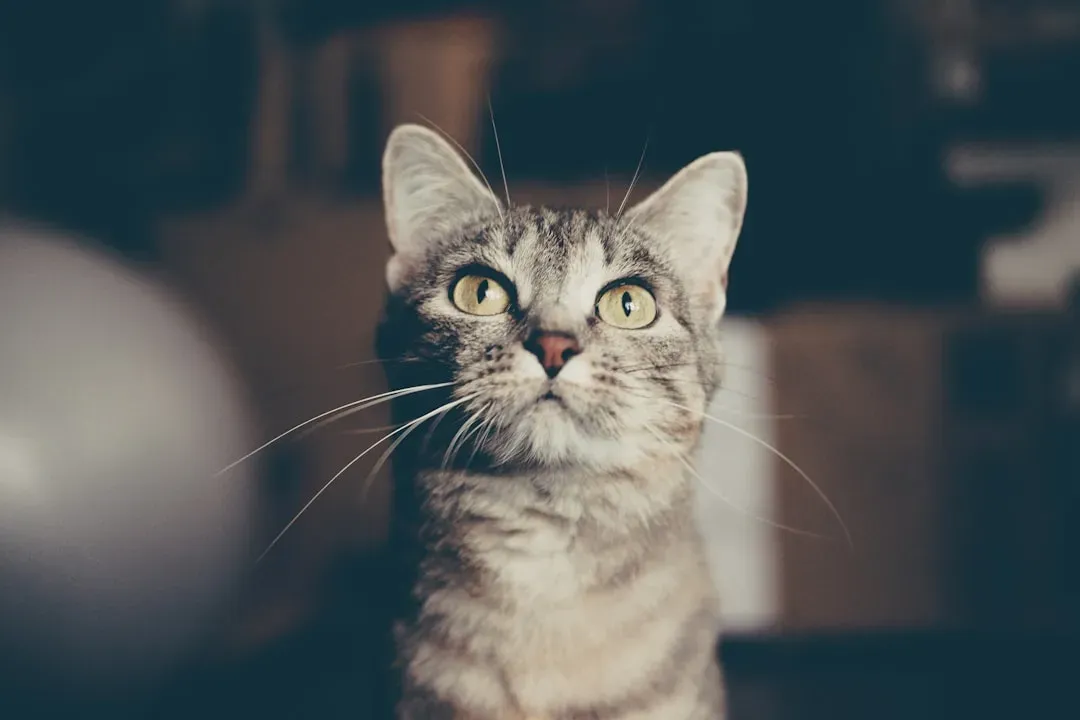
Think about what typically triggers that intense, searching look from your cat: a doorbell they do not usually hear, a vacuum cleaner dragged out of the closet, a large box suddenly appearing in the middle of the living room. These are the kinds of things that break the normal pattern of their territory, and for a territorial animal, that disruption demands a decision – approach, freeze, or flee. Your face becomes a quick shortcut to help them choose.
In those moments, many cats briefly pause and lock onto their person’s eyes. If you remain relaxed, talk gently, and move normally, some cats will cautiously investigate or at least stay put. If you jump, shout, or tense up, a cautious cat may decide that retreating under the bed is the safest move. The pattern is not always instant or dramatic, but over repeated small experiences, it adds up to a meaningful use of your expression as an information source.
#5 What Research Suggests – And What It Doesn’t
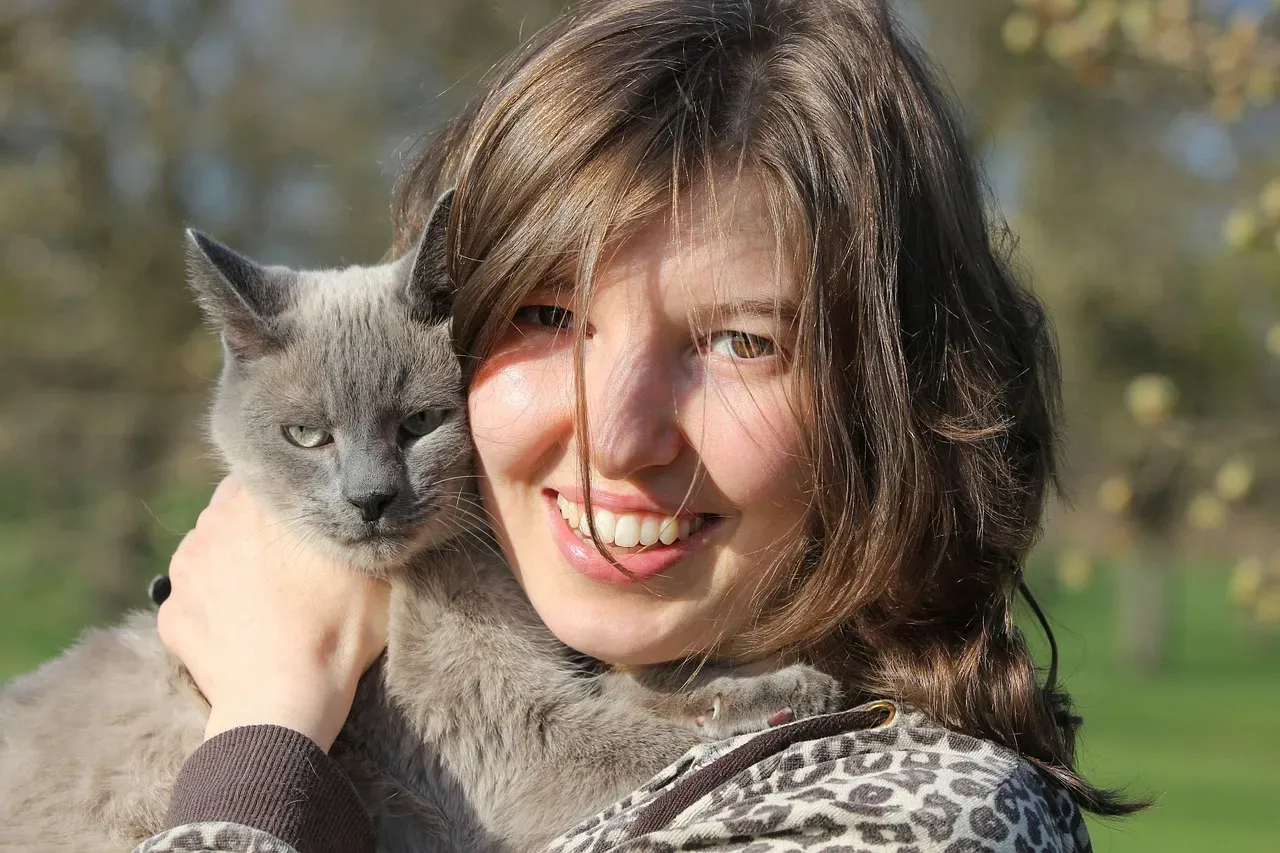
Studies looking at cats and human emotions are still relatively limited compared to the large body of research on dogs, but the trend is clear: cats are not emotional blank slates. Some experiments have found that cats respond differently when their owners display positive versus negative emotional cues in the presence of an ambiguous object or situation. The cats’ behavior – whether they approach, avoid, or remain neutral – changes in line with the human’s emotional signal.
At the same time, the evidence is not yet as deep or detailed as it is for dogs or human babies. Researchers still debate how much of this behavior is true understanding of emotion and how much is simple associative learning, where a certain facial pattern just predicts a certain outcome. The honest answer for now is that cats appear to use our faces and emotions as a source of information, but exactly how rich or flexible that understanding is remains an open and fascinating question.
#6 Personality Matters: Not Every Cat Uses Your Face the Same Way
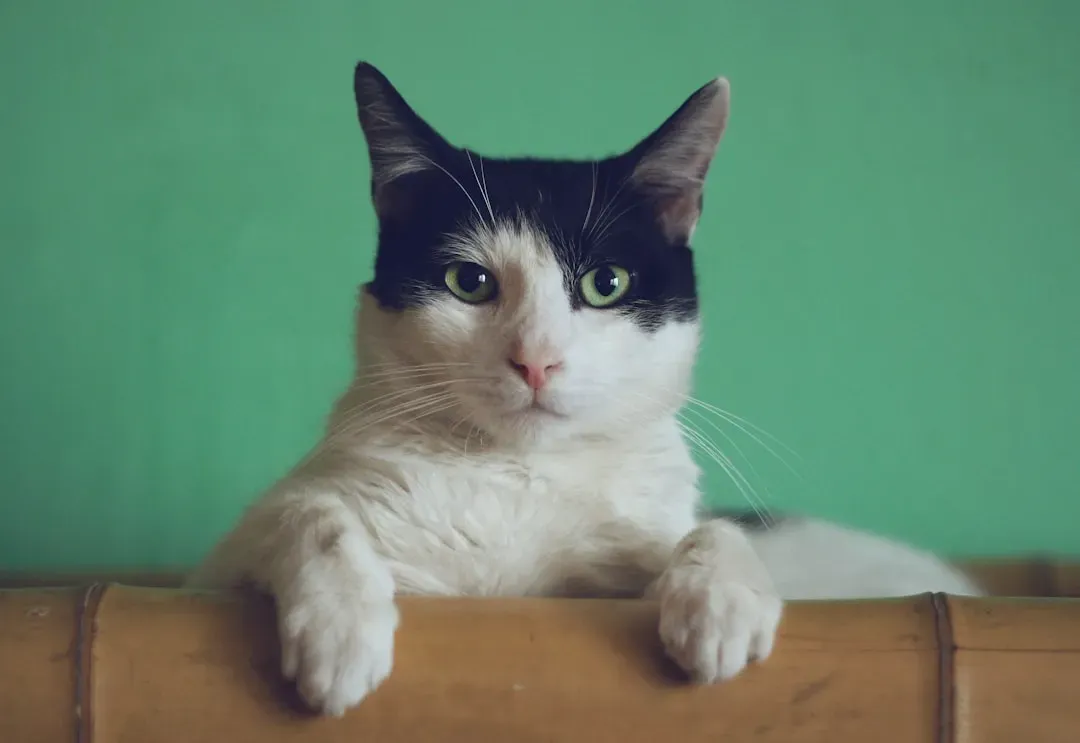
Anyone who has lived with more than one cat knows that their personalities can differ almost as much as people’s. Bold, confident cats may charge into new situations with minimal face-checking, relying more on their own curiosity and experience. Shy or nervous cats are far more likely to anchor themselves to you, using your stance, voice, and facial expression as a safety guide before they commit to a choice.
Early life experiences also shape how strongly a cat might rely on human cues. Kittens raised with gentle, consistent human contact often become adults who are more interested in human faces and more inclined to seek guidance from their people. Cats that have had rough or inconsistent human interactions may avoid direct staring altogether, either because they find it threatening or because they’ve simply learned that human faces do not predict anything useful or safe.
#7 How You Can Respond When Your Cat Looks to You for Information
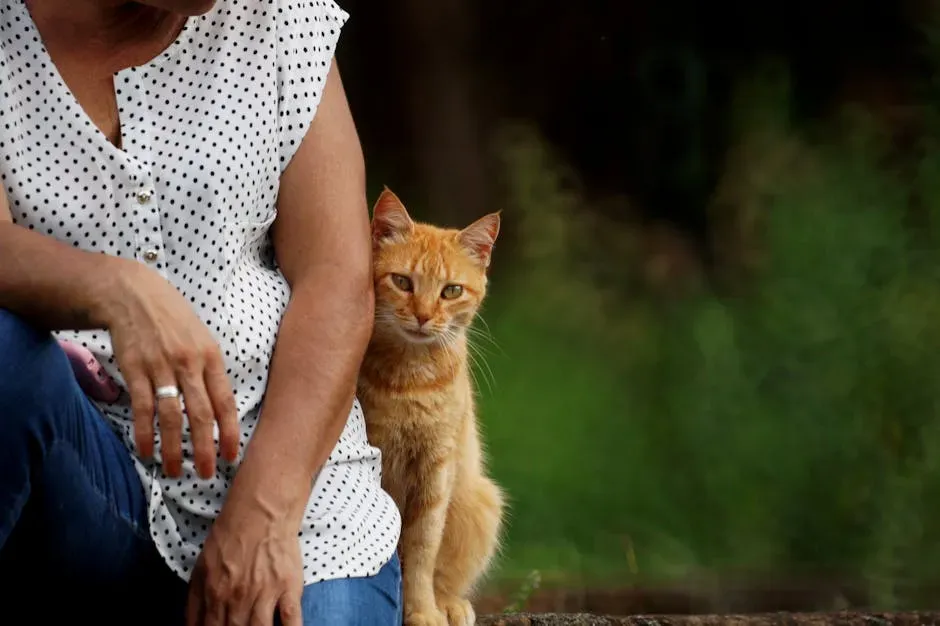
Once you notice that your cat is watching your face in uncertain moments, you can turn that into a conscious tool instead of an accident. When something unfamiliar happens – a sudden noise outside, a new person in the home, a piece of furniture moved – try to keep your expression and body language calm and predictable. Move a bit more slowly, soften your gaze, and use a relaxed, steady voice to give your cat consistent safety signals.
If your cat glances at you and you react dramatically, even without meaning to, you may accidentally teach them that new things are dangerous. Over time, this can feed into anxiety and hiding. On the other hand, by pairing unfamiliar situations with your calm face and a few positive experiences, like treats or play, you can help your cat learn that “weird” does not always mean “unsafe.” You become, in a very real sense, their living, breathing reassurance system.
#8 The Bigger Picture: Cats as Quiet, Careful Social Thinkers
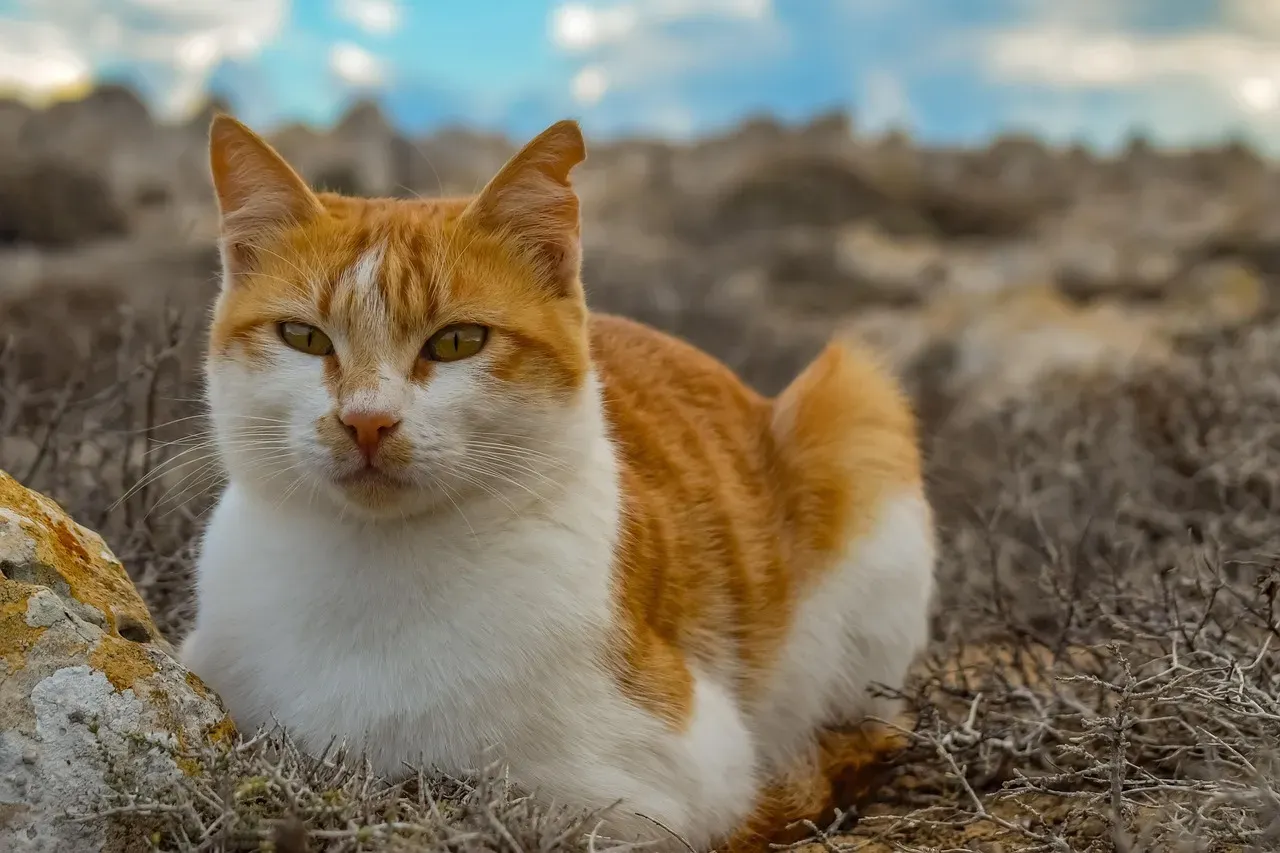
To me, the most striking part of all this is how it forces us to retire the old idea of cats as cold, detached roommates. A cat who watches your face in unfamiliar situations is not being creepy; they are being thoughtful. They are choosing to factor you into their decision-making, treating your reactions as valuable data. That may not be loud or obvious, but it is quietly profound, especially for an animal long dismissed as solitary and uncaring.
In my view, the evidence so far strongly supports the idea that many cats are low-key social thinkers, using us as reference points when the world feels uncertain. We should take that seriously. If your cat trusts your face enough to treat it as a safety gauge, that is a responsibility as much as a compliment. The next time your cat fixes you with that intense, questioning stare, you might ask yourself a simple question in return: what story is my face telling right now – and is it the one I want my cat to believe?
Kristina is a young writer from India. An arts graduate and an avid content creator, Kristina is passionate about animals and wildlife. She enjoys exploring topics related to pet care, animal behavior, conservation, and nature, combining thorough research with engaging storytelling.