Most people think a sick cat just wants to be left alone. Turns out, that’s only half the story.
When a cat is unwell, something quietly remarkable happens. It turns to one specific person and drops every wall it has.
Not the family. Not whoever feeds it. The one human it has decided, over time, to trust completely.
Even the most independent cats can show deep sensitivity when they’re closely bonded to their humans. That bond – built through daily interaction and quiet consistency – is what decides how a cat behaves when it’s feeling its absolute worst.
Here’s what fourteen real, observable signs reveal about the one person your cat has chosen. Some of them will make you look at your cat completely differently.
#14 – It Gravitates Toward You – and Only You – in the Room
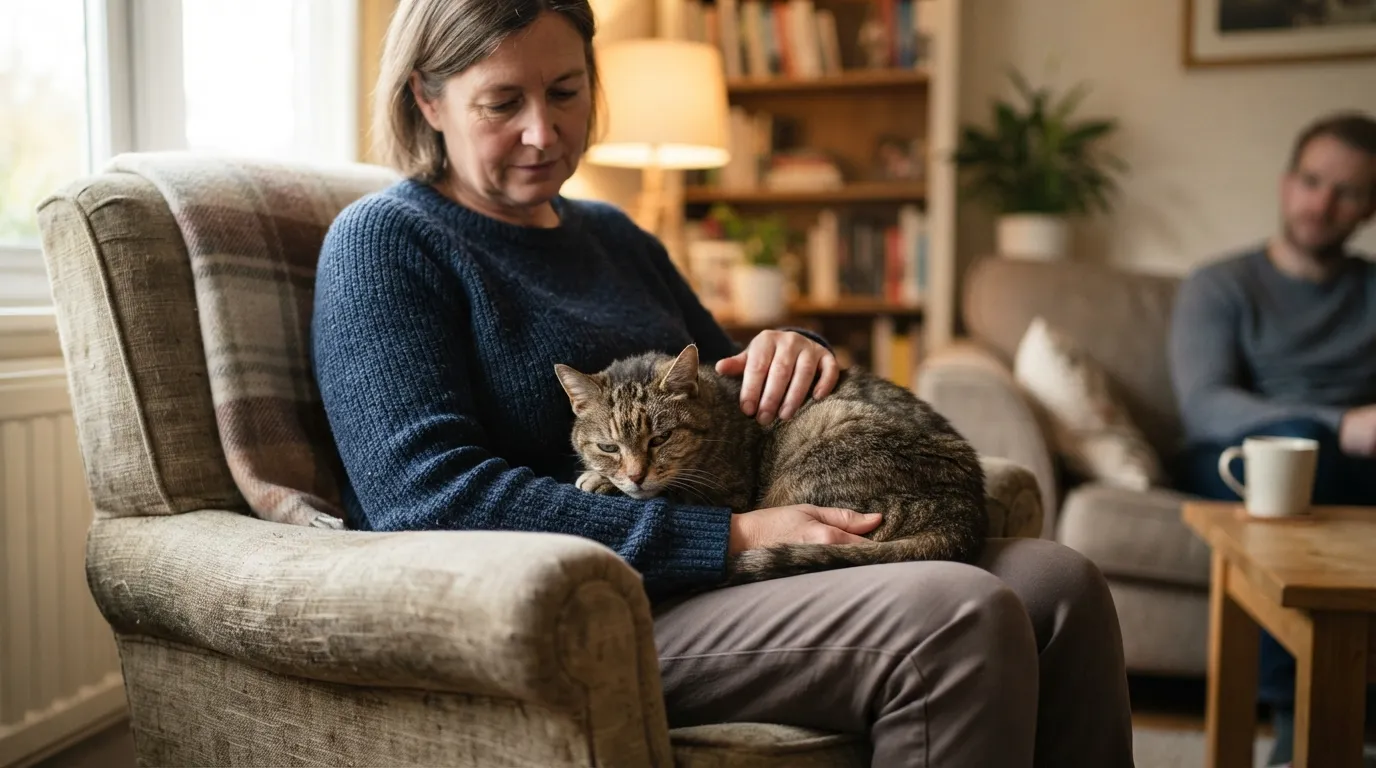
A cat may tolerate the whole family on a normal day. But when it’s ill or craving comfort, it chooses one person.
That selective behavior isn’t random. It reflects a deliberate internal ranking your cat has been keeping the whole time.
Cats can sense illness and distress through subtle physical cues, using heightened smell, hearing, and observation to notice changes others miss. When they’re the ones who are sick, those same senses guide them straight to safety.
That safety is you. And that’s only the beginning of what your cat is silently communicating.
But that’s nothing compared to what we found about #13…
#13 – It Chooses Your Specific Body Heat
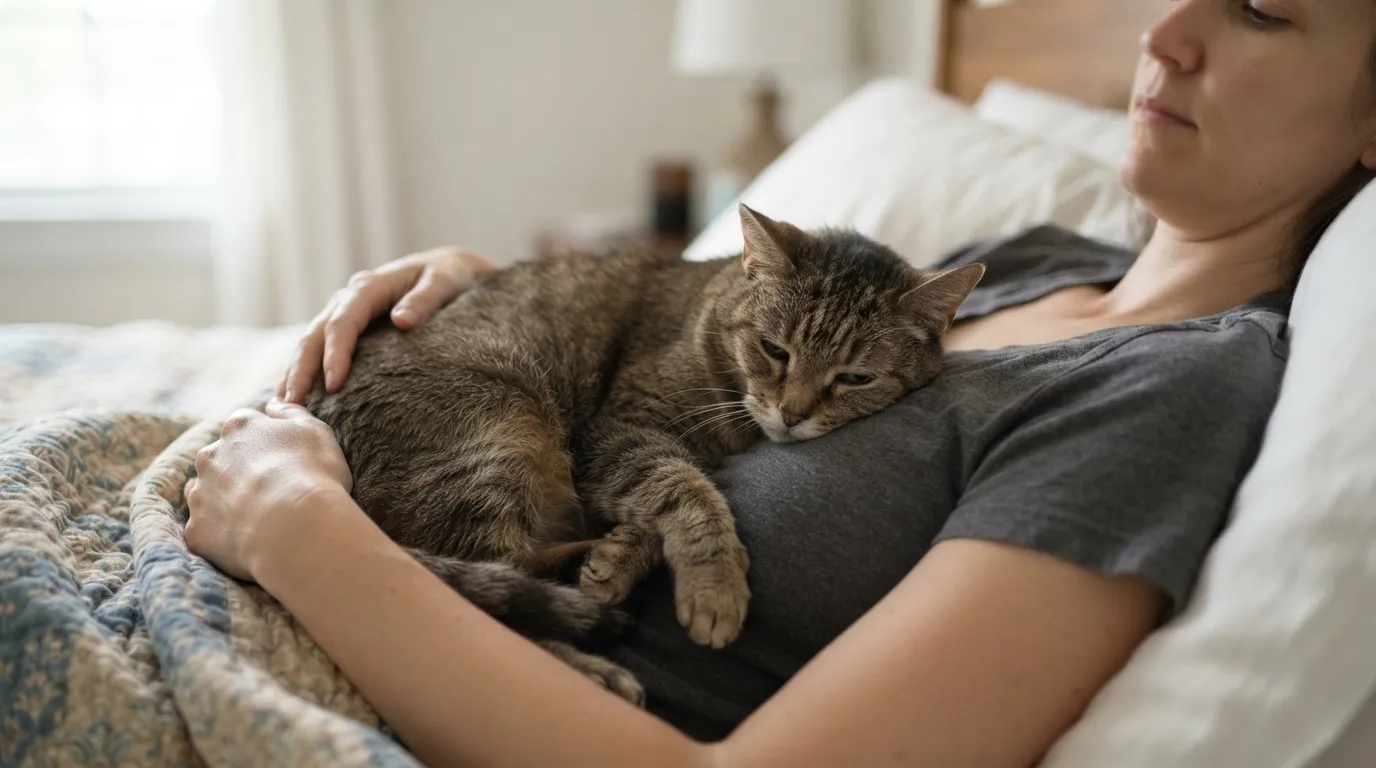
Some sick cats become more affectionate, seeking constant physical contact – sleeping near your head or chest specifically. This isn’t random cuddle behavior.
It’s targeted thermal comfort-seeking, and it’s directed at one trusted individual. A sick cat doesn’t just want warmth – it wants your warmth.
Watch for this: if your cat is unwell and picks your chest over a warm blanket, you’ve been chosen.
But that’s nothing compared to what we found about #12…
#12 – It Purrs Differently Around You
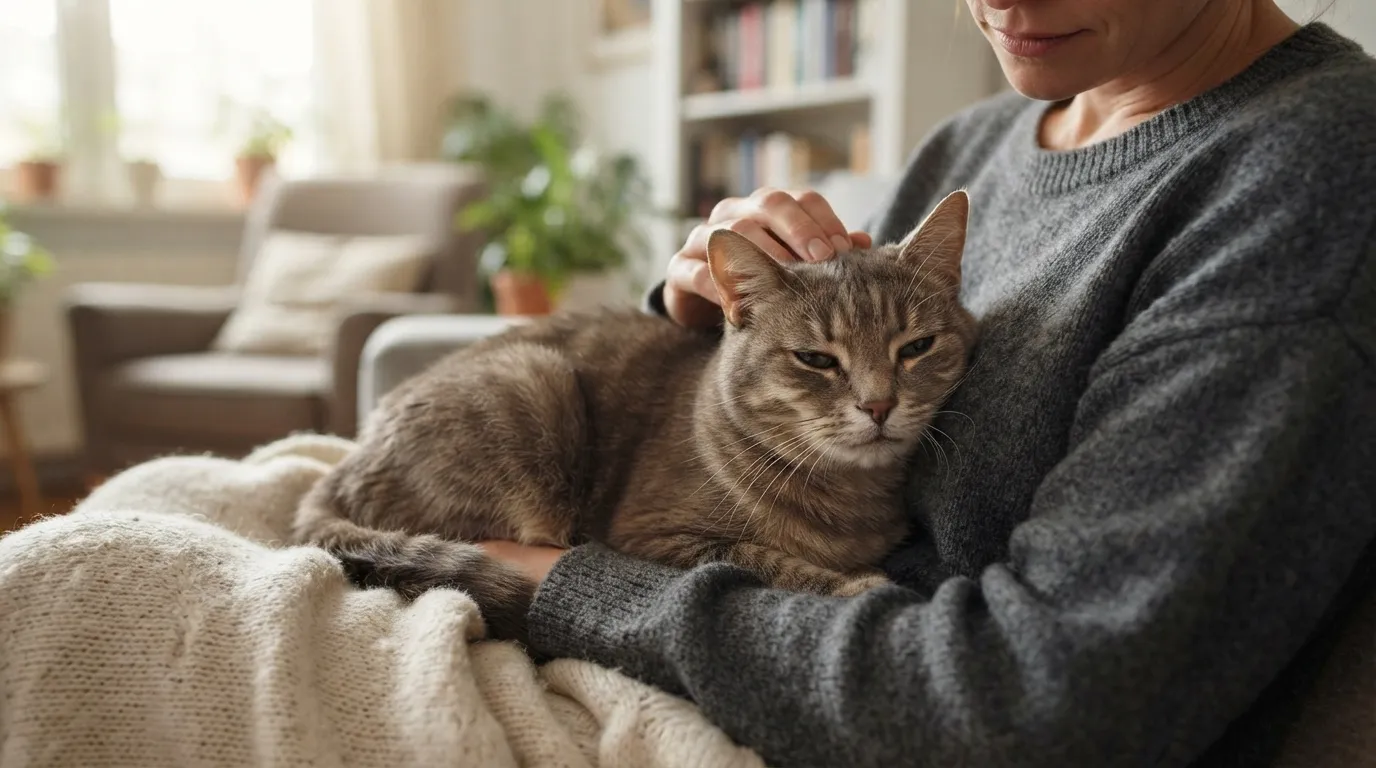
Most owners link purring to contentment, and that’s often true. But researchers have identified a second function: self-soothing, and possibly self-healing.
Cats may purr specifically around familiar, trusted voices. If your sick cat purrs while being held, it may be saying, “This is scary, but I trust you.”
Think of it like a child sucking their thumb – a private coping mechanism. The fact that your cat saves that self-soothing purr for you alone is trust made audible.
Fast Facts
- Cats purr at roughly 25 to 150 Hz, a range studies link to bone and tissue healing.
- Purring shows up during contentment, but also during pain, stress, and even injury.
- Researchers believe purring may work as a low-energy, built-in self-healing mechanism.
But that’s nothing compared to what we found about #11…
#11 – It Follows You Room to Room Without Playing
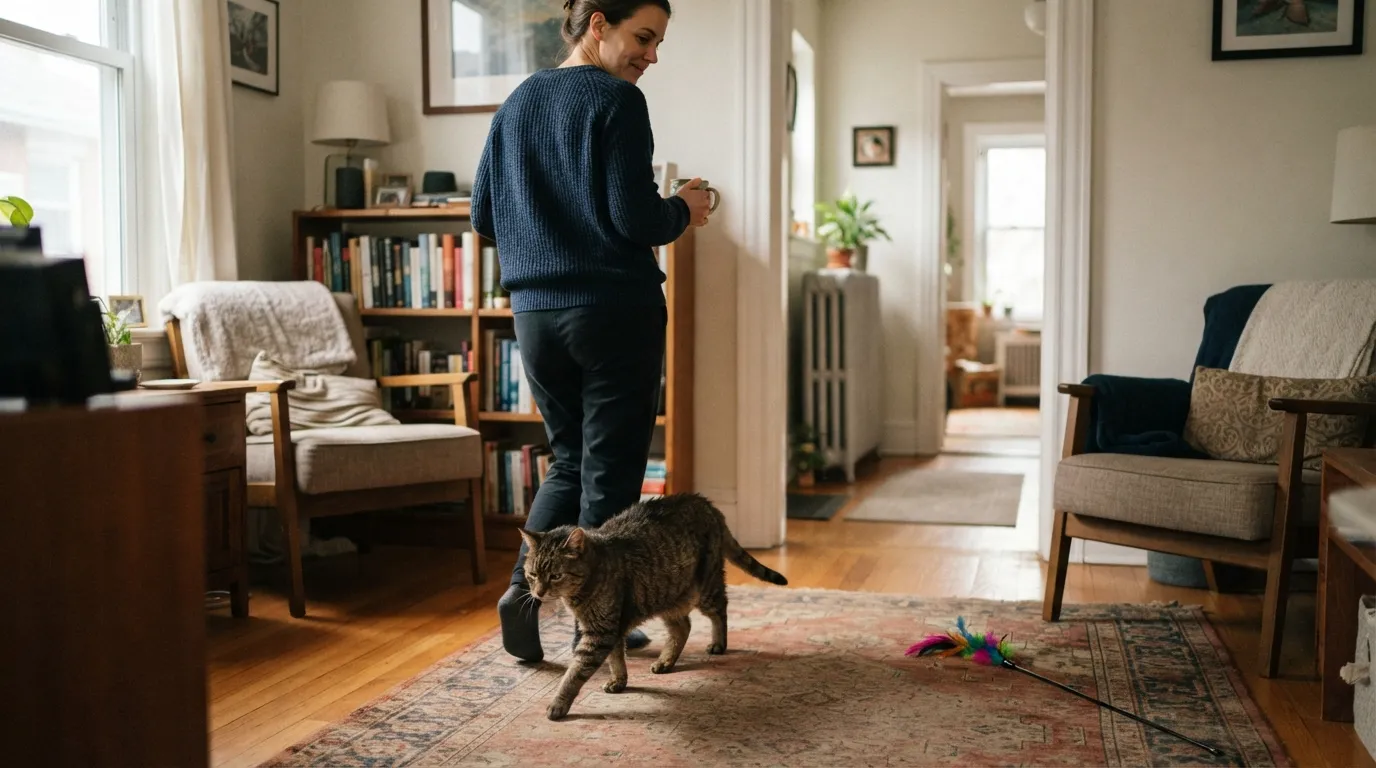
A normally energetic cat can turn lethargic and disinterested when it’s ill. But if your bond is strong, that same sick cat will still follow you from room to room.
This is different from ordinary “shadowing.” A healthy cat follows out of curiosity – a sick cat follows because you’re its anchor when everything feels wrong.
If your cat is dragging itself after you but ignoring every toy in sight, it isn’t being clingy. It’s reaching for its safe place.
But that’s nothing compared to what we found about #10…
#10 – It Positions Itself Between You and the Door
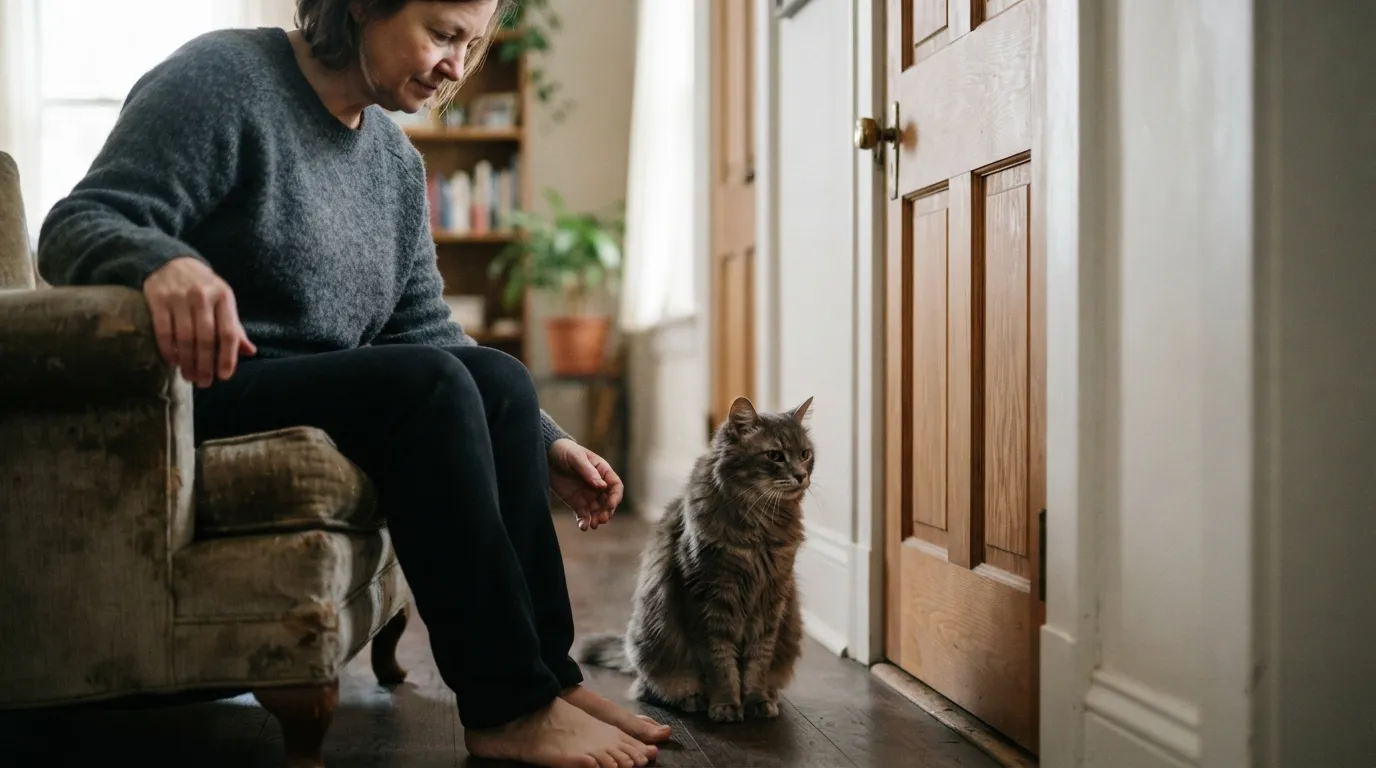
Some sick cats lean into affection. Others get protective – positioning themselves between their owner and any perceived threat.
This one gets overlooked constantly. The cat isn’t just seeking comfort for itself – it’s guarding its source of safety, making sure you don’t leave.
Cats stay locked into their environment, tracking scents, sounds, and body language nonstop. When their trusted person’s presence shifts even slightly, they notice immediately.
But that’s nothing compared to what we found about #9…
#9 – It Stares at You Slowly and Deliberately
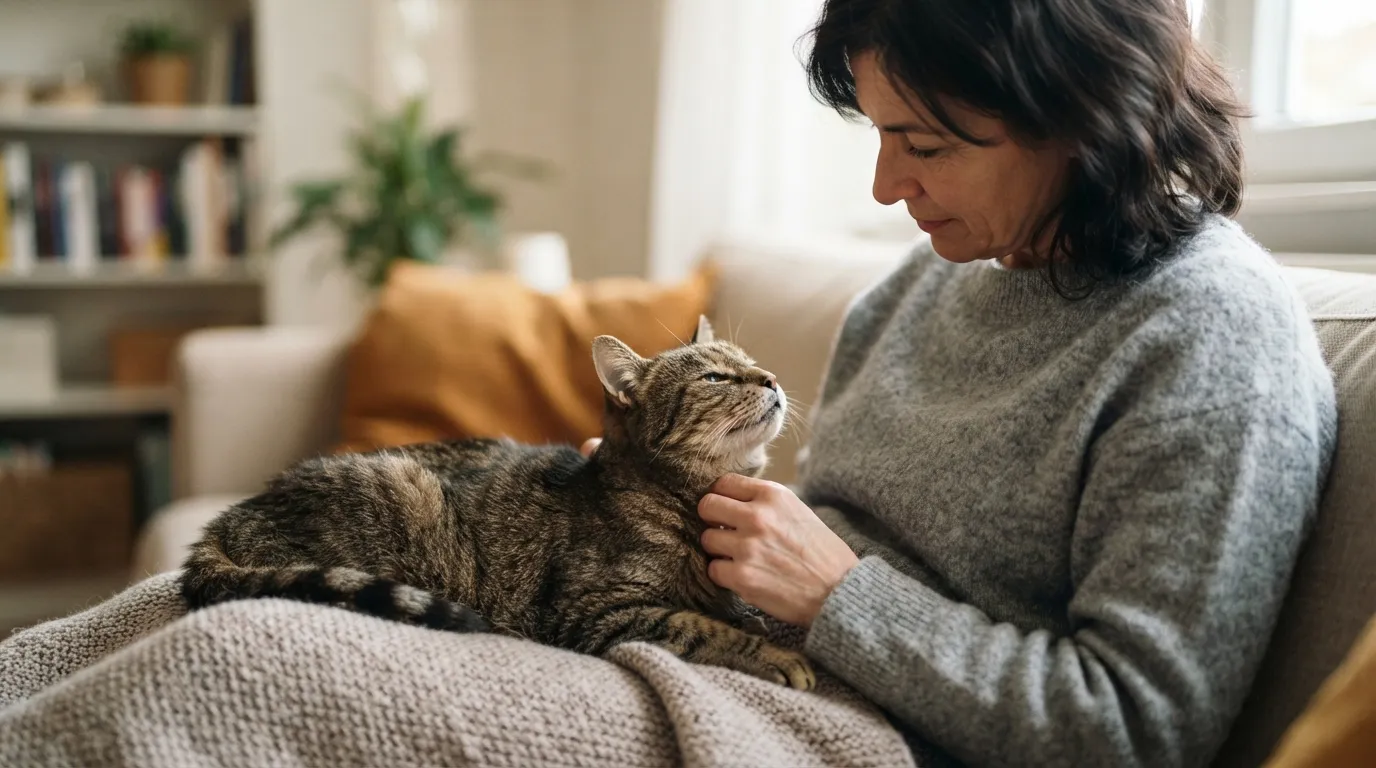
When a sick cat locks eyes with you and slowly blinks, that’s not zoning out. Slow blinking is one of the clearest recognized signs of trust between a cat and its person.
From a sick cat, that slow blink is an act of emotional surrender. It’s saying: I feel bad, but I feel safe here with you.
Cats don’t process emotion the way we do, but they read body language and tone constantly. Return the slow blink, and you’re speaking back in a language they actually understand.
“…it’s great to be able to show that cats and humans can communicate in this way.”
Professor Karen McComb, University of Sussex
But that’s nothing compared to what we found about #8…
#8 – It Vocalizes Only When You’re Near
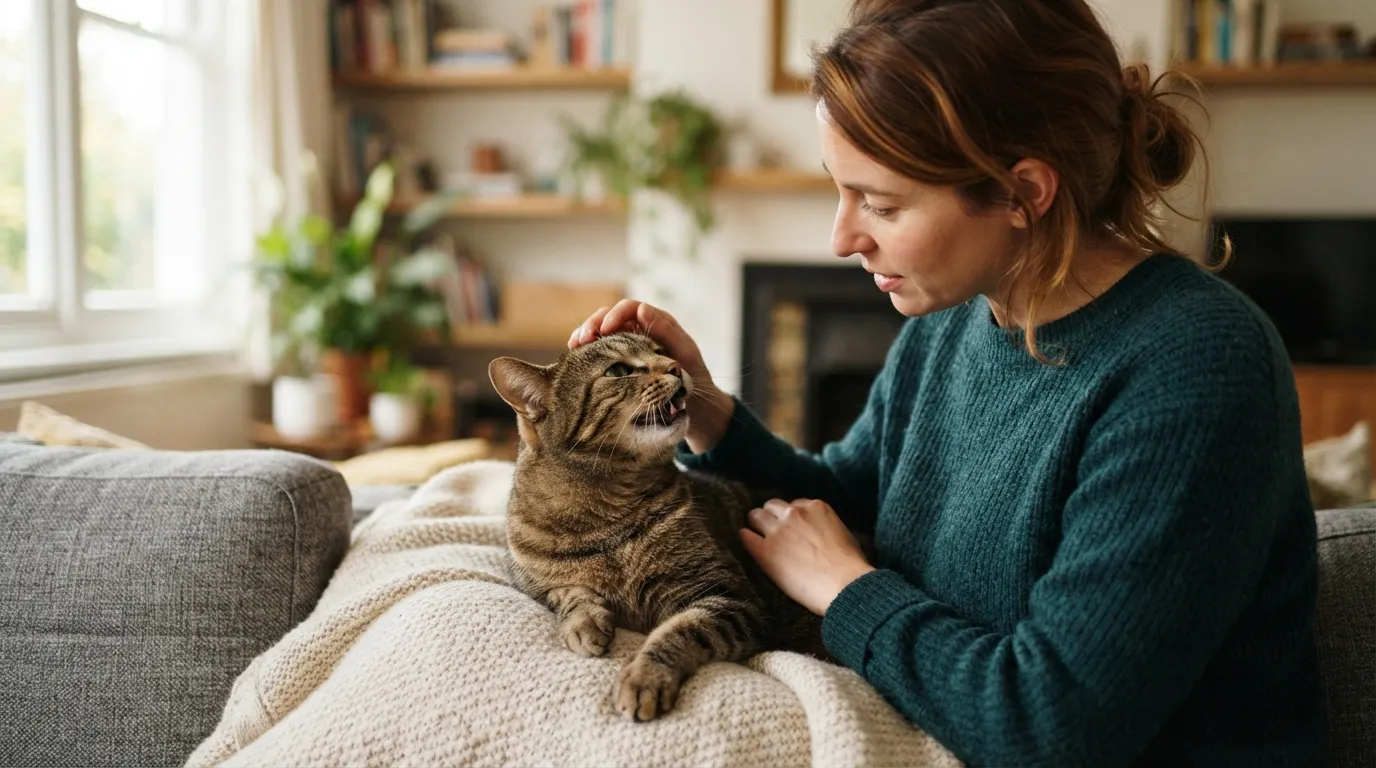
Sick cats often become more vocal, meowing more frequently or loudly to get attention and seek reassurance. Here’s what’s telling: many stay completely silent around everyone else in the house.
They save the vocalizing for the one person they trust. It’s a deliberate call for help, aimed at a specific individual.
Vocalization is a broad clinical sign in cats. It can point to pain, or to any number of underlying health issues – which is exactly why it matters who they’re calling out to.
If your cat is unusually vocal around you but silent around everyone else, pay close attention.
But that’s nothing compared to what we found about #7…
#7 – It Kneads You – But Not Anyone Else
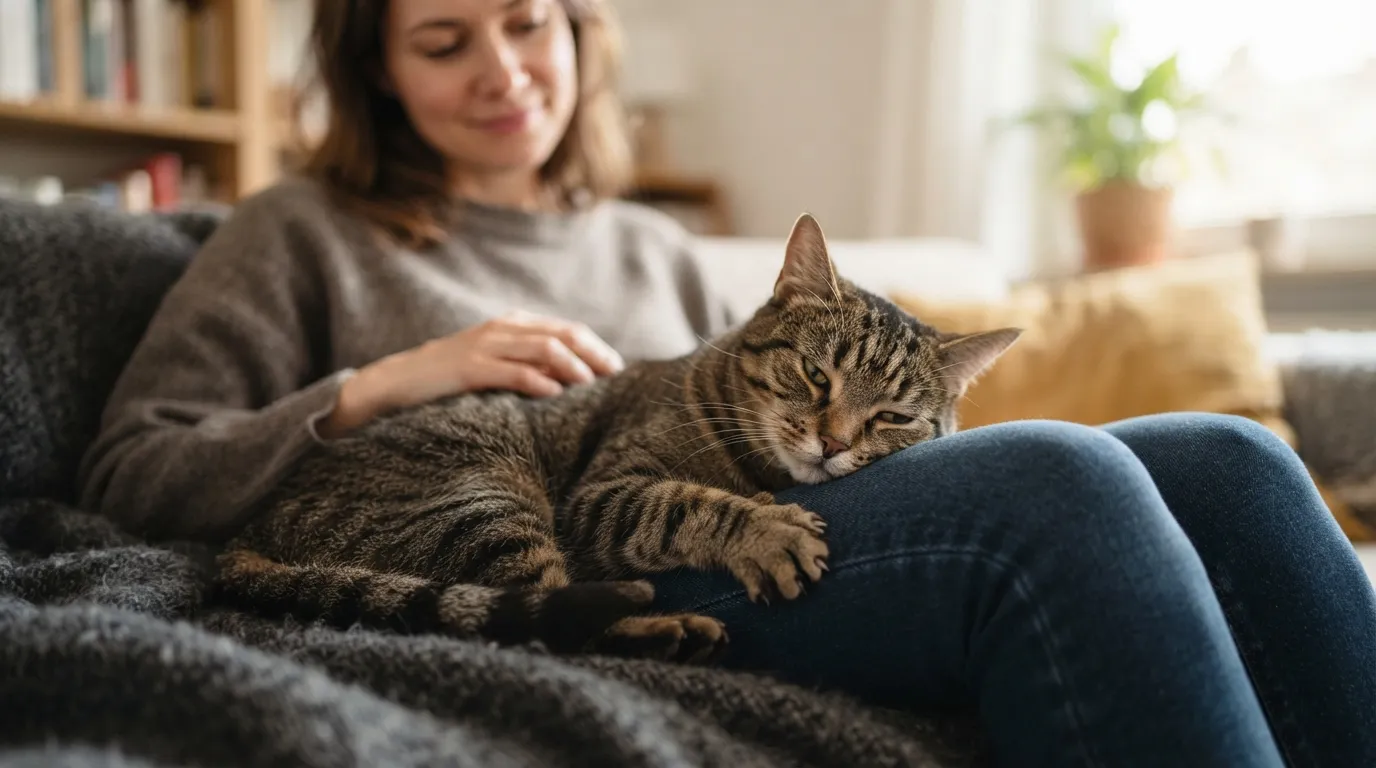
Kneading while purring traces back to kittenhood, when kittens kneaded their mother while nursing. In adult cats, it resurfaces during a positive, safe emotional state.
A sick cat kneading its trusted human is briefly regressing to the most primal comfort behavior it knows. It’s not just affection – it’s a return to a memory of complete safety.
Cats will curl up for long stretches, purring and kneading as a way of showing comfort. If that kneading is reserved for you alone during illness, it’s telling you exactly where it feels most secure.
Worth Knowing
- Kneading is sometimes called “making biscuits,” a nod to the pressing motion kittens use while nursing.
- The behavior often shows up alongside purring and drowsy, half-closed eyes.
- Cats who never outgrow it usually save it for people they consider completely safe.
But that’s nothing compared to what we found about #6…
#6 – It Leans Into Your Touch Instead of Pulling Away
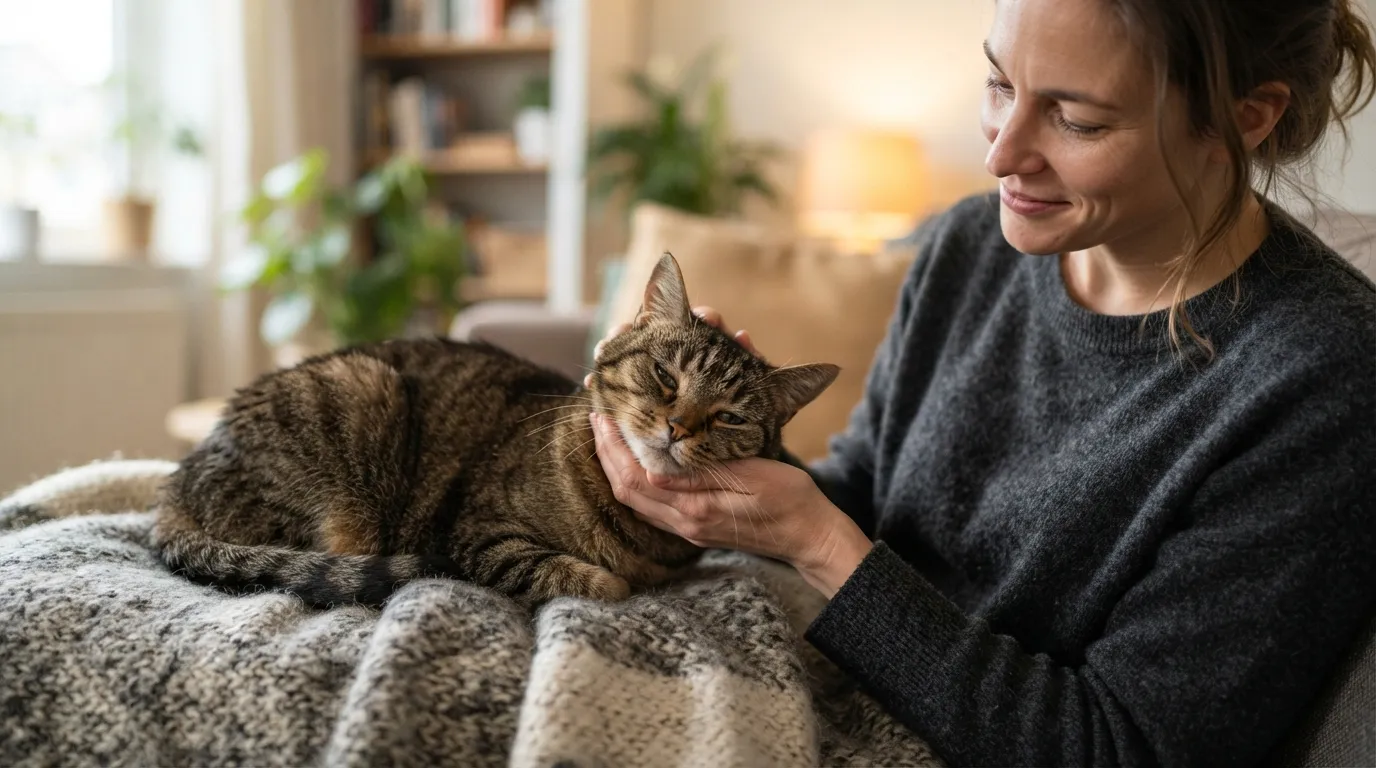
Spotting a sick cat can be tricky – cats are remarkably good at masking pain and discomfort. That’s what makes this next sign so significant.
Most sick cats flinch or pull away from handling. But a cat that leans into the touch of its trusted person, even while in pain, is overriding a powerful survival instinct.
It has calculated that the comfort of your contact outweighs the discomfort of being touched. Research shows cats can form secure attachments to their owners similar to how infants attach to caregivers – and this is that bond playing out in real time.
But that’s nothing compared to what we found about #5…
#5 – It Brings Its “Safe Object” to You
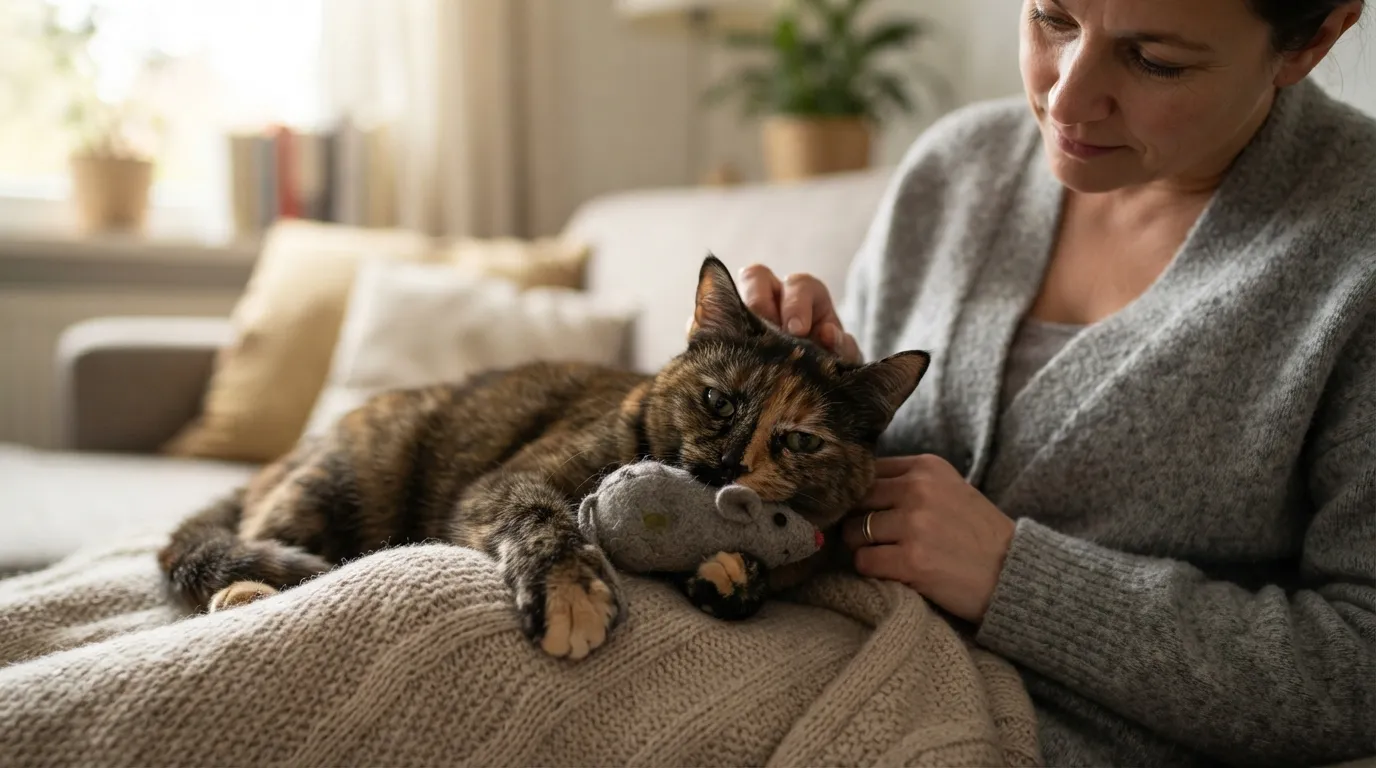
Some cats have a favorite toy or blanket they retreat to under stress. When sick, certain cats will carry or nudge that object toward their trusted person – merging their two sources of comfort into one.
A cat’s behavior often mirrors your own. If it recognizes concern on your face, it may try to comfort you by snuggling or rubbing against you.
The object-carrying is that same instinct reflected back at you. It’s doing the only thing it knows how to do – offering you what makes it feel safe.
But that’s nothing compared to what we found about #4…
#4 – It Refuses to Sleep Anywhere but Your Side
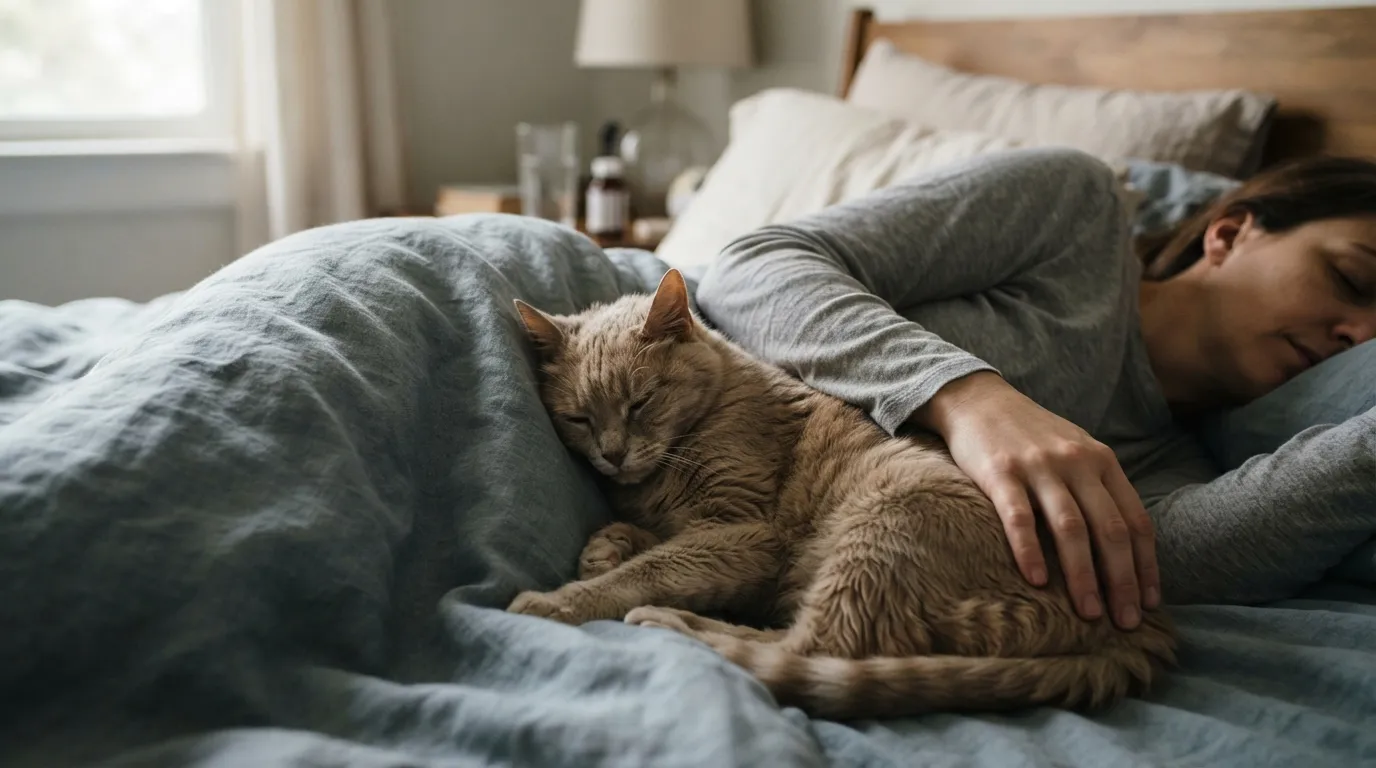
Cats often grow clingy toward a sick owner, staying close as if standing guard. The same logic runs in reverse when the cat is the one who’s unwell.
A sick cat that abandons its usual spots – the window, the sofa, the top of the wardrobe – and insists on sleeping directly against you is making a statement. Every other spot in the house suddenly feels wrong.
Sleep is when an animal is at its most vulnerable. Choosing your side, every time, is choosing complete trust.
But that’s nothing compared to what we found about #3…
#3 – It Grooms You When It Can Barely Groom Itself
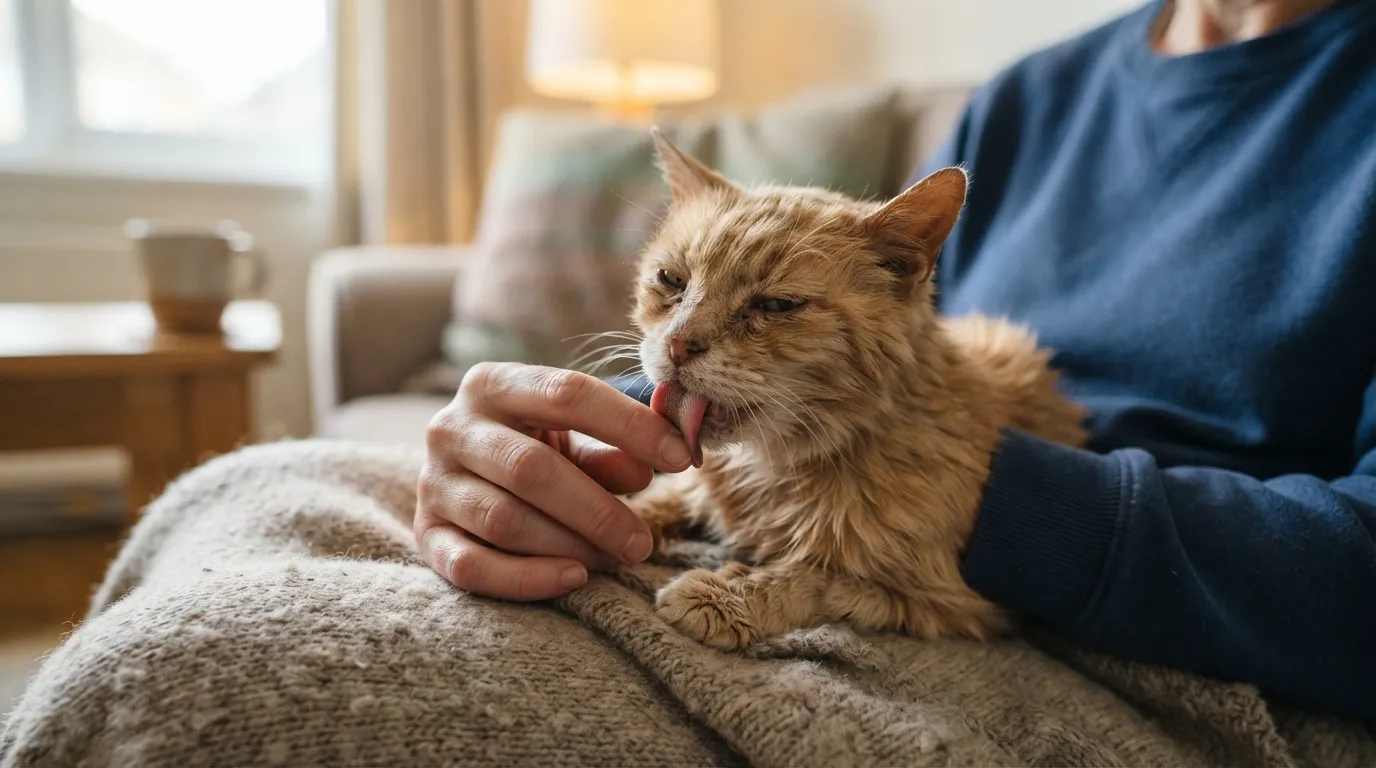
A cat that stops grooming itself is usually signaling pain or distress. So when a sick cat – one that’s neglecting its own coat – still leans over to lick your hand, that gesture carries real weight.
Cats groom the humans they’re bonded with as an expression of closeness and concern. Mutual grooming is one of the highest expressions of trust in feline social behavior.
A sick cat grooming you is spending energy it barely has – on you. That is not a small gesture.
But that’s nothing compared to what we found about #2…
#2 – It Makes Eye Contact and Then Closes Its Eyes Near You
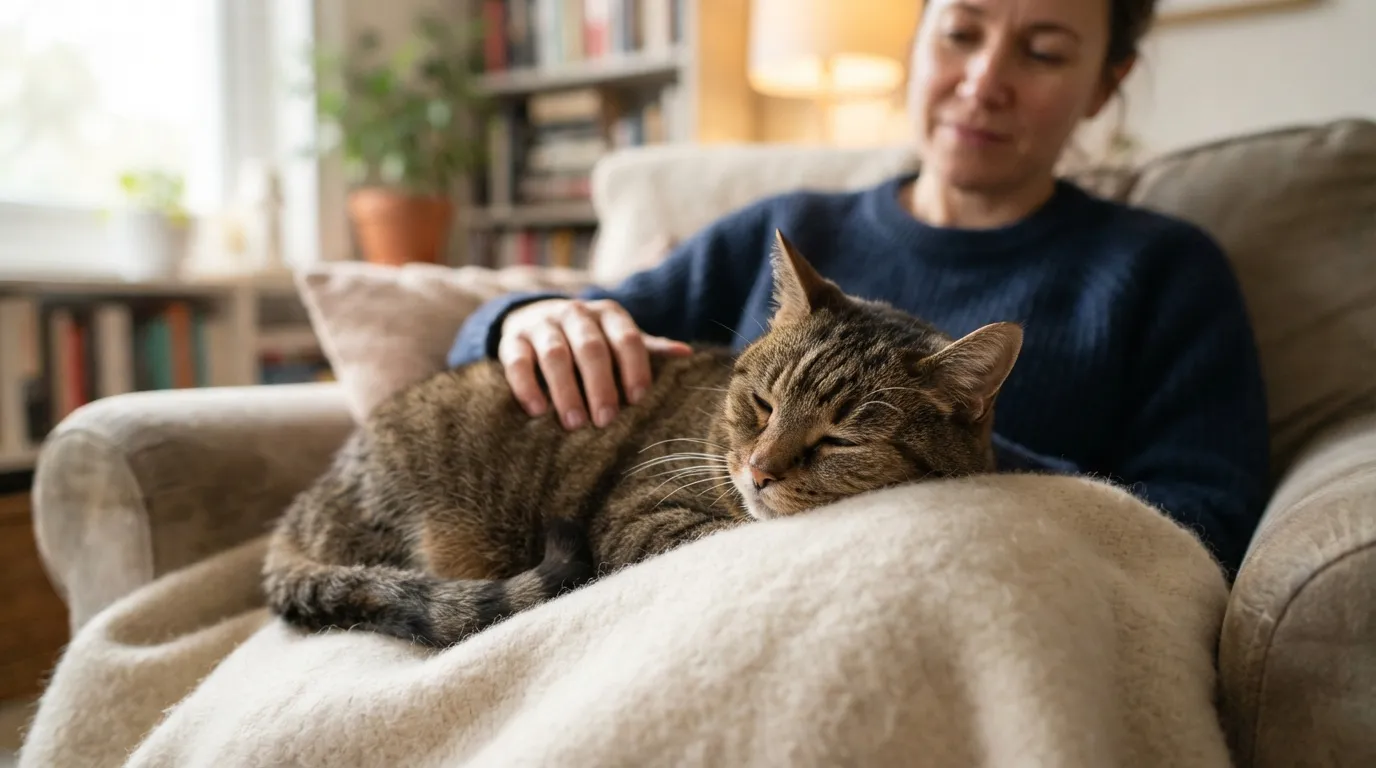
Cats are famous for their independence, yet many owners swear their cat can sense when something is wrong. Illness often brings on unusually attentive, close behavior.
A sick cat that holds your gaze and then closes its eyes – fully, slowly – is performing an act of complete vulnerability. Closed eyes, in feline body language, mean the cat has dropped its guard entirely.
When a cat senses a shift in its trusted person’s presence, it often turns more affectionate in response. When your sick cat closes its eyes in front of you, it has decided you’re the one place safe enough to be defenseless.
But that’s nothing compared to what we found about #1…
#1 – It Comes to You to Die – or to Recover
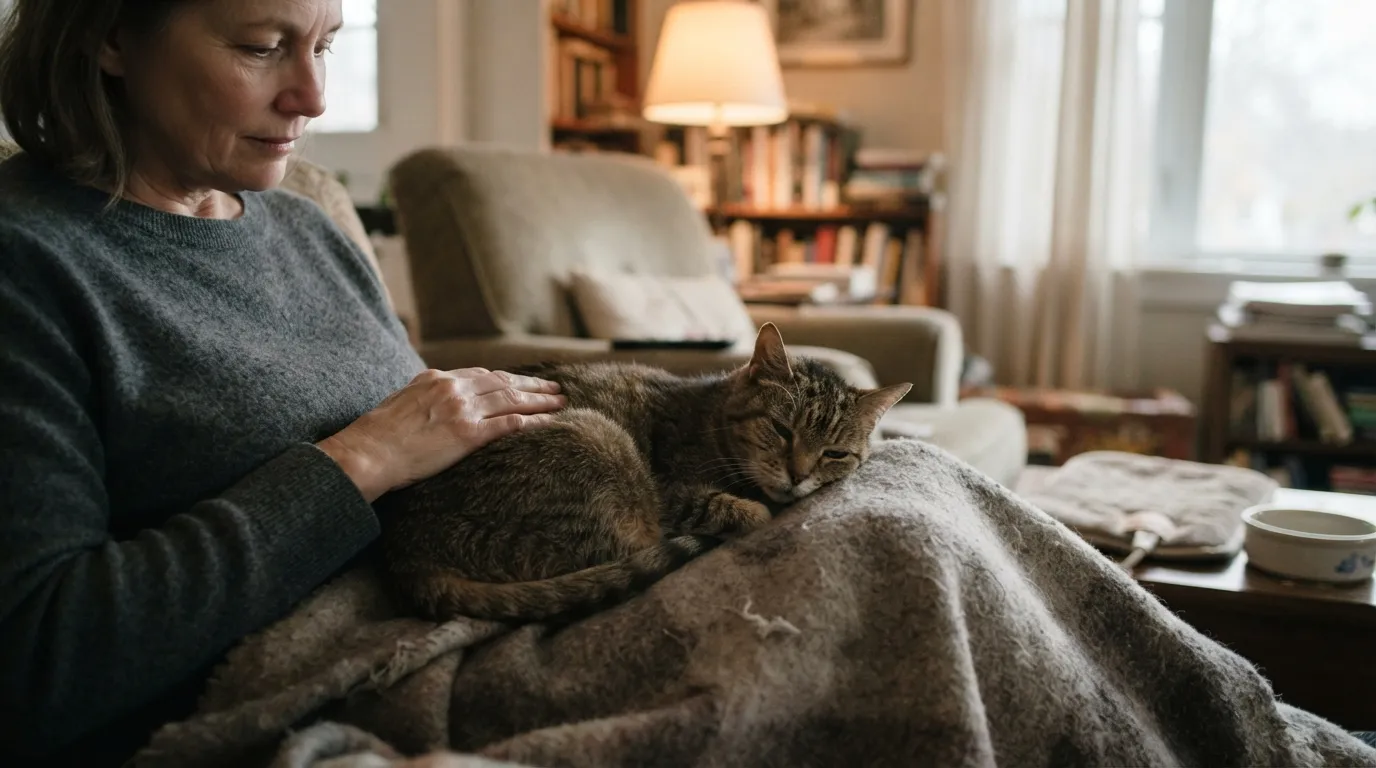
This is the one most people never want to talk about. If a typically independent cat suddenly turns clingy, it’s often because it’s feeling seriously unwell.
Cats instinctively retreat when gravely ill, but the direction of that retreat matters. Daily interaction and mutual trust decide where a cat goes when things get most serious.
A cat that seeks out its trusted person at its sickest moment isn’t choosing convenience. It’s choosing the one presence that lets it feel safe enough to be vulnerable.
This is the deepest vote of confidence a cat can cast. It has decided, quietly and without ceremony, that wherever you are is where it wants to be – even at the end.
The Bottom Line
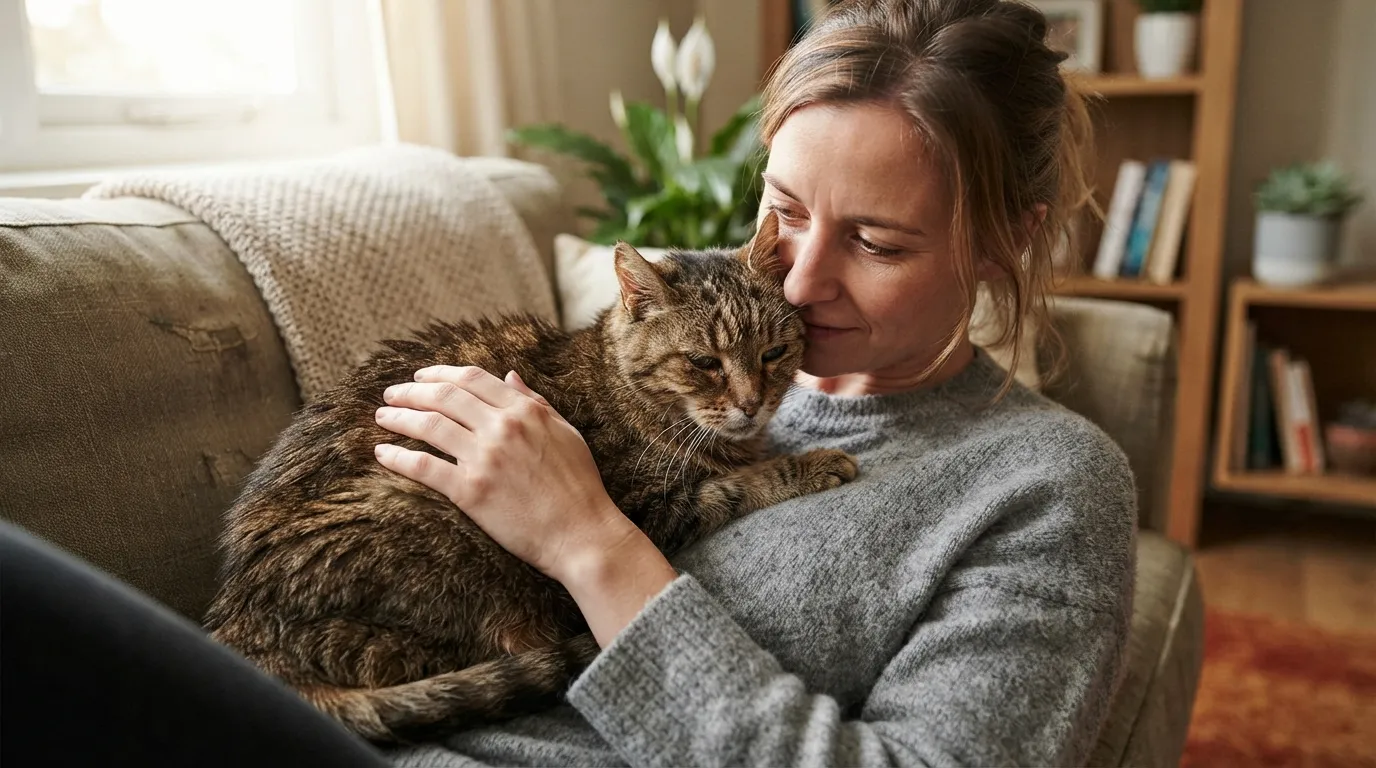
A sick cat doesn’t perform comfort-seeking for just anyone. Early experience, personality, and the trust built through daily care all decide who gets chosen.
Every behavior on this list – the slow blinks, the grooming, the purring, the body heat-seeking – is that trust made visible. Most people miss these signals completely, chalking them up to “the cat just being weird.”
At a Glance
- Trust cues to watch for: slow blinks, purring against your chest, grooming despite feeling unwell.
- Protective cues: blocking doorways, following room to room, refusing to sleep anywhere else.
- The strongest signal of all: seeking you out specifically, not just comfort in general, at its most vulnerable moment.
Turns out, your cat has been trying to tell you something precise and deliberate the whole time. Did your sick cat do something on this list we didn’t cover? Drop it in the comments – we read every one.