You probably think your indoor cat is fine all winter. A little extra sleep, a little extra food, maybe some grumpiness – no big deal, right?
Turns out that’s dead wrong. Reduced daylight scrambles a cat’s natural rhythms, and an unstimulated indoor cat doesn’t just get restless – it starts overgrooming, scratching furniture, acting aggressive, avoiding the litter box, and tearing through the house at 3 a.m.
Even the weight gain sneaks up on you, hidden under a fluffy winter coat until it’s already a problem. The good news: the fixes are simpler than you’d guess, and most of them cost nothing.
#15 – Recognize the Real Warning Signs First
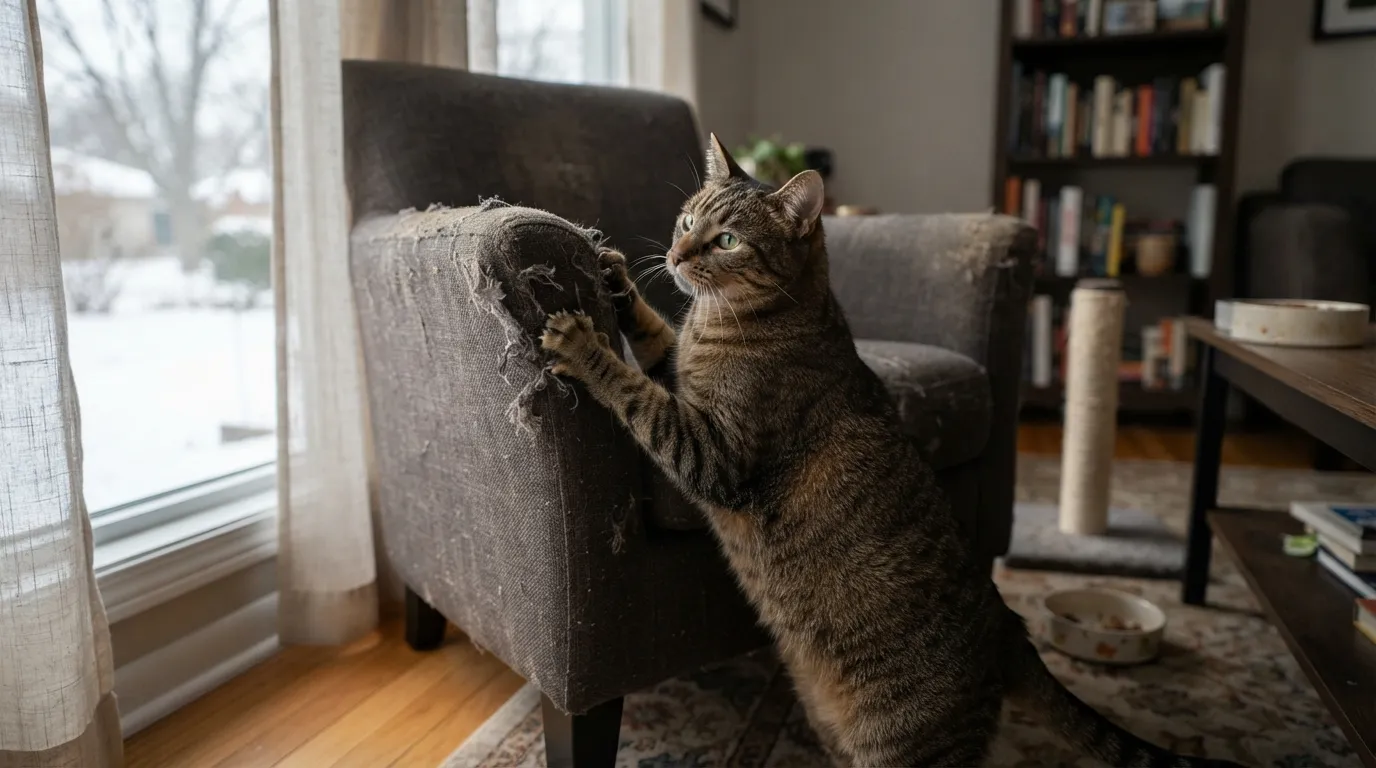
Most owners miss the early signals completely. They just don’t know what they’re looking at.
Indoor cats get less stimulation in winter thanks to closed windows, reduced activity, and a world that stops changing. Watch for excessive meowing, destructive scratching, nighttime hyperactivity, overeating, and constant attention-seeking.
Here’s the trap: a bored cat pestering you often gets mistaken for a hungry cat. Feed that misread enough times and you’ve got a genuine weight problem on your hands.
Catch the behavior early and the fix is easy. Miss it, and things escalate fast – which is exactly why #14 matters so much.
#14 – Stop Leaving All the Toys Out at Once
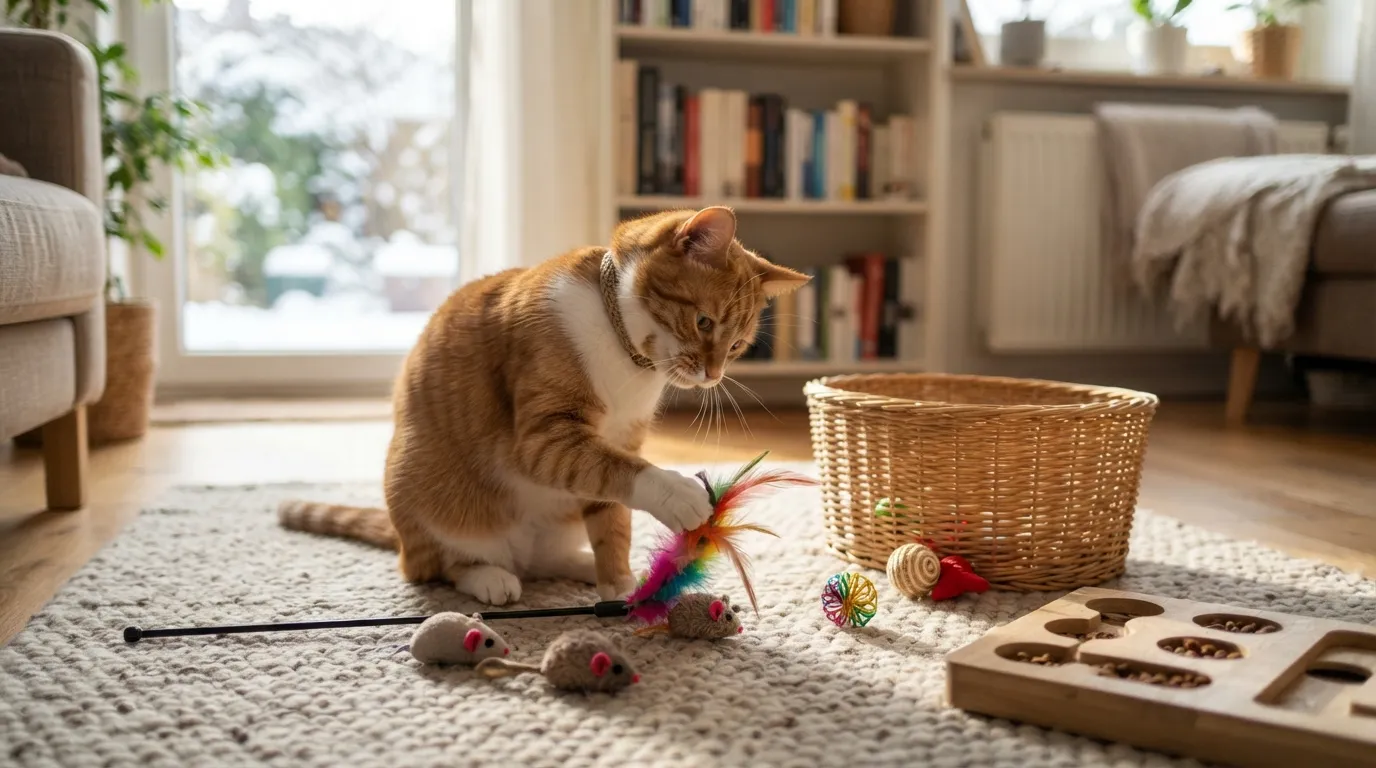
It feels generous to give your cat access to every toy, all the time. It’s actually one of the biggest mistakes owners make.
Cats lose interest fast in anything that never changes. Rotating toys weekly is what keeps curiosity alive.
Feather wands, puzzle toys, and laser pointers all tap into hunting instincts – but only if they still feel new. Pull half the toy bin away, swap it in later, and watch your cat rediscover old toys like they’re brand new.
Simple swap, real payoff. But wait until you see what a single window can do for a bored cat in #13.
#13 – Turn One Window Into Prime Real Estate
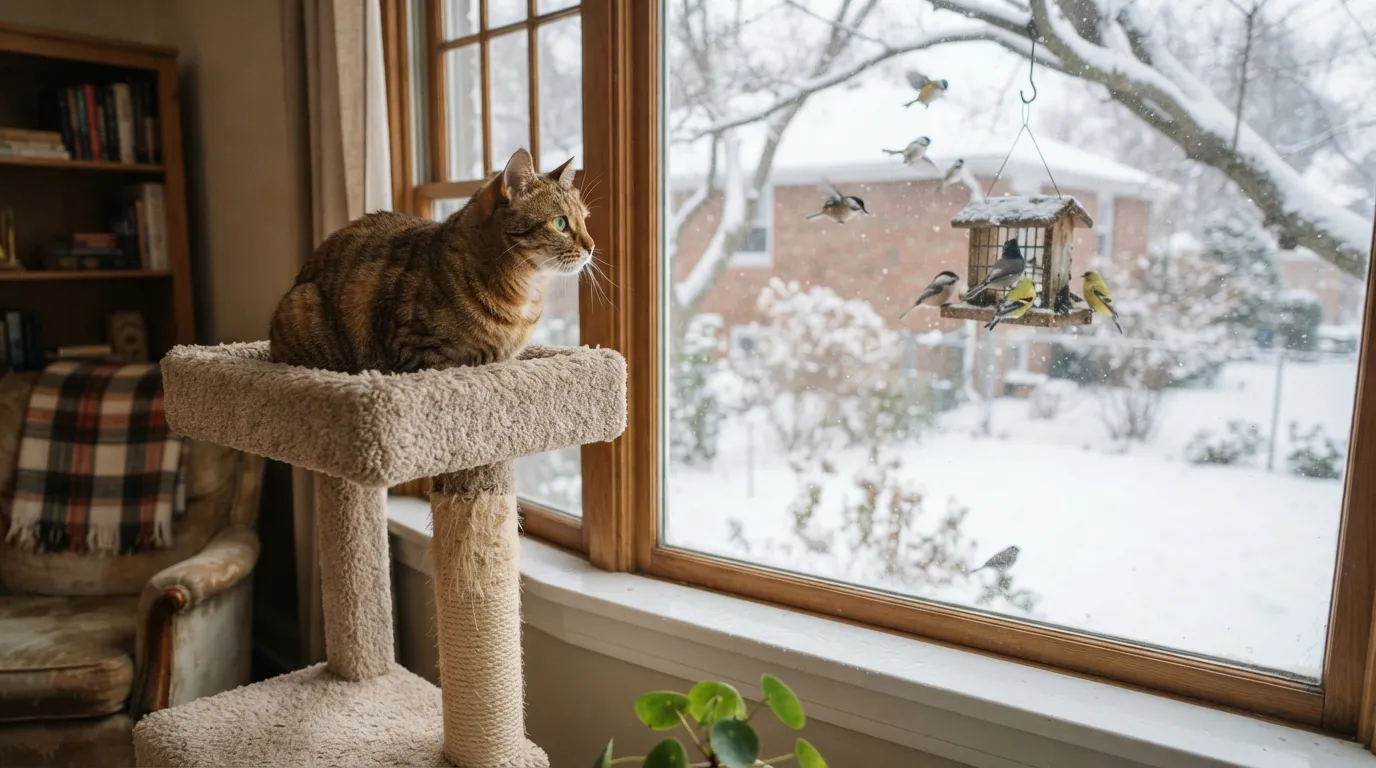
This fix costs almost nothing and delivers an outsized result. All it takes is a little furniture rearranging.
Set up a comfortable perch facing a bird feeder, squirrel activity, or just general outdoor movement. Even winter delivers birds, falling snow, and the occasional wildlife sighting.
Add a cat tree, wall-mounted shelf, or sturdy carpeted perch right by the glass. Height gives your cat a way to survey their territory, and that sense of oversight is oddly calming for them.
A cheap bird feeder outside the glass might be the closest thing to free entertainment you’ll ever buy your cat. Next up, though, is the enrichment trick most owners never even consider trying.
#12 – Ditch the Food Bowl for a Puzzle Feeder
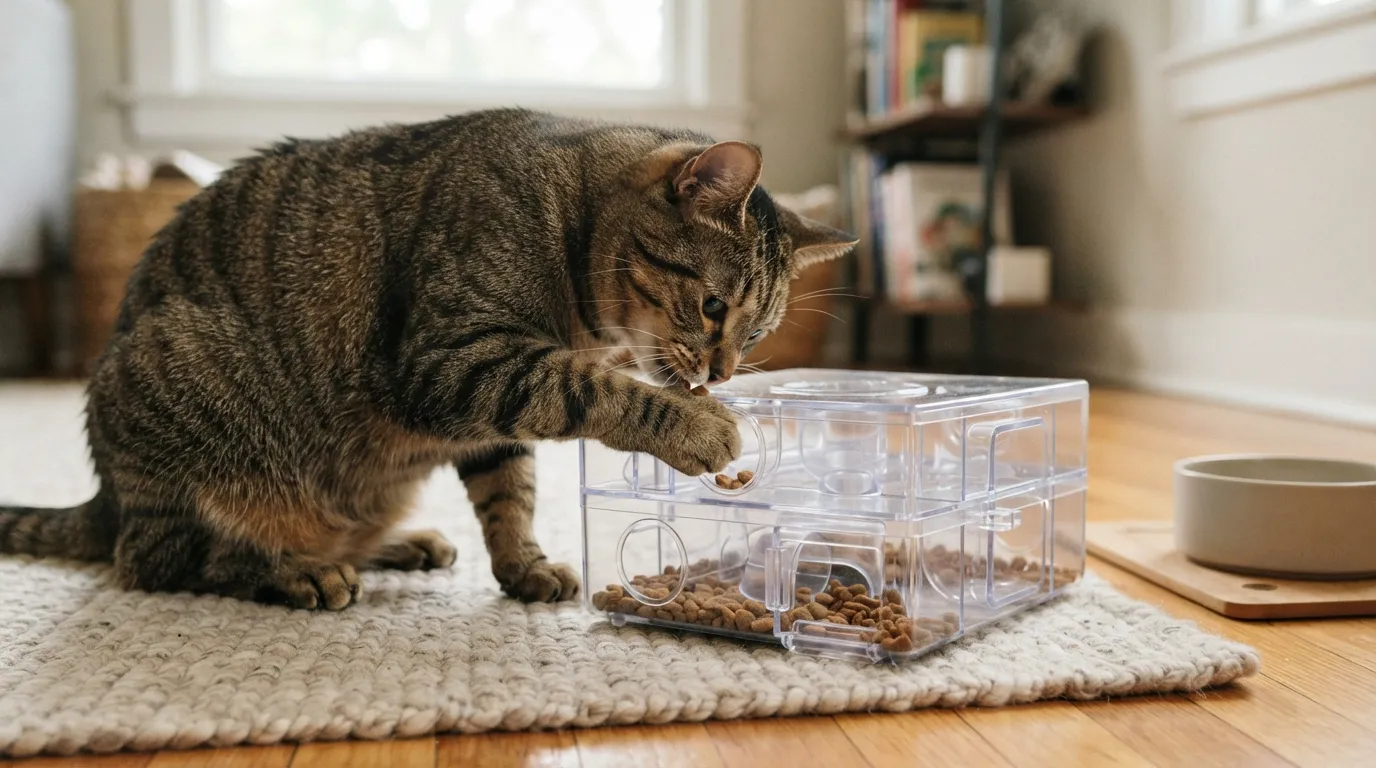
If your cat still eats from a plain bowl, you’re wasting the single biggest enrichment opportunity of the day. This one’s an easy fix.
Puzzle feeders force cats to work for food, mimicking natural hunting behavior. It also slows down fast eaters, which helps digestion too.
Quick Compare
- Plain bowl: Food disappears in under two minutes with zero mental effort involved.
- Puzzle feeder: The same meal can stretch into 15-20 minutes of problem-solving.
- Plain bowl: Feeds fast eating and boredom-driven begging later in the day.
- Puzzle feeder: Mimics a hunt, then rewards it – the exact cycle a cat’s brain wants.
Start simple – clear plastic puzzles where your cat can see the food work best for beginners. Increase the difficulty gradually as they figure it out.
No budget for a store-bought version? Muffin tins, cardboard boxes with holes, or cut-open plastic bottles all work just as well. The next fix, though, is about timing – and almost everyone gets it backwards.
#11 – Play at the Right Time, Not Just Any Time
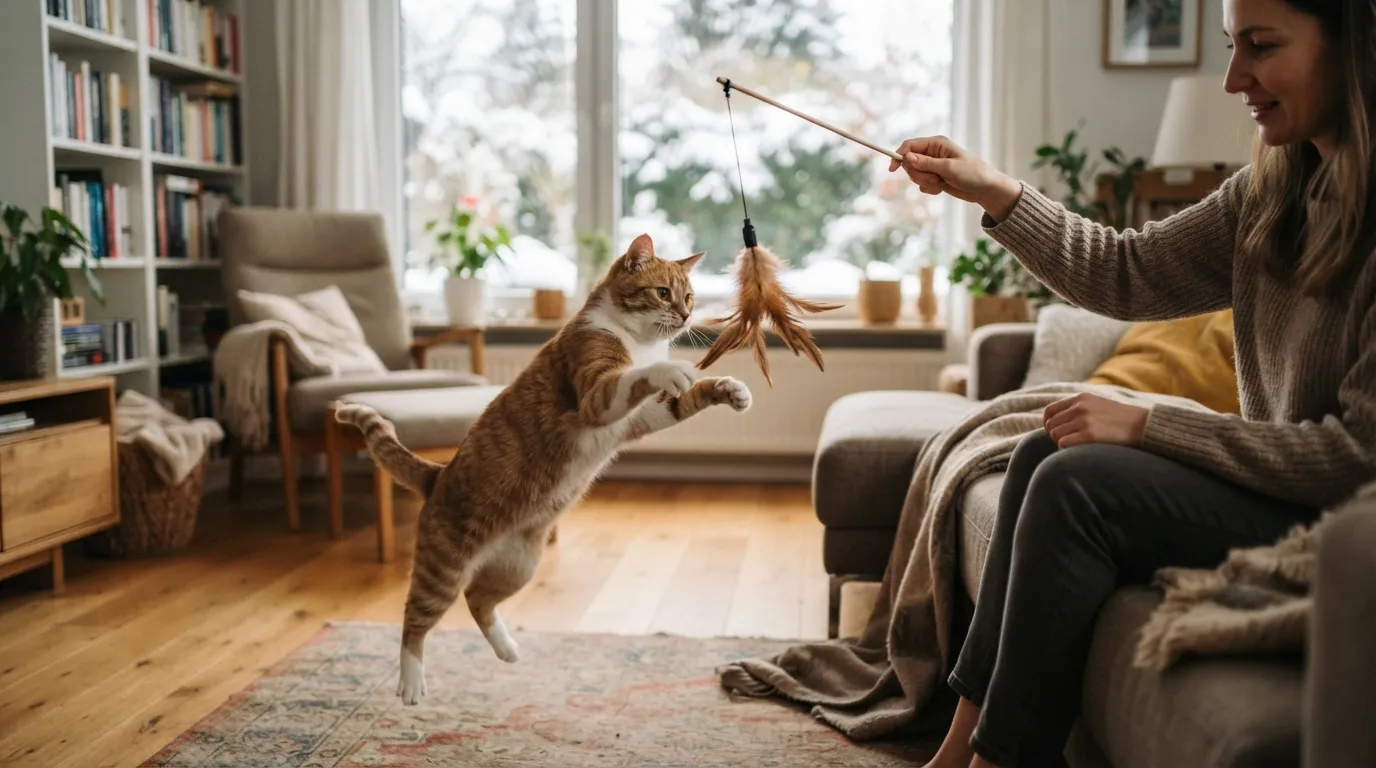
Most people play with their cat whenever it’s convenient. Experts say that timing is exactly wrong.
Aim for two 10–15 minute sessions daily, ideally right before meals. This mimics the natural hunt-eat-groom-sleep cycle your cat’s brain is wired for.
Get the sequence right and nighttime restlessness drops noticeably. Multiple short sessions beat one long, exhausting one every time.
Build it into your schedule like an appointment, and your cat will start anticipating it. That anticipation alone is a form of enrichment – but the way you move the toy matters just as much, which brings us to #10.
#10 – Move the Wand Toy Like It’s Actually Prey
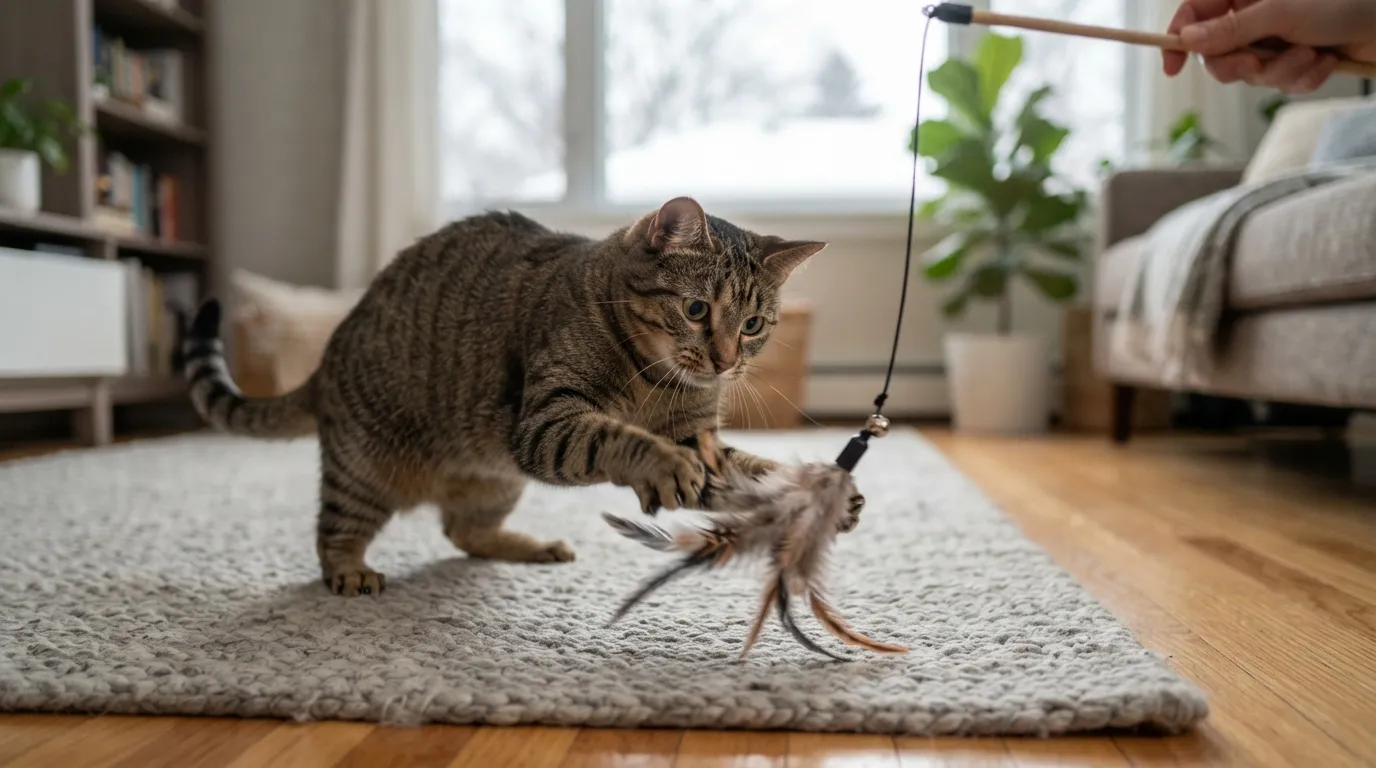
Wand toys are everywhere. Almost nobody uses them correctly.
The trick is technique: move the toy like scared prey, with sudden stops, quick darts, and moments where it freezes in fear. Let your cat catch it periodically – the frustration of never winning kills the fun fast.
Don’t make it too easy, but don’t make it impossible either. Let your cat catch it at the end and follow up with a treat or meal, closing the hunt cycle properly.
Senior cat at home? Slow the movements down and keep them low to the ground. Speaking of aging cats – vertical space matters more than most owners realize, and #9 explains why.
#9 – Give Your Cat a Second Floor
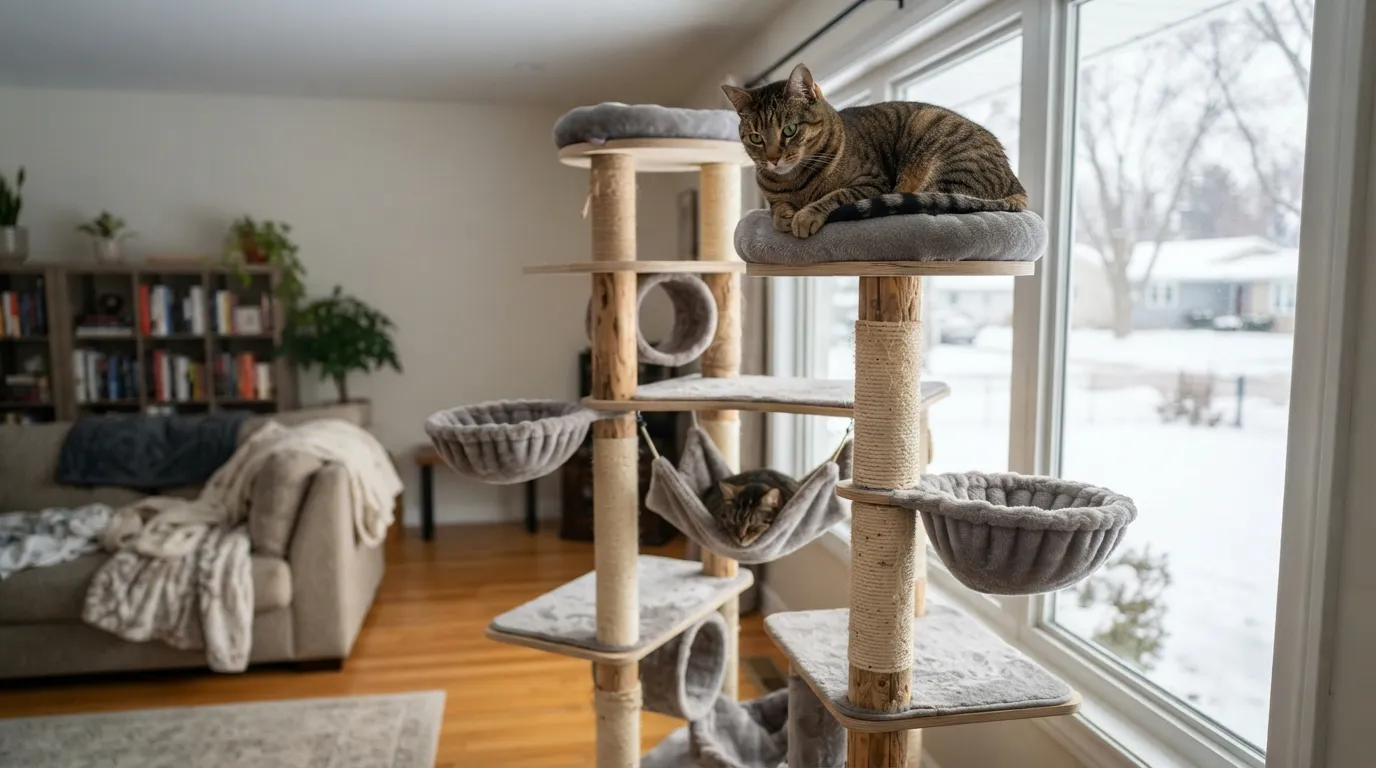
Cats don’t just want floor space. They need height, and most homes never give them enough of it.
Cat trees, shelving, and window hammocks all create elevated spots for observing their world. That elevated view triggers natural feline behavior your cat rarely gets to express indoors.
Why It Stands Out
- Elevated perches let cats monitor the room without feeling exposed or cornered.
- Climbing burns off energy that would otherwise turn into 3 a.m. zoomies.
- Built-in scratching posts protect both your furniture and your cat’s claws.
- A window-facing shelf doubles as a lookout post and a favorite nap spot.
A good cat tree offers climbing, scratching, and exploring in one piece of furniture. Different textures, different heights, and dangling toys all feed into a cat’s mental health.
Place one near a window and you’ve covered height, visual stimulation, and exercise in a single move. Up next: the trick that turns mealtime into a full-blown hunting expedition.
#8 – Hide Food Around the House Like Prey
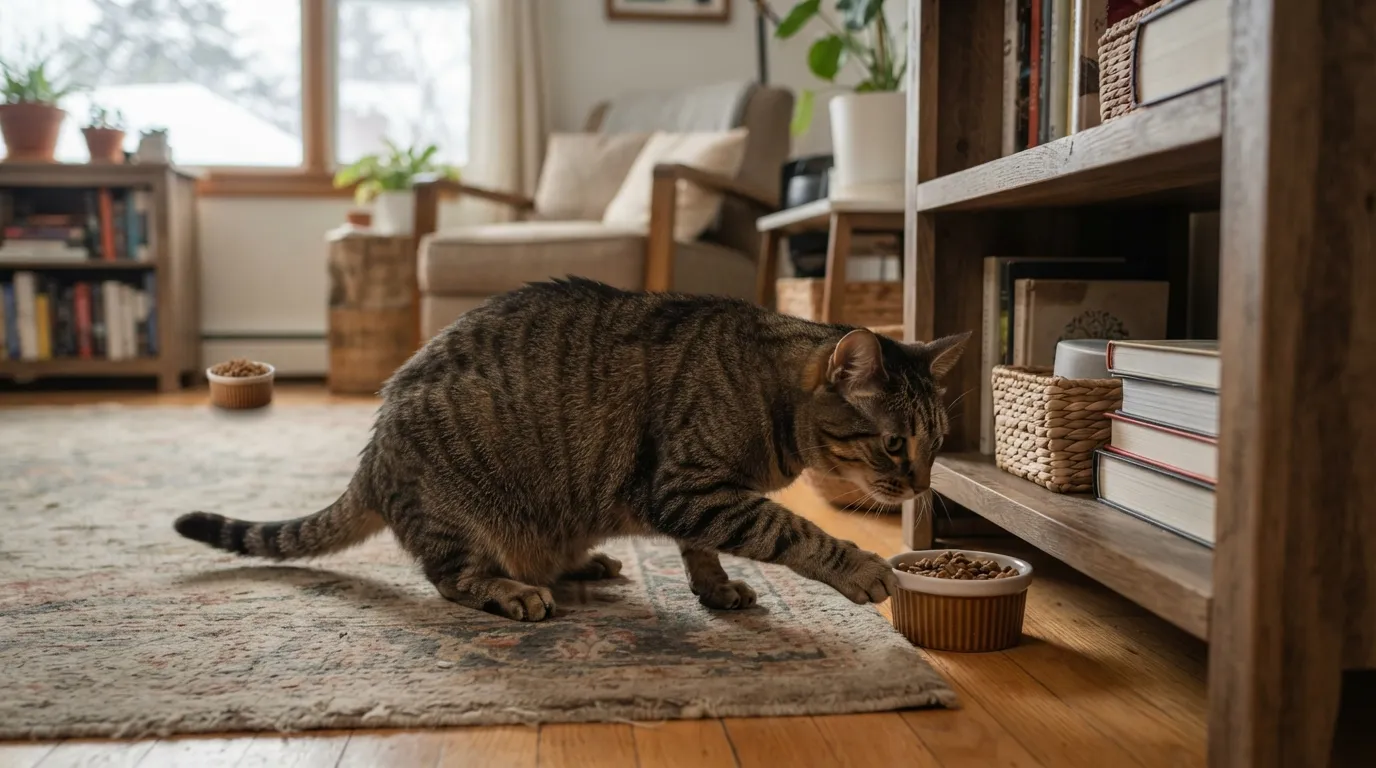
This is one of the most underused tricks in the entire list – and it works on nearly every cat. It also takes almost no effort.
Break your cat’s daily food into smaller portions and hide them around the house. Your cat has to stalk and hunt to find each one.
It builds in a little extra exercise and delivers real mental stimulation, especially useful on the days you’re gone all day. You may need to guide your cat the first few times until they catch on.
Once they get it, they’ll start hunting before you’ve even finished hiding the last portion. But even the smartest cat gets stuck seeing the same four walls – which is exactly the problem #7 solves.
#7 – Bring a Piece of the Outdoors Inside
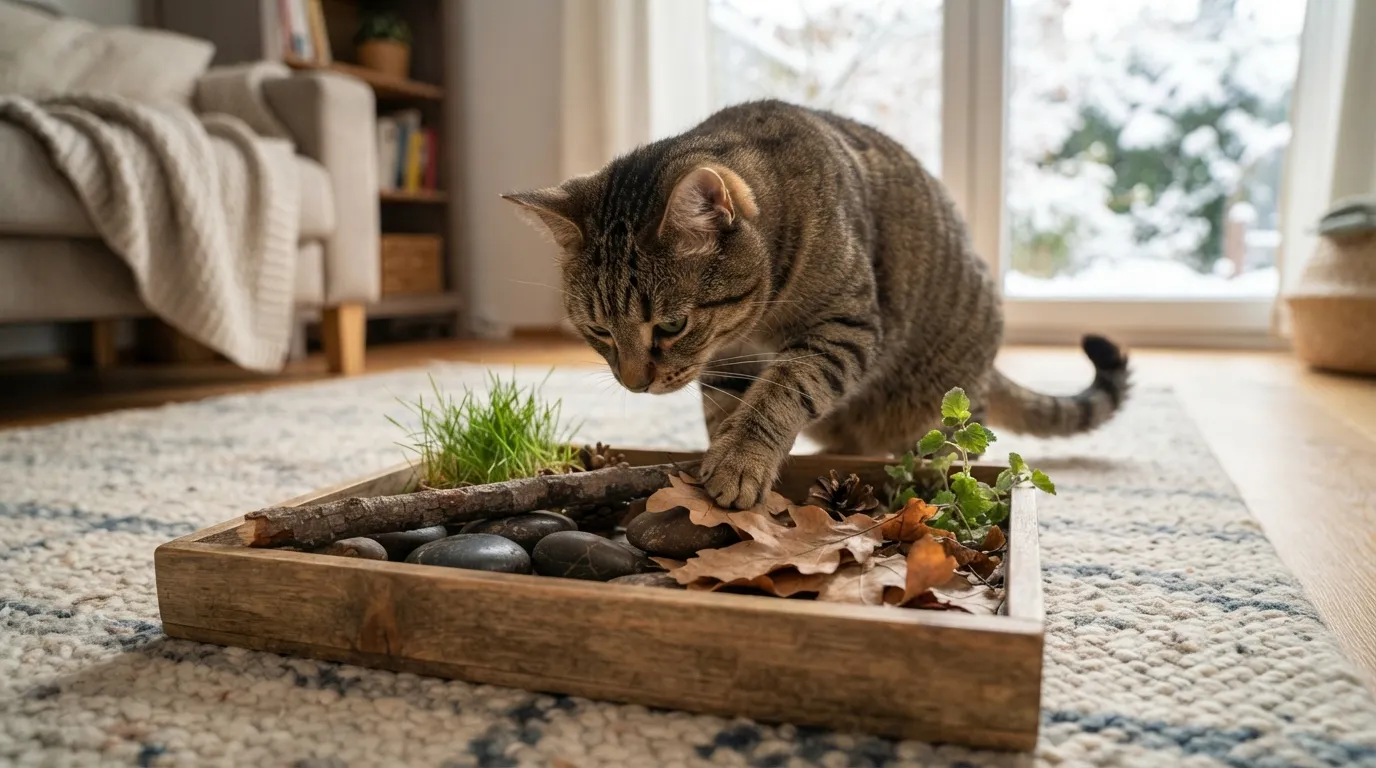
Indoor cats see and smell the exact same environment every single day of winter. Experts take that sensory monotony seriously.
The fix is almost too simple: bring a little outside in. Grab a few rocks, a stick, or a leaf, and drop them in a shallow box for your cat to investigate.
Worth Knowing
- Pinecones, smooth stones, and dry leaves are usually safe starter items.
- A shallow tray of clean snow offers a brand-new texture to paw at.
- Skip anything treated with pesticides, salt, or unknown chemicals.
- Fresh-cut grass or a catnip sprig adds a scent cats rarely get in winter.
They’ll sniff, roll things around, and use their senses for a few genuinely engaged minutes. When they lose interest, toss the items back outside.
Just double-check nothing you bring in is toxic, and supervise the whole thing. Speaking of cheap fixes, cardboard boxes are about to outperform every expensive toy you own.
#6 – Build an Obstacle Course Out of Cardboard
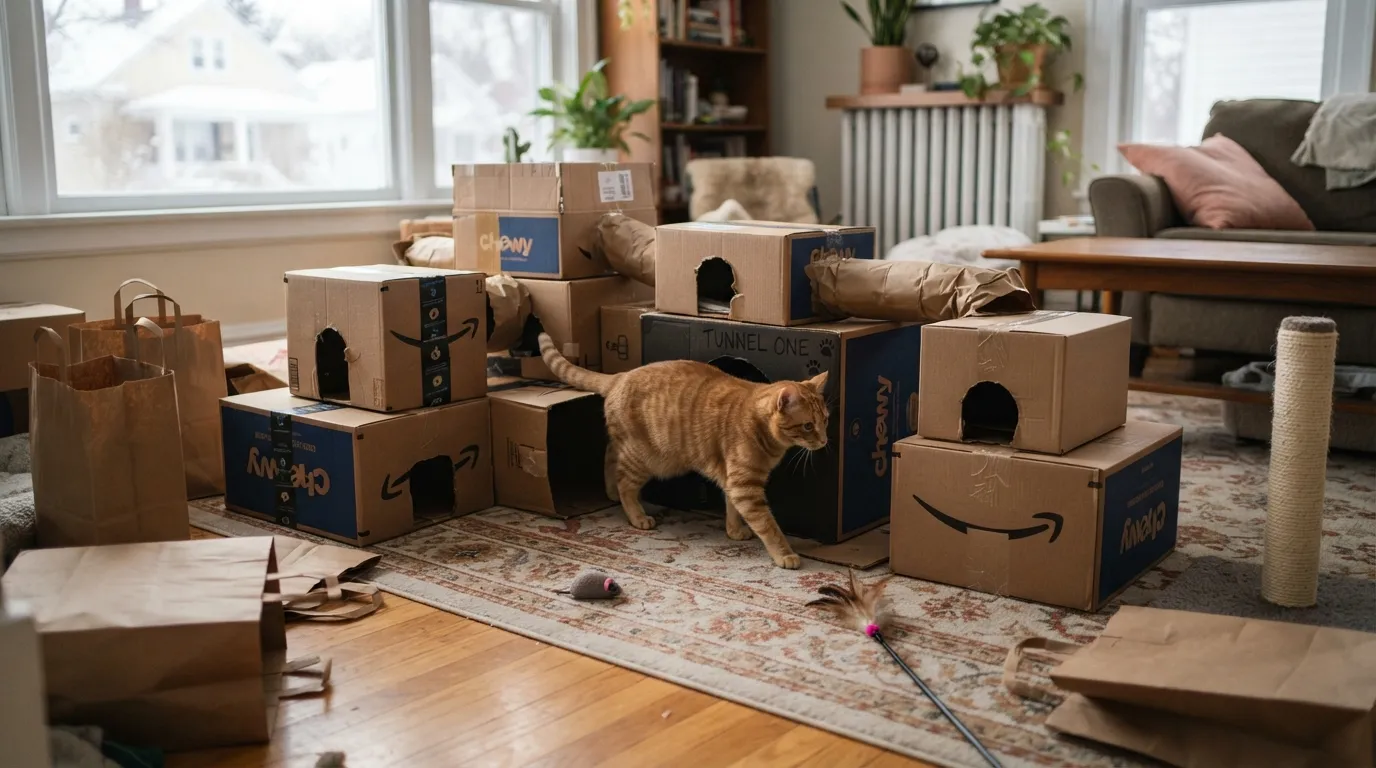
Your cat doesn’t need a fancy gym. It turns out cardboard boxes do the job better than most store-bought toys.
Set up tunnels, boxes, and hiding spots to create a simple obstacle course. It keeps curiosity and agility high through the dullest winter months.
Scatter boxes and handle-free paper bags around different rooms to encourage independent exploration. Just supervise for safety while your cat solves the puzzle at their own pace.
Rearrange it every few days so it never gets stale. Next, though, is arguably the single most powerful tool on this entire list – and almost nobody tries it.
#5 – Start Clicker Training This Week
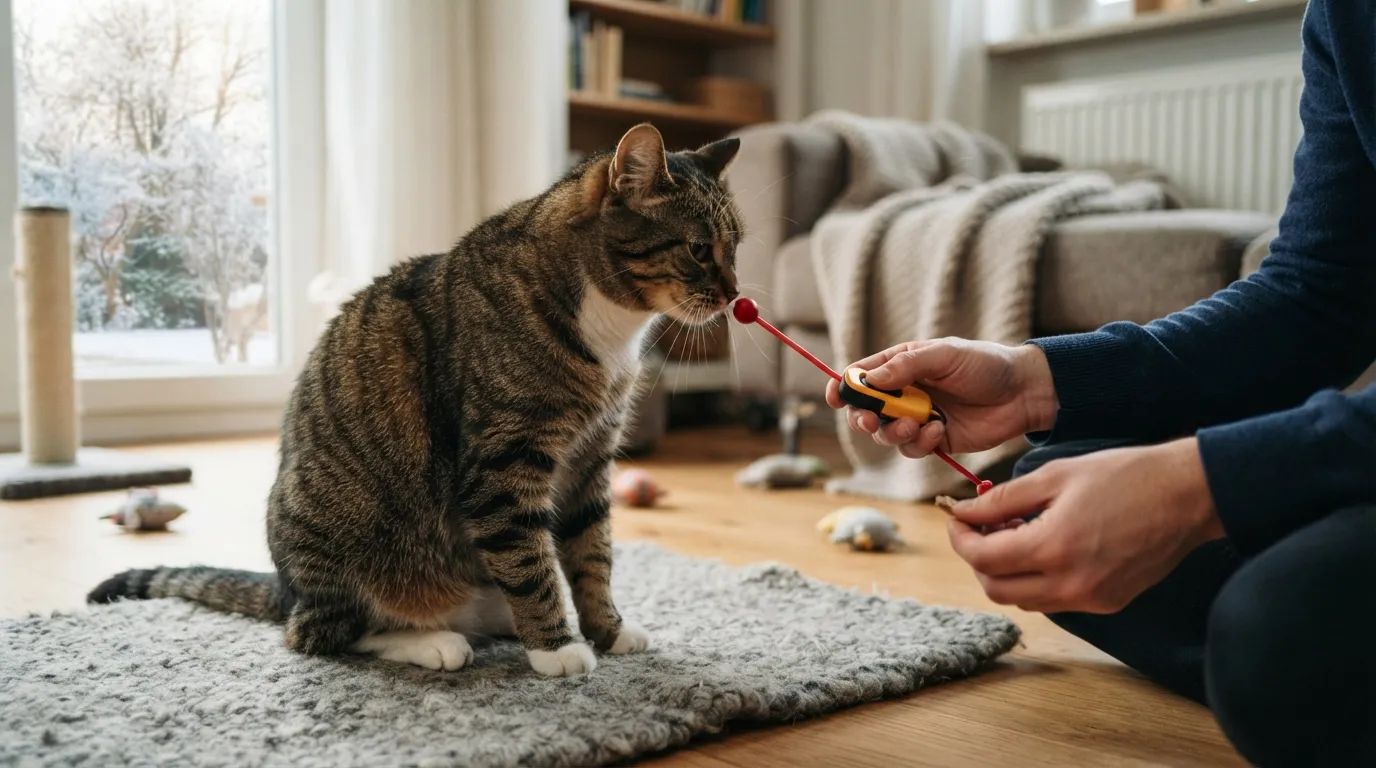
Most cat owners have never even attempted this. It might be the most underrated fix here.
Mental work tires a cat out just as effectively as physical play. Trick training remains one of the most overlooked tools for beating winter boredom.
Simple behaviors like targeting, sitting on a mat, or walking through an object can be taught in short sessions. It works for cats of nearly any age.
Always let your cat choose to engage – forcing it defeats the purpose and adds stress instead of relieving it. Five minutes of clicker training can exhaust a cat’s brain more than twenty minutes of solo toy play, but there’s a quieter issue brewing in the food bowl that deserves just as much attention.
#4 – Fix the Calorie Math Before It Becomes a Problem
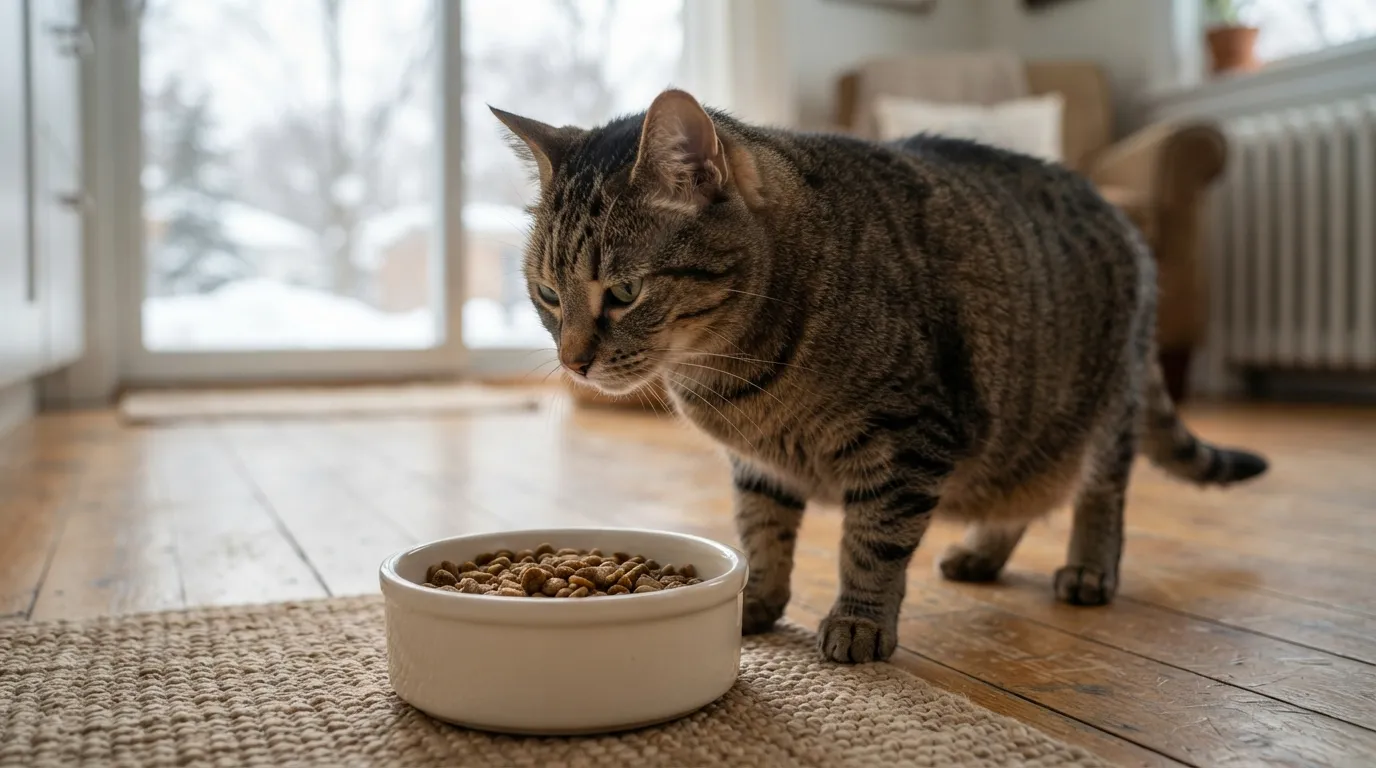
Everyone’s focused on play. Experts say what’s in the bowl matters just as much, and most owners get it badly wrong.
Shorter days mean less playtime for both of you. At the same time, some cats naturally eat more in winter – a holdover instinct from wild ancestors who needed extra calories to survive the cold.
Adjust your cat’s intake based on their actual activity level, not the season on the calendar. Switch to low-calorie treats, or simply use them more sparingly.
Here’s the number that stops most owners cold: one extra pound on a cat is roughly equivalent to 15 extra pounds on an average woman, or 17 on a man. That single pound is metabolically significant on a cat’s small frame, and it can meaningfully raise health risks.
“I’m always looking for ways to demonstrate how serious even a few excess pounds on a pet can be.”
Dr. Ernie Ward, Association for Pet Obesity Prevention
A predictable daily rhythm can help keep that weight in check – which is exactly what #3 is about.
#3 – Give Every Day the Same Shape
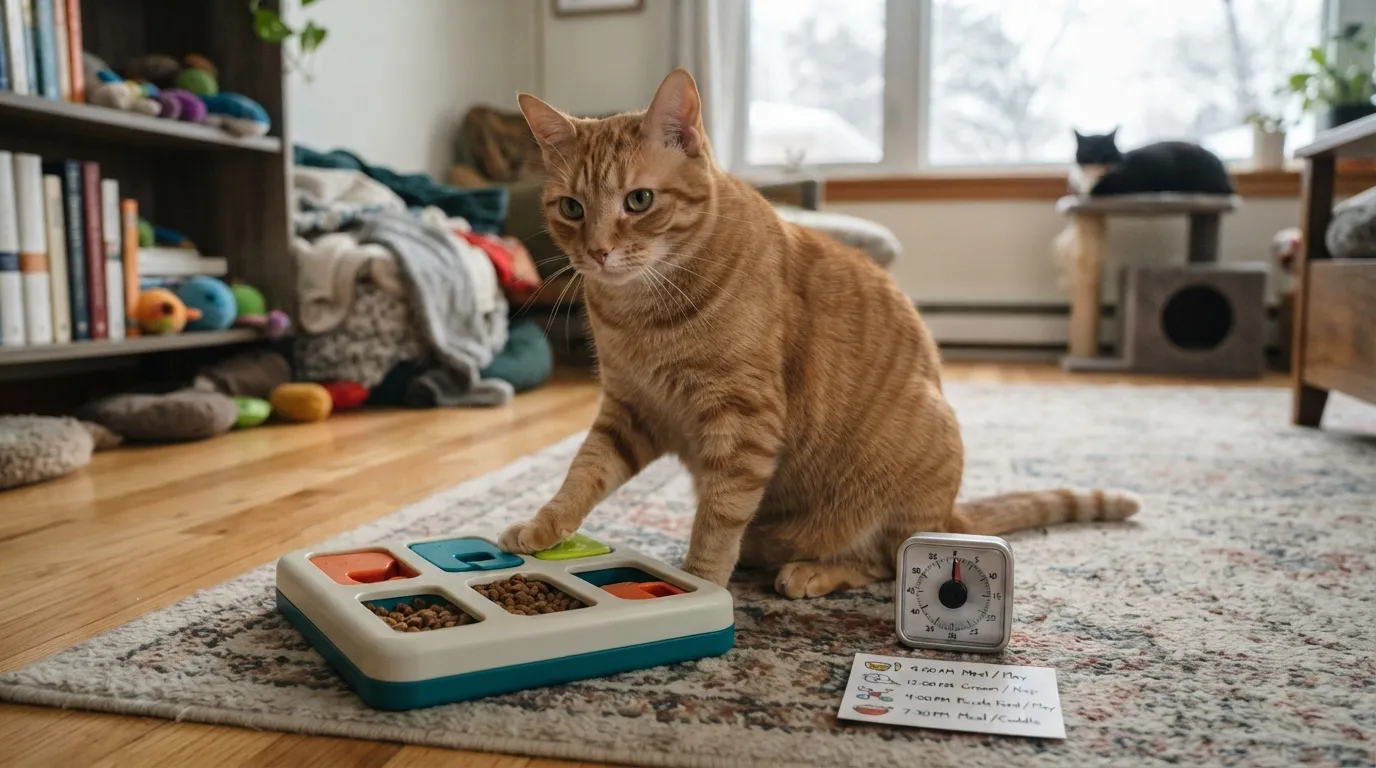
Cats thrive on predictability, and winter chaos wrecks it completely. This is the fix most owners skip entirely.
Short, varied enrichment sessions spread through the day beat one long block of activity. Using feeding time as a puzzle-solving opportunity stacks mental and nutritional benefits together.
Predictable routines reduce stress noticeably, especially in multi-cat households where tension already runs higher. Set a consistent schedule for meals, play, and exercise and stick to it.
A structured day gives your cat something to anticipate – and that rhythm turns out to be one of the strongest stress reducers available. The next fix, though, pays off long after winter ends.
#2 – Start Harness Training Before Spring Hits
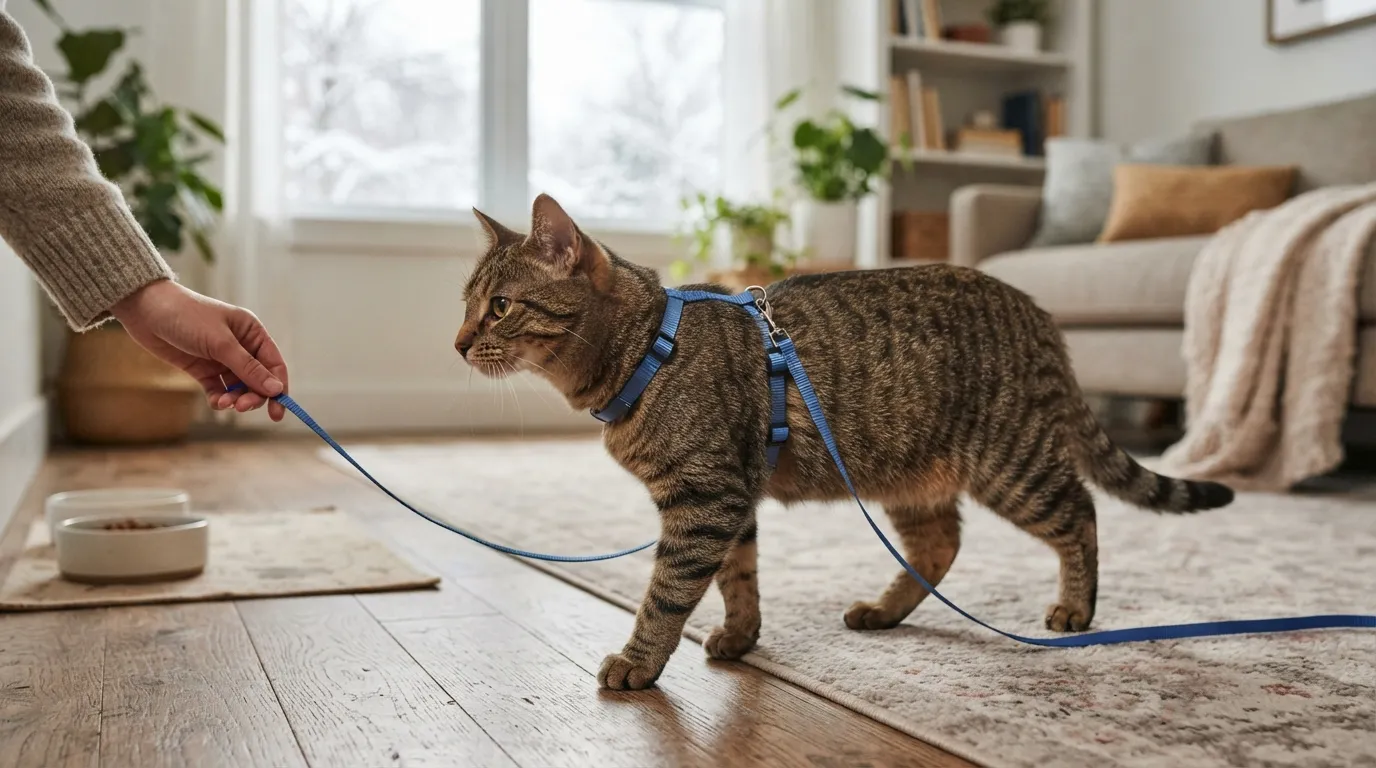
This one surprises most owners, and it’s a fix that keeps paying off for years, not just one season. Winter is actually the ideal time to start.
Leave the harness near the food bowl first so it becomes familiar. Progress to wearing it for a few seconds with treats, then longer stretches.
Add the leash next and let your cat drag it around the house on their own terms. Practice walking indoors with zero tension before you ever consider stepping outside.
A well-trained cat on a harness gets safe access to new sights, sounds, and smells – the ultimate cure for cabin fever, for both of you. By spring, you could have a cat that explores the outdoors safely, all built from a three-minute daily habit that starts right now.
#1 – Address the Mental Toll Nobody Talks About
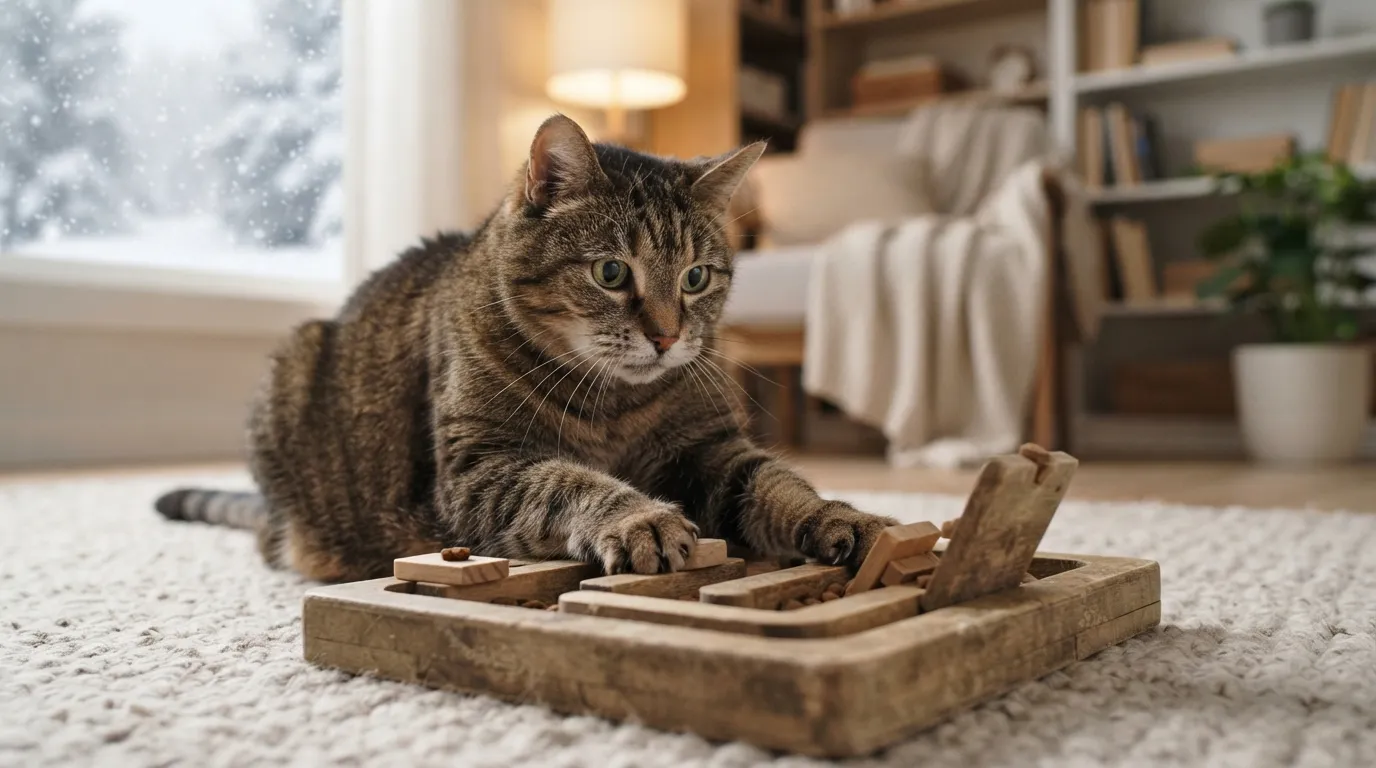
Everyone focuses on keeping their cat busy. Almost nobody addresses the deeper cognitive cost of a long, low-stimulation winter.
Senior cats especially can show real changes in memory, awareness, or problem-solving during these stretches. Regular mental stimulation can slow that cognitive decline and keep older cats sharper.
Simple games, scent trails, and gentle puzzle toys all help maintain that mental edge. Mental stimulation matters for cats of every age – it directly lowers stress and anxiety, not just boredom.
A comfortable hiding space also gives your cat somewhere to decompress and feel genuinely secure. Get this right, and you’re not just fixing a symptom – you’re protecting the whole cat: body, brain, and emotional well-being, all at once.
Winter doesn’t have to shrink your cat’s world down to four walls and a heating vent. Rotate the toys, hide the meals, train a few tricks, build that window station, and keep the days predictable – none of it costs much, and all of it compounds. Pick one fix tonight, and by the time spring rolls around, your cat won’t just have survived the winter. They’ll have actually enjoyed it.
Kristina is a young writer from India. An arts graduate and an avid content creator, Kristina is passionate about animals and wildlife. She enjoys exploring topics related to pet care, animal behavior, conservation, and nature, combining thorough research with engaging storytelling.