
Most people assume all cats are basically interchangeable – a different coat, a different meow, maybe a little more or less patience for children. Then they spend an afternoon with a Bengal, and that whole assumption falls apart.
This isn’t a checklist of vague personality traits. These are real, documented differences – genetic, physical, and behavioral – that separate the Bengal from every other domestic breed on the planet, and by the time you hit #1, you’ll understand why owners rarely go back to anything else.
#14 – The Wild Ancestry That No Other Domestic Breed Can Match
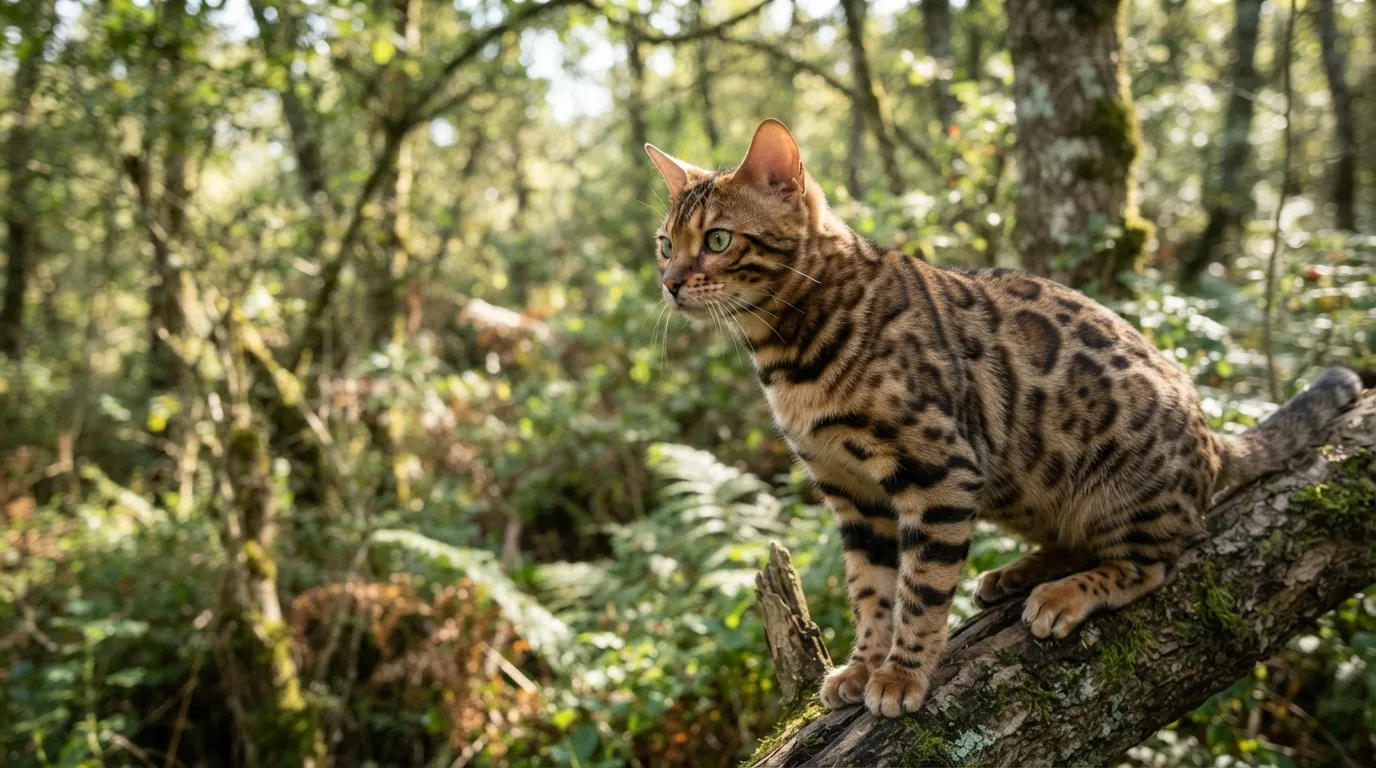
Most domestic cats trace back to the same quiet lineage stretching thousands of years. The Bengal breaks that pattern entirely.
The breed exists because, in the 1960s, breeders crossed a domestic cat with the Asian Leopard Cat, a genuine wildcat species. That cross is where the Bengal’s DNA – and its whole personality – actually begins.
Early hybrids carried so much wild blood that they were often shy and hard to handle. Decades of careful breeding turned that same wild energy into the bold, athletic cat we know today, and no other recognized breed can point to verified wildcat ancestry this recent.
Fast Facts
- The Bengal breed began in the 1960s from a domestic cat and Asian Leopard Cat cross.
- Early “F1” hybrids can weigh 12 to 20 pounds; typical pet-line Bengals (F4 and later) settle around 8 to 15 pounds.
- The wild Asian Leopard Cat ancestor itself weighs only about 10 to 15 pounds – roughly the size of a house cat.
Every trait on this list traces back to that one 1960s pairing.
Next up, that wild blood shows up somewhere you’d never expect – the coat itself.
#13 – A Coat That Literally Glitters in the Sun
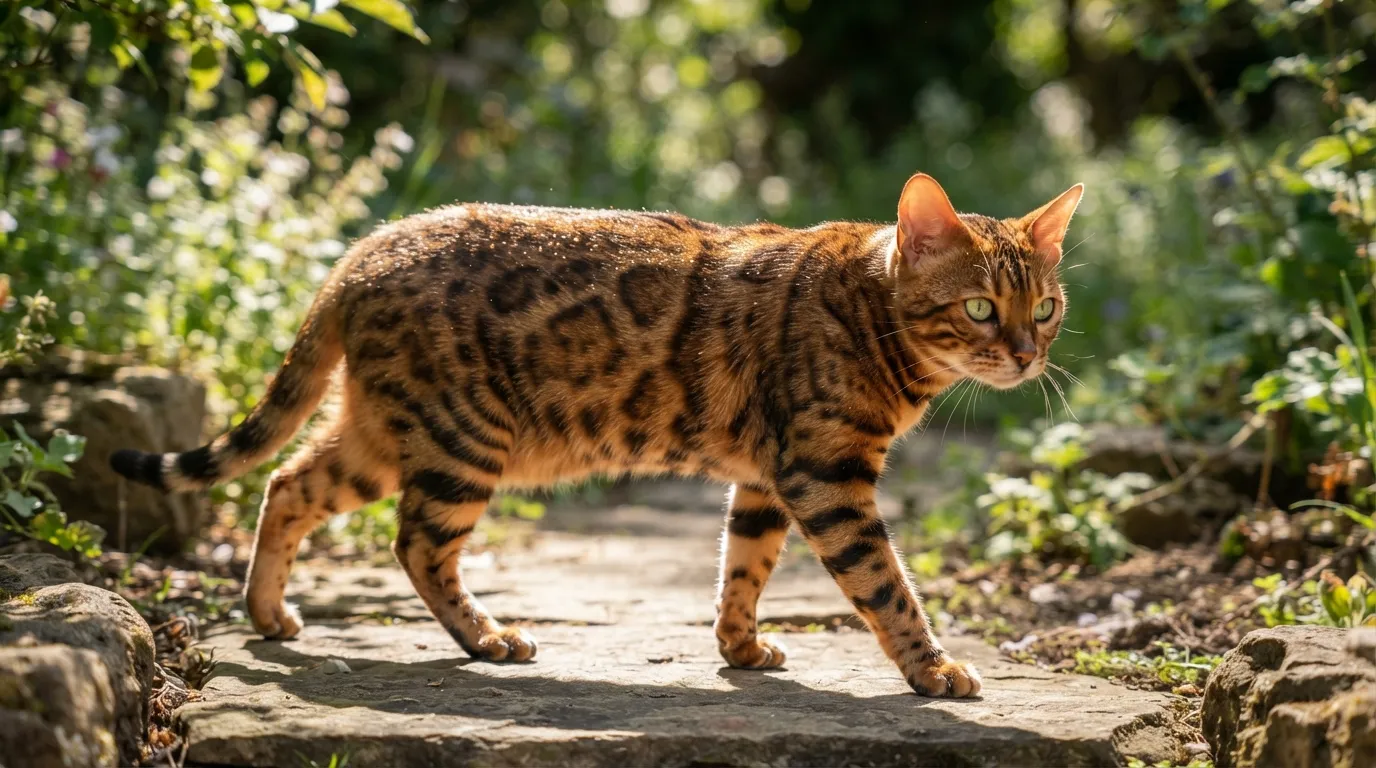
Every cat has fur. Almost no cat has fur that shimmers like metal flake paint.
Step a Bengal into direct sunlight and you’ll see it: a phenomenon breeders call “glittering,” where the tips of each hair catch the light and shine like scattered glitter. It comes from a rare, spontaneous genetic mutation in the Fgfr2 gene.
No tabby has it. No Persian has it. No Siamese has it. This mutation exists, as far as breeders and geneticists can confirm, only in the Bengal.
The wild ancestry shows up in the pattern too – and this next one stops people mid-sentence.
#12 – Rosette Markings That Mirror a Wild Leopard
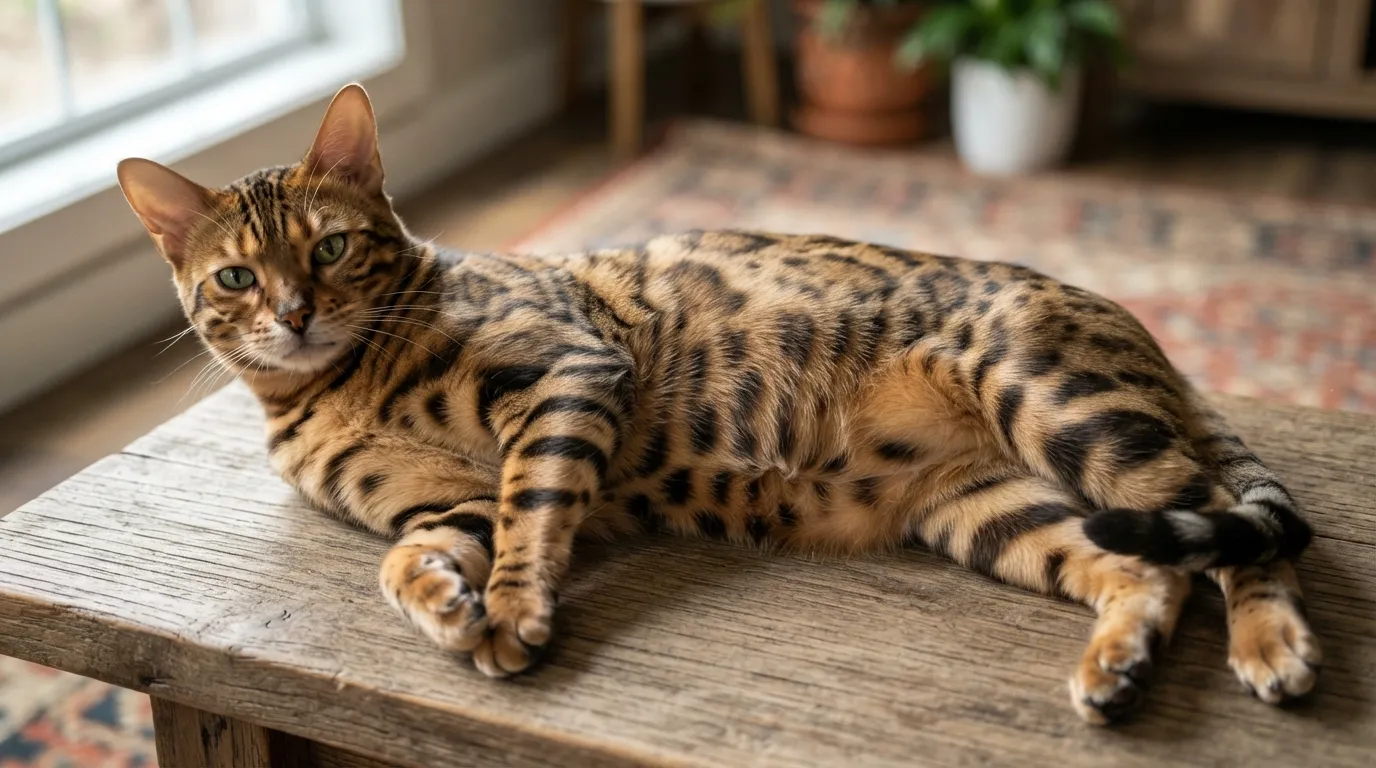
Plenty of cats have spots. Almost none have actual rosettes – the same broken-ring markings found on real leopards.
Bengals inherited this pattern directly from their Asian Leopard Cat ancestor, and it shows up in spotted or marbled coats with rosettes, stripes, and swirls. Even their bellies are spotted, a detail almost no other breed shares.
Strangers regularly mistake Bengals for small wildcats on first glance. That’s not an exaggeration – it’s the entire reason the breed was created.
Here’s where things get practical, because the coat isn’t just beautiful, it’s low-maintenance in a way that shocks new owners.
#11 – A Single-Layer Coat That Barely Sheds
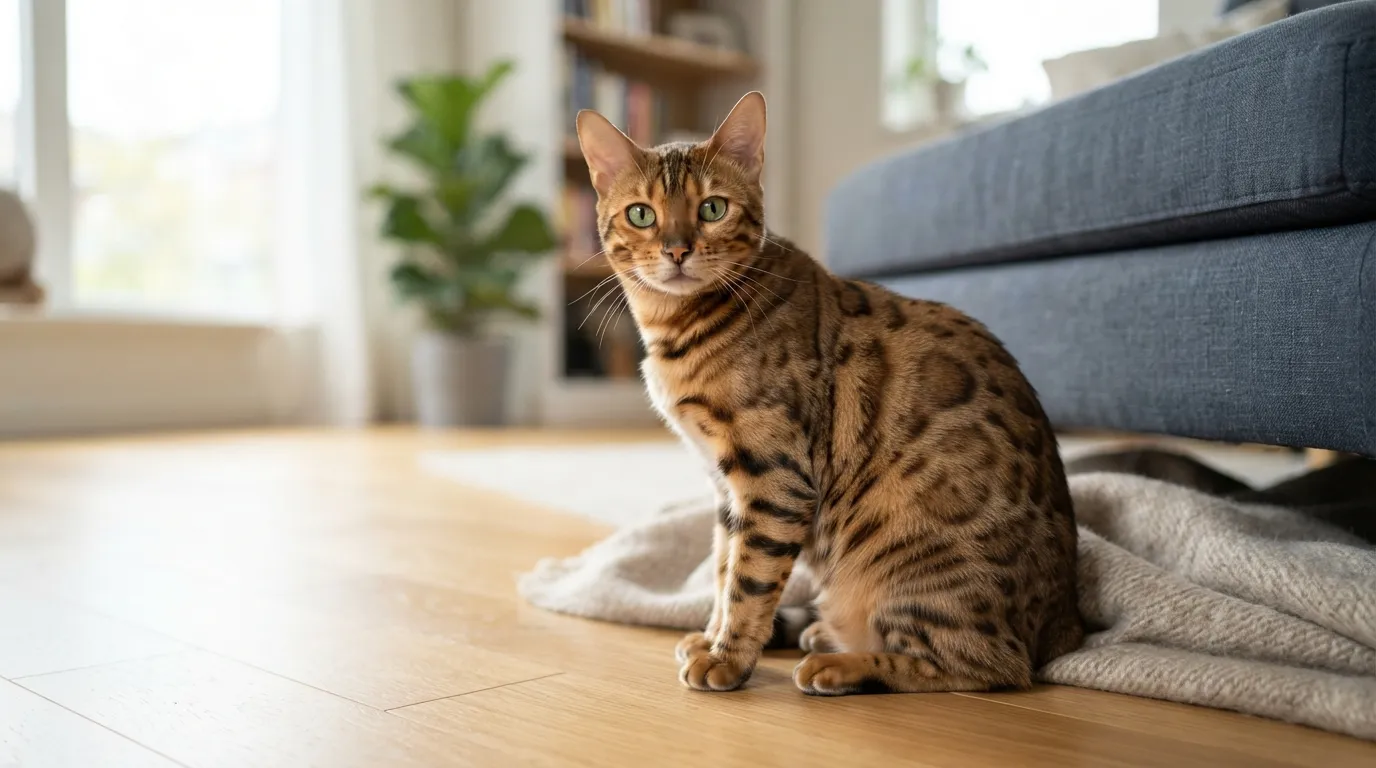
If you’ve ever owned a fluffy cat, you know the fur finds everything – the couch, your clothes, your coffee.
Bengals only have a single coat instead of the double coat most breeds carry, which means dramatically less shedding and fewer loose hairs floating around your home. A light weekly brush is genuinely all it takes to keep that coat in top shape.
Compare that to a Maine Coon or a Persian, and the difference is almost comical. One brush a week – that’s the whole routine.
That same coat quietly solves a problem a lot of cat lovers assumed was permanent.
#10 – Lower Allergen Risk Than Most Other Breeds
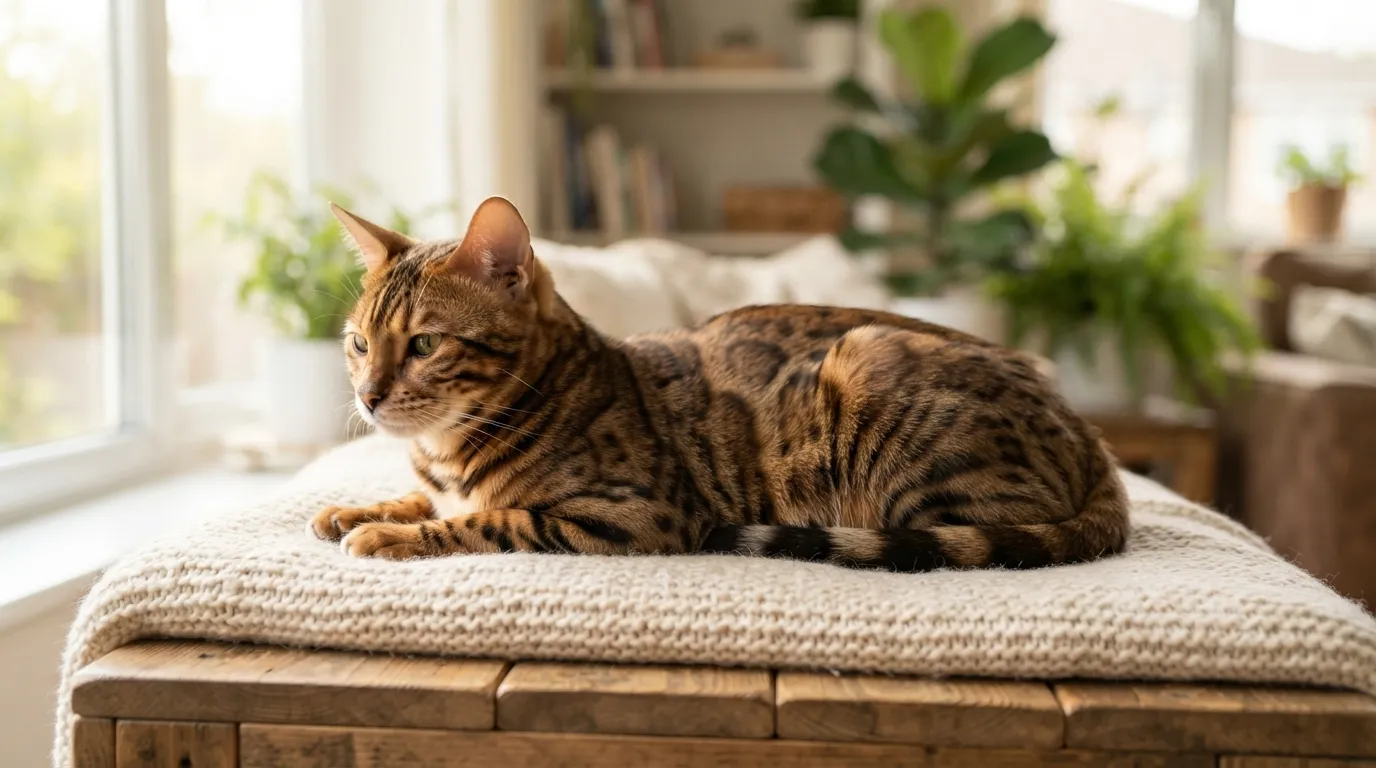
Here’s a fact that surprises almost everyone: some allergy sufferers tolerate Bengals better than other breeds.
Their short, sleek coat produces less dander and may carry lower levels of Fel d 1, the protein behind most cat allergies. Less self-grooming also means less allergen-loaded saliva spread across the fur.
No cat is truly hypoallergenic, and every allergy reacts differently. But for plenty of mild allergy sufferers, this one structural quirk has been the difference between never owning a cat and finally getting one.
Now for the trait that actually makes Bengal owners a little smug.
#9 – Intelligence That Puts Most Breeds to Shame
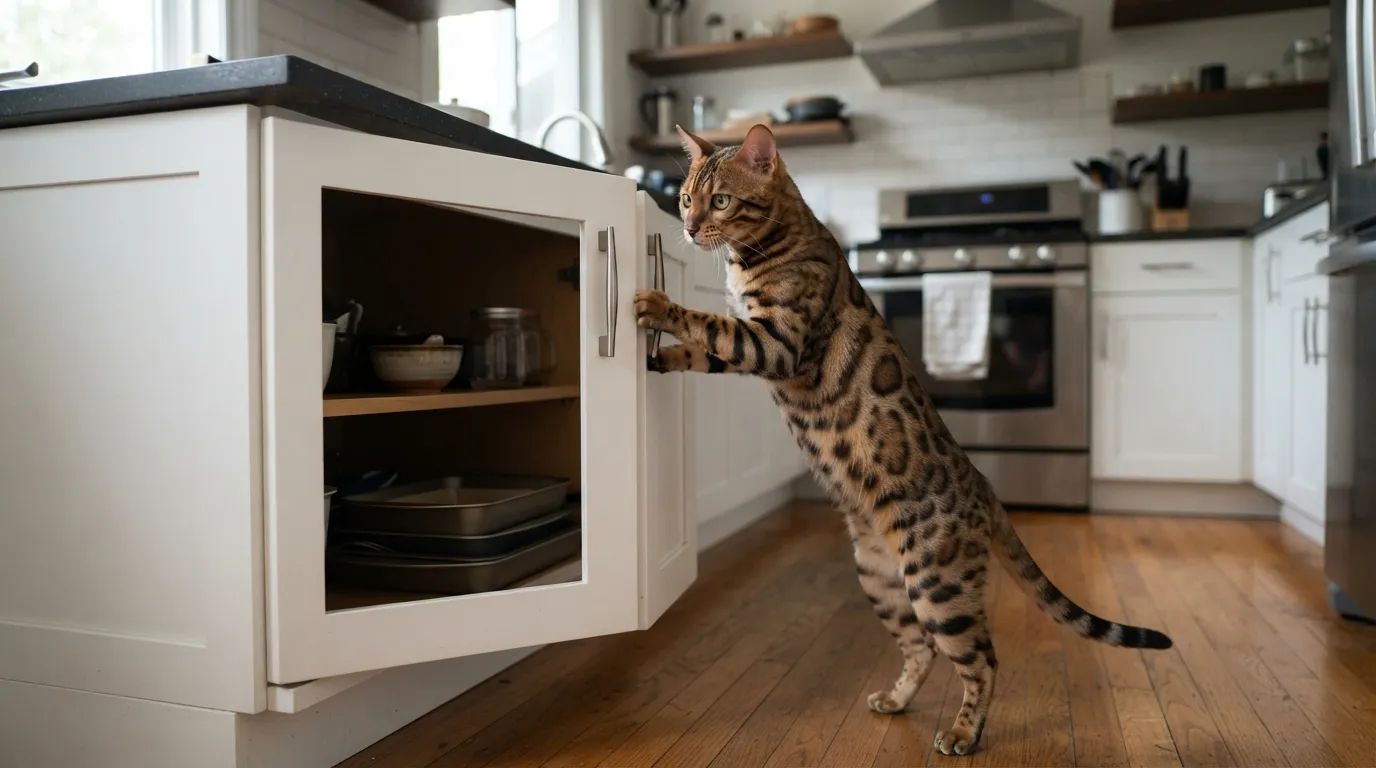
Every cat owner insists their cat is a genius. Bengal owners actually have the receipts.
These cats rank among the most intelligent in the domestic cat world, and their nimble, almost hand-like paws let them flip light switches, open cabinets, and fish objects out of closed containers. Boredom isn’t just unpleasant for a Bengal – it’s an invitation to cause trouble.
This isn’t typical cat behavior. It’s genuine problem-solving, and it means you need to think a step ahead of your own cat, not the other way around.
That brainpower leads straight into something even dog owners can’t ignore.
#8 – Trainability That Makes Dog Owners Jealous
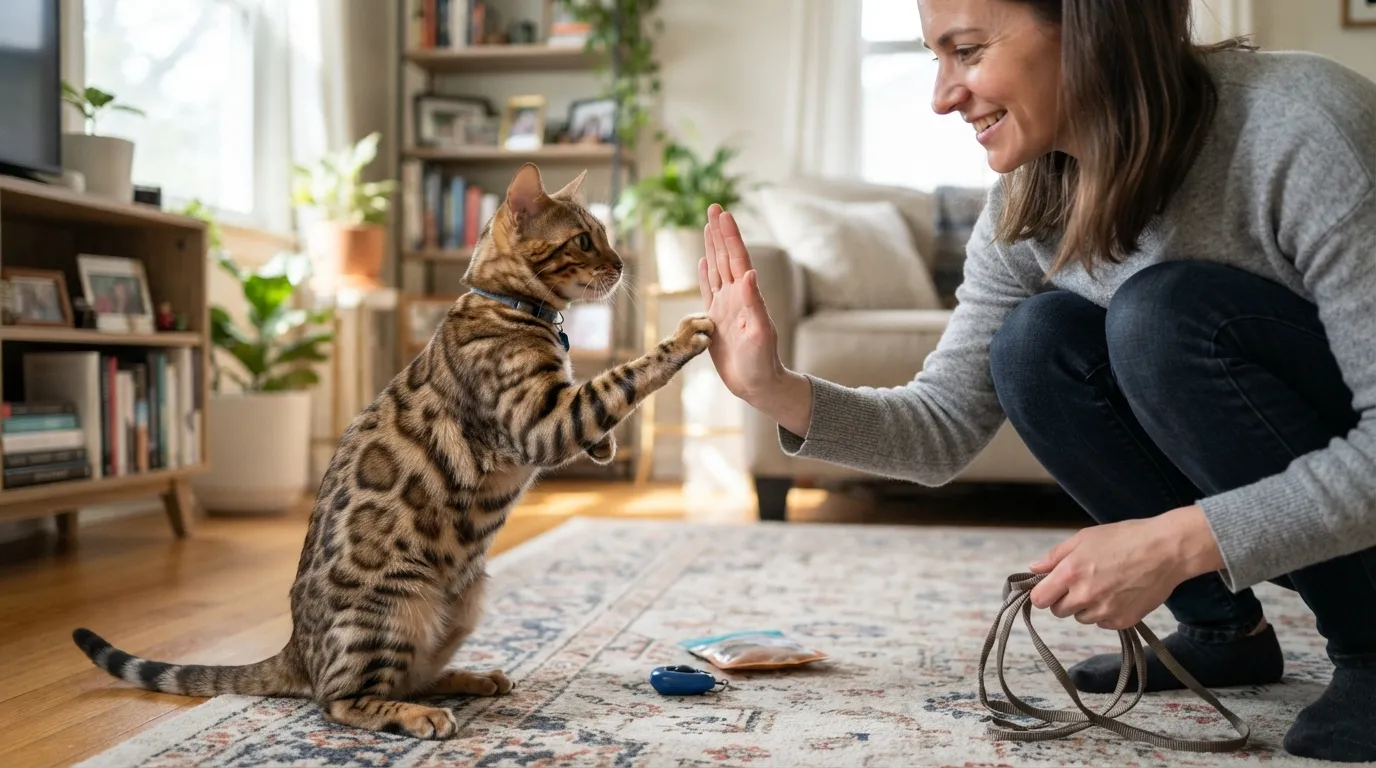
Most cats tolerate commands. Bengals actually want to learn them.
With patience, treats, or clicker training, Bengals can learn to fetch, walk on a leash, and respond to commands the way a dog would. Training sessions double as bonding time, which is part of why the breed responds so well to it.
Trainers who work with both species will tell you, off the record, that some Bengals are easier to train than certain dog breeds. That’s not marketing talk – it’s the lived experience of Bengal owners everywhere.
And then there’s the myth this breed completely destroys.
#7 – A Love of Water That Defies Cat Stereotypes
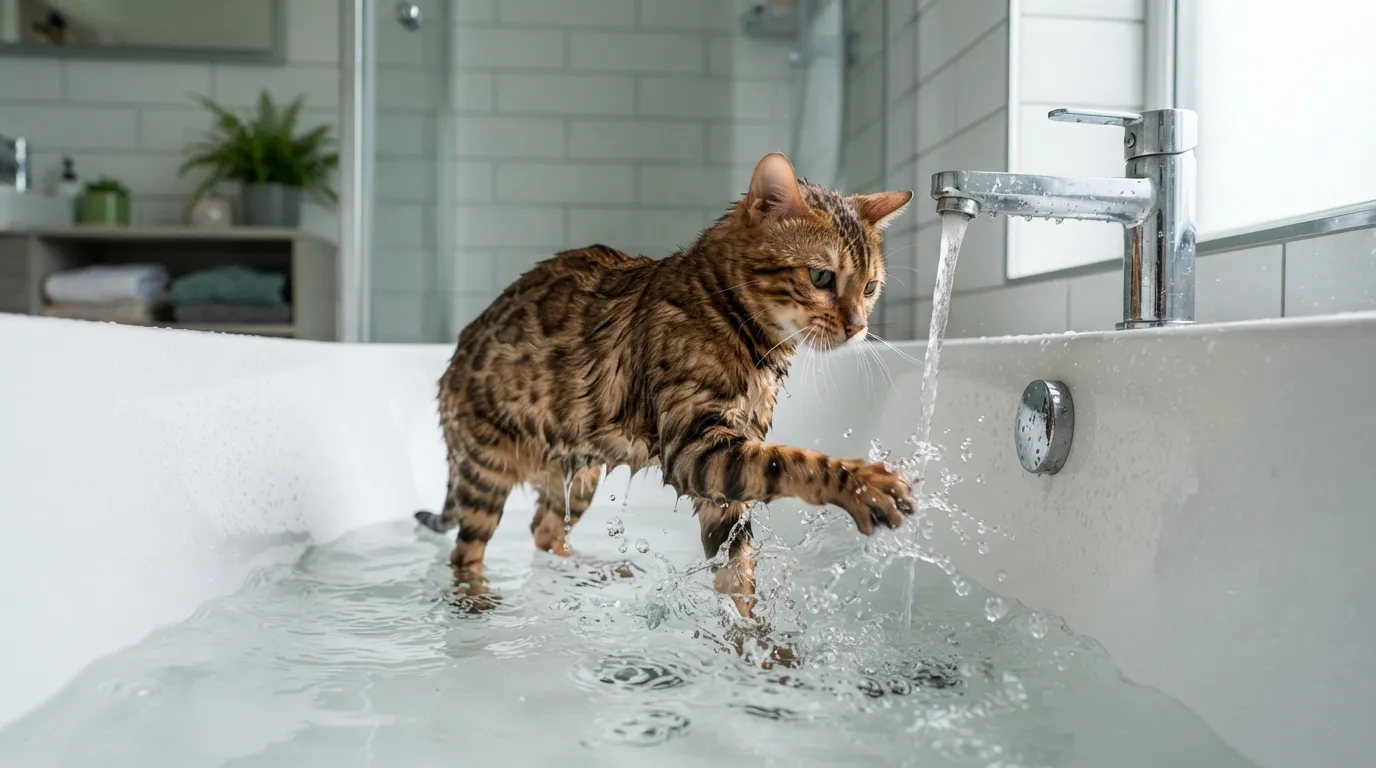
“Cats hate water” is one of the most repeated lines in the pet world. The Bengal never got that memo.
Many Bengals will splash in their water bowl, bat at a dripping faucet, or straight-up climb into the shower with their owner. It’s a trait inherited directly from the Asian Leopard Cat, a species known to swim in the wild.
The Bengal might be the only common house cat that genuinely enjoys bath time. Whether that’s a blessing or a hazard depends entirely on the size of your bathtub.
Worth Knowing
- The Asian Leopard Cat is a natural swimmer, and that instinct carried straight into the Bengal bloodline.
- Many owners install a flowing pet fountain just to satisfy a Bengal’s obsession with moving water.
- A dripping faucet or a running shower can pull a Bengal’s attention faster than almost any toy.
The body behind all that energy is just as unusual.
#6 – Athletic Power Packed Into a Lean, Muscular Frame
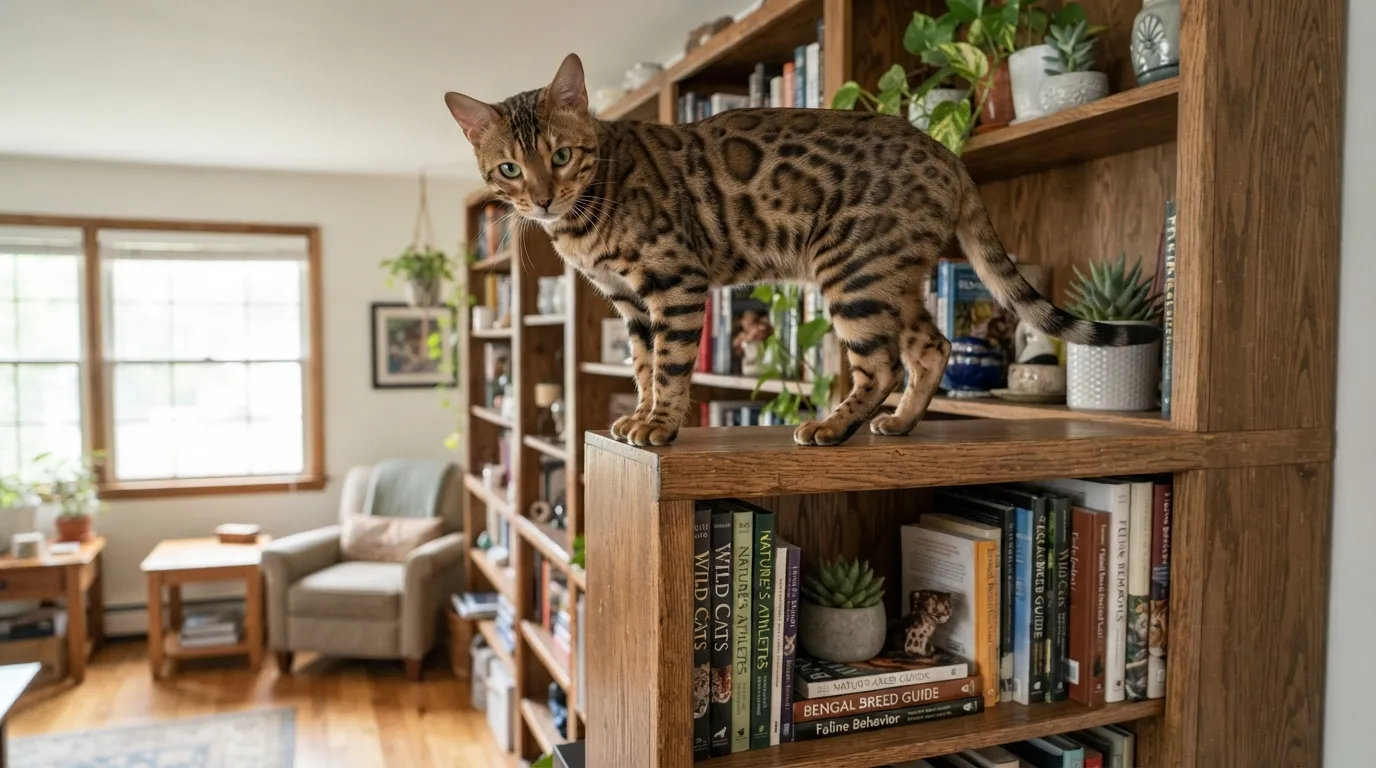
Most house cats are soft, round, and built for napping. The Bengal is built like an athlete.
Despite weighing about the same as an average house cat, Bengals look bigger thanks to long, muscular bodies and powerful legs built for jumping. Don’t be shocked if yours is staring down at you from the top of a bookshelf.
Quick Compare: Bengal vs. Other Cats
- Bengal: 8-15 pounds, lean and heavily muscled
- Average house cat: around 10 pounds
- Maine Coon: up to 22 pounds, one of the largest breeds alive
This isn’t just for show – it fuels a play drive most other breeds simply can’t match. A lazy Sunday with a Bengal is not really an option.
That same energy turns into raw confidence the moment anything new walks through the door.
#5 – Boldness and Confidence Other Breeds Don’t Come Close To
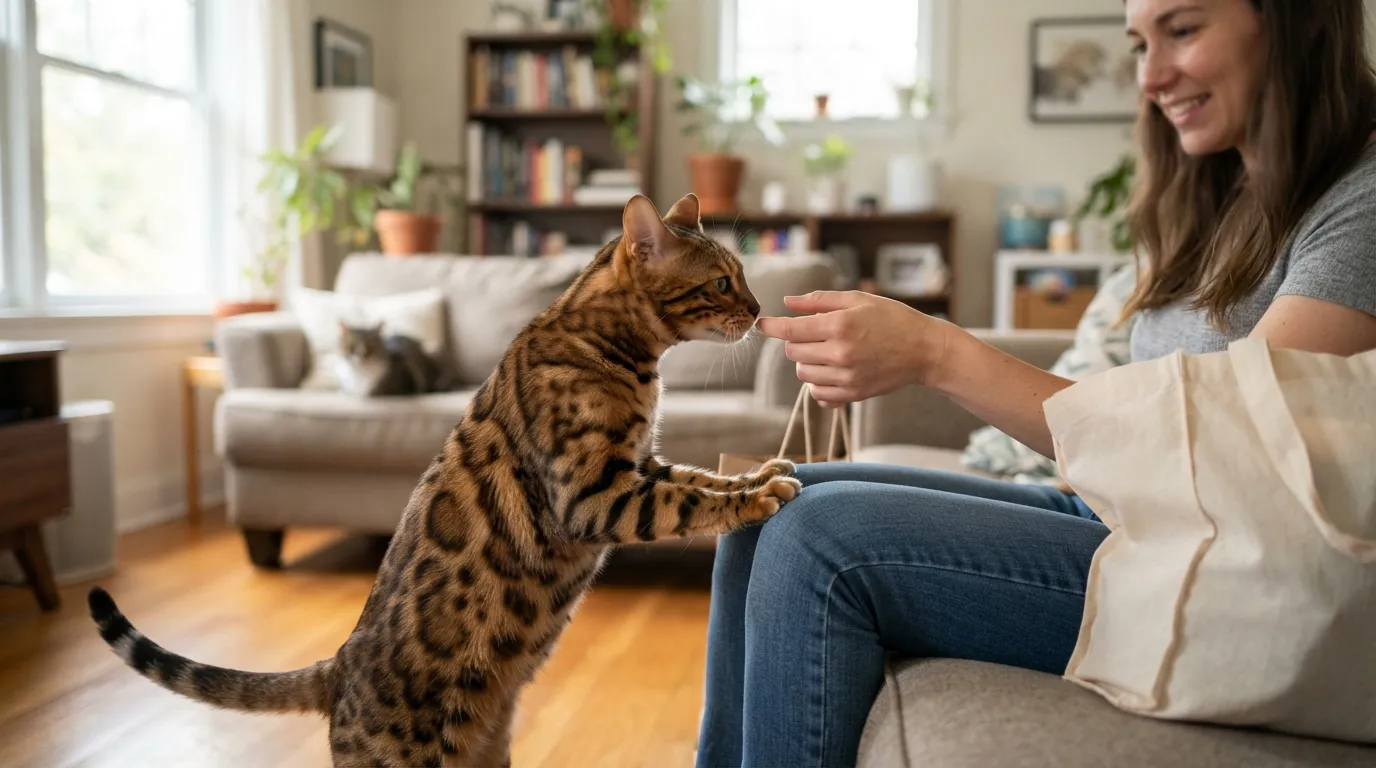
Plenty of breeds bolt and hide when something unfamiliar shows up. The Bengal treats it as an invitation.
They’re naturally inquisitive, often investigating grocery bags, guests, and strange noises before anyone else in the house reacts. Other pets frequently end up taking cues from the Bengal, not the other way around.
Other breeds disappear when company arrives. The Bengal appoints itself the host – and it isn’t aggression, it’s pure, unfiltered curiosity.
That confidence turns out to be a huge advantage in one specific kind of home.
#4 – Social Skills That Rival Dogs in a Multi-Pet Home
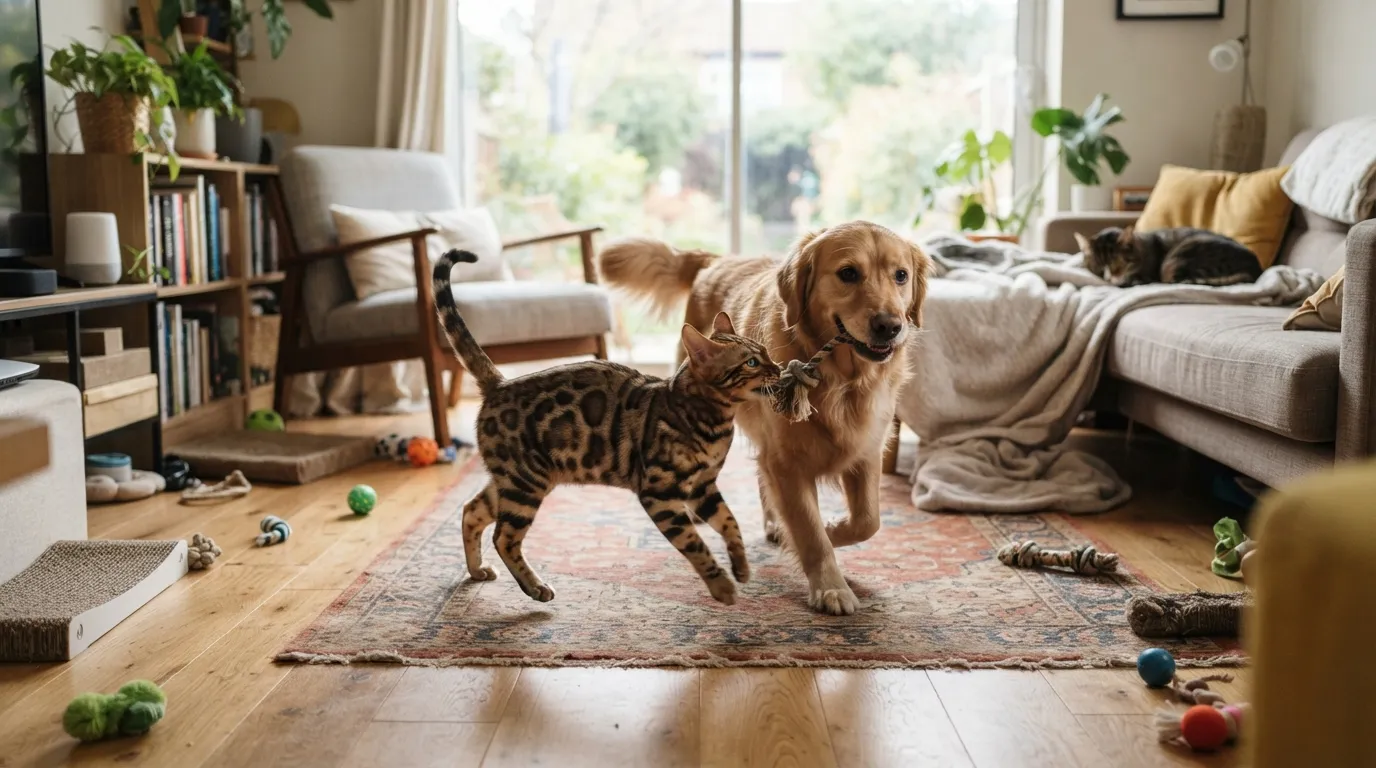
People assume wild ancestry means a Bengal will clash with other animals. It’s usually the opposite.
Bengals tend to get along well with dogs, often matching their pace and energy in a way most cat breeds simply can’t. They also do well in multi-cat households, provided they get enough stimulation to burn off that famous energy.
In a busy home full of competing pets, the Bengal doesn’t just survive the chaos. It thrives in it.
But none of that compares to how attached a Bengal actually gets to you.
#3 – Dog-Like Loyalty That Follows You Room to Room
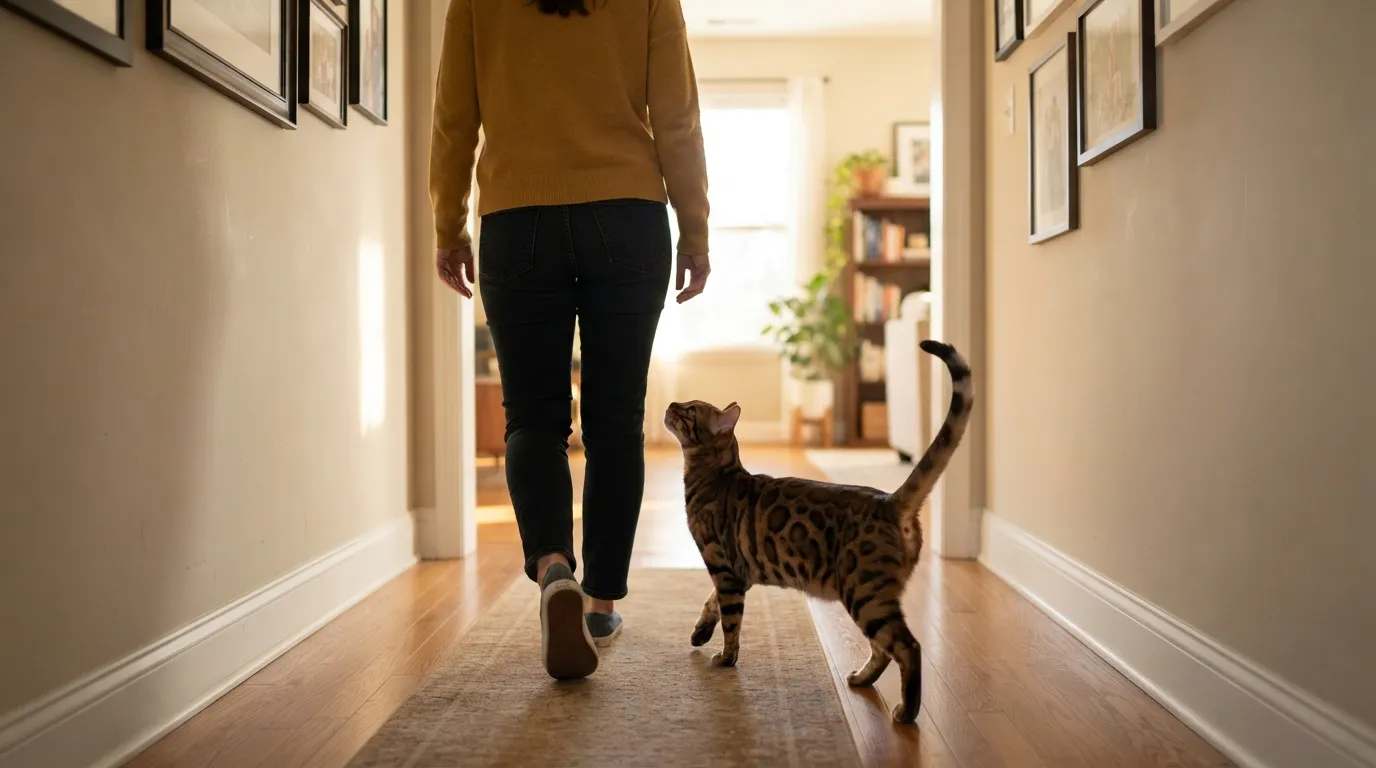
Most cats pick their moments to show affection. Bengals choose you – consistently, all day, every day.
One North Carolina-based Bengal breeder describes it simply: these cats follow their owners from room to room the way a dog would, because they genuinely want to be wherever their person is.
Owners of Persians, Russian Blues, and British Shorthairs openly admit they’re a little envious. You don’t train a Bengal to follow you – it just does, because it wants to.
And here’s the part that turns Bengal ownership into a long-term relationship, not just a phase.
#2 – A Lifespan That Rewards Long-Term Companionship
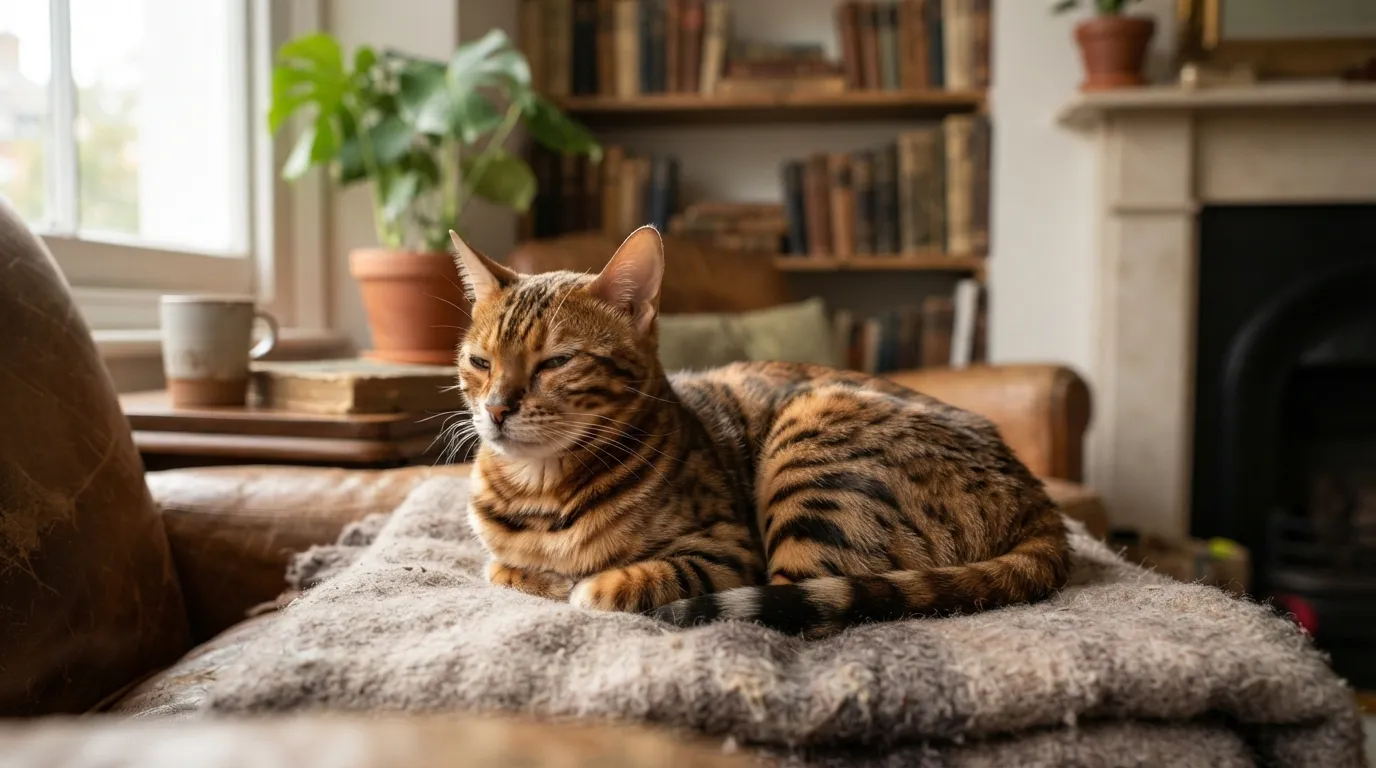
Falling in love with a pet only to lose it early is one of the hardest parts of animal ownership. The Bengal pushes that heartbreak further away than most breeds can.
With proper care, Bengals typically live 12 to 16 years, and some have reached 20 years under ideal conditions. That upper range is extraordinary for a domestic cat of any breed.
They do want consistency – routine and stability matter to them despite all that confidence. Give them that, and you’re not just getting a pet. You’re getting a companion built to stick around for two full decades.
At a Glance
- Typical Bengal lifespan: 12 to 20 years with proper care
- On the higher end of the range compared to many domestic cat breeds
- Routine, stimulation, and stability all help push a Bengal toward that upper limit
Which brings us to the one trait no other breed can touch – because it isn’t really one trait at all.
#1 – The Complete Package: No Other Breed Combines All of This
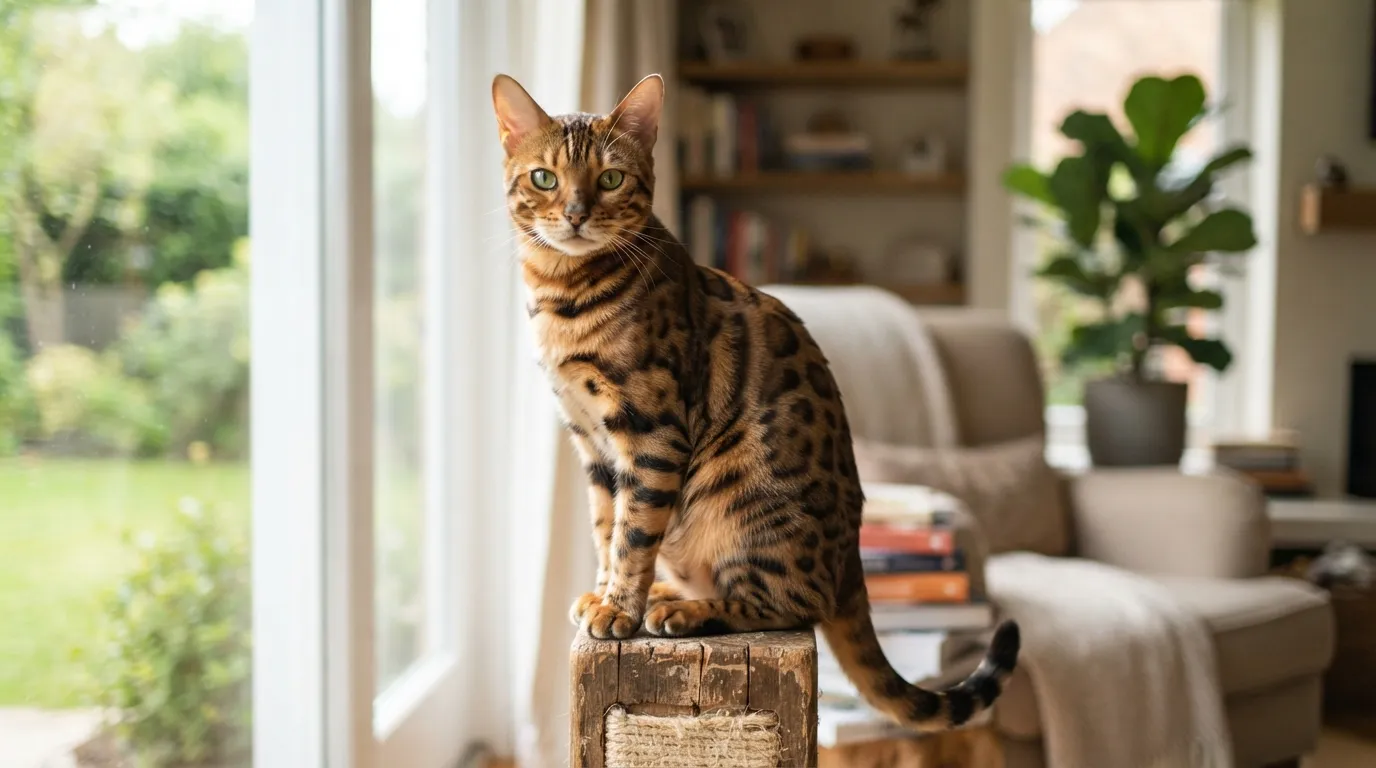
Here’s what most people miss: almost every breed on this planet does one or two things really well.
The Siamese talks constantly. The Maine Coon is gentle and huge. The Ragdoll goes limp with affection. The Bengal, despite its wild, leopard-like looks, somehow does almost all of it at once – loving, loyal, athletic, brilliant, and low-shedding, all in a single animal.
Wild looks. Dog-like loyalty. Elite trainability. Minimal grooming. A lifespan that can stretch two decades. No other breed stacks all fourteen of these traits into one cat – and that’s exactly what makes the Bengal not just a great pet, but arguably the most complete cat breed that exists.
The truth is, the Bengal was never going to be an “average” cat – not with wildcat blood, a mutation no other breed carries, and a personality closer to a dog than a housecat. Most people expect a pet to give them looks or personality. The Bengal hands over both, at full volume, with no compromise.
The only real downside? Once you’ve lived with one, every other cat breed starts to feel like it’s missing something.
Growing up traveling and experiencing new cultures and wonders, I have had a passion for nature, adventuring, photography, and videography. I am currently working towards a BSc in Biodiversity and Ecology at Stellenbosch University, and I hope to specialise in Marine Sciences one day.
Please send any feedback to Feedback@animalsaroundtheglobe.com