9 Incredible Snow Leopard Facts That Explain How They Survive Where Few Big Predators Can't
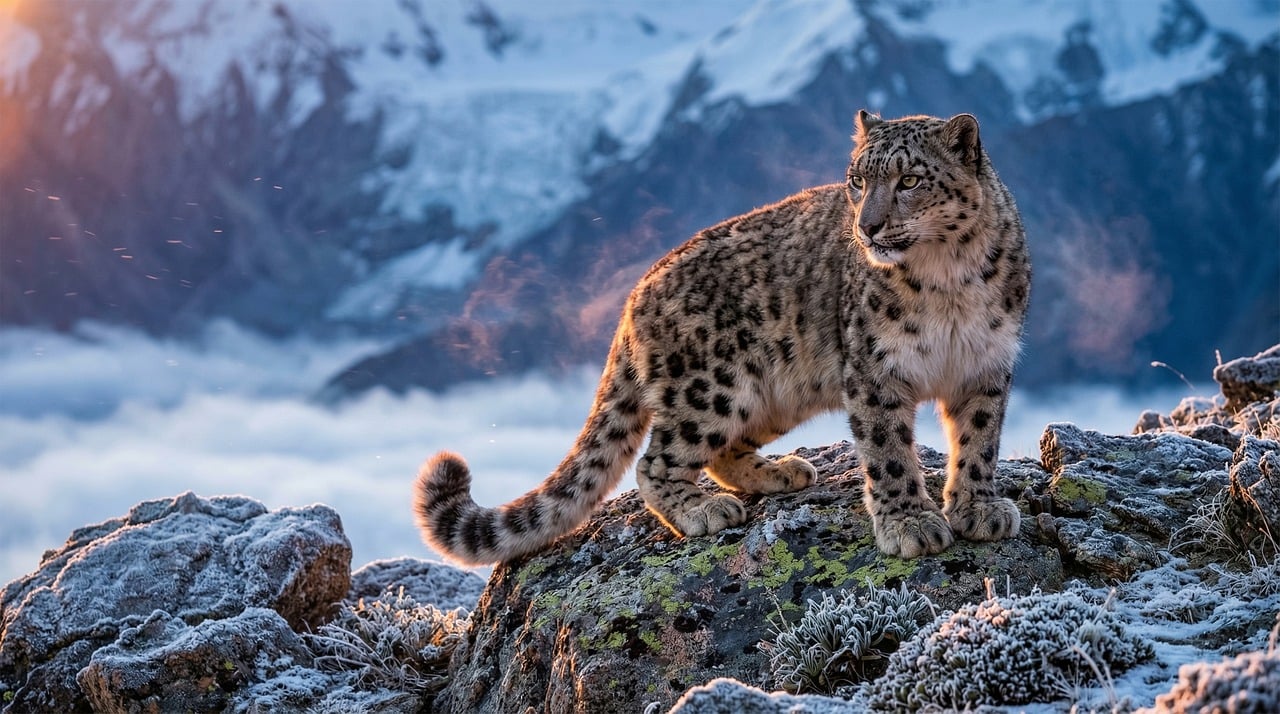
High in some of the toughest mountains on Earth, where the air is thin and the cold bites straight through your clothes, snow leopards live like it’s no big deal. For most large predators, these remote, icy ridges would be a hard no; for snow leopards, it’s home turf. The more you learn about them, the more it feels like they were custom‑built for a world humans can barely walk through without gasping for breath.
What fascinates me most is that we almost never see them in action. They are sometimes called “ghosts of the mountains” for a reason: they’re there, watching, surviving, thriving, while we stumble around far below. Let’s dive into the science and the weirdly human side of how these big cats manage to pull off what most other predators simply can’t.
#1: Their Thick, Smoky Fur Is Basically an Extreme-Weather Survival Suit
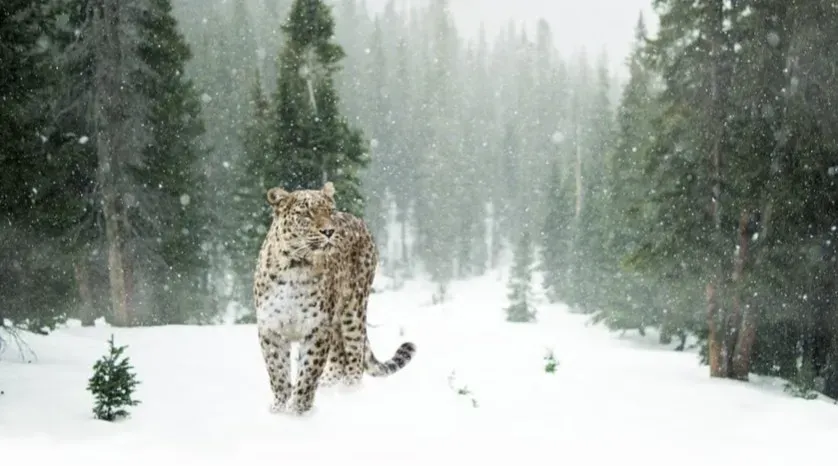
One look at a snow leopard and you can tell the fur is doing some heavy lifting. Their coat is dense, with long outer hairs and a thick woolly underlayer that traps warmth like a high-end winter jacket, allowing them to survive in temperatures that can drop far below freezing. The pale grey, smoky coloring with rosettes is not just beautiful; it blends almost perfectly with rock, snow, and shadow, helping them disappear into their surroundings.
Imagine standing in a blizzard on an exposed ridge with no shelter; that’s everyday reality in much of their range, yet they stay warm enough to stalk, pounce, and drag heavy prey. Their fur even grows on the bottoms of their paws, acting like built-in insulation and snow boots. While lions rely on open savannas and summer heat, snow leopards are wrapped in a climate-adapted armor that turns deadly cold into a manageable inconvenience.
#2: Massive Tails Work Like Balancing Poles and Mountain Blankets
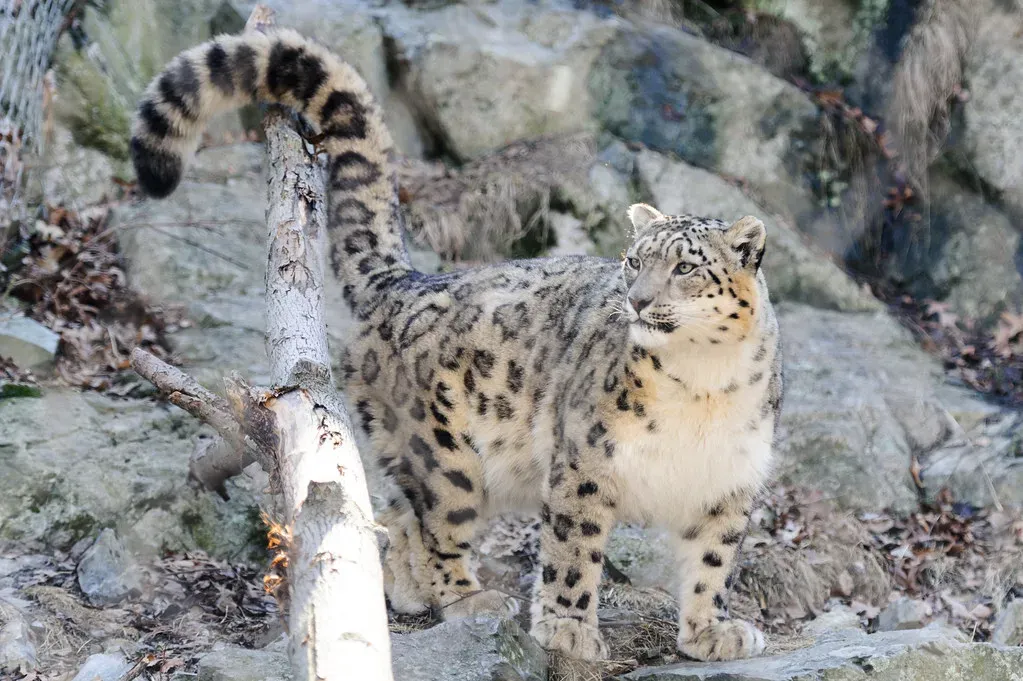
That huge, fluffy tail is not just there for cute photos. A snow leopard’s tail can be almost as long as its body, thick with fat and fur, and acts like a dynamic balancing pole when they race along narrow ledges or leap over rocky gaps. On vertical cliffs where a wrong step means a fatal fall, that tail helps fine‑tune every movement like a tightrope walker’s bar.
When resting or sleeping, snow leopards curl that same tail around their body and face, using it almost like a scarf or blanket. This keeps their nose and mouth protected from icy winds and helps retain heat around their core. Most big cats simply do not need this kind of multi-purpose appendage in flatter, warmer habitats, but up in brutal alpine terrain, that tail can literally be the difference between a comfortable rest and freezing damage over time.
#3: Supercharged Lungs and Chests Let Them Breathe Where We Struggle
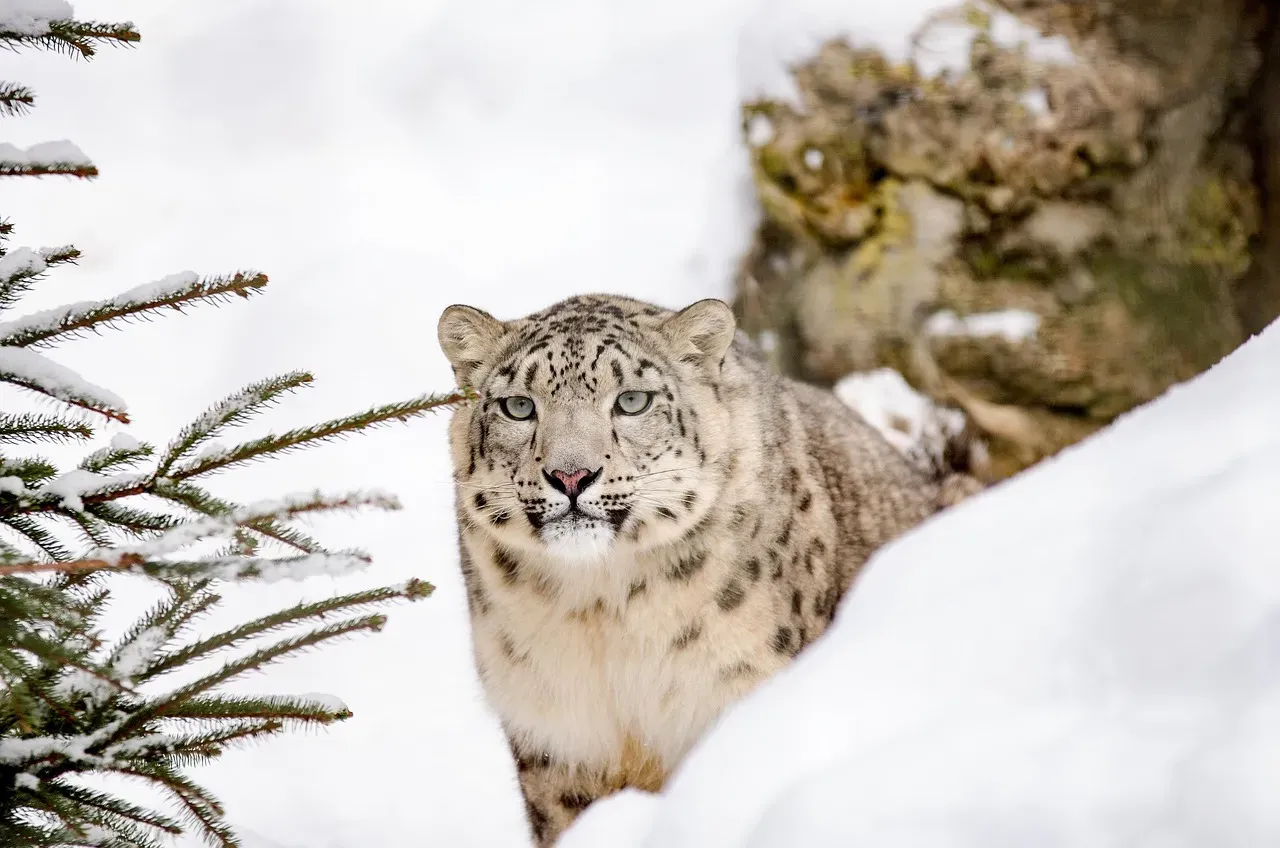
If you have ever hiked at high altitude and felt winded after a few steps, you already understand part of what makes snow leopards so remarkable. They live at elevations where oxygen is much thinner, yet they still need to sprint, climb, and wrestle down large prey. To pull this off, they have relatively large chest cavities and lungs compared to many other big cats, allowing them to take in and circulate more air with each breath.
Their blood and tissues are adapted to low-oxygen environments, supporting muscle performance when a high-speed chase or powerful leap could decide whether they eat or go hungry. Most large predators would be operating near their physical limits in such conditions, but snow leopards treat it as baseline normal. It is like they are born with the lifelong acclimatization that climbers spend weeks trying to earn on an expedition.
#4: Powerful Legs Turn Sheer Cliffs into Hunting Grounds
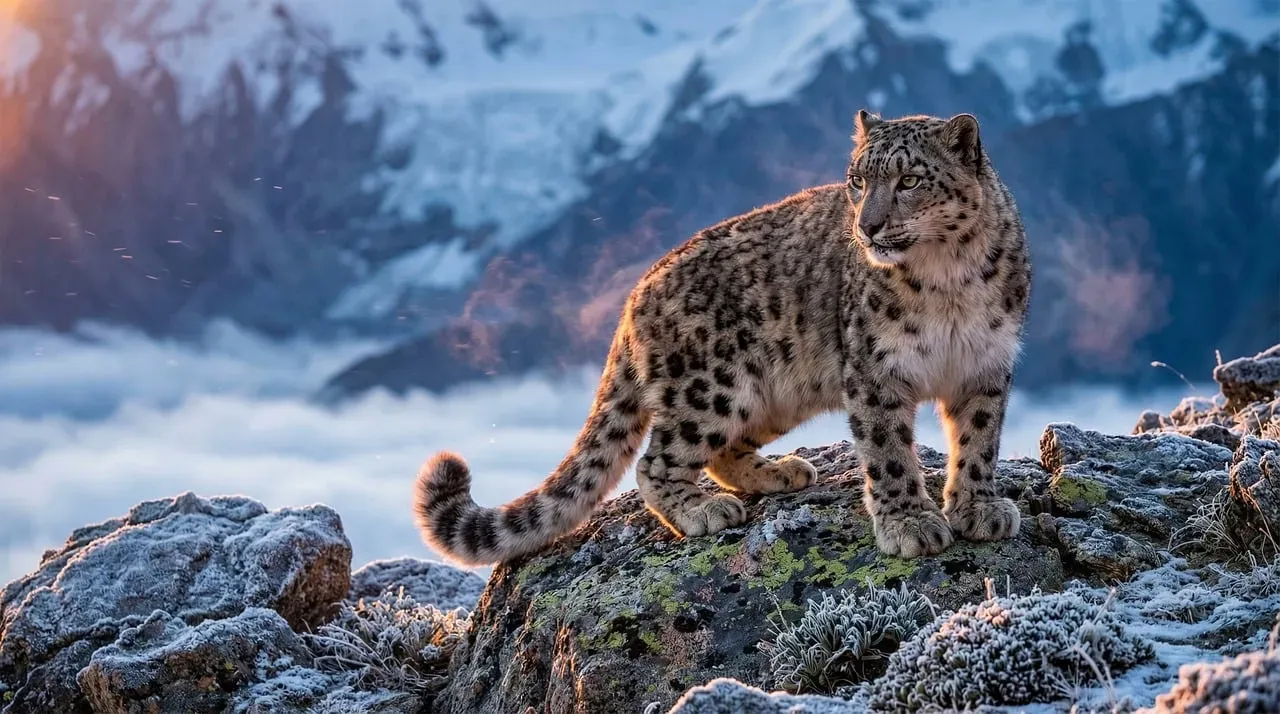
Snow leopards are not built for marathon chases across open plains; they are built to explode into action in steep, rugged terrain. Their hind legs are extremely powerful, allowing them to leap several times their own body length across rocky gaps or down steep slopes. That strength, combined with flexible joints and wide, furry paws, helps them land securely even where the footing is loose or icy.
Where another predator might see a deadly drop or unstable scree slope, a snow leopard sees a tactical advantage. They can launch ambushes from above, using gravity and surprise to take down prey like blue sheep or ibex that are themselves well adapted to cliffs. Instead of fighting the mountain, they use it as part of their hunting strategy, turning impossible-looking geography into a workable arena.
#5: Stealth and Camouflage Make Them Almost Impossible to Spot
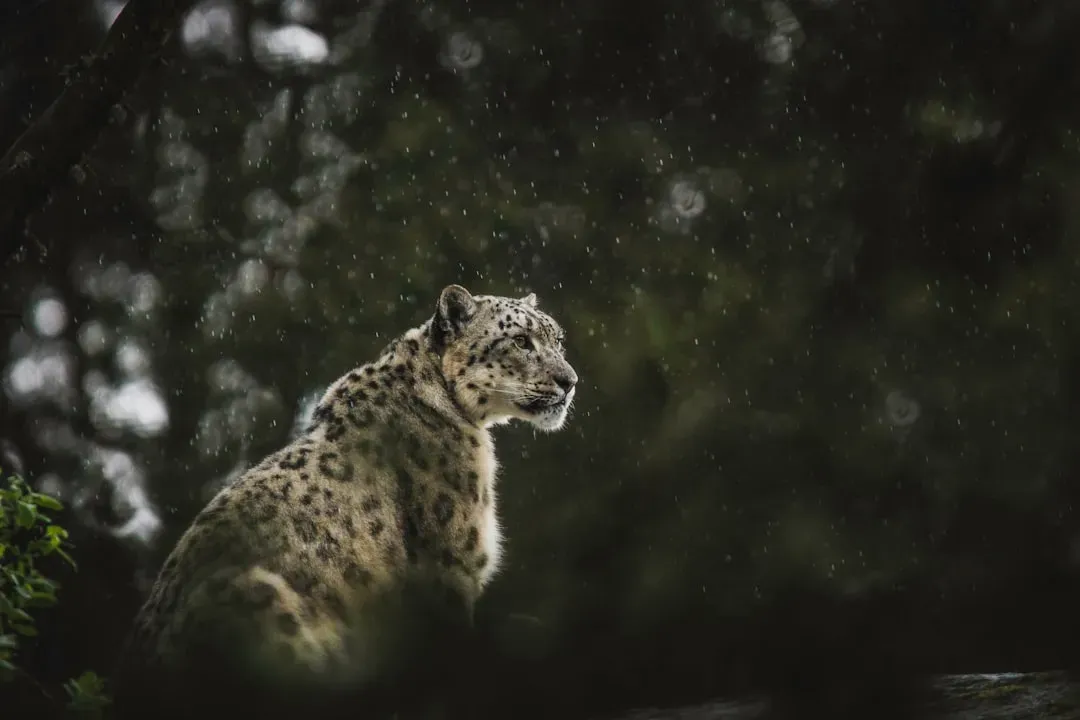
In many ways, their greatest weapon is not strength but invisibility. That smoky-grey coat with darker rosettes breaks up their outline against rocks, snow patches, and distant ridges, which is textbook disruptive camouflage. Even trained researchers with binoculars can struggle to pick out a snow leopard sitting in plain sight on a hillside, and prey species are under even worse odds.
They also move with slow, controlled steps when stalking, minimizing sound and sudden motion that could give them away. Instead of roaring to declare dominance like lions or tigers, snow leopards are much quieter, relying on visual marks and scent rather than loud calls. In a landscape where sound carries far and cover is limited, being a ghost is more useful than being loud, and that is exactly what gives them an edge.
#6: Solitary, Wide-Ranging Lifestyles Reduce Conflict and Competition
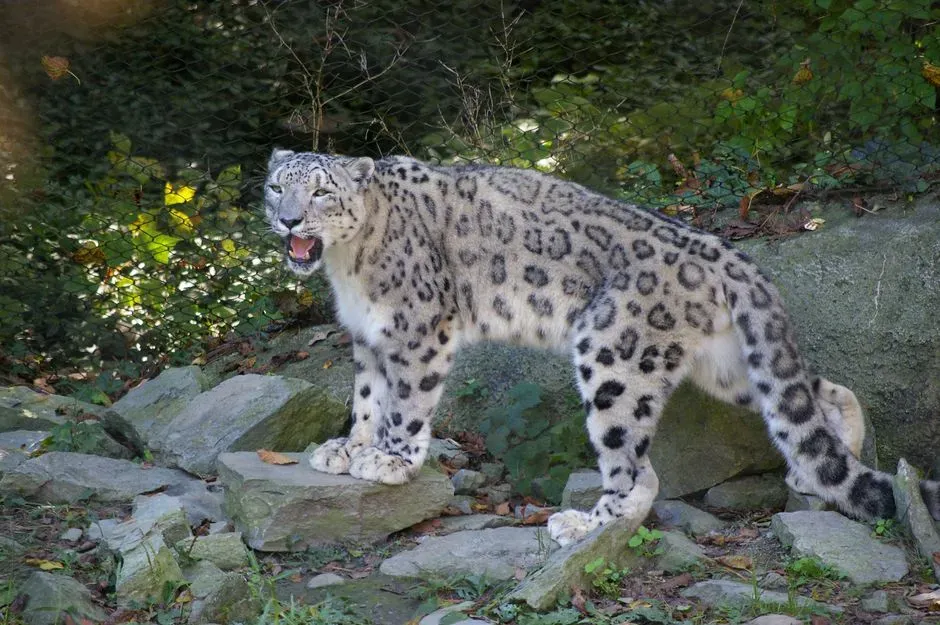
Unlike lions that live in prides and often fight over territory, snow leopards are mostly solitary, carving out huge home ranges across multiple valleys and ridgelines. This wide spacing helps reduce direct competition for limited prey in such harsh environments; you cannot afford constant fights when food is scarce and terrain is dangerous. Adults usually avoid each other except during mating season, keeping energy focused on survival and hunting rather than social drama.
This lifestyle also matches the patchy distribution of prey in the high mountains. One day they may be hunting near a cliff where blue sheep gather, and another day they may roam far to check a different ridge. Their large ranges and low population density make them extremely hard to study, but biologically it makes perfect sense: in a world with limited resources, solitude and flexibility are smarter strategies than crowding and confrontation.
#7: Seasonal Diet Flexibility Helps Them Ride Out Tough Times
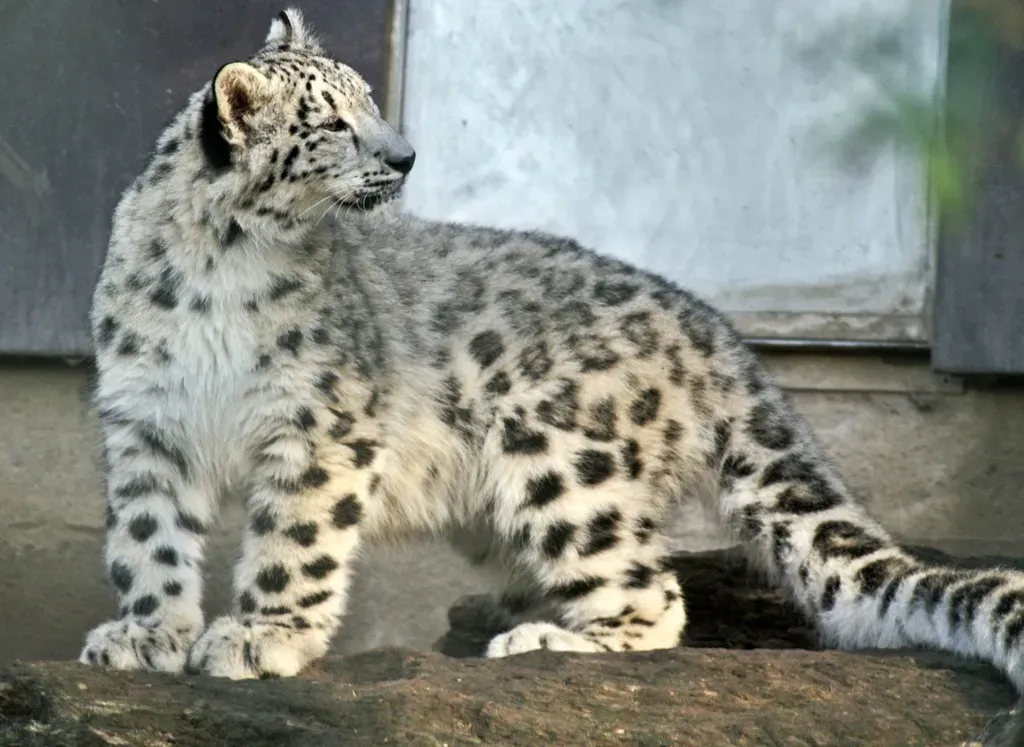
Snow leopards are specialist predators in some ways, often targeting wild mountain ungulates like blue sheep or ibex. But they also show surprising flexibility, switching to smaller prey such as marmots, pikas, or game birds when larger animals are scarce or conditions change. This ability to downshift to smaller meals can be a lifesaver in unpredictable mountain climates, where a heavy snow year or human activity can shift prey patterns drastically.
In areas where livestock grazing overlaps with their range, some snow leopards may attack sheep or goats, which often brings them into conflict with local herders. From a purely survival perspective, though, this is the same adaptive instinct: take what is available in a difficult environment. While it creates conservation challenges, it also underlines how these cats use every tool they have to keep going in landscapes where failure to adapt means starvation.
#8: Quiet Communication and Scent Marking Replace Loud Roars
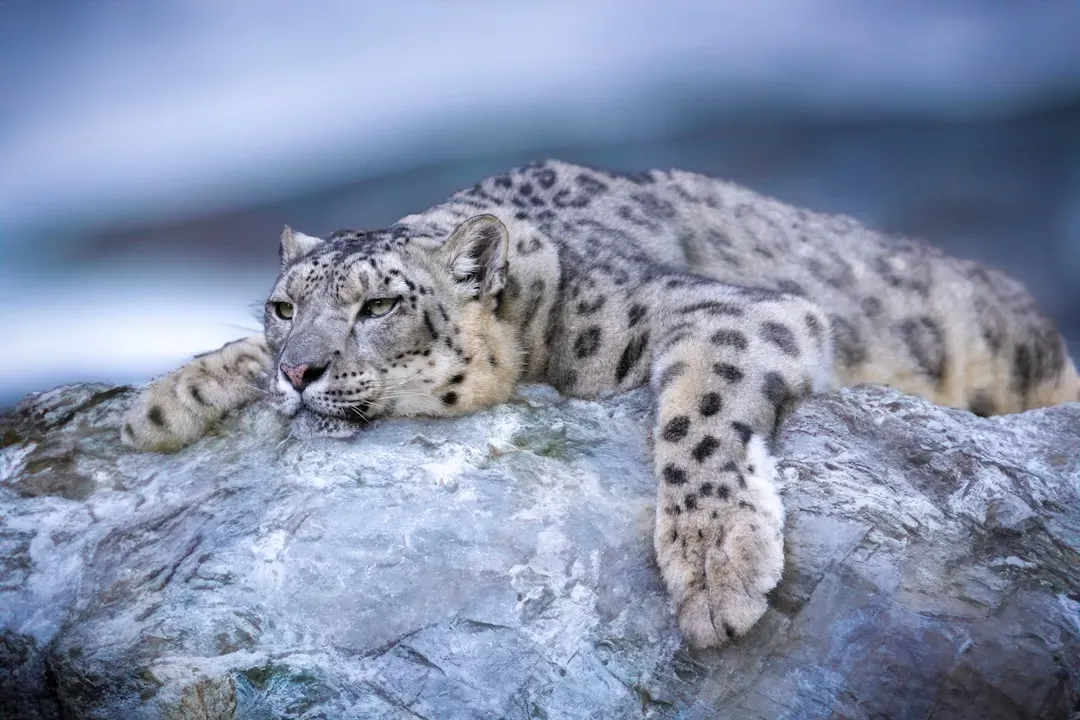
Interestingly, snow leopards cannot roar like lions or tigers due to differences in their throat anatomy. Instead, they rely on other forms of communication, such as mews, growls, and a distinctive chuffing sound, along with heavy use of scent marking on rocks and ridges. In echoing valleys where a roar might travel far and reveal their position to prey or rivals, this more muted communication system has clear advantages.
By leaving scent marks, they can signal territory boundaries, reproductive status, and individual identity without ever having to meet face to face. This reduces risky encounters in dangerous terrain and allows individuals to coordinate loosely across large distances. It is a clever, low-noise way to maintain social information in a world where one misstep on a cliff or one pointless fight could be lethal.
#9: Genetic and Behavioral Resilience Helps Them Cope with a Changing World
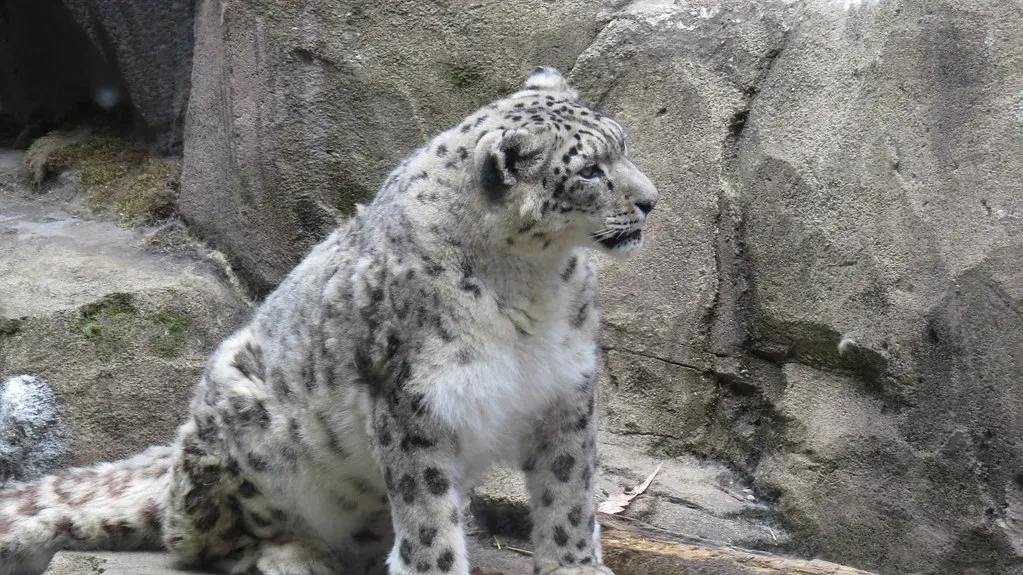
Snow leopards evolved for cold, high-altitude habitats, but the reality in 2026 is that their environment is changing fast due to human pressure and climate shifts. As some lower slopes warm and vegetation zones move uphill, prey distributions and human land use patterns are shifting too. Despite all this, snow leopards have shown a degree of behavioral resilience, sometimes using new corridors, adjusting hunting patterns, and even moving through human-dominated landscapes under cover of darkness.
However, I think it would be naive to romanticize their toughness as a guarantee they will be fine no matter what. Their finely tuned adaptations that let them dominate where other big predators fail also make them vulnerable when those rare habitats shrink or fragment. In my view, the most impressive thing about snow leopards is not just what evolution has already done for them, but what we decide to do next: whether we treat them as expendable ghosts or as proof that life can survive in almost impossible places if given half a chance. If a cat can master the roof of the world, the real question is whether we are smart enough to make sure it still has a roof to rule at all.
- Animal Science Says Jaguars Kill Prey Differently From Most Big Cats Because Their Powerful Bite Gives Them Another Option
- How Big Cats Use Their Paws for More Than Just Hunting
- The Relationship Between Big Cats and Scavengers in the Wild
- 9 Amazing Features That Allow Cheetahs to Turn, Accelerate, and Stop at Incredible Speeds