14 Signs your Indoor Cat is Secretly Thriving More than you Think
Most people assume an indoor cat is secretly miserable - pacing behind the window, aching for a life outside. But the actual data says something very different: cats kept exclusively indoors score higher on quality-of-life measures than cats with outdoor access. Your cat isn't suffering. They might be thriving in ways you've been completely misreading.
The proof isn't dramatic. It's hiding in small, everyday moments - a slow blink, a kneading paw, a lazy flop onto their back in the middle of the living room. Here are the 14 signs experts say most owners miss completely.
#14 - They Walk Toward You Instead of Away
Most people think a cat that ignores you is a happy, "independent" cat. Turns out, that's often backwards.
According to certified animal behavior consultant Tom Kirby, happy cats are usually relaxed around their human and cat families and freely solicit interactions. They don't run away when approached - they purr, headbutt, and show real enjoyment.
A cat that actively walks toward you is broadcasting confidence, not neediness. It means they feel safe in their space - the single biggest marker of indoor wellbeing.
If your cat greets you at the door or trails you from room to room, don't brush it off as clinginess. That's a thriving animal choosing to be near you on their own terms.
But that's nothing compared to what we found about #13...
#13 - Their Tail Goes Up Like a Flag
You've seen it a thousand times and probably never thought twice about it. Your cat trots over with their tail pointing straight up, maybe with a tiny curl at the tip.
That's not random. A tail held upright as your cat approaches is a friendly, confident greeting - the feline equivalent of a smile and a wave.
That subtle curl at the top is one of the clearest physical signs of genuine feline contentment. Stressed or unhappy cats keep their tails low or puffed instead.
Quick Compare
- Straight up, slight curl: confident, happy greeting
- Puffed up: startled, defensive, or scared
- Low or tucked: anxious or unsure of surroundings
- Wrapped around body or paws: calm and settled
Next time your cat struts in with that flag-pole tail, know you're looking at a genuinely thriving animal. They're not indifferent - they're announcing themselves.
But that's nothing compared to what we found about #12...
#12 - They Knead You (Yes, the "Biscuit Making")
Cats knead soft surfaces - your lap, a blanket, your stomach at 3am - and most owners just tolerate it. But this behavior carries a deeper meaning than most realize.
Kneading starts at birth, when kittens use it to stimulate milk flow from their mother. That comfort response carries into adulthood, where cats use it to signal contentment with their environment.
The fact that your adult cat still kneads means they feel safe enough to revisit their earliest, most comforting memory. That's not a quirk - that's a cat at profound peace with their environment.
If it happens on your lap, consider it the highest compliment your cat knows how to give.
But that's nothing compared to what we found about #11...
#11 - They Slow Blink at You
This one is genuinely backed by science - and most owners completely miss what it means. It's known as the cat "I love you," and it's not sleepiness.
Slow blinking with a soft facial expression is a deliberate signal of trust and acceptance. Research shows humans and cats communicate through their eyes, and slow blinking is tied directly to bonding.
A survey by the animal welfare charity Cats Protection found that 69% of the 1,100 cat owners asked said the slow blink signals a relaxed cat.
A cat only slow blinks when they feel completely unthreatened. In the wild, closing your eyes near a predator is a vulnerability - so when your cat does it toward you, they're telling you they feel entirely safe.
But that's nothing compared to what we found about #10...
#10 - They Groom Themselves In Front of You
Here's one most owners overlook entirely. Where your cat chooses to groom says a lot about how comfortable they really are.
A cat who walks into the middle of the room, throws up a leg, and starts grooming right there feels completely at ease. Regular grooming is also a sign of a happy, healthy feline friend.
Anxious or stressed cats tend to groom in hiding - or stop grooming altogether. A content cat shows comfort through steady routines: grooming, eating, and relaxed body language.
A cat that grooms openly in your presence is essentially saying, "I feel so safe here, I don't need to stay alert." The more exposed the spot, the bigger the compliment.
But that's nothing compared to what we found about #9...
#9 - They Sleep In the Open, Not Hidden Away
Where your cat naps is one of the most underrated health indicators there is. Pay attention to it.
Cats that are stressed, sick, or fearful tend to seek out tight, hidden spots - behind appliances, deep in closets, under beds. A comfortable cat looks loose instead of tense, with forward ears, relaxed whiskers, and a soft posture.
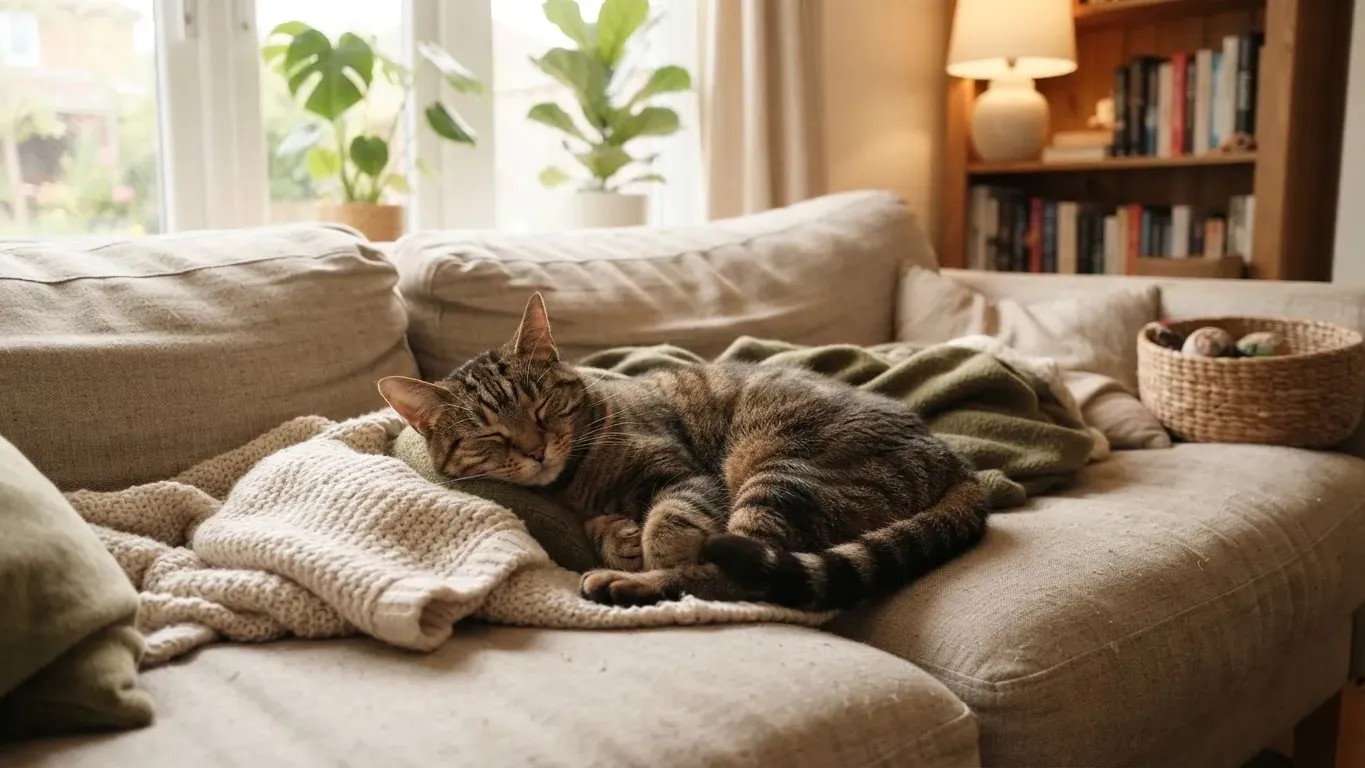
A cat napping in the middle of the sofa, belly half-exposed, has made a deliberate security assessment of your home. Showing their belly - their most vulnerable body part - is the ultimate display of trust from a cat.
If your cat naps in plain sight, that open space is their chosen safe zone. That's thriving, not lazy.
But that's nothing compared to what we found about #8...
#8 - They Eat on a Predictable Schedule
Boring? Maybe. But consistent eating habits are one of the most reliable indicators of feline wellbeing - and one of the first things that breaks down when something is wrong.
Happy, content cats have good appetites and enjoy their food, often with a routine around mealtime. If a cat's eating habits suddenly change, it's usually a sign something is wrong and a vet visit is due.
A truly happy cat runs on schedule - eating well, sleeping the right amount, and keeping a shiny, well-groomed coat.
Disruption to appetite is one of the earliest warning signs vets look for. A cat with a consistent, enthusiastic mealtime routine is quietly telling you their stress levels are low.
But that's nothing compared to what we found about #7...
#7 - They Initiate Play, Not Just Respond to It
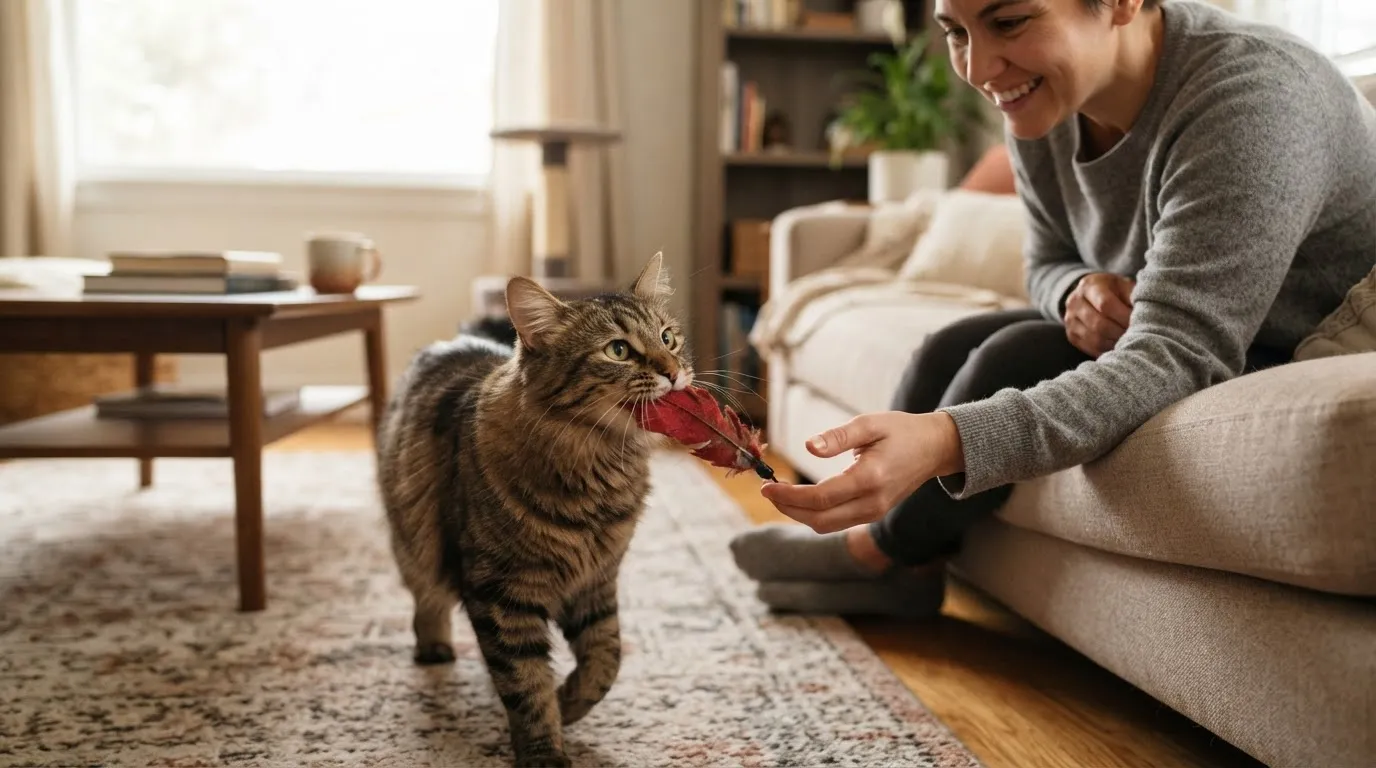
There's a big difference between a cat that plays when you dangle a toy in front of them and one that comes looking for it. The second type is the one you want.
Higher playfulness scores and more games played were significantly associated with higher cat quality-of-life scores in a study spanning over 1,500 cat guardians across 55 countries. This isn't anecdotal - it's measured behavior.
Fast Facts
- The study collected responses from 1,591 cat guardians across 55 countries
- Higher playfulness and more variety of games were tied to better quality-of-life scores
- Distress-related behavior changes showed up in cats when play disappeared for stretches of time
- Cats housed exclusively indoors scored higher on both quality of life and guardian bond strength than cats with outdoor access
Researchers also found behavioral changes linked to distress when play was absent for extended periods. A cat that seeks out play isn't just having fun - they're demonstrating neurological and emotional health.
If your indoor cat drops a toy at your feet, bats at your ankles, or races around for no reason at 11pm, that's a thriving animal with energy to burn and the confidence to ask for it.
But that's nothing compared to what we found about #6...
#6 - They Headbutt and Rub Against You
It might feel like your cat is just being pushy. They're actually doing something far more intentional.
Cats have scent glands in their cheeks and forehead, so when they rub against you, they're marking you as theirs - not territory in an aggressive sense, but their safe home base.
Cats that feel anxious or insecure don't headbutt. They hide. The headbutt is a social investment your cat only makes when they feel emotionally secure.
That level of social confidence is a hallmark of a well-adjusted, thriving indoor cat.
But that's nothing compared to what we found about #5...
#5 - They Use Their Litter Box Consistently
Not exactly glamorous, but this one matters enormously - and most owners don't connect the dots until something goes wrong.
A happy cat uses their litter box reliably and is usually forgiving even if its upkeep isn't perfect. An anxious or unhappy cat, on the other hand, may start peeing outside the box.
Consistent litter box use means your cat's stress hormones are regulated and they feel in control of their environment. Inappropriate elimination is one of the most common behavioral signs of a stressed or unhappy cat.
So if your cat uses their box reliably every single day without incident, that quiet consistency is actually a very loud sign that all is well.
But that's nothing compared to what we found about #4...
#4 - They're Curious About Their Environment
A thriving indoor cat doesn't stare at the wall. They investigate, patrol, and take interest in their surroundings - and that curiosity is a direct window into their mental health.
Cats that are depressed, ill, or chronically stressed tend to disengage entirely. They stop exploring, stop sniffing at new objects, and lose interest in windows.
If your cat is pouncing on toy mice or pawing at feathers, they're actively using their body and brain. An indoor cat that still hunts, investigates, and explores their home is mentally stimulated and emotionally healthy.
That curiosity doesn't need a backyard - it just needs an environment that gives them something to engage with.
But that's nothing compared to what we found about #3...
#3 - They Vocalize to You (Not at the Door)
There's a specific kind of meowing that signals a thriving indoor cat, and it's very different from the door-scratching, window-pacing vocalization of a frustrated one.
Cats that truly crave the outdoors scratch at doors and windows, pace, or meow excessively - that's the sound of frustration. A cat that chirps softly at you during your morning routine or trills when you walk into a room is doing something else entirely.
Short, quiet meows generally mean your cat feels comfortable - some say it's the cat's attempt to "talk human." Indoor cats that have learned to "converse" with their owners are demonstrating a sophisticated social bond that only develops when a cat feels genuinely safe.
But that's nothing compared to what we found about #2...
#2 - They Sleep Near You By Choice
Cats are highly selective about where they sleep. That selectivity is exactly why this sign matters so much.
Sleep is a vulnerable state, and a cat that chooses to sleep on your bed, your feet, or within arm's reach has made a conscious trust calculation. And you passed.
The main thing to look for in a happy cat is comfort performing normal, natural behaviors - sleeping included, whether that's 12 hours a day or 20.
Cats that sleep near their owners long-term have integrated you into their sense of safety. That's the deepest form of feline trust, and it never comes from a cat that's simply tolerating its environment.
But save your biggest surprise for #1...
#1 - They Have a Longer Life Expectancy Than You Realize
Here's the finding that should reframe everything: the very fact that your cat lives indoors is, statistically, one of the greatest gifts you can give them.
Indoor cats generally live 15 to 17 years, compared to just 2 to 5 years for outdoor cats. That's not a minor difference - that's an entirely different life trajectory.
Worth Knowing
- Outdoor cats face constant threats: traffic, predators, toxins, and infectious disease
- Indoor living removes exposure to fights, parasites, and extreme weather that cut outdoor lives short
- Large-scale research tracking thousands of cats found outdoor-only cats had notably shorter lifespans than cats kept primarily indoors
- The lifespan gap between indoor and outdoor-only cats often runs a decade or more
Most cats can be quite content living indoors as long as they're actively stimulated by their environment and their family every day.
Tom Kirby, certified animal behavior consultant
The research backs this up: cats kept exclusively indoors consistently score higher in quality of life than cats with outdoor access, according to their own owners.
Your indoor cat isn't missing out - they're living longer, safer, and in many cases, happier lives. The guilt you carry about keeping them inside? The data says it's largely unfounded.
The Bottom Line
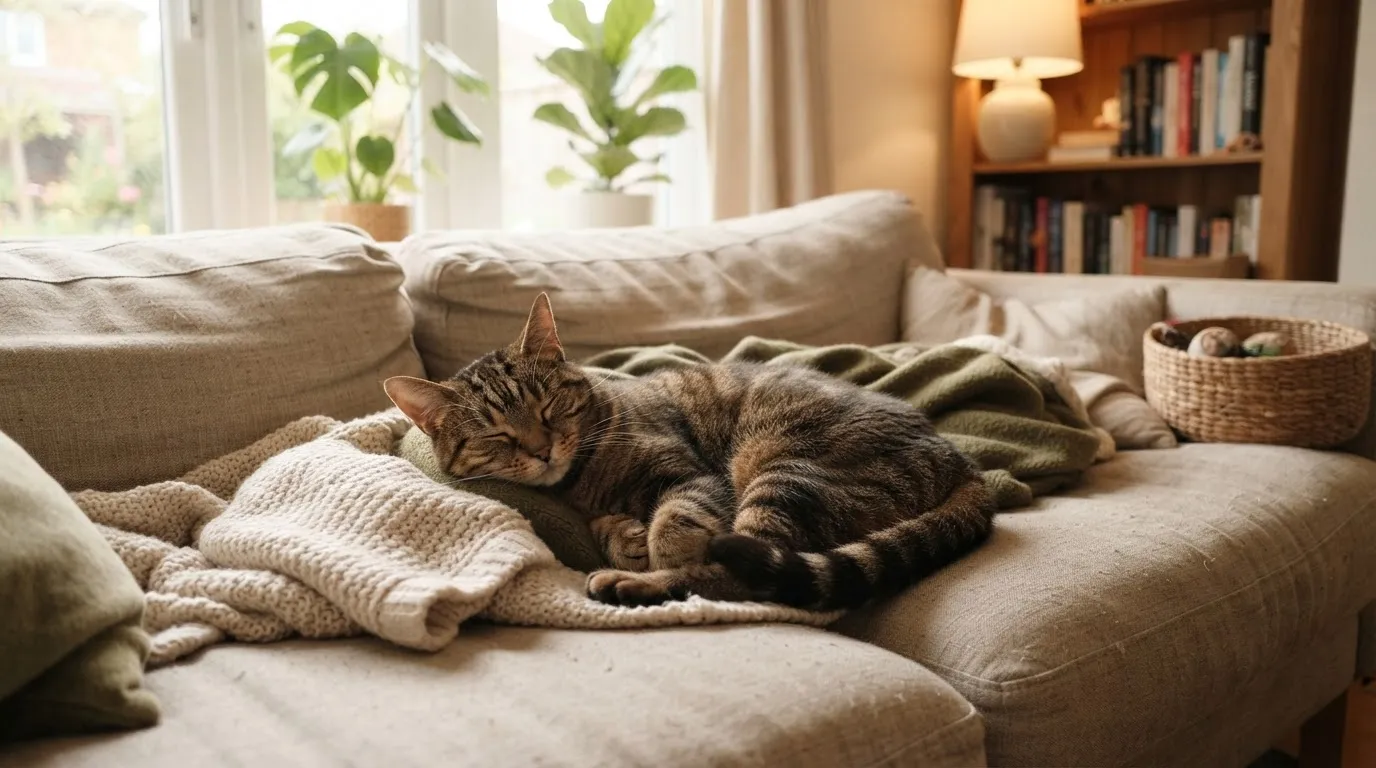
Most cat owners look for dramatic signs of happiness and miss the quiet ones happening every single day. The slow blink is a love letter. The upright tail is a greeting. The nap in the middle of the sofa is a vote of confidence in you and your home.
Higher playfulness and more shared games are tied to higher quality-of-life scores, and staying exclusively indoors is linked to both stronger cat-guardian bonds and a longer, healthier life. The evidence is clear: your indoor cat may be thriving far more than you ever gave yourself credit for.
The signs were there all along - you just had to know how to read them.