12 Quiet Things a Cat Does When It Knows You Have Had a Hard Day
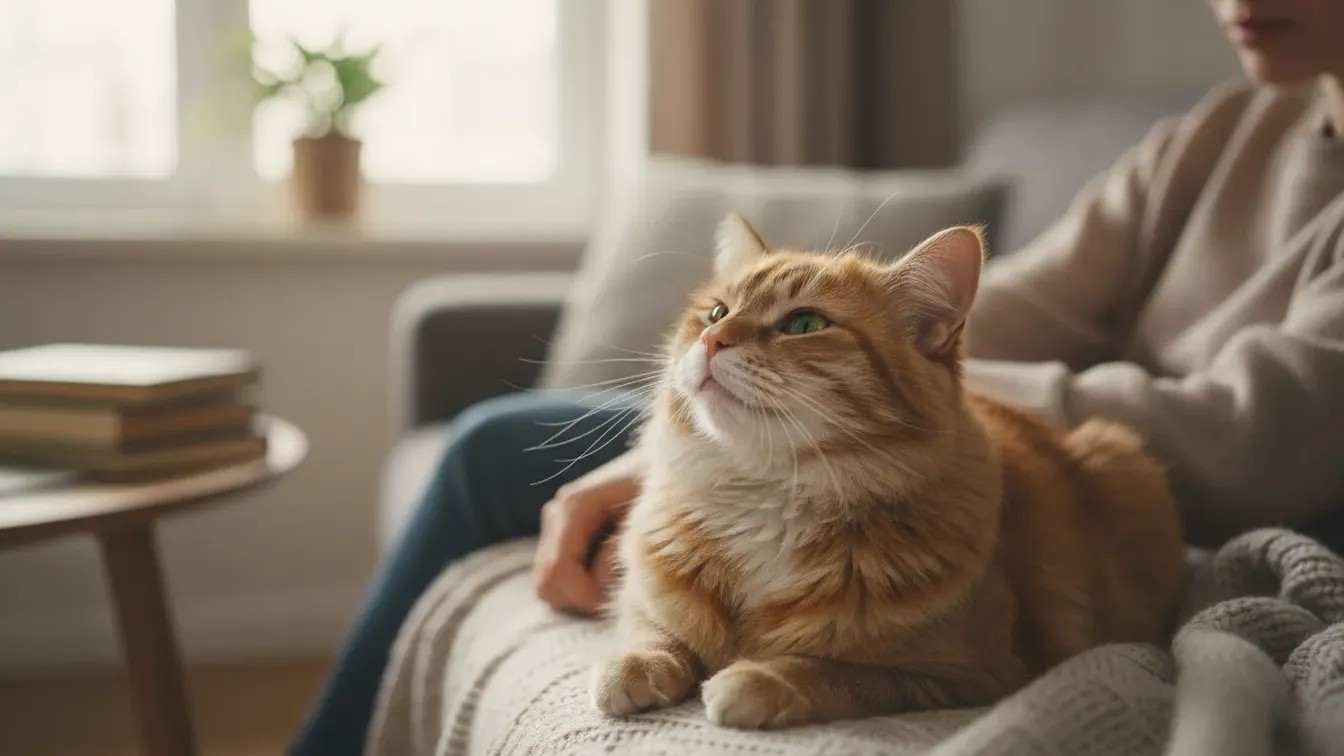
Most people assume cats are cool, detached little roommates who barely notice when you're falling apart. The truth is almost the opposite.
Researchers have found that cats read human emotional signals through both sound and body language, and they quietly adjust their own behavior in response. So when you walk through the door after the day from hell, your cat may already know before you say a word - and what happens next is far from random.
#12 - They Follow You From Room to Room
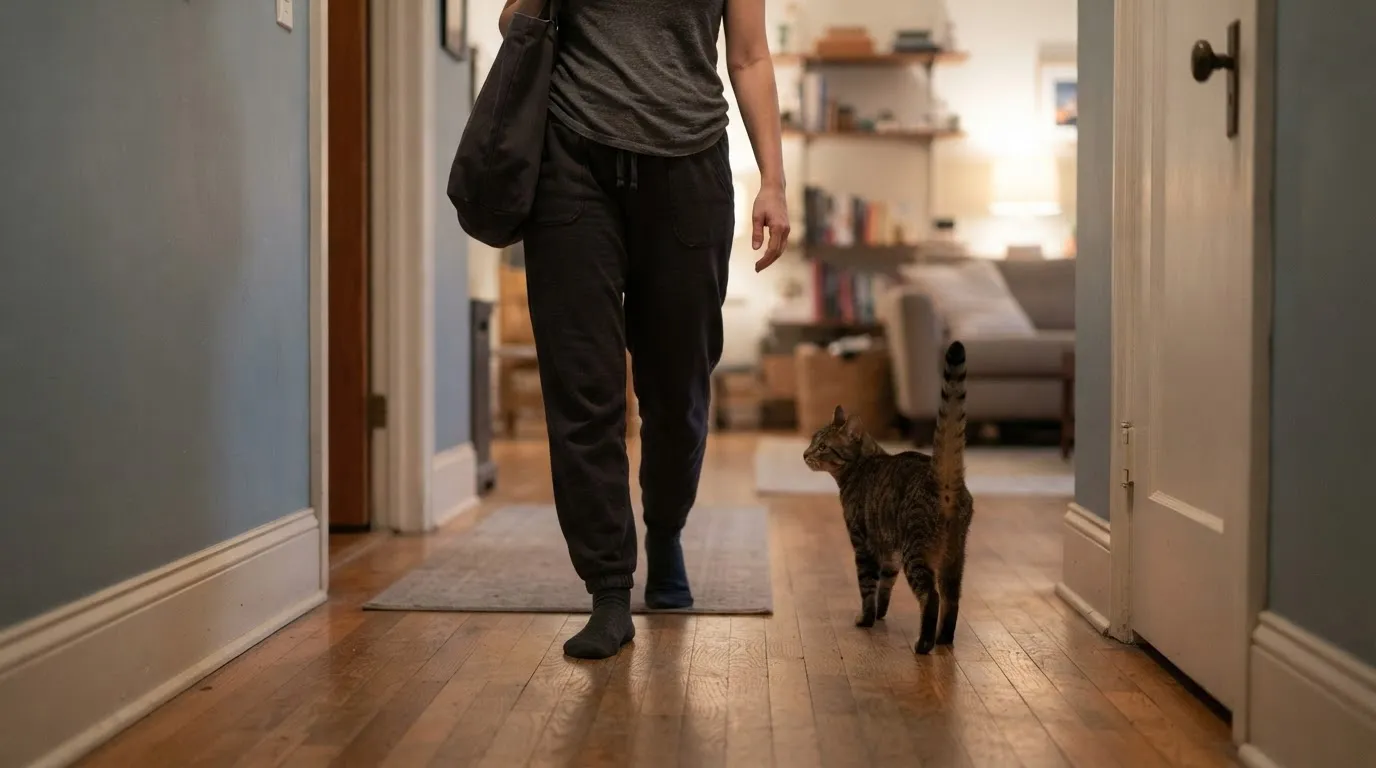
Your cat suddenly turning into your shadow is not a coincidence. Cats have been shown to approach their humans more often when those humans seem anxious, sad, or on edge.
A slower walk, a slumped posture, a flatter voice - cats notice all of it. This isn't clinginess. It's a quiet welfare check.
Most owners never connect the sudden shadowing to their own mood. But your cat clocked the shift in you before you even set down your bag.
Following you is only step one. What they do once they catch up is where it gets interesting.
#11 - They Settle Closer Than Usual
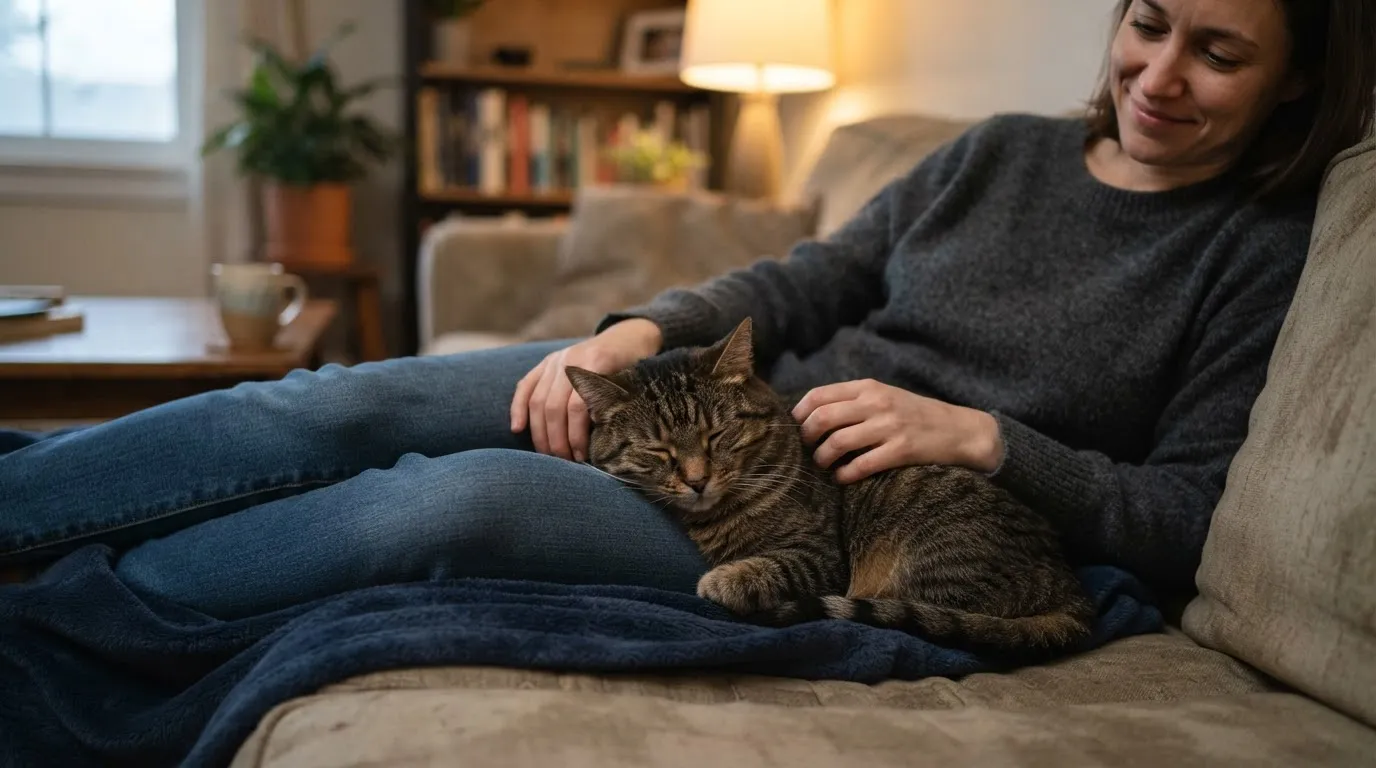
Forget the far end of the couch. On a rough day, your cat plants itself within inches of you.
Long-term studies of pet owners found that during low emotional periods, cats sought out more physical contact and watched their owners more closely than usual.
This is a deliberate choice, not an accident. Your cat isn't after warmth or your dinner - it made a call to be near you specifically.
Pay attention to exactly how it positions itself. What comes next takes closeness to a whole new level.
#10 - They Give You the Slow Blink
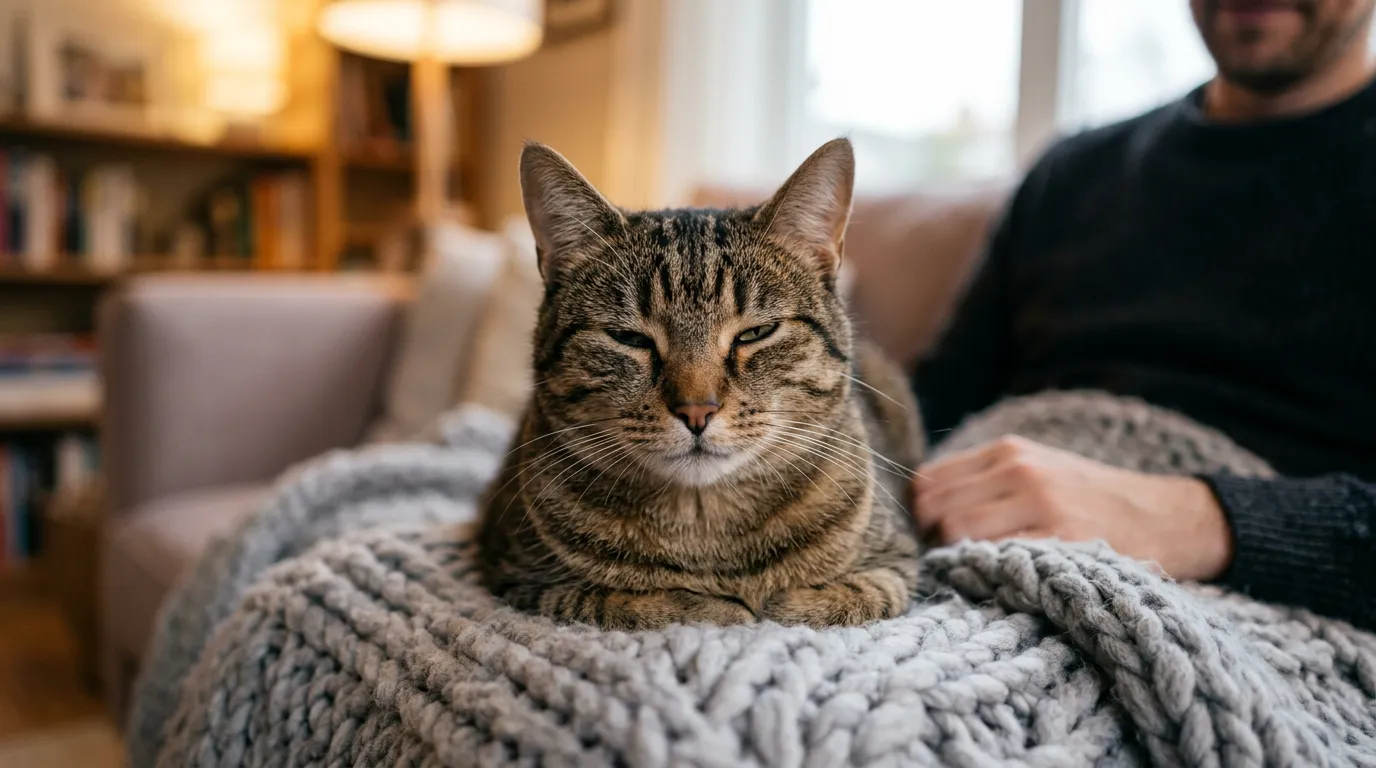
If your cat locks eyes with you and slowly closes, then reopens them, don't look away. In controlled experiments, cats were more likely to approach a human right after a slow blink exchange.
Behaviorists sometimes call this the "cat kiss" - a quiet signal of trust and safety between species.
"It's something that many cat owners had already suspected, so it's exciting to have found evidence for it."
Karen McComb, University of Sussex
On your worst days, this is your cat saying: you're safe, I'm here. No sound. No fuss. Just intention.
There's an even more physical form of comfort waiting just ahead.
#9 - They Knead on You or Beside You
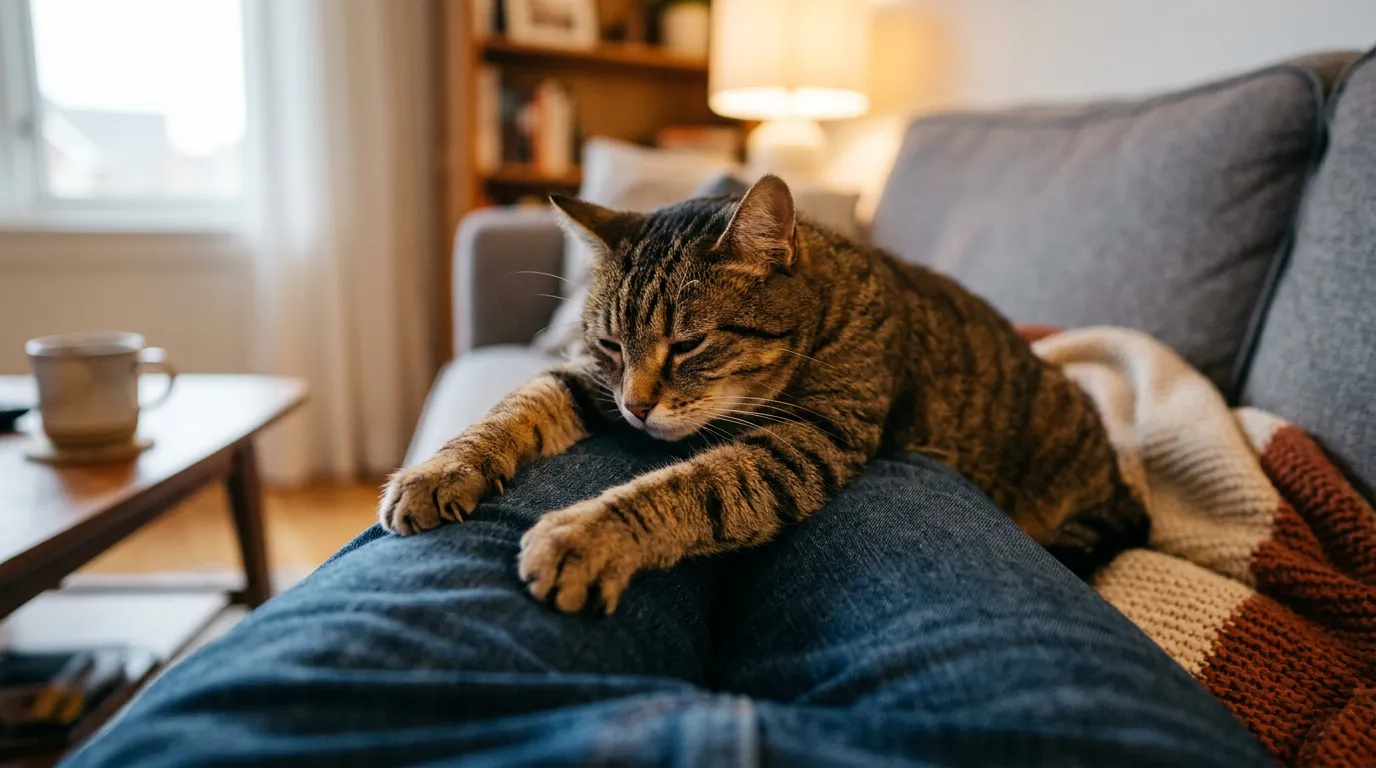
That rhythmic paw-pressing, sometimes called "making biscuits," traces straight back to kittenhood. Cats once kneaded their mother's belly to bring on milk, and the instinct never fully disappears.
Some research links kneading to oxytocin release - the same bonding hormone tied to trust and comfort in mammals.
When your cat kneads on you during a hard evening, it's sharing its own self-soothing ritual with you. That's the same comfort it gives itself, handed over freely.
Now pair that motion with a sound most people completely misread.
#8 - They Purr Deliberately Near You
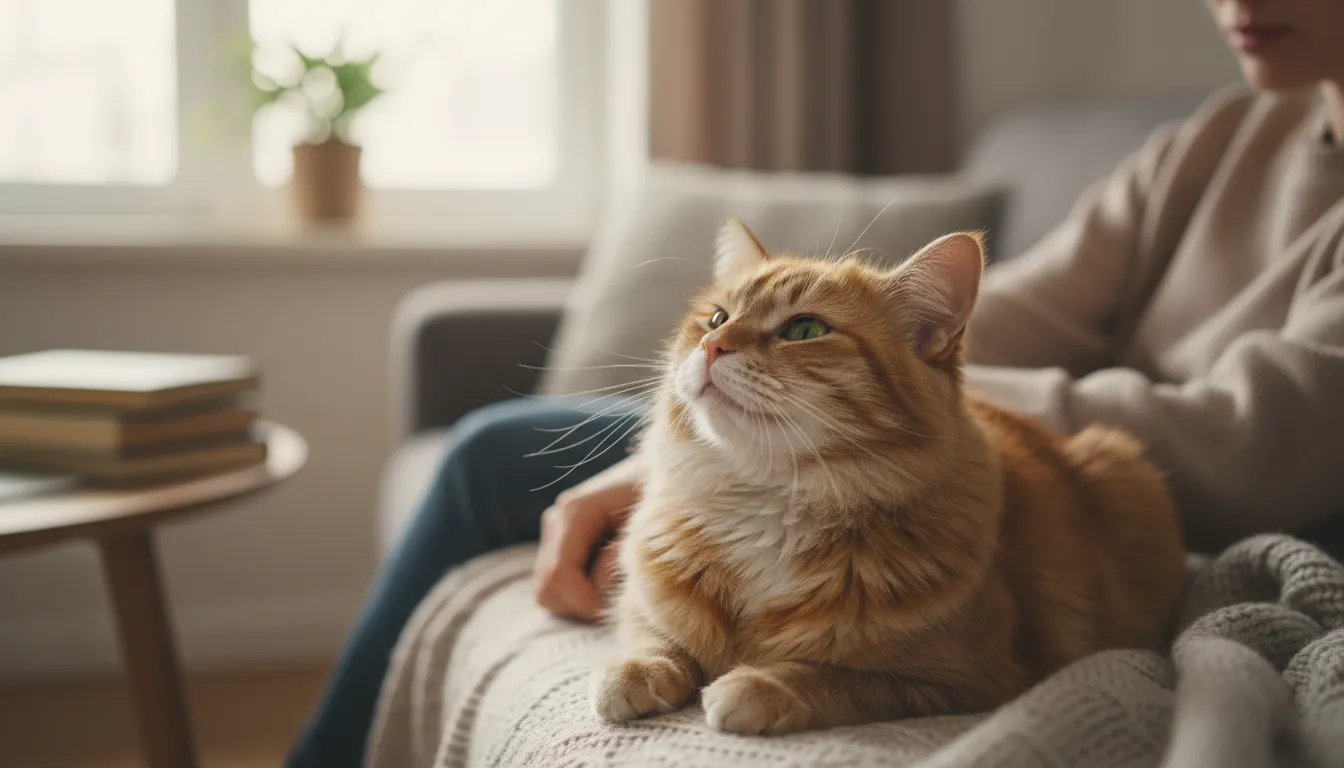
Most people think purring only means "happy cat." It's more layered than that - cats also purr to self-soothe when stressed, and sometimes to comfort the humans around them.
Sitting close and purring near a distressed owner has even been linked to lower blood pressure in people.
Fast Facts
- A cat's purr typically vibrates between 25 and 150 Hz.
- That range overlaps frequencies studied for bone and tissue healing.
- Purring near an owner has been linked to lower blood pressure in humans.
- Cats purr both when content and when self-soothing under stress.
A cat's purr vibrates in a frequency range scientists associate with stress reduction and healing. Your cat isn't just making noise - it's running a quiet biological comfort mechanism, aimed at you.
But there's a body language move that says even more than purring does.
#7 - They Head-Butt or "Bunt" You
A cat pressing its forehead against you, known as bunting, is a serious act of affiliation. Veterinarian Dr. Sarah Ochoa has noted that cats often shift toward physical contact - rubbing, lying in your lap, even licking your hands - once they sense something is wrong with you.
Bunting also transfers scent from glands near the forehead, which is how cats mark something as safe and theirs.
When your cat bunts you after a brutal day, it isn't just affection - it's claiming you. It's weaving you back into its sense of security, which for a cat is an enormous gesture.
The next move on this list is one most owners completely misread as rudeness.
#6 - They Sit Facing Outward on Your Lap
When a cat sits on your lap facing away from you, toward the room, it isn't being cold. It's standing guard.
Cats that sense something is off with their owner will sometimes position themselves as a form of watchful presence, staying alert to the surrounding room instead of resting.
Quick Compare
- Facing you: seeking direct comfort and closeness.
- Facing outward: standing guard, watching the room for you.
- Curled in a ball on your lap: total relaxation and trust.
- Perched on the armrest nearby: present, but giving you space.
Placing itself between you and everything else is a protective posture. Your cat has decided you're vulnerable right now, and appointed itself your sentry.
The vocal shift coming next is one most people chalk up to random chattiness. It isn't.
#5 - They Vocalize More Softly Than Usual
On bad days, some cats trade their usual assertive meow for something gentler - soft chirps, low trills, quiet murmurs. Cats pick up on tone fast, and soft human tones read to them as comforting, while sharp ones send them running.
In turn, many cats scale their own voice down to match your energy rather than overwhelm you.
A cat whispering instead of demanding isn't communicating less - it's communicating more carefully. It's saying: I see you, and I won't push.
Then there's the tail movement that says even more than the voice does.
#4 - They Approach With Their Tail Held High
A tail raised straight up like a flagpole is one of the friendliest signals in a cat's entire vocabulary. Cats have been observed rubbing against their owners more often during low emotional periods, almost as if trying to draw attention and offer comfort.
A high, upright tail during that approach is the feline version of walking toward you with open arms.
Add a slight curve at the tip - the so-called "question mark" tail - and your cat is actively checking in on you. It's asking permission to get close.
What comes next happens in complete silence, and it's easy to miss if you don't know what to look for.
#3 - They Watch You With Softened Eyes
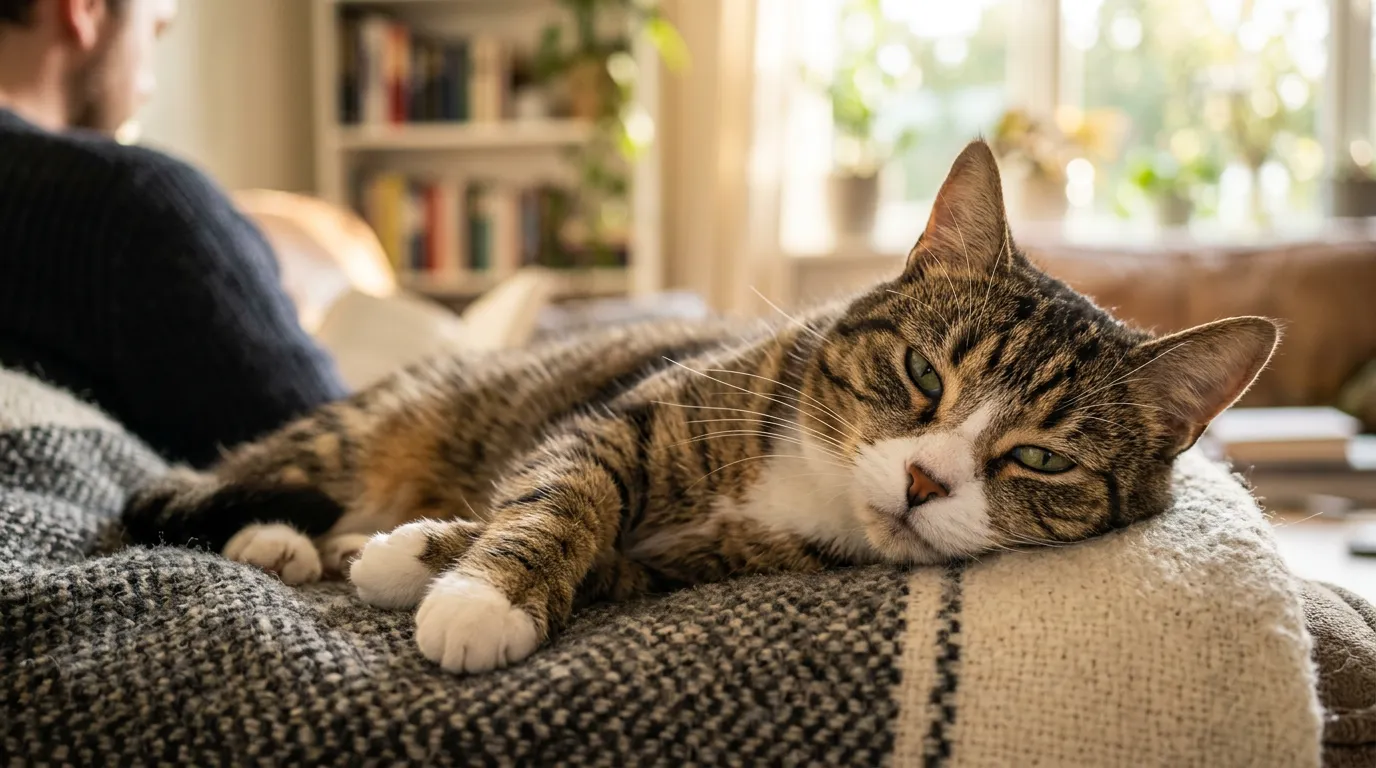
This isn't the hard, unblinking stare of a territorial cat. On a hard day, a caring cat watches you with half-closed, soft eyes - the feline equivalent of a warm expression.
This is part of what researchers call social referencing: cats read your face, and grow more attentive when they spot signs of distress.
A cat watching you with relaxed, narrowed eyes isn't zoning out - it's monitoring you. You've become its priority, and it's tracking every small shift in your expression.
The next behavior is one your cat almost never does for strangers.
#2 - They Lick or Groom You
Allogrooming - grooming a companion - is something cats reserve for their most trusted bonds. Studies on cat reunion behavior found the vast majority of cats rub against their owner after a separation, and relax noticeably once that owner is back.
Licking a person's hands or face is a direct import from how cats groom each other inside their own social groups.
Being licked or groomed by your cat pulls you into its inner circle - the group it would actually defend. It has to lower its guard completely to do it.
The final behavior on this list is the quietest one of all - and arguably the most powerful.
#1 - They Simply Stay
No performance. No fuss. They just don't leave.
Research out of Nottingham Trent University found that cats can pick up on when their humans are anxious or stressed, and many seem to mirror that emotional state rather than ignore it.
At a Glance
- Closer seating, softer meows, and slower blinks all signal concern.
- Kneading and purring are your cat sharing its own self-soothing tools with you.
- A tall tail or a forehead bunt means you're being pulled into its safety circle.
- Simply staying nearby, without demanding anything, is the strongest signal of all.
The most powerful thing a cat can offer is its presence - and it chooses to give that to you, specifically, on the days you need it most. It doesn't fix anything. It just refuses to leave the room.
Scientists sometimes call this the Secure Base Effect. Cat owners just call it comfort.
The Bottom Line
Your cat is not indifferent to your bad days. It reads your posture, your voice, even your scent, and quietly adjusts its behavior around all of it.
From the tail-up approach to the simple decision to stay, every item on this list is a real, documented response to you. The next time your cat does one of these twelve things, it isn't a coincidence - it's communication.
Which one does your cat do that didn't make the list? Drop it in the comments - we'd love to hear it.