10 Things a Cat Does That Show It Has Forgiven a Difficult Start
Most cat owners assume a rough start - feral roots, a neglectful home, months in a shelter - leaves a permanent scar. Behaviorists say something different: cats forgive far more, and far faster, than their reputation for grudges suggests.
The real mystery isn't whether your cat can move past a hard beginning. It's whether you'd even recognize the moment they do it, because the signs are quiet, easy to miss, and hiding in plain sight.
#10 - They Choose to Stay in the Same Room as You
It sounds small. It's actually enormous.
A cat that once bolted at the sight of you now lingers in the same room, even without seeking pets. That quiet choice means they've already decided you're not a threat.
For an animal that spent its early life avoiding humans, sharing space voluntarily is a massive leap. Let proximity be enough for now - don't rush what comes next.
But that's nothing compared to what we found about #9...
#9 - They Give You the Slow Blink
This one has real science behind it, and most owners walk right past it every day.
In cat communication, closing your eyes near another creature is risky, so a slow blink is a deliberate show of trust. Researchers have confirmed cats both produce and recognize this signal, and humans can send it right back.
A cat that slow-blinks at you is making itself vulnerable on purpose. That's not nothing for an animal that once had every reason to stay on high alert.
Fast Facts
- The slow-blink study came from psychologists at the University of Sussex and Portsmouth, published in Scientific Reports.
- The first experiment tested 21 cats across 14 households with their own owners.
- Cats also approached an unfamiliar researcher more often after being slow-blinked at, not just familiar owners.
- A separate shelter study found that cats who slow-blinked at visitors tended to get adopted faster.
But that's nothing compared to what we found about #8...
#8 - They Start Grooming Themselves Near You
Cats don't groom when they're on edge. Full stop.
Grooming demands total concentration and lowered defenses - two things a frightened cat will never risk near someone it doesn't trust. When your cat cleans its coat right beside you, it's telling you the coast is clear.
If the bond deepens further, they may even try to groom you back, licking your hand or hair. That's the moment you know you've crossed into fully bonded territory.
But that's nothing compared to what we found about #7...
#7 - They Headbutt You (Bunting)
People think this is just a cute quirk. It's actually closer to a signed peace treaty.
Cats have scent glands on their cheeks and forehead, and a headbutt transfers that scent straight onto you. In cat logic, they're marking you as family - territory worth defending.
A rescue cat won't get close enough to headbutt someone it doesn't trust. No exceptions, no matter how food-motivated they seem.
But that's nothing compared to what we found about #6...
#6 - They Follow You From Room to Room
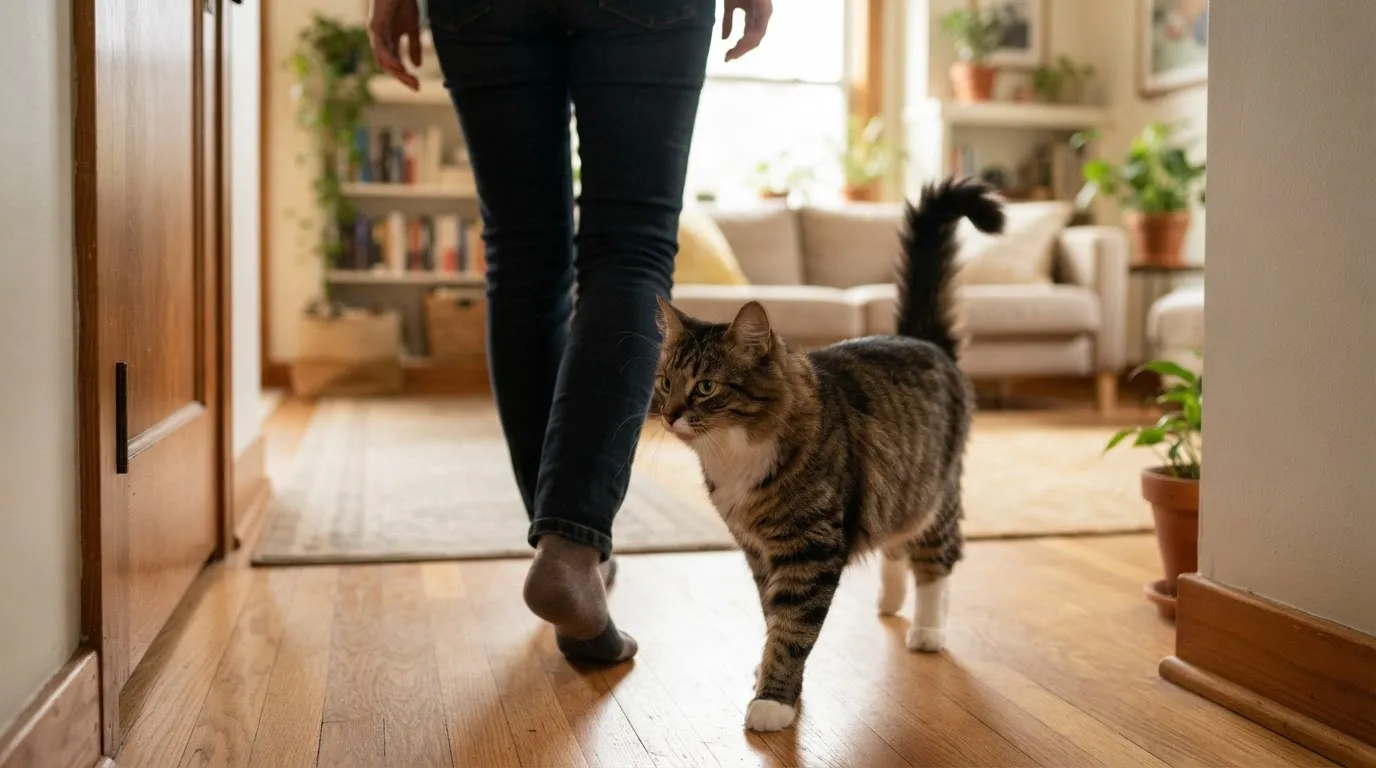
An independent animal shadowing you everywhere is not a coincidence.
Cats are wired for solitude, so choosing to trail behind you room after room signals something bigger. You've become their anchor point - the safest thing in the entire house.
Watch the tail while it happens. A raised, softly curved tail is the green light that their intentions are warm, not wary.
But that's nothing compared to what we found about #5...
#5 - They Knead You ("Making Biscuits")
This behavior goes all the way back to kittenhood, and that's exactly why it matters here.
Adult cats knead when they feel deeply secure, even though the nursing instinct behind it is long gone. A cat from a traumatic background that starts kneading you is handing over its most primal sense of safety.
It's also how cats release calming pheromones through their paw pads, quietly marking you as their territory. Literally, they're claiming you as their own.
Worth Knowing
- Kneading releases calming pheromones straight from a cat's paw pads.
- The habit is nicknamed "making biscuits" and traces back to nursing behavior from kittenhood.
- A cat purring while it kneads is doubling down on the relaxed signal.
- Some cats only ever knead blankets or beds, never a person - context still matters.
But that's nothing compared to what we found about #4...
#4 - They Purr Contentedly in Your Presence
Not every purr means the same thing. But this specific one is unmistakable.
Cats from hard starts can go weeks, sometimes months, without purring at all. The first time that rumble breaks loose in your presence, it means the anxiety holding it back has finally lifted.
Pair it with half-closed eyes and a loose, heavy body, and there's no ambiguity left. That's a fully relaxed cat, and you're the reason.
But that's nothing compared to what we found about #3...
#3 - They Sleep Near You (or On You)
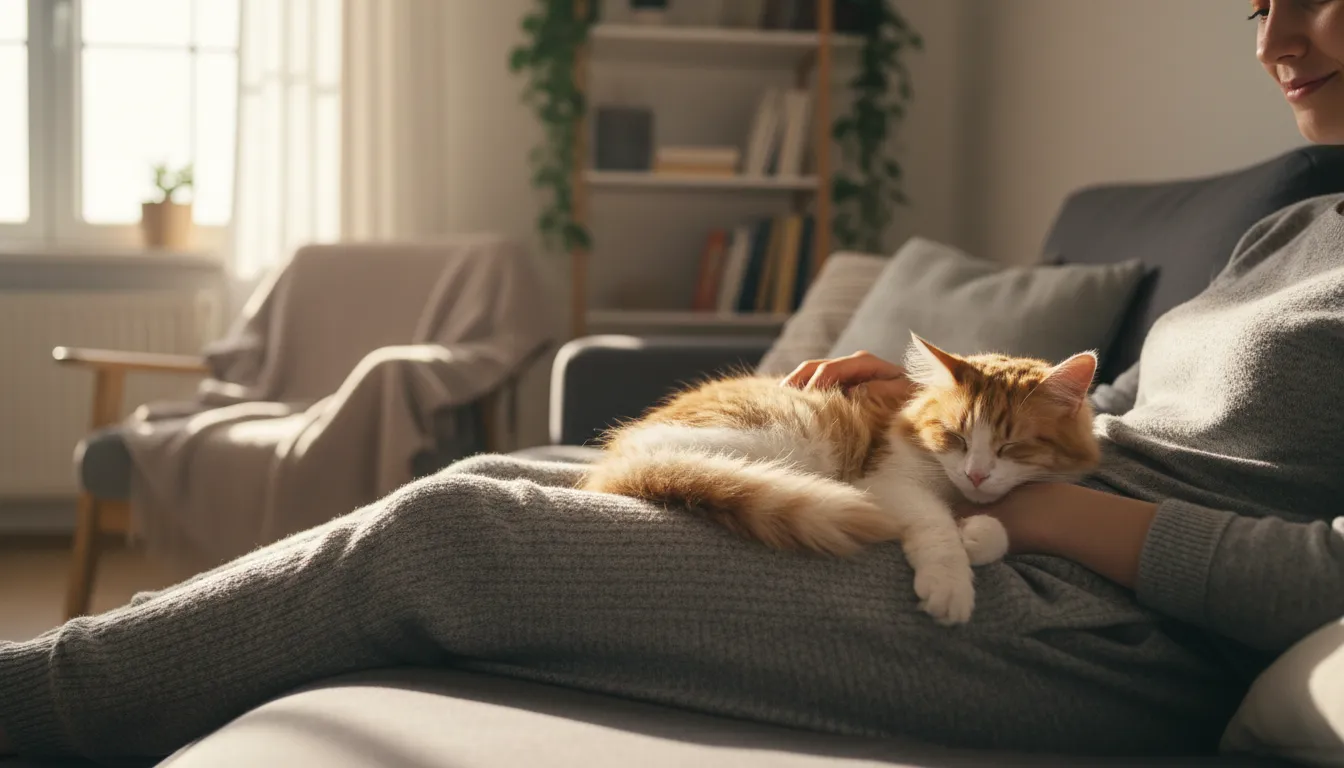
Sleep is when cats are at their most defenseless. Where they choose to do it tells you everything.
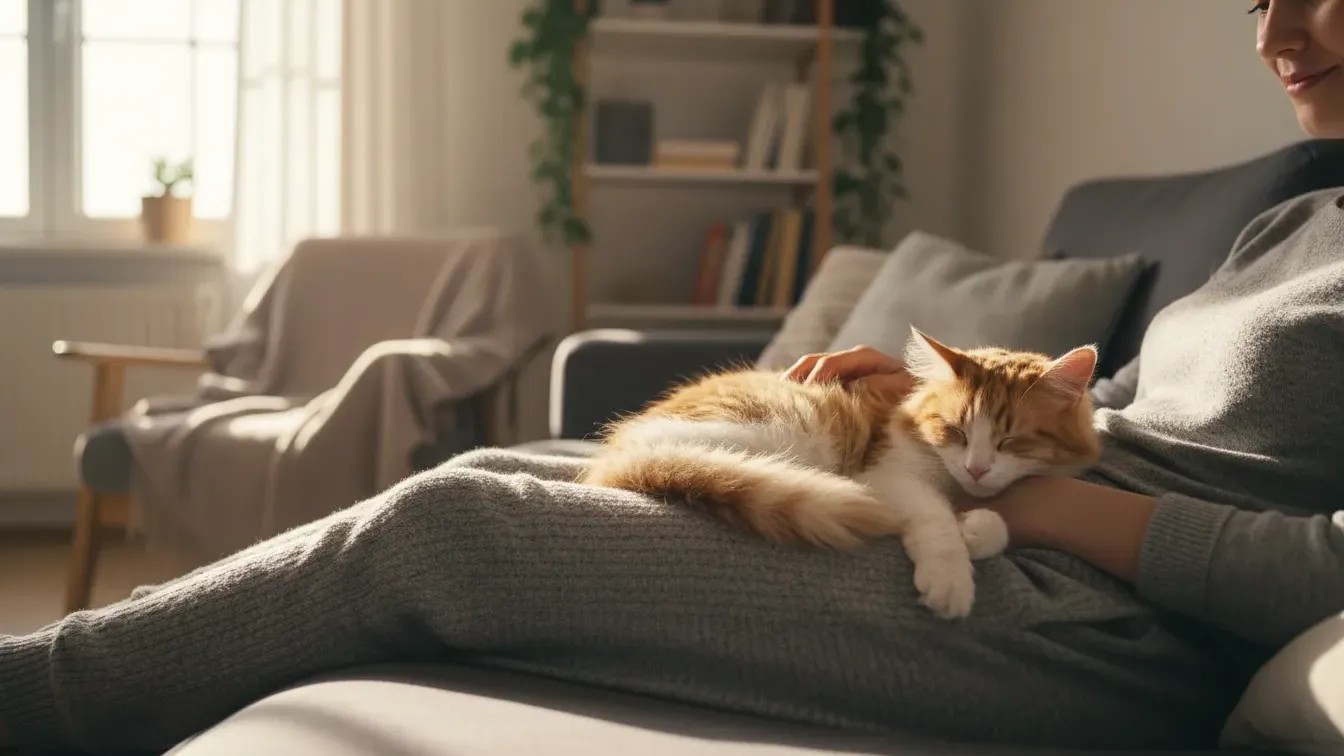
A cat that once slept behind appliances or deep inside closets is now dozing beside you out in the open. That's not laziness - it's a complete recalibration of what counts as dangerous.
If they return to your lap after any tension between you, that's forgiveness in its purest form. They're choosing you again, on purpose.
But that's nothing compared to what we found about #2...
#2 - They Expose Their Belly to You
Stop and think about what this actually requires from a cat with a hard past.
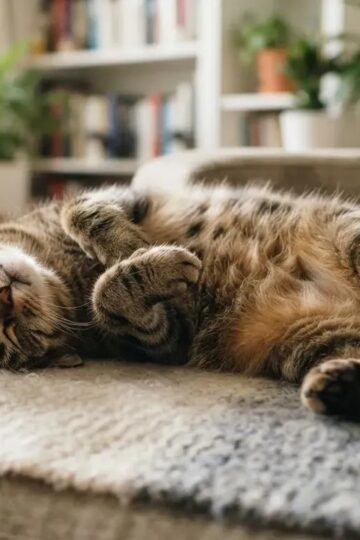
The belly is the most vulnerable, unprotected part of a cat's body. Rolling over and showing it to you, without flinching, is an act of real courage for an animal that once flinched at everything.
Read it as a compliment, not an invitation. Respond with a slow blink instead of a belly rub, and let the gesture speak for itself.
Quick Compare
- Fearful cat: flattened ears, tucked tail, low crouch, avoids eye contact.
- Trusting cat: relaxed ears, loose tail, exposed belly, holds your gaze and slow-blinks.
But the #1 sign? It's the one almost no one talks about, and it happens in plain sight almost every single day...
#1 - They Groom You or Allow You to Groom Them
This is the final frontier. For a cat from a hard beginning, it's the biggest signal there is.
Allogrooming, or social grooming, is reserved for the tightest circle a cat has. When a formerly feral or neglected cat starts licking your hand or hair, they've placed you inside that circle.
It doesn't get more forgiving than that. Trust like this is never handed out - it's earned, one quiet gesture at a time.
The Bottom Line
Most people expect big, dramatic gestures when a cat rebuilds trust. Real forgiveness looks quieter than that - a blink, a chosen nap spot, a headbutt in the kitchen at midnight.
Each of these ten behaviors is a choice, made by an animal that had every reason not to make it. If your cat is doing three or four of these regularly, they haven't just tolerated you - they've let you in.
Did your rescue cat show one of these signs that caught you off guard? Tell us about it below - the story is usually worth it.