13 Things a Cat Does in Its Last Years That Show a Lifetime of Trust
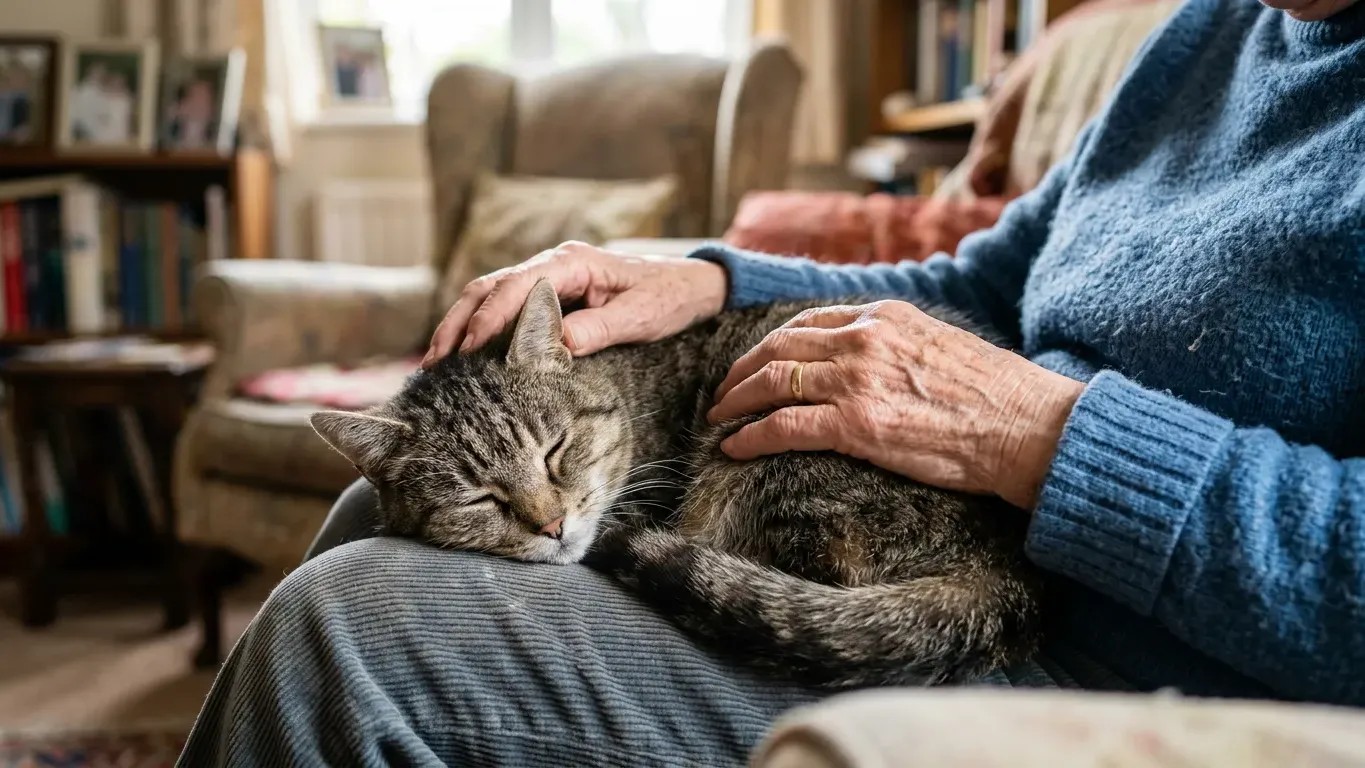
Most people think a cat pulling away in its final years means it loves you less. Turns out, the opposite is almost always true.
Senior cats - roughly 10 and older - go through a profound emotional and physical shift that rewrites how they relate to the humans they've spent a lifetime with. The behaviors that confuse owners most are actually the clearest signals of trust built over years.
Vets and animal behaviorists have been watching these patterns for decades, and the list below runs from subtle to genuinely gut-punching. Here's what your aging cat is really telling you.
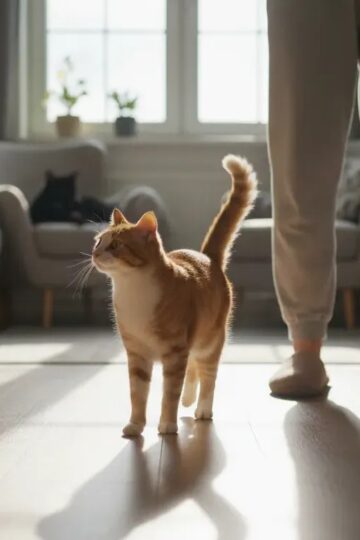
#13 - They Follow You From Room to Room
That "shadow cat" behavior isn't annoying - it's meaningful. With age, cats lean harder on the security, warmth, and routine their humans provide, and a calmer, more homebound energy draws them closer to you.
This isn't dominance; it's co-ownership. Behaviorists often see this in bonded, aging cats - the human becomes their "anchor," and they return the favor by supervising your every move.
Fast Facts
- Cats are officially classified as seniors starting at age 10, though some vets begin senior-level care around age 7.
- Thanks to better nutrition and veterinary medicine, it's now common for vets to see feline patients well into their twenties.
- Domestic cats typically live 13 to 20 years, with the final stretch reserved for the deepest trust behaviors.
It's one of the earliest trust signals owners overlook, dismissing it as a quirk rather than a declaration. But that's nothing compared to what we found about #12...
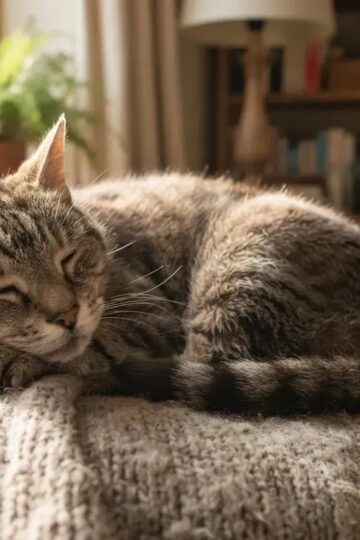
#12 - They Sleep Only on You
It's not just cute - it's strategic. Senior cats have less energy to patrol or defend territory, so they collapse where they feel most protected, sometimes timing their naps around when you sit down.
Older cats cherish predictable days even more than younger ones do. Just as people settle into routines with age, cats do too - and you are their favorite, safest routine of all.
The cat isn't being clingy - it's making a calculated choice about who it trusts most in the world. That choice is you, every single time. But #11 shows trust in an even more surprising way...
#11 - They Let You Handle Them Without a Fight
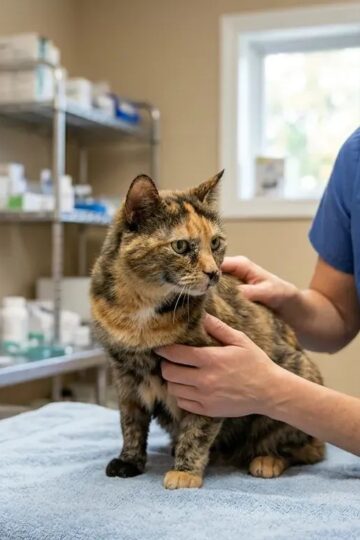
Senior cats rarely get more flexible physically, but emotionally, they can. When a cat who used to swat, bite, or bolt at the sight of a nail clipper suddenly lets you handle their paws, belly, or tail without a fight, that's a profound shift.
Cats have a very high pain tolerance and rarely announce when they're uncomfortable - they leave subtle clues instead. Letting you close when they're at their most vulnerable is anything but subtle.
At a Glance
- Vets recommend senior cat checkups every six months starting at age 10.
- Once a cat passes 15, many vets bump that up to every four months.
- Because cats mask pain so well, calm behavior during handling is often the clearest sign something feels safe - or wrong.
This is one of the rarest trust signals a cat can give. Don't take it for granted. And #10 is something almost every owner misreads completely...
#10 - They Groom You
You've been promoted into their grooming circle - the same status reserved for a cat's closest companions. Grooming is risky for a cat, since it means being distracted and vulnerable at the same time.
A senior cat that still spends its limited energy washing you is spending precious resources on you specifically. Leaning into that gentle daily ritual only deepens the bond further.
When a senior cat licks your hand or hair, it isn't an accident. It's an act of family. See how #9 takes this even further...
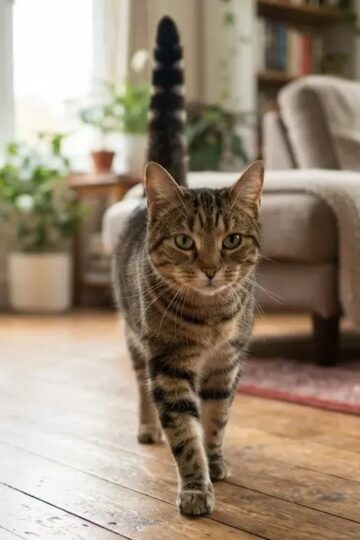
#9 - Their Greeting Becomes Intense and Personal
Watch whether they greet other people half-heartedly but explode into rubbing, purring, and circling only for you. That difference says everything.
Adult and senior cats often prefer a steady routine over high-energy play. They bond through proximity, shared quiet time, and gentle attention instead.
The greeting ritual of an aging cat is its most honest emotional expression. It costs them energy they no longer have to spare. And #8 is the behavior that catches most owners completely off guard...
#8 - They Sleep in Exposed, Vulnerable Positions Near You
When a senior cat regularly sleeps in exposed positions in shared spaces - hallways, the living room, the foot of your bed - they're treating the whole area as joint territory. Older cats are usually more careful with where and how they sleep, simply because getting back up is harder.
Choosing to sleep belly-up or fully stretched out in an open space near you isn't laziness - it's a statement: I know you won't hurt me.
Vets point to social interaction and predictable surroundings as core pillars of feline welfare in old age. A secure cat treats its owner as a home base to explore the world from - and in old age, that base barely needs exploring anymore. You are the world. But #7 is where it gets really emotional...
#7 - Their Play Becomes Focused Entirely on You
Aging cats streamline their energy toward interactions that feel emotionally rewarding, not just stimulating. When all their playful focus funnels toward one person, that's a quiet admission: fun now means fun with you specifically.
Your older cat may be sleeping more and playing less these days. That's often because they tire faster, not because they've lost interest in you.
When they do choose to play, and they choose you, that is everything. Wait until you read what #6 reveals about trust under pressure...
#6 - They Become More Vocal - But Only With You
One of the most common senior-cat changes is a sudden increase in vocalizing. Cats meow more as they age, whether from cognitive decline, discomfort, or plain old craving for company.
Most owners panic when their quiet cat suddenly starts talking. But directed vocalization - meowing at you, following you and calling out - is a form of communication reserved for trusted companions.
Worth Knowing
- Increased meowing in senior cats can point to cognitive decline, hyperthyroidism, high blood pressure, or pain - not just attention-seeking.
- Because cats hide discomfort so well, sudden vocal changes are often the first visible clue something's off.
- Meowing aimed at one specific person, rather than the whole household, usually signals a deeper bond with that person.
Talk back. Answer the meows, even just with your voice - it matters more than they let on. And #5 is the behavior vets say is the most misunderstood of all...
#5 - They Stop Guarding Their Territory From You
You'll notice fewer hard stares when you cross "their" path, replaced by relaxed, half-lidded blinks. They stop rushing to claim a space before you get there.
That's a subtle but real form of trust - they've decided you're part of the landscape, not a rival. Some cats need more emotional closeness as they age, becoming more dependent on the relationships they trust most.
A cat that shares its space without a flicker of competition has fully merged its world with yours. That's a decade or more of trust made visible. But #4 will genuinely surprise you...
#4 - They Seek Routine With You, Not Just Routine
Older cats cherish predictable days more than younger cats do, and sticking to normal routines reassures them. But here's the part most owners miss: it isn't the routine itself that comforts them - it's the person delivering it.
Cats rely heavily on predictability to feel safe. When familiar sights, sounds, or schedules change, some pull back, avoid interaction, or grow more watchful.
When a senior cat learns your schedule and plants itself in your path at the same time every day, it has built its entire sense of safety around your presence. That is not habit. That is love with a system. And #3 is where the emotional weight really lands...
#3 - They Choose to Be Near You When They're Unwell
Some cats become more loving near the end - sticking close, following you room to room. That's not random.
A sick or failing cat that seeks your company specifically is making a conscious choice about who it feels safest beside. Vets often read behavior changes as signs of illness, pain, or emotional distress.
But closeness during illness is the opposite of distress. It's the feline equivalent of reaching for a hand.
No animal seeks comfort from someone it doesn't fully trust. The fact that they reach for you says more than words ever could. Which makes #2 even harder to think about...
#2 - They Show You Their Slow Blink More Often
The slow blink is, by every behavioral account, a cat's version of "I love you, and I'm not afraid of you."
When a cat feels secure, it treats its owner as a home base to explore the world from. If that base ever feels shaky, a securely attached cat may turn avoidant instead - a sign of pain or discomfort, not lost love.
"Try narrowing your eyes at them as you would in a relaxed smile..."
Karen McComb, University of Sussex
A senior cat that slow-blinks at you often - especially from across the room, unprompted - does it because the guardedness is finally gone. It's a mix of changing needs and a settled, secure outlook that pulls them closer to the people they trust most.
The slow blink in old age is a cat saying: I've figured out life, and you're the best part of it. Save the most powerful one for last. #1 is the hardest to talk about - and the most important...
#1 - They Choose to Stay Close at the Very End
Some cats become more loving near the end and want to stick close, following you around. But many, equally, will quietly find your spot - your chair, your side of the bed, the corner of the room where you sit most - and settle there.
This isn't a mood swing. It's usually pain, aging, fading senses, or quiet cognitive decline rewriting how your cat sees the world, and who it trusts to survive it.
A lifetime of small moments - the consistent feeding, the gentle handling, the presence during storms, vet visits, and quiet Tuesday evenings - accumulates into this: a cat that wants to end its life exactly where it feels safest.
Beside you.
Domestic cats typically live 13 to 20 years - and in those final ones, everything they do distills down to trust.
The Bottom Line
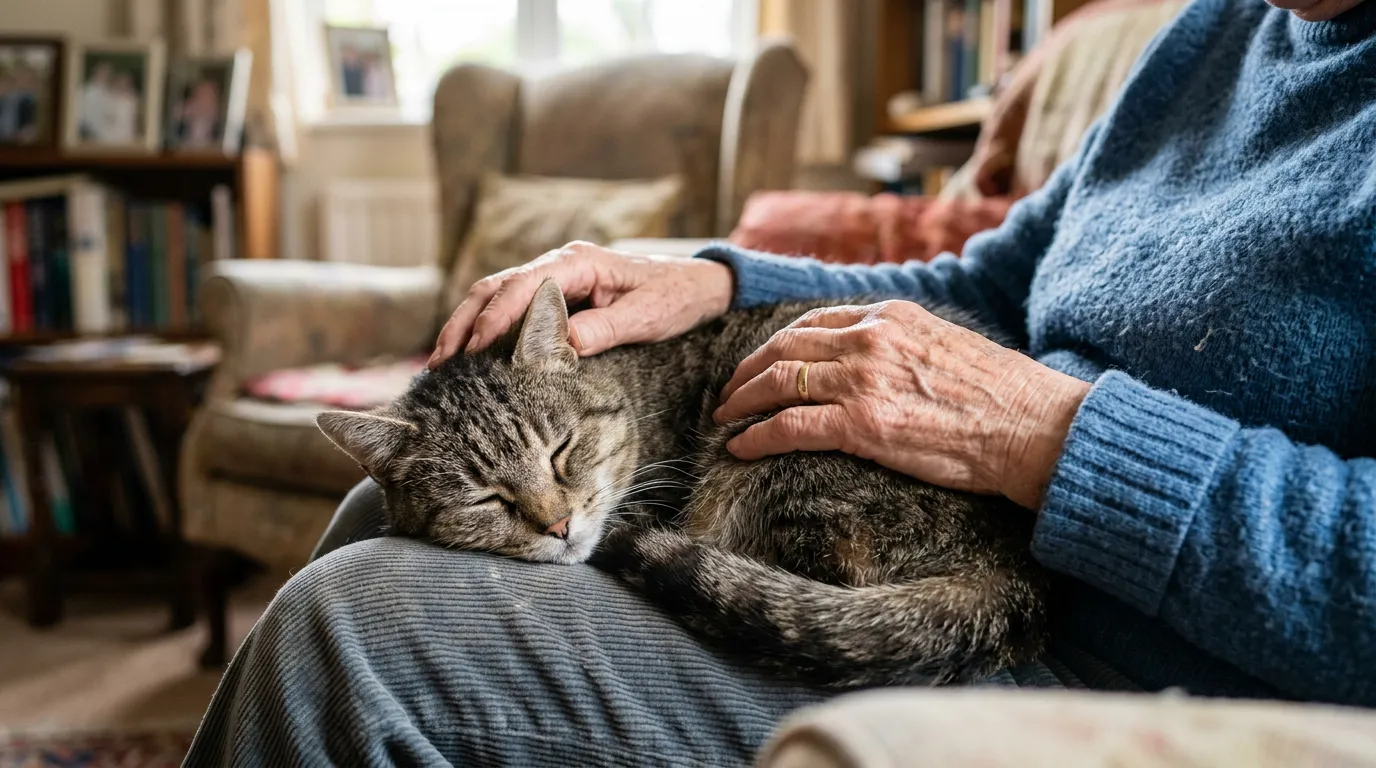
Senior cats don't love you less as they age - they love you more specifically. The clinginess, the vocalizing, the sleeping on your lap, the slow blinks, the willingness to be touched - none of it is a random old-age quirk.
Every behavior on this list is proof of years spent quietly deciding you are safe. They made their choice a long time ago - and they chose you.
If your senior cat is showing even a few of these signs, put the phone down and sit with them a little longer. Which one hit closest to home for you?