15 Things Vets Wish Cat Owners Knew About Aging Cats
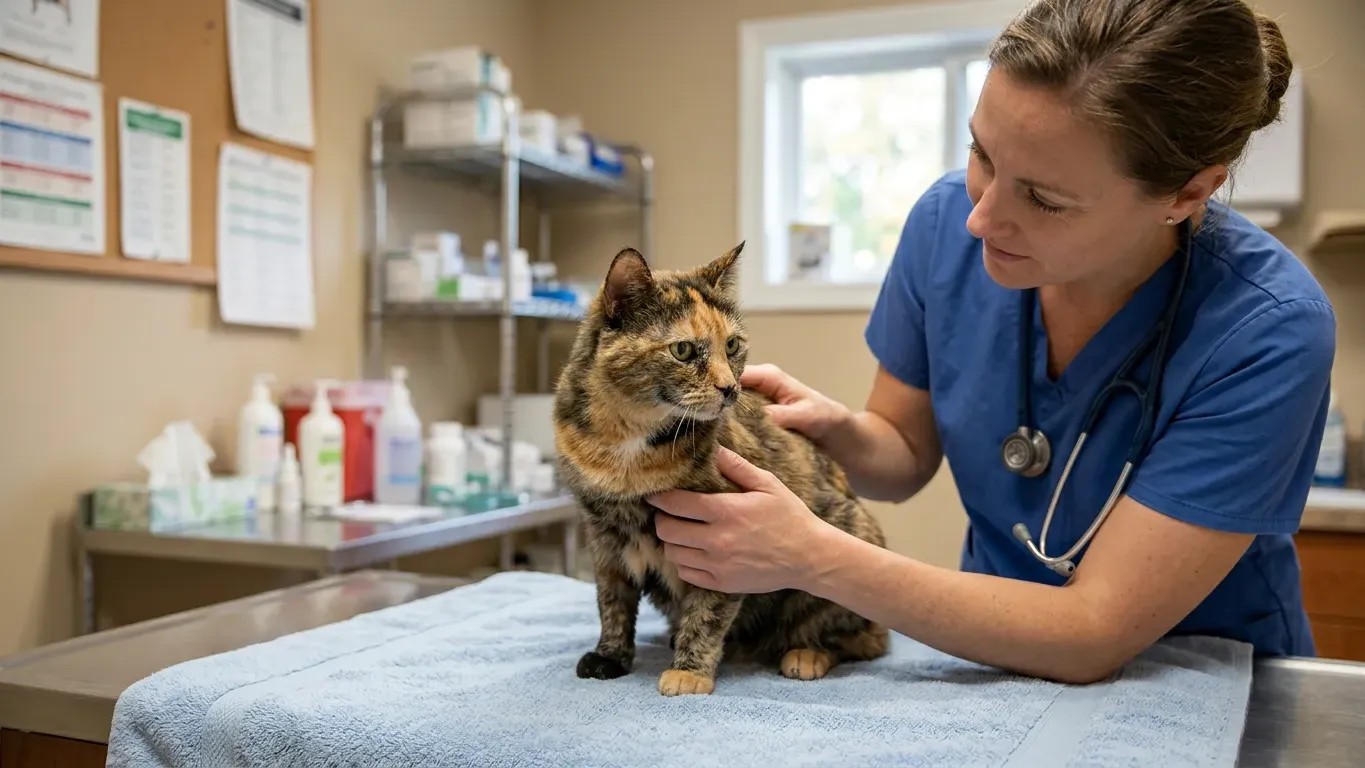
Most cat owners think their cat is “just slowing down with age.” Vets know that sentence is one of the most dangerous things they hear.
The truth is cats are professional pain-hiders, and what looks like normal aging is often a treatable condition caught far too late. From kidney disease to feline dementia, the warning signs are already there - you just have to know where to look, and that's exactly what's coming next.
15. Your Cat Is Considered “Senior” Earlier Than You Think
Most people picture a grey-muzzled, slow-moving cat when they think “senior.” Vets start that clock much earlier.
Cats are officially senior at age 10, but senior-level care often begins at 7. That's when wellness exams typically shift from once a year to every six months.
Many vets already treat 7-year-old cats as seniors, because they know how easily cats hide illness at that age. Your cat may look perfectly healthy at 8, but physiological changes are already underway - changes routine bloodwork will catch long before any symptoms appear.
Don't wait for obvious signs, or you'll end up managing a crisis instead of preventing one. But this early-age shift is only the beginning - wait until you see what's happening inside the body at #14.
14. “Slowing Down” Is Not a Diagnosis
Don't chalk up behavior or health changes to old age just because they happened gradually. Those shifts can be dental pain or common disease hiding in plain sight.
Dismissing symptoms as “just getting older” is one of the top regrets vets hear from owners after a serious diagnosis. Cats rarely cry out or limp dramatically - they just quietly adjust their routines until the pain becomes unbearable.
Slowing down, sleeping more, eating a little less - none of that is automatically normal. Each change deserves a conversation with your vet, and #13 explains exactly how often that conversation needs to happen.
13. Twice-a-Year Vet Visits Aren't Optional for Senior Cats
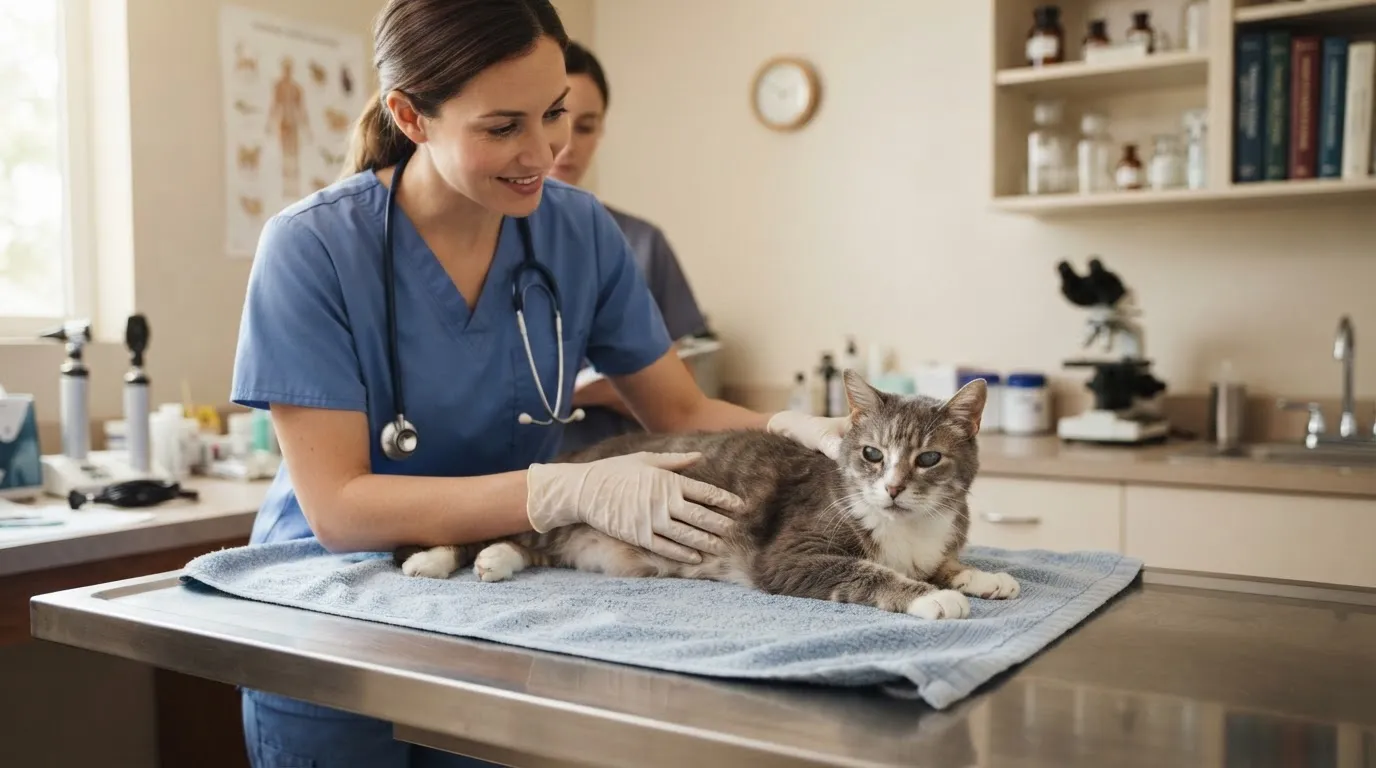
A full physical exam is recommended every six months once a cat turns 7. That sounds like a lot - until you realize it's roughly the equivalent of a human seeing their doctor once every three to four years.
The Feline Veterinary Medical Association recommends senior cats be seen twice yearly, because cats age so much faster than we do. A lot can go wrong in the two cat-years between visits.
Fast Facts
- Wellness exams shift to every six months once a cat turns 7.
- Two full cat-years pass between each annual visit - plenty of time for disease to progress.
- Bloodwork, urinalysis, and fecal screening are recommended at least once a year.
- Six months for a cat is roughly equivalent to three to four years for a person.
Blood, urine, and fecal tests are recommended at least once a year to catch organ changes before symptoms ever appear. Once-a-year checkups leave enormous gaps - and once you're in that exam room, make sure your vet is checking for the silent killer described in #12.
12. Kidney Disease Is the #1 Senior Cat Killer - and It's Silent
Kidney function declines as cats age, and the scary part is that cats rarely show symptoms until real damage has already occurred. Easy access to clean water becomes critical for exactly this reason.
By the time a cat starts drinking noticeably more water, kidney disease may already be advanced. Bloodwork is the only reliable early-warning system - the water bowl is just the last clue, not the first.
Kidney disease, hyperthyroidism, and high blood pressure frequently show up together in older cats. Your vet isn't being excessive by running a full panel - they're connecting dots you can't see, and #11 covers the one that hides best.
11. Hyperthyroidism Mimics a “Healthy” Cat
Here's the cruel trick hyperthyroidism plays: it often makes a cat look energetic and hungry, the exact opposite of sick. Owners frequently describe these cats as “doing great!” right before diagnosis.
The weight loss is the real red flag - an older cat eating more but losing weight is never normal. It's usually easy to diagnose with a routine blood test, and treatment options work well.
Any cat with suspected heart disease should be tested for hyperthyroidism too, since the two conditions travel together. There's another condition hiding just as quietly - and it affects your cat's mind. #10 gets unsettling.
10. Feline Dementia Is Real, and Most Owners Miss It Entirely
Feline Cognitive Dysfunction - cat dementia, essentially - is far more common than most owners realize. It's tied directly to brain aging and usually shows up after age 10.
Vets remember it with the acronym DISH: Disorientation, reduced Interaction, changes in Sleep, and loss of Housetraining. The middle-of-the-night yowling that owners brush off as “being needy” is one of the most consistent early signs.
Staring blankly into space, wandering, or crying out for no clear reason are also part of the pattern. Talk to your vet if you see it - there are management strategies that genuinely help, but first you need to understand what's happening to your cat's joints in #9.
9. Arthritis in Cats Is Massively Underdiagnosed
Cats don't limp the way dogs do, which is exactly why most owners have no idea their cat is in daily pain. A sudden reluctance to jump or climb is often the only clue you'll get.
A cat that stops jumping onto the couch isn't being lazy - it may be managing chronic joint pain. Vets have effective options now, from joint supplements to prescription medication.
Worth Knowing
- More than 90% of cats over age 12 show radiographic evidence of joint disease.
- Roughly 60% of cats over age 6 already show joint changes on X-rays.
- Most of these cats never show an obvious limp - the disease hides in plain sight.
- Shoulders, elbows, hips, and the spine are the joints most commonly affected.
Keeping your cat lean and preserving muscle tone both take pressure off aging joints. Once you understand how arthritis quietly reshapes a cat's world, #8 will make a lot of sense - because it's all about the litter box.
8. Litter Box Problems Are Usually Medical, Not Behavioral
Owners often get frustrated when a senior cat starts missing the box. Most vets will tell you: blame the body first, not the behavior.
Some arthritic cats can climb in to urinate but not to defecate, because the position hurts. Lowering the sides of the litter box, or getting a low-entry model, can fix the problem overnight.
Sudden litter box avoidance can also signal kidney disease, a urinary tract infection, or cognitive decline - none of which respond to scolding. This is the cheapest, easiest quality-of-life win most owners skip entirely, and #7 covers a fix that's just as simple.
7. Where You Place Food and Water Actually Matters
This sounds almost too simple to be important. It isn't.
Raising bowls to elbow height reduces the strain of crouching down for an arthritic cat. Most owners never think about it because the cat isn't complaining - but that's exactly the point.
Quick Compare
- Old habit: One floor-level bowl, refilled once a day.
- Better setup: Elevated bowls placed near elbow height to ease crouching.
- Old habit: A single water source in one room.
- Better setup: Multiple water stations, plus a fountain to encourage drinking.
Mixing wet and dry food helps with hydration as kidney health becomes more important with age. Multiple water sources, elevated bowls, and a fountain are three upgrades any owner can make today - and while you're adjusting the environment, don't overlook what #6 reveals about diet.
6. Senior Cat Food Labels Can Be Misleading
Walk into any pet store and you'll see dozens of bags labeled “senior formula.” Here's what most vets won't say loudly enough: not all of them are what your cat actually needs.
Most vets will tell you a senior cat doesn't automatically need a “senior” diet - it depends on their bloodwork and lifestyle. The wrong senior food can actually accelerate certain conditions, since a cat with kidney disease has very specific protein and phosphorus needs.
Let bloodwork drive your food choices, not the packaging. Once the diet is right, #5 reveals the grooming issue most owners confuse for contentment.
5. Reduced Grooming Is a Warning Sign, Not Laziness
A cat that has always been meticulous about grooming and suddenly isn't - that's a red flag wearing a very ordinary disguise. It rarely means the cat simply stopped caring.
Unkempt fur in a previously fastidious cat is one of the most consistent signals vets look for when suspecting pain, illness, or cognitive decline. Overgrown nails are part of the same problem, and they can curl painfully into the paw pad if left untrimmed.
Weekly brushing doubles as a health check and a bonding ritual. But the most overlooked part of any senior cat's body isn't the coat - it's what #4 reveals about the mouth.
4. Dental Disease Is Silently Destroying Your Cat's Health
If your cat's breath smells different or they're chewing less, it may be time for a dental check. Painful periodontal disease can quietly kill a cat's enthusiasm for its own food bowl.
A cat eating less may not be nauseous - it may simply be in too much mouth pain to eat comfortably. That distinction changes the entire treatment plan.
At a Glance
- By age 3, roughly 70% of cats already have some form of periodontal disease.
- Between 50% and 90% of cats older than 4 show signs of dental disease.
- Most of the damage happens below the gumline, invisible during a quick glance.
- Bacteria from infected gums can travel to the heart, kidneys, and liver.
Dental cleanings under anesthesia are safe for most senior cats and often transformative - which brings us to #3, and the anesthesia myth that stops too many owners from getting their cat real relief.
3. Anesthesia Fear Is Keeping Senior Cats in Unnecessary Pain
Vets hear it constantly: “Isn't anesthesia too risky for an older cat?” The honest answer is more nuanced than most owners expect.
Pre-anesthetic bloodwork and modern monitoring protocols have made anesthesia significantly safer than it was a decade ago. Refusing a needed dental cleaning out of anesthesia fear can leave a cat in chronic, unmanaged pain - which carries its own serious risks.
A healthy 12-year-old cat is a very different anesthetic candidate than a 14-year-old with advanced organ disease. Let bloodwork and your vet's real assessment make the call - and speaking of fear, #2 covers the kind that physically shortens your cat's life.
2. Chronic Stress Is a Genuine Health Threat in Aging Cats
Cats are creatures of habit at any age, but for a senior cat, disruption isn't just annoying - it has measurable health consequences. A new pet, a move, or a noisy renovation hits an older cat harder than you'd expect.
Chronic stress can suppress immune function, worsen existing conditions, and trigger behavioral problems that owners then mistake for plain decline. Reduced stress tolerance is a documented physiological change in aging cats, not a personality quirk.
Build a predictable, low-stimulus environment - same feeding times, same sleeping spots, minimal surprises. It costs nothing, and it matters enormously. But the single most important thing on this entire list is #1, and it might surprise you.
1. The Biggest Mistake Is Waiting Until Your Cat “Acts Sick”
Here's what every vet wishes they could say louder: by the time most cats “act sick,” the disease has usually been progressing for months - sometimes years.
Cats are experts at hiding illness until it's advanced, which is exactly why wellness exams matter even when your cat seems perfectly fine. Regular checkups and bloodwork remain the true cornerstone of senior cat health.
Catching illness early gives your cat a better shot at recovery and often costs you far less down the road. Don't assume something is “just because they're getting older” - ask your vet about anything that seems off, no matter how small.
The Bottom Line
Aging cats don't ask for help - that's the whole problem. Senior cats managing chronic illness are particularly likely to suffer quietly for a long time before anyone notices.
None of the 15 things on this list are complicated, but they all require you to stop assuming “old” means “fine.” Twice-yearly vet visits, proactive bloodwork, small home adjustments, and close attention to subtle shifts - these are the real tools.
Your cat can't tell you something is wrong. That job falls to you. Did any of these surprise you, or is there something your vet told you that should have made this list? Drop it in the comments.