16 Ways an Indoor Cat Shows It Feels Truly at Home
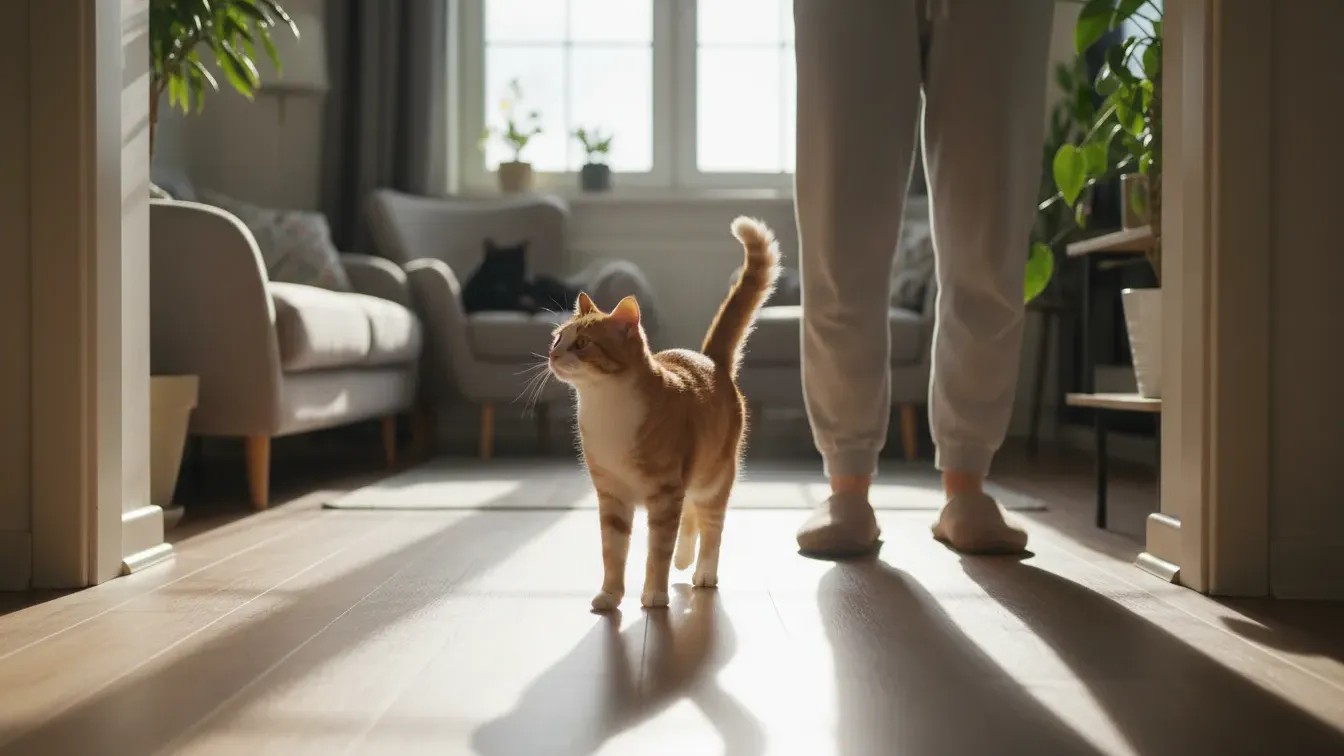
Most people assume they'll just know when their indoor cat is happy. In reality, feline contentment is quiet, deliberate, and almost impossible to catch unless you know exactly where to look.
The gap between a cat that merely tolerates your home and one that has truly claimed it comes down to a handful of very specific behaviors. Once you see them lined up, you'll realize your cat has been telling you this the whole time.
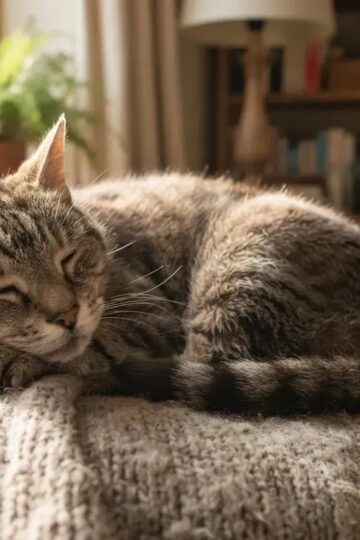
16. They Sleep in Exposed, Vulnerable Spots
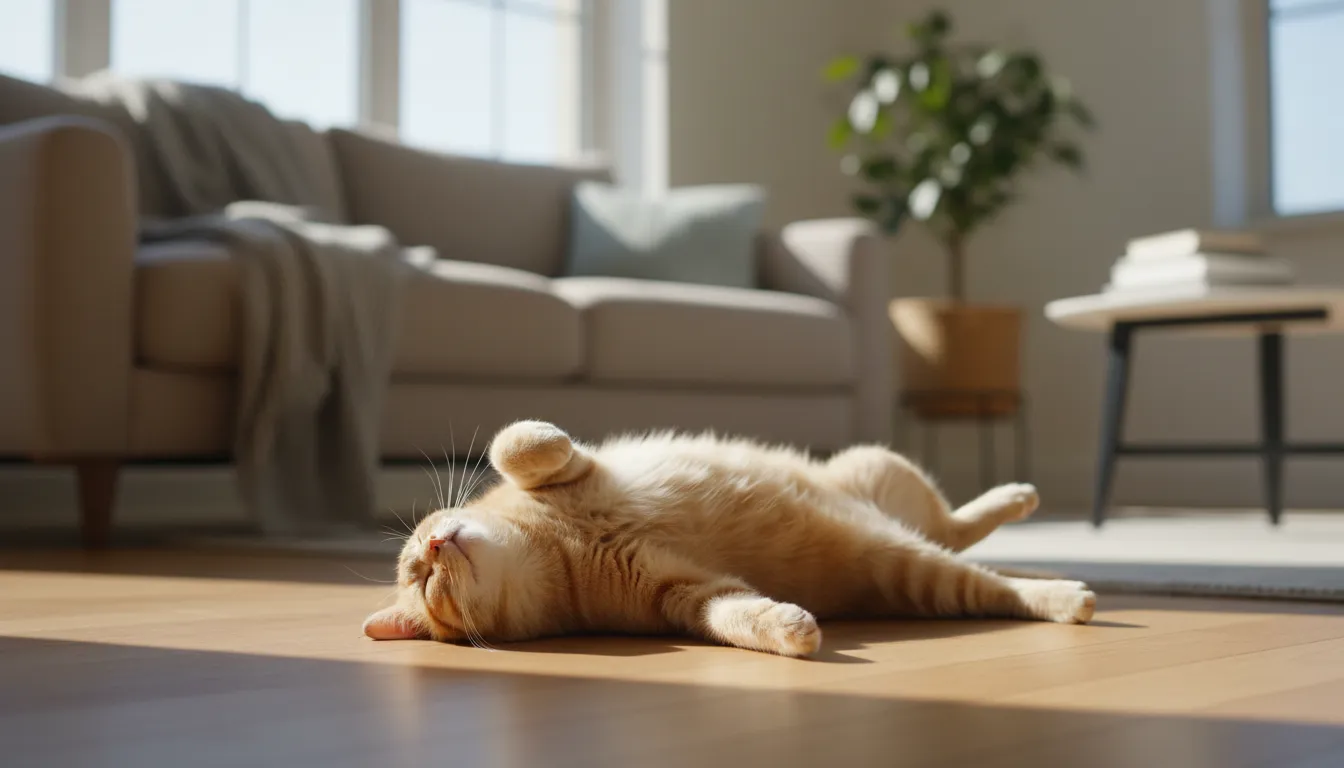
A nervous cat always sleeps tucked away in a corner. A cat that feels completely at home does the exact opposite.
When a cat feels safe, it will confidently nap in vulnerable positions, sprawled belly-up in the middle of the living room floor. That's not laziness; it's a trust signal.
Cats are both hunters and potential prey, so rest normally leaves them exposed. As your cat settles in, watch for them choosing less protected spots and worrying less about staying tucked away.
Fast Facts
- Adult cats sleep an average of 12 to 16 hours a day.
- Most naps last only 15 to 30 minutes before a cat rouses again.
- Kittens and senior cats can sleep up to 20 hours daily.
The belly-up nap in the open is your cat's version of a white flag, but aimed at the world, not at you.
But sleeping positions are just the surface. The next sign is even more telling, and it happens in your cat's eyes.
15. The Deliberate Slow Blink
Most owners think this is just sleepiness. Actually, it's one of the most studied comfort signals in feline science.
Animal behavior experts believe the slow blink is how a cat tells you it feels safe. It's basically a cat's way of saying it trusts you enough to close its eyes.
The slow blink really is an acceptance gesture. [Cats] do that when they're absolutely comfortable with you.
Gary Weitzman, veterinarian and author of How to Speak Cat
Research published in The Journal of Physiology found that slow blinking differs from an ordinary blink in both speed and intention. It isn't reflexive, it's a conscious choice.
In other words, your cat is deliberately choosing to lower their guard in front of you.
In one experiment, cats were more likely to approach a stranger after a slow blink exchange than after a neutral expression. That suggests the slow blink works as real emotional communication between cats and humans.
Try slow blinking back and see what happens. It connects directly to the next sign.
14. They Headbutt You (Bunting)
That gentle thud against your chin isn't random. It's one of the most deliberate things your cat does all day.
Headbutting, also called bunting, is when a cat presses its forehead against you and rubs its face along your body. Cats do this to show affection, mark their scent, or grab your attention.
Scent glands on a cat's face and lips release pheromones during a headbutt. Rubbing those pheromones onto you tells other cats you belong to their family, and makes you smell reassuringly familiar to them.
When your cat bunts you, they're not just saying "I love you", they're filing official paperwork that says you belong to their family group.
This kind of rubbing is reserved strictly for bonding and comfort. It's a social gesture, not an accident.
The next sign works on similar scent logic, but it happens quietly, without any physical contact at all.
13. They Knead Soft Surfaces Near You
Everyone knows cats knead. Few people realize just how significant it actually is.
Kneading happens when a cat feels completely relaxed and happy. It's a callback to kittenhood, to nursing safely against their mother.
A cat that kneads on your lap is essentially telling you that you trigger the same feeling of safety their mother once did. That's about as high a compliment as the feline world offers.
Both kneading and bunting involve scent marking, a way cats establish familiarity and control over their space. Directed at humans, they signal trust, love, and a desire to strengthen the bond.
There's another comfort behavior that happens quietly in the background, and most owners completely miss it.
12. They Groom Themselves in Your Presence
A cat that grooms in front of you is doing something almost no stressed cat will ever do. Grooming requires total distraction and being physically off-guard.
A cat that hasn't settled in, or feels unsafe, simply won't groom out in the open. The moment your cat starts a bath in the middle of your living room floor, they've decided your home is a safe zone.
The truly telling version is when they groom you. Allogrooming is reserved strictly for individuals a cat considers part of their social group, it's not just affection, it's group membership.
Watch where your cat grooms next. If it's in plain sight, you've earned something most cat owners never get, and the next sign is just as revealing, but louder.
11. They Purr While Just Resting Near You
Purring during play or feeding is common. Purring while simply resting near you, doing nothing at all, that's the real signal.
The detail most people miss is context. A cat purring unprompted a foot away from you is displaying deep, ambient comfort, the kind that only shows up when a space truly feels like home.
Cats can also purr when stressed or in pain, which is why context matters so much. A loose, relaxed body paired with an unprompted purr is the clearest version of this signal, it means your cat isn't just tolerating the moment, they're savoring it.
The next sign is one most people mistake for clinginess. The science tells a very different story.
10. They Follow You From Room to Room
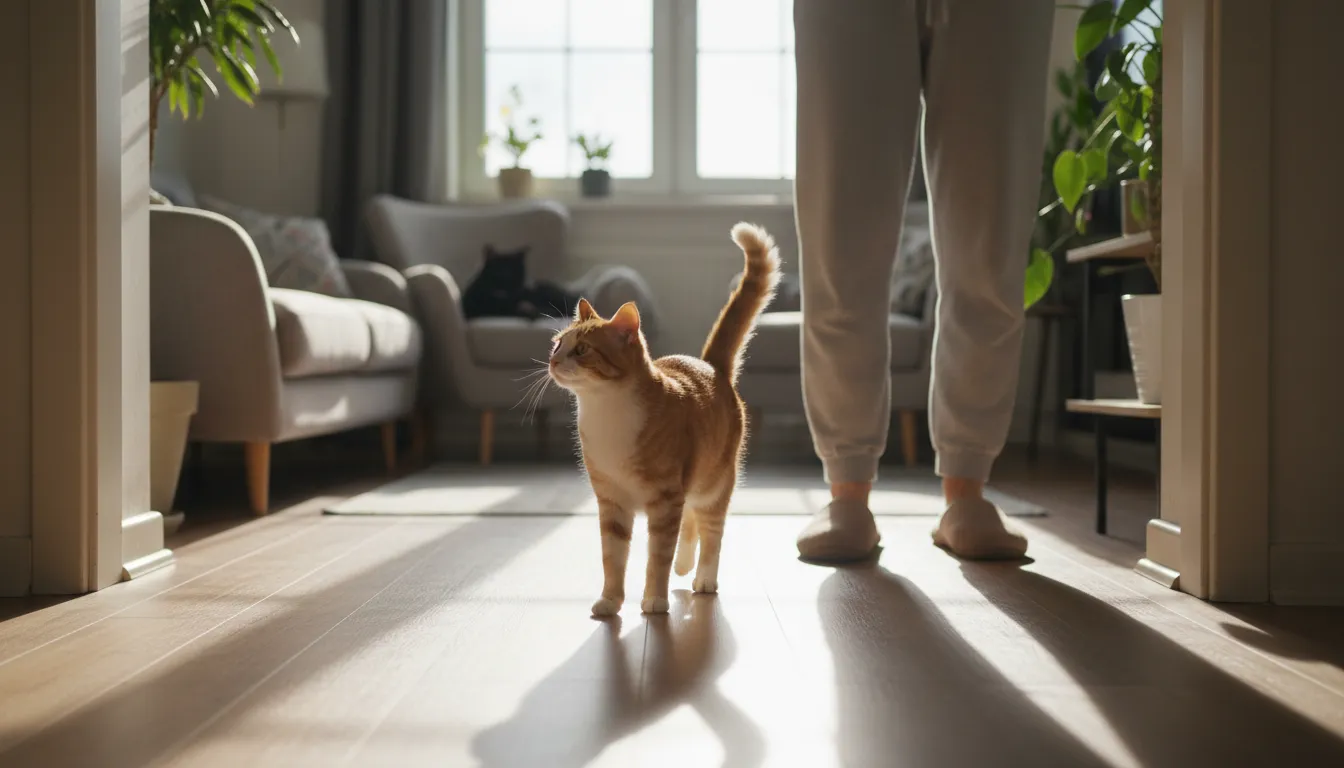
It might feel like surveillance. It's actually the opposite of anxiety.
A content cat seeks out your company, follows you around, or simply rests nearby. A cat that shadows you through the house has decided you're the most interesting, safest thing in their world.
The key detail is the "without asking" part. A cat that just parks itself in the same room as you, not demanding food or attention, just existing nearby, is expressing pure, undemanding comfort.
One more social signal is hiding in how your cat greets you the second you walk through the front door.
9. They Greet You at the Door With a Raised Tail
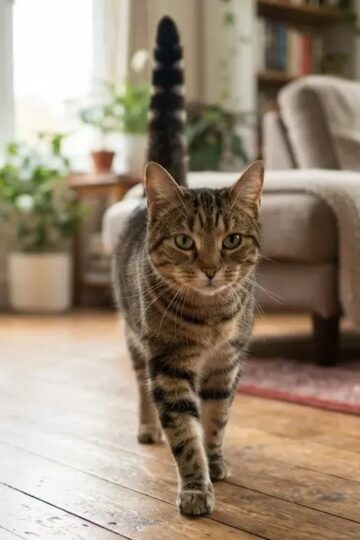
The tail is one of the most honest parts of a cat's body language. An upright tail with a gentle curve at the tip usually means confidence and happiness.
When your cat trots toward you at the door, tail held high like a flag, that's a formal, enthusiastic greeting. In feral colonies, this same raised-tail approach is reserved for cats they trust completely.
Quick Compare: Tail Positions
- Straight up, curved tip: confident, friendly, happy to see you.
- Straight up, puffed at the base: overstimulated, best to give space.
- Low or tucked: nervous, submissive, or unsettled.
- Puffed like a bottle brush: frightened or feeling threatened.
A tail held straight up, especially with a slight hook at the tip, is a cat's version of a standing ovation. It means you're not just tolerated in this space, you're genuinely welcomed back into it.
The next sign has less to do with you and everything to do with how your cat moves through the house on their own.
8. They Walk Confidently Through Every Room
A cat that skirts along walls and darts between hiding spots hasn't settled in. A cat that saunters through the house like it owns the place? That one actually does.
A secure cat learns to navigate the household without treating every doorway as uncertain territory. They move casually between sleeping spots, food stations, and windows, with relaxed body language instead of constant creeping.
That casual, unhurried strut through your kitchen is proof your cat has mentally mapped and approved every inch of your home. Comfortable cats eat consistently, sleep in preferred spots, and move with confidence rather than acting watchful or withdrawn.
Speaking of routines, the next sign is all about predictability, and it's one most owners don't even realize they've created.
7. They Settle Into a Predictable Daily Routine
Cats are creatures of habit. But they only commit to a routine when they trust their environment completely.
A secure cat reveals itself through quiet, everyday behavior, napping in exposed places, stretching across the floor, responding calmly to familiar sounds. A favorite window for 9 a.m. sun, a set nap spot, a ritual of meeting you in the kitchen at dinner, that's not quirky, that's deeply settled.
A self-constructed routine means your cat has decided this home is permanent enough to plan around. Comfort is closely tied to familiar scents, reliable resources, and a sense of control over their surroundings.
The next sign is closely tied to routine too, but it shows up in your cat's body, not their schedule.
6. Their Appetite Is Consistent and Relaxed
Most people never connect eating behavior to emotional comfort. Vets do.
Stress suppresses appetite in cats the same way it does in humans. A cat that's uneasy in its environment often eats erratically, skips meals, or rushes through food nervously.
Worth Knowing
- Stress can suppress a cat's appetite much like it does in humans.
- Anxious cats often eat quickly, in short bursts, or skip meals entirely.
- A relaxed cat eats at a steady pace and may leave food for later.
The most overlooked version of this sign is a cat that leaves food in the bowl. A stressed cat eats frantically; a genuinely at-home cat knows the food will still be there, because this place is reliable.
If your cat strolls to the bowl, eats at a measured pace, and walks away without finishing every bite, they've decided your home is a place of abundance. That's a bigger deal than it sounds.
Next up is a sign that happens in your cat's face, and it's more specific than most owners realize.
5. Their Facial Features Stay Soft and Open
You can read a cat's emotional state almost entirely from its face, if you know what to look for. Relaxed ears facing forward and half-closed eyes signal comfort.
A cat that feels unsafe pins its ears back, widens its eyes, or holds a tight, guarded expression. A cat that has truly settled in does the opposite, the whole face loosens up.
Soft, forward-facing ears combined with slightly heavy eyelids are the feline equivalent of a relaxed smile. It's a passive signal that requires no effort from your cat, which is exactly why it's so honest.
The next sign is vocal, and the specific type of sound matters enormously.
4. They Use Soft, Conversational Vocalizations
A cat that meows constantly is usually asking for something. A cat that chirps, trills, and chatters quietly is simply talking.
These gentle sounds are fundamentally different from the loud, demanding meow of a hungry or anxious cat. Chirps and trills are social sounds cats typically reserve for individuals they're comfortable around.
Cats that live alone with humans often develop a wider vocabulary of soft sounds specifically for their owners. That's not mimicry, it's a cat adapting its communication because it has decided you're worth talking to.
What comes next is a sign so subtle that even devoted cat owners miss it almost every time.
3. They Rub Against Furniture and Doorframes Regularly
This one looks like your cat is just scratching an itch. Actually, they're redecorating, in scent.
Cats use scent glands on their head and tail to leave pheromones on people, objects, and furniture. When your cat rubs its cheek along the couch or a doorframe, it's embedding its own scent into the architecture of your home.
At a Glance: Where Cats Store Scent
- Cheeks and chin
- Forehead and temples
- Base of the tail
- Paw pads
This is called allorubbing, and a cat that does it consistently is literally building a scent map that says "this place is mine and I am safe here." Unlike urine spraying, which signals stress, facial marking on furniture is purely about comfort and ownership.
The next sign brings it all together, and it's the one most people wait their whole cat-owning lives to see.
2. They Initiate Play Without Being Prompted
A cat that launches a surprise attack on your ankle at 7 a.m. is not being difficult. It's thriving.
Spontaneous play is a major marker of emotional well-being in cats. An anxious or unsettled cat suppresses its play drive, because play requires vulnerability and mental bandwidth stressed cats simply don't have to spare.
An adult cat that still initiates play regularly is one of the clearest signals that its environment is enriching enough to keep it genuinely curious. If your cat drops a toy at your feet or ambushes a shadow for no reason, celebrate it.
Save the best for last, because the final sign is the one that quietly changes everything.
1. They Choose to Simply Be Near You, Without Wanting Anything
This is the sign most people overlook because it looks like nothing. It's actually everything.
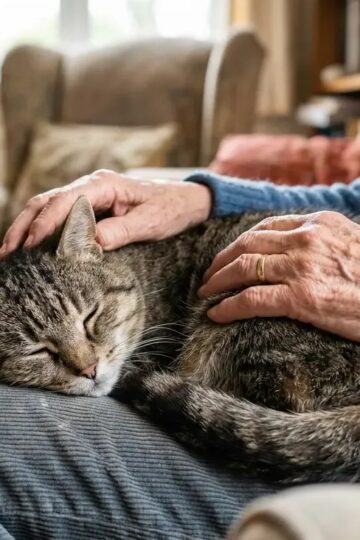
A cat that parks itself at the far end of the sofa, not touching you, not demanding food, just existing in the same space, has made the biggest decision a cat can make. It has chosen your company for its own sake.
A cat that sits near you and does absolutely nothing is a cat that has fully dropped its guard. That is the rarest, most meaningful gift a cat can give.
When all three pieces click into place, dropped guard, everyday ease, and a natural place in your household rhythm, you've stopped being a provider. You've become home.
The Bottom Line
Your indoor cat doesn't send greeting cards or make speeches. Its comfort signals are quiet, deliberate, and rooted deep in biology.
The slow blink, the belly-up nap, the unprompted purr, the gentle bunt against your chin, none of these are accidents. Each one is your cat telling you, in the clearest language it has, that this home is genuinely theirs.
The biggest mistake owners make is waiting for one dramatic sign. The truth is, the most powerful one is a cat that simply sits beside you and asks for nothing.
Which of these signs does your cat show the most? Tell us in the comments, we'd love to know.