15 Signs an Old Cat Is Enjoying Its Days More Than Owners Realise
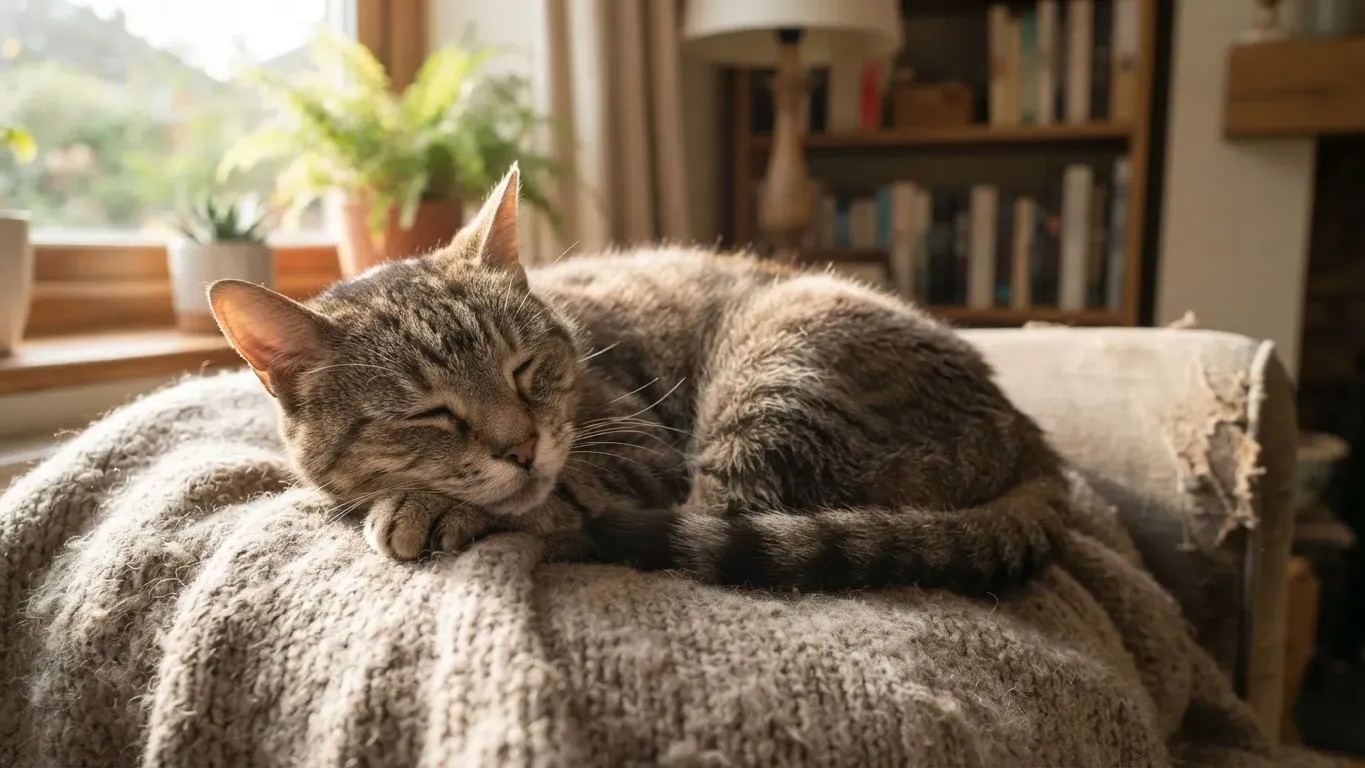
Most owners assume a quieter, slower old cat is fading away. Experts say they're reading it exactly backwards.
Senior cats are wired to hide discomfort and mask emotion, so the real signs of a thriving cat are subtle and easy to miss. Here's what vets say a genuinely content old cat actually looks like.
#15 - They Still Slow Blink at You
That long, lazy blink your old cat gives you across the room? Vets call it the "cat I love you" - a slow blink with a soft face is a sign of trust and acceptance.
For cats, blinking is far from mundane. When they blink, their guard is completely down.
Most owners think their senior cat is just drowsy. They're not - they're communicating.
Try slow blinking back. If they return it, that's a full conversation, and a happy one.
An old cat that still offers this gesture regularly is telling you it feels completely secure in its world.
But the slow blink is just the surface. What your cat does with its tail is even more telling - and almost nobody pays attention to it.
#14 - Their Tail Goes Up When They See You
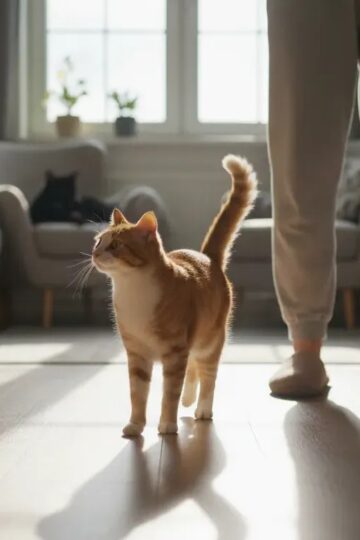
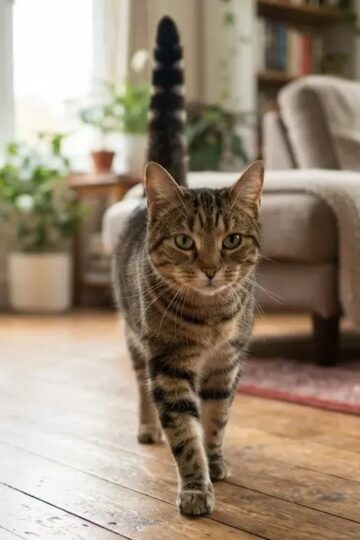
Tails are "downright chatty" when it comes to cat body language. Dr. Cheri Honnas, DVM, says a raised, gently swaying tail "often signifies a kitty on cloud nine."
A cat that greets you at the door or by the bed is saying it's genuinely glad you're there. Look for the upright tail, the erect ears, the body rub against your legs.
In senior cats, this greeting can be smaller and slower. The meaning is identical.
Happy cats stay relaxed around their favorite humans and other pets. They solicit interaction freely, entirely on their own terms.
If your old cat still wanders over and raises that tail, it's not habit. It's real affection - don't mistake the slower pace for disinterest.
Wait until you see what they do with their paws. That's where the real surprise is.
#13 - They're Still "Making Biscuits"
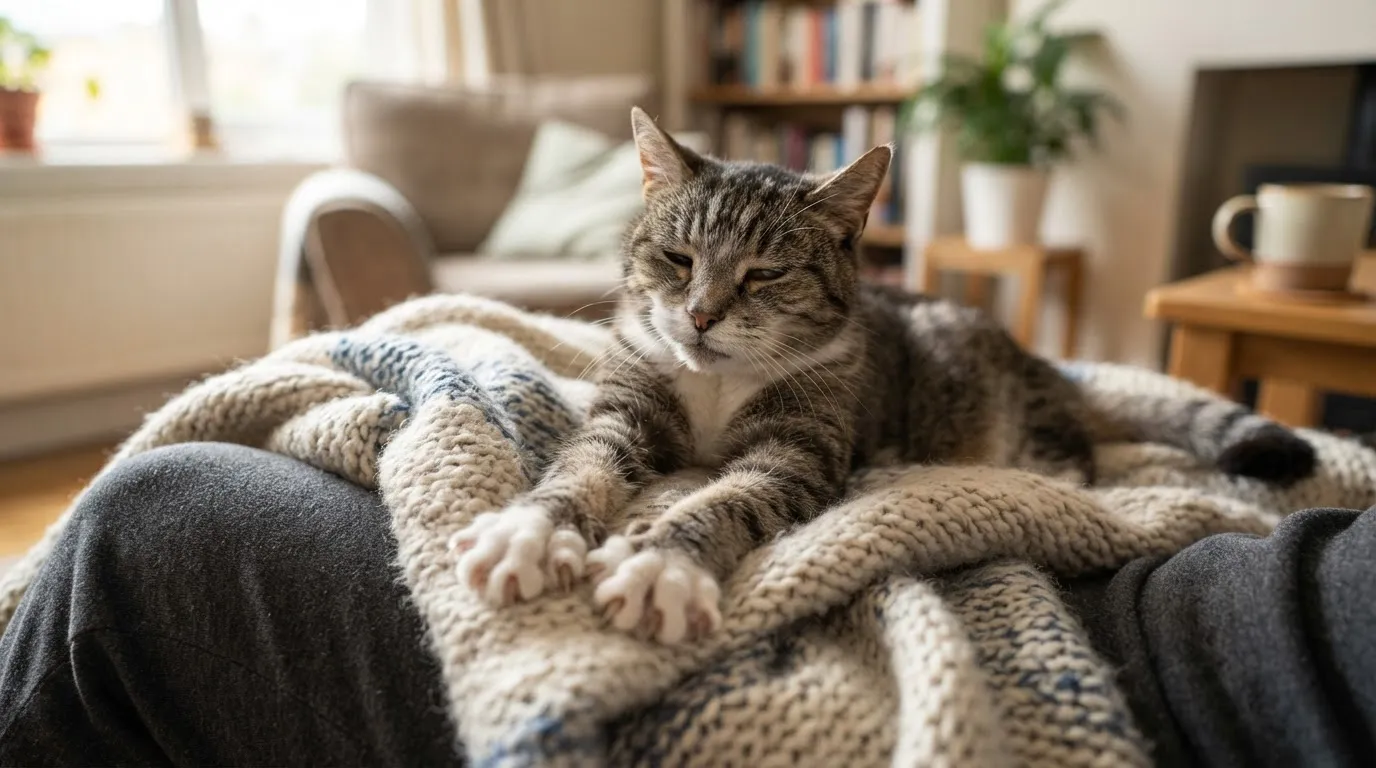
Kneading - popularly known as "making biscuits" - is when a cat presses its paws rhythmically into something soft. It's often the clearest sign of contentment there is.
It's thought to echo the safety kittens feel while nursing. When a senior cat still does this, it isn't just muscle memory.
It means they associate you directly with that deep, kitten-level sense of safety.
Adult cats knead when they feel especially content and comfortable. If your cat kneads you while purring, you're their favorite person - full stop.
Most owners never realize this is one of the strongest happiness signals a cat can give.
Fast Facts
- Kneading likely traces back to kittenhood, when paw motions along a mother cat's belly helped stimulate milk flow, so the habit starts as a survival skill.
- The action of kneading causes the release of the pain-relieving, feel-good chemical dopamine in the brain.
- This behavior may carry over into adulthood as the cat seeks to recreate the feel-good hormones they got when nursing.
- Some cats knead less as they get older, but in many cases, it's a lifelong behavior.
And it gets even more interesting when you look at what their coat tells you without them doing anything at all.
#12 - Their Coat Is Still Tidy and Shiny
Grooming is part hygiene, part self-soothing. A happy cat grooms in a balanced way - enough to stay smooth, never so much that patches thin out.
Under-grooming can be a clue, especially if a cat seems stiff or avoids certain positions. Cats hide discomfort so well that coat changes often show up before any limping or crying.
So a consistently well-groomed coat on an older cat is actually a meaningful green flag.
A happy cat eats well, sleeps an appropriate amount, and keeps its coat shiny. If your senior cat is still routinely cleaning itself, it's likely feeling comfortable in its own body.
But there's something they do while completely still - in a sun patch - that reveals even more. Scroll on.
#11 - They Seek Out Warm Spots and Stay There Calmly
A cat that stretches out fully or sits like a loaf is usually content and at ease. Relaxed cats aren't thinking about danger or escape routes.
A relaxed cat tends to be free of anxiety, stress, and fear. How a cat sits or lies down says everything about how content it feels.
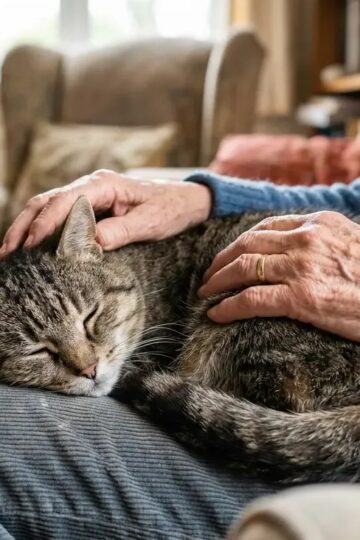
Senior cats have earned their sun patches. An old cat that spreads out fully - paws tucked, eyes half-closed - is broadcasting pure comfort.
Relaxed cats sit with paws tucked under and eyes half-closed. If your cat does this daily without bolting at small sounds, that's a genuinely content animal.
Most owners read the stillness as boredom. It's the opposite.
The next sign involves something your cat does around you that most people completely misread as neediness.
#10 - They Choose to Rest Near You (Without Demanding Anything)
Choosing to rest near you without demanding attention shows secure attachment. It's one of the most misunderstood signals in older cats.
Owners often assume proximity means the cat wants something. Experts say it means the opposite - the cat already has everything it needs.
Happy cats don't flee when approached. They interact through purring, headbutting, and other quiet displays of enjoyment.
A senior cat that positions itself in your orbit - on the couch, at your feet, across the room facing you - is expressing a stable, secure bond. The fact that it doesn't demand attention is actually the point.
Watch what they do when nothing is happening. Resting, grooming, and moving calmly through the room are quiet votes of felt safety.
And then there's the thing they do with their head that looks aggressive but means the exact opposite.
#9 - They Still Headbutt and Face-Rub You
If your cat frequently headbutts you or rubs its head against you, consider it a clear sign of affection.
"Cats have this endearing behavior of rubbing against us, which is more than just seeking attention. In doing so, they're leaving their scent on us - kind of like saying, 'You're part of my family.'"
Dr. Cheri Honnas, DVM
This behavior doesn't slow with age out of laziness. It slows because older cats become more deliberate.
When a senior cat chooses to headbutt you, it's a conscious act of bonding - not a reflex.
Most owners assume it's just about being fed. It's not.
It's territorial affection - your cat is marking you as its safe person. The older the cat, the more meaningful the gesture.
The next sign is one that almost every owner spots but almost none interpret correctly.
#8 - They Still Eat on Schedule Without Fuss
Eating well is almost always a sign of a happy cat. A healthy appetite is one of the clearest markers there is.
Senior cats that show up for meals at consistent times - not urgently, not anxiously, just matter-of-factly - are showing you their world feels predictable and safe.
As cats age, routine becomes deeply comforting. They're bonded to it, reassured by it, calmed by it.
A senior cat eating steadily, without picking at food or walking away, is showing you its stress levels are low.
Sudden changes in appetite usually point to stress or illness. So the absence of those changes - a cat that simply eats normally, day after day - is actually meaningful data.
At a Glance
- Vets recommend tracking how often a pet eats, drinks, or hangs around their food bowl as a simple daily habit.
- A steady appetite lines up with the "Hunger" category on the widely used "HHHHHMM": Hurt, Hunger, Hydration, Hygiene, Happiness, Mobility, and More good days than bad quality-of-life scale.
- Regularly checking body condition by feeling ribs and waistline helps catch problems appetite alone might hide.
- A cat that eats on schedule without picking or avoidance is quietly passing one of the biggest wellness checks there is.
The next sign takes place mostly at night, and it's the one that surprises people most.
#7 - Their Sleep Is Deep and Settled
Most cats sleep close to 20 hours a day, and a happy cat sleeps an appropriate amount for its age. Senior cats naturally sleep even more, which tends to make owners panic.
But the quality of that sleep tells the real story.
Relaxed cats don't startle at sudden sounds or movements - they simply stay calm. An old cat that sleeps deeply and wakes up slowly is a cat whose nervous system is genuinely at rest.
That's the hallmark of a secure, contented animal.
Increased sleep is a normal part of geriatric aging. The mistake owners make is reading more sleep as decline when, in most cases, it simply means the cat has mastered doing exactly what it wants.
Watch for twitching whiskers and paw-paddling during sleep. That's an old cat dreaming, and it's a genuinely good sign.
But what happens when your old cat suddenly shows a spark of interest in a toy? That's next - and it matters more than you think.
#6 - They Still Show Interest in Play (Even Briefly)
One of the best indicators of contentment in cats is play. Older cats aren't as active as their younger selves, but a happy one still shows a spark of interest when a favorite toy appears.
Senior cats still enjoy movement - just on their own timeline. Wand toys and slow, gentle play sessions help maintain both mobility and confidence.
Even two minutes of half-hearted swatting is a sign of a cat that still wants to engage with its world.
A senior cat can play less, jump less, and still be deeply content if it's comfortable. The bar for "playful" simply shifts as cats age.
Owners who stop offering toys because their cat "doesn't play anymore" may just be missing the shorter, subtler version of the same joy.
What comes next is a sound most people write off as background noise - but it's actually a complex signal.
#5 - They Purr in Specific, Relaxed Situations
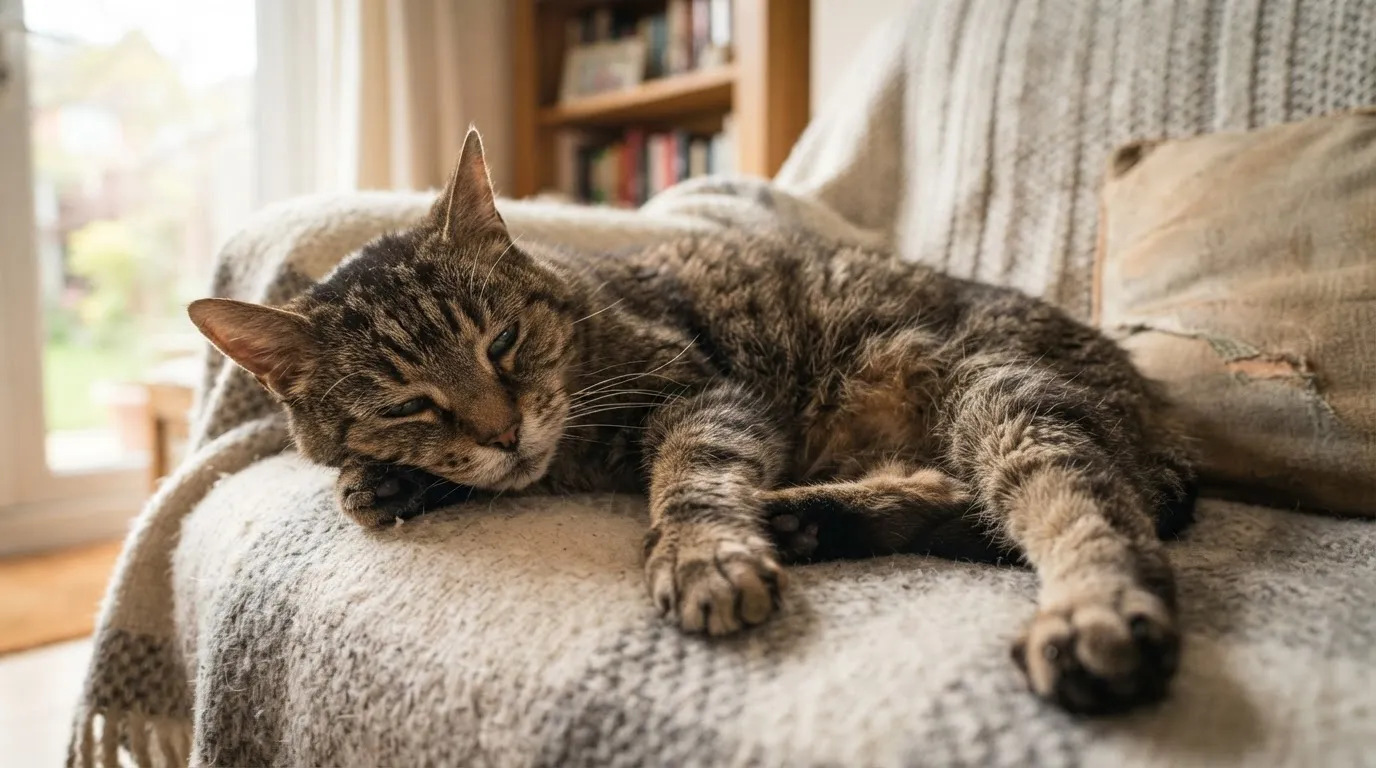
Cats purr when they're relaxed and content - that part everyone knows. What most owners miss is when and how the purr happens.
A contented purr during rest, not during handling or feeding, is the purest form there is.
Look for the full combination: loose limbs, half-closed eyes, and a steady, unprompted purr. That trio together is a senior cat telling you it's exactly where it wants to be.
Here's the nuance though - purring can also signal stress, illness, or pain, since it doubles as a self-soothing behavior. Context is everything.
A purr during a calm, comfortable moment is joy. A purr while trembling or hiding is a completely different story.
Next up is a sign that looks like your cat being antisocial - but means something far more positive.
#4 - They're Curious About Their Environment
Does your cat run to the window to watch birds, or check the door when the bell rings? If it's actively exploring and showing interest in new things, you can assume it's happy.
Even alert cats can be relaxed - standing tall at a window with a calm tail and steady breathing. An old cat that still monitors the world - watching squirrels, tracking sounds, sniffing new bags - is a mentally engaged, emotionally stable animal.
That interest is itself a form of joy.
Curiosity shows up as sniffing new objects, investigating a box, or watching household activity without fear. A senior cat that's curious is a senior cat that still finds life interesting - arguably the most meaningful wellbeing signal there is.
Owners who see this as random cat weirdness are missing the whole picture.
The next sign requires you to watch your cat's face - specifically at a distance, when they don't know you're looking.
#3 - Their Face Is Soft and Their Eyes Are Half-Closed at Rest
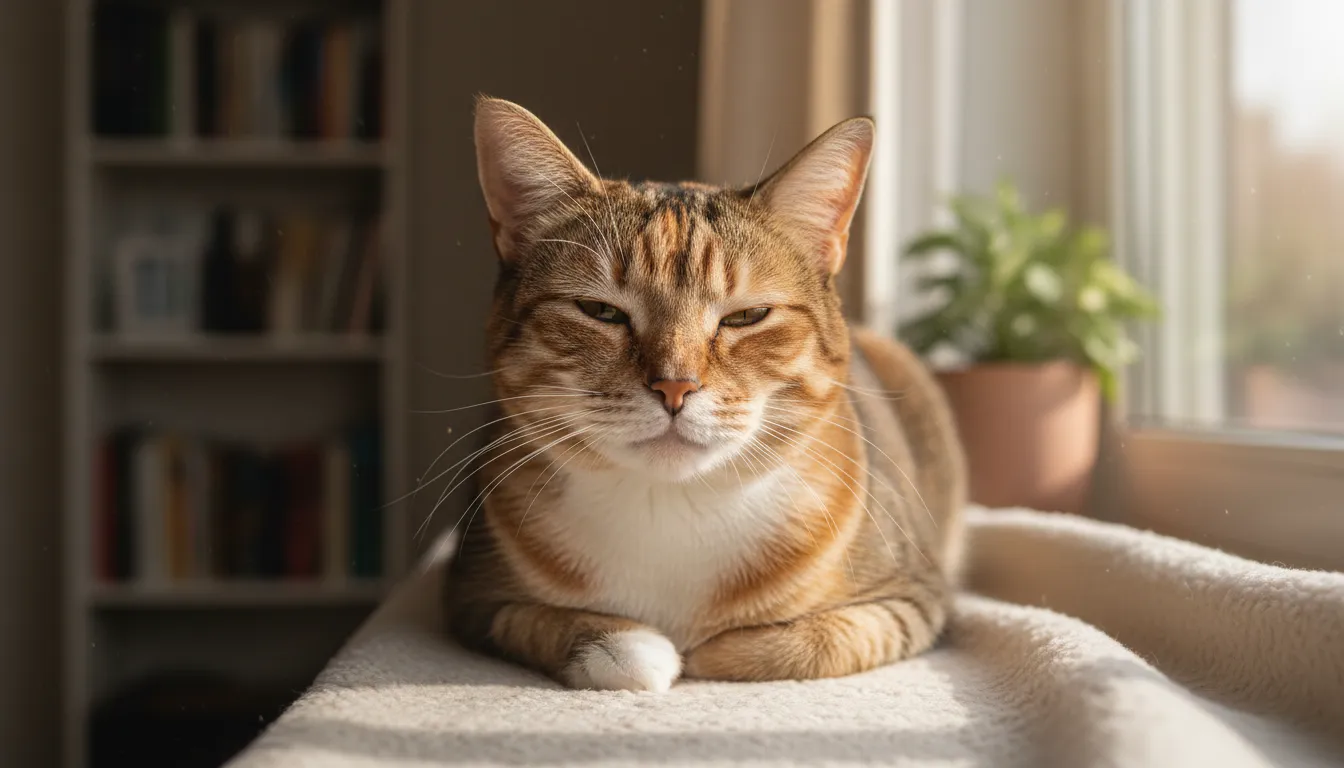
The clearest signs of a happy cat cluster together: slow blinks, a relaxed body, gentle grooming, a steady appetite, and a willingness to share space without demanding anything.
But the face on its own is a window. Watch what they do when nothing is happening - it's the truest read you'll get.
An old cat with soft facial muscles, slightly squinted eyes, and neutral ears is wearing the feline equivalent of a content smile.
Tension looks like the opposite - crouching, wide eyes, flattened ears, a lashing tail. Learn both poles and reading your senior cat's mood gets easy fast.
Most owners only notice when something seems wrong. The trick is learning to notice when everything is clearly right.
The penultimate sign involves something your cat says without making a single sound.
#2 - They Still Choose to Be Around the Family
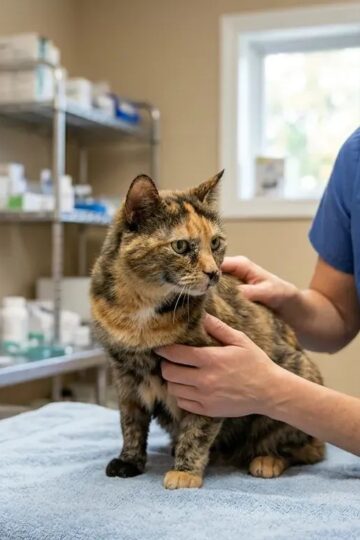
Vets look at whether a cat still seeks affection, moves comfortably, eats and drinks well, and interacts with the family. It's a core quality-of-life metric for senior cats.
Many older cats grow quieter or more selective about where they go. But a cat that still gravitates toward the people in the house - even silently, even from a distance - is actively choosing connection.
That choice matters enormously.
A senior cat's emotional wellbeing shows up in its appetite, mobility, stress levels, and overall comfort. A cat that stays part of family life, rather than withdrawing from it, is telling you its emotional world is intact.
Most owners expect their old cat to disappear into corners. So when it doesn't, they fail to notice it as the positive signal it actually is.
Worth Knowing
- Vets commonly score senior wellbeing using the "HHHHHMM" scale: Hurt, Hunger, Hydration, Hygiene, Happiness, Mobility, and More good days than bad.
- The "Happiness" category specifically asks whether senior pets still demonstrate some interest in their favorite activities or routines, even if they play less.
- A cat that keeps showing up for family life, however quietly, is checking one of the biggest boxes on that list.
And the #1 sign? It's the one most quietly overlooked of all.
#1 - Their Daily Routine Is Predictable and Calm
A happy cat shows several signs consistently, and paying attention to everyday behavior is the easiest way to catch both contentment and problems early. But the single biggest sign of a thriving senior cat isn't dramatic at all.
It's the quiet, unbroken reliability of a normal day.
Senior cats relax more when their environment stays consistent. Predictable feeding times, easy-to-reach resting spots, and stable household rhythms all lower stress.
A cat that moves through the same rituals - same nap spot, same mealtime pace, same evening spot near you - has a nervous system that's regulated and a life that feels safe.
The cat that eats, grooms, sleeps, watches, and seeks proximity in a steady, unbroken rhythm isn't declining. It's exactly where it wants to be.
Cats are so good at hiding discomfort that changes in behavior are usually the first real clue something's wrong. Which means the absence of those changes is one of the clearest signals of all.
Your old cat, quietly and on its own terms, is enjoying every single day.
The Bottom Line
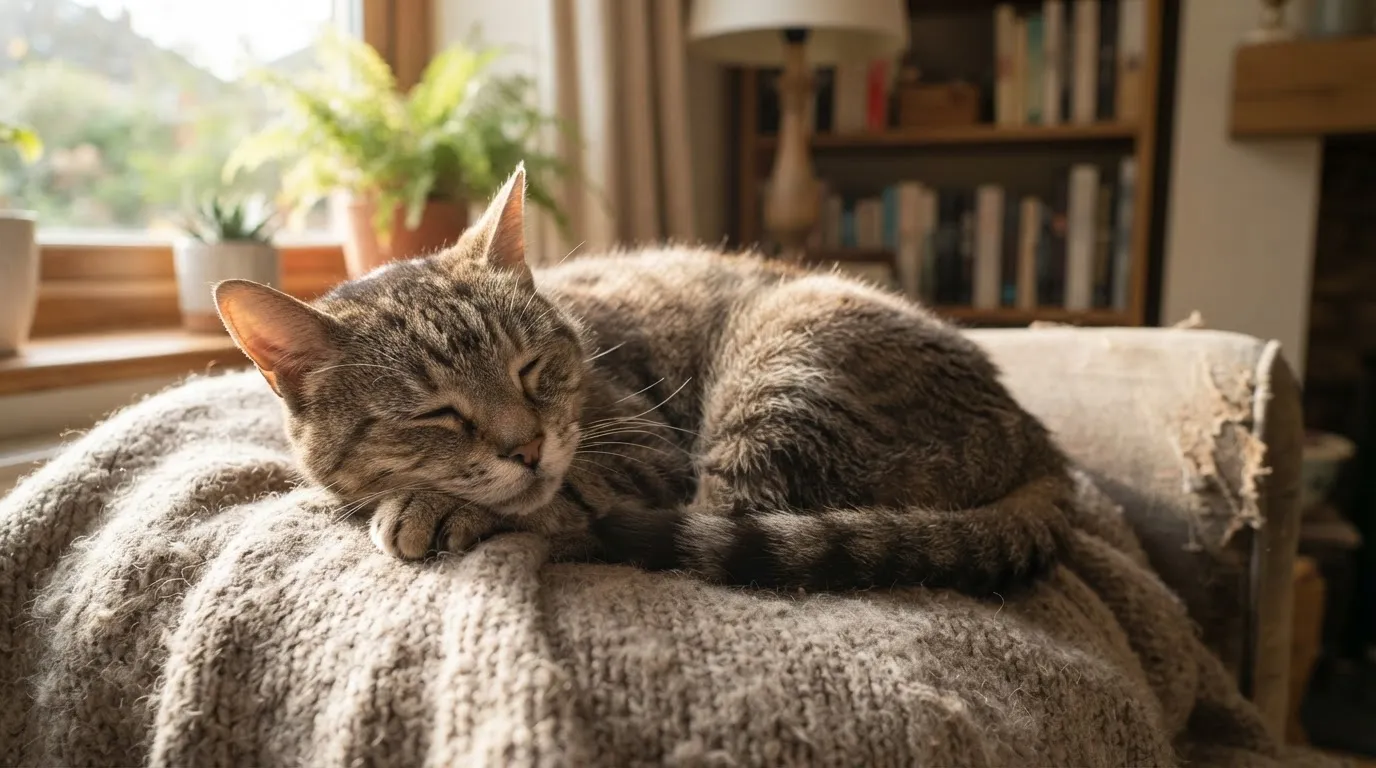
Older cats are masters of subtlety. The signs they're thriving - a slow blink, a steady purr during rest, a tail raised in greeting, a soft face in afternoon light - have been hiding in plain sight the whole time.
Most owners wait for an obvious, tail-wagging display of happiness that cats simply don't give. A senior cat can play less, jump less, and still be deeply content if it's comfortable.
The real skill is learning to read the quiet signals: the routines kept, the curiosity maintained, the proximity chosen freely.
Your old cat's contentment isn't loud. It never was.
But now you know what to look for - and it's everywhere. Which of these did your cat do today that you never noticed before?