9 Rabbit Behaviors New Owners Often Misread
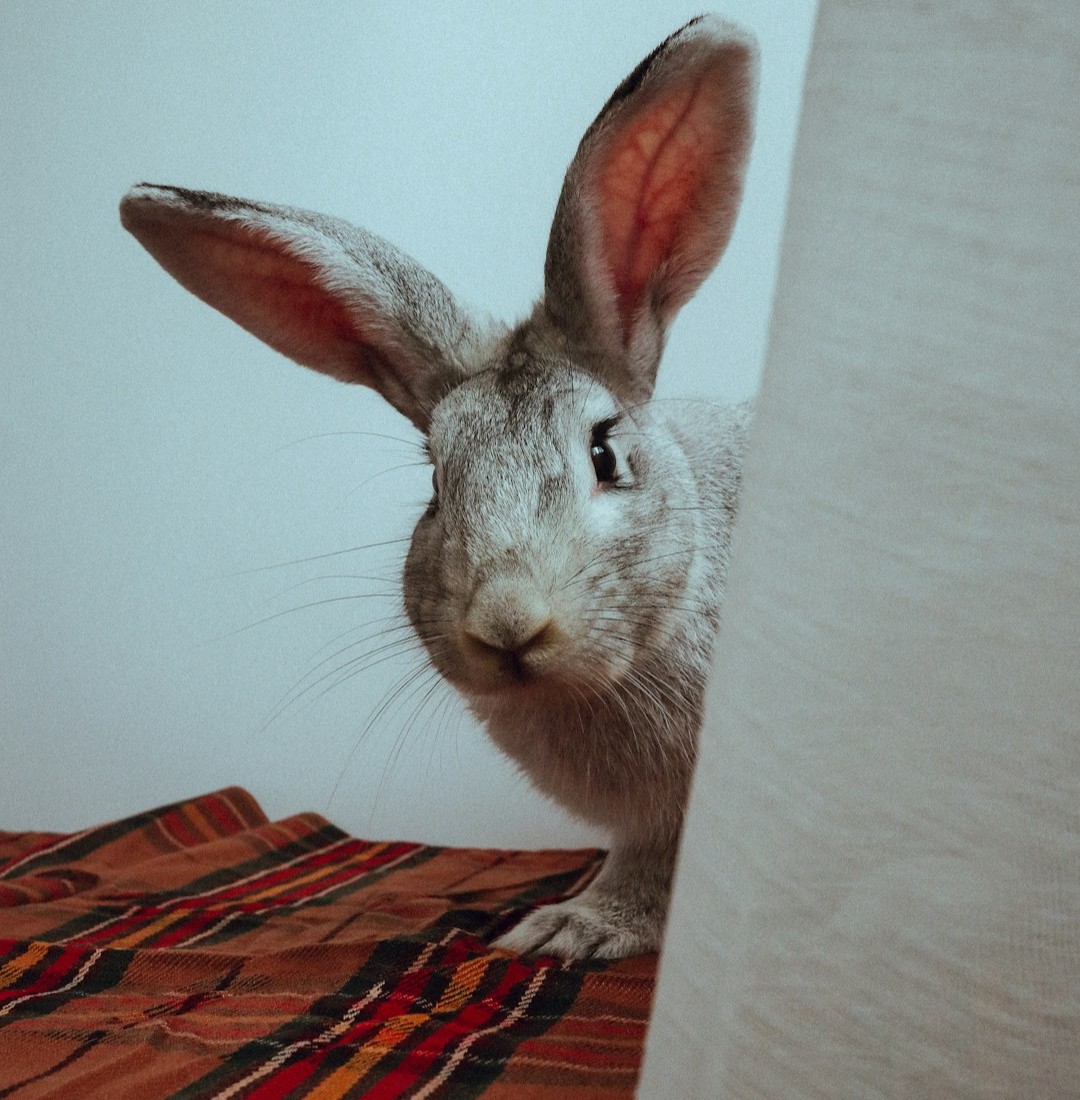
When you bring a rabbit home, it’s easy to assume they’ll behave like a tiny dog or cat. Then your “cute” new pet suddenly thumps, runs away, chews the baseboards, and stares at you like you’ve offended royalty. You start wondering if you’re doing everything wrong.
The truth is, rabbits speak a very different language. Once you understand what their body and behavior are trying to tell you, things that used to frustrate or worry you suddenly make perfect sense. Let’s walk through nine behaviors that new rabbit , and what your bun is really saying when they do them.
1. Thumping: Not Temper Tantrums, But Alarms

When your rabbit suddenly slams their back foot on the floor, it can feel like they’re throwing a dramatic tantrum. In reality, thumping is more like a fire alarm than a hissy fit. In the wild, rabbits thump to warn others about danger, so your bun is basically shouting, “Something’s wrong, stay alert!”
You’ll often see thumping when there’s a loud noise, a strange smell, or a new person or animal around. Instead of scolding your rabbit, look for what might be scaring them and try to remove or soften that trigger. Over time, as your rabbit learns that the environment is safe, the thumping usually decreases on its own.
2. Binkies and Zoomies: Not “Going Crazy” but Pure Joy
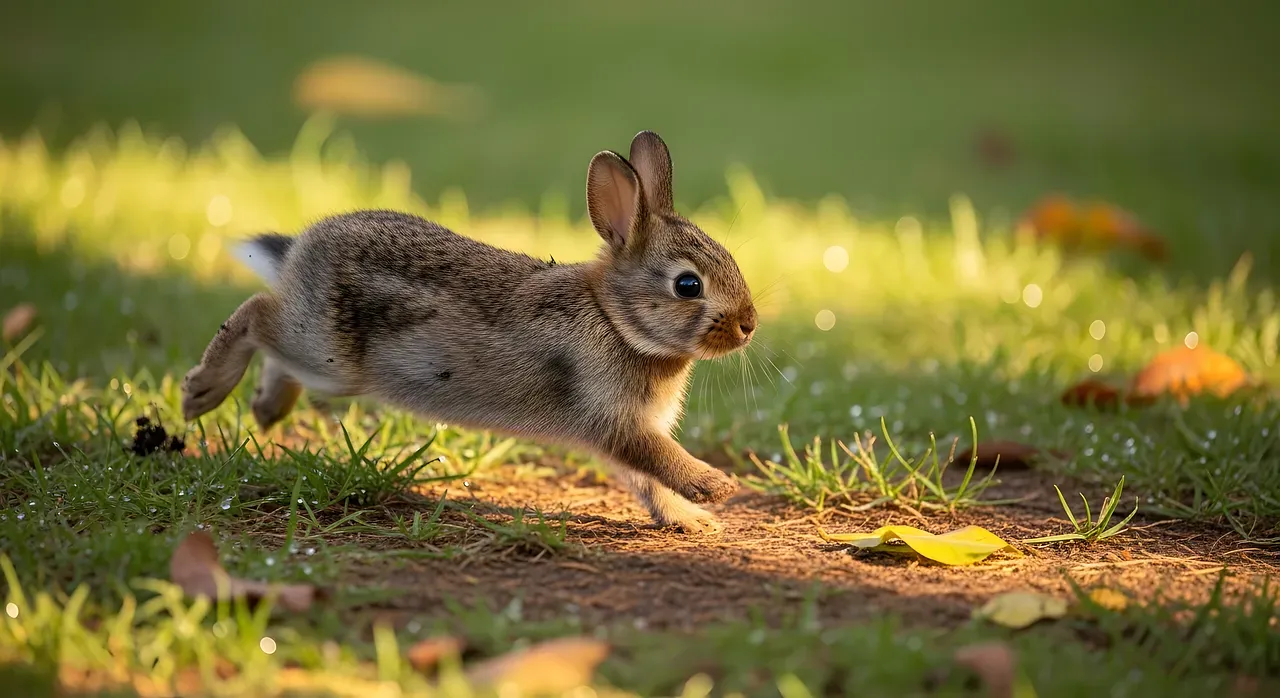
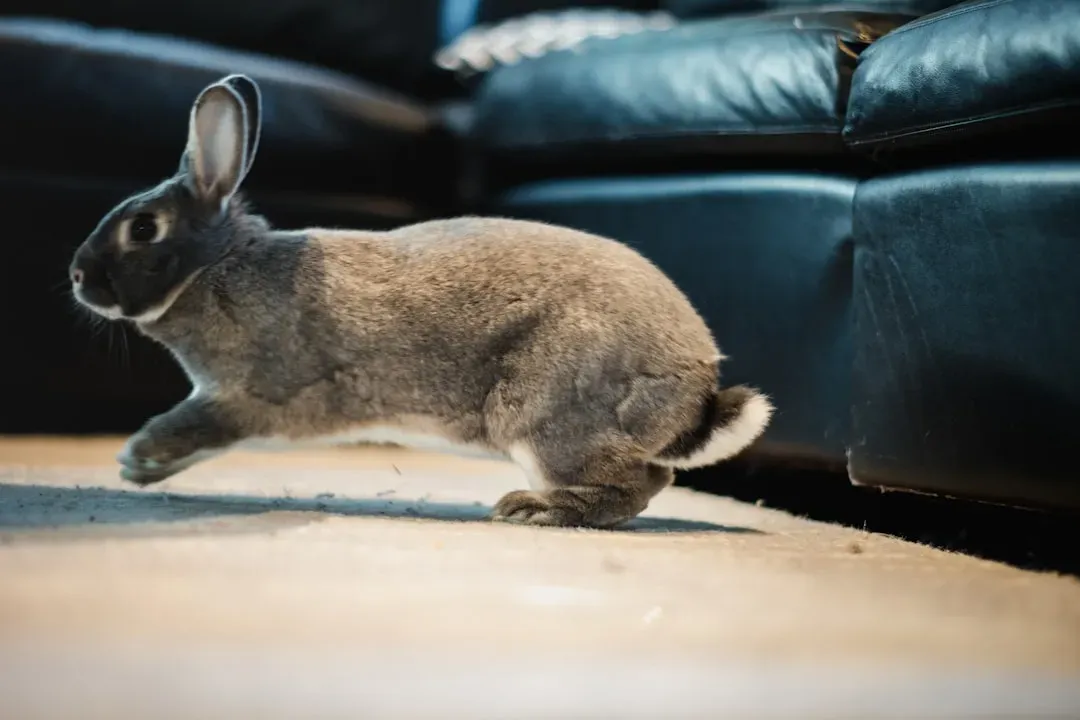
If you’ve ever watched your rabbit suddenly tear around the room, twist in mid-air, and fling themselves in random directions, you might wonder if they’ve lost their mind. That wild, acrobatic jump with a twist is called a binky, and paired with zoomies, it’s one of the clearest signs your rabbit is happy and energized.
Instead of worrying, you can take binkies and zoomies as a big compliment: you’re giving your rabbit enough space, safety, and stimulation for them to express pure joy. You’ll see this more often if your rabbit has plenty of room to run, daily out-of-cage time, toys to explore, and a routine that feels predictable and safe.
3. Chinning Everything: Not Being Weird, Just Claiming You
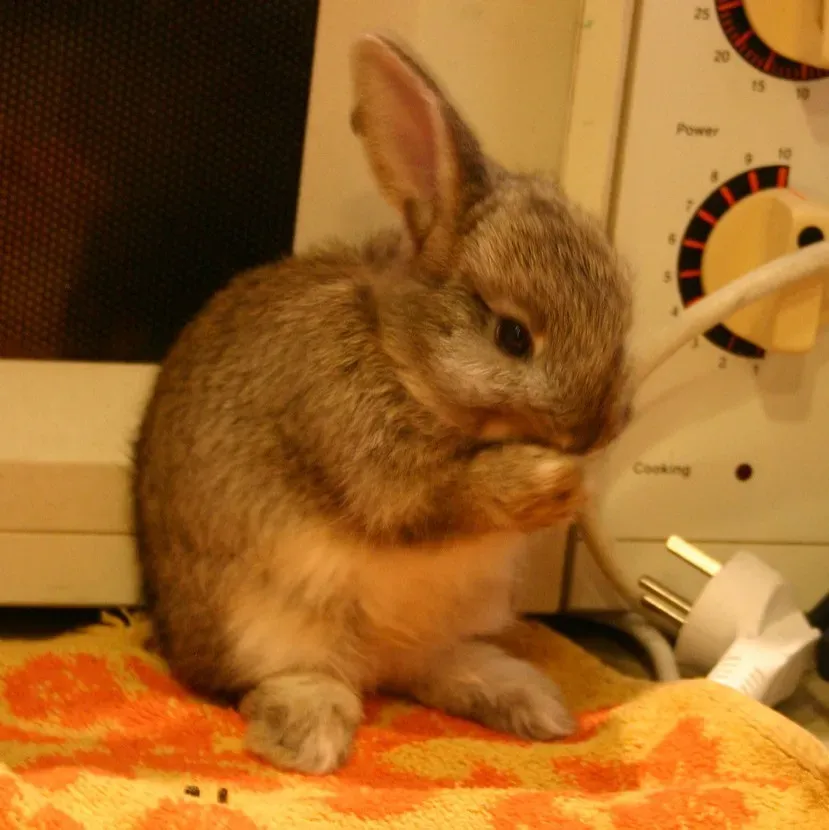
Chinning is completely normal and not something you need to stop. In fact, it usually means your rabbit feels secure enough to invest in their environment. If they start chinning you often, that’s a quiet but powerful sign of acceptance: you’ve been officially added to the “important things” list in their mental map.
4. Freezing and Hiding: Not Being “Stubborn,” But Terrified
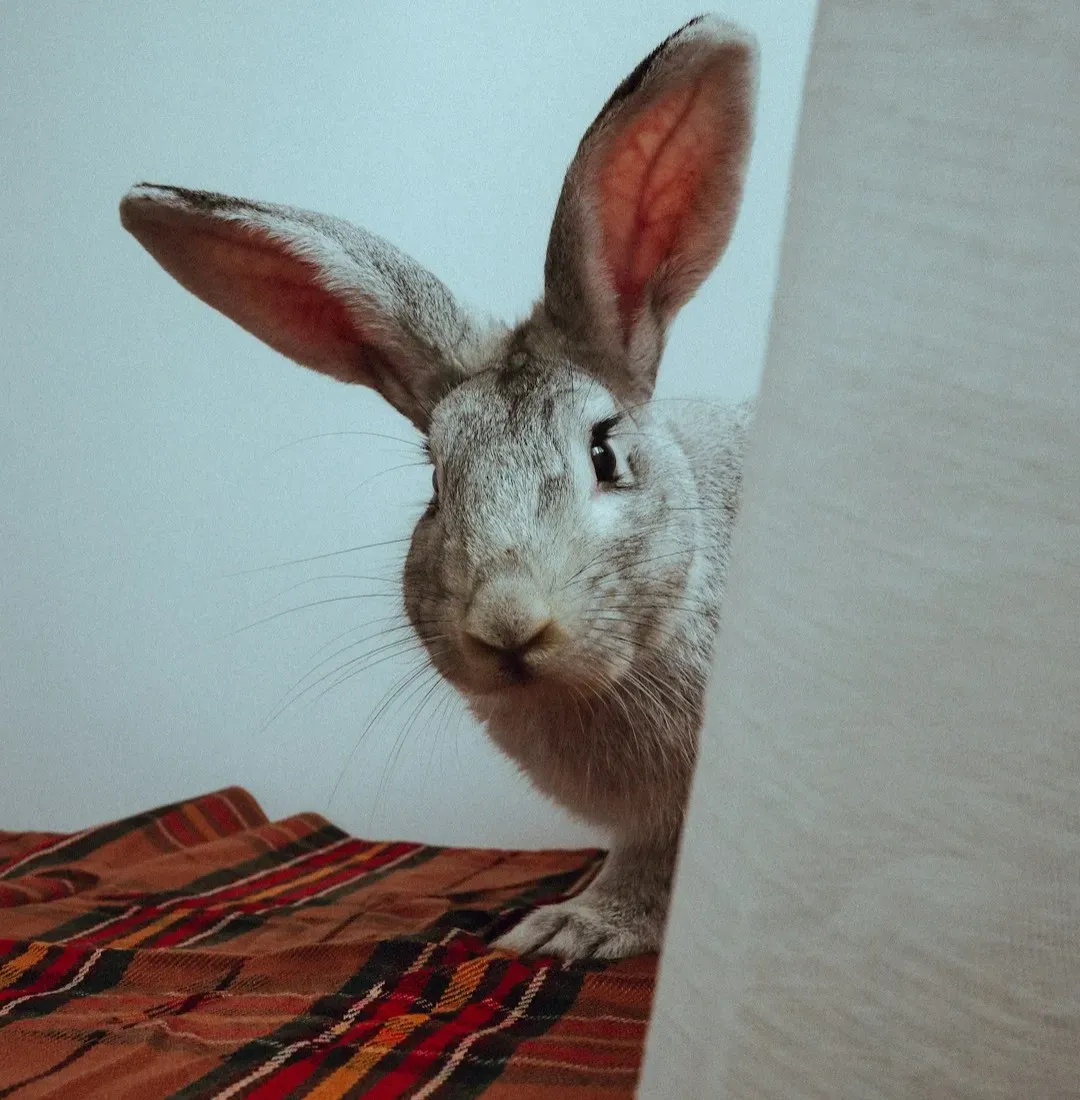
New owners sometimes think a rabbit that won’t move, just sits rigid and wide-eyed, is being difficult or ignoring them. In rabbit terms, freezing is a deep fear response, not a power struggle. Your rabbit is trying to become invisible, hoping the “predator” (which might just be a vacuum or a loud guest) will go away.
If your rabbit hides or freezes when you approach, you’ll build trust faster by backing off a bit rather than forcing interaction. Sit nearby at their level, speak softly, and let them come to you on their terms with treats and calm body language. Over time, as they learn you’re safe, that frozen statue posture usually softens into relaxed loafing or gentle exploring.
5. Chewing and Digging: Not “Bad” Behavior, But Natural Needs
![5. Chewing and Digging: Not “Bad” Behavior, But Natural Needs ([nivs], Flickr, CC BY-SA 2.0)](https://nvmwebsites-budwg5g9avh3epea.z03.azurefd.net/felinefam/7a71d60137dd135413404087d7bccd33.webp)
When your rabbit demolishes baseboards, carpet corners, or the underside of your couch, it can feel personal and destructive. From your rabbit’s point of view, they’re just acting on instincts to chew and dig, behaviors that are vital for a rabbit’s teeth, muscles, and mental health. Their teeth grow continuously, so they actually need to chew to avoid painful overgrowth.
Instead of focusing only on stopping the behavior, you’ll have more success by redirecting it. Offer sturdy chew toys, untreated wood, willow, cardboard, and dig boxes filled with shredded paper or safe soil-like materials. Protect off-limits areas with barriers or coverings, and think of it like toddler-proofing: you’re not punishing normal behavior, you’re reshaping the environment so your rabbit can be a rabbit without wrecking your home.
6. Nipping and Nibbling: Not Always Aggression
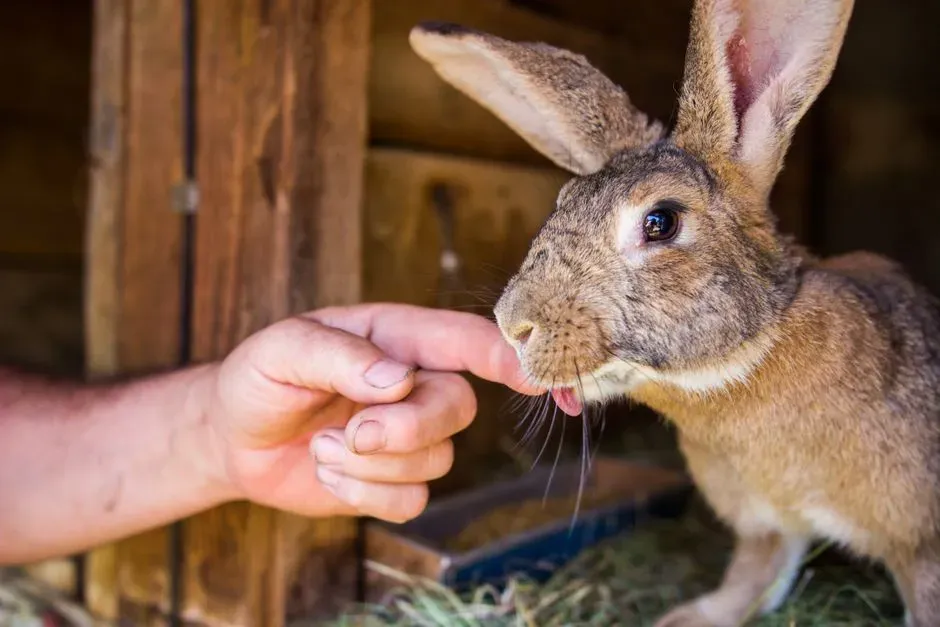
A tiny pinch from rabbit teeth can be surprising and painful, and your first thought might be that your rabbit is mean or ungrateful. But many nips are actually communication, not attacks. Your rabbit might be saying, “Move over,” “Pay attention,” or “That’s my space,” the same way a human might tap your shoulder a bit too hard.
You can gently teach better manners by reacting consistently. Let out a sharp but calm “ouch” sound and pull your hand away for a moment so your rabbit learns that nipping ends the interaction. At the same time, watch the context: if nips happen around grooming, picking up, or food, your rabbit could be anxious, in pain, or guarding something. Addressing the underlying discomfort usually reduces those little bites far more effectively than scolding.
7. Ignoring You: Not Hate, But Self-Preservation

Many people expect dog-like devotion and feel rejected when a rabbit hops away, turns their back, or seems to ignore them. In rabbit language, keeping distance is often about safety, not dislike. You’re a giant predator-shaped creature, and your rabbit needs time and repetition to build trust, especially if they came from a stressful background.
You can bridge that gap by making every interaction predictably positive. Offer treats from your hand while sitting quietly on the floor, avoid chasing or grabbing, and let your rabbit decide when to approach. Over time, that “ignoring” often turns into cautious curiosity, then relaxed companionship - with a flavor of independence that’s very rabbit-like and, once you get used to it, really charming.
8. Circling and Honking: Not Just Random Hyperness
If your rabbit starts running little circles around your feet, sometimes with soft grunts or honks, it may look like random hyper behavior. In many cases, this is actually courtship or excitement. Your rabbit might be expressing affection, attention-seeking, or, in unneutered animals, full-on hormonal love and frustration.
If your rabbit is spayed or neutered, circling can simply mean they’re thrilled you’re around or they’re eager for treats or playtime. If they’re not fixed, you may also see spraying, mounting, and more intense circling. In that case, getting them spayed or neutered not only protects their health but usually calms the most intense hormonal behaviors while keeping their playful personality intact.
9. Flopping Over: Not Dying, But Deeply Relaxed
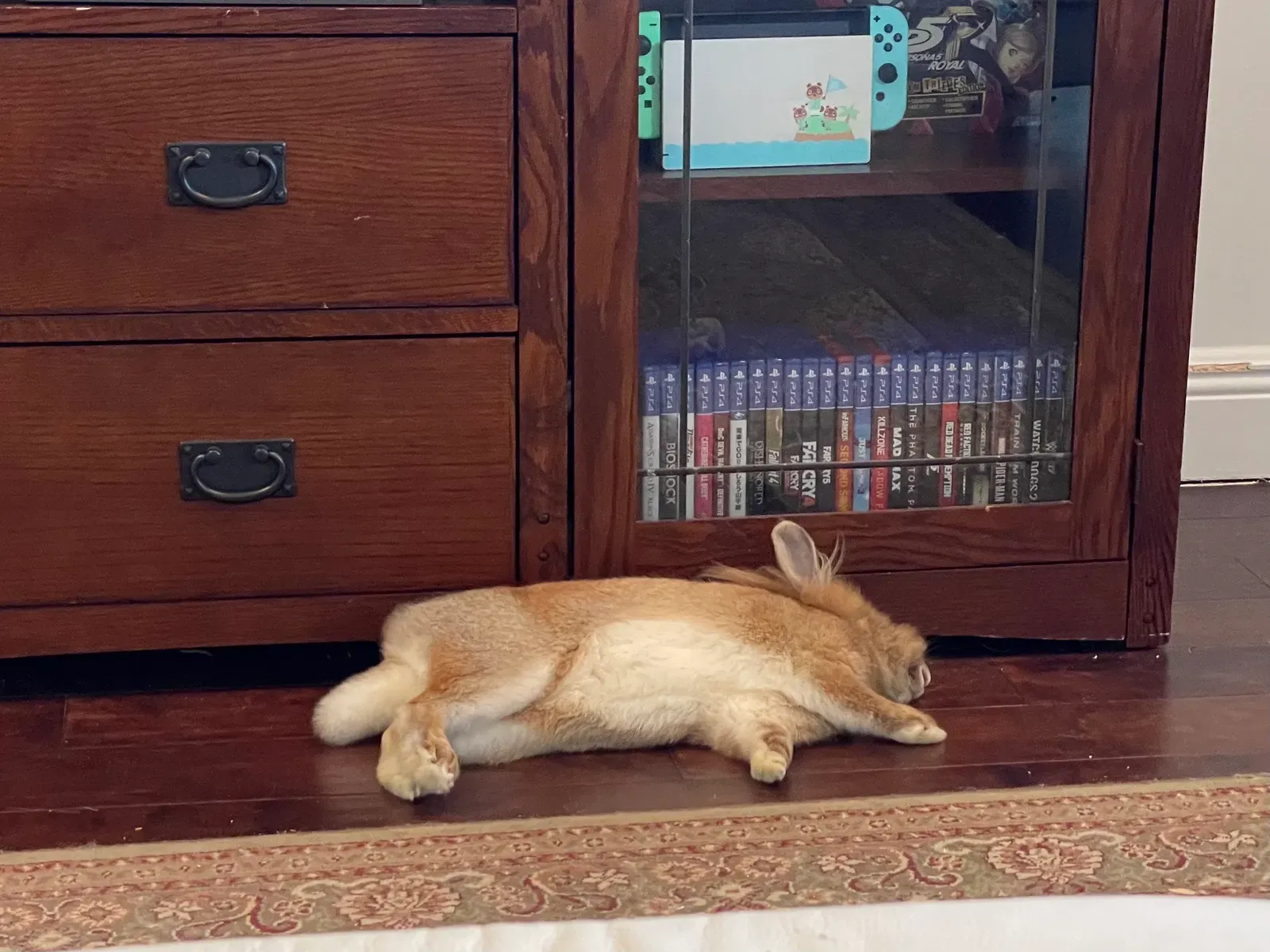
One of the most alarming moments for many new rabbit owners is the first time their rabbit suddenly throws themselves on their side and lies totally still. Your heart might jump into your throat as you rush over, thinking something terrible has happened. In most cases, though, this dramatic move is a full-body sign of trust and relaxation called a flop.
A rabbit that flops is dropping their guard completely, often after eating, playing, or during a quiet, safe moment. You might even see them twitch a little or snore softly when they drift into sleep. Once you recognize the difference between a relaxed flop and a medical emergency, you’ll start to see this as one of the sweetest compliments your rabbit can give you: they feel safe enough to completely switch off around you.
Sharing your life with a rabbit means learning to read a language that’s subtle, quiet, and often the opposite of what you expect. When you stop seeing thumps as misbehavior and flops as scary, and start viewing them as messages, your bond deepens in a way that feels almost like you’ve unlocked a secret code. Over time, you’ll notice patterns, anticipate their moods, and find that this once confusing little prey animal has become a surprisingly expressive companion - what new meaning will you see in your rabbit’s next mysterious move?