What Your Cat's Tail Is Doing While It Sits on Your Lap
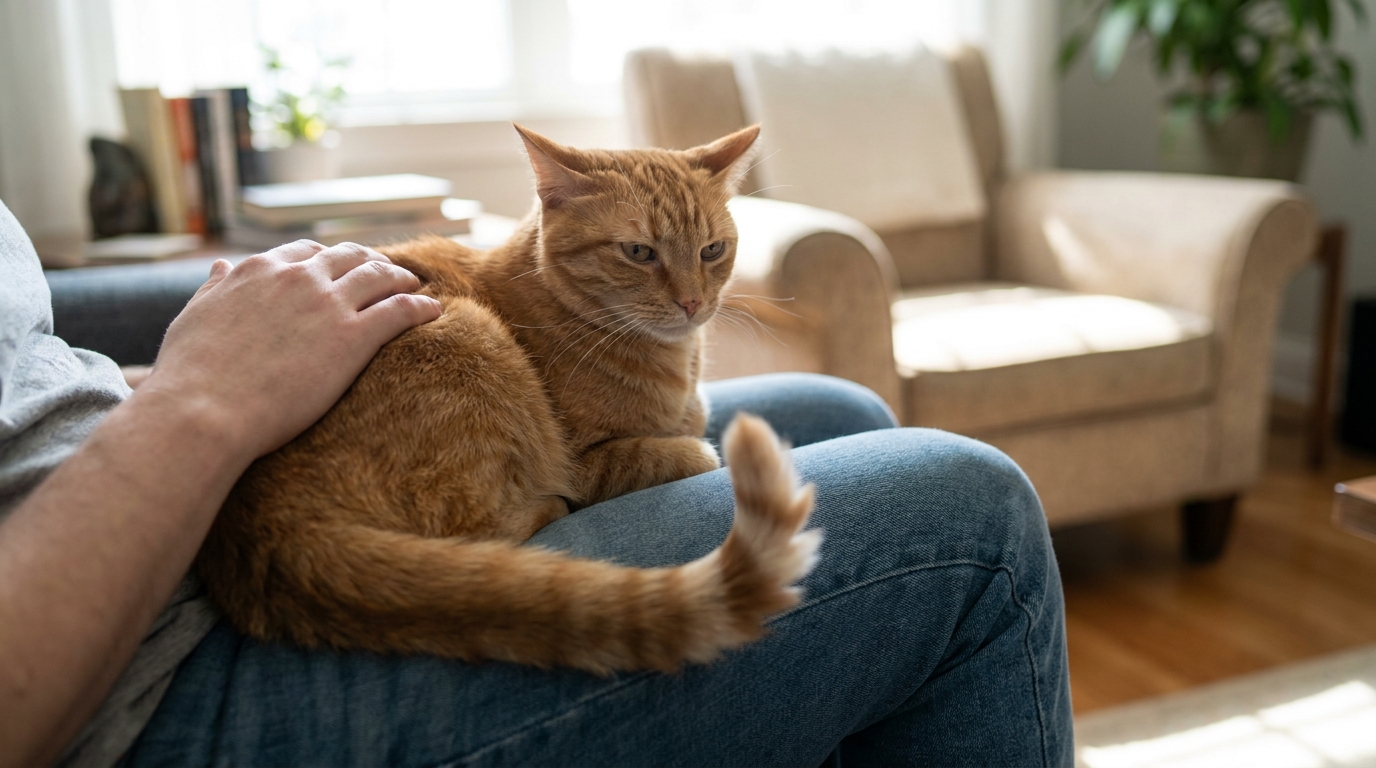
Your cat can choose your lap and still want you to stop petting it. The tail movements below—from a quiet curl to a sudden slap—can help you spot the difference between enjoying your company, watching something nearby, and reaching the end of a petting session.
The trick is to read the tail alongside the ears, eyes, and body, rather than treating every flick as a secret code. You do not need to memorize a chart, but you do need to notice what changes. Here’s what those signals can actually tell you.
#1 — The Quiet Tail Is Only Part of the Picture
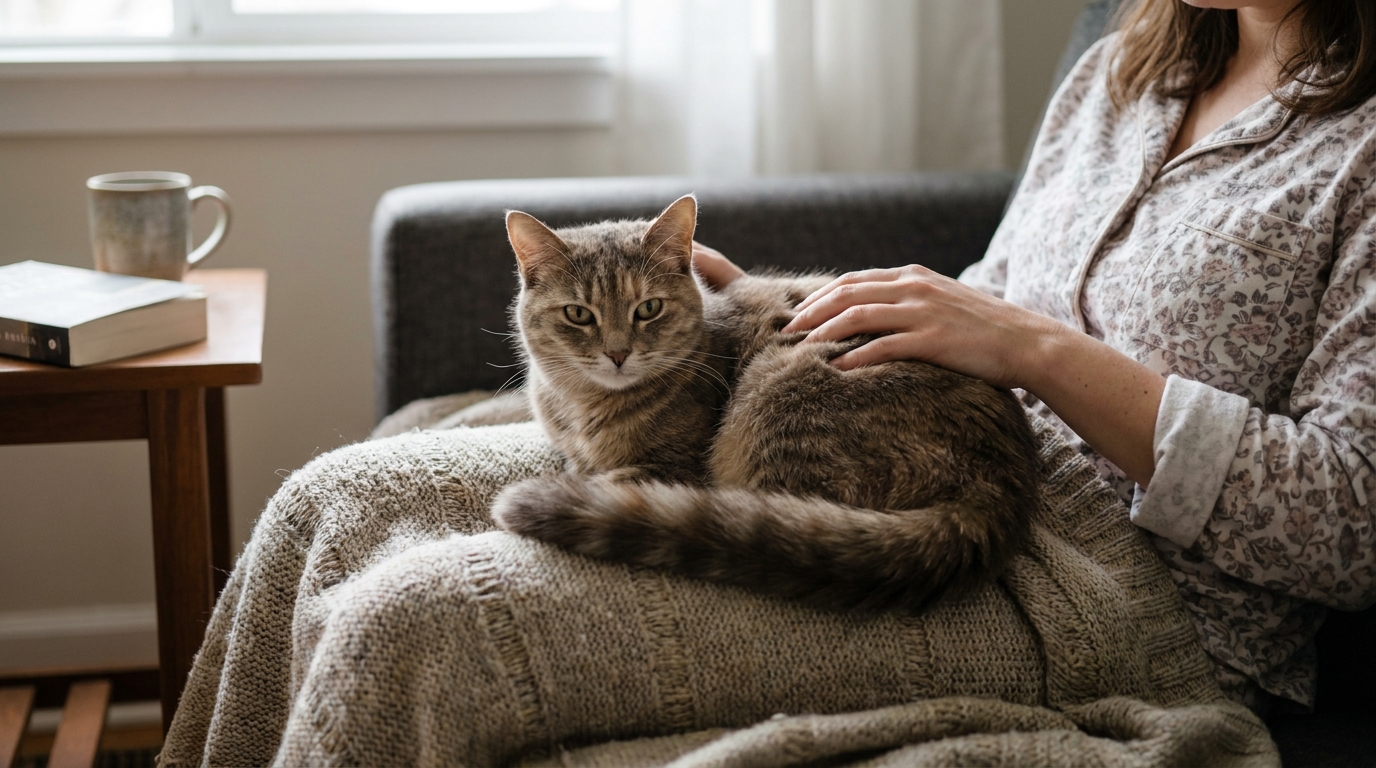
A still tail does not prove that a cat is relaxed.
A tail resting loosely across your legs can fit a comfortable lap visit, especially when the cat’s body feels soft rather than rigid. Half-closed eyes, relaxed ears, and an easy posture strengthen that reading.
But a worried cat may also become very still instead of trying to escape. If the muscles look tight, the eyes stay wide, or the ears turn back, a motionless tail offers little reassurance by itself.
Actually, the useful distinction is not moving versus motionless; it is loose versus tense across the whole animal. Look at how your cat settles its weight and whether its posture changes when your hand approaches.
If everything looks soft and settled, there is no reason to keep testing the mood with more touching. Let the cat rest, keep an exit available, and resist turning a quiet visit into a full-body massage.
But once just the tip begins to move, #2 adds a different clue.
#2 — The Tiny Tip Flick Is Not an Automatic Warning
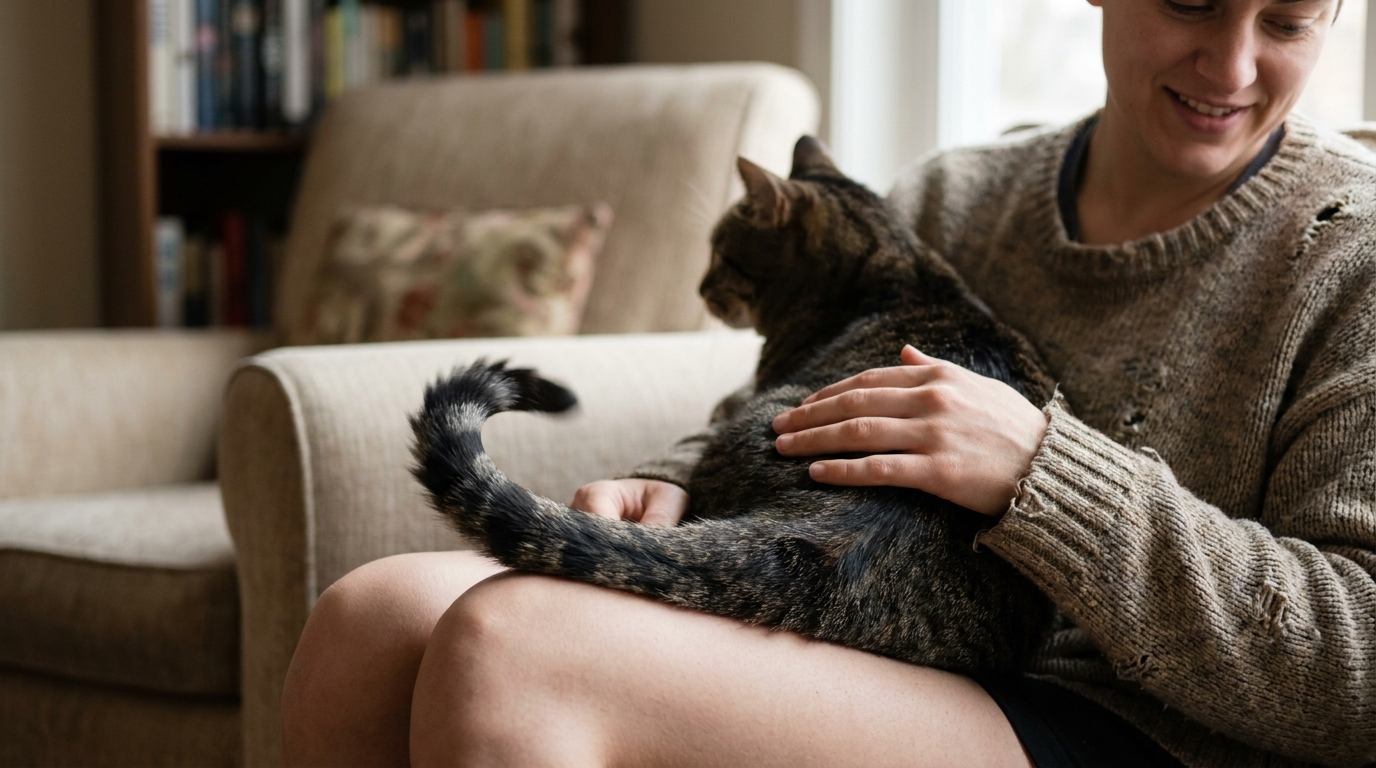
A flicking tail tip is not enough to diagnose irritation.
Small movements at the end of the tail can accompany attention or mild arousal, meaning the cat has become more alert. Your cat may have noticed a noise, a moving shadow, or something outside the window.
The same small flick can also appear as a cat grows less comfortable with handling. That overlap is why a single twitch should not earn a dramatic label such as “angry” or “about to bite.”
Watch what happens immediately before the movement and what follows it. A flick after every stroke deserves a different response from a flick that appears when a squirrel crosses the porch railing.
Try pausing your hand while leaving the rest of your body still. If your cat settles again, you have learned something useful without pushing the interaction far enough to get a stronger warning.
The movement matters, but the speed and force become harder to overlook in #3.
#3 — The Tail Slap Deserves a Petting Pause
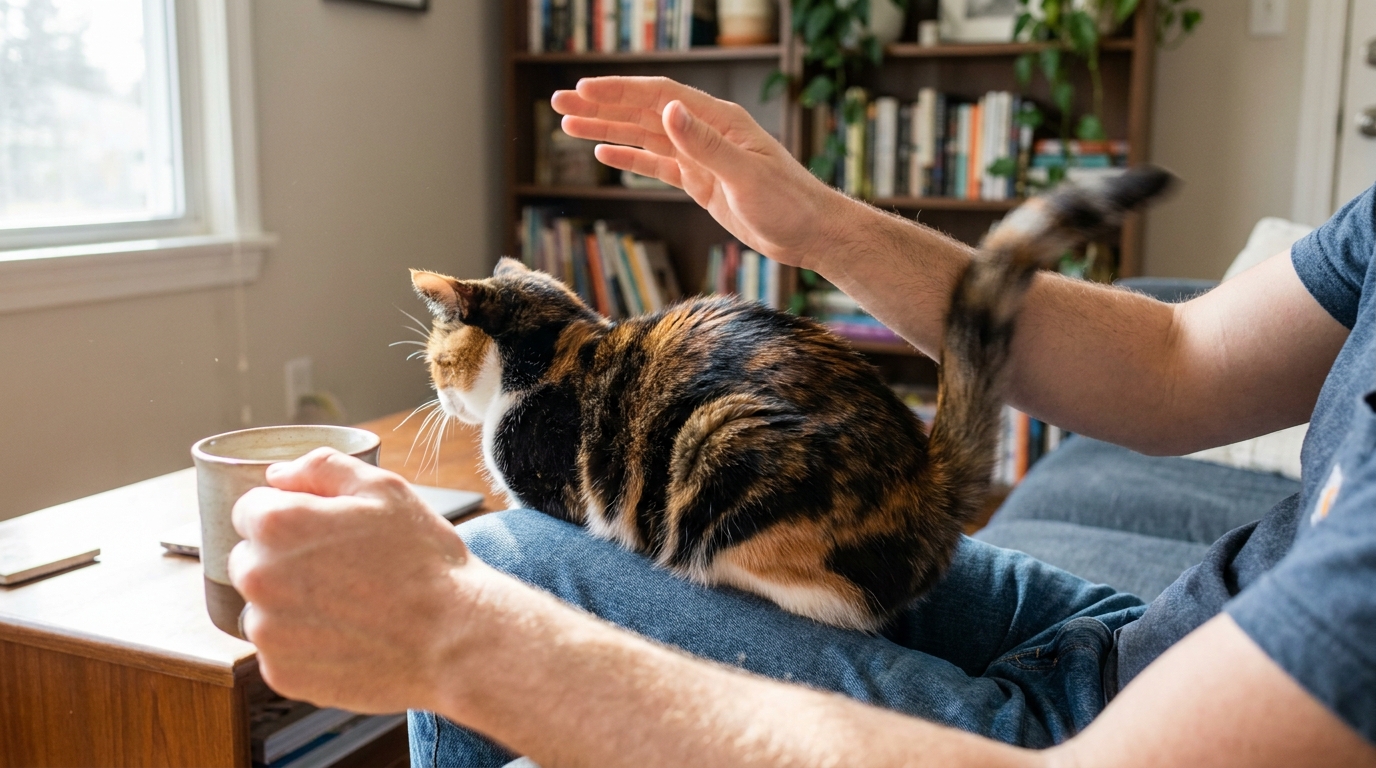
Repeated, forceful tail lashing often accompanies agitation or conflict.
When the tail starts sweeping sharply or striking your leg during petting, stop moving your hand. You do not need to wait for flattened ears, a growl, or teeth to decide that a break is sensible.
The cat may be irritated by touch, focused on something it cannot reach, or unsettled by activity nearby. The tail cannot tell you which cause applies without help from the rest of the scene.
Here is a defensible house rule: calling this a “happy wag” is a mistake when the cat’s body is also getting tense. A cat’s moving tail should not be interpreted using the familiar rules for an excited dog.
Leave your hands quiet and let the cat choose whether to stay or go. Avoid holding it in place for one last stroke, because restraint can add pressure to an interaction that is already becoming uncomfortable.
Still, even a slow tail sweep can fool you, as #4 shows.
#4 — The Slow Sweep May Be About the Window
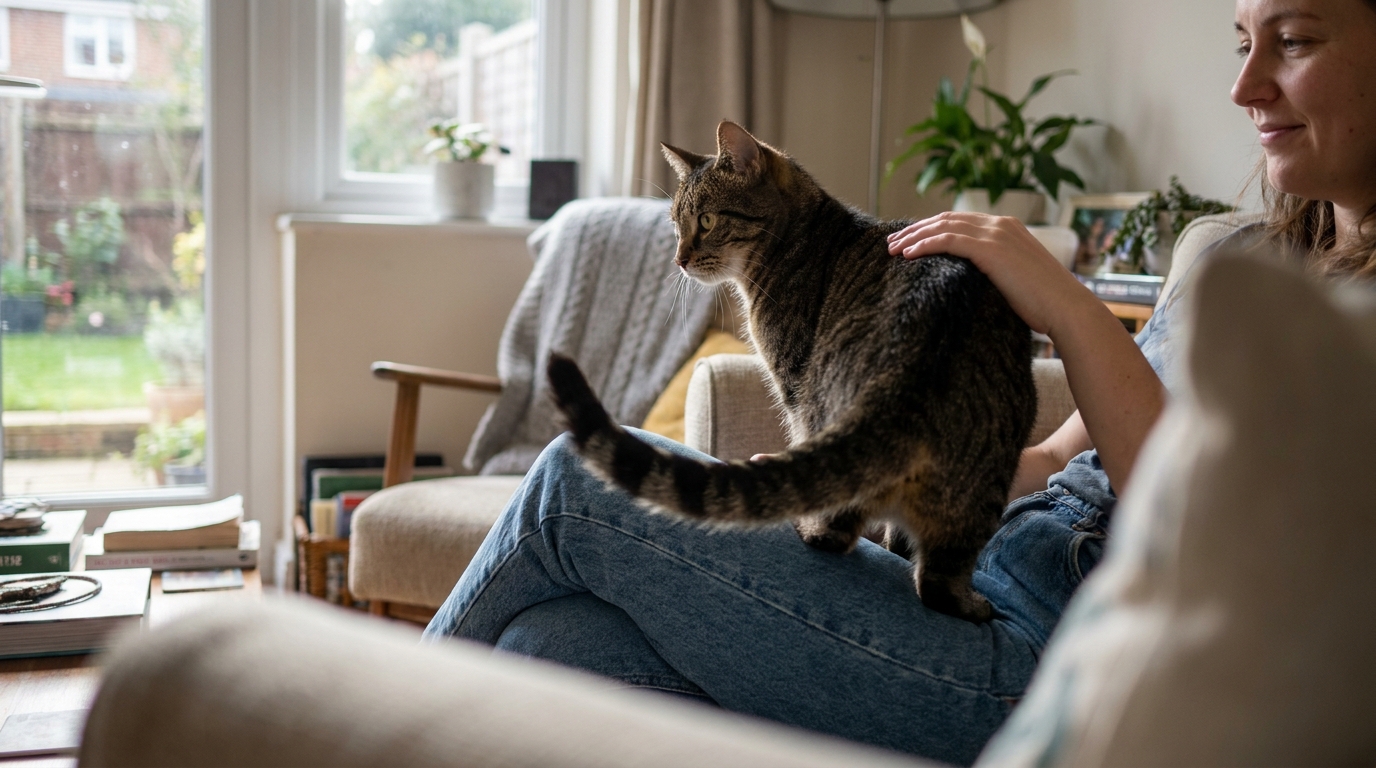
A cat watching prey can move its tail while the rest of its body stays nearly still.
Your lap may simply be the best seat for watching birds, squirrels, or a toy across the room. In that setting, a moving tail can accompany focused attention rather than a complaint about you.
Look for eyes fixed on one target, ears directed toward it, and a head that tracks its movement. Those clues give a slow sweep or twitch more meaning than its speed alone ever could.
That does not mean the cat wants extra petting while it watches. A highly focused cat may tolerate handling less readily, so it is sensible to leave your hand still rather than interrupt its concentration.
If the tail moves when the bird moves, the timing is useful evidence. If it changes when you stroke the cat, your hand becomes a more likely part of the explanation, though neither pattern is a perfect test.
The next movement looks more affectionate, but #5 still needs a little context.
#5 — The Tail Wrapped Around Your Wrist Is Not a Contract
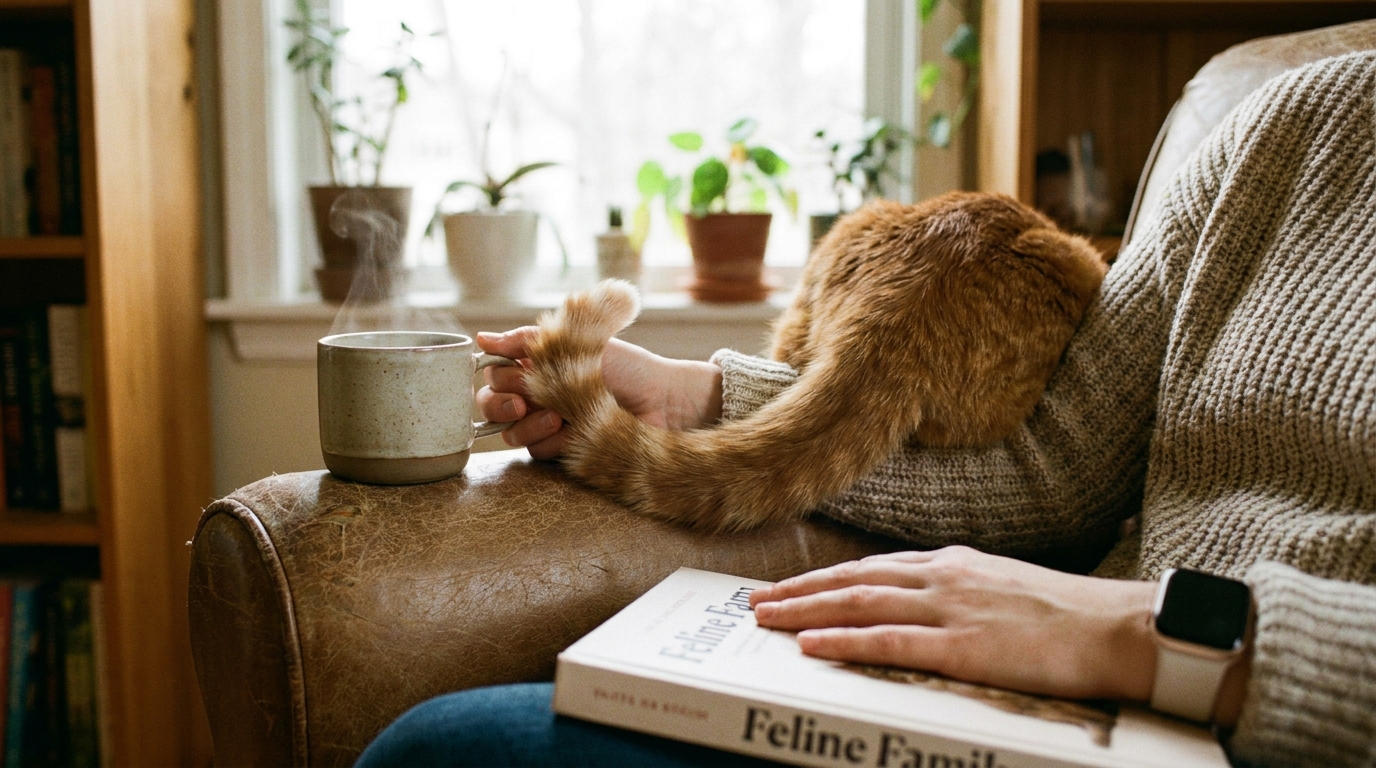
A tail curled against your wrist does not guarantee permission to pet.
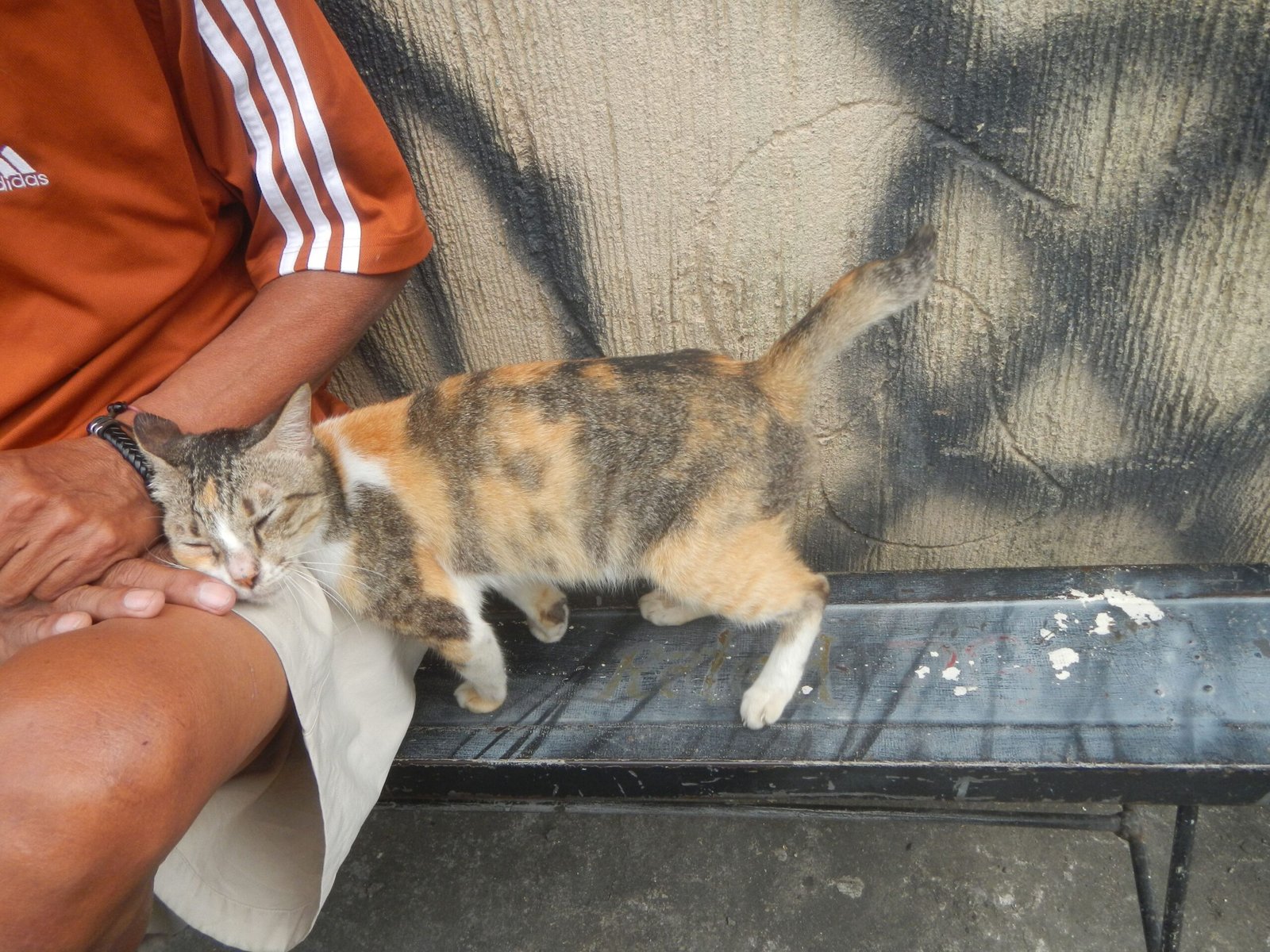
Cats sometimes rest their tails against a person while sitting close, just as they may tuck them beside their own bodies. That contact can fit a comfortable social moment, but it is not a reliable invitation by itself.
The truth is less dramatic than “your cat is secretly hugging you.” A curled tail may reflect body position, available space, or social contact, and you cannot confidently separate those possibilities from a single photograph.
Enjoy the closeness without turning it into a test of affection. If your cat remains loose and chooses to stay, that voluntary contact is already useful information about how the moment is going.
My take: the “tail hug” label is harmless until someone uses it to justify unwanted handling. Let the cat’s response to your next movement matter more than the sweet story attached to its current pose.
And when the tail disappears beneath the body, #6 explains why placement alone can mislead.
#6 — A Tucked Tail Can Mean More Than One Thing
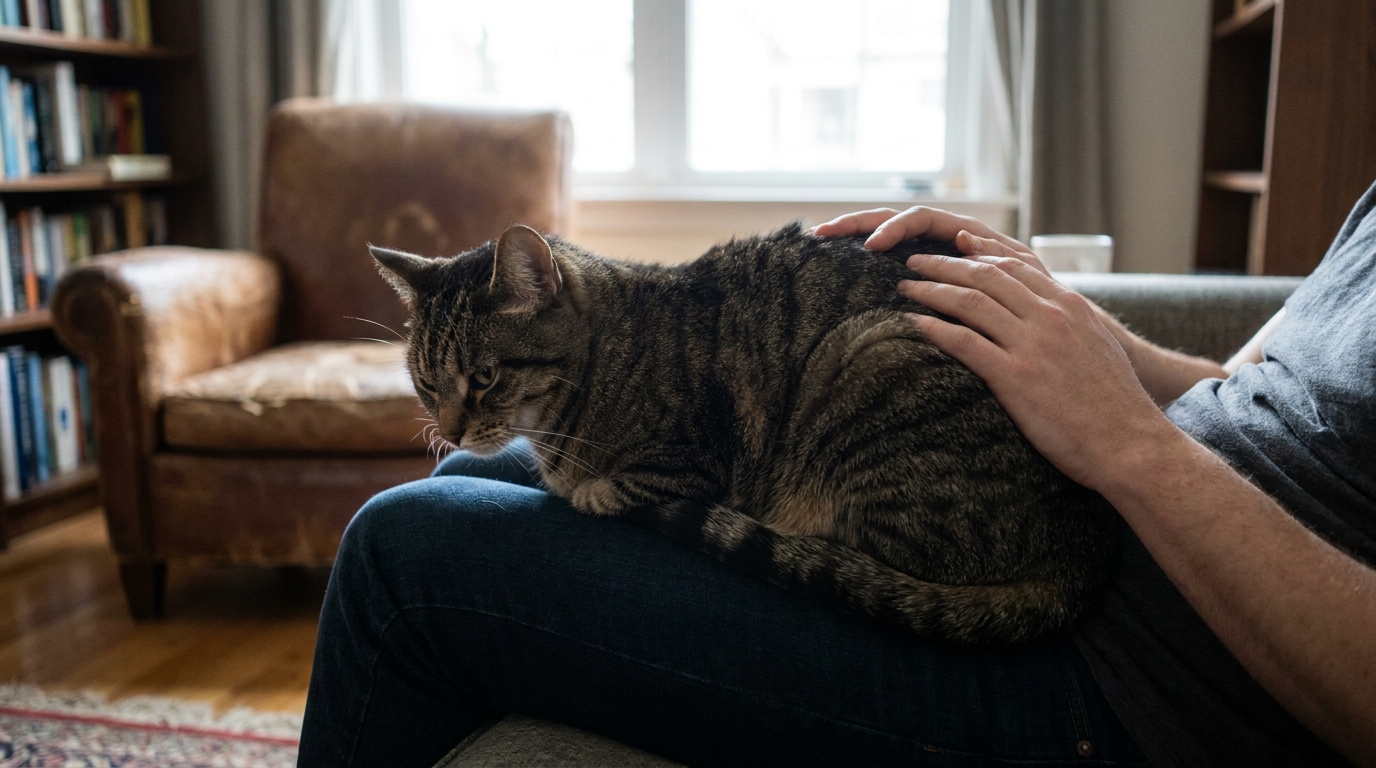
A tail pulled tightly against the body can accompany fear or unease.
The important word is “tightly,” because a cat curled up for a nap may also keep its tail close. A loose sleeping curl and a rigid crouch should not be treated as the same posture.
Check for a lowered body, ears held back, wide eyes, or an effort to make itself small. Several of those signs together make concern more reasonable than a tucked tail viewed on its own.
A lap can become uncomfortable if a visitor leans over, a dog approaches, or a child reaches toward the cat. Even a familiar resting place does not cancel out whatever is happening around it.
Reduce the pressure rather than trying to reassure the cat with firmer cuddling. Give it a clear way down, ask others to step back, and let it choose a quieter spot if that is what it wants.
A tucked tail keeps a low profile, but the change in #7 does the opposite.
#7 — The Bottlebrush Tail Signals a Bigger Reaction
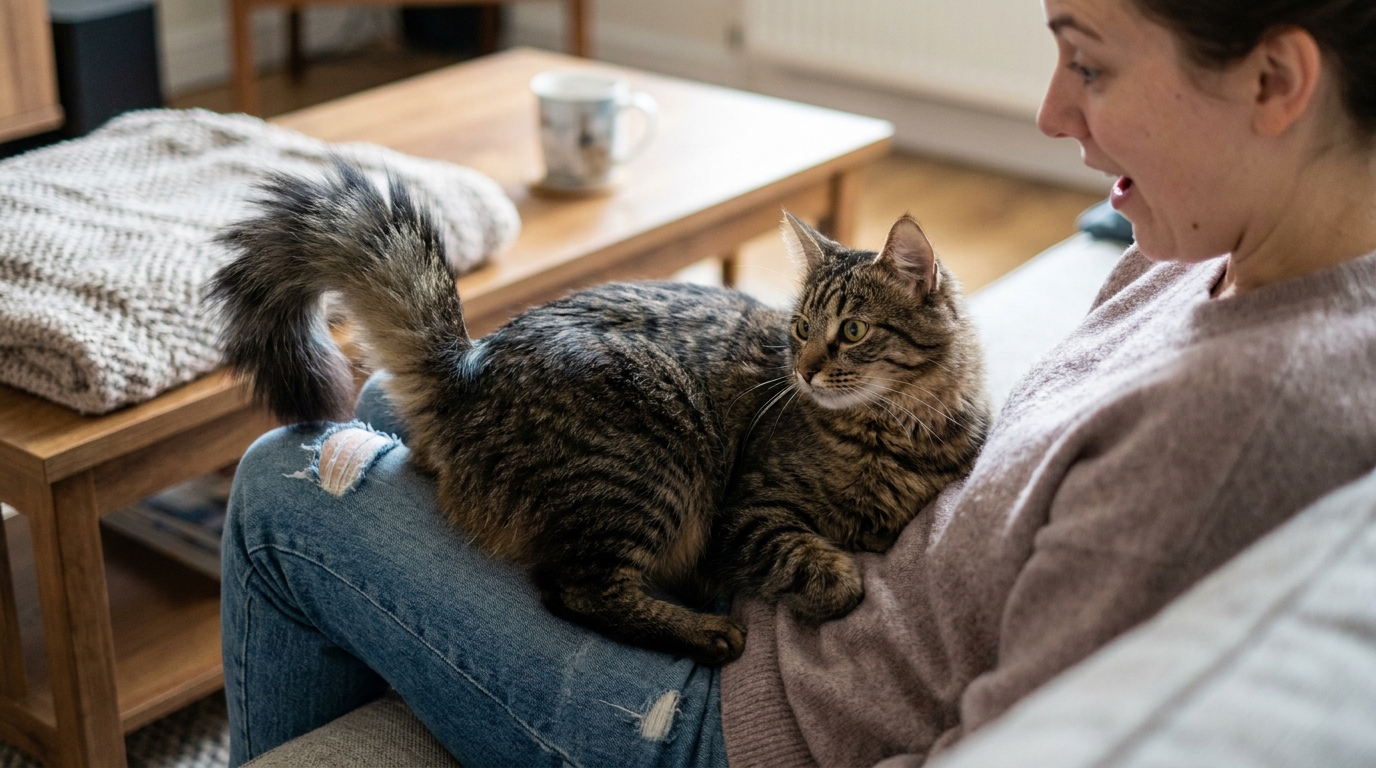
A suddenly puffed tail shows arousal, not one specific emotion.
The hairs stand up and make the tail look much larger, a response that can appear with fear or defensive excitement. Some cats also puff their tails during lively play, especially when they are young.
On your lap, a sudden bottlebrush tail deserves a look at what just happened. A slammed door, an unfamiliar animal, or a startling movement may explain the change better than anything your hand was doing.
Do not grab the tail or tighten your arms around the cat to keep it close. A startled animal needs space and a safe route away, not an unexpected wrestling match with its favorite person.
Pause the interaction and reduce the disturbance if you can do so safely. If another animal triggered the reaction, avoid reaching between them or picking up an agitated cat with your bare hands.
Not every twitch happens while your cat is fully awake, which changes the reading in #8.
#8 — Sleep Twitches Are Not a Hidden Complaint
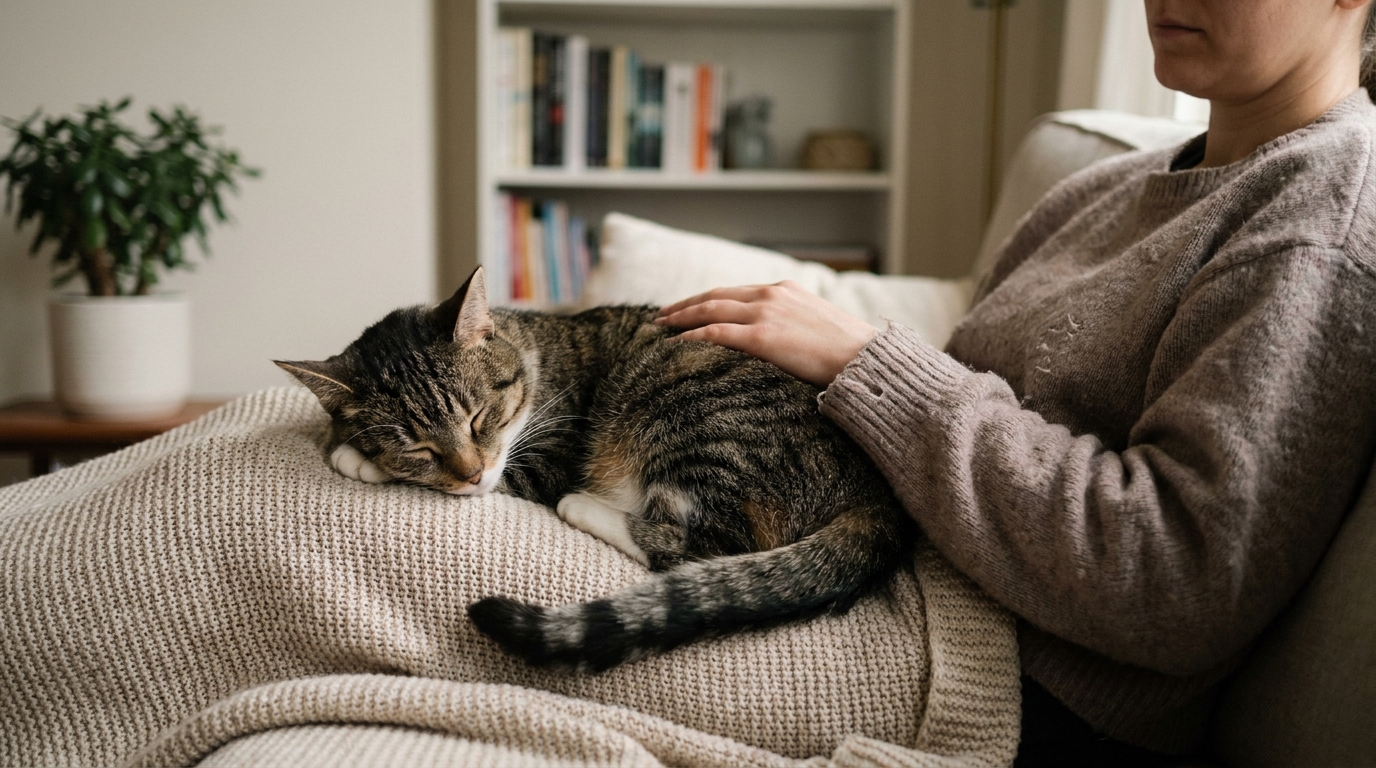
Cats can twitch their tails and limbs during sleep.
A cat dozing on your lap may show small movements in its whiskers, paws, ears, or tail. Those motions can occur during normal sleep and do not automatically mean the cat is objecting to your company.
Small sleep twitches can occur during REM sleep, a sleep stage linked with dreaming. What your particular cat might be experiencing is not something you can determine from the movement of its tail.
Leave a peacefully sleeping cat undisturbed rather than waking it to check whether it is annoyed. Gentle movements in an otherwise resting animal are different from a waking cat becoming tense under repeated strokes.
Seek veterinary advice for unusual episodes, especially if there is stiffness, collapse, difficulty waking, or confusion afterward. A video taken without delaying needed care can help a veterinarian understand an event that is hard to describe.
When your cat is awake and your hand starts moving, #9 becomes the more useful test.
#9 — The Change After a Stroke Matters More Than the Pose
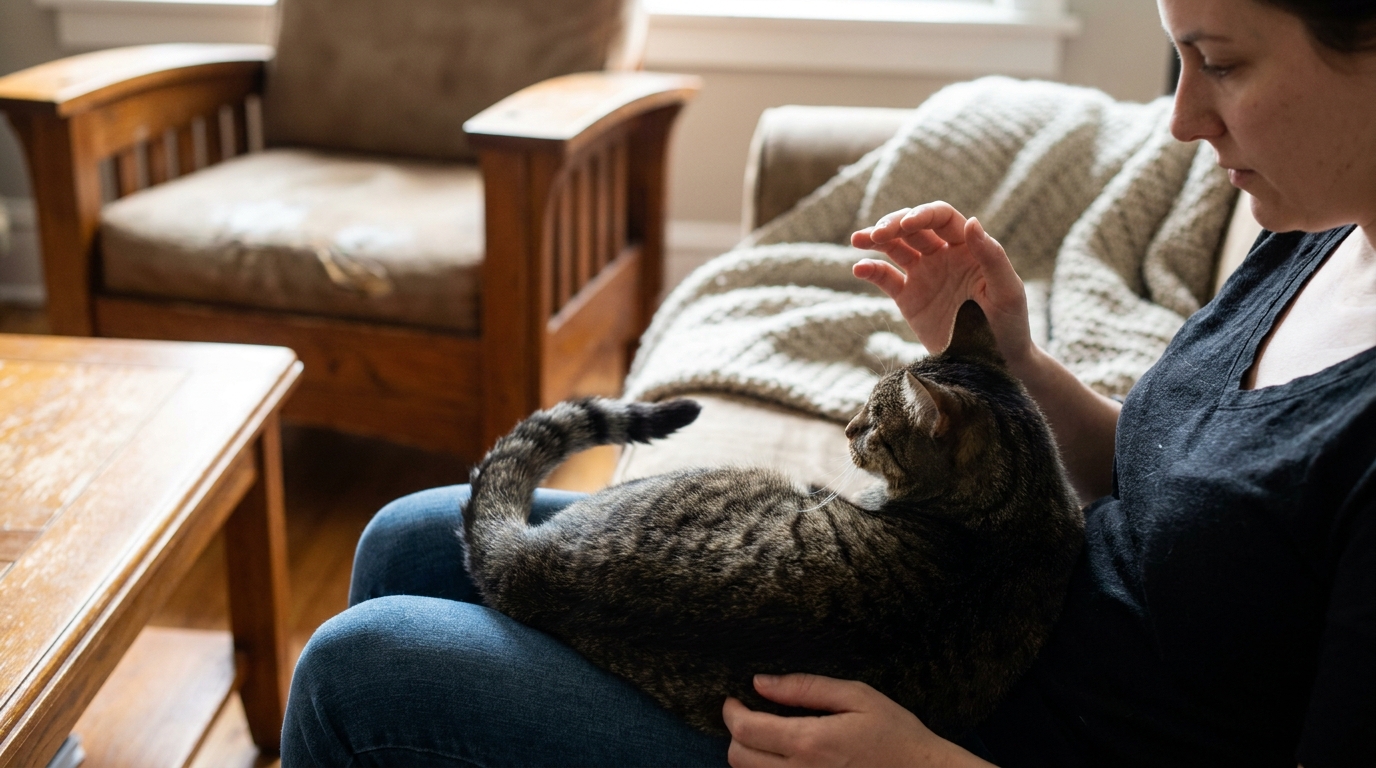
A change in tail movement during petting is a reason to reassess the contact.
A tail that was resting and then begins flicking after several strokes gives you a practical cue. It does not prove discomfort, but it is enough reason to stop and check the rest of the body.
Some cats enjoy brief contact yet become less tolerant as it continues. Early signs may include turning toward your hand, shifting position, rotating the ears back, or becoming less loose through the shoulders.
Try a few gentle strokes around the cheeks or head if those are areas your cat already enjoys, then pause. Avoid assuming that liking one kind of touch means liking every body area or every length of session.
If the cat moves away, let that end the experiment. If it rubs against your hand, you can offer another brief stroke while watching for renewed tension rather than treating the rub as unlimited permission.
One petting spot is especially easy to overread, and #10 explains the mistake.
#10 — Tail-Base Scratches Are Not Every Cat’s Favorite
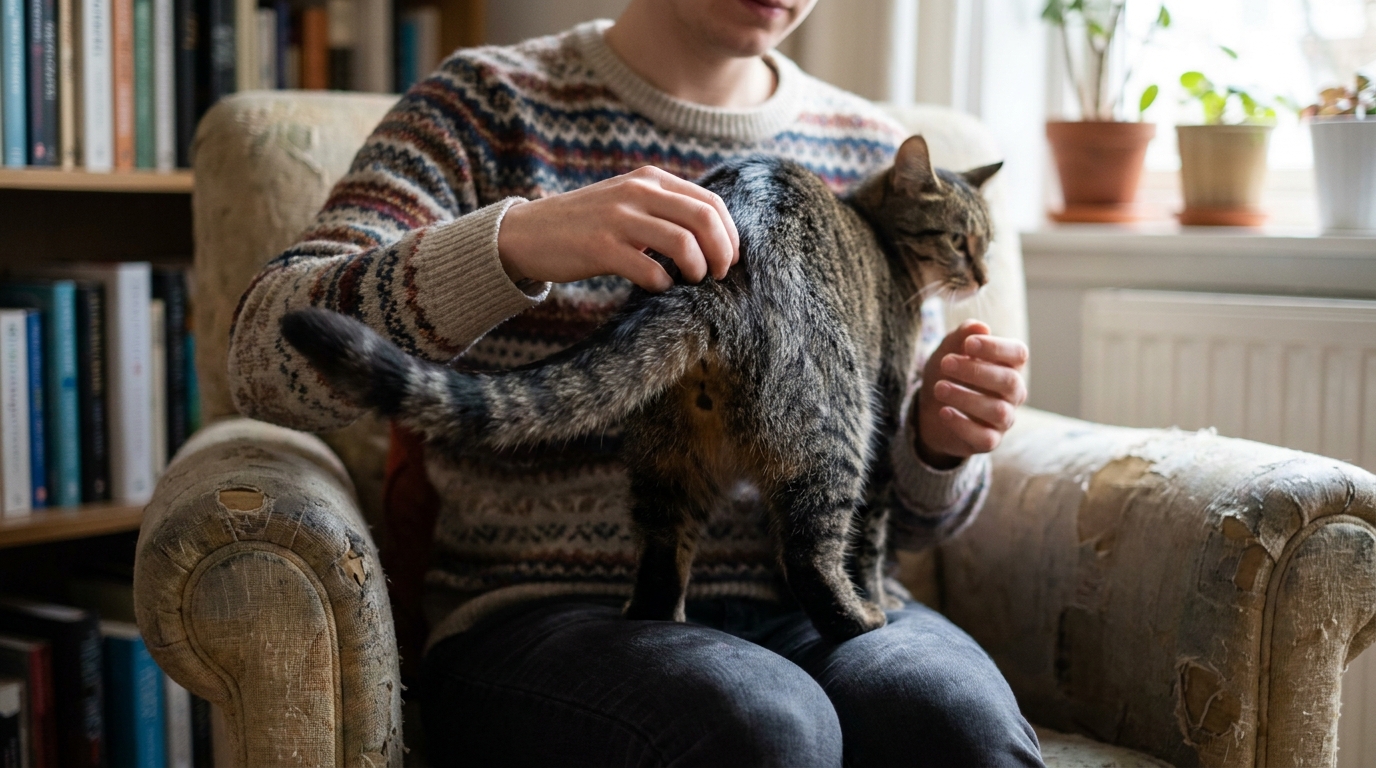
A raised rear during petting does not prove that continued scratching is welcome.
Some cats lean into contact near the base of the tail, while others dislike that area or tolerate it only briefly. The visible response can be lively enough that an owner mistakes intensity for enjoyment.
Watch the full sequence instead of one raised-back moment. A cat that leans in and stays loose presents a different picture from one that starts whipping its tail, turning sharply, or trying to leave.
This is one petting habit I would retire as a default: vigorous tail-base scratching for every friendly cat. Brief, gentle contact in a known favorite spot makes more sense than testing how much stimulation an animal will accept.
Stop if you see discomfort, and mention new sensitivity to your veterinarian. Painful skin, injury, and other medical problems can affect reactions to touch, so a sudden change should not be dismissed as ordinary fussiness.
Even a soothing sound can muddy the message, which brings us to #11.
#11 — Purring Does Not Cancel the Tail’s Warning
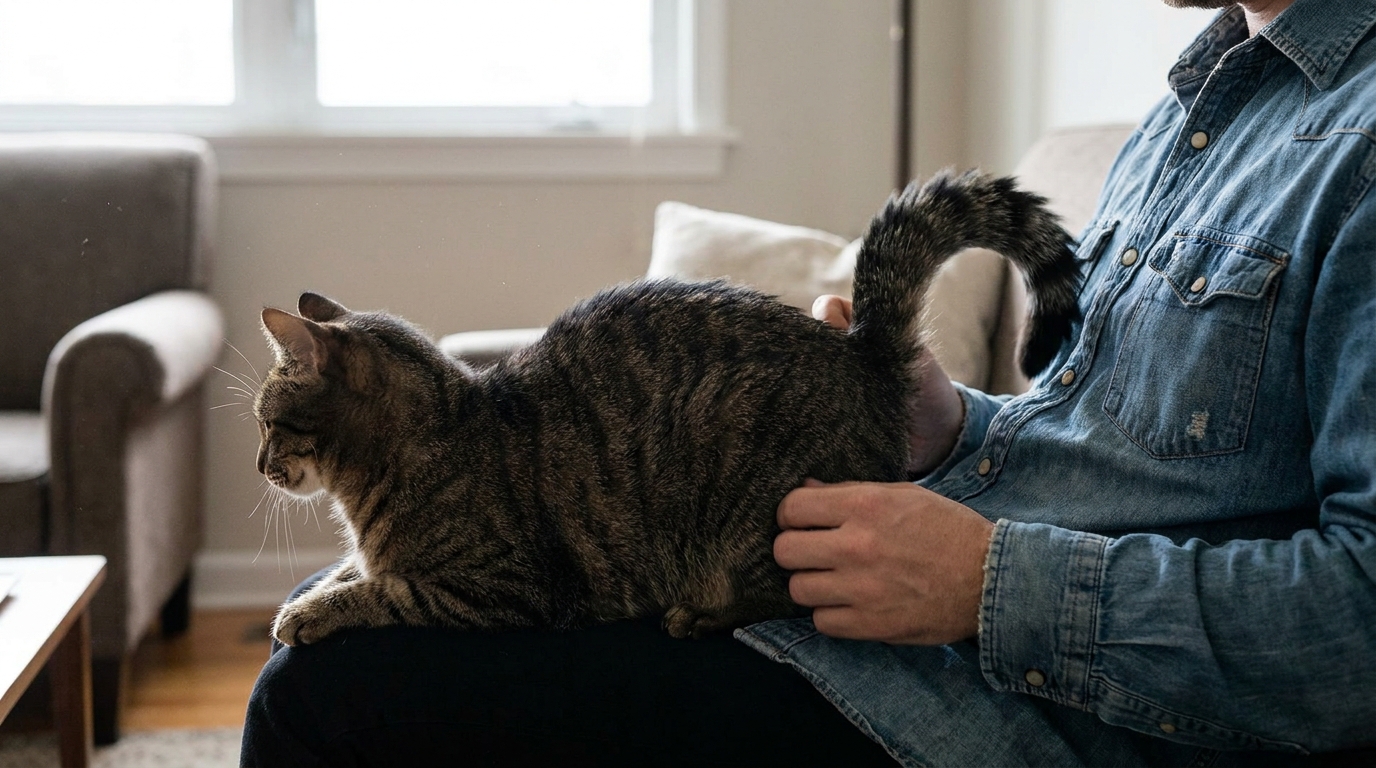
Cats may purr when distressed or in pain, not only when content.
Purring often accompanies a comfortable lap visit, but it is not a guarantee that every part of the interaction feels good. A cat can keep purring while its posture or tolerance for petting changes.
If the tail begins lashing and the ears pull back, do not let the sound overrule those observations. Stop touching and give the cat room to decide what happens next without pressure from your hands.
Think of purring as one piece of evidence rather than the final verdict. Relaxed muscles, voluntary contact, and an easy response to a pause make a more convincing picture of comfort than sound alone.
Purring also should not reassure you away from obvious illness or injury. A cat that is hiding, eating less, moving poorly, or reacting painfully to touch needs attention to those changes, even if it still purrs on your lap.
Sometimes the tail is not sending a social message at all, as #12 reveals.
#12 — The Sweep Before a Jump May Be About Balance
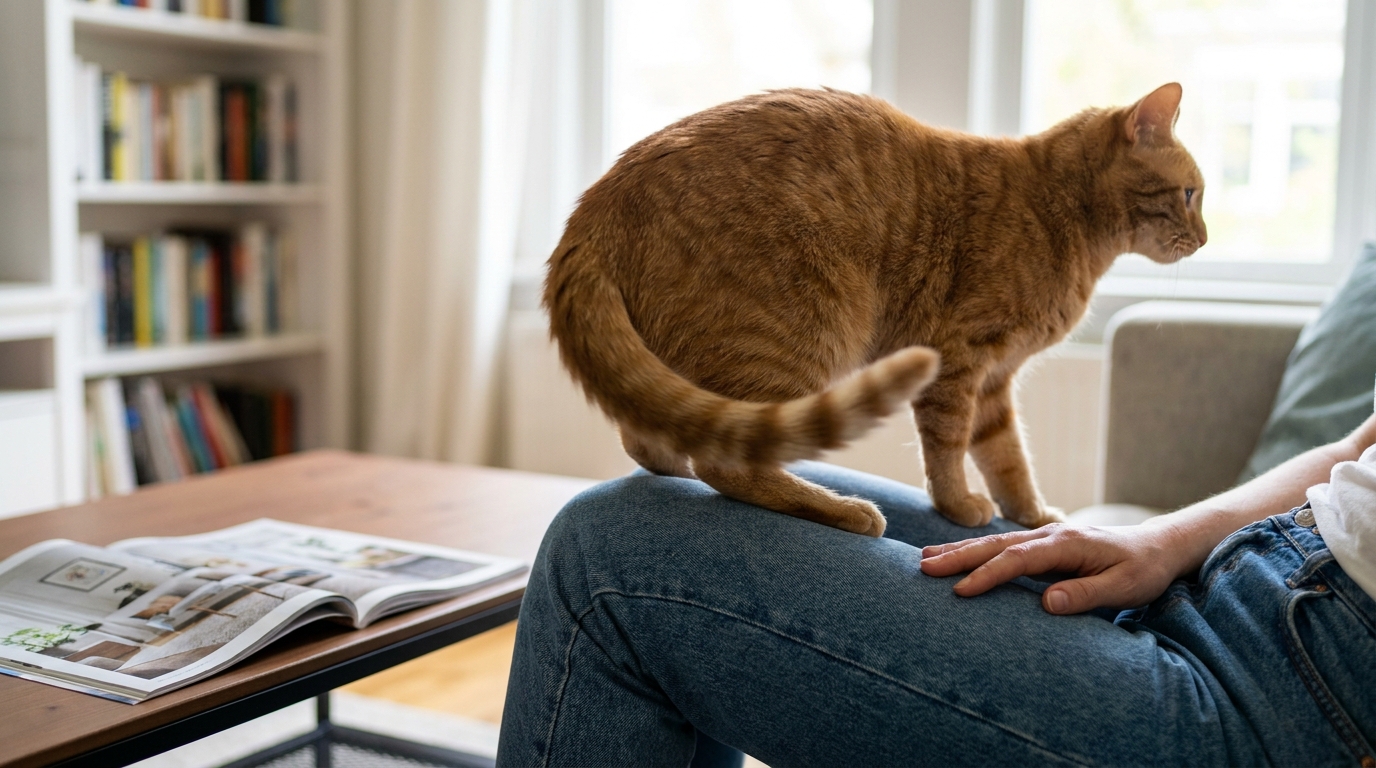
A cat’s tail contributes to balance during movement.
When your cat rises, turns, or prepares to step off your lap, the tail may shift as its body position changes. Not every sweep in that moment needs an emotional translation or a place on a mood chart.
Look at the paws and shoulders for the bigger story. A cat that starts gathering its feet beneath itself may be preparing to leave, even if it was comfortably settled a few seconds earlier.
Make that exit easy by keeping your hands clear and avoiding a sudden grip around the body. If a blanket has caught a claw, help carefully rather than assuming the cat is resisting out of bad temper.
The tail is not a handle, even when you are trying to prevent a fall or protect a nearby cup. Pulling it can cause injury, so move the object or provide safe space instead.
Ordinary movement is one thing, but an unfamiliar change deserves the attention described in #13.
#13 — A Newly Limp or Painful Tail Is a Different Problem
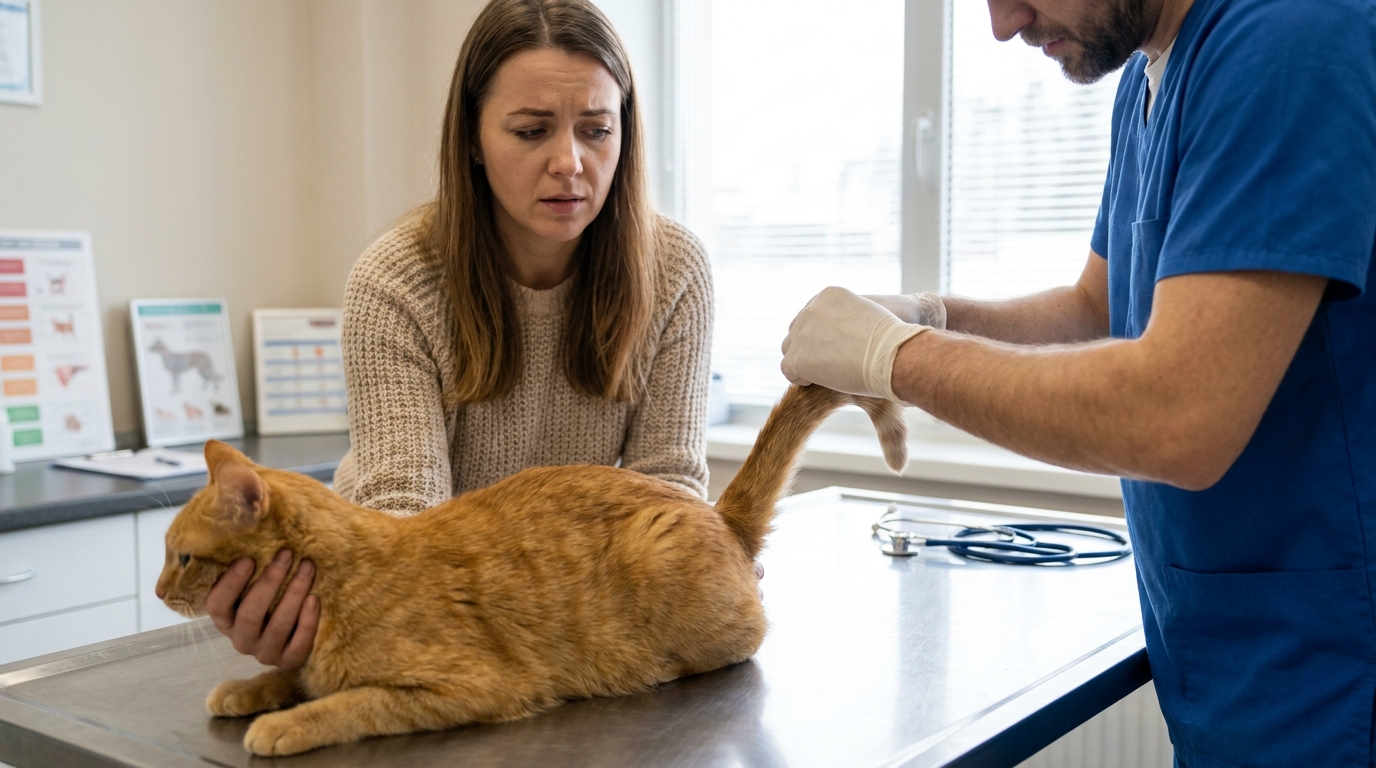
A sudden limp tail or new tail pain warrants veterinary attention.
This is where reading body language should give way to checking health. A tail that hangs differently, moves less than usual, or appears painful may reflect injury or another problem that cannot be sorted out from a behavior chart.
Look without pulling, bending, or squeezing the tail to test it. Swelling, a wound, persistent licking, or a strong reaction when the area is approached are useful observations to share with the veterinary team.
Tell the clinic promptly if the change follows an accident or occurs with hind-leg weakness or trouble passing urine or stool. Tail-pull injuries can affect nerves involved in bladder and bowel function, making those additional signs especially important.
Do not wait for the cat to cry out before taking a marked change seriously. Call your veterinarian for guidance, and let the clinic decide how urgently your cat should be examined based on the full picture.
For everyday lap visits, though, the best comparison is closer to home in #14.
#14 — Your Cat’s Usual Pattern Beats a Viral Chart

Your cat’s normal behavior is an important reference for noticing change.
One cat may flick its tail during almost every alert lap visit, while another usually keeps it quiet. That does not erase shared feline signals, but it does make personal context worth more than a rigid internet label.
Pay attention to repeated situations: resting without touch, being stroked, watching the window, and preparing to leave. Over time, those comparisons can help you separate familiar habits from a response that deserves a pause or closer look.
A short video can also reveal details you missed while looking down at your cat. Keep recording unobtrusive, and never repeat something upsetting just to capture a clearer example for friends or your veterinarian.
My opinion: charts that translate each tail shape into one exact sentence promise too much. A chart can teach you what to notice, but your cat’s whole body and the events around it still have to do the explaining.
That leaves the most useful distinction of all: what your cat wants from your lap in #15.
#15 — Your Cat May Want Your Lap, Not Your Hands
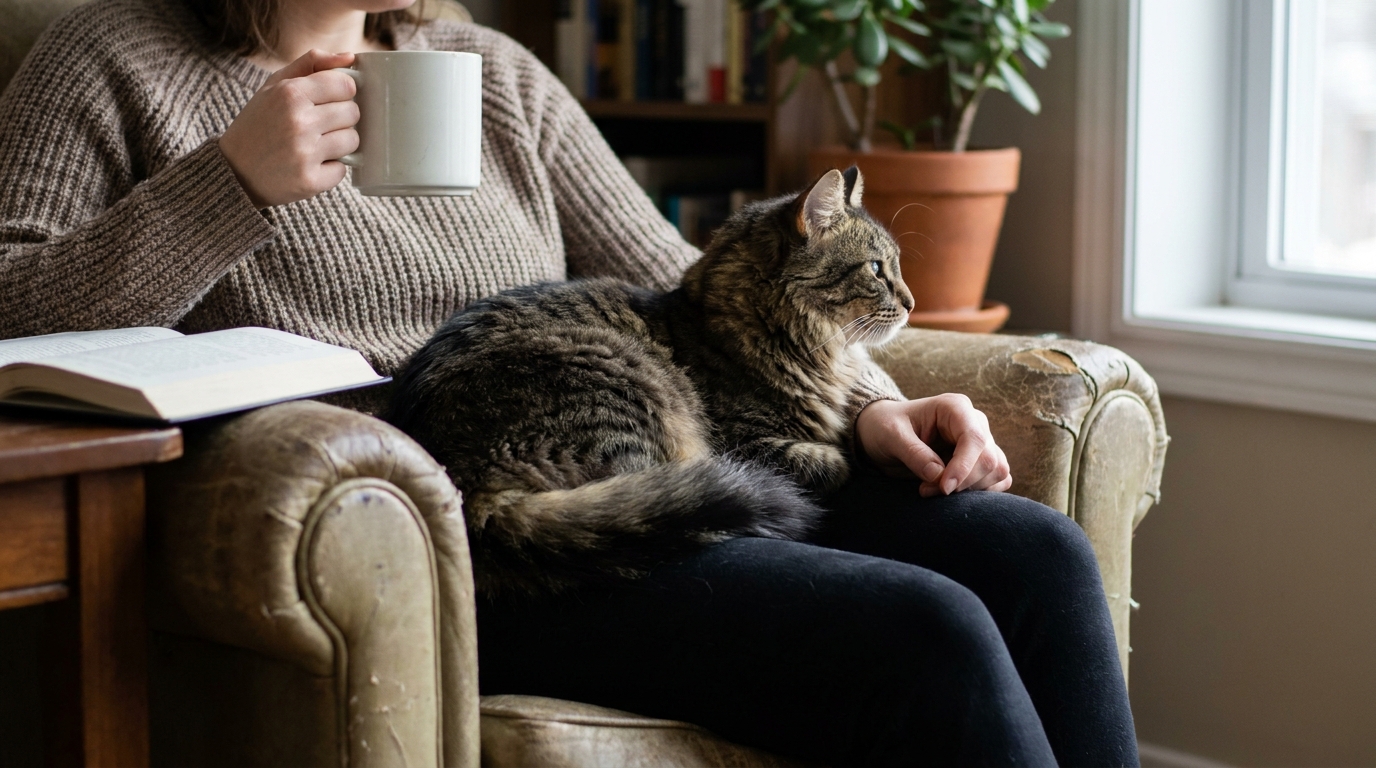
Choosing to sit on you does not automatically mean choosing to be petted.
Your lap offers warmth, a resting surface, and closeness to someone familiar. A cat can seek those things while preferring little or no touching, and that preference can change during the same visit.
This explains a moment many owners find personal: the cat climbs aboard, then flicks its tail when petting begins. There is no need to call it ungrateful or confusing when company and handling are two different experiences.
Try letting the next lap visit begin with your hands at rest. If you offer contact, keep it brief and pause, then watch whether your cat seeks more or simply settles back into doing nothing.
A longer cuddle is not a better cuddle if the cat has to tolerate it. Respecting small changes gives you a way to stop before tension builds, while leaving the cat free to keep enjoying your company.
The bottom line turns all these clues into one habit you can use tonight.
The Bottom Line
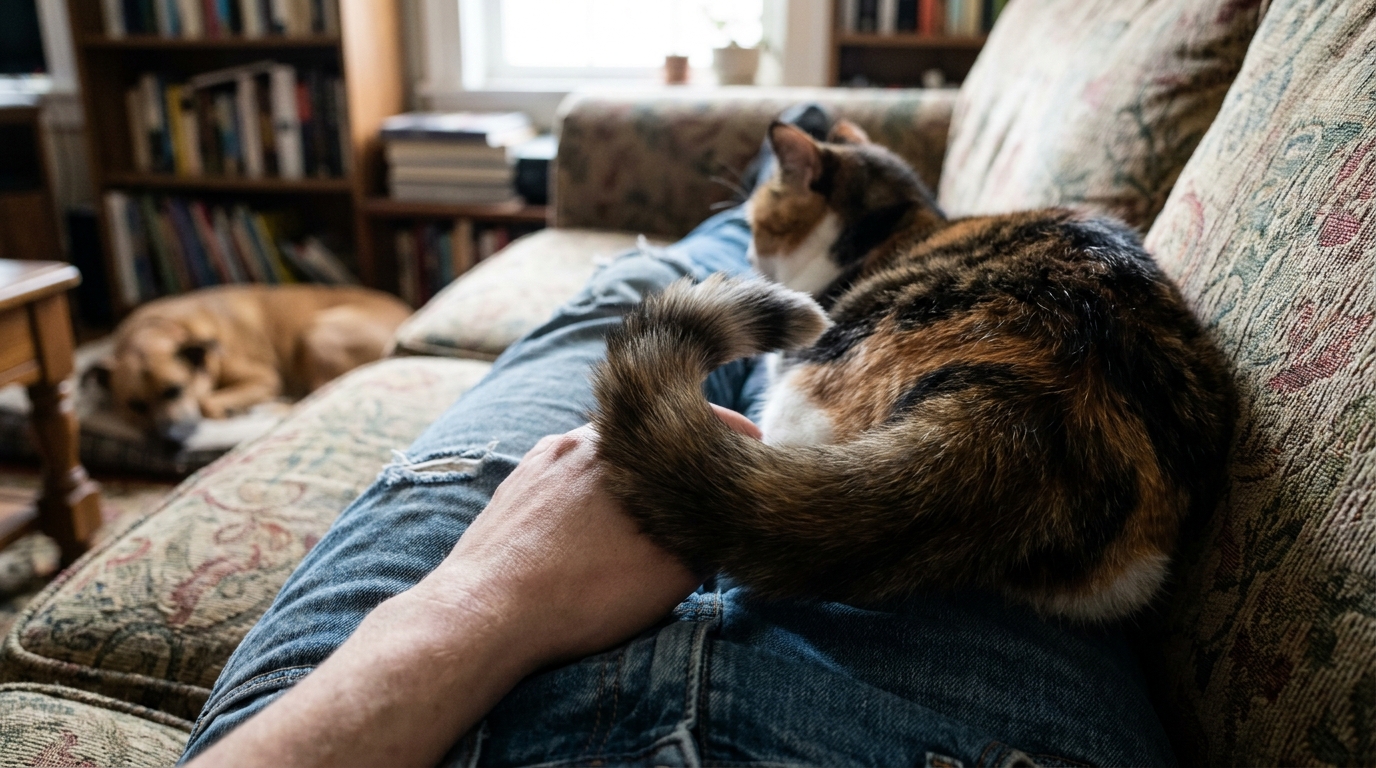
Your cat’s tail is useful evidence, not a stand-alone translator. A tiny twitch may accompany attention, a strong lash may signal agitation, and a still tail means little without the posture around it.
The biggest correction is simple: sitting on your lap and wanting to be stroked are not the same thing. Purring does not settle the question, either.
Watch for changes, pause your hand when tension appears, and keep the route off your lap open. A newly limp or painful tail belongs in a conversation with your veterinarian, not a guessing game about mood.
Does your cat have a lap-time tail habit we missed? Drop it in the comments.