9 Things Your Cat Does When It Hears Your Car
If you've ever pulled into your driveway and wondered what your cat was doing the moment it heard your engine, you're not alone. A 2019 study from the University of Tokyo found that cats can distinguish their owner's car from others based on sound alone—and what happens next is more complex than most people realize.
Your cat isn't just sitting there waiting. It's running through a sequence of behaviors that reveal everything from its attachment style to its survival instincts, and some of those actions might surprise you.
Here's what actually happens in those crucial seconds.
#9 — It Freezes and Rotates Its Ears First
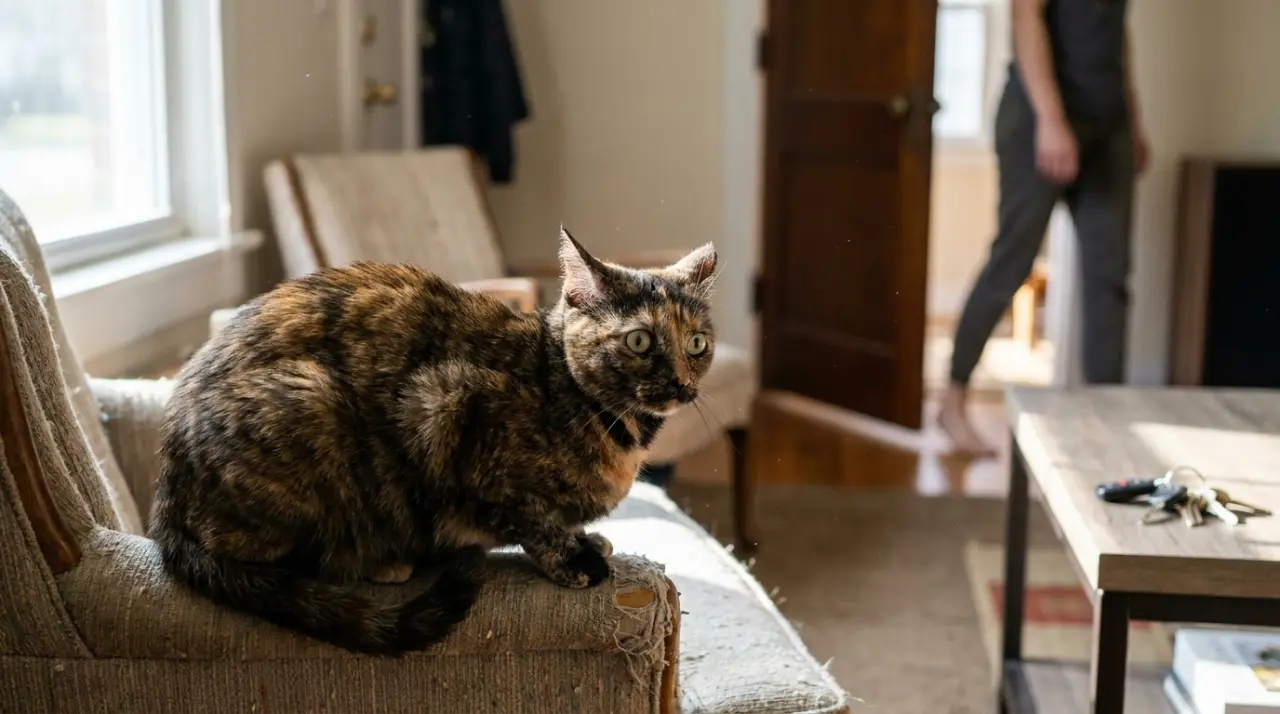
Your cat's first response isn't movement—it's a complete sensory lockdown.
The moment the sound frequency of your car enters audible range, your cat stops whatever it's doing and rotates its ears independently to triangulate the source. Cats have 32 muscles in each ear, compared to our six, which means they can pinpoint a sound's location within three inches from up to three feet away.
This freeze response lasts only two to four seconds. During that window, your cat is confirming three things: distance, direction, and whether the sound matches the stored acoustic signature of your specific vehicle.
Most people assume their cat recognizes them when they walk through the door. Turns out, the recognition happened 30 seconds earlier while you were still on the street.
But the sensory work doesn't stop there...
#8 — It Moves to a "Monitoring Position" Near a Window or Door
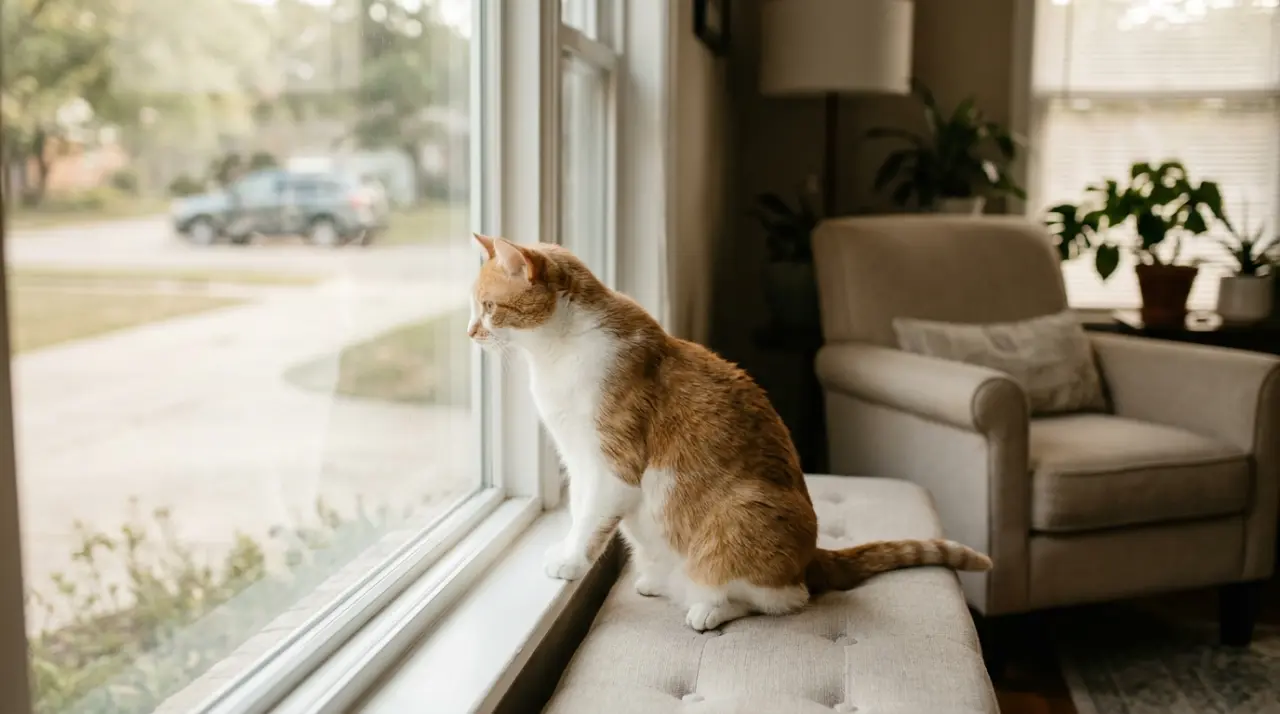
Once your cat confirms it's your car, it doesn't run to greet you—it relocates to a vantage point.
Behaviorists call this the "monitoring position." Your cat moves to a spot where it can observe your arrival without being seen, usually near a window with a clear sightline to the driveway or at the top of the stairs. This isn't aloofness—it's tactical awareness.
Cats are simultaneously predators and prey animals, which means they're hardwired to gather information before committing to action. Even in a safe home environment, that instinct remains active. Your cat needs to see you exit the vehicle, confirm you're alone, and assess your body language before deciding how to respond.
Indoor cats that have never faced a real threat still perform this behavior. The instinct is that deeply embedded.
If you have multiple cats, you might notice one claims the prime monitoring spot while others wait further back—that's hierarchy playing out in real time.
#7 — It Starts Grooming (Yes, Right Then)
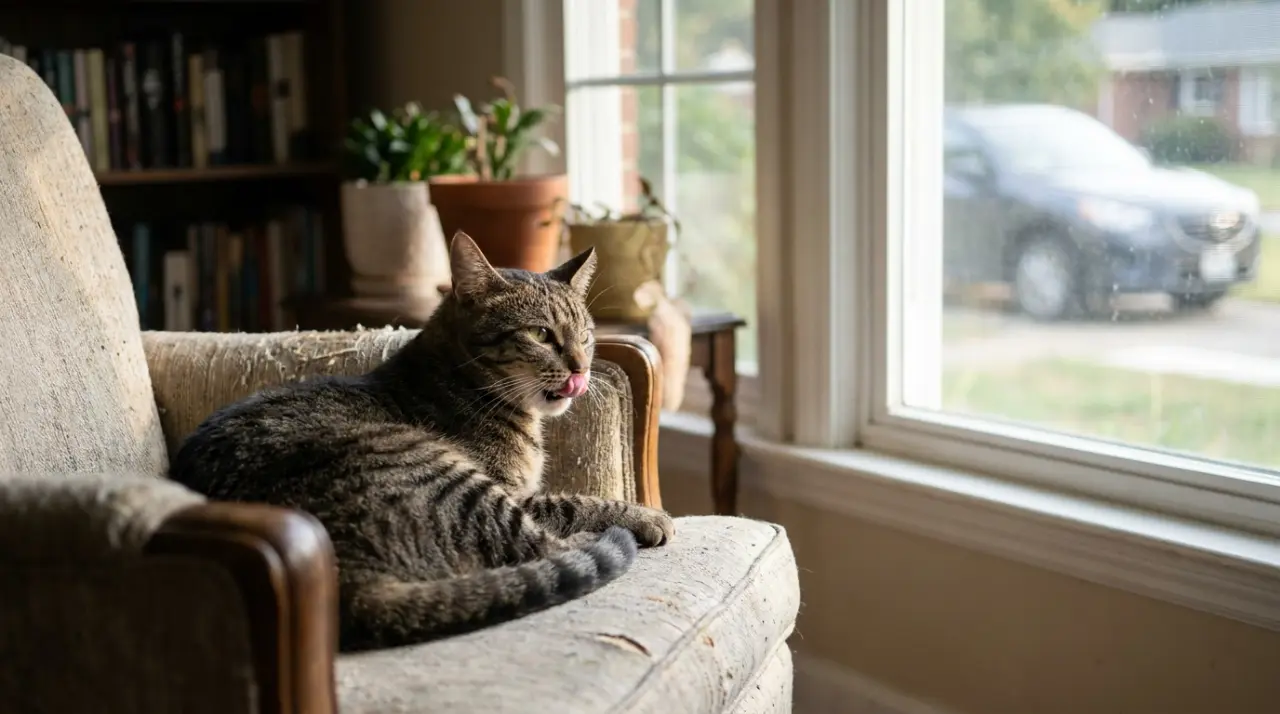
This one baffles most cat owners, but it's one of the most telling behaviors on the list.
Your cat hears your car, positions itself to watch, and then... starts licking its paw. It looks like indifference, but it's actually a displacement behavior triggered by conflicting emotions. Your cat is excited you're home but also uncertain about what happens next—will you feed it, play with it, or ignore it?
That tension creates a need to self-soothe. Grooming releases endorphins and gives the cat something to do with the arousal energy while it waits for more information.
**A 2017 study published in Applied Animal Behaviour Science found that cats groom 40% more frequently during moments of social uncertainty than during baseline activity.** Your arrival is a textbook example of that uncertainty.
If your cat grooms briefly and then stops when you open the door, that's a secure attachment. If it continues grooming even after you're inside, it may be anxious about the interaction.
But some cats skip grooming entirely and do something far more intense...
#6 — It Vocalizes (But Only If You've Reinforced It)
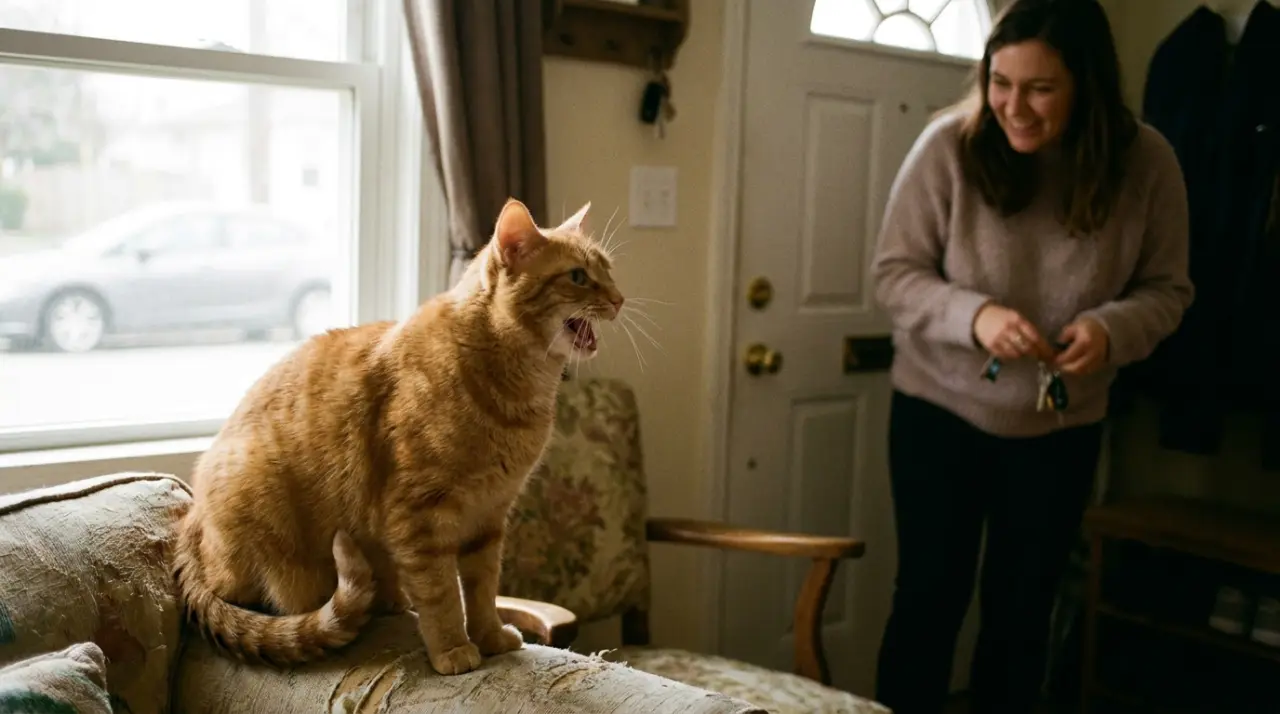
Not all cats meow when they hear your car—only the ones you've trained to do it.
Adult cats don't naturally meow at each other; it's a behavior they reserve almost exclusively for humans. If your cat has learned that vocalizing when you arrive gets a faster response—a quicker door opening, immediate petting, or food—it will start meowing the moment it hears your engine.
This is operant conditioning in action. You've reinforced the behavior without realizing it, and now your cat has added "announce owner's arrival" to its acoustic repertoire.
Some cats develop specific "greeting meows" that sound different from their food-request or play-solicitation calls. Owners can usually distinguish these vocalizations within a few weeks of adoption.
Interestingly, cats that live in multi-cat households vocalize less at owner arrival. The social dynamic changes the cost-benefit ratio of making noise.
The cats that don't meow aren't less attached—they've just learned a different strategy, which brings us to the next behavior...
#5 — It Runs to the Door (But Stops Short of It)
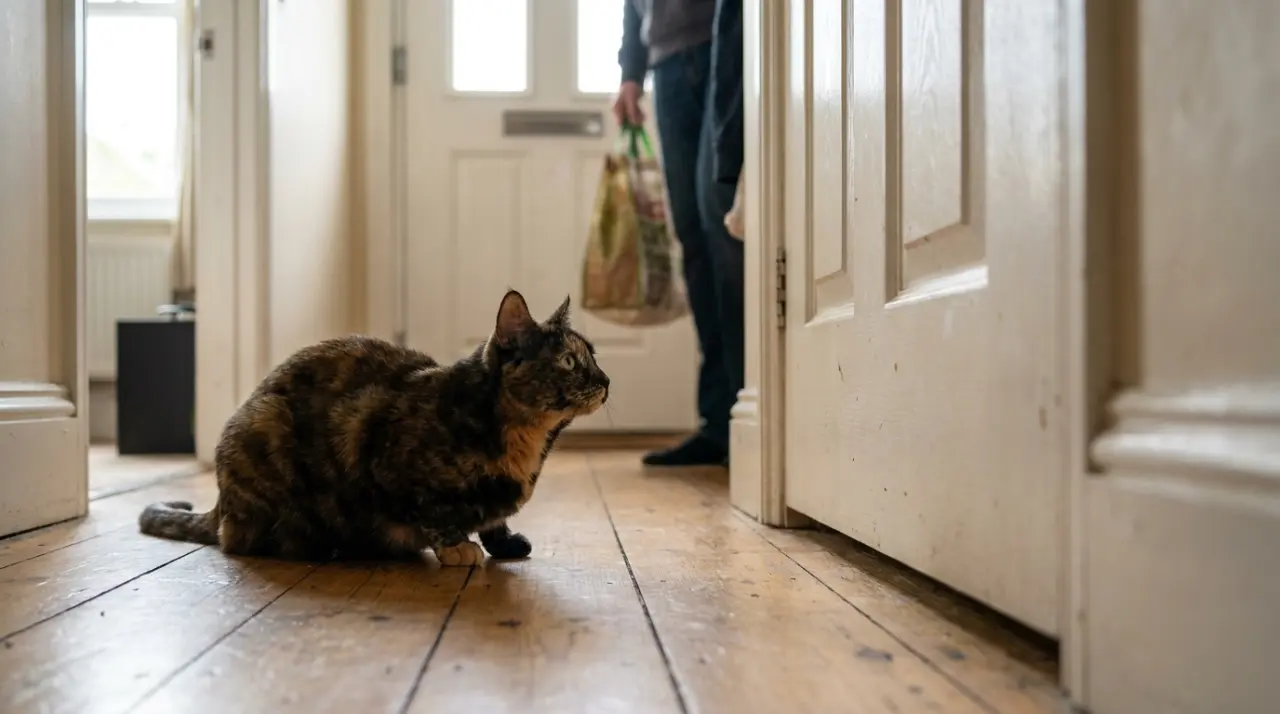
This is the behavior most owners recognize, but they usually misinterpret what it means.
Your cat hears the car, sprints toward the door, and then... stops about three to six feet away. It sits. It waits. It doesn't paw at the door or press against it. That stopping distance is deliberate.
Cats maintain what ethologists call a "safe greeting distance"—close enough to engage quickly, far enough to retreat if needed. Even with a trusted owner, the cat's spatial instincts require an escape buffer until it can see and smell you directly.
This behavior is more pronounced in cats that were adopted after kittenhood or that experienced early-life instability. Cats raised with their littermates until 12 weeks tend to close the distance more confidently.
If your cat does press against the door or paw at it, that's a learned behavior—usually reinforced by you opening the door faster when the cat "asks" that way.
But here's what happens if you take too long to come inside...
#4 — It Returns to Its "Safe Spot" If You Don't Enter Within 60 Seconds
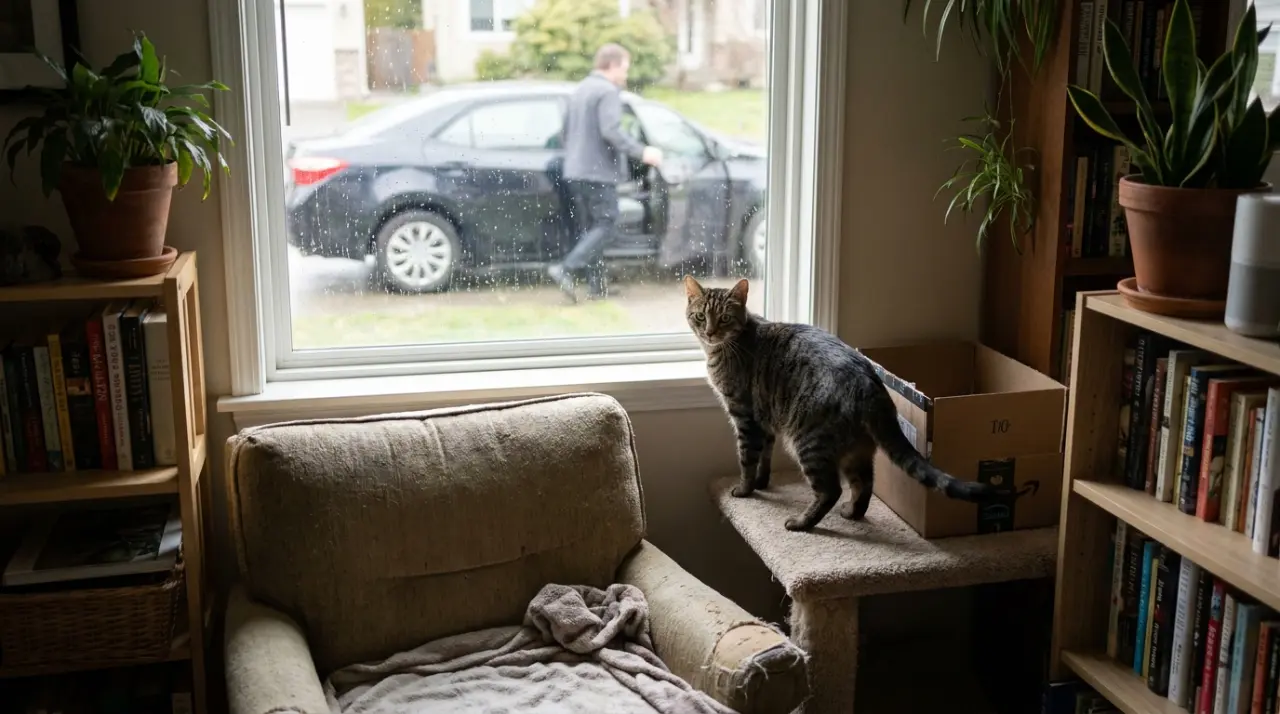
Cats operate on an internal expectation timer, and when you violate it, the behavior changes.
If you sit in your car checking your phone or unloading groceries from the trunk, your cat will eventually abandon its monitoring position and return to a resting spot—usually a bed, a favorite chair, or a high perch. This isn't spite. It's energy economics.
The heightened alert state your cat enters when it hears your car is metabolically expensive. Elevated heart rate, dilated pupils, muscle tension—it can't sustain that for long without a payoff.
Most cats have a tolerance window of 45 to 90 seconds. If you haven't appeared by then, the cat's brain reclassifies the event as a "false alarm" and shuts down the greeting protocol.
When you finally do walk in, the cat may not react at all. You've missed the window. Some owners interpret this as moodiness, but it's actually just a nervous system that's already cycled back to baseline.
A 2020 study on cat anticipation behavior found that cats whose owners had irregular arrival times showed 60% less door-oriented behavior than those with predictable schedules.
And speaking of that nervous system response...
#3 — Its Pupils Dilate and Its Tail Position Changes
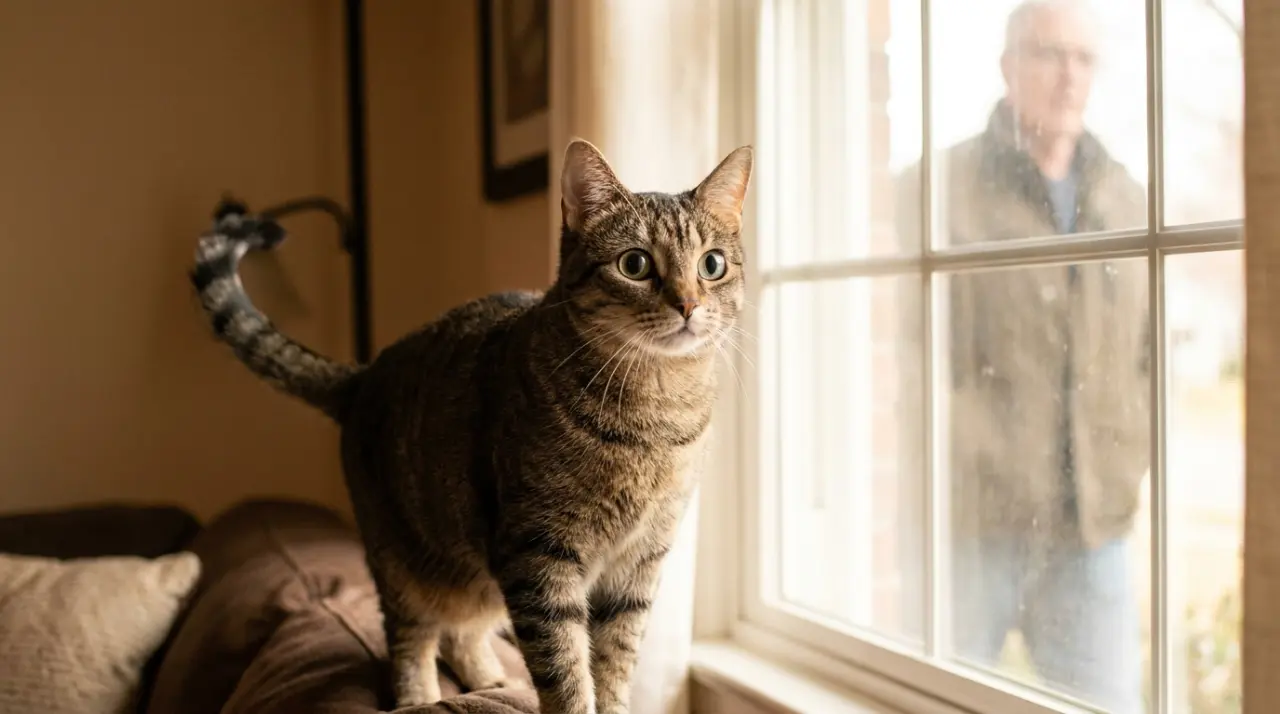
This is the physiological response most owners never notice because it happens so fast.
The moment your cat confirms the sound is your car, its pupils dilate—not to the full "startled" width, but to a mid-range dilation associated with anticipation and arousal. At the same time, its tail position shifts. A relaxed, low-hanging tail lifts to horizontal or slightly above, sometimes with a slight curve at the tip.
These are involuntary autonomic responses controlled by the sympathetic nervous system. Your cat is preparing for social interaction the same way you might feel your heart rate increase when you hear good news.
The tail position is also a signal to other cats in the household. A lifted tail with a relaxed curve means "non-threatening approach incoming." If the tail is up but bristled or thrashing, the cat is aroused but conflicted—common in cats with ambivalent attachment to their owners.
You can actually use pupil dilation to gauge your cat's emotional state during your arrival. Mid-range dilation plus a forward ear position equals positive anticipation. Mid-range dilation with flattened ears or backward rotation means stress or uncertainty.
But one behavior beats all of these for sheer emotional significance...
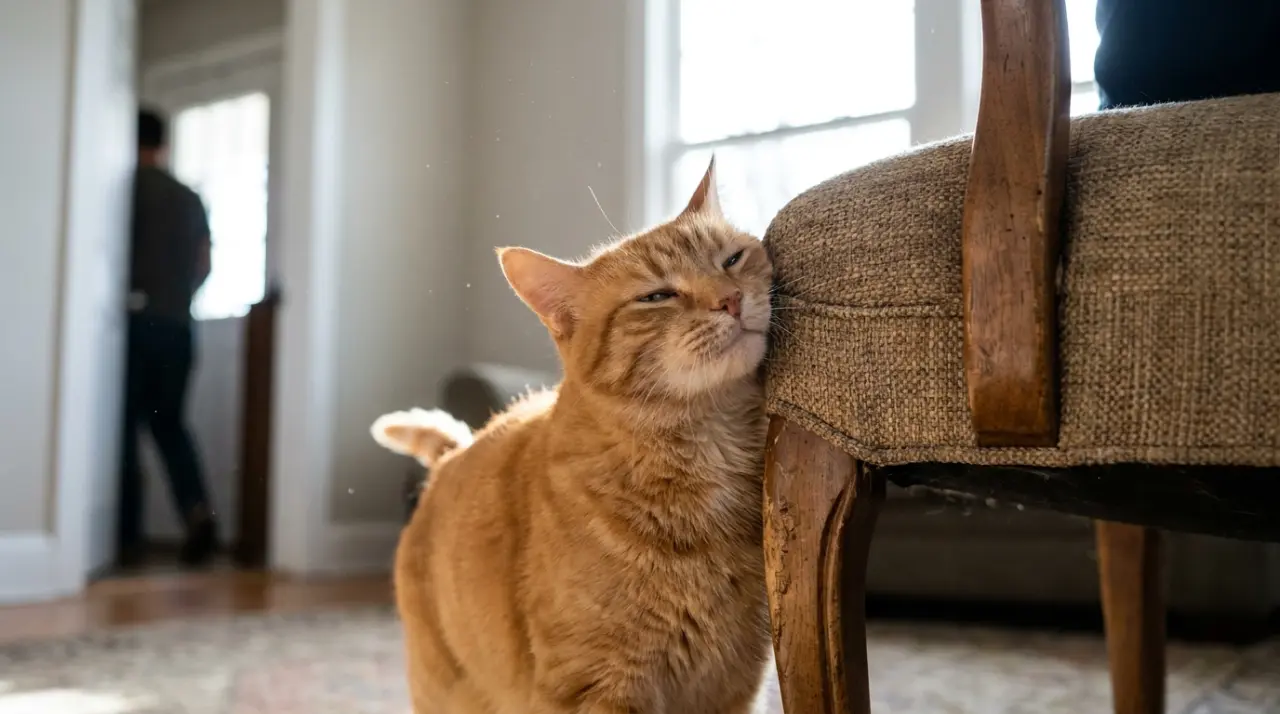
#2 — It Releases Pheromones by Rubbing Against Furniture
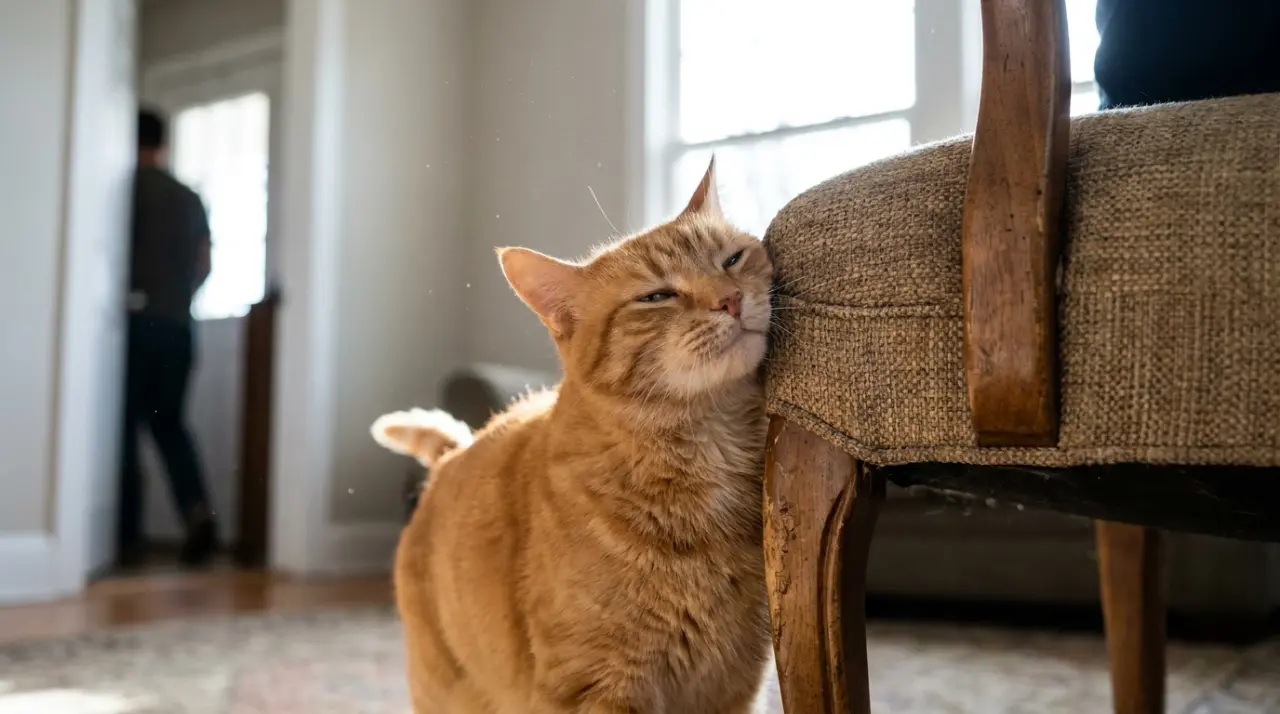
Before you even unlock the door, your cat is already marking the environment in preparation for your entrance.
Cats have scent glands on their cheeks, chin, forehead, and the base of their tail. When your cat hears your car and begins anticipating your arrival, it often rubs these glands against furniture, doorframes, or walls near the entry point. This behavior serves two functions: it self-soothes through familiar scent reinforcement, and it "refreshes" the territorial markers in the space where you'll first interact.
Feline pheromone research has identified at least five distinct chemical compounds in facial pheromones, including the "friendly" marker known as the F3 fraction. When your cat rubs its face on the doorframe, it's essentially re-establishing that this is a safe, positive space.
This behavior is more common in single-cat households. In multi-cat environments, the dominant cat may perform the marking, while subordinate cats skip it.
If your cat doesn't do this, it doesn't mean anything is wrong—some cats are simply less scent-driven in their greeting rituals. But if your cat used to do it and stopped, that can indicate a change in stress level or health status worth monitoring.
And finally, the single most significant behavior of all...
#1 — It Decides Whether to Greet You Based on What Happened Last Time
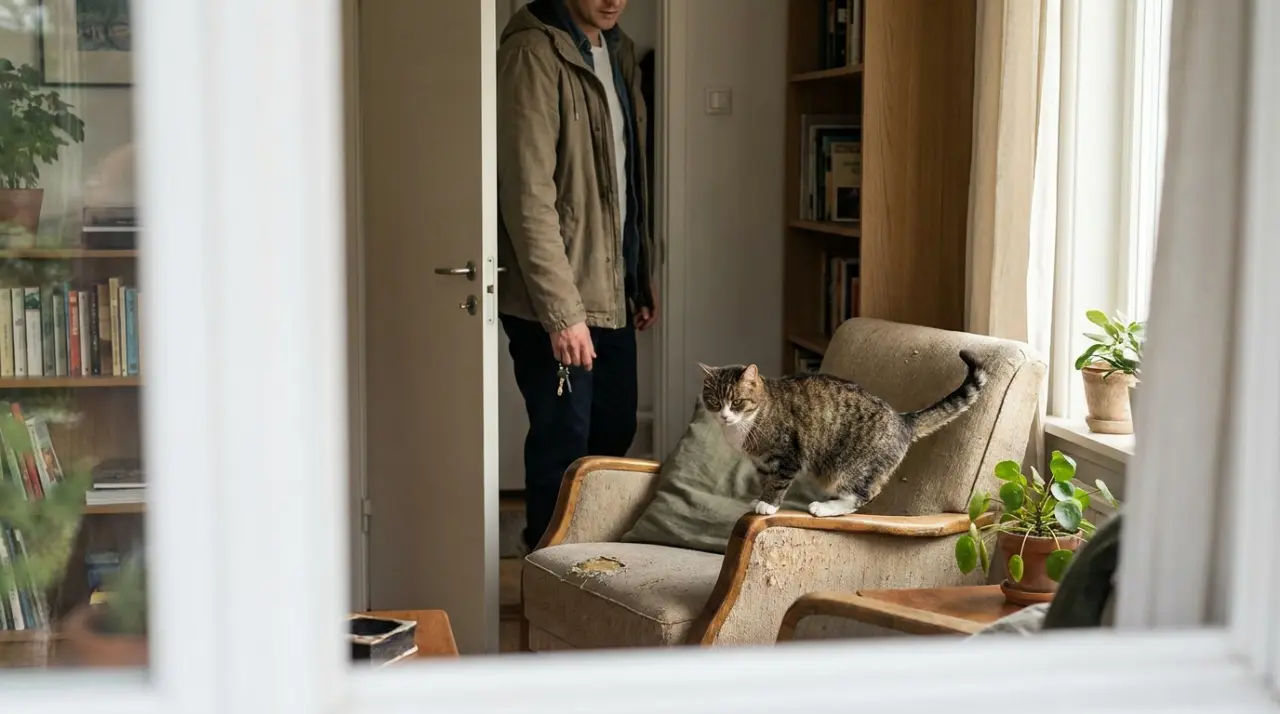
This is the behavior that reveals the real nature of your relationship.
Your cat doesn't just hear your car and react in the moment—it's running a predictive model based on recent history. If the last three times you came home you immediately fed it, played with it, or gave it attention, your cat will mobilize for a greeting. If the last three times you came home and ignored it, walked past it, or went straight to another room, your cat learns that arrival doesn't predict reward.
Cats are associative learners with excellent pattern recognition. Research from Oregon State University found that cats modify their social behavior toward owners within as few as two to three repetitions of a new pattern.
This is why your cat might greet you enthusiastically on weekdays (when you typically arrive and feed it immediately) but ignore you on weekends (when you come and go multiple times without a consistent routine).
Some owners report that their cat "knows" when they've had a bad day and keeps its distance. That's not emotional telepathy—it's your cat detecting subtle differences in your routine (slower walk to the door, heavier footsteps, different car door sound) and predicting a lower-reward interaction.
The truly fascinating part? Your cat is also factoring in its own recent behavior. If it knocked something off the counter two hours ago, it may avoid greeting you due to learned associations between "misbehavior" and owner mood—even though you don't actually know about the knocked item yet.
Your cat's greeting behavior is a real-time read on your relationship quality. If the enthusiasm is declining, the issue isn't your cat's personality—it's the pattern you've been reinforcing.
The Bottom Line
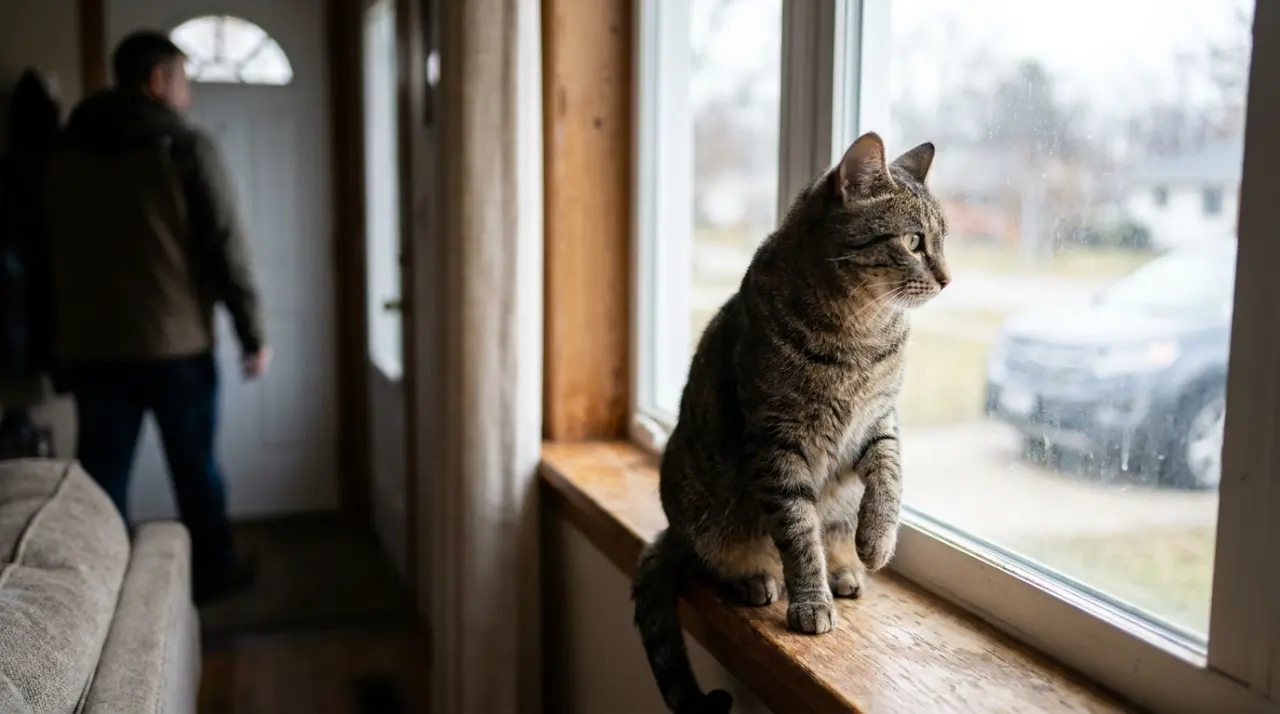
Your cat's response to your car isn't simple or automatic—it's a layered sequence of sensory processing, emotional regulation, and learned prediction. From the initial ear rotation to the final decision about whether to greet you, every step reveals something about how your cat experiences the world and its relationship with you.
The single biggest misconception cat owners have is that their cat's arrival behavior is fixed or personality-based. The research shows it's actually highly plastic and shaped by the consistency of your interactions.
If you want more enthusiastic greetings, the formula is straightforward: make the first 60 seconds after you walk in the door predictably positive for your cat. The behavior will shift within a week.
Did your cat do something we didn't cover when it hears your car? Drop it in the comments.