You’ve seen your cat stare at you while knocking your coffee mug off the table. You’ve watched them figure out how to open doors, cabinets, and somehow access treats you thought were hidden. Is this chaos, mischief, or something more calculated? Here’s the thing: your feline companion is far cleverer than most people give them credit for. Scientists are now peeling back the layers of feline cognition, revealing mental abilities that rival those of toddlers and even challenge our assumptions about what it means to be intelligent.
For too long, cats have existed in the shadow of dogs when it comes to intelligence research. They’ve been dismissed as aloof, untrainable, or simply uninterested in human interaction. Yet recent studies paint a strikingly different picture. Your cat isn’t ignoring you because they’re dumb. They’re making calculated decisions about when and how to engage. Let’s dive into the surprising world of cat cognition and discover just how sharp those whiskers really are.
Their Brains Are Wired for Complex Thinking
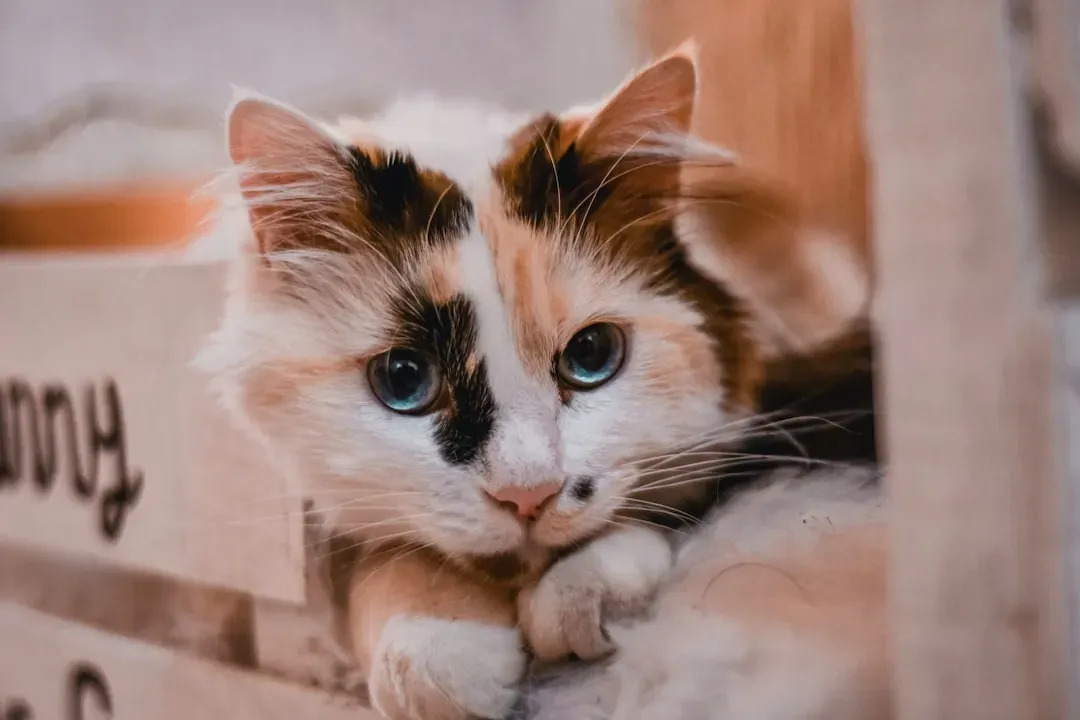
Your cat’s brain might be small, roughly the size of a walnut, yet it packs a serious cognitive punch. Cats possess approximately 300 million neurons in their cerebral cortex – nearly double that of dogs. That’s right, nearly twice as many. The structure matters too, not just the size.
Cat brains have an amazing surface folding and a structure that is about 90 percent similar to ours. This similarity means they’re processing information through pathways remarkably close to human ones. The cerebral cortex handles problem-solving, rational thought, and both short-term and long-term memory storage. So when your cat figures out your routine and waits by the door before you even grab your keys, that’s genuine cognitive processing at work.
Memory That Rivals Your Own

Cats possess impressive long-term memory capabilities, retaining recollections of events and locations for a decade or longer. Think about that. Your cat might remember that vet visit from five years ago, which explains the sudden disappearing act when the carrier comes out. Their memory isn’t just lengthy though.
It’s emotionally charged. These memories are often intertwined with emotions, allowing cats to recall both positive and negative experiences associated with specific places. This emotional tagging makes their memory more functional for survival. Studies show cats have a working memory span of 16 hours compared to dogs’ 5 hours, and research shows 50 cats could remember which bowl contained food even after being removed from the area for 15 minutes.
They Learn by Watching You
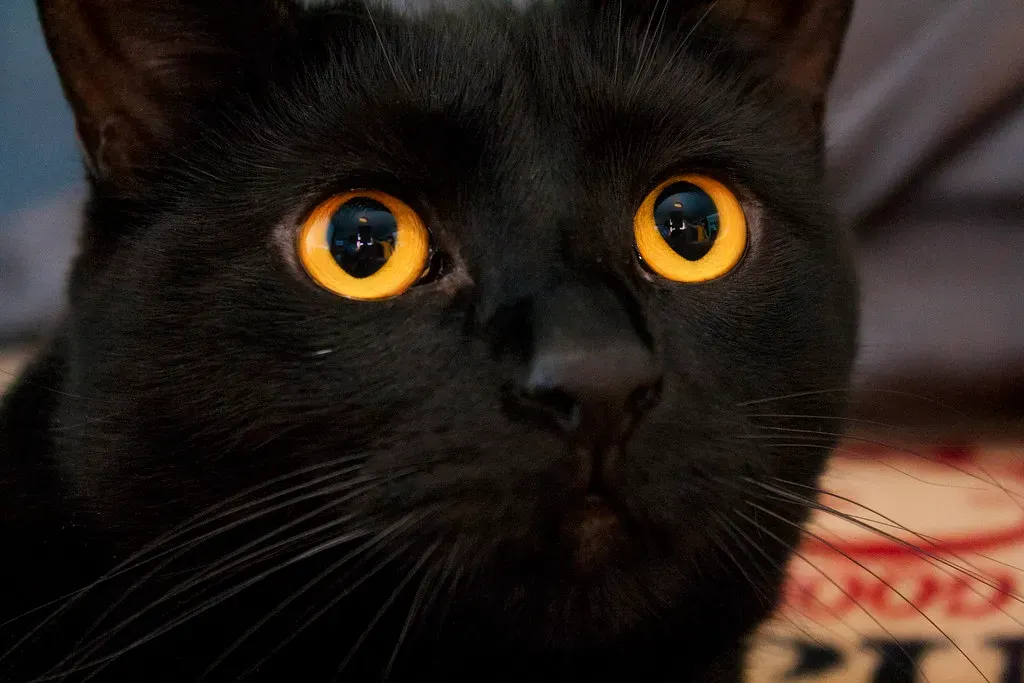
An adult cat’s intelligence is comparable to that of a two- to three-year-old child, since both species learn through imitating, observing, and experimenting. Your cat is literally studying you. Simply by watching their owners and mirroring their actions, cats are capable of learning human-like behaviors like opening doors and turning off lights.
One study demonstrated this beautifully. Kittens that observed their mothers performing an experimentally organized act were able to perform the same act sooner than kittens that observed a non-related adult cat, and sooner than ones who, placed in trial and error conditions, observed no other cat performing the act. This is observational learning at its finest. Your cat isn’t just randomly pawing at things. They’re experimenting based on what they’ve seen work before.
Problem-Solving Skills That Surprise Researchers

Early research by psychologist Edward Thorndike in the late 1800s used puzzle boxes to test animal learning. Thorndike’s experiments demonstrated that cats could learn to manipulate levers and latches through trial-and-error, thereby revealing their capacity for associative learning. Fast forward to today, and the findings have only gotten more impressive.
Recent studies show cats can navigate transparent fences and solve detour problems. If cats recognize both sides of the obstacle represent as an equally solvable task, they freely change their spatial approach to solve the task. They’re not rigidly following one path. They adapt their strategy based on what they understand about the problem. That’s flexible thinking, something many assume only primates possess.
Object Permanence: They Know What You’re Hiding
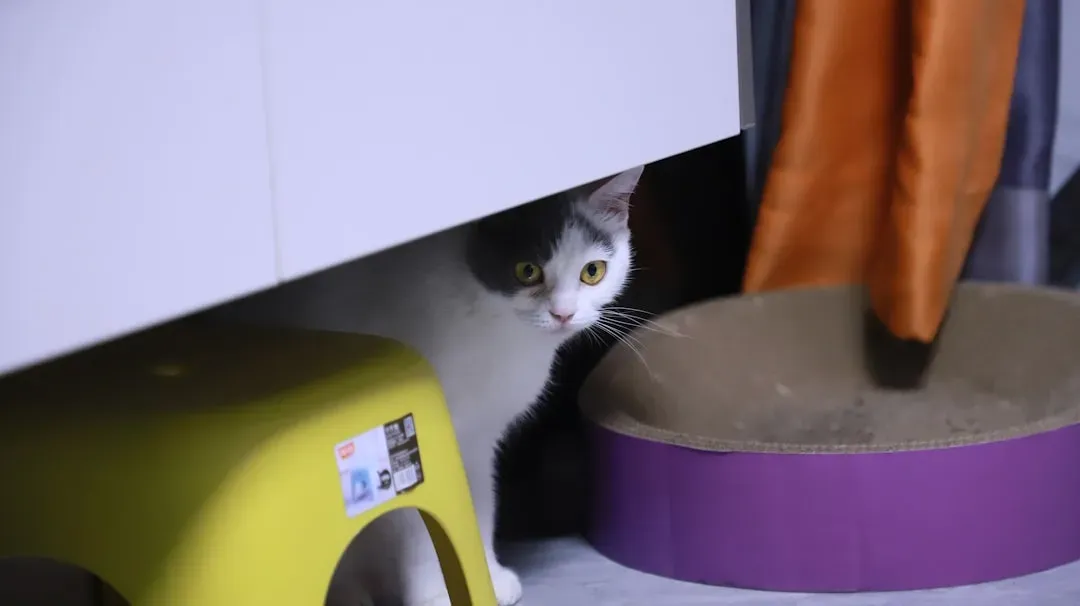
In controlled experiments, cats demonstrated fully developed concepts of object permanence, indicating that their sensorimotor intelligence is complete. Object permanence is the understanding that things continue to exist even when you can’t see them. Human babies don’t develop this until they’re several months old.
Your cat has it mastered. Cats are able to hold an object in mind and reason where it may be; stash toys in a cabinet or treats in a drawer where your cat can’t see them, and he still knows they’re there. This isn’t just instinct. It’s mental representation, the ability to hold an image or concept in mind without sensory input. Pretty sophisticated stuff for a creature that spends half the day napping.
Social Intelligence: Reading Human Emotions
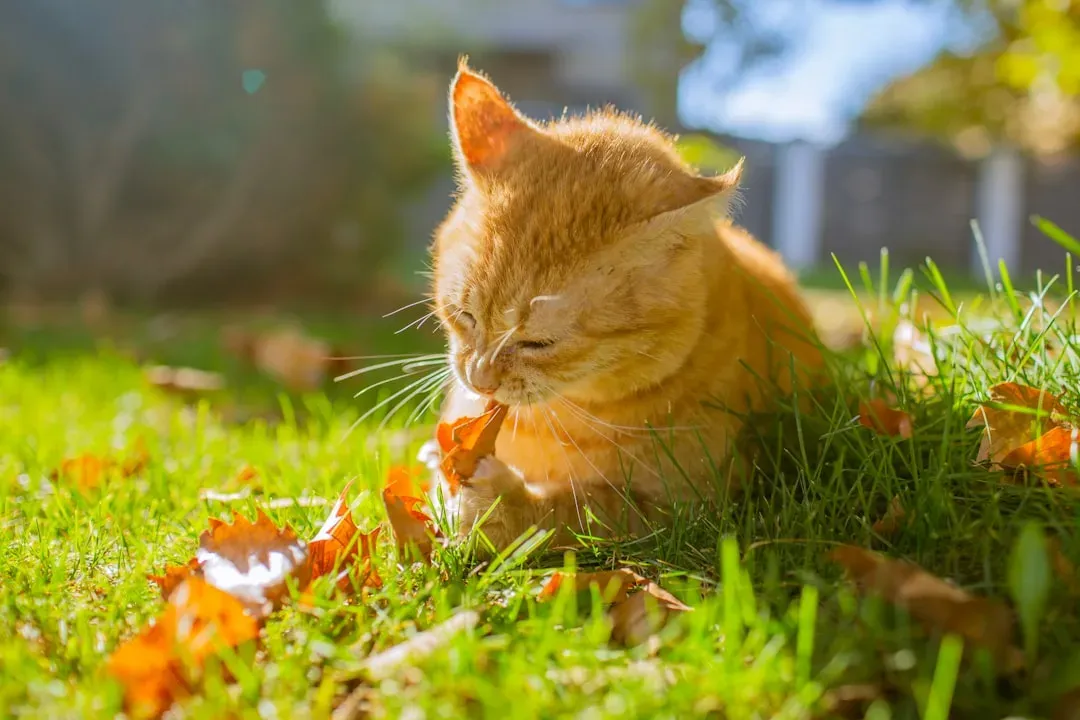
After years when scientists largely ignored social intelligence in cats, labs studying feline social cognition have popped up around the globe, and a small but growing number of studies is showing that cats match dogs in many tests of social smarts. They’ve been underestimated for too long. Cats can follow human pointing gestures, read gaze direction, and even discriminate between human emotional expressions.
Recent research has shown that cats have remarkable social cognitive abilities; they can follow human pointing and gazing cues, and they can discriminate human emotional expressions and attentional states. Your cat knows when you’re sad, stressed, or happy. They adjust their behavior accordingly, though they might choose not to respond the way a dog would. That’s not a lack of intelligence. It’s selective social engagement, which is actually a more complex cognitive skill.
Socialization Boosts Their Problem-Solving Ability
Here’s where it gets interesting. Cats with higher socialization scores were more likely to solve the problem in puzzle box studies. Age had an effect on solving the puzzle – such that younger cats were more likely to get the treat out of the box on their own than older cats. This suggests cognitive flexibility peaks early and can be enhanced through positive human interaction.
Some cats can pass the tests, suggesting these abilities are inherent to the species; if you take a well-socialized, calm cat, researchers think it’s going to perform similarly to a dog. The key word is “well-socialized.” Cats who trust their environment and humans perform better cognitively, which tells us something important: emotional state and cognitive performance are deeply intertwined in felines.
They Understand Cause and Effect (Mostly)
While they excel in observational learning and problem-solving, studies conclude that they struggle with understanding cause-and-effect relationships in the same way that humans do. This is one area where cats don’t quite match human cognition. However, their understanding isn’t absent. It’s just different.
Cats grasp immediate causality. They understand that pushing something makes it fall, that meowing gets attention, that scratching a door might get it opened. The nuance they miss is more abstract causal chains or delayed consequences. Still, for an animal that evolved as a solitary hunter, their level of causal reasoning is impressive. They don’t need to understand quantum physics. They need to catch mice and navigate complex social environments, and for that, their cognitive toolkit is perfectly adapted.
Spatial Memory That Guides Their Every Move

Cats possess extraordinary spatial memory. Working memory must be used to avoid obstacles that are not visible at the time of hindleg stepping; this memory is very precise and surprisingly long-lasting, lasting many minutes, and is used to precisely guide the movements of the hindlegs. This means when your cat walks over something with their front paws, they remember its exact location and height when their back paws follow seconds or even minutes later.
This spatial cognition extends to their territory. Cats build mental maps of their environment with remarkable detail. A predictive positive relationship connects spatial memory and the use of social referencing with the caregiver, highlighting the importance of the interplay between cognitive domains in sustaining complex behaviors. They know where every hiding spot is, where the sunny patches appear throughout the day, and the fastest routes through their domain. That’s not luck. That’s sophisticated spatial processing.
The Challenge of Studying Feline Intelligence
Let’s be real: cats make terrible research subjects. Some felines either didn’t cooperate or dived under the sofa; other cats scratched and wriggled their way out of their owners’ arms, and the team started with 99 cats but got usable data on only 41. This is why cat intelligence has been understudied for so long. They simply refuse to play along.
“If you want results on one cat,” one researcher says, “you have to test three”. This isn’t because cats are stupid. It’s because they’re selective about when and why they engage. Many cats won’t pass social intelligence tests as well as dogs, but that’s likely because they’re in an unfamiliar environment or with unfamiliar people, which can stress them out. When tested in comfortable environments with familiar people, cats perform remarkably well. The problem wasn’t the cats. It was our testing methods.
Conclusion: Respecting the Feline Mind

Cats clearly have a superior ability to learn new information, mesh it with existing information, recall it, and use that information in other situations; this cognitive ability makes them card-carrying members of the highly intelligent class. Your cat isn’t being difficult. They’re being discerning. They’re not ignoring your commands. They’re evaluating whether compliance benefits them.
The evidence is overwhelming. Cats possess memory systems that span decades, problem-solving abilities that adapt to novel situations, social intelligence that reads human emotions, and spatial awareness that navigates complex environments with precision. They learn through observation, experiment with trial and error, and form lasting memories tied to emotional experiences. Next time your cat outsmarts the childproof lock on the treat container, don’t be surprised. You’re living with a furry little genius who’s been hiding their intelligence behind those innocent eyes all along. What unexpected clever behavior has your cat shown you lately?