You watch your cat crouch low behind the sofa, rear end twitching, pupils blown wide open like dark moons. She looks ridiculous. She also looks absolutely terrifying. That fluffy ball of purring fur you bought treats for last Tuesday is, right now, rehearsing one of nature’s oldest and most efficient killing sequences. In your living room. During a Tuesday afternoon.
It sounds dramatic. Honestly, it kind of is. The truth about why your cat bats that crinkle ball across the kitchen floor at 2 AM, chatters like a little gremlin at the window, or bodyslams your ankles on your way to the bathroom is far more fascinating than most people realize. There is ancient predator logic hiding behind every silly pounce and every half-hearted ambush on your feet.
So let’s dive in, because what you’re about to discover about your pet might surprise you.
Your Cat Is a Descended Apex Predator in Pajamas
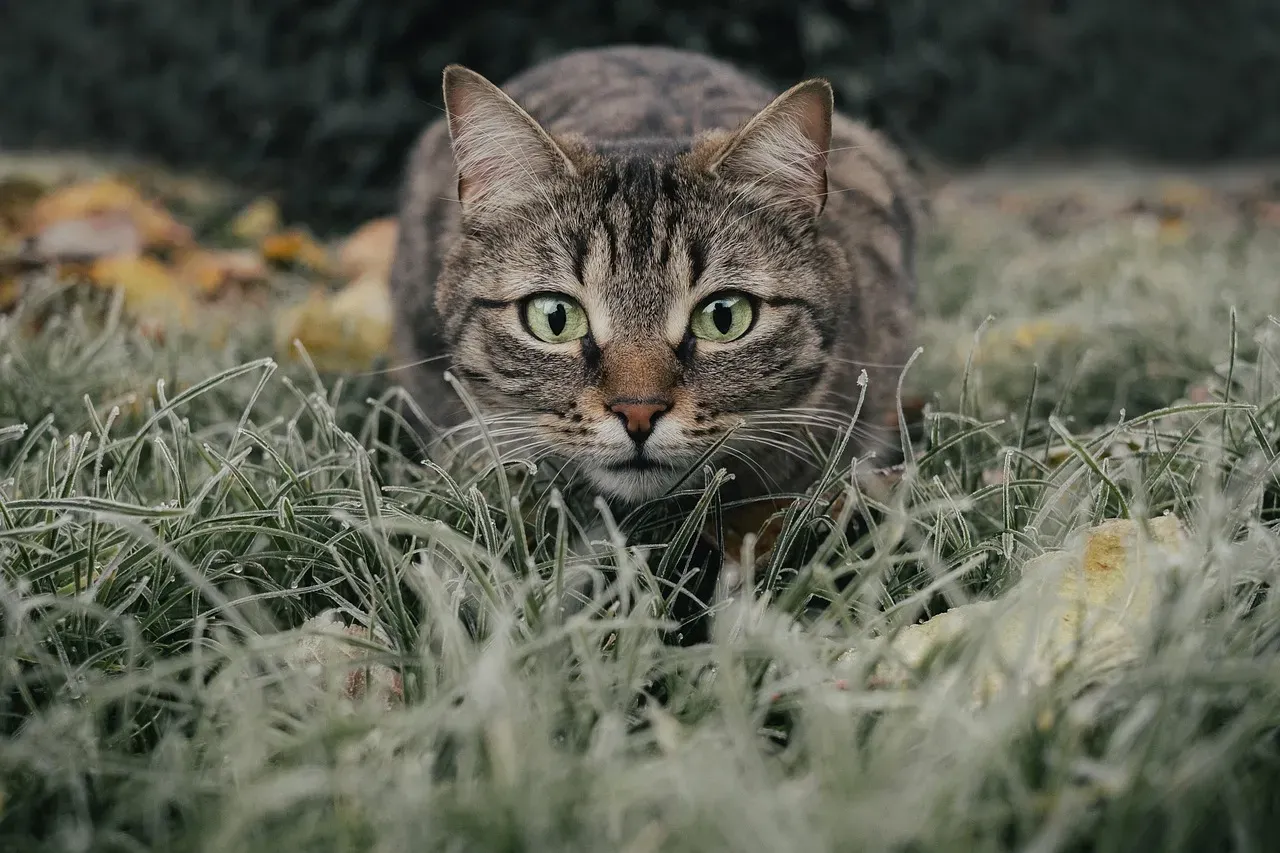
Let’s be real about something most cat owners choose to ignore. That creature napping on your couch is not fully domesticated. Domestic cats are a predatory species, and much like their wild ancestors, they are solitary hunters. Unlike dogs, who were gradually shaped and reshaped by thousands of years of selective breeding for companionship and obedience, cats took a different path entirely.
Until quite recently, cats were mainly kept to control rodent populations rather than as pets, and during this time, only the best hunters survived and reproduced, meaning your pet cats today descended from the most adept hunters. There has been very little selective breeding of cats, so their instinctive need to hunt remains incredibly strong. Think about that for a second. Your cat is, in many real ways, still a wild animal who just happens to tolerate your presence and your lap.
The Hunger Myth: Why a Full Bowl Changes Nothing
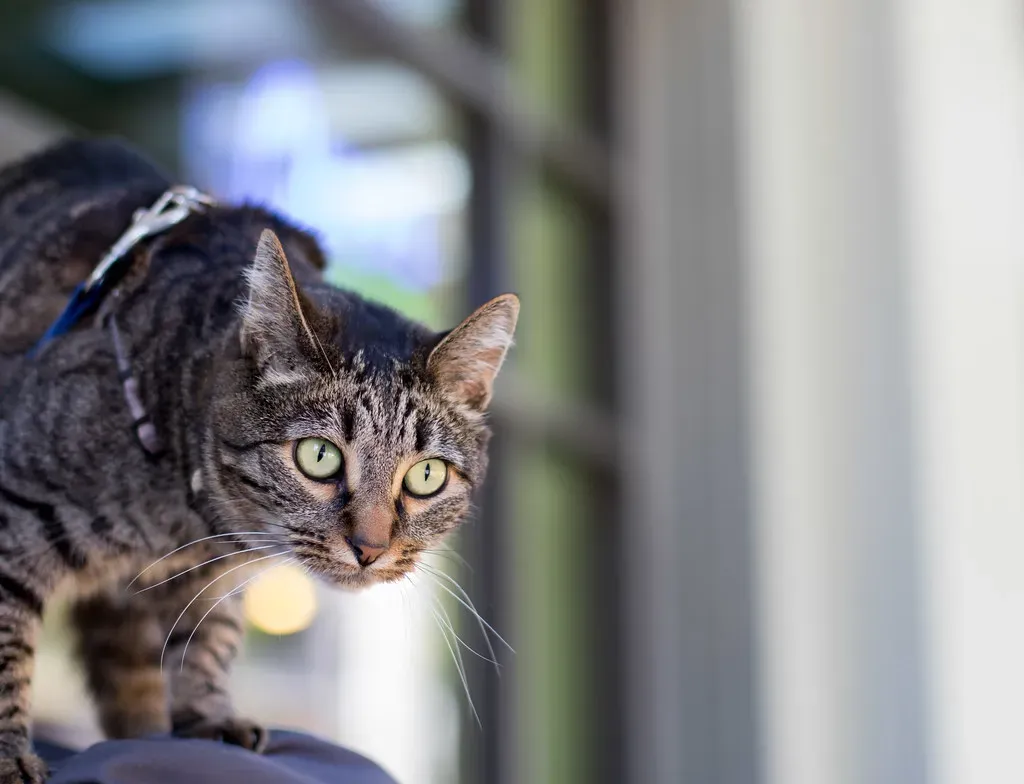
Here’s the thing that surprises most people. You might think that keeping your cat well-fed is enough to suppress that dangerous internal drive. You’d be wrong. Cats don’t need to be hungry to hunt. It’s the sound and sight of moving prey that provides the stimulus to chase and capture, a hardwired behavior as natural to the cat as purring. You could serve your cat a gourmet five-course meal, and ten minutes later, she’d still lose her mind over a piece of string you dragged across the floor.
The desire to hunt is not governed by hormones and therefore does not diminish after neutering. That surprises people too. Many assume that getting a cat fixed will take the edge off all those wild instincts. It simply does not work that way. Even if cats that are fed hunt less than those who have to survive, the feeling of being full and well fed does not cause a cat to give up hunting altogether. The drive runs too deep, and it has been doing so for millions of years.
The Four-Step Hunting Ritual Hiding Inside Every Play Session
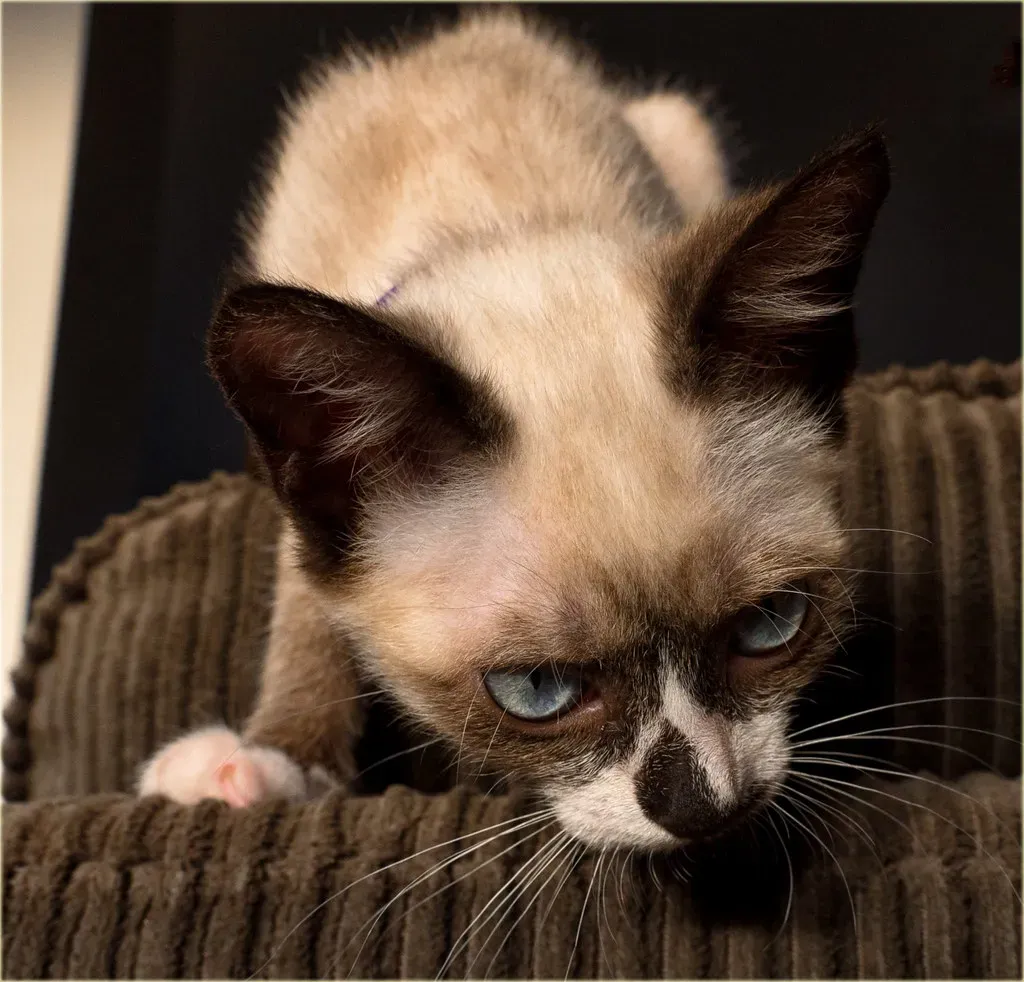
Your cat’s play is not random chaos. It follows a precise, ancient script. Cats are instinctively driven to stare, stalk and chase, pounce and grab, and deliver a kill bite. Every single time your cat plays, you are watching a compressed version of this sequence. It is almost like a theatrical rehearsal with a toy mouse cast in the starring role.
The hunting sequence unfolds in four distinct phases: the intense stare that locks onto movement, the slow-motion stalk with belly low to the ground, the explosive pounce with perfect timing, and finally the neck bite that would dispatch live prey. Each step has a specific purpose refined over countless generations of wild ancestors. Each segment of the predatory sequence, from stalking through to close-quarters interaction with the prey, is rewarding in itself, whether or not the cat’s efforts eventually result in the consumption of food.
Kittens Learn to Kill by Playing First
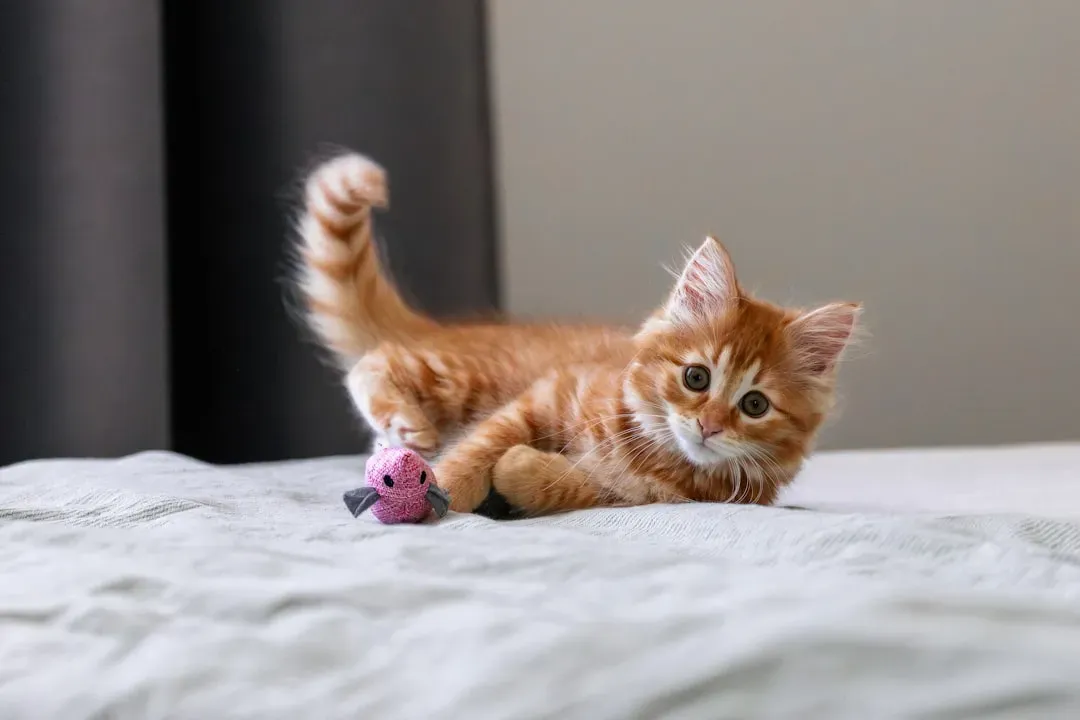
That adorable wrestling match between two kittens you once watched and shared on social media? That was actually a very serious training exercise. Playtime for cats isn’t just for fun, it’s serious business. The playful antics of batting, pouncing, and using claws are actually mini hunting lessons, helping kittens develop their hunting skills. Even if it looks like chaos from the outside, there is real functional learning happening underneath all that fur-flying nonsense.
In many instances, hunting is a learned behavior first taught by their mother and then reinforced and honed by playing with their littermates. Studies have shown that kittens who had the opportunity to observe their mothers hunt become better hunters than kittens who didn’t. Still, nature builds in a safety net. Most kittens who never see their moms hunt can still instinctually figure it out on their own. The blueprint is already there. Play simply sharpens it.
The Sensory Arsenal: A Hunter Built From the Inside Out
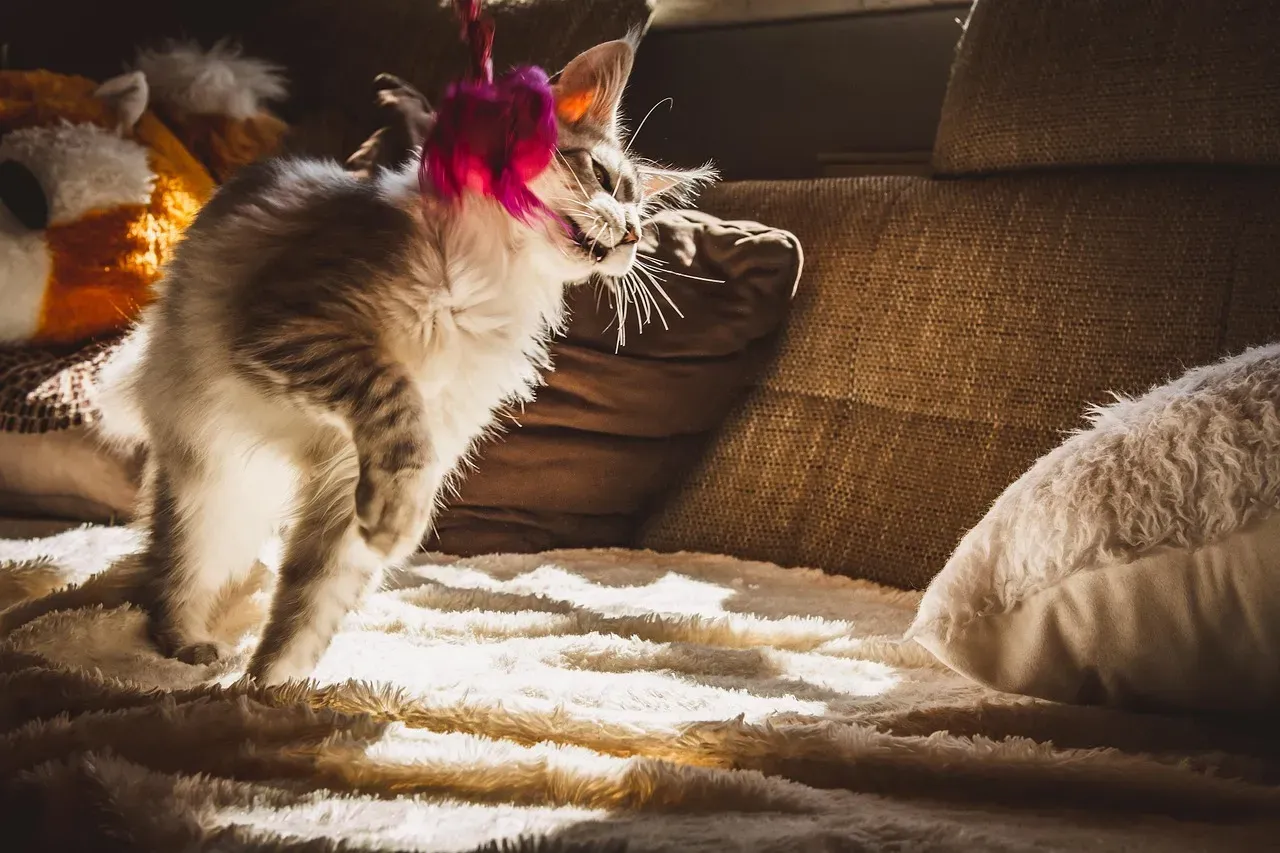
You probably assume your cat’s eyes, ears, and whiskers are just charming physical features. They are actually precision hunting instruments. Cats are good at detecting movement in low light, have an acute sense of hearing and smell, and their sense of touch is enhanced by long whiskers that protrude from their heads and bodies. These senses evolved to allow cats to hunt effectively at dawn and dusk. Every part of that sleek little body was designed with one core purpose in mind.
Humans and cats have a similar range of hearing on the low end of the scale, but cats can hear much higher-pitched sounds, up to 64 kHz, which is 1.6 octaves above the range of a human, and 1 octave above the range of a dog. That means your cat hears sounds you have absolutely no awareness of. High speed photography reveals that when a cat is unable to see its prey because it is too close to its mouth, its whiskers move so as to form a basket shape around its muzzle in order to precisely detect the prey’s location. I think that single fact alone reveals just how engineered for hunting these animals truly are.
That Strange Chattering at the Window Is Pure Ancient Strategy
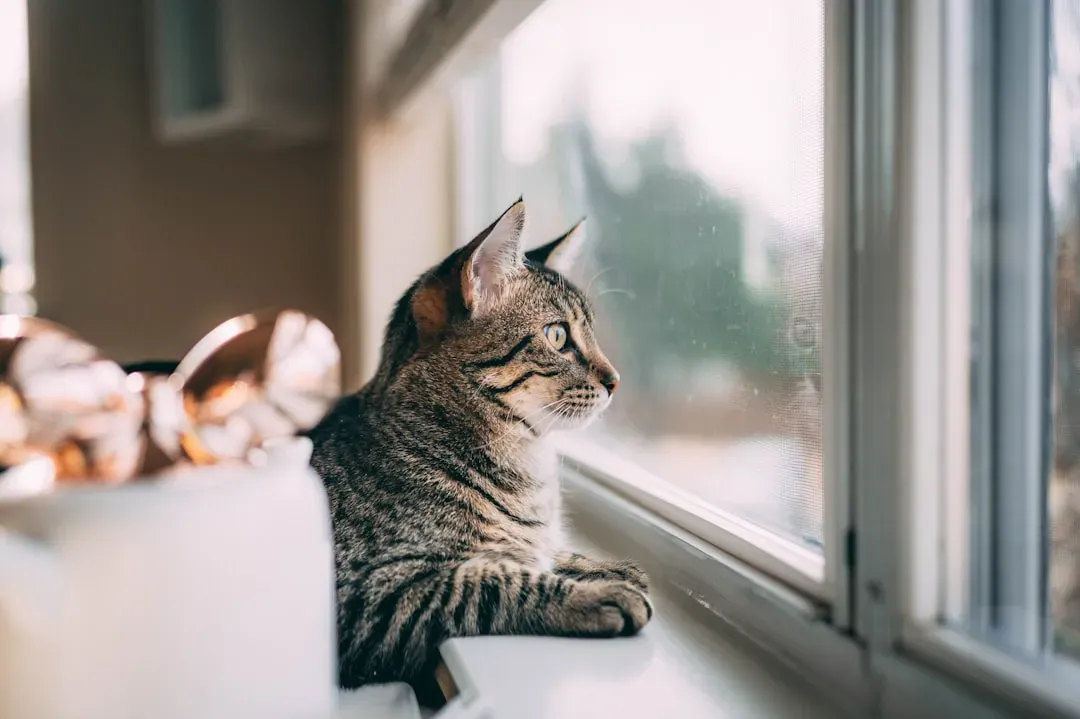
You have seen it. Your cat sits at the window, spots a bird outside, and starts making that bizarre rapid-fire clicking sound with her jaw. It is hilarious. It is also genuinely fascinating from a scientific standpoint. If your cat gets excited about birds and squirrels outside windows, this can initiate something called their prey sequence, a series of behaviors that cats perform when they hunt. The first step of this prey sequence is staring at prey animals and getting excited, which is where your cat’s chirping or chattering might come in. The second step is stalking or chasing, then comes pouncing or grabbing, and lastly comes the killing bite.
There is even a wilder theory about what that chattering actually is. Wildlife Conservation Society researcher Fabio Rohe was studying a group of pied tamarin monkeys in their natural habitat in the Amazon forests of Brazil. Rohe and his fellow scientists were recording monkey vocalizations when a wildcat prowled onto the scene. The wildcat began making calls identical to those of the monkeys, mimicking their vocalizations, which was the first recorded instance of a wildcat in the Americas mimicking the sound of its prey. So that clicking sound your cat makes might actually be an ancient vocal hunting trick, not just frustrated grumbling through the glass.
Why Your Cat “Plays” With Prey Instead of Just Killing It
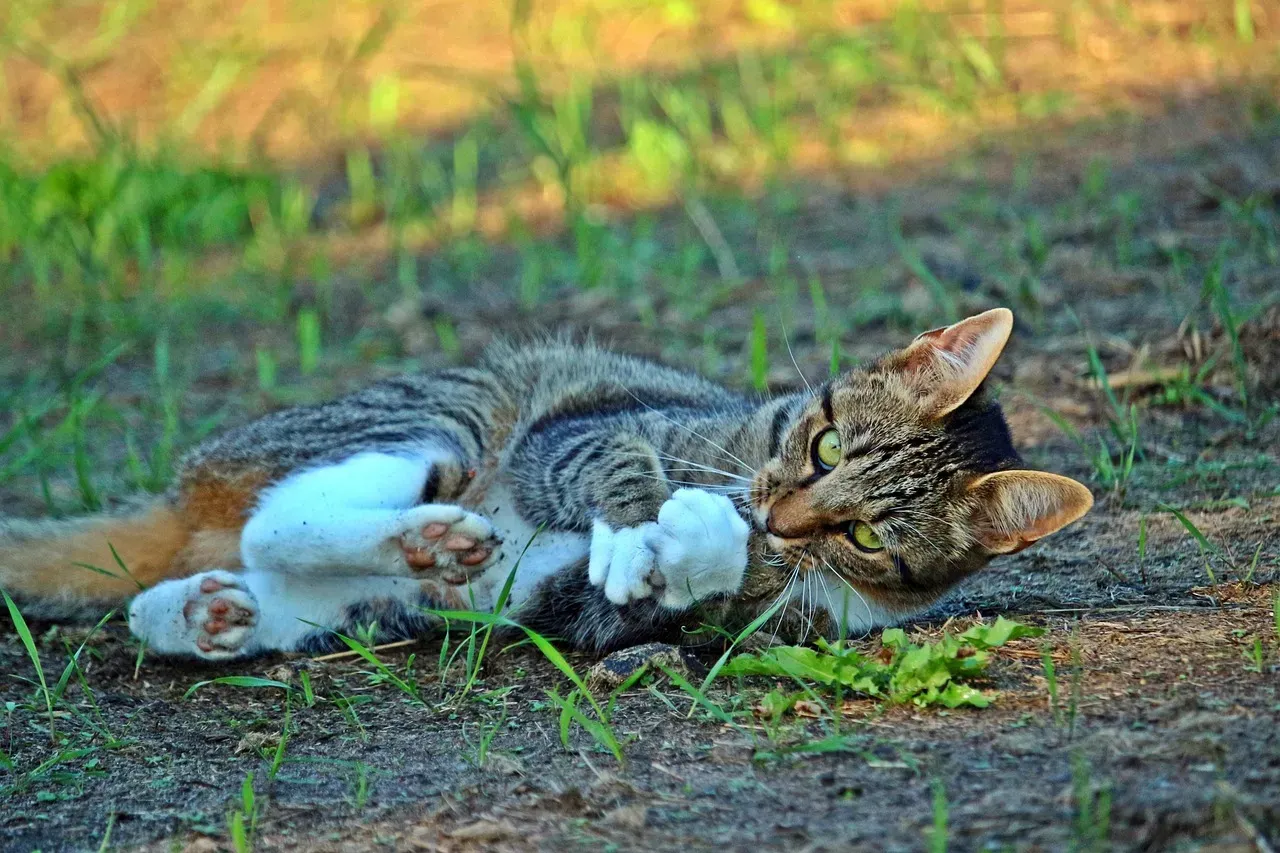
This one confuses and sometimes disturbs people. You see your cat bat a caught mouse around for what seems like forever before doing anything decisive. It looks almost cruel. Honestly, it is more strategic than it appears. Cats look like they’re playing, but they’re only trying to wear their prey out so they can kill them without injuries. An injured rat or bird can quickly strike the cat’s eyes or face if it comes too close, and the cat understands the danger and begins hitting its target as a survival tactic.
Some feline researchers believe that while playing with prey is related to the cat’s survival instinct, it occurs more with pet cats because they have a pent-up urge to hunt. Since house cats are typically fed by their owners, they’re not always hungry enough to consume their prey, but they still enjoy the thrill of hunting and going through the motions. In other words, your indoor cat is running a full hunting simulation, right down to the dramatic finale, even when there’s no real survival need attached to it at all.
Play Without Completion Is Quietly Stressful for Your Cat
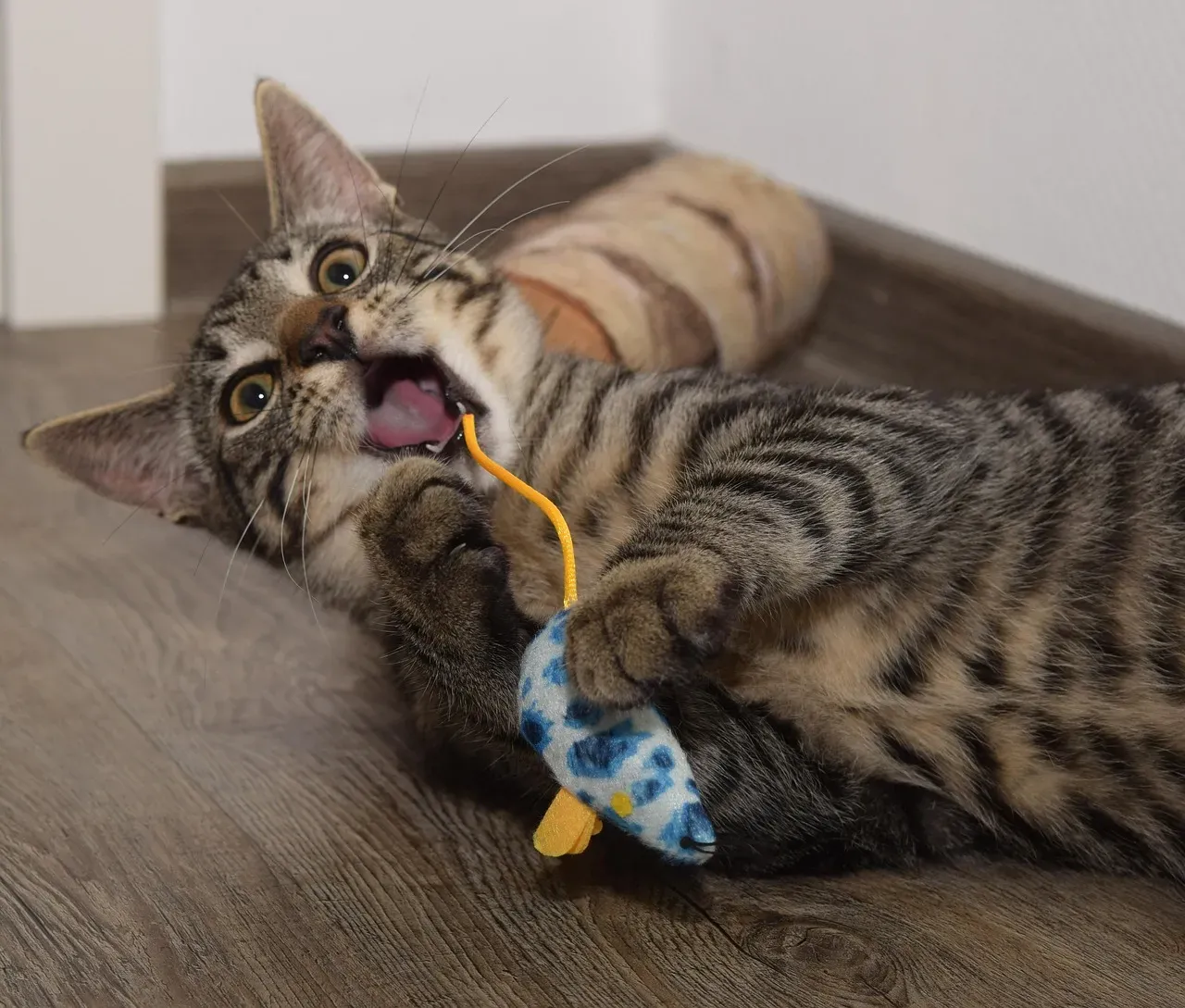
Here is something most people genuinely do not know, and it matters. When your cat plays but never gets to “complete” the hunt, it can actually create real frustration and stress. Automatic toys can be frustrating for cats, because they never get the satisfaction of actually catching and killing their prey and are thus denied a full circuit of their prey sequence. Think of it like being handed a puzzle with the last three pieces missing, every single day. Eventually, that adds up.
Each play session should be about 10 to 15 minutes long and allow the cat to act out their full prey sequence multiple times. Ending the session matters just as much as starting it. Eating is part of the larger sequence of hunting, eating, grooming, and sleeping, so the more you are able to honor this natural progression in your cat’s day, the more satisfying they will find your play sessions and the happier they will be. A small treat at the end of playtime is not spoiling your cat. It is completing the circuit her ancient brain was wired to need.
How You Can Become Your Cat’s Best Hunting Partner
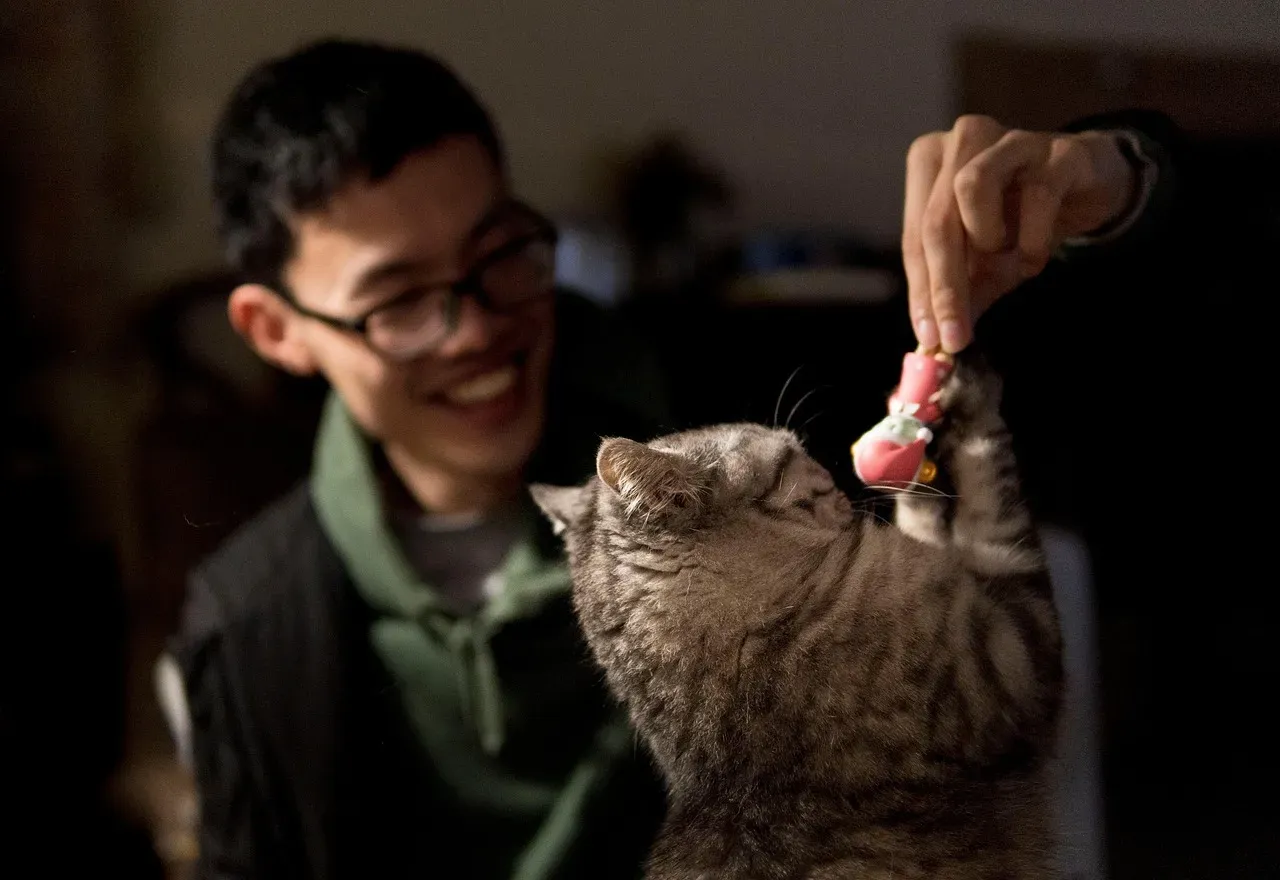
Now that you understand what’s actually going on underneath all that adorable chaos, you can start playing with your cat in a way that genuinely satisfies her. Most cat play mimics hunting behavior, including chasing toys, stalking laser pointers, and pouncing on moving objects. These activities satisfy their prey drive and help keep them mentally and physically engaged. The trick is choosing the right format and actually following the sequence your cat is biologically primed to complete.
At least one play session a day that lasts about 10 to 20 minutes, using an interactive wand toy, is recommended. Some cats might do better with more frequent playtimes that are shorter in length, so playing around with time and duration to establish your cat’s particular preferences is key. Also, keep in mind that short, frequent play sessions most closely resemble a cat’s natural predatory pattern, and choosing toys that look and feel like their natural prey increases engagement significantly. Variety matters too. Different textures and movements keep things exciting and genuinely challenging for a brain that was built to solve the problem of catching prey that fights back.
Conclusion
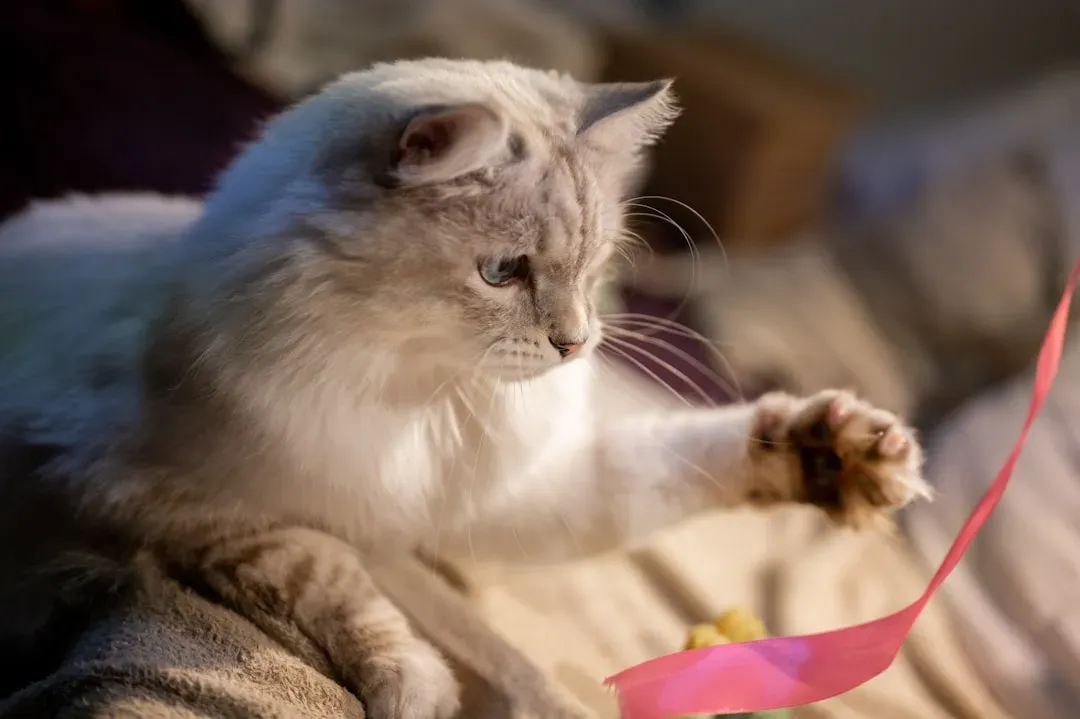
There is something quietly extraordinary about watching your cat stalk a feather toy across the kitchen floor. In that moment, you are not watching a pet being silly. You are watching millions of years of evolution play out in real time. Every crouch, every twitch, every single pounce is an echo of a wild ancestor who hunted alone in the dark to survive.
Understanding this does not just make your cat more interesting, though it absolutely does that. It also makes you a better companion to her. When you engage her prey sequence with intention, when you let her “complete the hunt” and follow it with a treat, you are giving her something genuinely meaningful. You are honoring what she actually is. Not just a cute housemate. A living, breathing, ancient hunting machine who also happens to sleep on your clean laundry.
Next time your cat locks eyes with you from across the room, wiggles that rear end slowly, and launches herself at your sock, try not to take it personally. She’s just practicing. What do you think, did you ever realize just how deep that instinct really runs? Tell us in the comments below.