Most of us assume that when a cat stares out the window, they’re seeing more or less what we see. A tree. A bird. A passing car. Maybe some clouds. But honestly, that assumption couldn’t be further from the truth. The world as a cat experiences it is a completely different place – one shaped by extraordinary senses, evolutionary fine-tuning, and biological tools that humans simply don’t have.
Think about it this way. Your cat doesn’t just notice more. They process reality in a fundamentally different way. Their brain, eyes, ears, nose, and even their skin are wired for a world we can barely imagine. So if you’ve ever wondered what’s actually going on inside that fluffy, enigmatic head – you’re about to find out. Let’s dive in.
A Color World That Looks Nothing Like Yours
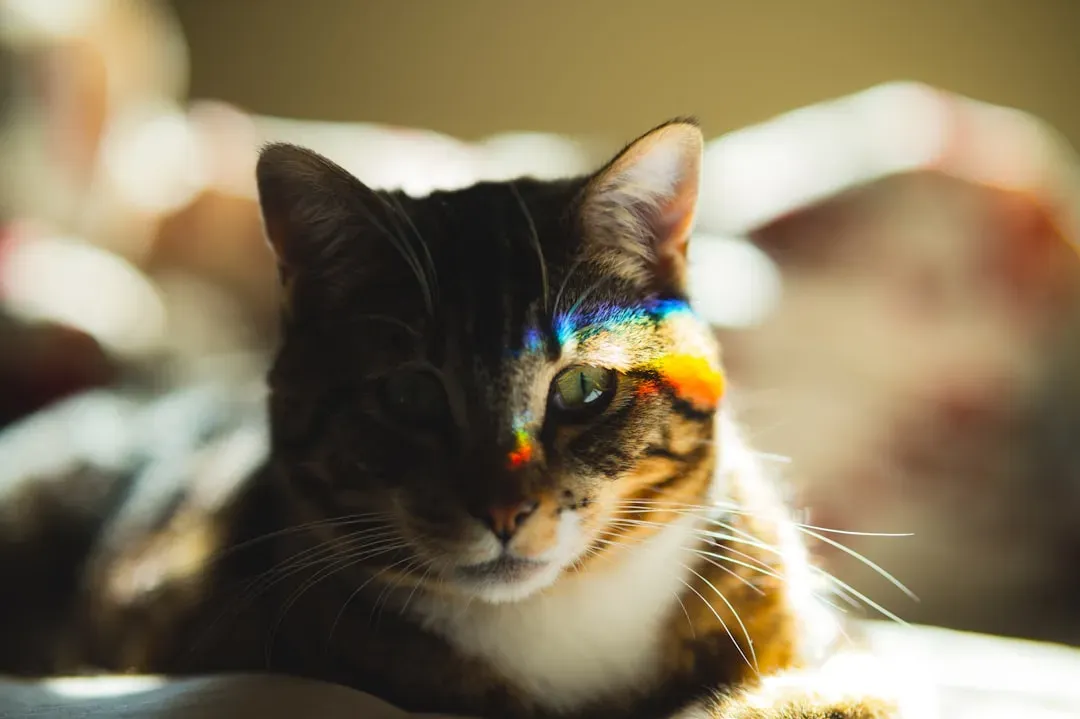
You probably imagine your cat seeing the world in full, rich color – the way you do. But that’s not quite right. Your cat’s color vision is similar to that of a person with red-green color blindness, and they have fewer cone cells in their eyes than you do, with only two types compared to your three, which significantly limits their color perception.
Your cat can distinguish between blue and yellow colors, may perceive some shades of green and gray, and sees muted tones throughout their environment. Red and pink, however, appear to them as shades of gray or green. So that fancy red toy you bought? To your cat, it’s basically a gray blob on the floor. Not exactly irresistible. Blue or yellow toys are a far better investment, honestly.
Night Vision That Puts Yours to Shame
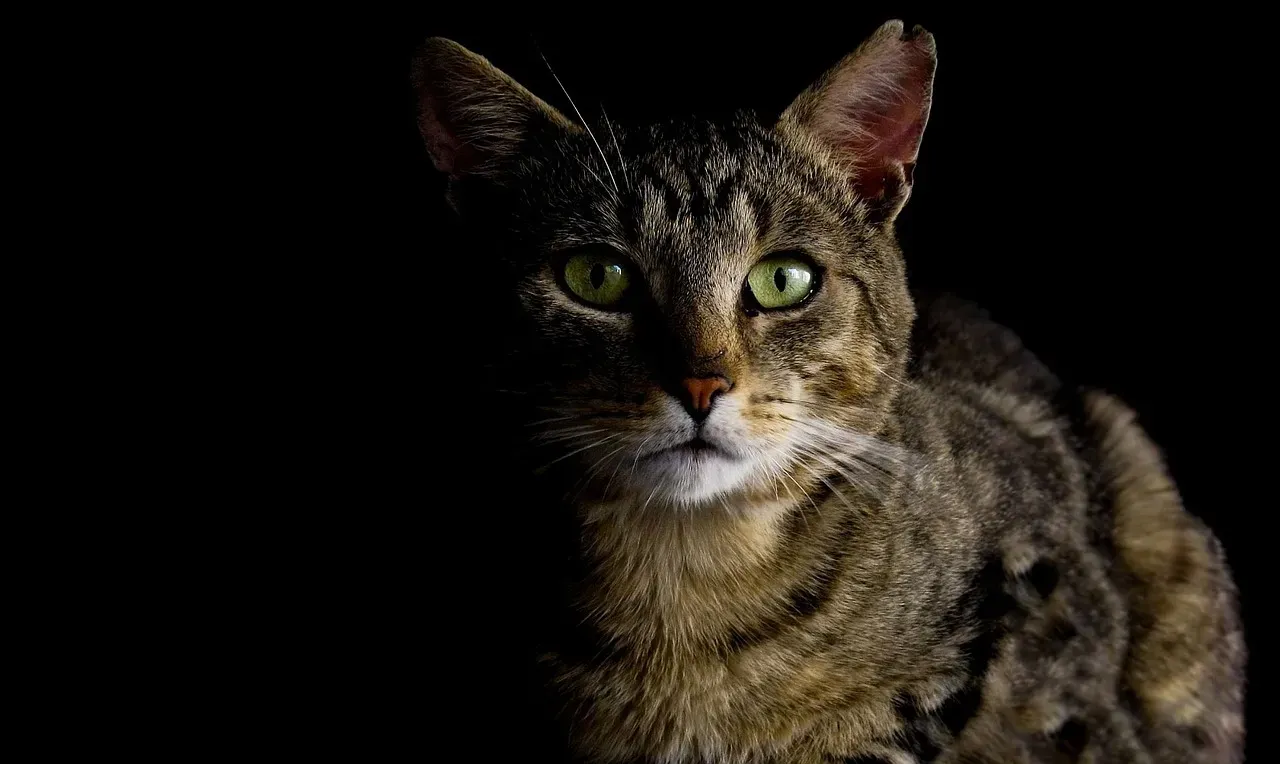
Your cat doesn’t have night vision in the truest sense of the term, but they can see significantly better in lower light conditions than you can – by roughly five and a half to seven times better in dim light, not complete darkness. That’s the difference between stumbling around your kitchen at midnight and gliding through it like a shadow.
One of the most fascinating features of your cat’s eye is the tapetum lucidum, a reflective layer located behind the retina. This layer acts like a mirror, reflecting light passing through the retina and improving your cat’s ability to see in low light conditions – and it’s also the reason your cat’s eyes glow when illuminated in the dark. It’s not magic. It’s engineering.
Those Vertical Pupils Are Doing More Than Looking Cool
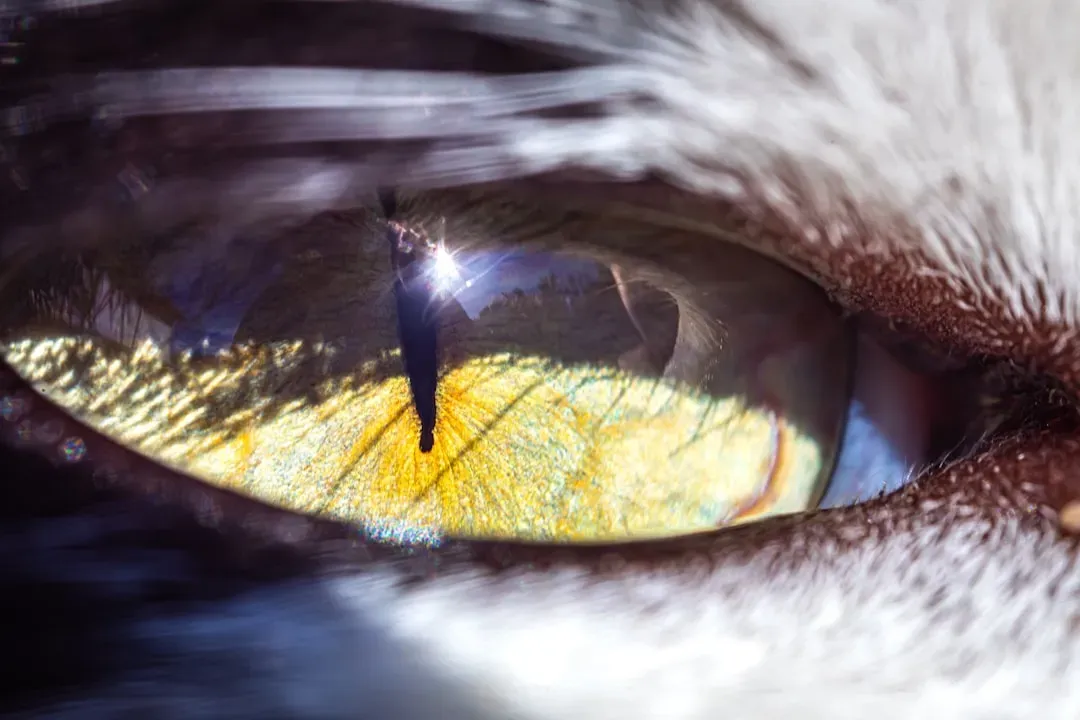
Your cat has elliptical pupils that can narrow to thin, vertical slits, and this design is used for depth perception and distance control, which is absolutely essential for hunting. It’s not just a stylistic quirk. That slit-shaped pupil is a precision instrument.
Your cat’s pupils are vertical and slit-shaped, unlike your round ones, and this allows them to regulate the amount of light entering the eye with great precision, adapting quickly to both the bright light of day and the dimness of night. Think of it like a camera with an incredibly fast and responsive aperture system, one that reacts in real time to the world around it.
A Field of View Wider Than Your Own
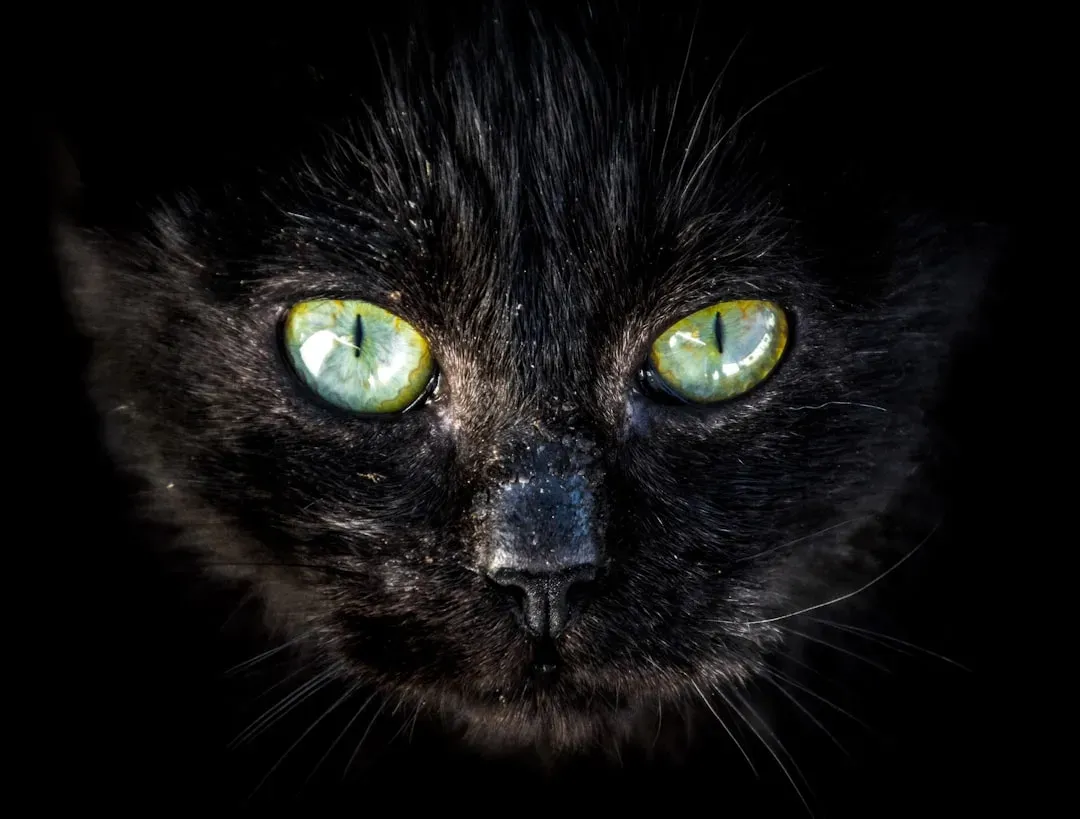
Your cat has a wider field of view compared to you, which gives them an advantage when scanning their surroundings for potential prey or threats. While you have a field of view of about 180 degrees, your cat can see about 200 degrees. That extra visual sweep may seem small, but in the wild, it can mean the difference between life and death.
Instead of the fovea, which gives you sharp central vision, your cat has a central band known as the visual streak. This horizontal band of sharp vision is perfectly tailored to scanning a flat horizon for moving prey. Your eyes were built for trees and detail. Your cat’s eyes were built for the hunt.
Hearing That Reaches Into Frequencies You’ll Never Know
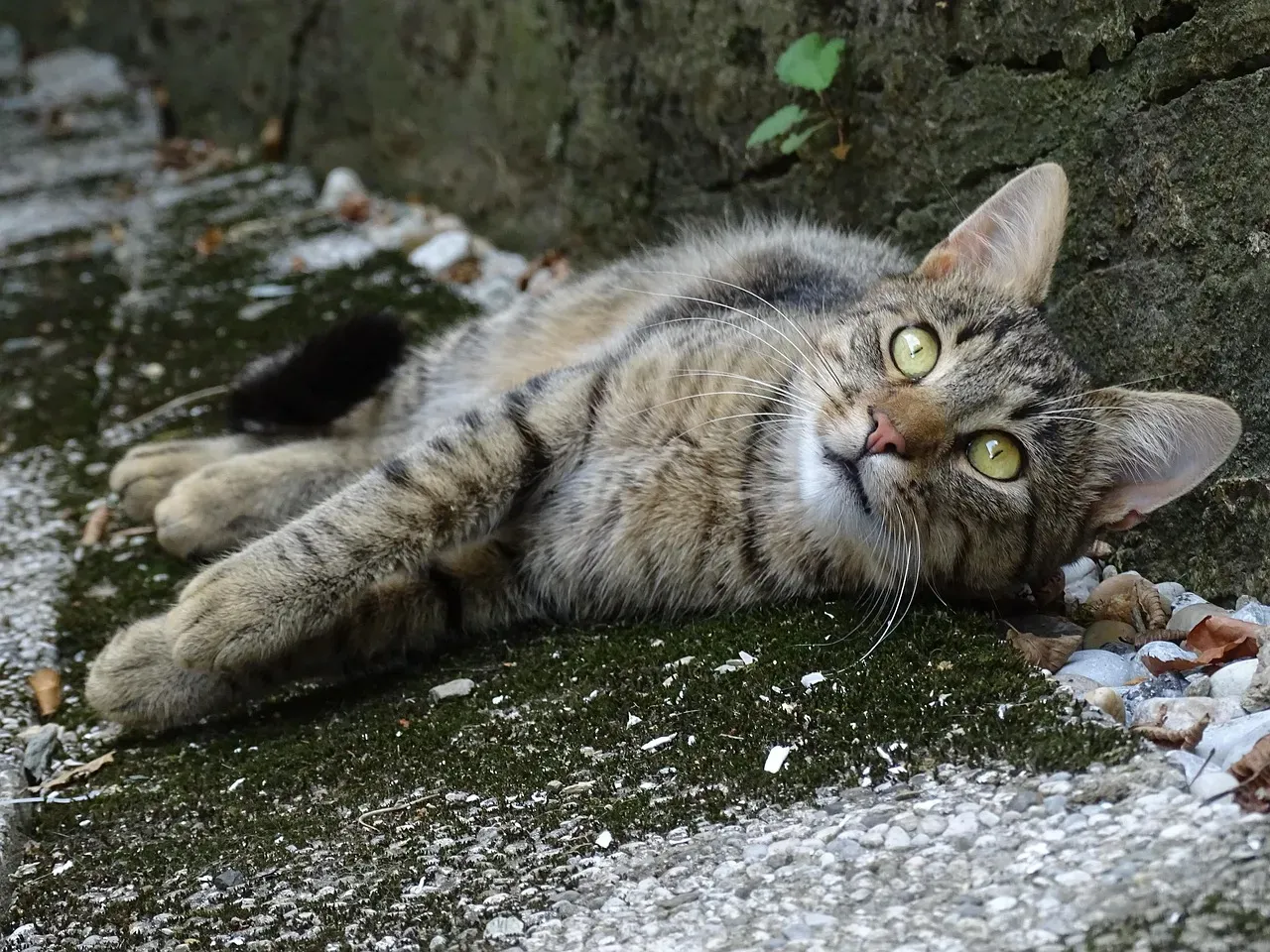
While you and your cat have a similar range of hearing on the low end of the scale, your cat can hear much higher-pitched sounds, up to 64 kHz, which is 1.6 octaves above your range, and 1 octave above that of a dog. Let that sink in. Your cat can hear sounds that are completely silent to you. Every single day.
Your cat’s ear flaps, or pinnae, can independently rotate forward, backward, and sideways to zero in on a sound’s location. This 180-degree rotation means your cat can pinpoint the location of a sound to within several inches in just six-hundredths of a second – faster than the blink of an eye – from up to three feet away. That’s not a superpower. That’s just being a cat.
A Nose That Reads the World Like a Book
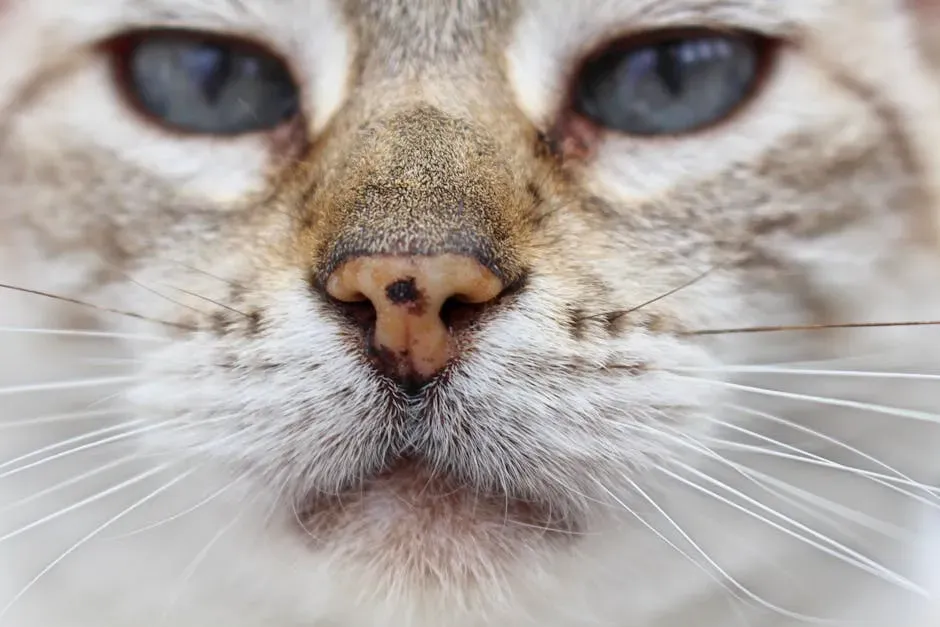
Your cat has more than 200 million odor sensors in their nose, while you have just 5 million. Their sense of smell is 14 times better than yours. If smelling were a sport, you wouldn’t even qualify for the junior league. Your cat wouldn’t just win – they’d lap the competition.
It’s not just your cat’s nose doing the work either, because they’re also equipped with a second scent sensor – a pair of organs called the Jacobson’s organs, located in the roof of their mouth. If you’ve ever seen your cat grimacing or pulling back their upper lip and opening their mouth, they’re using this secondary sense of smell. It’s called the Flehmen response, and it’s as fascinating as it looks strange.
Whiskers: Your Cat’s Secret Sixth Sense

Formally known as vibrissae, your cat’s whiskers are longer and thicker than normal cat hair, and each one grows from a follicle packed with nerves and blood vessels, making them as sensitive as human fingertips. These vibrissae help compensate for your cat’s less-than-stellar close vision, detecting subtle air movements that can indicate the presence of prey and helping your cat navigate around obstacles.
Your cat’s whiskers are extensions of their skin, designed to detect even the smallest changes in the environment, including air currents, air pressure, temperature, and wind direction. They’re embedded three times as deep as fur and translate the slightest contact to sensory cells at their roots. This is why using a deep bowl can actually cause your cat discomfort – their whiskers press against the sides and trigger sensory overload.
Taste: The One Sense Where You Actually Win
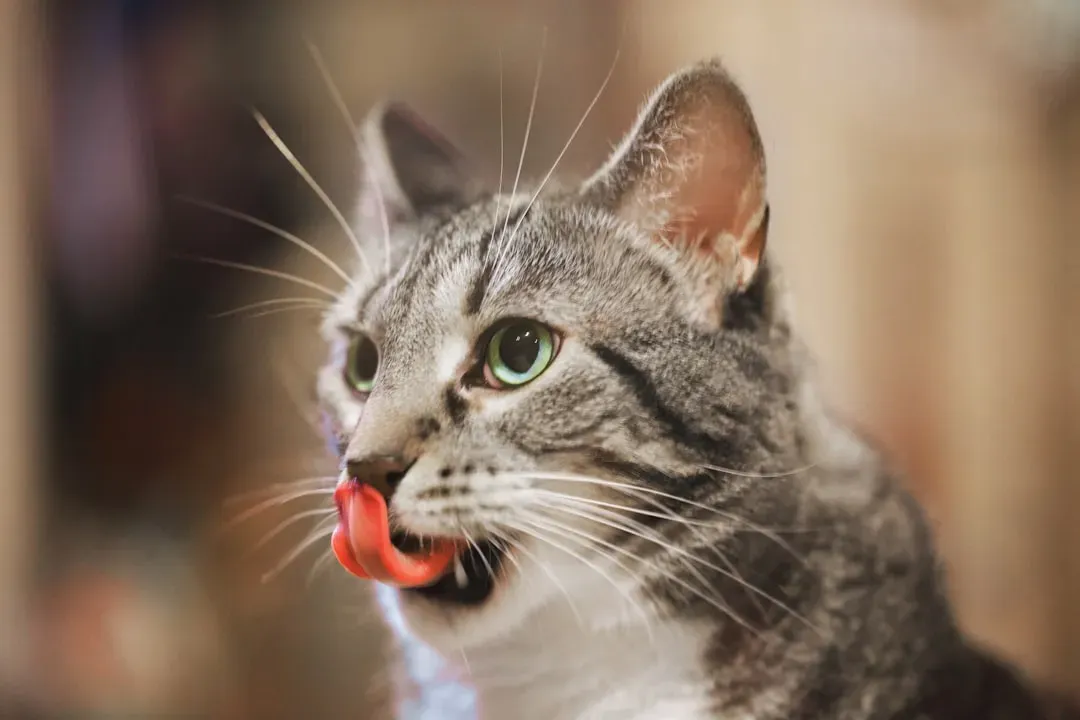
Your cat’s sense of taste is genuinely weak. You have around 9,000 taste buds, while your cat has a mere 473. They make up for this deficiency with a superior sense of smell. Let’s be real – taste is basically your cat’s Achilles heel, and it’s a remarkable contrast to how sharp everything else is.
Because of their meat-heavy diet, your cat doesn’t need to know whether something is sweet. They’ve actually lost the receptors on their tongue that detect sweet chemicals like sucrose, which is why you’ll never be able to tempt your cat out of hiding with a sweet treat. They literally cannot taste it. Fascinating, isn’t it? Evolution is ruthlessly efficient.
How Your Cat Uses Scent to Communicate

Your cat has extra scent glands along their tail, cheeks, chin, lips, and paws for leaving natural “notes” on surfaces. These pheromone deposits serve as territorial markers and help them find their way back home. When your cat cheek-rubs you, they’re mingling their scents to bond, and scratching on surfaces leaves both visual and scent clues for other cats.
Your cat depends on their olfactory powers to learn about their surroundings, to detect other cats and people, and to smell out impending danger. They will also often leave their own scent behind, as cats have scent glands on their paw pads, cheeks, lips, forehead, flanks, and tail. Every time your cat rubs against your leg, they’re not just being affectionate. They’re signing their name on you.
The Balance and Body Awareness That Defies Physics
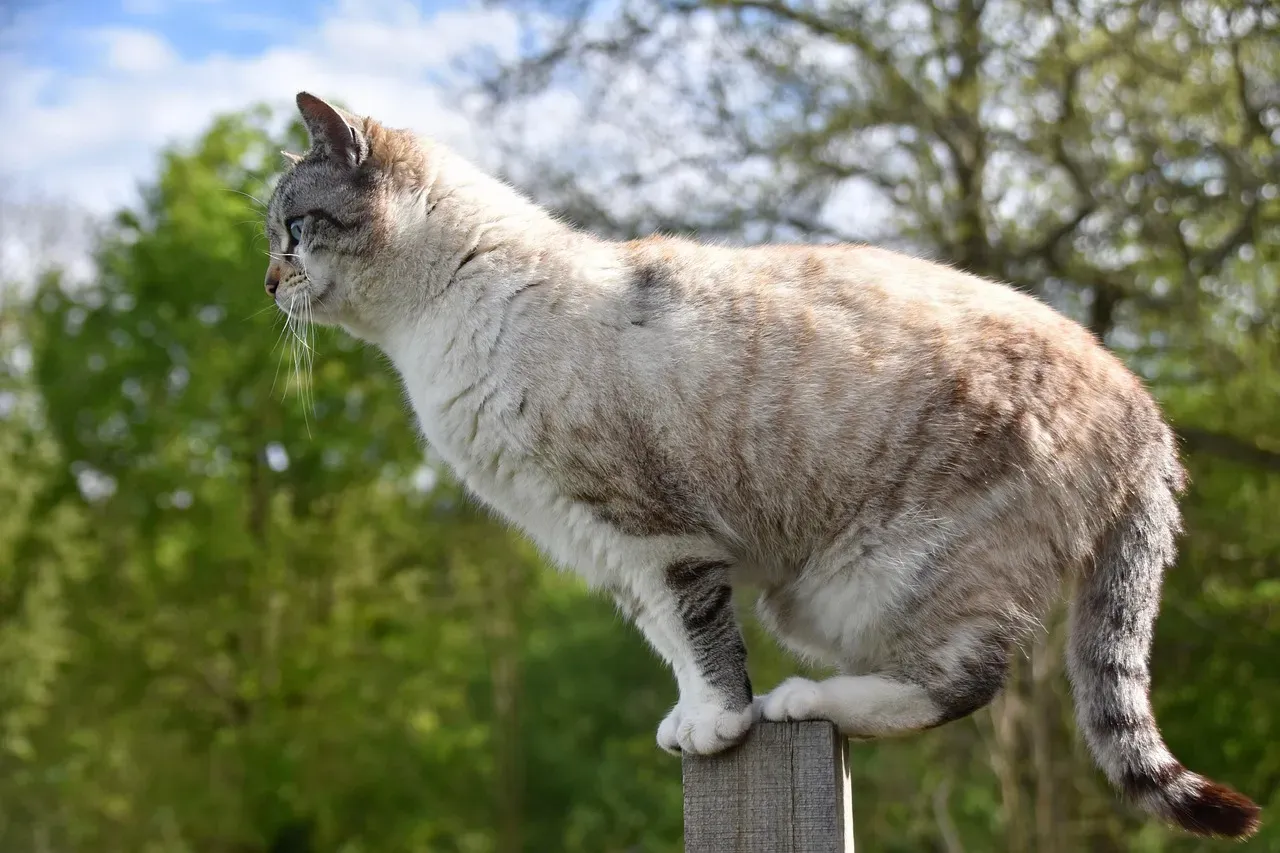
Deep within your cat’s inner ear lie semicircular canals – fluid-filled structures that contribute significantly to their legendary balance and agility. This intricate system allows your cat to maintain precise awareness of their body position at all times, enabling their remarkable ability to right themselves when falling. It’s the real reason behind the “cats always land on their feet” phenomenon.
Your cat’s sensitive hearing also means they experience your modern home in ways you might never imagine. Common household items, like LCD computer screens or electronic devices, can emit high-pitched frequencies that may prove stressful to your feline companion. What you perceive as mere background noise might actually register as a significant sound to your cat’s sensitive ears. That humming appliance you barely notice? To your cat, it might be a constant, low-grade irritant.
Conclusion: Your Cat Lives in a Different Reality

Here’s the thing – your cat isn’t just a smaller, furrier version of you. They’re a completely different kind of sensory being, one that has been shaped by millions of years of evolution into something both extraordinary and deeply alien to the human experience. Their world is dimmer in color but sharper in motion. Quieter for you, but deafeningly detailed for them. And fragranced with layers of information you will never access.
Understanding how your cat truly experiences the world changes the relationship. It explains the midnight zoomies, the unexplained stares at empty corners, the obsession with a crinkled piece of paper. None of it is random. All of it makes perfect, glorious sense once you step into their reality.
The next time your cat freezes mid-step and stares at something invisible to you – just remember. They’re not hallucinating. They’re simply living in a world you’re not quite equipped to perceive. What would you discover if you could borrow their senses for just one day?