In a remarkable encounter that has captivated marine scientists worldwide, fishers off the Caribbean coast of Costa Rica recently hauled in a shark unlike anything previously documented. This isn’t just any unusual catch — the shark’s vivid orange skin and ghostly white eyes point to two extremely rare pigmentation conditions occurring together, making this discovery the first of its kind in the region’s waters.
A STUNNING FIND IN COSTA RICAN WATERS
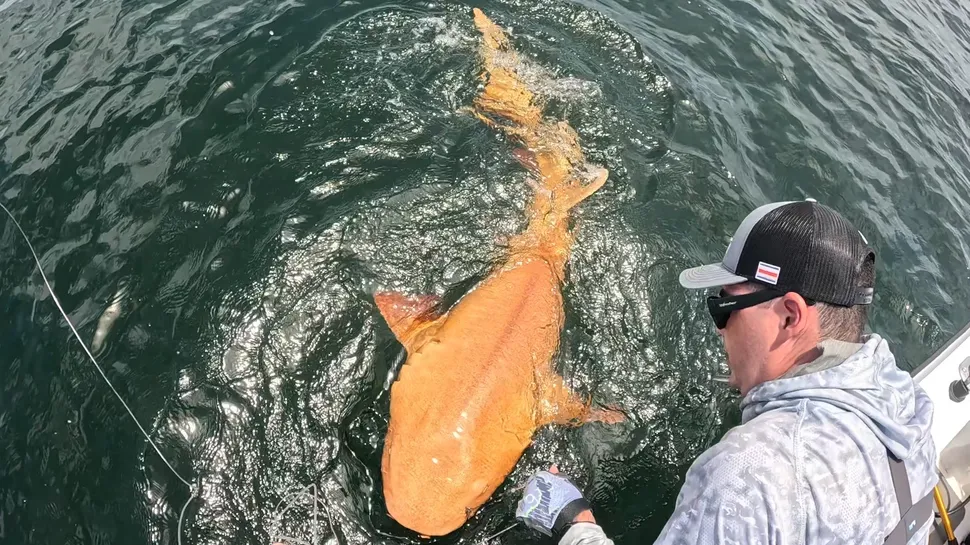
Sport fishers exploring near Tortuguero National Park in 2024 reeled in a shark that immediately defied expectations. Instead of the typical grey-brown hues of most sharks, this individual displayed a bright orange body that seemed to glow against the Caribbean Sea backdrop. After photographs were taken for scientific examination, the shark was carefully released back into the water.
The astonishing sight quickly drew the attention of ichthyologists and genetic researchers, who realized they were witnessing a combination of pigment abnormalities never scientifically confirmed together in a shark species in the Caribbean.
WHAT MAKES THIS SHARK UNIQUE?
The shark has been identified as a nurse shark (Ginglymostoma cirratum), a species typically exhibiting muted amber or brown tones. But this individual’s striking orange color is not merely an aesthetic twist — it reflects a rare pigment condition known as xanthism.
Xanthism occurs when darker pigments are under-expressed, allowing yellow and orange tones to dominate the skin’s appearance. While known in a few fish and bird species, it has never before been scientifically documented in a shark until now.
In addition to this unusual hue, researchers also noted that the shark’s eyes lacked visible irises and appeared pale white, which is characteristic of albinism — a complete or near-complete absence of melanin pigment. The overlapping presence of these two conditions led scientists to classify this case as albino-xanthochromism.
THE SCIENCE BEHIND THE COLOURS
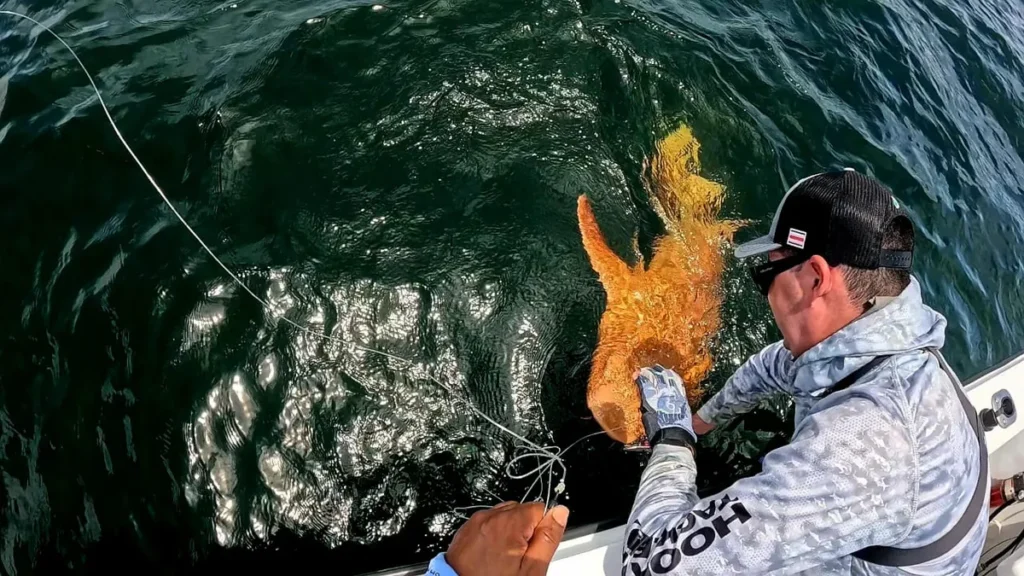
Xanthism and albinism are both genetic traits tied to pigment production, but they operate differently. Xanthism enhances yellow-orange pigments by reducing darker tones, whereas albinism diminishes melanin, often producing light or white skin and eye coloration. When both conditions coincide, the result is an extreme departure from normal pigmentation, as seen in this shark.
“This blend of pigment conditions is exceptionally rare and biologically fascinating,” said one researcher involved in the study. Investigating how these genetic expressions shape coloration can shed light on broader questions about vertebrate pigmentation and evolution.
SURVIVAL AND ECOLOGICAL IMPLICATIONS
One of the most intriguing aspects of this discovery is that the shark appears to have reached adulthood despite its conspicuous coloration. In most marine environments, bright colours can make predators or prey more visible, potentially reducing survival odds. Yet this individual seems to have thrived long enough to grow to an estimated 2 meters (about 6.5 feet) in length.
That survival raises questions about the real impact of such pigmentation anomalies. Typical nurse shark camouflage relies on subdued tones to blend with sea floors and reefs. Seeing an orange variant succeed in these waters could challenge assumptions about visibility and predator-prey dynamics in some ecosystems.
A WINDOW INTO GENETIC MYSTERIES
Researchers emphasize that much remains unknown about what triggers these pigment conditions. While genetics are the most likely cause, other factors such as environmental stressors, hormone shifts, or temperature variations might also influence pigmentation expression.
To better understand these anomalies, scientists plan to examine genetic diversity within nurse shark populations and the specific environmental conditions of northern Caribbean waters. This rare shark may unlock new insights into the interplay between genetics and marine ecology.
THE BROADER SIGNIFICANCE
Beyond its scientific value, this remarkable sighting highlights the ongoing surprises nature holds beneath the waves. Discoveries like this underscore how much remains to be learned about marine biodiversity, even in well-studied coastal regions like the Caribbean.
The event also offers a vivid reminder of the importance of responsible fishing and observational reporting. Because this extraordinary shark was photographed and released, researchers could study and document it while preserving its life in the ocean it calls home.
The discovery of this bright orange nurse shark with combined xanthism and albinism offers a rare opportunity to expand scientific understanding of pigment conditions and their ecological implications. It stands as a testament to the richness of life in the Caribbean and the remarkable variations that can arise in nature’s vast tapestry. Continued study and respectful observation promise to unlock even more mysteries from beneath the sea’s surface.