The Moment That Changed Everything

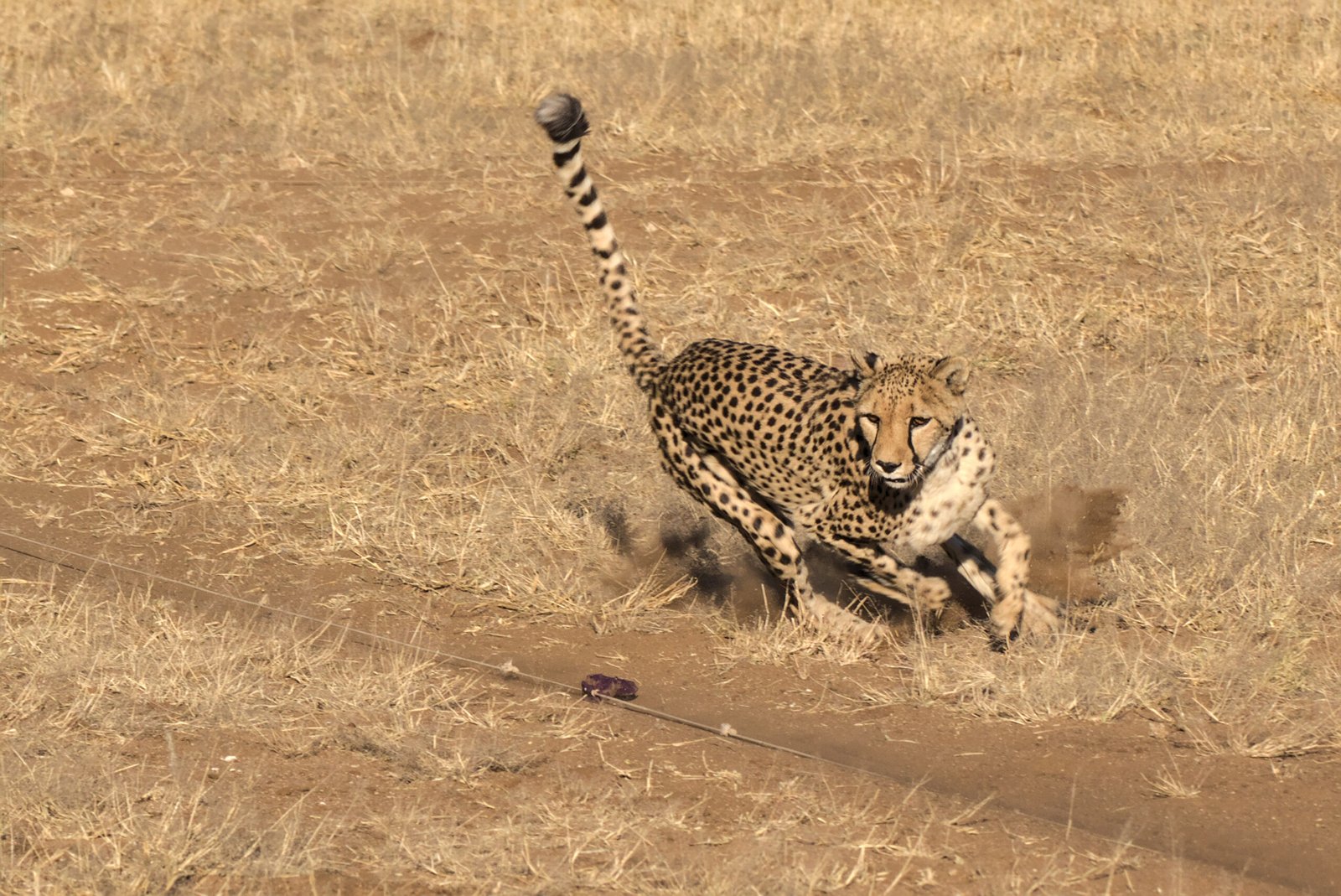
In the dusty plains of northern Namibia, something extraordinary happened on a quiet Tuesday morning. A young cheetah named Kesi stepped cautiously from her transport crate, her amber eyes scanning the vast landscape that would become her new home. The local villagers watched in complete silence, barely breathing as this magnificent predator took her first tentative steps toward freedom.
What nobody expected was how this single moment would transform an entire community. The village of Okonjima had been struggling with human-wildlife conflict for years, losing livestock to predators and feeling disconnected from the natural world around them. But Kesi’s arrival marked the beginning of something much bigger than a simple conservation project.
From Fear to Fascination

Initially, the villagers kept their distance. Cheetahs had always been seen as threats to their livelihood, sleek killers that could devastate a herd in minutes. Children were warned to stay indoors when predators were spotted, and farmers armed themselves with whatever they could find. The relationship between humans and wildlife had been broken for generations.
But Kesi was different. She wore a radio collar that allowed researchers to track her movements, and slowly, the villagers began to understand her patterns. They learned that she avoided human settlements, preferring the open grasslands where antelope grazed. She wasn’t the monster they had imagined – she was simply trying to survive in a world that seemed to have no place for her.
The Village Guardian Who Changed Hearts

Enter Tomas Nghipondoka, a local farmer who had lost three goats to predators the previous year. He volunteered to become part of the monitoring team, initially hoping to better protect his livestock. Armed with binoculars and a tracking device, Tomas began following Kesi’s daily routine.
What he discovered amazed him. Kesi was incredibly efficient, hunting only when necessary and avoiding human areas entirely. She had established a territory that barely overlapped with the village boundaries. For the first time, Tomas saw a cheetah not as an enemy, but as a fellow creature trying to make a living in harsh conditions.
The Ripple Effect Begins
Word spread quickly through the village about Tomas’s observations. His evening reports became a gathering point for curious neighbors who wanted to hear about Kesi’s latest adventures. Did she successfully hunt that springbok? Had she found a suitable den site? Was she showing signs of pregnancy?
These conversations sparked something unexpected – genuine interest in wildlife conservation. People who had never given a second thought to the ecosystem around them suddenly wanted to learn more. The village chief, Maria Ankama, noticed the change immediately. “People were talking about something other than drought and hardship,” she later recalled.
Education Through Experience

The research team seized this opportunity to launch informal education sessions. Every week, they would share updates about Kesi’s progress, but they also explained broader concepts about ecosystem balance and the crucial role predators play in maintaining healthy animal populations. These weren’t dry lectures – they were stories about a cheetah the villagers had come to know personally.
Children became particularly engaged, asking questions about cheetah behavior and drawing pictures of Kesi in their school notebooks. Some even gave her a local name – “Oshikwanyama,” meaning “the swift one.” The fear that had once defined their relationship with wildlife was slowly being replaced by curiosity and respect.
Economic Opportunities Emerge

As word spread about the successful cheetah reintroduction, something unexpected happened. Tourists began arriving in small numbers, hoping to catch a glimpse of Kesi or learn about the conservation project. The village had never seen eco-tourism before, but suddenly there was demand for local guides, traditional meals, and craft souvenirs.
Maria Ankama quickly organized a small tourism committee. Village women began selling handmade jewelry and textiles featuring cheetah motifs. Young men trained as trackers, learning to identify animal signs and share their traditional knowledge with visitors. The economic impact was modest but meaningful – providing alternative income sources that didn’t depend on livestock alone.
The Livestock Protection Revolution

Perhaps the most practical change came in livestock management. Inspired by Kesi’s predictable behavior patterns, the villagers began experimenting with new protection methods. They built better enclosures, implemented rotational grazing schedules, and established early warning systems for predator sightings.
The results were remarkable. Livestock losses dropped by 70% in the first year, not because there were fewer predators, but because the community had learned to coexist more effectively. Farmers like Tomas discovered that understanding predator behavior was far more effective than trying to eliminate them entirely.
Cultural Transformation

The most profound change was cultural. Traditional stories about wildlife began to resurface in village conversations. Elders shared forgotten tales about the spiritual significance of cheetahs in their ancestors’ beliefs. Children learned that their great-grandparents had once considered these animals sacred, symbols of speed and grace rather than threats.
This cultural renaissance helped bridge the gap between conservation science and traditional knowledge. The villagers realized that protecting wildlife wasn’t a foreign concept imposed by outsiders – it was a return to values their own culture had once embraced.
Kesi’s Legacy in Action

Two years after her reintroduction, Kesi had successfully established a territory and was showing signs of preparing for her first litter. But her impact extended far beyond her own reproductive success. The village had become a model for human-wildlife coexistence, attracting attention from conservation organizations across Africa.
Other communities began sending representatives to learn from Okonjima’s approach. The villagers found themselves in the unusual position of being teachers, sharing their experiences with delegations from Kenya, Botswana, and South Africa. Their transformation from conflict to cooperation had become a blueprint for similar projects across the continent.
Youth Leading the Future

The most encouraging development was the emergence of young conservation leaders within the village. Teenagers who had grown up watching Kesi formed a youth wildlife club, conducting their own research projects and organizing educational programs for younger children. They monitored other species in the area, creating a comprehensive database of local wildlife populations.
These young people began to see conservation as a legitimate career path. Several received scholarships to study wildlife management at universities, with the understanding that they would return to contribute to their community’s ongoing conservation efforts. The brain drain that had plagued rural areas was beginning to reverse.
Scientific Breakthroughs

The detailed monitoring of Kesi’s behavior provided valuable scientific data about cheetah ecology in semi-arid environments. Her adaptation strategies, territorial behavior, and hunting patterns contributed to research papers that influenced conservation policies across Namibia. The villagers’ observations proved crucial in understanding how cheetahs could successfully coexist with human communities.
This citizen science approach demonstrated that local communities could contribute meaningfully to wildlife research. The villagers’ intimate knowledge of their environment, combined with scientific monitoring techniques, created a powerful tool for conservation. Their data helped refine reintroduction protocols for future projects.
Expanding the Vision

Success with Kesi led to ambitious plans for expanding the conservation program. The village requested support for reintroducing other species, including wild dogs and leopards. They had gained confidence in their ability to manage human-wildlife interactions and wanted to restore the full complement of predators to their ecosystem.
The transformation was so complete that the villagers began advocating for the establishment of a community conservancy. They wanted formal recognition of their conservation efforts and the legal authority to manage wildlife in their territory. This represented a fundamental shift from viewing wildlife as a government responsibility to embracing it as a community asset.
Challenges and Adaptations

The journey wasn’t without obstacles. Drought years tested the community’s resolve as competition for resources intensified. Some villagers questioned whether supporting predators made sense when their own livestock were struggling. These challenges forced the community to develop more sophisticated management strategies and strengthen their commitment to long-term thinking.
The key to overcoming these difficulties was maintaining open communication and adapting strategies based on changing conditions. The villagers learned to view challenges as opportunities for innovation rather than reasons to abandon their conservation efforts. Their resilience became a model for other communities facing similar pressures.
Regional Recognition
The success of the Okonjima cheetah project gained international attention, attracting visitors from around the world. The village was featured in documentaries, research papers, and conservation magazines. This recognition brought pride to the community and validated their efforts to balance human needs with wildlife conservation.
More importantly, the attention led to increased funding for conservation programs and infrastructure development. The village received support for improving schools, healthcare facilities, and water systems. Conservation success had become a pathway to broader community development, creating a positive feedback loop that strengthened support for wildlife protection.
The Ripple Effect Continues

Today, Kesi’s story continues to inspire communities across Africa and beyond. The principles developed in Okonjima – combining scientific research with traditional knowledge, creating economic incentives for conservation, and building local capacity – have been adapted for different species and environments around the world.
The village has become a training center for community-based conservation, hosting workshops and exchange programs. Their approach demonstrates that successful wildlife conservation doesn’t require choosing between human welfare and environmental protection – it requires finding creative ways to achieve both simultaneously.
Looking Forward

As Kesi raises her cubs in the Namibian wilderness, the village of Okonjima continues to evolve. New challenges emerge regularly – climate change, economic pressures, and generational differences in conservation values. But the foundation built through one cheetah’s reintroduction has proven remarkably durable.
The villagers have learned that conservation is not a destination but a journey requiring constant adaptation and commitment. Their success story offers hope that humans and wildlife can share the same landscapes, benefiting both species and communities. In a world where such positive outcomes seem increasingly rare, Okonjima stands as proof that transformation is possible when people open their hearts and minds to new possibilities.
What started with a single cheetah’s tentative steps toward freedom became a community’s bold leap toward a more sustainable future. Did you expect that one animal could inspire such profound change in an entire village?

Hi, I’m Bola, a passionate writer and creative strategist with a knack for crafting compelling content that educates, inspires, and connects. Over the years, I’ve honed my skills across various writing fields, including content creation, copywriting, online course development, and video scriptwriting.
When I’m not at my desk, you’ll find me exploring new ideas, reading books, or brainstorming creative ways to solve challenges. I believe that words have the power to transform, and I’m here to help you leverage that power for success.
Thanks for stopping by, Keep coming to this website to checkout new articles form me. You’d always love it!